Sylwia Bęczkowska, Iwona Grabarek, Wlodzimierz Choromanski (2018). The Role of Human Factor in the Transport of Hazardous Materials. In: Advances in Physical Ergonomics and Human Factors: Part I. AHFE Open Access, vol. 1. https://doi.org/10.54941/1007
This article describes and analyses issues related to modelling of human factor in the transport of hazardous materials. Due to its complexity, a human being constitutes an element parameterization of which encounters numerous difficulties. In the literature various attempts of human actions’ modelling have been presented. Authors of the article have used heuristic techniques – particularly, fuzzy set methods – in order to build a model of human factor for the purposes of their work. This model defines human actions by text description, that is, linguistically. The specificity of fuzzy sets allows the “precision” of human actions’ description to be “naturally” limited. The model has been built upon proprietary expert-based surveys, enabling selection of specific features, influencing driver’s efficiency, with their corresponding fuzzy sets. The model’s initial parameter is λL – intensity of accidents caused by driver’s mistake. The parameter has been created for the purposes of the proprietary risk assessment model in the road transportation of hazardous materials. Driving mistakes can significantly increase the risk of accidents. This heuristic model has been used to prepare a simulation of the influence of selected features on the driving safety.
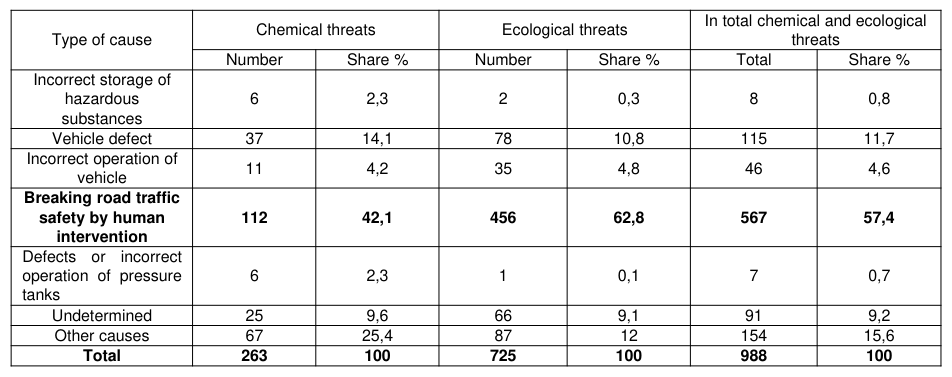
Actions aimed at ensuring safety in the transport of hazardous materials have become of key importance in recent years. They include: implementation of the relevant normative documents, obtaining ISO certification or establishing non-governmental organisations dealing with the transport of hazardous materials. In the literature a lot of attention is devoted to safety issues of the human – machine – environment system (H-M-E). Each of the system’s elements may cause accidents that result in losses incurred by a man. Therefore, it is important to identify each of the system’s elements and their interaction. In this article the system is defined as a set of three elements: driver carrying dangerous goods, vehicle – tank truck for hazardous materials and environment, that is material work environment (D-V-E). The DVE system is responsible for specific tasks performed during the process of transportation of dangerous goods. Due to wide range of duties and responsibilities, the driver is required to have a good knowledge of specific regulations related to the type of transport and to perform his work conscientiously and diligently. Despite mandatory trainings, the driver is still the weakest link in the system. His mistakes are due to: work adjustment, workplace equipment and condition of the direct and indirect environment. Statistical data show that driver-operator’s mistakes cause around 60% of all accidents (table 1) (www.straz.gov.pl, GUS 2010).
Table 1: Local chemical and ecological threats between 2007 and 2010 (National Headquarters of the State Fire Service)
Human error is therefore one of the main factors adversely affecting the road traffic safety. As statistical data show, the defects of means of transport constitute a second most important group of issues influencing the abovementioned problem. The most popular vehicle used for transportation of hazardous materials is a tank truck. Its common use results from the development of motorization and growing demand for such fuels as gasoline, diesel or natural gas. Tank trucks receive road corridor permits from the Transport Technical Supervision. It should be emphasized that creation of a faultless DVE system is practically impossible, despite the supervision of technical devices and numerous compulsory trainings for drivers. Tank truck transportation of hazardous goods poses certain risk for a man and it is impossible to rule out the probability of an accident. Thus, the interactions within the DVE system should be analysed and, based on the results, preventive measures should be adopted in order to reduce the risk within the transportation chain of hazardous materials.
The above mentioned arguments have become an inspiration for elaboration of a new risk assessment method that takes the human factor into consideration and is intended for analysis of transportation of hazardous goods. Consideration of the human factor as a key cause for an accident overcomes a shortcoming of the method, since, as we may read in the literature (Szopa T. 2009; Radkowski S. 2003; Michalik J.S., Gajek A., Grzegorczyk K., Gredecki S., Piękniewski M., Słomka L., Janik P., Dziwulski D., Zając S. 2008), no complex risk assessment method including this factor has been elaborated so far. In this article the main concept of the method described in the next paragraph was presented, with the focus on human factor modelling and its role in transportation of hazardous materials. Heuristic techniques – particularly, fuzzy set methods – were used in the assessment of human- driver.
THE CONCEPT OF THE RISK ASSESSMENT METHOD Polish and international literature regarding risk assessment in the transport of hazardous goods lack of homogeneous and complex approach to this problem. In Poland there is no such a thing as a recommended risk assessment method that would take into consideration the specific nature of this kind of transportation. Statistical data that have been gathered for many years show that the majority of accidents taking place in Poland are caused by driver’s mistake. This tendency is also present in other types of transport. The above described situation became an impulse for carrying out a research on a new approach to the analysed issues, taking into account numerous factors determining the level of risk in the process of transportation of hazardous materials. These factors include: human factor (the most important one), technical factor (vehicle), environmental factor (workplace material environment), road factor, as well as a factor related to traffic intensity around fuel storage centres and refineries. Additionally, the method emphasizes the problem of human-driver fatigue, which limits his efficiency and, consequently, decreases the level of road safety (Bęczkowska S., Grabarek I., Choromański W. 2012; Bęczkowska S., Grabarek I.,
Choromański W. 2013). In the method it has been assumed that fatigue increases with time. The “risk assessment” term is defined by authors as a choice of an optimal delivery route, involving the lowest risk level and, as a consequence, the smallest losses possible. Considering the characteristic of hazardous materials, we can distinguish different types of losses: human, ecological and, consequently, financial. In the analysis the risk was calculated as a product of the probability of an accident and the value of losses. An accident may lead to different scenarios of its consequences and in the analysis they were interpreted as follows: an overturn of the vehicle with no additional consequences, an overturn of the vehicle with a leak, an overturn of the vehicle with a leak and a fire, an overturn of the vehicle with a leak and an explosion. Authors assumed that the probability of an accident is not the same on the whole delivery route of hazardous goods. That is why the route was divided into sections with defined parameters and the risk was calculated for each of the sections separately. Then the risks mentioned were summed up into a total risk. The created assessment model allows to choose a delivery route that entails the minimal risk and, consequently, the smallest losses possible.
First of all, the development of the risk assessment model required definition of parameters describing any section of hazardous materials delivery route, such as: a. the level of human, ecological and financial losses, in consideration of different scenarios and environment conditions of the route /built-up area, non-built-up area/, b. the intensity of accidents caused by technical state of the vehicles, other road users, drivers fatigue, traffic intensity, as well as human factor, that is, driver’s mistake, c. the probability of an accident in a given route section, d. risk value, e. and, additionally, speed limit and actual speed.
The so defined parameters allow to divide the delivery route into sections /most often not identical to the length of/ and such an operation is possible only when one section differs from others in at least one of the parameters. The length of the route section cannot constitute the division criteria though. The intensity of accidents caused by driver’s mistake is one of the section’s parameters. In order to determine its value, heuristic model was created. It was developed with the use of fuzzy set method and it includes factors that are considered “significant”. These factors were defined upon an analysis of the driver-vehicle system, the procedural requirements of the analysed type of transportation, traffic accidents causes analysis, as well as proprietary expert-based surveys carried among drivers. For the purposes of the risk assessment model, a simulator based on the Breath First Search algorithm was created. Various simulation experiments was carried out. They referred to the choice of an optimal delivery route, depending on the selected aim, that is, minimization of human, ecological or financial losses. The risk assessment model has been described in detail in the literature (Bęczkowska S., Grabarek I., Choromański W. 2012; Bęczkowska S., Grabarek I., Choromański W. 2013).
HUMAN FACTOR IN THE TRANSPORT OF HAZARDOUS MATERIALS The profession of a driver-operator falls into the category of difficult and dangerous ones (ADR 2011-2013). In the road transport system human factor plays decisive role and has two functions: performs as a co-author of road traffic and as a road user. The driver carrying hazardous materials is exposed to numerous factors, which deteriorate his ability of job performance and even lead to deterioration of his health. Driver’s safe functioning within road traffic systems much depends on his psychophysical characteristics, social adaptability, driving etiquette and his ability to deal with complex situation, such as driving a vehicle. Carrying out test verifying drivers’ vocational usability (the so called “professional selection”) is a duty of specialized services (Łuczak 1998). Methods of such a selection are thoroughly developed. The final decision to offer a job is made based on required documents and appropriate professional courses certificates, medical examinations and observation during trial period. According to the literature, selecting only those drivers with certain predispositions is a highly effective method of reducing the risk of accidents in the transport of hazardous materials.
Professional profile of the driver carrying hazardous goods includes the following (Łuczak 1998):
1) Sensorimotor efficiency : a) Critical features: visual acuity, colour sensitivity, stereoscopic vision, night vision, sense of smell, visual-motor coordination, quick reflexes, perceptiveness, dexterity; b) Useful features: good hearing, sense of balance, sense of touch.
2) Abilities: a) Critical features: powers of concentration, ability to multitask, imagination and creative thinking, technical skills; b) Useful features: good memory, logical reasoning. 3) Personality a) Critical features: long-term endurance, self-control, ability to work in isolation, ability to work under monotonous conditions, courage, precision; b) Useful features: emotional endurance, ability to follow instructions, readiness to work under difficult environmental conditions, perseverance, patience.
The analysis of transport systems shows that technical machine operator makes mistakes, despite his abilities that meet his professional profile. Those mistakes are due to not only his individual features, but also to workplace conditions, such as existing vibrations, noise, microclimate, etc. Monotony constitutes a significant element of truck driver’s work process. The higher is the level of monotony, the lower is the driver’s alertness, which may pose a risk to life and safety of the driver and other road users (Bęczkowska, Grabarek 2010; Bęczkowska S., Grabarek I. 2012). Driving at night, which entails straining driver’s eyes, decreases his vigilance. The modern constructions of driver’s cab improve operator’s work conditions: his comfort at work increases and physical effort related to driving is reduced. However, these improvements do not manage to isolate truck driver completely from vibrations and noise created by vehicle’s movement. The impact of the factors mentioned grows with the increase of speed and the number of road users. As a consequence, driver’s fatigue rises quickly. Weariness leads to the decrease of physical efficiency, leg-hand coordination disorder and limitation of visual field. As an effect, sleepiness and apathy increase. Driver’s fatigue has also an influence on: reaction stability, speed and scope of perception, attention and reaction time. Taking into consideration a complexity of the situation, in which driver carrying hazardous materials operates, we can distinguish various types of fatigue, for example: muscle fatigue (related to driving posture and holding steering wheel), sensory fatigue (reduced capacity to answer to stimulation) and mental fatigue (decrease of cognitive performance caused by constant focus on a task and monotony of driving conditions). The consequences of driving despite appearing fatigue may be dangerous not only for drivers themselves, but also for other road users (Gronowicz 2003). The highest share of accidents caused by drivers’ fatigue has been recorded on highways A2, A1 and A4, as well as on national roads n°2, 3, 17, 18 and 22 (Jamroz 2012). Conclusion from above mentioned arguments support a thesis that it is practically impossible to protect drivers carrying hazardous materials from temporal information overload, emotional tension or real and unexpected situations. It should be noted that a man to a great extent is responsible for safety of the DVE system, although he is just a component of the greater whole. Therefore, a penetrating analysis of this component and actions aimed at strengthening it will reinforce the whole system.
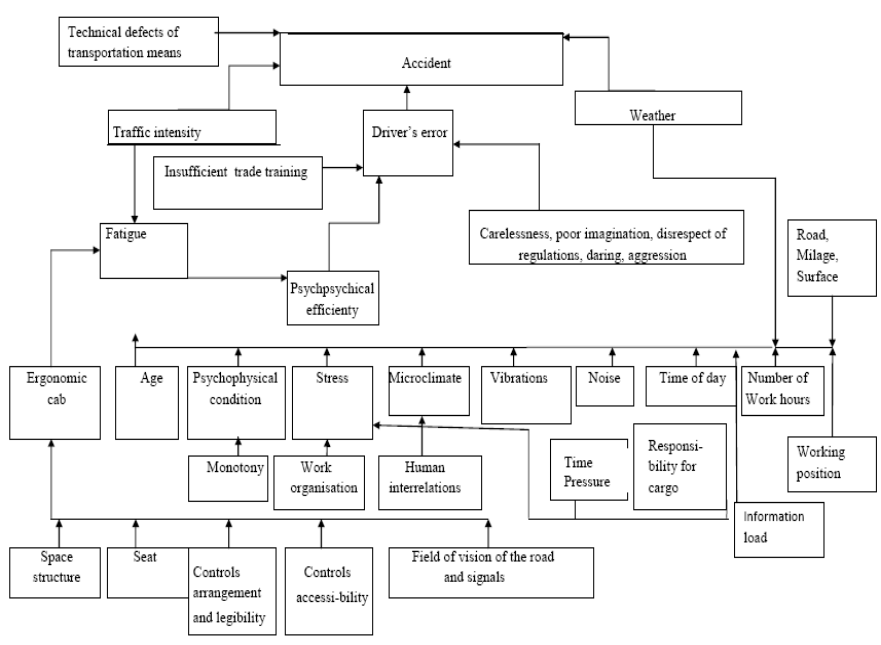
The analysis of driver’s performance has allowed to determine the structure of factors having potential influence on the probability of an accident (Bęczkowska S. ,Grabarek I. 2010). This structure is presented in the Figure 1. In the years 2011-2012 the factors mentioned were evaluated through a survey by drivers carrying hazardous materials. The evaluation was carried out among 238 drivers in various age groups, with different work experience and who drove different types of vehicles used for transport of hazardous goods. The respondents between 36-45 years old constituted the most numerous age group. As an average, those drivers were making between 10000-12000 km per month. Their vehicles were relatively new – they were produced in the years 2001-2005. The anonymity of the survey gave the respondents the opportunity to discuss openly existing difficulties and risk related to their workplace. The data gathered through evaluation was statistically analysed with the use of R Development Core Team Software (version 2.15.2).[ ] The results show that factors considered by drivers as arduous include the following ones: vibrations (94%) and noise (70%), that is, vibroacoustic environment conditions; night shifts (51%), time pressure (53%), monotony (50%) and stress (46%). Based on the research results and specialist literature, the most significant factors from the point of view of ergonomics and safety in the transport of hazardous materials were selected. Subsequently, a fuzzy model was created, which allows to generate the intensity of accidents caused by driver’s mistake (λL), described in detail in the following paragraph.
Figure 1. Factors potentially influencing probability of an accident
HEURISTIC MODEL OF HUMAN FACTOR
Model assumptions The aim of the modelling was to determine the influence of selected factors, referred to as features in this model, on the intensity of accidents caused by driver’s mistake. The features had been selected based on expert-based surveys and literature. The Mamdani model was used for model creation. The procedure of creating the model included:
1. Selection of features, that is, external characteristics formed by organizational and technical conditions, such as: working time, skills, vibrations, noise, knowledge of procedures; and internal psychological and physiological characteristics, such as: stress, age, time of day, monotony.
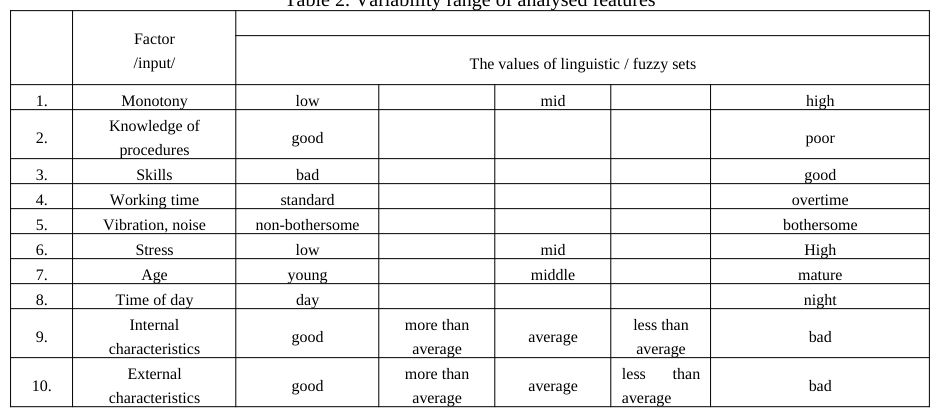
2. Assigning certain levels of selected features with their corresponding fuzzy sets, that is: monotony (low, mid, high), knowledge of procedures (good, poor), skills (good, bad), working time (standard, overtime), vibroacoustic conditions (bothersome, non-bothersome), stress (low, mid, high; treated as a “submodel” of internal characteristics), age (young, middle, mature), time of day (day, night).
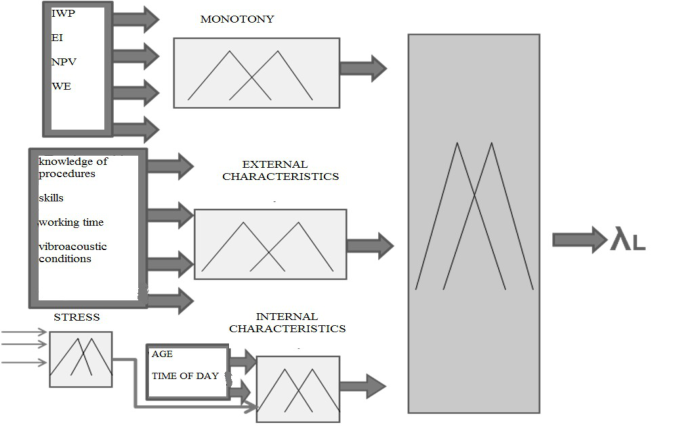
The analysed structure has been presented in the Figure 2.
Figure 2. Heuristic model of intensity of accidents caused by driver’s mistakes Where: IWP – invariability of working process
EI - environmental invariability NPV – necessity of permanent vigilance WE – work easiness In the process of fuzzy modelling values are assigned to particular features in order to “measure” them. For the reasons of numerical effectiveness of algorithms described in the following part of the article, the value of λL, (intensity of accidents caused by driver’s mistake) has been standardized in accordance with the formula:
( 1 )
λL[Equation or mathematical symbol available in the original paper PDF]=[Equation or mathematical symbol available in the original paper PDF] x−xmin xmax[Equation or mathematical symbol available in the original paper PDF]−[Equation or mathematical symbol available in the original paper PDF]xmin where: λL – intensity of accidents caused by driver’s mistake, x – current value of a real variable, xmin – minimum value of a real variable, xmax – maximum value of a real variable.
As it’s above mentioned standardization of variables is appropriate from the point of view of numerical calculations (scope of change for each variable is the same and, as a consequence, the problem is numerically very well defined). The equation (1) implies that reverse operation (change from standardized to real variables) is explicitly determined. The minimum and maximum values of a real variable were calculated based on data from the State Fire Service, Central Statistical Office and own research. The analysed data referred to local chemical and ecological threats involving tank trucks from the last 5 years, the number of tank trucks registered in the same period of time and the average number of annual working hours of tank trucks’ drivers. In order to determine λLmin and λLmax of the above mentioned period of time, the years with the smallest and the largest numbers of dangerous incidents were chosen and combined with the number of registered tank trucks in a given year. The λL parameter takes into account only the incidents related to the probability of an accident caused by driver’s mistake. Due to the lack of detailed databases, the analysis were based on the level of men’s participation, expressed in %, as a main cause of chemical and ecological accidents according to the National Headquarters of the State Fire Service. Based on the analysis of the available data, the intensity of accidents caused by human mistakes λL was determined as the following interval: ( 0,0000016; 0,0000021 ). In the case of qualitative variables, this method requires assigning a value that ranges in degree from 0 to 1 to a given feature. This value refers to “expert” evaluation of the feature’s intensity. Values assigned to particular features, that is, quantization levels, are presented on the Table 2.
Table 2. Variability range of analysed features Factor /input/ The values of linguistic / fuzzy sets
Selected features were assigned by fuzzy sets and their corresponding membership function (MF). First the monotony model was defined by four factors determining its level, then the model of external factors and the stress submodel, included in the model of internal factors, were determined. The features, together with their levels, formed grounds for linguistic-based heuristic model, formulated as an implication. A fragment of the rules referred to the stress submodel has been presented below: “If time pressure is low and the level of information overload is low and responsibility for a cargo is small then the stress level is low.
If time pressure is low and the level of information overload is low and responsibility for a cargo is big then the stress level is low.
If time pressure is low and the level of information overload is high and responsibility for a cargo is small then the stress level is low.
If time pressure is low and the level of information overload is high and responsibility for a cargo is big then the stress level is medium...”
Analogous was creation of remaining models referred to monotony, external and internal characteristics. Their linguistic form was applied to the model of intensity of accidents caused by driver’s mistake.
The structure of fuzzy model and its numerical implementation
Heuristic model, described in the previous paragraph, was numerically implemented in MATLAB/Simulink environment (Version 7.5). The model includes three structures, in accordance with the Figure 2. Fuzzification is the main process in fuzzy modelling in which the crisp quantities are converted to fuzzy ones. The conversion into fuzzy values is represented by a membership function. There are various methods of assigning membership values or the membership functions to fuzzy variables. Membership value ranges in degree between 0 and 1, and it represents the degree of membership of each input linguistic variable to a corresponding fuzzy set. In the Mamdani model the Gaussian function was adopted as a membership function. Other available membership functions, that is triangular and trapezoidal, had no significant influence on the results.
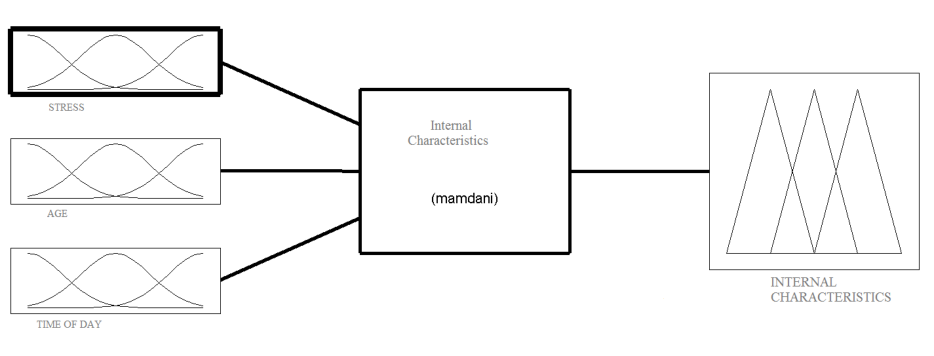
The Mamdani model for internal characteristics simulation has been shown as an example in the Figure 3.
Figure 3. Mamdani model for internal characteristics simulation
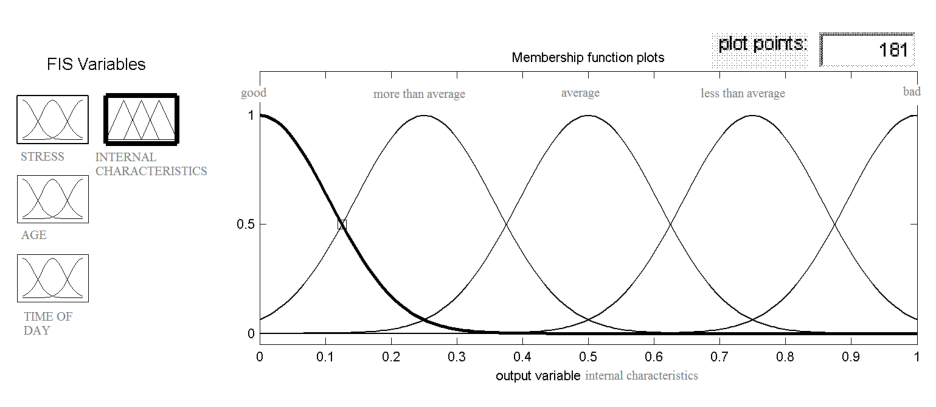
The total of membership functions determine the number of quantization levels adopted for the input signal. For each feature the Gaussian membership function has been applied, as it has been shown in the Figure 4.
Figure 4. Membership function for internal characteristics
Internal characteristics were developed at five levels, in accordance with the assumptions. Analogous operations were performed for each of model’s structure. As we may see, the model has various elements that can be modified and precisely this flexibility allows to reflect the reality. Nevertheless, it entails laborious and expensive experimental researches, as a man himself constitutes their main object.
Simulation results
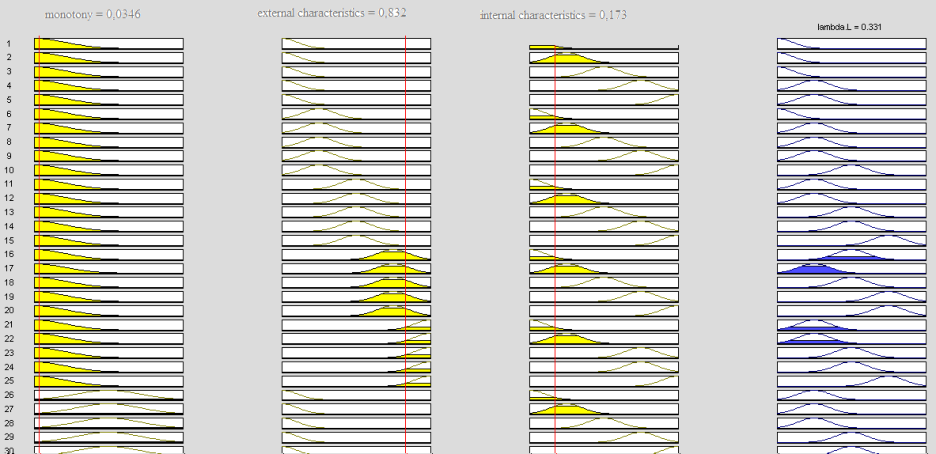
In this part of the article authors present selected simulation results, performed with the use of Mamdani model, regarding the influence of particular features on the intensity of accidents caused by driver’s mistake. The Figure 5 shows an example of visualisation of 29 out of 75 implication rules describing the intensity parameter with assumed values of membership function for monotony, external and internal characteristics.
Figure 5. Visualization of implication rules for simulation λL
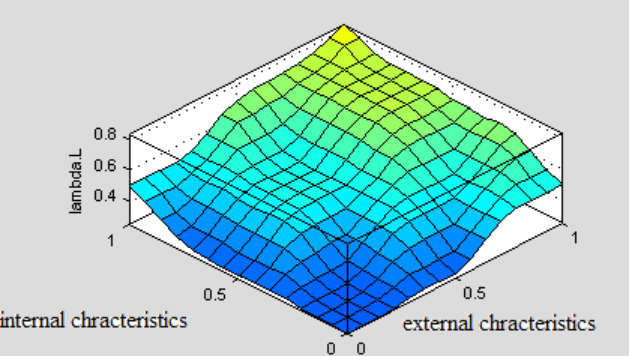
In this case the intensity of accidents caused by driver’s mistake was 0,331 (the standard score). The Figure 6 presents the intensity of accidents depending on external and internal characteristics. The shape of the created surface indicates that internal characteristics have more impact on the intensity level λL than the external ones.
Figure 6. Simulation results for intensity of accidents caused by human mistake depending on external and internal characteristics.
Similar simulations were performed for the remaining models. The heuristic model allows to carry out various experiments and estimate the intensity of accidents caused by human factor. Modelling and computer simulations constitute effective research tools to determine existing relations within the DVE system. Estimation of the parameter λL is a component of the risk assessment model, which allows to generate the probability of an accident in transportation of hazardous goods.
CONCLUSIONS
Hazardous materials constitute an important sector of transportation market and they are indispensable for the functioning of industry and urban agglomerations. The transport of hazardous goods poses a potential threat to human, road and environmental safety, regardless of the mean of transportation used for that purpose. Therefore, actions aimed at reducing the risk mentioned are becoming of key importance. However, it should be mentioned that even the most tightened legal requirements related to transport of hazardous goods might prove little effective if they are not accompanied by the risk assessment that takes into account human factor as a main cause of road accidents. That is why the authors of the article have made an attempt to create human-driver subsystem. This model has been based on heuristic techniques, which enable the description of qualitative relationships. The model has been built upon authors’ own research, used for selection of bothersome features of driver’s workplace. Those features have constituted an input for creation of linguistic model. Simulation results allow to determine the influence of particular characteristics on the intensity of accidents caused by driver’s mistake. Additionally, they allow to identify various interdependences between individual features. Carrying out such a researches and computer experiments gives great cognitive abilities and can be an effective tool for studying connections within the DVE system. It is not always possible to carry out researches in real life conditions – it depends on financial resources and organizational capabilities. It shouldn’t be forgotten that carrying out research involving human subjects has a limited scope and constitutes a very difficult task. The resulting parameters have been applied to the created risk assessment method and have been used as one of the factors determining the probability of an accident in the transport of hazardous materials.
REFERENCES
ADR (2009-2011).:Umowa europejska dotycząca międzynarodowego przewozu towarów niebezpiecznych, Bęczkowska S., Grabarek I. (2010): Analiza czynników warunkujących ergonomiczne warunki pracy i bezpieczeństwo podczas transportu towarów niebezpiecznych. Czasopismo Logistyka 4/2010, Poznań, Bęczkowska S., Grabarek I., Choromański W. (2012): Modelowanie ryzyka w drogowym transporcie towarów niebezpiecznych z
uwzględnieniem czynnika ludzkiego. Monografia „Ergonomia w gospodarce opartej na wiedzy”, Komitet Ergonomii PAN, pp.183-197, Bęczkowska S., Grabarek I. (2012): Czynnik ludzki w ocenie ryzyka w transporcie towarów niebezpiecznych, Technika Transportu Szynowego 09/2012, Łódź, Bęczkowska S., Grabarek I., Choromański W. (2013): Model oceny ryzyka w drogowym transporcie towarów niebezpiecznych –
wybrane zagadnienia. Prace Naukowe Politechniki Warszawskiej, Vol. 97, Łuczak A. (1998): Wymagania psychologiczne w doborze osób do zawodów trudnych i niebezpiecznych. CIOP, Warszawa, Główny Urząd Statystyczny( 2010), Gronowicz J. (2004): Ochrona środowiska w transporcie lądowym. Biblioteka problemów eksploatacji, Wyd. IteE, Poznań- Radom, Jamroz K.( 2012): Analiza wpływu zmęczenia kierowców na ryzyko wypadków na drogach krajowych, Gdańsk. Krajowy Program Bezpieczeństwa Ruchu Drogowego na lata 2005 – 2007 - 2013 “GAMBIT 2005”. Ministerstwo Infrastruktury,
Warszawa 2005, Michalik J.S., Gajek A., Grzegorczyk K., Gredecki S., Piękniewski M., Słomka L., Janik P., Dziwulski D., Zając S.(2008): Opracowanie programów zarządzania ryzykiem związanym z transportem drogowym niebezpiecznych chemikaliów. Określenie kryteriów oceny zagrożeń oraz wymagań dotyczących transportu drogowego substancji i materiałów niebezpiecznych w Polsce w kontekście przeciwdziałania katastrofom chemicznym w transporcie tych materiałów, z uwzględnieniem rozwiązań zastosowanych w niektórych państwach. Centralny Instytut Ochrony Pracy – Państwowy Instytut Badawczy, Warszawa, Radkowski S.( 2003):Podstawy bezpiecznej techniki. Oficyna Wydawnicza Politechniki Warszawskiej. Szopa T.(2009): Niezawodność i bezpieczeństwo. Oficyna Wydawnicza Politechniki Warszawskiej. www.straz.gov.pl
LISTED IN THE AHFE DIGITAL BOOKSTORE CATALOGUE
Explore the complete digital volume
Advances in Physical Ergonomics and Human Factors: Part I
Read this individual research paper free through the original publisher, or explore the full digital proceedings book.
ISBN 978-1-4951-2104-3
Explore this ISBN in the AHFE Bookstore ↗Listed in the July 2026 bookstore catalogue; search by ISBN to confirm current availability · Digital book purchase optional