Alan Hedge (2018). Effects of Personalized Environmental Control (PEC) on User Comfort, Health and Typing Performance. In: Advances in Physical Ergonomics and Human Factors: Part I. AHFE Open Access, vol. 1. https://doi.org/10.54941/10012
Result are presented for an experiments investigating the effects of the personal control of the thermal micro-environment on typing performance and environmental comfort ratings. Twelve participants performed typing tasks for two 2 hours sessions in individual cubicles, each with its own air handling module, in a climate controlled laboratory. For each session the initial thermal condition was an air temperature of 26.7°C. Cubicles were paired. For each session half of the participants were able to control air temperature using a custom designed software interface, while the others experienced identical thermal conditions without control and the order of having no control/control was counterbalanced. Results showed a small but significant difference in cubicle air temperature among cubicles (p = 0.000) and an effect of time-of-day on cubicle air temperature (p = 0.035) - the mean temperature was slightly higher in the morning session (26.2°C) than the afternoon session (26.0°C). Cubicle air temperature was significantly positively correlated with ratings of air temperature (p = 0.000) and negatively correlated with ratings of air freshness (p=0.000), and air movement (p=0.000) There was a significant effect of personal control on ratings of overall air movement (p=0.042). There was no significant effect of personal control on cubicle temperature, or ratings of thermal comfort, health symptoms, effort and alertness, or on typing performance. Implications of the study will be discussed.
The conventional design of an HVAC system in a large office building provides a ventilation supply that is based on the average requirements of the building occupants. This approach has been described as a “one size fits all” approach to building ventilation (Ari et al., 2007). However, there are numerous sources of individual differences due to the occupants themselves, including differences in body size, clothing insulation, diurnal rhythms (morning vs evening type of person), chemical sensitivities, atopic status, physical and mental activity level, and personal preferences. For example, Melikov et al. (1994) showed that preferences for air movement can differ by more than four times. Even if all occupants were identical, ventilation requirements would still vary in a large building because of differences in workstation cubicles, such as differences in location (near windows, walls, elevator shafts, stairwells, photocopiers, ventilation supply diffusers etc.), cubicle partitions (number, height and arrangement), task equipment (desktop vs laptop personal computers, laser vs inkjet printers, etc.), and surface materials (carpet, linoleum, vinyl tile, wood etc.). For these reasons there has been considerable interest in the possibility of designing ventilation systems that provide personally controllable microenvironmental conditions to each occupant. Ari et al. (2007) refer to this possibility as “have it your way” ventilation system design and this work has shown that theoretically such a system can be designed without creating any major energy or control issues for the HVAC system.
Interest in the potential benefits of providing individually controlled cubicle ventilation spans almost two decades. In the late 1980s and early 1990s much of this interest focused on the use of a task ambient underfloor ventilation systems (Sodec & Craig, 1990). By the early 1990s there were several buildings in North America that had an underfloor task air system that used a zero pressure plenum with individual floor tile modules that could be personally controlled by opening or closing a damper and by rotating each of 4 circular supply diffusers. A survey of the facilities managers in 6 of these buildings and of 151 office workers in 3 of these buildings found that the facilities managers said that they now received fewer IAQ complaints from occupants than when they were in a conventionally ventilated office building, and over two-thirds of office workers said that compared with their experiences of conventional HVAC systems the task air ventilation system provides easy ventilation control, better ventilation and better comfort (Hedge et al., 1993). Office workers cited the ability to control ventilation as being the main benefit of the task air ventilation system (ibid). A laboratory study of this type of task air system found that when the supply from two floor units was directed towards the occupant this reduced age of air in the breathing zone by up to 40% (Faulkener et al.,1995). However, in this design the occupant can control the velocity and direction of the supply air but not the fresh air mix of the supply air. If the occupant directs the diffusers away from their cubicle there may be no benefit to the local IAQ. Also, there is no additional localized air filtration in the terminal unit. This design also has the disadvantage that it cannot easily be retrofitted into an existing building.
Another design that has been tested, termed “breathing zone filtration” (BZF), uses a module that houses a fan and a 3 stage filter unit (coarse pre-filter, activated charcoal coated filter to remove VOCs, and a HEPA filter). With the size of module required for the volume of cubicle air this design works best when quad, penta or hexagonal radial desk arrangements around the BZF core. Air is drawn into the BZF unit at desk surface level, filtered, then delivered at low velocity back to the occupied space above seated head height, supposedly to create an “umbrella of fresh air”. An extensive field study measured the effects of a BZF design on a whole floor of office furniture and quantified the changes in IAQ and in occupant responses (Hedge et al., 1993a,b; 1994). The BZF system decreased level of respirable particulates (PM 2.5) and total volatile organics (TVOCs), as well as significantly decreasing sick building syndrome (SBS) symptoms, improving perceived air quality and improving self-reported productivity (ibid.). Compared with the underfloor task air system, the advantages of a BZF system are that it filters the air, it does not require any connection to a ventilation system, and it can easily be retrofitted to any space when the furniture is replaced. The disadvantage is while it provides cleaner air to each pod of workstations it does not really allow for individual control of ventilation and it provides no control of the mix of fresh air in the supply air.
Other designs of personalized ventilation systems have been tested that overcome some of the limitations of both the underfloor task air system and the BZF system. In one design, termed the personal environment module (PEM), a supply air terminal device (ATD) is suspended beneath each cubicle worksurface. The PEM ATD contains a fan and filter arrangement and supplies air via small ducts to two small nozzles placed on the desk. Supply air is delivered to the PEM either by flexible ducting running between office partitions or via an underfloor ventilation system. The two nozzles can be placed in a variety of orientations on the worksurface, such as at the back corners to generate two symmetrical jets towards the occupant, or at the front desk edge generating two jets, one that can be directed toward the occupant’s body and the other can be directed away from the occupant to improve local air mixing through turbulence. Several laboratory tests have confirmed that this design has the potential to improve the inhaled air quality by filtering out and diluting pollutants that otherwise would have been in the inhaled air and to optimize local IAQ conditions (Sodec & Craig, 1990; Arens et al., 1991; Bauman et al., 1997; Faulkner et al., 1993, 1999, 2004; Tsuzuki et al., 1999; Melikov et al., 2002; Cermak & Melikov, 2003). An early field study tested the effects of the PEM units installed in a newly constructed insurance office (West Bend Mutual Insurance) and found that the provision of individual control of microenvironmental conditions increased employee productivity by approximately 3% (Kroner et al., 1992; Kroner & Stark-Martin, 1992). Installing Personal Environmental Modules (PEMs) at 42 selected workstations in three Bank of America office buildings in San Francisco was shown to increased overall occupant satisfaction with thermal comfort, and air quality (Bauman et al., 1997). The advantages of the PEM system are that it allows each occupant to control the airflow velocity and the direction of airflow and the air has been locally filtered, but the system does not allow for any control of the outdoor air mix in the supply air, and the system is expensive.
Yet other designs of personalized ventilation systems have been developed worldwide. A comparative laboratory study of two task/ambient air conditioning systems (Climadesk from Sweden and the PEM from the USA), both of which supply air from desk-mounted air outlets, showed that both systems can improve ventilation and air quality and save energy while maintaining acceptable indoor air quality at the breathing zone (Faulkener et al., 1994). Potential issues with the PEM design have been discussed above. The Climadesk system works best when this can be directly connected to the outdoors, which seldom is possible in deep-plan US office buildings.
The design and positioning of the ATD, and its air flow rate (typically from less than 5 l s-1 up to 20 l s-1) have been shown to affect the amount of inhaled clean personalized air available to the occupant (Melikov, 2002). To date most ATDs have not been able to exceed 50–60% of clean air for each occupant inhalation, although high efficiency ATDs capable of providing almost 100% clean and cool personalized air in each inhalation have been developed, which makes it possible to increase the ventilation effectiveness at least 20 fold compared with traditional mixing ventilation (ibid). However, the impact of such systems in a field setting remains to be established. Recent research has shown that activated carbon filters placed downstream of particle filters and the stand-alone bag filter with activated carbon filters produced the best perceived IAQ, but that all filters negatively affected IAQ after five months of use (Bekö et al., 2008). Those ATDs that incorporate a localized filter system will need to have the filters changed on a regular schedule otherwise there is the potential for these air cleaning devices to become pollution sources.
A personal Environmental Control system (PECS) provides users with “have it your way” control of their indoor environmental conditions (Ari et al., 2007). The success of any PECS will depend on how well users can detect undesirable conditions and rectify these using the controls provided. Personal control (PC) is the behavioral act that corrects for homeostatic deviations from comfortable conditions. PC can take many forms, e.g. if users feel too cold they might turn on a heater, raise a thermostat setting; light a fire; request to close window; don additional clothing and/or seek better shelter.
PC can be a reactive response to uncomfortable conditions and exercised before physiological thermoregulatory processes are activated, e.g. donning warmer clothes before becoming cold enough to initiate shivering. PC can be proactive and compensate for anticipated undesirable conditions (e.g. donning warmer clothing before entering a cold environment). PC can be real or perceived where users believe they can regulate exposure to undesirable conditions, even if they never exercise this control.
Perceived PC can exert a powerful effect. In a series of noise exposure studies in which participants believed that they could terminate an annoying loud noise but were asked to try not to do this (and most complied, and all were unaware that they could not actually terminate the noise) the stressful aftereffects of noise exposure were diminished for those who believed that they had PC (Glass & Singer, 1972). If users have real PC they also have perceived PC, but not vice versa. Thus, an optimal PECS design is one that provides real PC to regulate prevailing conditions to meet homeostatic requirements.
Research on the effects of providing PC of environmental conditions is in its infancy. Although there is some evidence that PC of the IAQ and thermal conditions beneficially affects productivity, comfort and health (e.g. Kroner & Stark-Martin, 1992), to date the research has not systematically investigated these effects. We have little information on the triggers for exercising PC or the pattern of exercise of PC over time? We do not know how much of any beneficial effect of PC is due to perceived PC and how much is due to real PC (i.e. behaviors that produce changes in the conditions). If a heating, ventilating and air-conditioning (HVAC) system is able to maintain comfortable IEQ then PC should never be exercised by occupants. If an HVAC system mimics that pattern of exercise of PC will this produce the same effects for users, or is the perceived PC also required? To date very little information has been gathered on these questions. Similarly, the magnitude of the JNDDs for either thermal or IAQ conditions is unknown? Nor do we know the effects of varying the system lag on the exercise of real PC.
There are engineering challenges associated with creating an effective personal environmental control system (PECS) for an office workplace, but these efforts will be worthwhile if there is good evidence that the use of a PECS results in better perceived IAQ, better health and better work performance. Studies of a furniture-integrated BZF, personal air filtration system in real-world offices have shown significant improvements in local IAQ, reductions in reports of sick building syndrome (SBS) symptoms and also improvements in self-reports of office productivity, although objective occupant performance measures were not taken (Hedge et al., 1993a,b; 1994). A field study of the use of PEM units has shown a 3% productivity increase, although IAQ conditions were not measured (Kroner et al., 1992; Kroner & Stark-Martin, 1992). It has been suggested that providing individual employees with the ability to control the temperature at their desk by a range of ±3°C might increase personal productivity by some 3% for mental and skilled work and by up to 7% for repetitive manual tasks such as typing (Menzies & Bourbeau, 1997). Supplying outdoor air via a PECS at 20°C has been shown to significantly improve task performance, perceived air quality, and the ability to think and concentrate, as well as decreasing SBS symptoms, especially complaints of headache (Kaczmarczyk et al., 2002). Personal control may exert powerful effects because individual differences in personal microclimate preferences and temperament can strongly influence perceived environmental conditions, comfort and performance (Rohles, 2007). Together these results, if validated, suggest that providing a PECS could have a large impact on the productivity of organizations, as well as the health, comfort and performance of workers.
All PECS designs can only be effective if the occupant choose to actually use their ability to control some aspect of ventilation. But how and why do occupants choose to exercise control? None of the studies of different PECS designs seem to have documented the occupants pattern of control use or documented what prompts an occupant to actually exercise control? People are homeostatic systems and presumably a person will use a PECS control when ambient conditions are noticeably different to the conditions desired by the body. For thermoregulation this means that an occupant is likely to request more heat when their body feels cold and request more cooling when their body feels too warm. Investigation of the just noticeable difference (JND) for thermal sensation shows that when the adapted skin temperature is low at 28°C then the JND for sensing warmth is ~1°C whereas the JND for a further cool sensation is ~0.2°C, however, when the adapted skin temperature is high at 40°C then the reverse is true, and furthermore the JND changes as a function of changes in the rate of warming or cooling (Lee et al., 1998). From this work, when the skin is in a thermally neutral state then changes in ambient room temperature >0.8°C will exceed the JND and once this happens then the person may choose to operate control of a PECS to either warm or cool the ambient conditions. The more frequently the ambient conditions fluctuate >± 0.8°C the more frequently the person will operate the PECS control. For IAQ the situation will be more complex because unlike air temperature, many pollutants cannot be sensed and for those that can be sensed (e.g. many VOCs) the odor thresholds are known for some substances but the JND values are unknown. When the concentrations of indoor pollutants are low then a person is unlikely to operate a PECS control, but when these concentrations exceed some level and create a sense of poor IAQ then the PECS control will be operated, but at what point this occurs is unknown.
An experiment was undertaken to determine whether personal control of environmental conditions (air temperature and air movement) resulted in an improvement in ratings of thermal conditions and an improvement in the amount of work (typing) that was performed. In most of the literature on the benefits of a personal environment system, the research design has not differentiated between the impact of personal control as a psychological factor and the effect of the different environmental conditions experienced by a person who uses personal control compared to someone who is in an uncontrolled environment. Consequently, a study was designed that allowed the availability of personal control to be tested separately from the effects of different environmental conditions. This was achieved by pairing the test settings but only providing one participant with the ability to physically control conditions while the past participants passively experience the same conditions.
EXPERIMENTAL METHODS Participants
Twelve people voluntarily participated in this experiment: 6 men and 6 women. Participants were naïve to the purpose of the study. Participants were recruited by posters placed around the Syracuse University campus and they were paid $100 for their day in the laboratory.
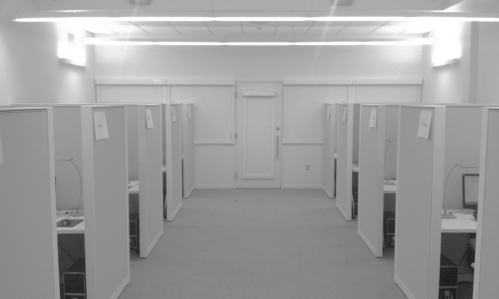
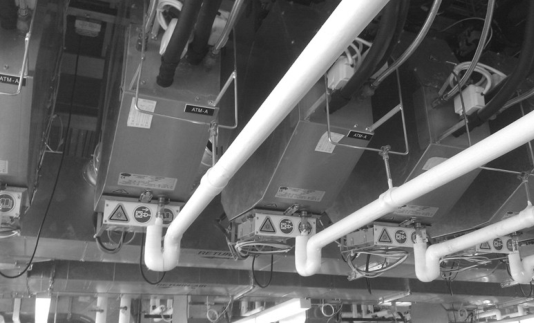
Research Site This study was conducted in Suite A (Room 503) of the Carrier Total Indoor Environmental Quality (TIEQ) laboratories in the Center of Excellence for Energy and Environmental Systems (CoE) at Syracuse University (Figures 1). The laboratory (~10.6 m long x ~6.5 m wide) has 12 cubicles (Figure 2.2), each ~3.2 m2 with acoustic partitions (~1.7 m tall x 1m wide) on 3 sides and an unrestricted entryway (~0.8 m wide). Each cubicle workstation has a task chair (Herman Miller Celle), worksurface (~1.8 m wide x ~0.7 m deep x ~0.8 high), personal computer (LG WHQL-1D with ~0.5 m screen and Microsoft keyboard and mouse), a return (~0.9 m long x ~0.6 m deep x ~0.7 m high) beneath which sits a 2 drawer pedestal file storage unit. Each cubicle has its own floor-mounted, turbulent mixing type supply air diffuser (20 cm diameter), approximately centrally located and behind the chair (Figure 2) and air was provided to each cubicle by individual Air Treatment Modules (ATMs – Carrier Corporation) located one floor below the TIEQ laboratory (Figure 3), with the conditioned air ducted to the laboratory cubicles through an under floor plenum.
Figure 1. Interior of the TIEQ Laboratory. Figure 2. A TIEQ cubicle workstation.Figure 3. Individual ATMs for each TIEQ cubicle workstation.
Each ATM contains a fan unit, heat exchanger with hot/cold water connections, a UV filter, and control module, and is capable of supplying controlled amounts of conditioned air to a conjugate cubicle. Outside air is first conditioned in an air handling unit (AHU) prior to being fed to the individual ATM’s. Return air to the cubicles is exhausted from a return vent located approximately 2.7 m high in the North West corner the TIEQ laboratory.
When under automated control, as in this study, the ATM fan speed and supply air temperature is dictated by the control unit by the temperature set point in the cubicle. The cubicle temperature is measured by a sensor (Carrier Maestro Controller ) located on the front wall of each cubicle. This also serves as the thermostat for each ATM. When the set point is changed to a value different from the cubicle air temperature, the fan speed is increased to supply the air flow and the hot/cold water valves are opened to change air temperature as required to change the cubicle air temperature. These units are capable of supplying airflow ranging from 16.5 – 70.8 liters per second and providing supply air temperatures as low as 12.7°C during cooling.
Indoor Environment Measures Heating, Ventilating and Air Conditioning (HVAC) control software (Carrier i-Vu) monitored and recorded fan speed, air flow rate, % outside air, cubicle set point, cubicle temperature, hot and cold water valve positions, and outdoor air temperature for each individual ATM and cubicle at one minute intervals. Cubicle supply air temperature was measured with a T-type thermocouple in the under floor ducting, no further than 3.3 m from the supply air diffuser, which was wired to a voltage based National Instruments data acquisition system. Software (Lab View) running on a laptop computer (Toshiba Satellite A15-S127) was used to view and record the supply air data. The thermocouples were tested in a Sub-Zero test chamber with known air temperature. A linear curve for each thermocouple was fit to relate the temperature measured by the thermocouples to the known chamber temperature. This calibration curve was input into Lab View software to ensure accurate readings. Air temperature was measured at one minute intervals in each cubicle with data loggers (HOBO U12), with an accuracy +/- 0.5°C, placed above each pedestal file cabinet. The data was gathered via a software (HOBOware ) running on a laptop computer (Dell D630). Carbon dioxide (CO2) concentrations were logged at ~ 10 second intervals with a custom sensor (created using a Crossbow MDA-300 digital acquisition board combined with a Siemens QPA2002 CO2 sensor). The CO2 sensor has an accuracy of +/- 50ppm + 2% of the measured value. The sensor was placed on the worksurface adjacent ~1 m from each participant. A Crossbow MIB-520 base station was used to allow the sensors to transmit data wirelessly to a laptop computer (Lenovo Thinkpad T61) running logging software (MOTEVIEW by Crossbow).
Temperature Dashboard The air temperature delivered to each cubicle was controlled by software that presented the user with a graphical user interfaces (GUI’s). The dashboards was designed to control the cubicle set point over a wide temperature range and to provide real time feedback based on the user’s set point decision. The dashboard displayed on the computer in the showed the cubicle number, the cubicle air temperature, a vertical slider of air temperatures, and commit and cancel buttons. The GUI served two purposes: it allowed for the user to control their set point over a wide temperature range not provided by the Maestro Controllers, and also had the ability to provide real time feedback based on the user’s set point decision. The temperature GUI is shown in Figure 2.6, and its position on the computer screen is shown in Figure 4. To change the set point, the user simply moved the slider to the desired temperature. The new temperature set point appeared to the right of the slider, as shown in the figure. To accept the set point change, the user simply needed to click “commit” or they could click “Cancel” to keep their current set point, and the slider reverted back to its original position.
Figure 4. The Temperature dashboard and its operation.
Figure available in the original PDF paper.
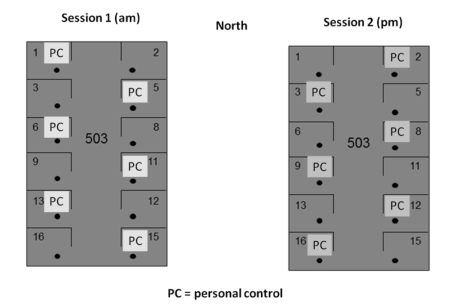
Procedure Each participant spent a total of 4 hours in the TIEQ. A counterbalance design was used that comprise two 2 hour sessions. Paticipants were asked to wear light clothing. Each session had the same initial environmental conditions in the TIEQ and every cubicle had the same setpoint (26.7°C). It was anticipated that this warm temperature would encourage participants to exercise personal control to create more comfortable conditions for themselves in the laboratory. In the first 2 hour session 6 of the participants had personal control of the temperature of their workstation cubicle via a dashboard slider on the computer screen, while the remaining six participants did not have control over environmental conditions and no dashboard was displayed on their computer screen. Cubicles were organized in pairs so that one-person exercising control also directly affected the adjacent cubicle where the individual did not have personal control. As a participant with control changed the temperature in their cubicle, so, unknown to the participant in the adjacent cubicle, the experimenter matched that temperature in the adjacent cubicle where the person did not have personal control. In this way, participants with no control experienced comparable thermal conditions to those with personal control throughout the test session. This allowed for a test of the importance of personal control per se rather than also having the confounding effect of different climate conditions. Following a break for lunch where all participants were in a separate conditioned environment, and all took a tour of the building that was designed to provide similar activity and avoid a "post-lunch dip" all participants returned to the laboratory. In the second 2 hours session those participants who previously had personal control of the temperature now did not have access to this dashboard and it was not on their computer screen, and those who previously had not had any personal control now had access to the dashboard slider on their computer screen. Thus, each participant experienced both a personal control and a no control condition resulting in a complete repeated measures experimental design (Figure 5).
Figure 5. Organization of the morning and afternoon test sessions for the paired cubicles
(1,2;3,5;6,8;9,11;12,13;15,16).
In each of the test sessions each participant typed four different text passages, each lasting 25 min. This copy typing was designed to simulate office work. In between the typing trials, participants rated their comfort and the environmental conditions on a series of scales. At the end of the whole experiment participants also listed the items of clothing that they were wearing so that a clo value could be computed. All ratings and trials were administered via a computer program. In addition to the measures of typing performance (characters typed, words typed, errors made) and answers to the environmental ratings, levels of CO2 were measured with a separate sensor system, cubicle temperature was measured with a HOBO unit as well as a sensor built-in to the cubicle, supply air temperature was measured with a separate temperature probe, performance of the air terminal module was measured by iVU controlling software. The resulting data set comprised measures of environmental comfort and environmental perception, typing performance, and multiple measures ambient conditions (outdoor, indoor, and supply air temperature, relative humidity, carbon dioxide level, frequency of using the dashboard controls, setpoint temperatures that chosen by the participants). The experimental protocol was approved by the Institutional Review Boards of both Cornell University and Syracuse University.
Data Analysis All raw data files were time synchronized and extracted data were entered into a multivariate statistical software package (IBM SPSS v21). The total number of words typed in the 50 minutes period was used to calculate the words per minute. Appropriate analysis of variance models and Pearson correlations were used to analyze the data.
RESULTS
All participants wore similar clothing for the experiment (0.77 ± 0.05 clo).
Environmental Conditions The effects of Time of Day and Personal Environmental Control (PEC) on mean setpoint temperature, the number of changes to the setpoint temperature, mean Outside Air Temperature, mean cubicle %RH, mean cubicle air temperature, mean cubicle CO2, and mean total words typed are shown in Table 1. Participants made an average of 6 changes to the cubicle set point in each session.
Table 1. PC, Cubicle Conditions and Typing Outside Air Temperature %RH Cubicle Air Temperature
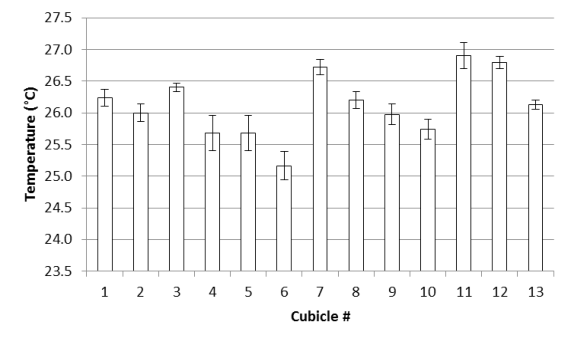
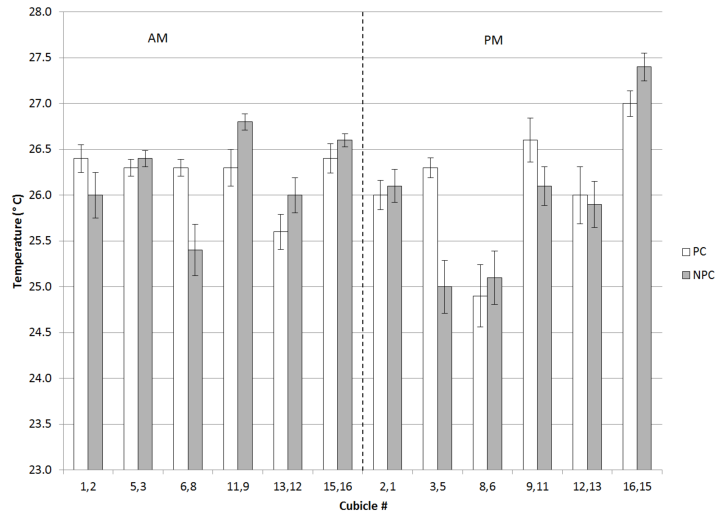
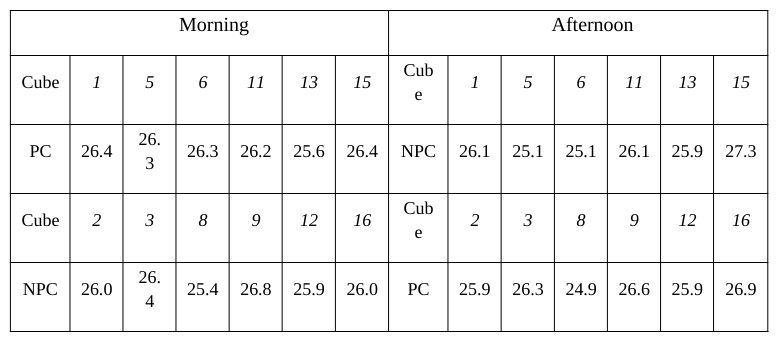
Cubicle Air temperature There was a small but significant difference in cubicle air temperature by cubicle (F10,48 = 14.713, p = 0.000) and this is shown in Figure 6. There was a small but significant effect of time-of-day on cubicle air temperature (F 2,48 = 3.592, p = 0.035) the mean temperature was slightly higher in the morning session (26.2°C) than the afternoon session (26.0°C). There was no significant main effect of personal control and no significant interaction with cubicle or time of day (Figure 7). However, there was still some variability among the cubicles (Table 2). Cubicle air temperature was significantly positively correlated with ratings of air temperature (r = 9.348, p = 0.000) and negatively correlated with ratings of air freshness (r= -0.277, p=0.000) and also air movement (r= -0.208, p=0.000).
Figure 6. Mean cubicle air temperature for the experimental day.
Thermal Comfort There was no significant systematic difference in rated thermal comfort ratings between those sessions with personal control and the coupled no-control cubicles (PC = 59.5mm; NPC = 56.6mm).
Figure 7. Mean cubicle air temperature by time-of-day and personal control status
(PC = personal control; NPC = no PC)
Table 2. Cubicle space temperature (°C) for cubicles with personal control (PC) and without personal control (NPC) for the morning and afternoon sessions.
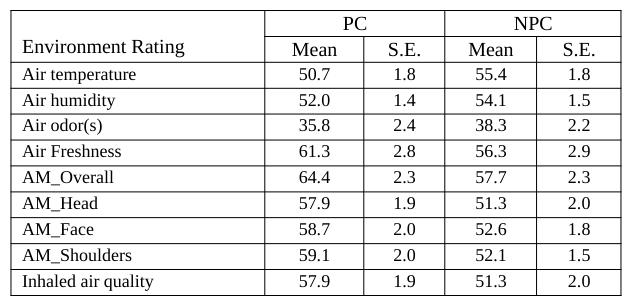
Environmental Ratings There was a significant difference in self-ratings of overall air movement between the use of PC (64.4mm) and NPC (57.6mm) (p=0.042) but no other differences in air movement ratings at the head, face or shoulder, or air quality were significant (see Table 3).
Typing Performance
There was no significant difference between PC and NPC in total words typed (PC=1005.2±41.1 words; NPC=1036.1±44.3). There was no significant effect of gender on the total words typed (men = 1021.8±51.5; women = 1018.9±31.6). There was no significant effect of time-of-day on total words typed (morning session = 1036.7± 43.1; afternoon session = 1004.7± 42.2). The number of setpoint changes made by Ps was not significantly correlated with typing performance.
Table 3. Environmental conditions and air movement (AM) by personal control status (100mm scale)
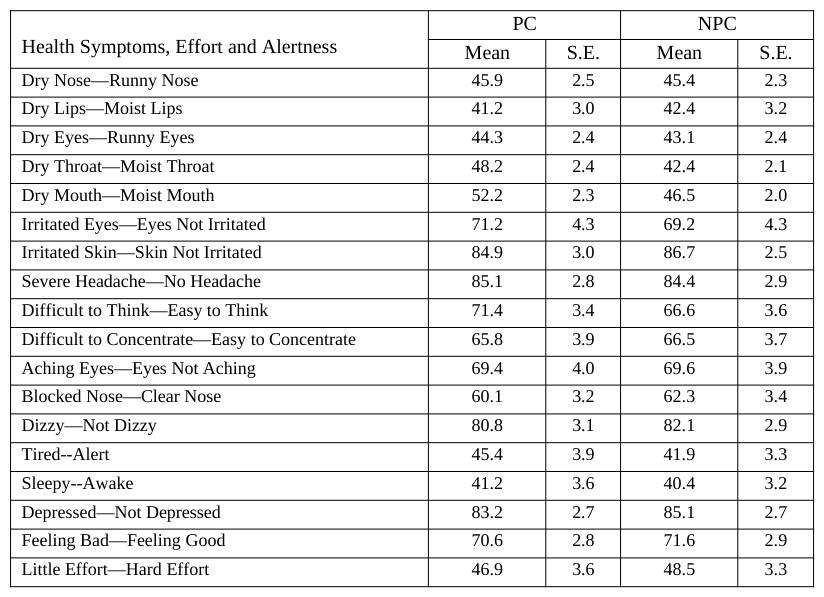
Health Symptoms, Effort and Alertness Ratings There were no significant differences between PC and NPC conditions health symptoms, effort and alertness (Table 4).
Table 4. Ratings of Health Symptoms, Effort and Alertness by personal control status (100mm scale)
DISCUSSION
Previous research on the use of PECS has found that this results in improvements in measures of productivity (Kroner et al., 1992; Kroner & Stark-Martin, 1992, Menzies & Bourbeau, 1997, Kaczmarczyk et al., 2002) and improvements in perceived air quality and SBS symptoms, especially headaches (Kaczmarczyk et al., 2002). It has been argued that personal control may exert these powerful effects by allowing personalization of microclimate preferences (Rohles, 2007). However, in these studies the availability of personal control, which is a psychological factor know to impact stress responses (e.g. Glass and Singer, 1972), has been confounded with the variations in climate conditions arising from the exercise of that personal control. The results of the present study disentangled these confounding variables by allowing one person to exercise control of their microclimate conditions while simultaneously exposing another person without control to those same conditions. Any differences between such pairs of participants are a measure of the effect of personal control per se, rather than a measure of the effects of variations in microclimate conditions. The results showed that the exercise of personal control did not result in any statistically significant effects. These results strongly suggest that reports of the benefits of PECS arise from the variations in the microclimates rather than from the ability to exercise personal control. This opens the possibility of designed automated HVAC systems that learn personal preferences and then automatically provide these to occupants without the occupants having to physically exercise control. This possibility exists in the Personal Environments system from Johnson Controls, but as yet this system has not gained wide acceptance.
In the present experiment all participants entered the laboratory at a temperature of 26.6°C and it was anticipated that they would immediately seek to cool this to a temperature in the range of 21.1-22.2°C, but mostly this did not happen and participants instead chose temperatures around 25°C. This result was not a consequence of the latency of response of the laboratory ATMs to cooling demands but rather reflects user preferences for warmer temperatures in this study, perhaps because of the low relative humidity at the time of the study.
There are however, several limitations with this study. Participants were exposed to the laboratory climate conditions for only 4 hours in total, which may not be a sufficiently long time to see preference and performance effects. Although it was at the capacity of the laboratory, the sample size was comparatively small. The study was conducted at a time of year when the relative humidity was quite low, and this may have influenced thermal preferences.
CONCLUSIONS
This study did not find any significant effects of having and exercising personal control over the temperature on ratings of thermal comfort or health, or on typing performance when results were compared to those experiencing the same environmental conditions but without personal control. Results suggest that the previously reported beneficial effects of personal environmental control arose from changes in the actual physical environment rather than the psychological phenomenon of personal control. This raises the possibility of designing automated systems that better simulate the changes in thermal conditions that a user would select.
ACKNOWLEDGEMENTS
The research was supported by a grant from the US Department of Energy (DE-EE0002121) administered by the Syracuse University Center of Excellence. I gratefully acknowledge the assistance of Vijay Ramakrishnan at Syracuse University with development of the GUI and Daniel J. Rice at Syracuse University with the development of the task software. I thank Professor H. Ezzat Khalifa at Syracuse University for assistance with designing the study. I am extremely grateful to Brian Granetz and Jinjing “Sabrina” Wang at Syracuse University and Timothy Bromm, Jordan Licero, Jonathan Roth, Ji Hi “Sarah” Han, and Professor Ying Hua at Cornell University for their assistance with literature compilation, the running of the experiments and assistance with data compilation.
REFERENCES
Arens, E.A., Bauman, F.S., Johnson, L.P.and Zhang, H. (1991) Testing of localized ventilation systems in a new controlled environmental chamber, Indoor Air, 3, 263–281. Ari, S., Cosden, I.A., Khalifa, H.E., Dannenhoffer, J.F., Wilcoxen, P. and Isik, C. (2007) Individual Thermal
Comfort and Energy Optimization, Proceedings of CLIMA 2007, Helsinki, Finland, on CD-ROM Bauman, F., Baughman, A., Carter, G. & Arens, E. (1997) A field study of PEM (Personal Environment Module) performance in Bank of America’s San Francisco office buildings, Final Report, April. Retrieved 10/26/08 from http://www.cbe.berkeley.edu/research/publications.htm Bauman, F.S., Carter, T.G., Baughman, A.V. and Arens, E.A. (1998) Field study of the impact of a desktop task/ambient conditioning system in office buildings, ASHRAE Transactions, 104, 1153–1171. Bekö, G. , Clausen, G. and Weschler, C. J. (2008) Sensory Pollution from Bag Filters, Carbon Filters and
Combinations, Indoor Air, 18(1), 27-36. Cermak, R. and Melikov, A.K. (2003) Performance of Personalised Ventilation in a Room with an Underfloor Air Distribution System, Proceedings of Healthy Building 2003, Singapore, 2, 486–491. Faulkner, D., Fisk, W.J. and Sullivan, D.P.(1993) Indoor airflow and pollutant removal in a room with desktop
ventilation, ASHRAE Transactions, 99,750–758. Faulkner, D., W.J. Fisk, and D.P. Sullivan (1995) Indoor air flow and pollutant removal in a room with floor-based task ventilation: results of additional experiments. Building and Environment, 30(3), 323-332. Faulkner, D., Fisk, W.J., Sullivan, D.P. and D.P. Wyon (1999) Ventilation Efficiencies of Desk-Mounted
Task/Ambient Conditioning Systems, Indoor Air, 9(4), 273-281. Glass, D.C. & J.E. Singer (1972) Urban stress: Experiments on Noise and Social Stressors, New York, Academic Press. Hedge, A., Michael, A.T., and Parmelee, S.L. (1993) Reactions of facilities managers and office workers to
underfloor task air ventilation, J. Architectural and Planning Research, 10, 203-218. Hedge, A., Mitchell, G.E., McCarthy, J., Ludwig, J. & Wilkes, A.(1993a) Effects of a furniture-integrated breathingzone filtration system upon indoor air quality and health, CLIMA 2000, London, England, Nov. 1-3, 72-73 (Abstract). Paper on conference CD-ROM Hedge, A., Mitchell, G.E. & McCarthy, J. (1993b) Effects of a furniture-integrated breathing-zone filtration system
on indoor air quality, sick building syndrome, productivity, and absenteeism, Indoor Air, 3(4), 328-336. Kaczmarczyk, J., Zeng, Q., Melikov, A. & Fanger, P.O. (2002). The effect of a personalized ventilation system on air quality prediction, SBS symptoms, and occupant's performance. Proceedings of Indoor Air 2002, Monterey, 1042-1047. Kroner, W., Stark-Martin, J.A. & Willemain, T. (1992) Rensselaer’s West Bend Mutual Study: Using Advanced
Office Technology to Increase Productivity, The Center for Architectural Research, Troy, NY. Kroner, W.M. & Stark-Martin, J.A. (1992) Environmentally responsive workstations and office worker productivity.
In Proceedings of Indoor Environment and Productivity, June 23–26, Baltimore, MD, H. Levin (Ed.), Atlanta, GA, ASHRAE. Melikov, A., Cermak, R. and Mayer, M. (2002) Personalized ventilation: Evaluation of different air terminal devices, Energy and Buildings, 34, 829–836. Menzies, D. and Bourbeau, J. (1997) Building related illness, New England Journal of Medicine, 337(21), 1524-
1531. Rohles, F.J. (2007) Temperature & temperament: A psychologist looks at comfort, ASHRAE Journal, February, 14-
19. Sodec, F. and Craig, R. (1990) The underfloor air supply system – The European experience, ASHRAE Transactions, 96, 690–694. Tsuzuki, K., Arens, E.A., Bauman, F.S. and Wyon, D.P. (1999) Individual thermal comfort control with desk-
mounted and floor-mounted task/ambient conditioning (TAC) systems. In: Proceedings of Indoor Air, Edinburgh, 2, 368–373. van Elburg, H. (2009) Smart metering and in-home energy feedback; enabling a low carbon life style. In ECEEE Summer Study.
LISTED IN THE AHFE DIGITAL BOOKSTORE CATALOGUE
Explore the complete digital volume
Advances in Physical Ergonomics and Human Factors: Part I
Read this individual research paper free through the original publisher, or explore the full digital proceedings book.
ISBN 978-1-4951-2104-3
Explore this ISBN in the AHFE Bookstore ↗Listed in the July 2026 bookstore catalogue; search by ISBN to confirm current availability · Digital book purchase optional