Ziyi Yu, Fang Liu (2022). Comparative Study on Implicit Guidance in Game Design. In: Intelligent Human Systems Integration (IHSI 2022): Integrating People and Intelligent Systems. AHFE Open Access, vol. 22. https://doi.org/10.54941/ahfe1001051
As mobile phones become more common among players of all ages, the popularity of mobile games is also increasing, and players’ experience is of-ten influenced by the explicit and implicit guidance of the game. The use of direct tutorials in modern mainstream mobile games makes the experience less enjoyable. This study aims to conduct a comparative study by building game samples of implicit and explicit versions of game guidance, collecting players’ test data to explore the influence of different levels of guidance on players’ sense of experience, and analyzing and comparing the differences and connections between implicit guidance in game design. The study sup-ports three main findings. First, players prefer implicit guidance because it is fun. Second, different levels of game guidance have significant applicability to other players. For advanced gamers, the tutorial has relatively little im-pact. Third, in the context of complex game teaching, explicit guidance may be more effective.
Intelligent Human Systems Integration (IHSI 2022): Integrating People and Intelligent Systems https://openaccess.cms-conferences.org/#/publications/book/978-1-7923-8988-7
INTRODUCTION
With the rapid upgrading of smartphones’ hardware and system software, the complexity of mobile game design is gradually increasing, and the differences between mobile games and computer games are gradually decreasing (Korhonen et al. 2006). In the current mobile game market, single-mode games are gradually replaced by multi-mode games, and players’ requirements and expectations for mobile games are also increasing. With the increasing complexity of games and the variety of game modes, the de-mand for tutorials seems to be growing, especially for the unskilled. However, the reinforcement of the game guide may also reduce the fun of the game and the player’s experience, leading to negative emotions such as fatigue and boredom. Games as a form of art are highly interactive, communication between the game designer and the player. By studying game coaching design, we can explore the role of game coaching in game design and its applicability to players, the possibility of effectively conveying gameplay, and alleviating players’ boredom, which is of great significance to digital media research.
Implicit game coaching is a discovery in game design, though it has been around for decades. The designers found that the 1985 game (Super Mario Bros., 1985) used a series of subtle designs to teach the player how to play without noticing that it was just a tutorial (Lyer et al. 2021). As one of the first parkour games, Super Mario Bros had a relatively complete game design architecture. In addition to the basic game operations such as direction control, jumping, acceleration, and run-up, there are also some special effects created by advanced players with great game technologies and some skills developed by using game bugs, which are essential expressions of players’ active exploration of game mechanisms. Players actively explore the hidden factors in the game to meet players’ demands for fun. Some good experiences of players without unexpected design harvest inspired the application direction of implicit guidance in game design for game designers.
In contrast, modern mainstream games seem to focus on providing players with clear and specific directions. While a detailed tutorial can help players learn the game quickly, a growing number of players feel that this design reduces their ability to explore the game, and they want to be free from the negative constraints of explicit guidance. According to (Hedges et al. 2021), guides that “do not feel like tutorials” are more attractive to players. This suggests that the use of implicit tutorials in games may be an effective solution to the problem of explicit tutorial boredom. To further discuss whether implicit tutorials are more effective, this study designed two versions of the game with detailed tutorial and implicit tutorial according to variables extracted from different players, such as age, level of awareness of the game, and ability to operate the game. In further research, the feedback provided by players for the two versions of the game was compared in-depth, and four hypotheses were analyzed based on the results.
Intelligent Human Systems Integration (IHSI 2022): Integrating People and Intelligent Systems https://openaccess.cms-conferences.org/#/publications/book/978-1-7923-8988-7
LITERATURE REVIEW
The role of tutorials in video games has been discussed in several existing studies. (Passalacqua et al. 2020) found that tutorials can encourage unskilled players to continue playing mobile games with simple gameplay. (Andersen et al. 2012) argue that tutorials are more critical for complex games and closely related to the game environment. They also mention that players should be allowed to experiment freely with game interfaces, which is consistent with (Hedges et al. 2021). According to Hedges, players prefer safe, prepared, skippable, free tutorials to tutorials. All these works discuss potential ways to improve the effectiveness of game coaching, but none of them begins their research by designing specific sample games, which means that the games studied in these works may lack a focus on coaching design.
This study integrated the existing research content and put forward four main ideas about implicit guidance in the hypothesis.
1. Implicit guidance is more fun than explicit guidance, and games with implicit guidance are considered more fun by players.
2. The difference between the enjoyment of the game and the helpfulness of the tutorial is more significant among players with higher game ability.
3. Players who reported the guidelines as helpful tended to score higher than those who reported the guidelines as unhelpful.
4. There is a positive correlation between players’ game ability and their acceptance of implicit guidance.
METHODOLOGY
Sample Game Design In the early stage of game sample design, the gameplay, vision, and guidance of the game sample are the three main parts of the research. Game architecture is based on the MDA game design framework, which (Wigdor et al. 2011) believe is an effective model to help game designers master the flow of gamification. The MDA model divides the game experience process of players into three parts: rules, system, and fun, which correspond to the mechanism, dynamics, and aesthetics in the design process of game designers. MDA model plays a guiding role in this study. Game guide design generally includes information on game mechanics and dynamics to guide players.
In with different game guide, MDA model of apparent characteristics of main-stream mobile games for reference after research, the team designed a particular game to test the implicit instruction’s impact on the players, the game samples by dominant and recessive refers to
Intelligent Human Systems Integration (IHSI 2022): Integrating People and Intelligent Systems https://openaccess.cms-conferences.org/#/publications/book/978-1-7923-8988-7 different design guidelines for testing feedback data to a comparative study. The game is an Android parkour game called End of the Loop and has been released in two versions, one with an implicit tutorial (version 0.2.2) and one with a detailed tutorial (version 0.3.0).
(Eva Villegas et al. 2921) team used motivation to identify game mechanics, said in a study in the process of the game to achieve “overcome obstacles to complete the challenge,” “in many competitions to win,” “realize the goal of the game,” the goal and achievement and growing competition, the competition and the associated relationship between achievement become a valuable tool for motivating players. Our design team also took advantage of the Eva team’s research to motivate players to complete game challenges by establishing a relationship between competition and achievement. The game is made up of tutorial parts and non-tutorial parts. There are four basic mechanics (Treaty, slither, Enemy, and reward) and two advanced mechanics (position swap and ground Strike), which differ in that they require more complex operations. In both versions of the sample game, players were required to complete the tutorial section to learn all the mechanics, then proceed to the non-tutorial level, where their mastery of the mechanics was assessed through five de-signed achievements to test the effects of the different versions of the tutorial.
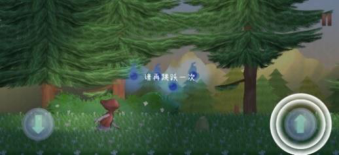
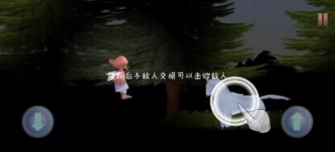
Figure 1. Jump tutorial (the explicit version is on the left).Figure 2. Position swap tutorial (the left is the explicit version). In the implicit version, a rope was added to instruct the players.
Intelligent Human Systems Integration (IHSI 2022): Integrating People and Intelligent Systems https://openaccess.cms-conferences.org/#/publications/book/978-1-7923-8988-7
Figure 3. Highlighted keywords in the narrative.
Game mechanics are defined differently by the gamer and the game designer. Players equate game mechanics with game rules, while game designers see game mechanics as a control mechanism for players’ in-game behavior (Kim, 2015). The design of the sample game follows the basic principles of the MDA model and explores the entry point of mechanism design from the perspectives of both players and game designers. The game design is guided by the comparison of the influence of implicit and implicit guidance on players.
In the hidden version, the player is free to control the character, and the tutorial is decorated with instructive scenes, and keywords that help them understand the gameplay are used in the storyline. In the explicit version, the game’s pace is relatively slow, and when the player reaches the necessary position, the game automatically pauses, and guidelines appear.
RESEARCH DESIGN Material. We collected feedback on the game in the form of a questionnaire. Referring to the survey design of (Clark et al. 2019), the questionnaire in End of the Loop is mainly divided into three parts. In the first part, players are re-quired to fill in variables such as age, gender, game preference, and game ability to classify players. In the second part, players are asked to rate the non-tutorial parts in terms of playability, difficulty, fun, etc. In the third part, players were asked to rate how valuable or boring the tutorial sections were.
Intelligent Human Systems Integration (IHSI 2022): Integrating People and Intelligent Systems https://openaccess.cms-conferences.org/#/publications/book/978-1-7923-8988-7
s
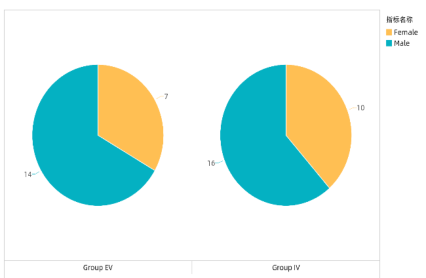
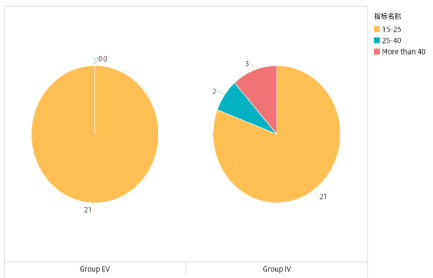
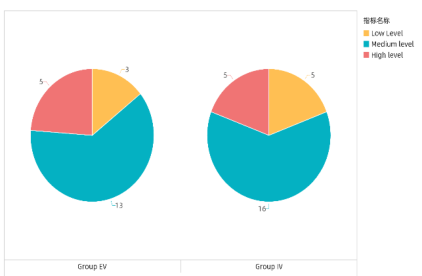
Figure 4. Gender ratio of all participants.Figure 5. Age ratio of all participants.Figure 6. Abilities of mobile gaming of all participants ratio of all participants.
Sample. To ensure the authenticity and value of the test data, we openly recruited 56 testers through social networking sites. To ensure the objectivity of feedback, each tester only tested
Intelligent Human Systems Integration (IHSI 2022): Integrating People and Intelligent Systems https://openaccess.cms-conferences.org/#/publications/book/978-1-7923-8988-7 one version. The implicit version (IV) was released first, and 26 valid questionnaires were received, while the explicit version (EV) received 21 valid responses. The ratio of men to women was 2/1 in EV and 8/5 in IV, with the two groups roughly equal, with roughly twice as many men playing as women. However, all participants in the EV group were 15-25 years old, but different age groups could be found in the response of the IV group, with 21 testers aged 15-25 years, two testers aged 25-40 years, and three testers aged over 40 years. Most gamers have played mainstream parkour games at one time or another. The percentage of people in group IV who have never played a significant parkour game is 4/25, and one member with an error message does not count. The percentage of participants in the EV group who had not played a mainstream parkour game was 4/23. The percentage of people in both groups who preferred games was about the same. Most players report that their gaming ability is average. In the EV group, 3 cases had a low level, 5 cases had a high level, and 13 cases had a medium level. In IV, both the high-Level and low-level players reported five times, while the other 16 players reported intermediate levels. One EV candidate said he played games but did not like mobile games, and this candidate was classified as the medium for analysis. Members of the two groups played at roughly the same level.
Procedure. According to the routine research workflow, the questionnaire content is designed according to the research topic. The design of the initial version of the questionnaire set all the questions in the form of selection and filling in the blanks. After testing the questionnaire, we found that the questionnaire page was too tedious for players to fill in feedback and analyze data. To get feedback effectively, some questions in the questionnaire were modified into Likert scales, and players were allowed to score by sliding. After completing both versions of the sample game, questionnaires and different versions of the sample game were distributed to recruit-ed players. Players were recruited through social networking sites and online fo-rums. We released a poster with two QR codes. A QR code instructs players to download the game, complete the tutorial, and try non-tutorial levels five times. Another QR code asks players to complete a questionnaire after playing the game.
RESULT
Table 1. Average marks from two versions’ non-tutorial review.
Implicit 3.38 70.25 Medium level Explicit 4.15 69.15 High level Implicit 4 75
Explicit 4.4 63.2
The game’s aesthetics, narrative, and mechanics received generally positive reviews from players, with hidden games scoring an average of 70.08 for fun and 68.73 for playability out
Intelligent Human Systems Integration (IHSI 2022): Integrating People and Intelligent Systems https://openaccess.cms-conferences.org/#/publications/book/978-1-7923-8988-7 of 100, excluding maxima and minima. By comparison, explicit games scored 63.42 for fun and 64.19 for playability. Comparing the two sets of data shows that players rate the hidden version of the game more highly than the explicit version. In the additional information of feedback questionnaire, a total of 23 test players for the game to experience process expressed their appreciation and encouragement, and six players expressed their love for the game style. Four players, although considered the game difficult, still were attracted to continue playing the game storyline. Six players appreciated the transposition mechanism design of the game, and they considered the design of the transposition mechanism innovative.
Some players are neutral or pessimistic about the game. The main problems pointed out by players who made negative comments were hardware problems, game difficulty, and art style design. While most of the smartphones tested could run the sample game smoothly, eight players reported low frame rates, stuttering, and input delays when running the sample game on their phones. On top of that, many gamers felt that the game’s mechanics were too complex and made the game more challenging. In both versions of the game, the average difficulty is 71 points. Eight medium-level players, three high-level players, and two low- level players all generally re-ported severe difficulty. Some players reported that the game’s difficulty gradually increased as the game progressed, especially in the final stage, which made them lose the desire to complete all the challenges. There is also the perception that enemies in the game are too fast and do not give the player time to react, making it difficult for the player to protect the character from damage, especially for lower-level players with less experience in the game.
Table 2. Marks from two versions’ tutorial review. The rating for tutorial review is based on the Likert Scale, so the marks above are all between 0 to 5. Ranks: 1 – Not helpful/boring at all, 2
Table available in the original PDF paper.
– Not quite helpful/boring, 3 – Uncertain, 4 – Helpful/Boring, 5 – Very helpful/boring.
Intelligent Human Systems Integration (IHSI 2022): Integrating People and Intelligent Systems https://openaccess.cms-conferences.org/#/publications/book/978-1-7923-8988-7
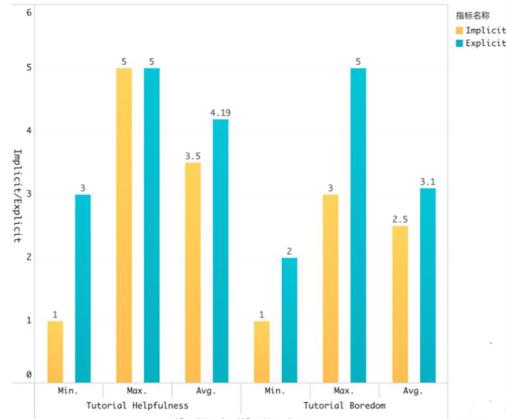
Figure 7. Marks from two versions’ tutorial review.Table 3. Completion percentage of the five game achievements. Because one player in each of the explicit and implicit groups did not complete the game achievements in the feedback questionnaire, their data was not counted in this chart.
Table available in the original PDF paper.
Achievements #1 #2 #3 #4 #5 Total Participants Implicit Group 44.0% 68.0% 28.0% 24.0% 0.0% 32.8% 25 Explicit Group 55.0% 80.0% 30.0% 45.0% 0.0% 42.0% 20
Intelligent Human Systems Integration (IHSI 2022): Integrating People and Intelligent Systems https://openaccess.cms-conferences.org/#/publications/book/978-1-7923-8988-7
Figure 8. Completion percentage of the five game achievements.
Figure available in the original PDF paper.
The two different versions of the game’s tutorial were rated differently by players. According to the feedback data, on a total score of 5, the average value of the implicit tutorial is 3.5, while the average value of the explicit tutorial is 4.19, and the difference between the two versions is 0.69. Implicit tutorials score 2.5 for boredom, explicit tutorials 3.1 for boredom, and the difference between the two versions is 0.6. Implicit tutorials are statistically less helpful than explicit ones but not as dull. Five players commented in the message that the tutorial was hard to understand, with unclear explanations of when enemies would attack, how they would attack, and how characters would dodge. The impact of the implicit and explicit versions of the instructions on the player can be shown directly from the player’s level score data. Under explicit instruction, players scored significantly higher on each level than players with implicit instruction. The player score for level 5 is 0, which shows that the game’s difficulty design is flawed.
The player feedback for the implicit version did not report any negative comments on how fun the tutorial was, but five players said they were attracted to the game even though the tutorial was unclear and made the game more challenging. Seven players from the explicit version explicitly criticized the game for its slow tutorial, dullness, and lack of fun and wanted more autonomy. Even players of the explicit version dropped out of the playtest because they thought the game was a waste of time. When asked why they said they wanted to play the game to be fun and explore, a clear and detailed tutorial was too simple to make the game a good experience.
DISCUSSION
The feedback data strongly support the first hypothesis. On a scale of 5 out of 5, the implicit instruction scored 0.6 points lower on average than the explicit instructions. In the detailed data, players of the implicit tutorial rated the tutorial as “very interesting,” “interesting,” and “average,” and no players rated the tutorial negatively. In the explicit version, one player rated the direct tutorial as very dull, two players rated it as dull, two players rated it as fun, all other players rated it as “average,” and none rated the explicit tutorial as “very fun.” In terms of overall fun, the hidden version scored 6.66 points higher than the explicit version. There is a positive correlation between player ratings of the fun of both versions of the tutorial and the over-all fun of the game, suggesting that different versions of the tutorial affect player attitudes towards non-tutorial parts of the game and the overall game. By comparing the average and extreme values of the tutorial fun and the overall fun of the game in both versions of the game, we can come to the basic conclusion that, from the tutorial itself, the fun generated by implicit guidance is more attractive to players. On the game, the two different instructions had a significant impact on players’ judgment of the game’s overall fun, with the sample games with the implicit instructions being rated as more fun by players.
Intelligent Human Systems Integration (IHSI 2022): Integrating People and Intelligent Systems https://openaccess.cms-conferences.org/#/publications/book/978-1-7923-8988-7
Table 4. The standard deviations of three gaming ability groups.
Table available in the original PDF paper.
Std. Dev Perceived Enjoyment Tutorial Helpfulness Low 17.31225825 1.060660172 Medium 19.37343669 0.959782406 High 22.91748483 0.632455532
This study only half supports the second hypothesis. The sample players were divided into three groups based on their ability to play the game, and the standard deviation analysis was performed on the perceived enjoyment of the game and the tutorial’s helpfulness, which indicated the dispersion between the groups. It can be observed from the data in the table that perceived enjoyment of games is positively correlated with players’ ability to play, while the standard deviation of tutorial help-fulness is inversely proportional to players’ ability to play. This suggests that players with high levels of gaming ability are more diffuse in their evaluations of perceived enjoyment of a game, and advanced players are more homogeneous in their evaluations of tutorials’ usefulness than they are diffuse. Therefore, we can assume that the implied content of the tutorial and the fun of the game has less impact on advanced players overall.
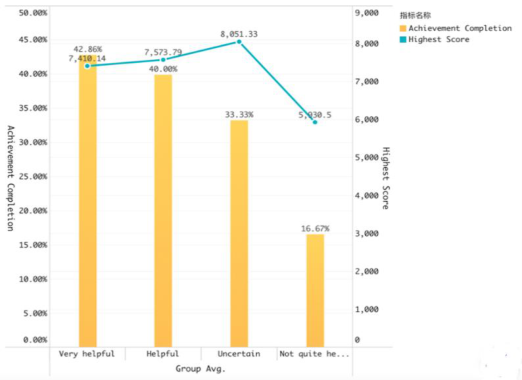
The results did not confirm the third hypothesis. Statistically, players who were helped by feedback tutorials completed a higher percentage of their achievements. To investigate this hypothesis, we analyzed the highest scores and achievements of 45 players in their first five games. Linear regression analysis showed that the player’s performance in the game did not match the tutorial’s perceived help (maximum score: R²=0.069, F=3.184, achievement completion: R²=0.070, F=3.22). Considering that the limited number of samples may affect the accuracy of linear regression, we adopted the grouping method. By comparing the averages of each ability group, we found no significant linear relationship between a player’s score and how helpful the tutorial was, but their achievement completion was positively correlated with how helpful the tutorial was. Since these five game achievements were specifically de-signed to assess the player’s mastery of the mechanics, this result suggests that the presence of a tutorial improves the player’s understanding of the mechanics and their performance in the game.
Intelligent Human Systems Integration (IHSI 2022): Integrating People and Intelligent Systems https://openaccess.cms-conferences.org/#/publications/book/978-1-7923-8988-7
Figure 9. Player groups’ highest score and achievement completion in the first five playsTable 5. Ratings of the three ability levels. The full score is 5.0 for the tutorial’s helpfulness and 100 for the difficulty of the game. The data in this table is analyzed based on this score.
Intelligent Human Systems Integration (IHSI 2022): Integrating People and Intelligent Systems https://openaccess.cms-conferences.org/#/publications/book/978-1-7923-8988-7
Figure 10. Ratings of the three ability levels.
Figure available in the original PDF paper.
The correctness of the fourth hypothesis cannot be clearly confirmed in the current data. In this study, players’ acceptance of the game was evaluated by players’ ratings on the difficulty of the game and the helpfulness of the tutorial. If there is a positive correlation between players’ ratings on the difficulty of the hidden version of the game and the helpfulness of the tutorial, and there is a clear difference between players of the three levels, this prediction is true. The data showed that players of all three rated the hidden version of the game as more complex and the definitive version of the tutorial as more helpful. The difference in difficulty ratings between the two versions was 20.8 for low-level players, 1.1 for medium-level players, and 11.8 for high-level players. However, for the implicit version of tutorial help, the difference was -0.6 for low-level players, -0.77 for medium-level players, and -0.4 for high-level players. The data showed that low-level players rated the hidden version as the most difficult and the tutorial as moderately helpful; Medium level players rated the hidden version as the least difficult and the tutorial the least helpful; Advanced players rated the hidden version as only moderately complex and the tutorial the most helpful. It can be seen from the data that although players of different grades generally accept different versions of games with implicit guidance, we can-not conclude that there is a significant difference in the acceptance of players of different grades with implicit guidance. Through the analysis of sample data, this conjecture can be established. However, the feedback shows the advantage of de-tailed tutorials, where explicit instructions can guide players more effectively, even if it is boring. Explicit tutorials are beneficial for games with complex mechanics and great difficulty.
LIMITATION The starting point of this study is to find the importance of the application of implicit guidance in game design, so the experimental design focuses on the comparison of implicit guidance and explicit guidance by setting two versions of the experimental group and the control group of sample games to obtain the feedback data of players. However, in the analysis of the feedback data obtained, three obvious shortcomings bring trouble to the further advancement of the research. First, many players report-ed that the sample game was too difficult after testing and that the fifth achievement in the game design had a zero- completion degree. This phenomenon is directly reflected in the slight difference of experimental data feedback from players, which hinders data analysis to a certain extent and weakens the persuasive power of data. Second, sample game to the plot, style design, mechanism, and MDA in the model of the essential elements of game design consideration is not perfect; there are many players of the game more exciting question said they think familiar story, rough visual and lack of innovative mechanisms so that they weaken the power of their game, and it has a negative impact on their evaluation of the overall fun of the game. Ignoring the quantitative part of the sample games in this experiment will reduce the authenticity of the experimental data obtained. Third, the number of players as the main body of the sample is small, mainly 18-25 years old college students, the group coverage is small, and players are required to self-evaluate the game ability, which will lack objectivity of the
Intelligent Human Systems Integration (IHSI 2022): Integrating People and Intelligent Systems https://openaccess.cms-conferences.org/#/publications/book/978-1-7923-8988-7 experiment. Due to the irrationality of the samples, there will be problems in verifying the third hypothesis when analyzing the existing data. The conclusion shown in the experimental results is generally consistent with the inference, but due to the small number of samples and the lack of objectivity of the data, the inference cannot be verified due to the lack of precise data support. In their study, Passalacqua et al. [5] also pointed out the need for professional measurements of players’ ability to play.
CONCLUSION
To sum up, this study designed a game with implicit and explicit versions of in-game guidance and compared players’ feedback on the two versions of the game to obtain the role and influence of implicit guidance in game design. By analyzing the player feedback data, we came to four conclusions. First, implicit tutorials and games with hidden instructions are more fun for players. Second, the implied con-tent of the tutorial and the fun of the game has less of an overall impact on advanced players. Third, explicit guidance can be more effective in guiding the player, even if it is boring. Explicit tutorials are beneficial for games with complex mechanics and severe difficulty. Fourth, there is a positive correlation between player understanding of game mechanics and the tutorial’s help. The results of this study support the vital role of implicit coaching in game design and can be an effective solution to the problem that direct coaching is too dull. Although this study has some limitations, it is hoped that professional methods can be used to measure data instead of self-assessment of samples in future in-depth studies, and the influence of critical quantitative elements on experimental results can be considered when setting variables.
ACKNOWLEDGMENTS
The authors would like to acknowledge sponsorship from Summer Undergraduate Research Fellowship of Xi’an Jiaotong-Liverpool University and the great team work.
REFERENCES
Andersen, E., O’Rourke, E., Liu, Y.-E., Snider, R., Lowdermilk, J., Truong, D., Cooper, S., Popovic, Z.: The impact of tutorials on games of varying complexity. In: Proceedings of the SIGCHI Conference on Human Factors in Computing Systems, pp. 59–68. Association for Computing Machinery, New York, NY, USA (2012). https://doi.org/10.1145/2207676.2207687 Clark, J., Reynolds, J., Crandall, P.G.: Perceptions of a video game to promote handwashing
habits in foodservice. Food Control 107, 106772 (2020). https://doi.org/10.1016/j.foodcont.2019.106772
Intelligent Human Systems Integration (IHSI 2022): Integrating People and Intelligent Systems https://openaccess.cms-conferences.org/#/publications/book/978-1-7923-8988-7
Hedges, N.: Video game tutorials: How do they teach?, https://gamasutra.com/blogs/NathanHedges/20171013/307378/Video_Game_Tutorial s_How_Do_They_Teach.php, last accessed 2021/08/19. Korhonen, H., Koivisto, E.M.I.: Playability heuristics for mobile games. In: Proceedings of the 8th Conference on Human-Computer Interaction with Mobile Devices and Services, pp. 9–16 (2006). https://doi.org/10.1145/1152215.1152218 Kim, B.: Chapter 3: Game mechanics, dynamics, and aesthetics. In: Hogan, P. (ed.)
Understanding Gamification, p. 17. American Library Association, Chicago, IL, USA (2015). Lyer, A.: Analyzing Super Mario’s level and tutorial design, https://medium.com/swlh/theperfect-game-tutorial-analyzing-super-marios-level-design-92f08c28bdf7, last accessed 2021/08/19. Passalacqua, M., Morin, R., Sénécal, S., Nacke, L.E., Léger, P.-M.: Demystifying the first-
time experience of mobile games: The presence of a tutorial has a positive impact on non-expert players’ flow and continuous-use intentions. Multimodal Technologies and Interaction 4(3), 41 (2020). https://doi.org/10.3390/mti4030041 Super Mario Bros. Nintendo, Kyoto, Japan (1985). Wigdor, D., Wixon, D.: Chapter 16 - Mechanics, Dynamics, and Aesthetics: The Application of MDA. In: Wigdor, D. and Wixon, D. (eds.) Brave NUI World, pp. 107–114. Morgan Kaufmann, Boston, MA, USA (2011). https://doi.org/10.1016/B978-0-12-382231- 4.00016-2 Villegas, E., Fonseca, D., Peña, E., Bonet, P., Fernández-Guinea, S.: Qualitative Assessment
of Effective Gamification Design Processes Using Motivators to Identify Game Mechanics. Sensors (Basel) 21(7), 2556 (2021). https://doi.org/10.3390/s21072556
Intelligent Human Systems Integration (IHSI 2022): Integrating People and Intelligent Systems https://openaccess.cms-conferences.org/#/publications/book/978-1-7923-8988-7
LISTED IN THE AHFE DIGITAL BOOKSTORE CATALOGUE
Explore the complete digital volume
Intelligent Human Systems Integration (IHSI 2022): Integrating People and Intelligent Systems
Read this individual research paper free through the original publisher, or explore the full digital proceedings book.
ISBN 978-1-7923-8988-7
Explore this ISBN in the AHFE Bookstore ↗Listed in the July 2026 bookstore catalogue; search by ISBN to confirm current availability · Digital book purchase optional