Lloyd Herbert Lloyd Herbert, Juan Luis Arias, Alonso Toro, Andrés Martínez, Homero Murzi (2022). Information Management for The Projection of Productive Capacities Articulated to Export Scenarios. In: Human Interaction & Emerging Technologies (IHIET-AI 2022): Artificial Intelligence & Future Applications. AHFE Open Access, vol. 23. https://doi.org/10.54941/ahfe100925
Information in various markets constitutes the primary basis for making the right decisions in a modern and globalized world. Therefore, opportunities grow based on the availability of data and how the data is structured to obtain information that supports decision-making processes, Ogrean (2018) and Neubert (2018), and even more so when business dynamics revolve around satisfying the demand for the products or services offered, Jacobs and Chase (2009). This article proposes the analysis of Colombian green coffee, as an alternative for strategic nodes that lack information on export scenarios, through operational research techniques, addressing the behavior of export sales for medium and long-term projections for management. business. The analysis is developed through Markov Chains, time series analysis techniques and mathematical functions, so a complementary approach is used to obtain predictions in future scenarios such as analysis of sales levels related to market shares.Choi et al (2018), indicate that one of the important applications of information management is in the field of demand forecasts, becoming one of the common alternatives in prediction for data series over time. The data is taken from Statistics of the National Federation of Coffee Growers (FNC), from 2016 to 2019 for export of Colombian green coffee, FNC (2021). Merkuryeba (2019) proposes procedures between techniques that allow a comprehensive approach to forecasts and where the methods complement each other, it is through the use of the methodology in Markov chain models (Kiral and Uzun 2017), plus the methodology of the time series analysis and mathematical functions (Stevenson et al 2015), which with a complementary approach, can reach a more detailed and comprehensive level of analysis for the statement about the future of the variable of interest: exportation market sales for Colombian green coffee.The results showed that Markov chains were very useful in long-term analysis for exports forecasting and their analysis by market segmentation, for this the demands level is classified according to the technique of Pareto. Another important contribution to the Markov chain in information management corresponds to the analysis disaggregated by export sales in demand levels associated to productions levels for aggregate plans.Complementarily, for the alternative of times series analysis; we start from the analysis of the demand, where a seasonal behavior of coffee green demand is detected. Rockwell and Davis (2016) and Stevenson et al (2015), establish a procedure for estimating and eliminating seasonal components by using the seasonal index. Additionally, Weller and Crone (2012) and Lau et al (2018), recommend two common alternatives to measure forecast error and make decisions to select the technique more adequate for information management: mean absolute deviation (MAD) and mean absolute percentage error (MAPE), finally, the result of the three techniques developed: moving average, exponential smoothing, and weighted moving average, the simple exponential smoothing, optimized through MAPE minimization is the selected technique, with which short and medium-term forecasts are defined.This study contributes directly to information management in the context of the exports of Colombian green coffee, as well as in academic settings in relation to research processes in data series under the configuration of big data. In this sense, it was demonstrated that the behavior of sales, segmented by demand levels, can be transformed into estimates of future behavior that establishes an orienting mapping of information management with respect to the possible level of production to energize the supply chain. Finally, the methodological scheme under an epistemological perspective supported by technical decisions, represent an academic contribution of great relevance for information management, where is recommended to use the time series techniques for short and medium-term forecasts, while Markov chains for the prediction and analysis of the sales structure in medium to long term forecasts, supported by median predictions through the use of mathematical functions.
Due to the fact that many of the strategic nodes lack information about the export scenarios, the export of Colombian coffee is taken as a reference as a representative product. According to (Dane, 2022), coffee represents in the year 2020, one of the first level export products, reaching 15.5% of the network of products with international output at the primary level of exploitation. This study has important inquiries about prediction methods to estimate the demand for green coffee, which allows to streamline the supply chain in relation to the internal and external market of Colombia.
In percentage, figures from the World Bank (2021) indicate that 7.7% of GDP (gross domestic product) is related to agriculture, forestry and fishing in Colombia, which establishes a representative figure in relation to the economic support of the country. In the aforementioned figure, green coffee is cataloged as one of the most important export products, which from another measurement has a representativeness of 16% of agricultural GDP (Anguera, 2018).
Thus, an important point in information management is the adequate study and analysis of the demand for its products and/or services, to link them to its productive capacities. Therefore, the study carried out incorporates the analysis of the demand for green coffee through three perspectives: Markov chains, forecasting techniques in time series and analysis through mathematical functions, based on the exports of green coffee from the year 2016 to the year 2019.
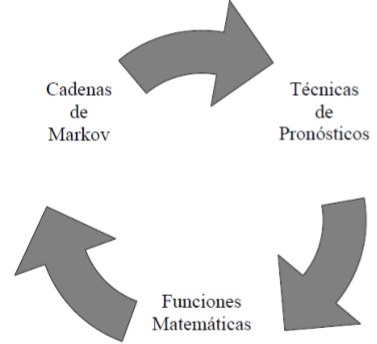
This study has a high level of methodology significance to establish epistemological routes for the development of studies that combine productive capacities to export scenarios under the management of information. For this, the multi-method or multi- technique approach suggested by (Agrawal et al., 2019) is taken. Figure 1 reveals the methodology that the researchers used to approach the study and analysis of coffee exports using the combination and complementation of multi-methods: Markov method, projection methods and methods based on equations.
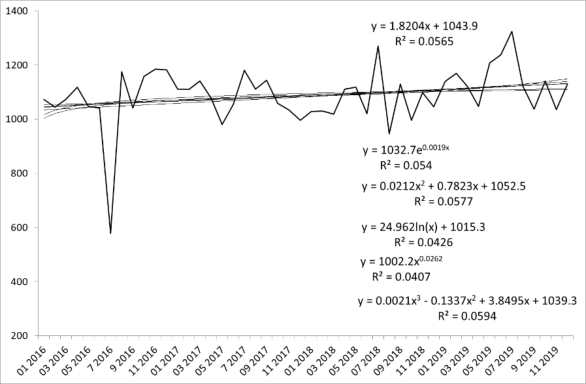
Figure 1. Combination and complement of multi-methods The afore mentioned methods are applied in the unit of analysis corresponding to the thousands of bags of coffee 60 kilograms per month (2016 to 2019), data analyzed in the sampling plan. These data are shown in figure 2.
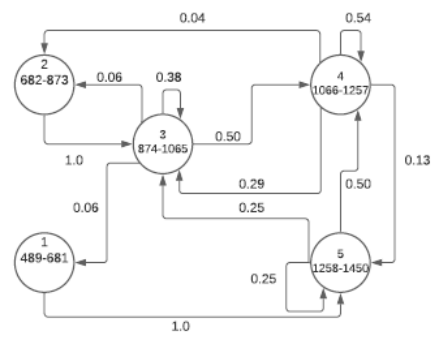
Figure 2. Coffee Export (Miles of 60 kg bags / month). Source: FNC National Federation of Coffee Growers of Colombia (2021) Results and discussion The definition of states through descriptive statistics is developed through the transition diagram shown in figure 3. For this process, the procedure proposed by (Arumugam and Rajathi, 2020) (Li, 2008) (Gorener and Toker, 2013), (Schroeder et al, 2011) is taken.
Figure available in the original PDF paper.
Figure 3. Transition diagram
When creating a system of stable states proposed by (Arumugam and Rajathi, 2020)
(Li, 2008) (Gorener and Toker, 2013),(Schroeder et al, 2011) and using the definitions of irreducible matrices creating a system of equations formulated under linear programming, the steady state probabilities are obtained. The result of the steady-state probabilities is summarized in figure 4, лi, for each state i = 1,2,3 or 4, associated with the states defined in figure 2, with class marks.
Expect ᴨᶳ1 ᴨᶳ2 ᴨᶳ3 ᴨᶳ4 ᴨᶳ5 Σ
Probability
ed Value 0.021 0.042 0.339 0.489 0.110 1.000 1090 585.3 777.5 969.6 1161.7 1353.9 Thousand 60kg bags
Figure 4. Probabilities for stable states Projection methods
Figure available in the original PDF paper.
Krajewski et al (2010), Jacobs and Chase, 2009) and Schober et al. (2018) indicate methodological procedures for the analysis of forecasting techniques in demand patterns. The precision assessment of each of the selected projection methods is performed: simple exponential smoothing, moving average and weighted moving average, for which the calculation of the mean absolute deviation (MAD) and the mean absolute percentage error (MAPE). When using QM for Windows software, the following results are obtained by projection method. See Figures 5,6,7 and 8.
Native Value
Measure Error Measures Bias 1.213 MAD 98.787 MSE 22399 MAPE 9.77% Forecast next period 1130
Figure 5. Result Method (Native) n=3 Value n=2 Value Measure Measure Error Measures Error Measures Bias 1.457 Bias 1.637 MAD 84.717 MAD 90.778 MSE 15050.3 MSE 15768.8 MAPE 8.50% MAPE 9.10% Forecast Forecast next period next period 1082.5 1102
Equation reproduced from the original PDF.Equation reproduced from the original PDF.Equation reproduced from the original PDF.
0.015 84.46 14844.47 8.51%
1075.045
Error Measures Error Measures Error Measures Bias 1.4 Bias 1.153 Bias MAD 83.955 MAD 85.542 MAD MSE 14864 MSE 15190.3 MSE MAPE 8.43% MAPE 8.59% MAPE Forecast Forecast Forecast next period next period next period 1076 1076.04
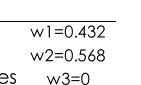
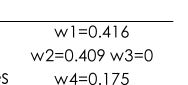
Figure 7-8. Result Weighted Moving Average Method (WMA) Equation-based methods
The following equation-based methods are used in equations used linear, exponential, polynomial (of order two and three), logarithmic and potential function. The results are shown in Figure 9. For the analysis of mathematical functions, the use and interpretation of the correlation and determination indices are key files 12. (Lind et al, 2019).
Figure 9. Result Method based on equations Final considerations
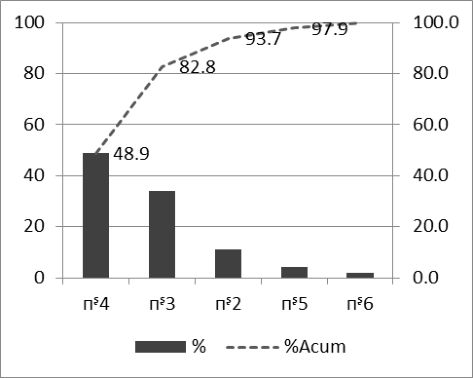
For the Markov method, the representativeness of the stable state results for manufacturing scenarios that animate the supply chain can be summarized in a percentage and cumulative percentage representation according to figure 10.
Figure 10. Representativeness of results of the Markov method Regarding the projection methods, the smallest error was located in the exponential smoothing and in relation to the methods based on equations when making the equivalence to MAD and MAPE values, the suggested methods are linear and polynomial, but with higher error levels. to exponential smoothing.
Finally, the projection methods are proposed in short and medium-range predictions, the Markov method for predictions and inquiries of the structure in exports, supported by methods of use based on equations to medium-range scenarios.
CONCLUSIONS
Due to the lack of information on export scenarios of Colombian strategic nodes, this study has a high level of methodological significance to establish epistemological routes for the development of studies that combine productive capacities to export scenarios under information management.
Markov chains allow you to double expected levels of demand and make proposals at levels that can energize the supply chain. In this sense, the states or levels of export demand with the highest probability of occurrence are those related to the four states and three, which represents a net accumulated of 82.8% of the export market behavior in which production can be boosted. at average production levels. 1,135 thousand bags of 60 kilograms per month.
Forecasting techniques and mathematical functions are capable of defining prediction scenarios with acceptable levels of error (less than 10% in MAPE). In a comparative way, the simple exponential smoothing forecasting technique is the one that quantified the smallest distances between the forecast value and the actual demand
Human Interaction & Emerging Technologies (IHIET-AI 2022) Artificial Intelligence & Future Applications https://openaccess.cms-conferences.org/#/publications/book/978-1-7923-8989-4 with α = 0, for a MAPE of 7.48% and a MAD of 74.383.
From the perspective of medium-term analysis, the use of mathematical functions is recommended as they move directly to movement in time, which in forecasting techniques is only possible to the extent that we obtain new real data. Therefore, when considering the levels of precision obtained, the mathematical function with the highest precision in the medium term is the linear one and the polynomials of degree two and three.
REFERENCES
DANE (Dirección Nacional de Estadística, Colombia),https://www.dane.gov.co/index.php/estadisticas-por- tema/comercio-internacional/exportaciones/exportaciones-historicos. Banco Mundial (World Bank) (2021). Recuperado 22/9/2021 disponible en
https://data.worldbank.org/indicator/NV.AGR.TOTL.ZS?locations=CO Donovan, N. K., Foster, K. A., & Salinas, A. P. (2020). Quality management and the economics of green coffee hermetic storage. International Journal of Food and Agricultural Economics (IJFAEC), 8(1128-2020-427), 1-20. Anguera, M. Teresa, et al. "Revisiting the difference between mixed methods and
multimethods: Is it all in the name?." Quality & Quantity 52.6 (2018): 2757- 2770. Agrawal, A. K., Murthy, V. M. S. R., & Chattopadhyaya, S. (2019). Investigations into reliability, maintainability and availability of tunnel boring machine operating in mixed ground condition using Markov chains. Engineering Failure Analysis, 105, 477-489. Arumugam, R., and M. Rajathi. "A markov model for prediction of corona virus
covid-19 in india-a statistical study." J Xidian Univ 14.4 (2020): 1422-1426. Li, Jianguo, et al. "One step beyond histograms: Image representation using Markov stationary features." 2008 IEEE Conference on Computer Vision and Pattern Recognition. IEEE, 2008. Gorener, Ali, and Kerem Toker. "Quality Improvement in Manufacturing Processes
to Defective Products using Pareto Analysis and FMEA." Beykent Üniversitesi Sosyal Bilimler Dergisi 6.2 (2013). Schroeder, Roger G., Susan Meyer Goldstein, and M. Johnny Rungtusanatham. Administración de operaciones: Conceptos y casos contemporáneos. McGraw-Hill, 2011. Krajewski, L. J., Ritzman, L. P., & Malhotra, M. K. Operations management:
Processes and supply chains. New Jersey: Pearson. 2010. Jacobs, F. R., & Chase, R. B. Administration of production and operations: essential. Bookman Editor. 2009. Schober, Patrick, Christa Boer, and Lothar A. Schwarte. "Correlation coefficients:
appropriate use and interpretation." Anesthesia & Analgesia 126.5 (2018): 1763-1768.
Read this individual research paper free through the original publisher, or explore the full digital proceedings book.
ISBN 978-1-7923-8989-4
Explore this ISBN in the AHFE Bookstore ↗Listed in the July 2026 bookstore catalogue; search by ISBN to confirm current availability · Digital book purchase optional