Karin Oolu, Ingrid Pappel (2022). Influence of Content-Oriented Information Management Activities on the Creation of National Memory. In: Human Factors, Business Management and Society. AHFE Open Access, vol. 56, pp. 153–160. https://doi.org/10.54941/ahfe1002263
The transformation of information society has caused changes in memory creation processes since the amount of information is indeterminately larger. Processes on the institutional level have transformed digital, organizations function differently, which probably causes changes in the content of the information to be preserved. The proposed paper will look at the institutional level activities that affect the content of the preserved information based on the two-year qualitative case study induced by an Estonian public sector institution. Results synthesized in the context of the theoretical approach allow us to claim that due to the nature of the development of memory and history, the human factor remains in the selection/appraisal processes.
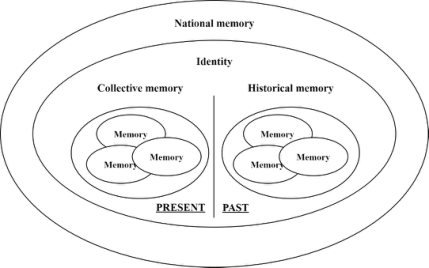
The creation mechanism of history is based on the centuries-long preservation of information. The selection of what to preserve and what not to preserve is broadly based on the problems of collective memory. According to Halbwa- chs, collective memory is always selective and depends on social groups and the numerous roles we play during our lives (Halbwachs, 1980, p. 23). He claims collective memory is a social construction that forms the framework to keep holding together the society. French classic Pierre Nora (1931-...) has analyzed the French national memory in his seven-volume work “Les Lieux de Memoire” (Nora, 1989), and founds similarily to Halbwachs that history should be treated as events or changes which are always selective but inte- rested in the past, not the present. Contrarily, collective memory should be understood as “living”and having a live connection between the generations, “providing the group a self-portrait that unfolds through time...” (Halbwa- chs, 1980, p. 86). Hence, the concept of memory can be seen as the basis for national identity (see Figure 1), based on Hallbwachs (1980), Nora (1989), Assmann (2008), Connerton (2010), as it is also connected to power, politics, and governance (Halbwachs, 1980; Nora, 1989; Connerton, 2010; Assmann, 2008).
Figure 1: Interpretation of the concept of memory (Oolu, 2022).
The given approaches can, to some extent, be addressed as the historical memory preserved in archives that include collective memory which is evo- lving in present, e.g in organizations. In the context of the contemporary information society, technology is the outcome of human activities and deve- lopment, but on the other hand, the fast development of ICT affects human perception and cognition to a great extent. The increasing massive of data has caused the method of filtering, selecting, de-selecting, and disposing of information to be changed. The major problem is information deluge and it is essential to consider information content and selection alongside long-term accessibility and think about how to influence the decision-making process to keep collectively agreed information.
In this research, the focus was set on the information held by archives, which are often viewed first and foremost in their role of preserving informa- tion contained in unique records, rather than as overt interpreters of content as in contrary, takes place in libraries and museums. In Estonia, the arch- ival value of records is given by the National Archives of Estonia (NAE) during the macro appraisal process. When evaluating documents, the NAE captures all the information generated in the process of the activities of the institutions, regardless of the medium on which it is recorded or in which databases. It also seeks to cover as long a period as possible for both exi- sting and future documents. As a result, the list of classified information with assigned archival value will be provided for the organization (Archives Act, 2011).
CONTENT-ORIENTED INFORMATION MANAGEMENT ACTIVITIES Archives are legally charged with preserving the national memory through the transfer of records that are now, almost always, created in a digital environ- ment (Kallberg, 2012). The institutions must ensure that the digital content transferred to NAE is technically compliant, authentic, and can be archived with context. Upon another, evidential value (business value), the institu- tion can decide itself, ensuring that all procedural and legal obligations are fulfilled.
Influence of Content-Oriented Information Management Activities 155
Schlögl (Schlögl, 2005) distinguishes content-oriented information mana- gement (IM), which deals with information content, from the technology- oriented IM, which purpose is to make available the right information at the right time and the right place. There are two possible risks at the ope- rational level: the electronic archive is overloaded with records that should not be there, while at the same time records which should be there are mis- sing (Klett, 2017, p. 25). Digital documents are ephemeral, and produced in great volume (Collomosse et al. 2018). These two standpoints apply to EDRMS (Electronic Records Management System) meaning that appraisal of electronic records is much more comprehensive and complicated than in paper. Furthermore, appraisal as an activity must be differentiated from the certain procedure macro-appraisal, regulated by national legislation and performed by the national archive. The NDSA report explains “government records managers often appraise from the perspective of selecting for long- term retention those records that best document or capture the activities and information outputs of government agencies” (NDSA, 2013, p. 7). Moreover, the character of appraisal as an activity for what, recurrently, the meaning and significance are important components as it depends not only on archi- vists or information professionals whether the document has captured to the EDRMS and given value or not.
Electronic records are consulted as proof of activity by anyone inquiring about decisions, processes, or performances of an organization. In this resea- rch, the scope regarding these systems that manage documents, records or data and involves all acronyms as EDMS, EDMRS, ECMS, ERMS under one term EDRMS (Electronic Document and Records Management System) with the meaning the system for corporate records management - “suppor- ting an organization to manage, secure, access and exploit its information in complex digital environments across a myriad of locations” (Brooks, 2019, p. 14). The European Model Requirements for the Management of Electronic Records clearly defines how to manage electronic and paper documents and records throughout their information lifecycle (Fresko, 2009), and to some extent, how to prepare them for preservation (MoReq2010, 2011). In Esto- nia, documents with archival value are usually located in EDRMS together with metadata. Until the documents are transferred to NAE, the manage- ment of metadata and file formats takes place in EDRMSs (Pappel et al. 2017). Since there is no one-size-fits-all EDRMS, there are quite diverse solu- tions among data providers to fulfill all criteria. People and technological implications as hardware and software capabilities and development cause that there is no single approach and organizations manage information most conveniently and suitably for them. What will be captured to the EDRMS is declared in the information management regulations and stra- tegies in the organization in accordance with the local legislation of the country, also following the macro-appraisal done by NAE. At the instituti- onal level, an information management strategy and classification schema are critical to the life cycle of every organization’s information, regu- lating how information is created, stored, disseminated, managed, and protected.
156 Oolu and Pappel
METHODOLOGY
The activities prior to the transfer to NAE are analyzed from the perspective of the institution on the example of one Estonian public institution. To this end, action research was carried out over a period of two years (01.01.2018- 31.12.2020) intending to gain an overview of the specific activities that affect appraisal decisions and on which the content of the stored substance depends.
Corresponding to an action study characteristics such as the structure and process of action research is cyclical (Järvinen, 2009). The research draws on the literature and unpublished results of work undertaken by the authors’ organization to improve professional practices in the transfer of records to the archives. The action plan was intended to fit within authors’ normal working activities as follows: The main activities that applied in order to cope with the situation were (a) Update of regulations – simultaneously with analysis of the information and processes of the case institution (b) Update of the EDRMS – simultaneously with overall system development.
Data collection included personal notebook/journal, draft versions of regu- lations analysis, and EDRMS logs. In the authors’ personal notebook/journal, the implementation of the actions was described, planned, and reflected on every step of the process. Authors’ interpretations of the outcomes that emerged from the analysis of the documents and the comparison of draft versions of regulation analysis, also from EDRMS logs were taken into account. Inductive-deductive analyses were carried out to analyze qualita- tive data, such as narrative and descriptive development actions and personal reflections.
The case institution Estonian Academy of Arts (EKA) is the only public uni- versity in Estonia providing higher education in fine arts, design, architecture, media, visual studies, art history, and conservation, with more than 1000 students enrolled. In addition to the 4 academic units, there are 6 supportive units as a museum, gallery, publishing house, library, open academy, doctoral school. Corporate EDRMS Webdesktop (WD) has total of 243 active users (Dec 2020).
Webdesktop is B-type EDRMS meaning that in addition to C-type sim- pler records management functionalities it allows the next: the creation of digital documents based on templates or digitized, internal workflow processing, digital signing, retention, and disposal within the EDRMS. B- Type EDRMS allows standard interfaces with systems used to perform support functions (such as financial and personnel systems) for organiza- tions that need a system to record, manage, process, dispose and store records until the end of their retention period. It is important to emphasize that the EDRMS under consideration does not allow A-type functionali- ties such as integrated document management and extensive interfaces with both internal and external information systems (Miinimumnõuded, 2014). Although the system under discussion does not support maximum digi- tal information management, it is sufficiently widespread both in Estonia and abroad, and its functionality is sufficient for analyzing preservation decisions.
Influence of Content-Oriented Information Management Activities 157
RESULTS
In an institutional context, activities are regulated with two management documents as classification schema/folder structure, which allows to classify and mark selections that will be preserved. Secondly, the internal guideline- s/information management strategy of the organization defines and specifies internal activities with corporate information. Analyses of renewal of both documents allow to detect relatedness between activities and information to be transferred to NAE.
Information Management Regulations Renewal
1. Information Management Strategy Renewal Process: Due to the changes in national legislation and requirements, the strategy document was re-created from zero and re-structured as the previous version was intended for classical, paper management processes. All workflows of the organization were map- ped and analyzed in MS Excel. Since all workflows, users, management, and information professionals/system administrators of the organization were included, the renewal of regulatory strategies is a vital activity that ensures the correct and purposeful creation of documents. The format of the docu- ments to be preserved depends directly on whether the document is created in accordance with the updated strategical requirements.
2. Classification Schema Renewal Process: In EKA the schema is a functionality-based classification schema. Notebook/journal analysis shows that schema update was performed as continuous analysis of information flows done unit-by-unit of the organization. Simultaneously with strategy updates, the classification schema was updated. Moreover, some series were empty because the information was handled in other IT systems, consequen- tly, updating the classification schema has been insufficient. Furthermore, 13 new series have been opened during the research period, hence, need macro-appraisal by NAE. Therefore, the location of the documents in the schema and the need for macro-appraisal depend directly on constant schema updates. Two examples illustrate this:
1. Archival value has been given to Cooperation and consortium agree- ments with other higher education institutions, which belong to the series of Civil Agreements. In the period prior to the research EDRMS settings allowed to capture all agreements under the one series. In the later phase, when the records will be transferred to NAE, it is not possible to isolate the Cooperation and consortium agreements with other higher education insti- tutions because (1) the amount is too high for archivists to decide upon each agreement (2) appraisal decisions done later may not consider all details of decisions made in certain moment and may occur mistakes.
2. If the data is handled in other systems than EDRMS, it is marked accor- dingly in the corresponding aggregation unit in the classification schema. This is problematic for technical reasons as it is not possible to transfer data to NAE from any systems via direct interfaces yet.
The update of classification schema and its management are directly depen- ding on the activities of the EDRMS administrator, and managers of all information systems. Direct interface between agency and archive would help
158 Oolu and Pappel
to avoid human mistakes as simultaneous schema management on both sides and agile appraisal would prevent future mistakes.
Activities related to updates of EDRMS
1. Update of data-types: Changes in data-types during the two-year period were analyzed according to the notebook/journal. At the end of the period, there are a total of 202 different data types, of which 165 are active (to which documents can be captured). As EDRMS data-type settings play a crucial role in locating documents in classification schema, it assures the capture and storage of the data and proves how the selection of preserved data is dependent on the data-type functionalities, as well as on the administrator and his/her skills and knowledge
2. Update of file creation templates: In EKA information flows, processes, and procedures are more downwards from top management to the personnel, employees are not so actively engaged in the decision-making process. Even with perfect regulations, the integrity of the series can be negative because of the low user-friendliness of the system. Therefore, the usage of an automated tool for file creation with templates is justified ensuring correct usage. Fur- thermore, EDRMS allows automatic file creation based on metadata for the digital records which requires formatting the data in the form of a file, usu- ally for digital signing. Notebook/journal and EDRMS log analysis allowed to recognize the next:
Designed CVI templates were not possible to implement for technical rea- sons (caused by the mandatory usage of .odt format of template creation process which does not allow specific design features and the special fonts which should be downloaded beforehand to users PC);
Differences in file creation process between MAC and PC users were recognized;
Inner system conversion of files from .doc to .PDF is not working properly which is caused by the usage of different versions of Office products within EKA.
3. EDRMS Integrations with other systems: Integration with other systems or software improves business processes and simpler workflows, but the pro- bability of duplication risks will also increase. Therefore, the integration of the EDRMS with other systems in terms of long-term preservation is critical and the problem is moving back to the level of macro-appraisal. For exam- ple, during the research period, an interface was developed with the Estonian Research Information System (ETIS) for the management of creative work reporting in EDRMS. However, the Estonian Research Agency, which holds the ETIS, must also be guided to avoid duplications of stored data for the long term. This is a macro-level problem but still illustrates how human decisions and local system updates may define the content of preserved information.
Activities Related to Unspecified Domain (Cloud) Dynamic documents which are always available to edit and update at any point in time cause several challenges in the context of long-term
Influence of Content-Oriented Information Management Activities 159
preservation. With the aim to maintain ownership and control over organiza- tional processes and resources, some dynamic documents were considered as records with archival value and hence, are required to be preserved. In addi- tion, the problem has been raised from the user-friendliness of the EDRMS. Research revealed there are several records appraised with archival value to be transferred to NAE that are not captured to EDRMS because of extra work needed by the system user. For example, press releases are stored only on the EKA web page, also not all e-mail correspondence is not captured to EDRMS, and stored in G-Mail. Furthermore, the problem of an unspecified domain of records is complicated as may need duplication by users and the- refore finds avoidance. An example of a problematic case is capturing grant reports to EDMRS. As the user needs to manage the reports in portals offered by the financer, duplicative work was avoided and losses of information with archival value were detected in the EKA system.
CONCLUSION
Research has revealed the evident connection between content-oriented infor- mation management and preserved collective memory. Information processes on the institutional level have transformed digital due to changes in soci- ety; organizations function differently, collective memory emerges and will be preserved in digital form.
A corporate information system that acts as a tool for selecting and storing records should be given significant attention due to the reason that its quality is in direct correlation with processes prior to preserving data. Whether the document will be captured to the EDRMS and in what form is directly rela- ted to the activities of EDRMS management, users, and IT professionals of the organization. The main question is how to ensure that records are cura- ted throughout the lifecycle to avoid any influence on information loss or misapprehension for long-term preservation. It can be claimed that due to the nature of the development of memory and history, the human factor will always remain important regardless of the format of information.
Institutional level activities in changing digital environments directly affect the content of the resulting digital matter to be transferred to the national archives which finally constitute the preservation of our historical memory.
REFERENCES
Archives Act (2011). RT I, 21.03.2011, 229 [online]. Available from: https://www.riigiteataja.ee/akt/129122011229?leiaKehtiv. Assmann, J. (2008). Communicative and Cultural Memory. In: Cultural Memory Studies. Berlin, New York: Walter de Gruyter. Brooks, J. (2019). Perspectives on the relationship between records management and
information governance. Records Management Journal [online], 29(1/2), pp. 5– 17. Available from: Ebscohost [8 Feb 2022]. Collomosse, J.P, Bui, T., Sheridan, J., Green, A., Bell, M., Fawcett, J. Higgins, J., & Therux, O. (2018). ARCHANGEL: Trusted Archives of Digital Public Documents [online]. In: DocEng ‘18: Proceedings of the ACM Symposium on Document Engineering, August 28 - 31, 2018, Halifax NS Canada, NY, US. Available from: https://arxiv.org/pdf/1804.08342.pdf
160 Oolu and Pappel
Connerton, P. (2010). How Societies Remember. Cambridge: Cambridge University Press. Halbwachs, M. (1980). The Collective Memory. New York: Harper & Row. Fresko, M. (2009). MoReq2: a European Contribution to the Preservation of Ele-
ctronic Records. In: DigCCurr 2009: Digital Curation Practice, Promise and Prospects, April 1-3, 2009, Chapel Hill, NC USA, pp. 37–41. Järvinen, P. (2009). On various characteristics of action research [online]. Tampere: University of Tampere. Available from: https://webpages.tuni.fi/utacs_history/cs/ reports/dsarja/D-2009-4.pdf Kallberg, M. (2012). Archivists 2.0: redefining the archivist’s profession in the digital
age. Records Management Journal [online], 22(2), pp. 98–115. Available from: Ebscohost [8 Feb 2022]. Klett, E. (2017). Examining the use of core terms in a records appraisal context - two Swedish examples. Trust and Transparency in E-government [online] 8(1). Available from: Tidsskiftet Arkiv [8 Feb 2022]. Miinimumnõuded Eesti avaliku sektori asutuste dokumendihaldussüsteemidele
(2014). Juhis [online]. Available from: https://www.mkm.ee/sites/default/files/edh s_miinimumnouded_juhis.pdf. MoReq2010 (2011). Modular Requirements for Records Systems [online]. Available from: https://moreq.info/index.php/specification. Nora, P. (1989). Between Memory and History: Les Lieux de memoire. Representa-
tions, 26 (Special issue: Memory and Counter-Memory), pp. 7-12. NDSA, G. C. T. (2013). Issues in the appraisal and selection of geospatial data, an NDSA Report [online]. Available from: https://ndsa.org/documents/NDSA_Appr aisalSelection_report_final102413.pdf. Pappel, I., Oolu, K., Saarevet, K., Lauk, M., & Draheim, D. (2017). The digital
archiving process in Estonia - assessment and future perspectives. In: Future Data and Security Engineering: 4th International Conference, FDSE 2017, November 29 - December 1, 2017, Ho Chi Minh City, Vietnam. Ho Chi Minh City: Springer. pp. 472–481. Schlögl, C. (2005). Information and knowledge management: dimensions and approaches. Information Research [online], 10(4) paper 235. Available from: http://InformationR.net/ir/10-4/paper235.html.
LISTED IN THE AHFE DIGITAL BOOKSTORE CATALOGUE
Explore the complete digital volume
Human Factors, Business Management and Society
Read this individual research paper free through the original publisher, or explore the full digital proceedings book.
ISBN 978-1-958651-32-2
Explore this ISBN in the AHFE Bookstore ↗Listed in the July 2026 bookstore catalogue; search by ISBN to confirm current availability · Digital book purchase optional