Vesa Salminen, Heikki Ruohomaa, Minna Takala (2022). Future Ecosystem Ensuring Competitiveness in Continuous Co-Evolution. In: Human Factors, Business Management and Society. AHFE Open Access, vol. 56, pp. 1–9. https://doi.org/10.54941/ahfe1002245
The world is changing rapidly, and it is difficult to form clear understanding of future challenges and opportunities. Continuous demand on sustainability, carbon neutrality, circular economy and life cycle material chain management has changed societies and all industries fast. However, sustainable development and competitiveness are always based on being economically viable and circular economy itself is an economic theory. The amount of usable data in business environment is at the same time exponentially increasing. Technology opportunities as well are prominent to use the data in managing by data for the purpose of business co-evolution. Competitive landscape is shifting from well-defined industries to broader ecosystems and traditional enterprise boundaries are breaking down. This also means for busines transition towards platform economy e.g. enterprise production lines to networked intelligent value chains and ecosystems. Companies need in this disruptive situation an ecosystem strategy and analysis, which type of business model they are utilizing. Businesses are networking and transforming into ecosystems, emphasizing the management of interface processes. It is essential to understand digital ecosystem supporting business co-evolution. Data is a valuable currency that gives fuel for innovation and data driven co-evolution. Capturing of new data from various sources and executing it in business in transition requires human- oriented data-driven business architecture and strategy alignment on that basis towards circular economy business model and continuous coevolution. Circular economy ecosystems are based on economic theory, and they are not working if they are not economically viable. The goal of this article is to identify and analyze the life cycle material flow in circular economy in different business areas and find various business models and similarities in business practices. At the same time, this article attempts to develop framework for the strategic management of complex change through sustainable co-evolution in order to achieve a competitive edge for companies.This research is partly constructive, conceptual and analytical, because it introduces pathway to ecosystem strategy and introduces experiences of applying different evolutionary circular economy business models. Data for this concept creation has been collected over several years on continuous flow from ten different regional applied research and development projects. The data sources have also been interviews and workshops executed during projects on foresight and scenario planning basis. The researchers have been able to participate on creation of several regional ecosystems. Researchers have contributed on ecosystem strategy planning, decision making and continuous development practices.The complexity of co-evolution is difficult to manage without ecosystem- based approach. A generic perception of this research is that successful ecosystem needs clear ecosystem strategy and should set up a shared vision and evolutionary roadmap to serve as basis for common value creation, co- operation and ecosystem leadership. All ecosystem players can focus attention of ecosystems in the value propositions that are being pursued, not in corporate identity. It is important to understand that ecosystem is value driven. Ecosystems are defined around the roles, positions, and flows across the partners that create a value proposition. Nearly all business fields and enterprises face the need for transition towards data- driven circular economy business model and continuous coevolution through digital ecosystem.
The world is changing rapidly. Continuous demand on sustainability, circu- lar economy and life cycle material chain management has changed societies and all industries fast. The amount of usable data in business environment is exponentially increasing. Technology opportunities are tremendous to use the data in managing by data and business co-evolution.
Competitive landscape is shifting from well-defined industries to broader ecosystems and traditional enterprise boundaries are breaking down. This also means for businesses transition towards platform economy e.g., enter- prise production lines to networked intelligent value chains and ecosystems. Companies need in this disruptive situation an ecosystem strategy and analy- sis, which type of business model they are utilizing. Business is networking and transforming into ecosystems, emphasizing the management of interface processes.
Digitalization and data captured from various sources fuel for innova- tion and data driven co-evolution. Capturing of new data from various
sources and executing it in business in transition requires human- oriented data-driven business architecture and strategy alignment on that basis.
A successful ecosystem needs clear ecosystem strategy and should set up a shared vision and evolutionary roadmap to serve as basis for common value creation, co- operation and ecosystem leadership. All ecosystem players can focus attention of ecosystems in the value propositions that are being pursued, not in corporate identity. Ecosystems are defined around the roles, positions, and flows across the partners that create a value proposition (Adner, 2021).
Nearly all business fields and enterprises face the need for transition towards data- driven circular economy business model and continuous coe- volution. In this article is analyzed different circular economy business models and what type of ecosystems their business is built on.
The goal of this article is to identify and analyze the paradox of econo- mic theory of sustainable growth on the life cycle material flow in circu- lar economy in various business areas and find various business models. Ecosystem innovation and development is based on the fact that it brings competitiveness and profitability to the participating companies.
THEORETICAL FRAMEWORK By the twenty-first century, humankind has fallen into a very complex glo- bal human-ecological crisis which endangers not only its economic system, general welfare, peace, and development but its long-term survival and mere existence as well.’ (Bastante-Ceca et al, 2020). ‘Waste management must be replaced by resource management, and in this regard, a new paradigm is born. There is an urgent need for businesses to look beyond the bottom line and pursue a stakeholder-centric approach. A new trend in sustainable investing that focuses on material- issues that impact a firm’s valuation, rather than a traditional commitment to sustainability’. (Curnani, 2020) Profitability is vital for sustainability. ‘However, profitability is a necessary but insufficient condition for sustainability: the environment and social dimensions must also be included’ (Wells, 2013).
‘As digitalization enables the generation of data-driven complementarities across markets, products and services, a better unit of analysis might be an ecosystem that can cut across markets or sectors. In digital ecosystem, data is a valuable currency that gives rise to potentially contentious issues, such as to the identity of customers and their activities. Successful ecosystem drivers define who gets what information and establish guidelines for how it will be shared- both digitally and ethically.’ (Sebastian et al., 2021).
‘The business ecosystems metaphoric framework tries to formalize the business world into a practical complex model’ (Moore,1993). ‘While the crucial role of keystones in this definition can be considered as a downside for an economic ecosystem, digital business ecosystems try to solve the problem in the digital world (Razavi et al, 2010). ‘Digital ecosystems are defined as interacting organizations that are digitally connected and enabled by modu- larity and are not managed by a hierarchical authority.’ (Jacobides et al., 2018) ‘Platform ecosystems are complex ecologies of firms with individual competencies and collective objectives’ (Ader, 2021).
Future Ecosystem Ensuring Competitiveness in Continuous Co-Evolution 3
‘It is estimated that companies with an ecosystem approach have higher earnings than those without’ (Bughin et al., 2019). ‘To participate succes- sfully in ecosystems, traditional companies must often change the way they think about customers.’ (Chung et al., 2021 ‘Dramatic changes in organiza- tions’ business ecosystems occurs, because digital business make them, more complex, larger and essential to strategy.’ (Burton Besty, 2017).
RESEARCH QUESTIONS The objective of this article is to analyze if the paradigm of sustainable economic theory can be based on profitability. Rapid change in business environment forces enterprises to adapt ecosystem-based approach. It is also introduced an ecosystem co-evolution process for continuous business tran- sition. This article identifies and analyzes as example the life cycle material flow in circular economy and related business models. The main research questions are
1. Is the paradigm of sustainable economic theory based on profitability? 2. How business models are changing according sustainable theory during co-evolution? 3. What type of key functionalities and prerequisites ecosystem- based co- operation and partnership has? 4. How the complexity during change is managed through ecosystem approach?
This research is partly constructive, conceptual and analytical because it introduces pathway to ecosystem strategy and introduces experiences of different evolutionary circular economy business models.
Data for this concept creation has been collected over several years on continuous flow from ten different regional development projects, which may be seen as a type of applied science. The data sources have also been interviews and workshops executed during projects on foresight and scena- rio planning basis. The researchers have been able to participate on creation of several regional ecosystem. Researchers have contributed on ecosystem strategy planning, decision making and continuous development practices.
CIRCULAR ECONOMY AND MATERIAL FLOW The shift towards data- based circularity brings significant opportunities. ‘The circular economy seeks to replace today’s linear, “take-make-dispose” approach to resources with one in which materials are kept at their highest material value and constantly cycled back through the value chain for re- use, resulting in less energy and resource consumption.’ (Bartels et al. 2020) Enterprises can help society to address some of its biggest environmental and sustainability challenges. However, paradigm of sustainable economic theory has to be based on profitability
‘However, the move to circularity requires vigilance and decisive action, as it promises to disrupt the industry’s value chains, profit pools and demand patterns while creating new opportunities for growth’ (Bartels et al., 2020).
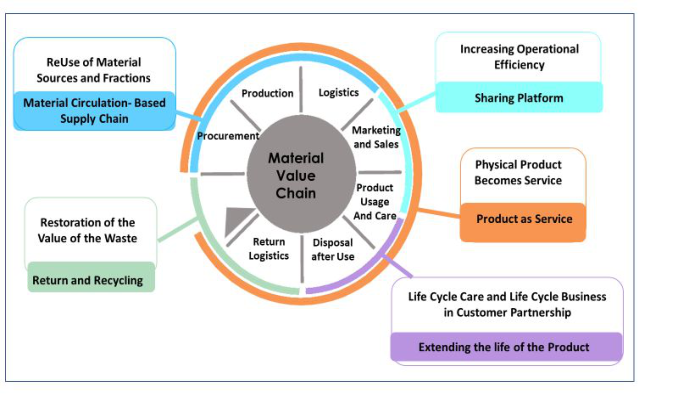
Figure 1: Circular economy and five different business models (Gerholdt, 2015).
The transition is in full swing and has arguably passed the point of no return. Engaging in circularity is no longer a “nice to have”—it is a key source of competitive advantage.
Circular economy is on transition from waste treatment towards material as endless resource through material fraction and component reuse manage- ment over the product life cycle. This is a regenerative approach and enables viable business opportunity for attaining environmental challenges and create value through sustainable economic innovations.
Profitability- based sustainable economy paradigm is giving way to the circular economy, a model that focuses on careful management of material flows through product design, reverse logistics, business model innovation and cross-sector collaboration (Gerholdt, 2015).
It has been analyzed that there are at least four various business models recognized in circular economy: Sharing Platform, Product as Service, Exten- ding the Life of the Product, Return and Recycling and Material Circulation- Based Supply Chain (fig. 1). They all are supposed to have own specific ecosy- stems to run their business and partially as well different customers. All these ecosystems have already a long time digitalized their business and are still been facing stronger and dramatic pressure of digitalization. Data is a new power for business success.
ECOSYSTEM CO-EVOLUTION Ecosystem fits on business environment, which is under rapid and complex transition. It is important to define target for co-operation and roadmap for coevolution to define what partners are involved and what type of roles they are in ecosystem. As important is to understand what data, information and process is needed over the interfaces of ecosystem partners. That is essential for trust building in ecosystem.
Future Ecosystem Ensuring Competitiveness in Continuous Co-Evolution 5
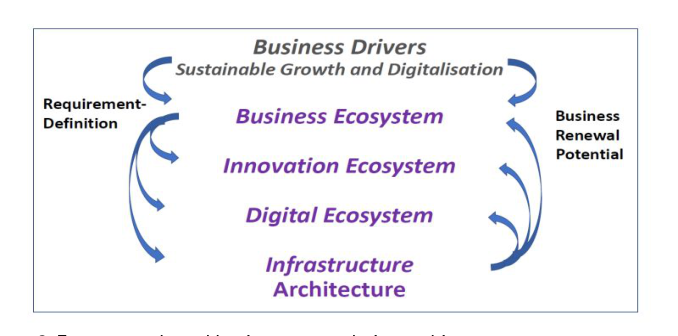
Figure 2: Ecosystem- based business co-evolution architecture.
‘Ecosystem- based innovation process is divided into three stages: Strategic Ecosystem, Innovation Ecosystem and Implementation Ecosystem’ (Ruoho- maa, 2020). Fast implementation is dependent on fluent co-operation over various ecosystems. Some of the partners can be involved in all of these ecosystems.
Continuous demand on sustainability, circular economy and life cycle material chain management is influencing on societies and all industries fast. Sustainable growth and digitalization are business drivers for continuous co-evolution (figure 1). They produce new requirements continuously for business ecosystem, innovation ecosystem and digital ecosystem (figure 2). These are dependent on their development that infrastructure architecture is developed as well to support ecosystem- based co- evolution. That multifu- nctional development creates business renewal potential and increased value for all partners in ecosystems.
Ecosystems are built on the interaction between business, entrepreneurs, research, public administration and third sector actors. An ecosystem is both a structure and a process of interaction through which complementary actors create value together. An ecosystem strategy is a strategic alignment of the return on value between the parties to a networked business.
The ecosystem has several parallel network structures, united by a shared vision and common goals, as well as an operating model to guide the carrying out the goals according strategic roadmap and implementation.
Digital platforms as the backbone of digital ecosystem enable different actors, users, providers and other stakeholders across organizational boun- daries jointly carry out value-added activities in accordance with common policies. They are strongly determined by a new cumulative resource that generates and transmits value: digital information, data, and new technolo- gies related to its processing.
The premise of ecosystem thinking is that the ecosystem produces through broad-based and interactive cooperation simultaneously more value than individual actors alone. At the same time, the ecosystem is constantly evolving as a result of the targeted and random actions of the actors and interacting
with the environment. Understanding these interactions, interdependencies and visibility is central to guiding ecosystem functioning, setting goals for effectiveness, and anticipating the path of development.
Is it important to make sure that all actors in the ecosystem can anchor their perceptions of ecosystems to targeted value propositions and returns, not corporate identity. This change in mindset is essential as we create and implement a management strategy in the ecosystem world. Ecosystems are defined around the roles, positions, and flows between partners that create value. Interface process management is essential. There are no losers in a successful ecosystem - only partners who benefit in different ways.
Ecosystems and networks cannot be “managed” in the traditional sense of the word from position authority. Self-organization takes place alongside enthusiasm. Trust is an important part of social capital. Trust is more effective than authority, control or money. The greater the uncertainty and risks, the greater the need for trust.
The guideline for ecosystem co-evolution process consists of the following areas:
A common vision for the functioning of the ecosystem
Describes the structural (topography) and functional definition (processes) of an ecosystem
Principles of value return and identification
Defines the rules of the game for the functioning of the ecosystem
Defines the roles of partners
Serves as a support tool for ecosystem management and self-organization
The operating guidelines for common use are stored in the ecosystem’s operating instructions.
SUSTAINABLE BUSINESS MODEL ANALYSIS Circular economy has to be understood as economic theory. All the circu- lar economy ecosystems are based on economic theory (fig. 2), and they are not working if they are not economically viable. No more goods are con- stantly produced, instead consumption is based on the use of services rather than ownership: sharing, renting and recycling. Value is tied to materials sources, which are maintained in society as long as possible. That leads us to continuous resource efficiency.
Digitalization has enabled the business of sharing platforms (fig. 2). The digital platform enables sharing. It is also scalable to all type and size of business ecosystems in different forms. Online storage and logistic operations have spread as business model for trade and retail business. Construction and manufacturing business ecosystems have built “platform of trust”- type of information sharing and storing environments for speeding up and clarifying co-operation on business interfaces. It also provides backbone for transport optimization.
In many of the businesses the product delivered and installed to custo- mer is becoming as platform for service in the form of life cycle service. Virtual model as digital twin of the product is the backbone for continuous
Future Ecosystem Ensuring Competitiveness in Continuous Co-Evolution 7
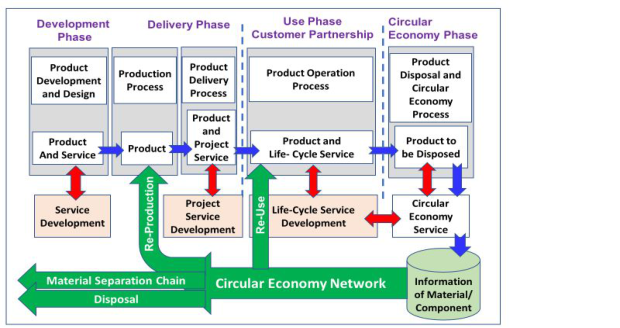
Figure 3: Material flow in product life- cycle business.
co-operation and service with and for customer. Remote diagnostic and pre- dictive maintenance have become common services for customer as product life cycle service. Real time data is collected globally from all products and stored as dynamic state of the process and as use cases for service purposes estimating customer process functioning failure or product fraction. Resou- rce efficiency is possible to increase in many ways on this business model if ecosystem interfaces are clear and data and information are defined well on interface operations.
Material recycling in consumer goods type of business is has in recent years started to formulize and consumer waste e.g., plastics and carton have become to have value in circular economy ecosystem. Anyway, it could not have happened if no economically viable ecosystem had emerged. There should be sufficiently value in material flow to be recycled. Material flows have to be homogenous and uniform to have enough value to be used for circular business ecosystem. Electronic components normally have specific materials as earth metal, palladium.
Material recycling of mechanical parts of product requires well organized item management of supplier network (fig. 3). Material recycling of mecha- nical parts of product requires well organized item management of supplier network. Every part should have identity and identity should have also mate- rial knowledge on it. During development and design phase also item life cycle is roughly determined and valuable material recycling defined. Item is follo- wed over the life cycle and turned-on circular economy chain to be separated and recycled (fig. 3). Material recycling in product and life cycle business after disposal of product is a developing business model and ecosystems are still evolving. Legislation over disposed product material reuse is under prepara- tion and when completed it will influence on material chain business model and industrial symbiosis- based ecosystem formulation.
DISCUSSION AND CONCLUSION The pressure of the market and the environment is growing towards the pri- nciples of sustainable development, where resources are used as efficiently as
possible. This requires new holistic economic theory, which must be based on profitable business. Circular economy thinking provides the basis for the holistic development of theory. The article highlights the most important business models. The efficiency of business models is based on ecosystem cooperation and the opportunities provided by digitalization to create new profitable businesses in a sustainable way.
The business environment is becoming complex and rapidly changing, and ecosystem development has been perceived to best meet this challenge. Ecosystem innovation and development is based on the fact that it brings competitiveness and profitability to the participating companies.
Future competition is not determined by the amount of data acquired or the ability to analyze the data collected, but by the ability to turn it into profi- table business models. These are realized at the interfaces of different business sectors so that the virtual and real worlds mix. People now make decisions in networks so that each party has independently acquired the information on which each decision is based. In the ecosystems of the future, knowledge will be shared, and the decision will be made on the basis of the common knowledge produced by artificial intelligence and the knowledge generated by human interaction. Real-time decision-making is real-time and analytical.
Ecosystem-based development is a long journey but will provide solutions for complex problems and situation. Technology opportunities and digitali- zation should be applied on data- based sustainable economic innovations. The complexity of sustainable business co-evolution is difficult to manage without ecosystem- based approach.
REFERENCES
Adner, R. (2021) Winning the Right Game: How to Disrupt, Defend, and Deliver in a Changing World, MIT Press. Bartels, R., Elser, B., Ulbrich, M. (2020) Winning in Circular Economy. Accenture
Executive Report Bastante-Ceca, M., Fuentes-Bargues, J., Florin-Constantin, M., Hufnagel, L. (2020) The Need to Change Paradigm- Sustainability and Development at the 21st Cen- tury. IntechOpen Publishing. DOI: htp://dx.doi.org/10.5772/intechopen.90655 Ecosystem Bughin, J., Kretchmer, T., Zeebrock, N. (2019) Experimentation, Learning and Stress:
The Role of Digital Technologies in Strategy Change. SSRN Electronic Journal, DOI: 10.2139/ssrn.3328421 Burton, Besty (2017), Eight dimensions of business ecosystems, Gartner, June 2017 https://www.gartner.com/smarterwithgartner/8-dimensions-of-business- ecosystems/ Curnani, CP (Jan 7th 2020) Sustainability and profitability can co-exist. World
Economic Forum, Davos 2020. Gawer, A. (2021) Digital platforms and ecosystems: remarks on the dominant organizational forms of the digital age. Online Journal of Innovation Organization & Management, Taylor & Francis Inc. DOI: 10.1080/14479338.2021.1965888 Jacobides, M., Cennamo, C., and Gawer, A. (2018), Towards a Theory of Ecosy-
stems. Strategic Management Journal, 39(8): 2255-2276 Moore J.F. (1993), Predators and Prey: A New Ecology of Competition. Harvard Business Review., vol. 71, 1993, pp. 75–83.
Future Ecosystem Ensuring Competitiveness in Continuous Co-Evolution 9
Razavi, A., Krausen, P.J., Abbas Strommen-Bakhtiar, (April 2010), From business ecosystems toward Digital Ecosystems, Conference paper DOI: 10.1109/DEST.2020.5610633 Ruohomaa, H. (2020) Ecosystem-based Development in the Transition of Fourth Industrial Revolution. http://urn.fi/URN:ISBN:978-952-476-931-0 Sebastian I., Weill, P., Woermer S. (2021) Driving Growth in Digital Ecosystems. MIT
Sloan Management Review, Fall 2020, Vol 62, No 1, MIT Press, Cambridge, USA. Staub, N., Haki, K., Aier, S., Winter, R., Magan, A. (2021) Evolution of B2B Platform Ecosystems: What Can Be Learned from Salesforce? ECIS 2021 Research Papers. 141. https://aisel.aisnet.org/ecis2021_rp/141 Wells, P. (2013), Sustainable business models and the automotive industry, IIMB
Management Review (2013) 25, p.228 – 239 Gerholdt, J. (April 22th, 2015) The 5 business models that put the circular economy to work, Accenture- Report. https://www.greenbiz.com/article/5-business-models- put-circular-economy-work Chung, V., Dietz M., Rab, I., and Townsend, Z. (2021) Ecosystem 2.0: Climbing to
the next level. McKinsey Quarterly.
LISTED IN THE AHFE DIGITAL BOOKSTORE CATALOGUE
Explore the complete digital volume
Human Factors, Business Management and Society
Read this individual research paper free through the original publisher, or explore the full digital proceedings book.
ISBN 978-1-958651-32-2
Explore this ISBN in the AHFE Bookstore ↗Listed in the July 2026 bookstore catalogue; search by ISBN to confirm current availability · Digital book purchase optional