Heikki Ruohomaa, Marina Weck, Vesa Salminen, Heidi Kerkola (2025). Supporting Small and Medium-sized Enterprises with Smart City Data for Circular Innovations. In: Human Factors, Business Management and Society. AHFE Open Access, vol. 176, pp. 160–174. https://doi.org/10.54941/ahfe1006314
The exponential growth of data and the rapid advancement of technology are driving transformative changes globally. Simultaneously, urbanization is speeding up, positioning cities as the primary environments in which vast amounts of data are generated and used. This trend presents both opportunities and challenges, particularly in the context of sustainable urban development and carbon neutrality goals. Many services in urban areas are provided by small and medium-sized enterprises (SMEs), making their development critical to achieving these goals. Cities have a strong interest in supporting the growth of companies that provide urban services and operate within city infrastructures. This work-in-progress paper presents the preliminary findings from an exploratory case study. The aim of this study is to investigate the role of cities in enabling circular innovations among service providers, with a specific focus on how city-generated data can support SMEs in adopting circular practices. The findings highlight the crucial role cities play in helping service providers develop circular innovations by offering digital platforms, ensuring open data access, fostering public–private partnerships (PPPs), implementing supportive policies, and providing financial incentives. Together, these efforts create an environment where service providers can adopt circular business models (CBMs) and integrate resource-efficient, waste-reducing practices into their operations. The findings also suggest that SMEs can drive circular innovations by integrating open city data with their proprietary "my data" and by leveraging smart city data to optimize resource use. They can further strengthen their efforts by adopting advanced AI and analytics tools for predictive insights and by following a structured CBM development cycle.
The volume of data generated globally is expected to increase at an exponential rate, driven by the advancements in digital technologies, expansion of the Internet of Things (IoT), and growing reliance on data- driven decision-making. Simultaneously, urbanization is accelerating. The urban population has more than doubled in the past 40 years and is expected to reach 5 billion, accounting for nearly 55% of the global population by
Supporting Small and Medium-Sized Enterprises with Smart City Data 161
2050 (European Commission, 2023). As cities expand, they generate and utilize a significant share of the world’s data through their infrastructure and the activities of their inhabitants. Cities also rely on data for service production and management.
This growing dependence on data not only enhances urban functionality but also plays a crucial role in addressing major global challenges, including sustainable development, carbon neutrality, and cost-efficient energy solutions. Often referred to as “wicked” problems, these challenges are complex and interdependent, and they lack straightforward solutions, necessitating innovative approaches. To tackle these challenges, cities must actively integrate digital technologies, data-driven decision-making, and collaborative governance while developing and enhancing services for their residents (Bibri, 2019).
An important aspect of this transformation is the key role of businesses, particularly small and medium-sized enterprises (SMEs), that provide services for cities. To remain competitive in an increasingly sustainability-driven services market, SMEs must rethink traditional practices and adopt new circular business models (CBMs), “which replace the ‘end-of-life’ concept with reducing, alternatively reusing, recycling and recovering materials in production/distribution and consumption processes” (Kirchherr et al., 2017, p. 224) and are increasingly data driven. However, the effectiveness of these models depends on data being available, accessible, accurate, and up to date. While digital technologies enable efficient data utilization, regulatory challenges and gaps in the “rules of the game” can pose significant obstacles. In response to these challenges, discussions about the concept of data spaces and the fair data economy have gained momentum in Europe, emphasizing the need for clear regulations and ethical frameworks to ensure fair data access (Lähteenoja, 2023).
Cities must also play an active role in fostering sustainable business innovation by serving as platforms and providing SMEs with opportunities to develop and test new solutions. At the same time, cities should act as strategic partners in defining and maintaining service chains, particularly for SMEs, ensuring that public–private collaborations support long-term sustainability objectives. Therefore, it is important that the data collected by cities be effectively utilized by SMEs to develop innovative, data-driven services, optimize supply chains, and create new CBMs. These advancements not only enhance business operations but also play a pivotal role in reducing environmental impact, improving overall urban living conditions, and accelerating the achievement of sustainable development goals. Exploring these assumptions, this work-in-progress paper presents preliminary findings from an exploratory case study. The aim of this study is to investigate the role of cities in enabling circular innovations among service providers, with a specific focus on how city-generated data can support SMEs in adopting circular practices. To guide this investigation, the following research questions are posed:
How can cities support their service providers in developing circular innovations?
How can the data generated by cities be effectively utilized by SMEs to drive circular innovations?
The study examines data collected between 2023 and 2025 from two case study projects undertaken in Finland: “DataMill—Sustainable Data Management for Companies in a Smart City Environment” and “KIITO—Renewing Business with Circular Economy Know-How.” The data collection process incorporated multiple sources, including observations, documents, interviews, and workshops with 26 SMEs participating in these regional development projects. This approach ensured a comprehensive understanding of the phenomena under investigation. For data analysis, a qualitative thematic analysis was employed to identify patterns and themes within the collected data. By extracting key themes from diverse data sources, the researchers gained valuable preliminary insights into the phenomena, laying a robust foundation for the continuation of this research.
CONCEPTUAL FRAMEWORK The Role of Data in Sustainable Urban Development
The amount of data worldwide is predicted to grow exponentially, a trend that is expected to continue and further underline the growing importance of data across various domains. The per capita rate of daily data- driven interactions is projected to increase 20-fold over the next decade as homes, workplaces, appliances, vehicles, wearables, and implants become increasingly data-enabled. By 2025, nearly 20% of the global datasphere is expected to be critical to daily life, with almost 10% of that classified as “hypercritical”, which have a direct and immediate impact on the health and wellbeing of users (International Data Corporation, 2017). At the same time, the total volume of data created, captured, copied, and consumed globally is forecast to rise rapidly, reaching 149 zettabytes in 2024. By 2028, global data creation is projected to exceed 394 zettabytes (Statista, 2024).
This exponential growth in data generation is largely driven by several key technological advancements. The expansion of cloud computing allows organizations to collect, store, and process ever-increasing amounts of information from customers, the business market, and social media platforms. Additionally, the widespread adoption of Internet-connected devices, 5G communication networks, and IoT technologies generates vast amounts of real-time data, further accelerating data creation (Ruohomaa et al., 2020). The increasing use of digital technologies, alongside advancements in data analytics, machine learning, and generative AI, enhances the efficiency of data collection, analysis, and utilization, making data more accessible and actionable than ever before.
As the data landscape continues to evolve, its role in sustainable urban development becomes even more significant. The increasing deployment of IoT devices, 5G networks, and cloud computing solutions enhances data collection from various sources across urban areas. City data are collected from a wide range of domains, including transportation, emergency services, public safety, energy, environmental monitoring, public health, social media,
Supporting Small and Medium-Sized Enterprises with Smart City Data 163
economics, telecommunications, tourism, education, culture, and urban planning (Ma et al., 2019). For example, intelligent traffic systems and GPS tracking devices collect real-time data on traffic flows, congestion levels, and movement patterns, thereby helping optimize urban mobility. Similarly, smart buildings and infrastructure continuously generate data on their usage and efficiency, contributing to improved resource management. Additionally, environmental sensors monitor noise levels, air quality, and other factors, producing vast amounts of data that support environmental protection and urban planning efforts. Furthermore, data collected on resident and user interactions with city services can inform urban planning and the enhancement of public services. Finally, city management systems utilize data on residents’ needs, infrastructure, and municipal services to facilitate more informed and efficient decision-making (OECD, 2023).
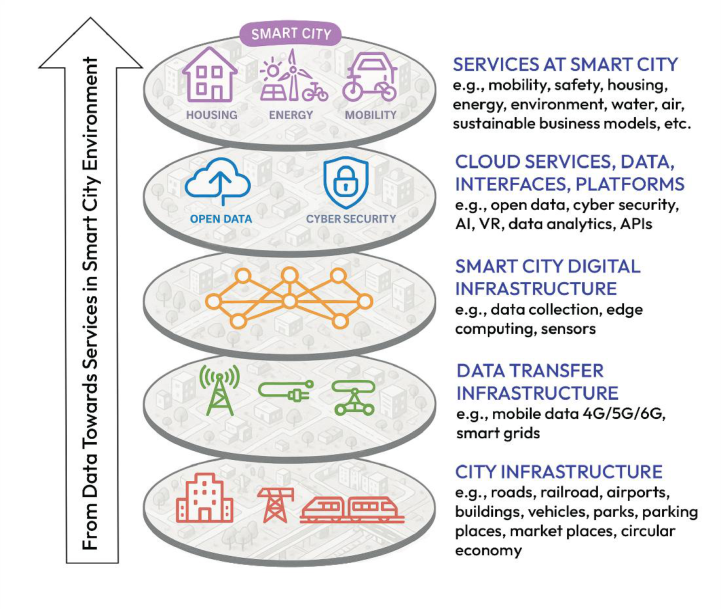
The use of city data in developing new CBMs and supporting company operations must be viewed holistically as part of a broader digital ecosystem (Figure 1). This ecosystem consists of multiple levels of digitalization, some of which are deeply intertwined with the city’s infrastructure.
Figure 1: From Data Towards Sustainable Services in Smart City Environment—Digital Ecosystem [Adapted from the Finnish Government, 2022].
In summary, in the context of sustainable urban development, data plays a vital role in shaping resilient and efficient cities. The increasing volume
of urban data has enabled the development of more sophisticated analytics and predictive models, allowing cities to optimize resource management, enhance service availability, and improve residents’ overall quality of life. SMEs can also benefit from this data expansion, as it creates opportunities to develop innovative, data-driven products and services. By integrating data into urban development strategies, cities and businesses can collaborate to drive carbon neutrality, support the circular economy (CE), and promote long-term economic and environmental resilience.
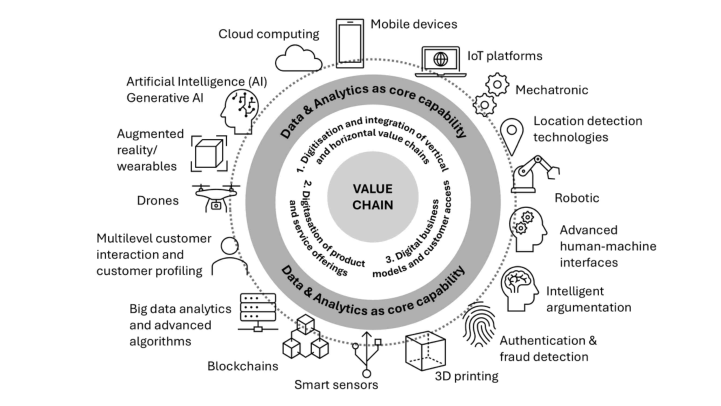
Data Spaces and the Fair Data Economy in Sustainable Innovation The increasing availability of affordable, data-based technologies (Figure 2) transforms decision-making processes across the public and private sectors. As data become more accessible and analyzable, companies can leverage these insights to develop sustainable products and services, optimize supply chains, and adopt innovative CBMs that align with environmental and economic sustainability.
Figure 2: Framework for contributing digital technologies [adapted from Pricewater- houseCoopers (PwC), 2016].
At the core of this transformation lies the value economy, which shifts the focus of success beyond traditional financial measures to include sustainability and resource efficiency. To succeed in this evolving environment, companies must rethink their business models, performance indicators, and organizational values while also addressing the value chain inefficiencies that may hinder the adoption of new CBMs. A practical tool that supports SMEs in self-assessment and enhances their process capabilities is crucial for identifying and overcoming these inefficiencies and ensuring a smoother transition to CBMs (Weck et al., 2024). As multidimensional value—encompassing economic, social, and environmental
Supporting Small and Medium-Sized Enterprises with Smart City Data 165
impact—becomes the ultimate measure of success, mastering this new paradigm is essential for long-term sustainability and positive societal impact (Abeysinghe, 2023).
While the growth of data and advancements in technology offer significant opportunities, challenges related to data ownership, sharing, usage rights, and data quality must be addressed. To ensure that data can be effectively utilized while maintaining transparency and fairness, the European Commission has emphasized the importance of data spaces and the fair data economy. There is a clear and practical structure for accessing and using data: common European data space have fair, transparent, proportionate and non-discriminatory access rules, due to well-defined and trustworthy data governance mechanisms. (European Commission, 2022).
In the European Union, data spaces refer to shared environments in which data from multiple sources can be accessed, integrated, and processed. They prioritize interoperability, enabling various organizations and systems to connect seamlessly. These spaces facilitate data sharing while ensuring compliance with regulations such as the General Data Protection Regulation (Vahti, 2018). Data spaces are designed to enhance collaboration across industries, enabling companies and institutions to share and analyze data collectively for improved decision-making. They often include industry- specific applications in sectors such as manufacturing, healthcare, and finance, wherein multiple stakeholders benefit from streamlined data exchange. By implementing standardized protocols and formats, data spaces ensure secure and structured access to valuable information, typically through application programming interfaces (APIs) or data lakes.
Complementing the technical framework of data spaces, the fair data economy emphasizes ethical considerations in data usage. It promotes fairness, data sovereignty, and privacy while ensuring that data contributors, whether individuals or organizations, are compensated and their rights respected (Sitra, 2021). The fair data economy is built on several key principles. Transparency requires organizations to clearly communicate how data is collected, used, and shared. Privacy and security emphasize the need for strong governance frameworks and security measures to protect personal and sensitive data. Empowerment ensures that individuals and communities have control over their data and can benefit from their use.
While data spaces focus on the technical and infrastructural aspects of data sharing, the fair data economy ensures ethical and equitable data practices. Data spaces aim to enhance collaboration and enable data-driven decision- making, whereas the fair data economy ensures that all stakeholders benefit from the data ecosystem in a just and transparent manner. To create a sustainable, data-driven urban and business landscape, both concepts must work together. Data spaces provide the foundation for connectivity and information exchange, while the fair data economy establishes an ethical framework to ensure that the data are used responsibly and inclusively. Together, they drive innovation, sustainability, and equitable economic growth in the evolving digital landscape.
According to a 2021 Sitra survey, which gathered insights from 1,200 European companies across four countries regarding attitudes and
commitment to a fair data economy, companies that are more deeply engaged in data-driven business models tend to implement fair data principles—such as privacy, ethical codes of conduct, and transparency—more effectively within their organizations. In a fair data economy, individuals, governments, and companies must consider not only legal and technological constraints but also societal and economic expectations surrounding data usage. While these factors may sometimes limit the scope of data utilization, they also play a crucial role in fostering trust and fairness. Together, they establish a framework within which responsible and ethical data practices can thrive (Saaristo and Heikkilä, 2022).
In establishing fair data spaces, cities play a critical role in fostering trust, transparency, and ethical data usage. By creating structured frameworks that balance innovation with regulatory and societal expectations, cities enable public and private organizations, as well as individuals, to operate within a secure and equitable data ecosystem. This ensures that data-driven advancements contribute to sustainable urban development while fairness and public confidence in the digital economy are upheld.
Enhancing Sustainability With Circular Business Models Sustainability focuses on integrating environmental resilience, economic growth, and social inclusiveness to ensure the well-being of both current and future generations. Conversely, CE serves as a strategic approach to achieving sustainability (Pieroni et al., 2019). These two concepts are deeply interconnected, driving the structural changes needed to implement effective circular innovations, which should be embraced as an opportunity to enhance competitiveness. According to the European Commission, “There will be no sustainability without competitiveness, and there will be no long- lasting competitiveness without sustainability” (2010, p. 1). This statement underscores the increasing necessity of integrating sustainability into business strategies to ensure long-term success.
Representing an economic approach, the CE integrates various business models, typically classified into five fundamental frameworks, offering a foundation for business development and transformation (Gerholdt, 2015). The typology proposed by Sitra and Deloitte (2022) encompasses five CBMs: circular inputs, sharing platforms, product as a service, product life cycle extension, and resource recovery. By adopting these CBMs, firms can effectively transform inefficiencies within their value chains into new value propositions, with each model offering unique business benefits, financial impacts, operational effects, and varying degrees of implementation ease (Sitra and Deloitte, 2022). Within these models, technology and data play a pivotal role as enablers. Digital platforms, sharing platforms, IoT devices, sensors, and automation leverage digitalization to optimize resource utilization and enhance operational efficiency. Today, the identification and monitoring of inefficiencies have become more cost-effective than ever before (Sitra and Deloitte, 2022).
Innovative CBMs drive companies toward sustainability, compelling them to develop and adopt new solutions and technologies that address
Supporting Small and Medium-Sized Enterprises with Smart City Data 167
environmental and social challenges. Companies must innovate and adapt their business models by integrating CE principles into their strategies (Pieroni et al., 2021), despite implementation challenges that can sometimes lead to execution failures (de Angelis, 2022). The success of CE-driven innovations largely depends on effective data-to-service management and multidisciplinary collaboration (Salminen et al., 2022). In this evolving landscape, competition will no longer be determined solely by the volume of and ability to analyze available data but, rather, by the capacity to transform the data into innovative business models. These new models emerge at the intersection of multiple industries in which the physical and digital worlds converge. Decision-making is increasingly taking place within networked ecosystems, wherein stakeholders independently acquire and apply information to drive strategic decisions (Salminen et al., 2017).
CASE STUDY FINDINGS Empowering Service Providers to Drive Circular Innovations
The initial findings from the study provided insights into how cities can effectively support their service providers in developing circular innovations.
Empowering policy and regulatory frameworks One of the most effective ways in which cities can support service providers is through empowering policy and regulatory frameworks that encourage the adoption of CBMs. By implementing sustainability requirements in public procurement and service contracts, cities can incentivize suppliers to incorporate circular principles, such as product life extension, reuse, and remanufacturing. Establishing clear guidelines and standards for circularity ensures that service providers prioritize waste reduction, material recovery, and resource efficiency in their offerings. Additionally, cities can streamline permitting processes and regulatory compliance for companies adopting circular strategies, thus reducing administrative barriers that may hinder innovation.
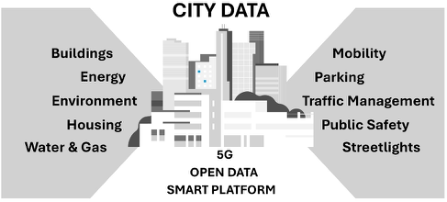
Open data and digital infrastructure Another key area of support is open data and digital infrastructure. Cities generate vast amounts of data related, for example, to waste management, energy consumption, transportation, and infrastructure (Figure 3). By granting service providers access to centralized platforms, APIs, and real- time data, cities can enable companies to optimize their operations, identify circular opportunities, and track the life cycles of materials.
For instance, a waste collection company could use city-generated data to enhance logistics for material recovery, while an energy provider could optimize consumption patterns based on real-time insights. Cities can further facilitate the integration of digital tools, such as IoT sensors and blockchain technology, to improve transparency and traceability in circular supply chains.
Figure 3: Data available in the smart city environment visualized in the DataMill project.
Public–private partnerships and collaborative ecosystems Public–private partnerships (PPPs) and collaborative ecosystems are essential in driving circular innovations. Cities can act as facilitators by bringing together companies, research institutions, and community stakeholders to co-develop circular solutions. By creating innovation hubs, accelerators, and pilot projects, cities can supply service providers with testing environments for CBMs before scaling them. Municipalities and private sector suppliers working together can create closed-loop systems in which the waste from one service becomes a resource for another, enhancing industry synergies. Establishing feedback channels through which companies can communicate their data needs and challenges ensures that city data remains relevant and useful to companies.
Financial incentives and funding opportunities Financial incentives and funding opportunities further strengthen circular innovation efforts. Cities can offer grants, subsidies, and tax incentives to service providers that implement circular practices. Green financing mechanisms, such as impact investment funds or sustainability-linked loans, can encourage companies to invest in circular technologies and infrastructure. Additionally, cities can integrate CE criteria into their investment and economic development strategies, ensuring that circular innovations receive financial backing for long-term success.
By implementing these strategies, cities can effectively support their service suppliers’ efforts to develop circular innovations, leading to a more sustainable urban environment. Through regulatory incentives, data accessibility, collaboration, and financial support, cities can accelerate the transition to a CE and enable service providers to create long-term economic, environmental, and social value.
Utilizing City-Generated Data to Drive Circular Innovations An examination of the data collected from two case-study projects offered the following key perspectives on how city-generated data can be effectively utilized by SMEs to drive circular innovations.
Combining open city data with a company’s proprietary “my data” The vast amounts of data generated by cities present a significant opportunity for SMEs to drive circular innovations. However, the open data alone does
Supporting Small and Medium-Sized Enterprises with Smart City Data 169
not always lead to new business models. The true potential lies in combining open city data with a company’s proprietary “my data,” thereby enabling the development of CBMs, optimized supply chains, and new products and services designed for sustainability.
Smart city data for optimizing resource utilization Smart city data can also help SMEs optimize resource utilization in ways that directly align with CE principles. Companies can utilize smart city data to enhance resource efficiency, optimizing energy consumption and waste management while identifying opportunities for recycling and repurposing. This not only leads to cost savings but also promotes sustainability. Additionally, real-time data from IoT devices and sensors deployed throughout the city enable companies to perform real-time analytics and enhance responsive operations.
Advanced AI and analytics Advanced AI and analytics tools further enhance the potential of city- generated data. AI-driven predictive analytics can assess waste patterns, resource flows, and material availability, enabling companies to plan more effectively for material recovery and reuse. Generative AI can also support companies in designing circular products and optimizing manufacturing processes by analyzing trends in urban consumption, customer preferences, and regulatory shifts. Furthermore, dashboards that visualize smart city data can aid companies in identifying opportunities for circular innovations, such as pinpointing areas in which excess materials can be collected and redistributed.
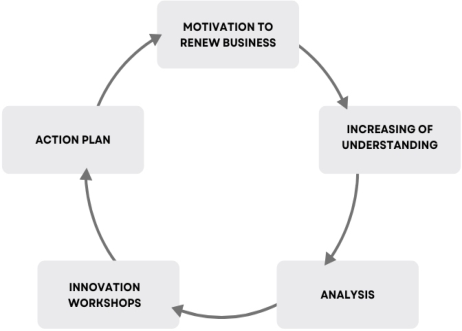
Utilizing city-generated data to renew business models The development cycle for utilizing city-generated data to renew business models consists of the following five defined stages (Figure 4):
Figure 4: CBM development cycle defined in the KIITO Project [Adapted from Weck et al., 2025].
Stage I—Motivation to Renew Business City-generated data provide valuable insights into changing consumer behavior, particularly the shift from product ownership to service-based consumption. By analyzing urban mobility patterns, resource consumption trends, and digital service interactions, companies can identify emerging demands and gain the motivation to renew their business models and adapt and refine their offerings accordingly. This data-driven approach enables companies to develop CBMs, such as shared mobility, rental services, and subscription-based solutions, aligning with evolving customer preferences and sustainability goals.
Stage II—Strengthening Understanding By exploring emerging CBMs, assessing the company’s interests and resources, and identifying opportunities to integrate data-driven solutions into operations, companies can better understand the development of CBMs that leverage city data. This stage also involves evaluating potential challenges, such as regulatory compliance, market acceptance, data accessibility, and risks. Additionally, engaging stakeholders and industry partners early on can provide valuable insights and foster collaboration, ensuring a smoother transition to data-powered CBMs.
Stage III—Analysis of Circular Potential and Digital Readiness Understanding companies’ circular potential and digital readiness is crucial to driving sustainable innovation, integrating data-driven solutions, and utilizing city-generated data. Assessing circular potential involves identifying opportunities for resource efficiency, waste reduction, and CBM adoption. At the same time, evaluating digital readiness ensures that companies have the necessary technological infrastructure, data capabilities, and digital competencies to effectively leverage smart city data. By combining circular potential and digital readiness, companies can transition toward CE practices while optimizing their operations through digital innovation.
Stage IV—Innovation Workshops Innovation workshops provide a collaborative platform where companies and network partners can explore data-sharing opportunities and adopt new digital solutions. By engaging in these workshops, companies can analyse how city-generated data and emerging digital solutions can enhance efficiency, sustainability, and customer responsiveness. Encouraging cross- sectoral collaboration fosters innovative ideas that maximize impact, enabling companies to develop new CBMs. Through structured innovation processes and workshops, companies can accelerate their transition toward data-driven and sustainable operations.
Stage V—Action Plan By capturing experiences and newly acquired competencies in a structured action plan, companies can ensure that lessons learned contribute to long- term business model transformation. Documenting insights from innovation processes, collaborations, and data-driven strategies helps refine approaches, mitigate risks, and identify new opportunities for growth. A well-defined
Supporting Small and Medium-Sized Enterprises with Smart City Data 171
growth strategy, supported by a concrete action plan, enables companies to scale circular innovations, enhance operational efficiency, and adapt to evolving market demands.
CONCLUSION
Aligned with the two research questions, this work-in-progress paper presents initial findings from an exploratory case study, highlighting the critical role of small cities in providing digital platforms, ensuring data accessibility, fostering public–private partnerships, implementing supportive policies, and offering financial incentives. These actions collectively create an environment that promotes the adoption of circular business models (CBMs) and resource- efficient practices.
A key insight is that while open city data alone does not necessarily drive circular innovation, its integration with companies’ proprietary “my data” enables SMEs to optimize supply chains, develop circular services, and improve waste management and resource use. Utilizing smart city data, alongside advanced digital tools such as AI, IoT devices, and real-time analytics, enhances companies’ capacity to make informed decisions, predict resource flows, and innovate new business models.
The KIITO project outlined a structured development cycle to support companies in utilizing city-generated data, focusing on motivating firms, building CBM knowledge, assessing digital readiness, co-developing data-driven solutions through innovation workshops, and creating long- term action plans for transformation. Public–private partnerships and innovation workshops emerged as critical platforms for collaboration and co-development.
Furthermore, the findings emphasize that cities must maintain strong technological infrastructures, ensure clear data governance frameworks, and actively participate in co-development processes to foster an ecosystem where circular innovation can thrive. Strategic use of public procurement to promote circular principles and long-term investments in know-how, data warehousing, and SME-specific development support are also crucial.
Overall, cities are uniquely positioned to act as key facilitators of the shift toward a data-driven circular economy, improving their own services while strengthening the broader regional economy and environmental sustainability through targeted collaboration, policy-making, and digital innovation.
However, there are several limitations in the study. As an exploratory case study, the findings are context-specific and may not fully capture the diversity of city structures, service sectors, or regional regulatory environments. Future research should broaden the analysis to include multiple cities across different geographies to validate and refine the proposed approaches. Additionally, while the study identifies key enablers such as digital platforms, open data, and PPPs, it does not deeply assess the operational barriers that SMEs might face when integrating city data with proprietary systems. Further investigation is needed into the effectiveness of digital tools like AI, IoT, and real-time analytics in driving circular practices at scale.
ACKNOWLEDGMENT
The authors acknowledge that the case study, conducted using data collected from three case projects, was co-funded by the European Social Fund (ESF) and the European Regional Development Fund (ERDF). The “KIITO – Renewing Business with Circular Economy Know-How” project (February 2023 – January 2025) was co-funded by the ESF through the Häme Centre for Economic Development, Transport, and the Environment (ELY Centre). The “DataMill – Sustainable Data Management for Companies in a Smart City Environment” project (September 2024 – December 2026) is co-funded by the ERDF through the Regional Council of Häme and by the Cities of Riihimäki, Hämeenlinna, and Forssa in Finland. The “KAP – Digital Autonomous Services in the Circular Economy” project was co-funded by the ERDF through the Regional Council of Häme (Finland).
REFERENCES
Abeysinghe, A. F. (2023). The Value Economy: Why It’s the Next Evolutionary Step in Digital Transformation, Forbes. https://www.forbes.com/councils/forbestechco uncil/2023/10/18/the-value-economy-why-its-the-next-evolutionary-step-in-digi tal-transformation/ Bibri, S. (2019). Advances in Smart Sustainable Urbanism: Data–Driven and Data–
Intensive Scientific Approaches to Wicked Problems. https://dl.acm.org/doi/10. 1145/3368756.3369032 De Angelis, R. (2022). Circular Economy Business Models as Resilient Complex Adaptive Systems, Business Strategy and the Environment, 31(5), pp. 2245–2255. https://doi.org/10.1002/bse.3019 European Commission (2023). Continuing Urbanization, Press release. https://know
ledge4policy.ec.europa.eu/continuing-urbanisation_en European Commission (2022). https://digital-strategy.ec.europa.eu/en/policies/data -spaces European Commission (2010). Industry for Europe—Europe for Industry, Press
release, IP/10/1434, Brussels. https://ec.europa.eu/commission/presscorner/api/fi les/document/print/en/ip_10_1434/IP_10_1434_EN.pdf Finnish Government (2022). National Programme for Sustainable Growth in the Transport Sector in 2021–2023. Publications of the Finnish Government 2022:8, Government Administration Department, Helsinki, ISBN pdf: 978-952-383-598- 6. Gerholdt, J. (April 22nd, 2015). The 5 Business Models that Put the Circular
Economy to Work, Accenture Report. https://www.greenbiz.com/article/5-busine ss-models-put-circular-economy-work International Data Corporation (2017). https://www.seagate.com/files/www-conten t/our-story/trends/files/Seagate-WP-DataAge2025-March-2017.pdf Julian Kirchherr, J., Reike, D., and Hekkert, M. (2017). Conceptualizing the circular
economy: An analysis of 114 definitions, Resources, Conservation and Recycling, Volume 127, pp. 221–232, ISSN 0921-3449, https://doi.org/10.1016/j.resconrec. 2017.09.005 Lähteenoja, V. (2023). Four things everyone should know about the fair data economy. Sitra. https://datataloudentiekartta.fi/en/what-is-fair-data-economy/ (Accessed: 15 November 2024).
Supporting Small and Medium-Sized Enterprises with Smart City Data 173
Ma, M., Preum, S. M, Ahmed, M. Y., Tärneberg, W., Hendawi, A., and Stankovic, J. A. (2019). Data Sets, Modeling, and Decision Making in Smart Cities: A Survey. ACM Transactions on Cyber-Physical Systems, 4(2), Article 14. https://doi.org/10. 1145/3355283 OECD (2023), Smart City Data Governance: Challenges and the Way Forward,
OECD Urban Studies, OECD Publishing, Paris, https://doi.org/10.1787/e57c e301-en Pieroni, M., McAloone, T., Borgianni, Y., Maccioni, L., and Pigosso, D. (2021). An Expert System for Circular Economy Business Modelling: Advising Manufacturing Companies in Decoupling Value Creation from Resource Consumption, Sustainable Production and Consumption, 27, pp. 534–550. https://doi.org/10.1016/j.spc.2021.01.023 Pieroni, M. P., McAloone, T. C., and Pigosso, D. C. (2019). Business Model Innovation for Circular Economy and Sustainability: A Review of Approaches. Journal of Cleaner Production, 215, pp. 198–216. https://doi.org/10.1016/j.jclepr o.2019.01.036 PwC (2016). 4.0 Industry: Building the Digital Enterprise. Global Industry Survey. https://www.pwc.com/gx/en/industries/industries-4.0/landing-page/indus try-4.0-building-your-digital-enterprise-april-2016.pdf (Accessed: 15 November 2024). Ruohomaa H. and Salminen V., (2020), 5G as a driver for transformation of
digitalization in ecosystem-based development, AHFE2020 the San Diego July 16-21, 2020, Publisher Springer, Cham, 2020, Print ISBN 978-3-030-50790-9 Online ISBN 978-3-030-50791-6. Saaristo, A., and Heikkilä, A. (2023). A Fair Data-Driven Economy—The Future of Europe. Turku University Publishing. Report number: CCR INSIGHTS 2/2022. doi: 10.13140/RG.2.2.31528.85761. Salminen, V., Kantola, J., and Ruohomaa, H. (2017). Digitalization and Big Data
Supporting Responsible Business Co-Evolution. In: Kantola, J. et al. (eds.), Advances in Human Factors, Business Management, Training and Education, Springer Nature Publication, pp. 1055–1067. doi: 10.1007/978-3-319-42070- 7_96. Salminen, V., Ruohomaa, H., and Takala, M. (2022). Future Ecosystem Ensuring Competitiveness in Continuous Co-Evolution. In: Vesa Salminen (ed.), Human Factors, Business Management and Society, Volume 56, Issue 56, AHFE International Open Access Publishing, ISBN: 978-1-958651-32. https://doi.org/ 10.54941/ahfe100224521 Sitra and Deloitte (2022). Sustainable Growth with Circular Economy Business
Models: A Playbook for Businesses. Helsinki: Sitra. https://www.sitra.fi/en/public ations/sustainable-growth-with-circular-economy-business-models/ Statista (2024). Volume of data/information created, captured, copied, and consumed worldwide from 2010 to 2023, with forecasts from 2024 to 2028. https://www.statista.com/statistics/871513/worldwide-data-created/ (Accessed: 22 April 2025) Vahti, J. (2018). Controversial EU General Data Protection Regulation could launch human-driven data economy. Helsinki: Sitra. https://www.sitra.fi/en/news/ controversial-eu-general-data-protection-regulation-launch-human-driven-data- economy/
Weck, M., Jalonen, M., and Kerkola, H. (2024). Supporting Adoption of Circular Business Models in Small and Medium Enterprises: Circular Readiness Assessment Framework. In: Vesa Salminen (ed.), Human Factors, Business Management and Society. AHFE International Conference. AHFE Open Access, Volume 135, AHFE International. http://doi.org/10.54941/ahfe1004936 Weck, M., Tolonen, T. & Minkkinen, H. (2025). KIITO project to support
sustainable business operations of SMEs [KIITO-hanke pk-yritysten kestävän liiketoiminnan tukena] in M. Weck (ed.), KIITO – Renewing business with circular economy know-how. HAMK Unlimited Professional. https://urn.fi/URN: NBN:fi-fe2025021211734
LISTED IN THE AHFE DIGITAL BOOKSTORE CATALOGUE
Explore the complete digital volume
Human Factors, Business Management and Society
Read this individual research paper free through the original publisher, or explore the full digital proceedings book.
ISBN 978-1-964867-52-6
Explore this ISBN in the AHFE Bookstore ↗Listed in the July 2026 bookstore catalogue; search by ISBN to confirm current availability · Digital book purchase optional