Emmanuel Nkansah (2025). Optimizing Fundraising Appeals: USING DATA AND MACHINE LEARNING. In: Human Factors, Business Management and Society. AHFE Open Access, vol. 176, pp. 107–112. https://doi.org/10.54941/ahfe1006308
Fundraising is a critical component of non-profit and educational institutions, and optimizing these efforts is essential for ensuring financial sustainability. This paper examines the challenges and solutions involved in improving the efficiency and effectiveness of fundraising appeals, utilizing data and machine learning techniques to enhance donor engagement and campaign outcomes. By implementing predictive analytics through methods such as neural networks and random forests, we analyze donor behaviors and optimize campaign strategies. The research explores the use of unique identifiers for tracking donor responses, the impact of tailored communication on donor relationships, and how these strategies lead to more targeted appeals. Results indicate that data-driven decision-making can significantly enhance conversion rates and overall donation outcomes. Furthermore, improving fundraising efforts directly impacts a university's capacity to support its programs and initiatives, ultimately contributing to student success and enriching the educational experience.
Human higher education institutions rely heavily on fundraising to support scholarships, research, infrastructure, and other critical initiatives, ensuring the sustainability and growth of academic and extracurricular programs. However, traditional fundraising methods often lack the precision needed to maximize donor engagement and contributions, relying heavily on generic approaches that fail to leverage the full potential of donor data. With the advent of machine learning and data analytics, universities now have the tools to transform their fundraising strategies by moving from reactive to proactive methods.
Machine learning enables institutions to analyze vast amounts of donor data, uncovering patterns and trends that can inform personalized outreach and engagement strategies. By leveraging predictive modeling, institutions can identify prospective donors who are most likely to contribute, determine optimal donation amounts, and forecast campaign outcomes with greater accuracy. Additionally, machine learning can enhance donor retention by identifying key factors that influence long-term giving and crafting strategies to strengthen alumni relationships.
This paper examines how machine learning can be applied to enhance the efficiency and effectiveness of fundraising in higher education by focusing on tracking donor responses, predicting donation outcomes, and optimizing
campaign strategies. Specifically, it explores the role of advanced data segmentation techniques in tailoring campaigns to distinct donor groups, enabling institutions to deliver more personalized and impactful outreach. By adopting these technologies, higher education institutions can not only improve financial support through precise targeting and engagement but also foster stronger, more meaningful connections with their donor communities.
The Business Problem: Challenges in Current Fundraising Campaigns Higher education institutions (HEIs) face significant challenges in their fundraising campaigns, including difficulty in accurately tracking the effectiveness of various appeal methods, such as mail campaigns, which hinders the ability to identify successful strategies (Worth, 2020). The lack of detailed and comprehensive data on donor responses further complicates efforts to evaluate which campaigns resonate most effectively, as donor data is often fragmented across multiple platforms (Bekkers & Wiepking, 2011). Additionally, inconsistent donation outcomes create uncertainty in planning future efforts, leading to inefficiencies and suboptimal resource allocation (Sargeant & Jay, 2014). To address these issues, a systematic approach to tracking and analysing donation patterns is essential. Research highlights the importance of leveraging data analytics and technology, such as CRM systems and predictive modelling, to centralize donor data, segment audiences, and personalize outreach efforts, thereby improving campaign effectiveness and donor engagement (Hart, 2018; Kumar et al., 2020; Sargeant & Shang, 2016). By adopting these data-driven strategies, HEIs can make informed decisions, optimize future campaigns, and achieve more consistent fundraising outcomes (Shang & Sargeant, 2017; Dwyer et al., 2019).
Campaign Methods Higher education institutions often grapple with the complexities of fundraising, facing challenges like tracking campaign effectiveness, understanding donor responses, and managing inconsistent donation results. However, these obstacles can be addressed through a strategic blend of traditional and digital fundraising methods. For example, personalized direct mail appeals, such as letters with response cards, remain a powerful tool, particularly for older donors who appreciate tangible, thoughtful outreach. Simultaneously, email campaigns leverage the benefits of digital technology, offering real-time insights into engagement metrics like open rates, click-through rates, and unsubscribes. By harmonizing these approaches, institutions can craft campaigns that resonate with diverse donor segments, ensuring broader reach and higher engagement.
To further refine their efforts, institutions can implement unique identifiers for tracking campaign performance. These identifiers—comprising components like the campaign name, season of distribution, donor category (e.g., alumni, faculty), and a unique code—act as digital fingerprints for
Optimizing Fundraising Appeals: Using Data and Machine Learning 109
each mailing or email. This system enables precise identification of which campaign drives donations, simplifying performance analysis and revealing donor responsiveness patterns. By embracing this data-driven approach, institutions can make informed decisions, optimize future campaigns, and foster meaningful connections with their donors.
Machine Learning and Predictive Analysis Machine learning has the potential to revolutionize fundraising campaigns in higher education by predicting donor behavior and refining outreach strategies. Even in the absence of robust historical data, predictive analysis can generate simulated data to train models that forecast future donation outcomes. Over time, these models can be fine-tuned with real-world data, enabling institutions to continuously enhance their campaign strategies and achieve greater precision in targeting donors.
The process of predictive analysis in fundraising involves a series of carefully planned and systematic steps designed to maximize efficiency and accuracy. The process begins with data extraction from institutional databases, often utilizing robust tools such as SQL to retrieve, clean, and structure the data for analysis. This step ensures that the dataset is comprehensive, accurate, and ready for further processing. Following this, mailing and email lists are meticulously prepared, with unique identifiers or source codes assigned to each mailing slip. These identifiers are critical in enabling precise tracking of donor engagement metrics, including open rate (returned slips) and donation conversion rate. The source codes are generated by campaign type, donor segment, and sequence number.
Once the data is prepared, machine learning models are applied to perform in-depth analyses of historical donation patterns and donor behaviors. These models identify key trends, such as the types of campaigns that resonate with specific donor segments, optimal times for outreach, and factors influencing donor retention. The insights generated from these analyses are then used to predict the outcomes of future campaigns and optimize their design, ensuring maximum impact.
The final stage involves iterative refinement of strategies based on real- time donor responses and feedback. This includes evaluating campaign performance metrics, identifying areas for improvement, and incorporating new data into the machine learning models to enhance their predictive accuracy. By continuously analyzing donor behavior and campaign outcomes, institutions can develop increasingly effective and personalized fundraising strategies that drive greater donor engagement and long-term success. For instance, a model might predict a donation outcome of $14,606 based on 11,000 mailed letters. Similarly, it could forecast a donation of $16,415 from 38,000 emails sent out, of which 9,345 were successfully delivered, 1,578 were opened, and 25 were clicked. By leveraging such insights, institutions can pinpoint the most effective outreach strategies, maximize donor engagement, and significantly improve fundraising outcomes.
110 Nkansah and Kowarsch
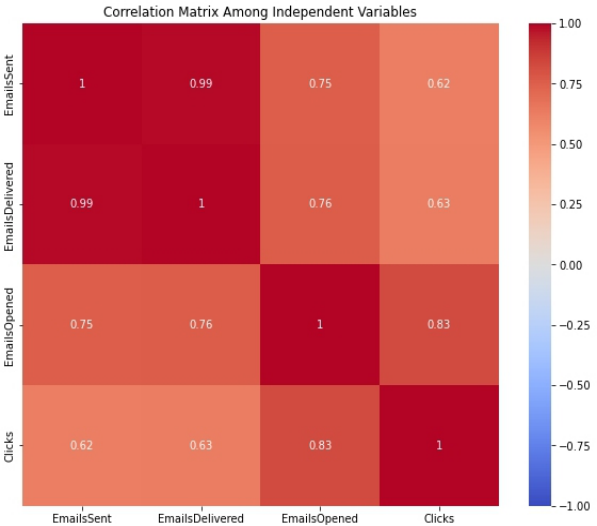
Figure 1: Correlation matrix among features.
Conversion rates serve as a vital metric for evaluating the success of fundraising campaigns, providing insight into how effectively appeals transform recipients into donors. Analyzing these rates across various campaigns and donor segments allows institutions to understand donor preferences and behaviours, enabling them to fine-tune their strategies for greater impact and resonance.
Case Study: La Sierra University La Sierra University showcased the transformative potential of a machine learning-driven approach in optimizing its fundraising efforts. By leveraging unique identifiers to track donations from specific mail and email campaigns, the university gained precise insights into donor responses. These insights powered machine learning models that not only analyzed past donation patterns but also predicted future outcomes with remarkable precision. The results were striking: the models achieved a prediction precision rate of 92.3% and an accuracy rate of 92%, significantly enhancing the effectiveness of their campaigns. This data-driven strategy enabled the university to allocate resources more efficiently, craft highly targeted campaigns, and foster deeper connections with donors. This case underscores the importance of integrating advanced analytics into fundraising, demonstrating how institutions can achieve measurable improvements by embracing technology and data-informed decision-making.
The alumni category emerged as the largest donor category in donations. While email campaigns achieved a moderate open rate of 16.9%, the low
Optimizing Fundraising Appeals: Using Data and Machine Learning 111
click-through rate of 0.27% highlights the need for improved email content and engagement strategies. Predictive models effectively forecasted donation amounts based on email engagement metrics, enabling more efficient resource allocation. Notably, “clicks” showed the strongest correlation with donations, suggesting their critical role in driving contributions. Visual tools like scatter plots are recommended to validate and illustrate this relationship, supporting the findings from correlation analysis.
Table 1: Machine learning-driven fundraising optimization at La Sierra University.
Table available in the original PDF paper.
Aspect Details Approach Machine learning models used to track and predict donor behavior. Tracking Method Unique identifiers for mail campaigns to monitor
donor responses. Model Performance Prediction precision rate: 92.3%; Accuracy rate: 92%. Key Insights Alumni were the largest donor category. Email Campaign Metrics Open rate: 16.9%; Click-through rate: 0.27%. Predictive Insights “Clicks” showed the strongest correlation with donations. Resource Allocation Enabled efficient allocation of resources and targeted
campaign strategies. Visual Tools Scatter plots recommended to validate and illustrate correlations between engagement and donations.
Optimizing fundraising in higher education calls for a data-driven approach that combines machine learning, unique identifiers, and predictive models. By tracking donor responses with precision, analysing the effectiveness of campaigns, and continuously refining strategies, institutions can significantly enhance their fundraising efforts. This approach not only strengthens donor relationships but also ensures more efficient resource allocation. Embracing these data-driven strategies is essential for higher education institutions to achieve sustainable growth and thrive in an increasingly competitive environment.
The use of machine learning and data analytics in fundraising introduces important ethical considerations that institutions must address. Compliance with privacy regulations like GDPR and CCPA is essential to ensure donor data is handled responsibly and securely. Transparency is equally critical, requiring institutions to clearly communicate to donors how their data is being used to improve fundraising strategies. Additionally, predictive models must be carefully designed to avoid biases that could inadvertently exclude or disadvantage certain donor groups, ensuring fairness and inclusivity in all fundraising efforts.
ACKNOWLEDGMENT
The authors would like to acknowledge the Office of Advancement at La Sierra University for their support and contributions to this work.
112 Nkansah and Kowarsch
REFERENCES
Bekkers, R., & Wiepking, P. (2011). A literature review of empirical studies of philanthropy: Eight mechanisms that drive charitable giving. Nonprofit and Voluntary Sector Quarterly, 40(5), 924–973. Booher, H. R., Minninger, J. (2003) “Human systems integration in army systems
acquisition”, in: Handbook of human systems integration, Booher, Harold (Ed.). pp. 663–698. Booher, Harold, ed. (2003). Handbook of human systems integration. New Jersey: Wiley. Chapanis, A. (1996). Human factors in systems engineering. Wiley Series in Systems
Engineering and Management. Andrew Sage, series editor. Hoboken, NJ: Wiley. Dwyer, P., Sargeant, A., & Shang, J. (2019). Fundraising principles and practice. John Wiley & Sons. Folds, Dennis. Gardner, Douglas and Deal, Steve. (2008). Building Up to the Human
Systems Integration Demonstration, INCOSE INSIGHT Volume 11, No. 2. Friedenthal, S. Moore, A. Steiner, R. (2008) A Practical Guide to SysML: The Systems Modeling Language, Morgan Kaufmann; Elsevier Science. Hart, T. (2018). People to people fundraising: Social networking and Web 2.0 for
charities. John Wiley & Sons. Honour, Eric C. (2006) “A Practical Program of Research to Measure Systems Engineering Return on Investment (SE-ROI)”, proceedings of the Sixteenth Annual Symposium of the International Council on Systems Engineering, Orlando, FL. Kumar, V., Rajan, B., Venkatesan, R., & Lecinski, J. (2020). Understanding the
role of artificial intelligence in personalized engagement marketing. California Management Review, 62(4), 135–155. Meilich, Abe. (2008) INCOSE MBSE Initiative Status of HSI/MBSE Activity (Presentation). Sargeant, A., & Jay, E. (2014). Fundraising management: Analysis, planning, and
practice. Routledge. Sargeant, A., & Shang, J. (2016). Fundraising principles and practice. John Wiley & Sons. Shang, J., & Sargeant, A. (2017). Building donor loyalty: The antecedents and role
of commitment in the context of charity giving. Journal of Nonprofit & Public Sector Marketing, 29(1), 1–25. Taubman, Philip. (June 25, 2008) Top Engineers Shun Military; Concern Grow.
The New York Times Website: https://www.nytimes.\penalty\z@{}com/\penalty\ z@{}2008/\penalty\z@{}06/\penalty\z@{}25/us\penalty\z@{}/25engineer.html. Worth, M. J. (2020). Nonprofit management: Principles and practice. SAGE Publications.
LISTED IN THE AHFE DIGITAL BOOKSTORE CATALOGUE
Explore the complete digital volume
Human Factors, Business Management and Society
Read this individual research paper free through the original publisher, or explore the full digital proceedings book.
ISBN 978-1-964867-52-6
Explore this ISBN in the AHFE Bookstore ↗Listed in the July 2026 bookstore catalogue; search by ISBN to confirm current availability · Digital book purchase optional