Zahra Hamdani, Aicha Dif (2025). Business Management in the Digital Transformation Era: Effective Strategies for Achieving Competitive Advantage. In: Human Factors, Business Management and Society. AHFE Open Access, vol. 176, pp. 135–145. https://doi.org/10.54941/ahfe1006311
Modern management thought has evolved significantly due to numerous scientific and intellectual contributions, propelling advancements in the field of management. In its contemporary sense, management involves the effective utilization of available resources to achieve organizational goals, guided by a set of prevailing modern strategies.Therefore, it’s essential that strategies be periodically evaluated and adapted to changes in the external environment. Consequently, the study of business strategies and competitive advantage is one of the most critical areas in business administration, given its direct impact on organizational success and sustainability.In today's rapidly changing business world, effective strategies and a competitive advantage are vital for the survival and growth of companies. These are enhanced through adaptation to shifts in markets, technologies, and consumer trends, providing valuable insights for decision-makers to make better strategic choices.Business strategies and competitive advantage are two fundamental concepts in the field of management, closely linked to organizational success and sustainability.
Today, the world is witnessing an unprecedented digital transformation, fundamentally changing the way organizations operate across various sectors. Digital transformation is no longer just an option but has become an imperative for organizations seeking to survive and compete in this rapidly evolving digital age. This new environment requires innovative and effective business management strategies (Jordão and Novas, 2017) that align with rapid technological changes and meet evolving customer expectations. This research aims to explore and analyze effective business management (Morgan and Berthon, 2008) strategies in the digital transformation era, with a focus on how to achieve sustainable competitive advantage. We will highlight the challenges and opportunities facing organizations in this era, and provide a comprehensive framework (Porter, 2017) of strategies that can help them adapt and succeed. In light of the rapid changes the business world (Bel, 2018) is witnessing because of digital transformation, companies
face significant challenges in maintaining their competitiveness. To explore how companies can adapt traditional business management strategies to leverage the opportunities offered by digital transformation (Nemlioglu and Mallick, 2017), and to identify the various effective strategies that companies can adopt to achieve a sustainable competitive advantage in the digital age, we will address various fundamental concepts within their theoretical framework (Hewitt and Van Rensburg, 2020).
Digital Transformation in the Business World: (Kraus and Durst 2022) Digital transformation is a comprehensive process that involves integrating digital technologies into all aspects of business, leading to radical changes in how organizations operate and deliver value to customers. It includes the use of technologies (Zhu and Westphal 2021) such as:
Artificial Intelligence: to automate processes, analyze data, and make decisions.
Big Data: to collect and analyze massive amounts of data and extract valuable insights.
Cloud Computing: to store and access data from anywhere and at any time.
Internet of Things: to connect devices and objects to the internet and collect data from them.
Blockchain Technology: to enhance transparency and security in transactions.
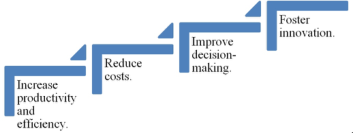
The Importance of Digital Transformation in Business Management Digital transformation is no longer just an option, but has become an imperative for organizations seeking to survive and compete in this rapidly evolving digital age. This new environment demands innovative and effective business management strategies that align with rapid technological changes and meet evolving customer expectations. To achieve this, the following elements must be realized: (Todeschini and Cortimiglia, 2017).s
Improving Efficiency and Productivity
Enhancing Customer Experience
Fostering Innovation.
The Impact of Digital Technologies on Various Aspects of Business Management The following tables explain the impact of digital technologies, such as artificial intelligence, big data, and cloud computing, on various aspects of business management (production, marketing, human resources and finance) (Jordão and Novas, 2017).
Business Management in the Digital Transformation Era 137
Production
Table 1: Explains the impact of digital technologies, such as artificial intelligence, big data, and cloud computing on production.
Table available in the original PDF paper.
Big Data Cloud Computing Internet Artificial Intelligence
Production Used to automate production processes and improve efficiency and quality.
Enables the collection and analysis of production data to improve processes and reduce waste.
Enables the remote management of production processes and real-time performance monitoring.
Enables the connection of devices and equipment in factories to collect data and improve efficiency.
Enables the prediction of equipment failures and preventive maintenance.
Helps improve supply chain management and demand forecasting.
Helps improve collaboration between production teams and suppliers.
Helps track the movement of raw materials and products in the supply chain.
Helps improve inventory management and reduce costs.
Marketing
Table 2: Explains the impact of digital technologies, such as artificial intelligence, big data, and cloud computing on marketing.
Table available in the original PDF paper.
Big Data Cloud Computing Internet Artificial Intelligence Enables the efficient and effective storage and management of marketing data.
Marketing Used to analyze consumer behavior and provide personalized marketing experiences.
Enables the collection of data on customer interaction with products and services in the real world.
Enables the collection and analysis of massive amounts of data to understand market trends and customer preferences.
Helps provide integrated marketing experiences across various digital channels.
Enables the automation of marketing campaigns and improves customer targeting.
Helps provide interactive and innovative marketing experiences.
Helps improve marketing strategies and identify the most effective channels.
Helps create innovative and engaging marketing content.
Enables the measurement of marketing campaign performance and improves return on investment.
138 Hamdani and Dif
Human Resources
Table 3: Explains the impact of digital technologies, such as artificial intelligence, big data, and cloud computing on human resources.
Table available in the original PDF paper.
Big Data Cloud Computing Internet Artificial Intelligence
Human Resources Used to automate recruitment, training, and performance evaluation processes.
Enables the management of employee data and the provision of human resources services online.
Enables the tracking of employee attendance and performance in workplaces.
Enables the analysis of employee data to identify trends and problems and provide effective solutions.
Helps improve the work environment and increase safety.
Enables the analysis of employee data to identify training needs and improve performance.
Helps improve talent management and identify high-performing employees.
Helps improve communication and collaboration between human resources teams and employees.
Helps improve employee experience and increase job satisfaction.
Finance
Table 4: Explains the impact of digital technologies, such as artificial intelligence, big data, and cloud computing on finance.
Table available in the original PDF paper.
Big Data Cloud Computing Internet Artificial Intelligence
Finance Used to automate accounting and financial auditing processes.
Used to automate accounting and financial auditing processes.
Enables the management of financial data and the provision of financial services online.
Can be used in the process of tracking equipment that companies own, and tracking its financial condition.
Enables the analysis of financial data to predict trends and make better investment decisions.
Enables the analysis of financial data to predict trends and make better investment decisions.
Helps improve collaboration between finance teams and investors.
Helps improve financial risk management and detect fraud.
Helps improve financial risk management and detect fraud.
How to Achieve Competitive Advantage in the Digital Age In the digital age, competitive advantage is of paramount importance for companies seeking to survive and grow. There is clarification of the importance of competitive advantage in this era: (Sohl and Vroom, 2020).
Continuous Innovation: Developing new products and services that meet changing customer needs.
Business Management in the Digital Transformation Era 139
Exceptional Customer Experience: Providing personalized and seamless experiences across all digital channels.
Investment in Digital Technologies: Adopting new technologies that enhance efficiency and productivity.
Data Analysis: Using data to understand customers and make better strategic decisions.
Building a Digital Culture: Encouraging employees to adopt digital technologies and innovate (Kumar and Sureka, 2021).
How Companies Adapt Their Operations and Business Models (Onufrey and Bergek, 2022) Adapting Internal Processes: Companies are streamlining internal operations by automating tasks with AI and robotics, optimizing supply chains through iot and data analytics for tracking and demand prediction, and enhancing collaboration using digital platforms for communication and project management (process automation, improving supply, chain management, enhancing collaboration.).
Adapting Business Models: Businesses are transforming their models by moving towards service offerings, developing digital platforms to connect users, and participating in the sharing economy to optimize resource utilization (shift from products to services, platform-based business models, sharing economy.).
Adaptation Strategies: To adapt effectively, companies must foster a culture of innovation, invest strategically in digital technologies, prioritize employee skill development, enhance customer experiences across digital platforms, and maintain flexibility to respond to market and technological shifts (Adopting a Culture of Innovation, Investing in Digital Technologies, Developing Employee Skills, Focusing on Customer Experience, Flexibility and Adaptation.) (Gonzalez and Milasi, 2019).
Companies That Have Successfully Adapted
Netflix: Transformed from a DVD rental company to a leading digital streaming platform.
Amazon: Started as an online bookstore, and then expanded to become the largest e-commerce platform in the world.
Uber: Changed the concept of transportation by creating a platform that connects riders and drivers.
Challenges Facing Companies in the Digital Transformation Process Digital transformation requires companies to face multiple challenges and risks. (Hewitt and Van Rensburg, 2020). Companies must plan carefully and implement effective strategies to overcome these challenges and risks and achieve success in the digital age. The most important of these challenges: (Chrisman and Chua, 2005).
140 Hamdani and Dif
Table 5: Explains the challenges facing companies in the digital transformation process.
Table available in the original PDF paper.
Technical Challenges
Organizational Challenges
Financial Challenges
Customer-Related Challenges
Legacy Systems Integration- Cybersecurity- Data Management
Resistance to Change-Changing Organizational Culture-Skills Development
High Costs Changing Customer Expectations- Maintaining Customer Loyalty
Risks Facing Companies in the Digital Transformation Process (Krüger and Meyer, 2021)
Loss of Competitive Advantage: If companies do not adapt to digital transformation, they may lose their competitive advantage and fall behind competitors.
Disruption of Traditional Business Models: Digital transformation may disrupt traditional business models, requiring companies to innovate new business models.
Cybersecurity Risks: Increased cyber breaches, ransomware attacks, and phishing (Latifah and Setiawan, 2020).
Most Effective Digital Strategies in Building a Sustainable Competitive Advantage: Digital innovation strategies are essential for companies seeking to achieve success in the digital age (Teece, 2018). By adopting effective strategies, companies can create innovative products and services, improve internal processes, and achieve a competitive advantage. Competitive advantage requires companies to adopt innovative and flexible strategies that align with rapid market changes and constantly changing customer expectations (Bel, 2018).
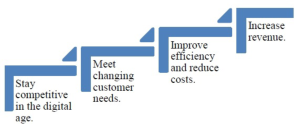
Digital Transformation Strategies and the Effectiveness of Competitive Advantage Digital Innovation Strategies: Developing new digital products and services, and improving processes through digital technologies. (Héraud, 2021) Digital innovation (Haryati and Yasri, 2021) strategies are a set of methods and plans aimed at using digital technologies to create new products and services, or improve existing products and services, or improve the company’s internal processes (Teece, 2018).
Business Management in the Digital Transformation Era 141
Figure 1: The importance of digital innovation strategies in companies.
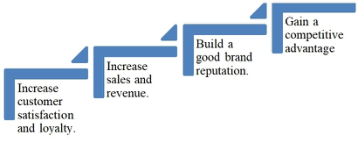
Digital Customer Experience Strategies: Improving the customer experience through digital channels, and providing personalized services. Digital customer experience strategies are a set of plans and actions aimed at improving the customer experience across all digital channels, and providing personalized services that meet their needs and expectations (Teece, 2018).
Figure 2: The importance of digital customer experience strategies in companies.
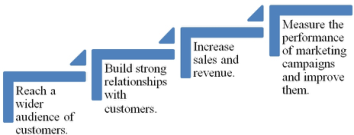
Digital Marketing Strategies: Using social media, content marketing, and email marketing to reach customers. Digital marketing strategies (Balocco and Cavallo, 2019) are a set of plans and methods that use digital channels and technologies to reach and interact with customers, (Exposito and Sanchis-Llopis, 2018) build strong relationships with them, and achieve marketing goals (Teece, 2018).
Figure 3: The importance of digital marketing strategies in companies.
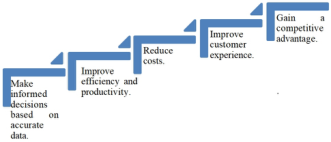
Data Management Strategies: Collecting and analyzing data to make better strategic decisions. Data management strategies are a set of plans, processes, and technologies aimed at collecting data from various sources, storing, organizing, and analyzing it, and using it to make better strategic decisions.
142 Hamdani and Dif
Figure 4: The importance of data management strategies in companies.
Digital Collaboration Strategies: Digital collaboration strategies are a set of plans and methods that use digital tools and technologies to enhance collaboration and communication between employees and partners, and improve productivity and efficiency. Digital collaboration strategies helps companies: improve communication and collaboration between employees and partners.
Figure 5: The importance of digital collaboration strategies in companies.
Theoretical Framework for Various Basic Concepts Theories of Competitive Advantage: We can present the most important theories that have contributed to the development of competitive advantage: (Héraud, 2021).
1. Resource-Based View: This theory focuses on the idea that sustainable competitive advantage stems from the unique resources and capabilities possessed by an organization. These resources include physical, human, and organizational assets, as well as capabilities that allow the organization to achieve superior performance.so resources and capabilities must be valuable, rare, difficult to imitate, and non- substitutable to achieve a sustainable competitive advantage. 2. Porter’s Five Forces Model: This model analyzes the competitive environment of an organization through five forces: the threat of new entrants, the bargaining power of suppliers, the bargaining power of buyers, the threat of substitutes, and the intensity of rivalry among 1 existing competitors. It helps organizations understand industry dynamics and identify competitive positions from which they can achieve an advantage. 3. Value Chain Analysis: This theory divides the organization’s activities into primary and support activities, and analyzes how each activity contributes to creating value for the customer. It helps organizations
Business Management in the Digital Transformation Era 143
identify sources of competitive advantage by improving efficiency and effectiveness in each activity (Porter, 2006).
Theories of Innovation
1. Disruptive Innovation Theory: This theory describes how small and emerging companies can challenge large incumbent companies by offering simpler and cheaper products or services, and disruptive innovations often begin in niche markets before moving into mainstream markets. 2. Open Innovation Theory: This theory encourages organizations to collaborate with external sources of innovation, such as customers, suppliers, and universities, and open innovation helps organizations accelerate the innovation process and reduce costs. 3. Innovation Life Cycle Theory: This theory describes the stages that innovation goes through, from creation to growth, maturity, and decline. It helps organizations understand how to manage innovation at different stages (Porter, 2006).
Theories of Change Management
1. Lewin’s Change Model: This model divides the change process into three stages: unfreezing, changing, and refreezing. It helps organizations manage change in an organized and effective manner. 2. Kotter’s 8-Step Change Model: This model presents eight steps to successfully manage change, starting with creating a sense of urgency and ending with anchoring the change in the organization’s culture and helps organizations avoid common mistakes that lead to change failure. 3. Organizational Development Theory: This theory focuses on improving organizational effectiveness through planned interventions aimed at changing behaviors, values, and beliefs. Organizational development is a comprehensive approach to change management that focuses on participation and collaboration (Porter, 2006).
Developing a Theoretical Framework That Links Digital Transformation, Business Management Strategies, and Competitive Advantage Theories that address various concepts can be developed thanks to a number of factors, the most important of which are: (Héraud, 2021).
4. Defining Vision and Objectives: Institutions must define a clear vision for digital transformation and specific, measurable objectives. 5. Developing an Integrated Digital Strategy: Institutions must develop an integrated digital strategy that includes all aspects of the business and aligns with overall strategic objectives. 6. Building Digital Capabilities: Institutions must invest in building digital capabilities, including developing employees’ digital skills, updating digital infrastructure, and developing digital systems and processes.
144 Hamdani and Dif
7. Change Management: Institutions must manage change effectively, communicate with employees and customers, and provide the necessary support and training. 8. Performance Measurement and Continuous Improvement: Institutions must continuously measure the performance of digital transformation, identify strengths and weaknesses, and take necessary corrective actions.
CONCLUSION
Digital transformation represents the driving force behind the development of business management strategies, as it compels companies to adopt new technologies and redesign their processes. Through these strategies, companies can enhance customer experience and increase efficiency, leading to a sustainable competitive advantage in the digital age. The relationship between digital transformation, business management strategies, and competitive advantage is an integrated one. Digital transformation provides the tools and technologies necessary to implement business management strategies, and these strategies, in turn, help companies achieve a competitive advantage in the digital age and optimally exploit available opportunities. Therefore, companies must embrace digital transformation as an essential part of their business management strategies and focus on developing innovative and effective strategies that leverage digital technologies to achieve a competitive advantage (Cao and Duan, 2015). This is because digital transformation is not merely an option, but an imperative for companies seeking to survive and grow in the digital age.
REFERENCES
Balocco, R. Cavallo, A. Ghezzi, A. Berbegal-Mirabent, J. (2019). Lean business models change process in digital entrepreneurship. Bel, R. (2018). A property rights theory of competitive advantage. Strateg. Manag.j. Cao, G. Duan, Y. Li, G. (2015). Linking business analytics to decision making
effectiveness: A path model analysis. Chrisman, J. Chua, JH. Sharm, a P. (2005). Trends and directions in the development of a strategic management theory of the family firm. Exposito, A.; Sanchis-Llopis, J. (2018). Innovation and business performance for
Spanish SMEs: New evidence from a multi-dimensional approach. Gonzalez Vazquez, I. Milasi, S. Carretero Gomez, S. Napierala, J. (2019). The changing nature of work and skills in the digital age. Haryati, R. Yasri, Y. Aimon, H. Darwin, M. (202). Development of Small, Micro
Enterprises Based (SMES) on Innovation and Environmental SustainableDe- velopment in West Sumatera. Héraud, J.-A. (2021). A New Approach of Innovation: From the Knowledge Economy to the Theory of Creativity Applied to Territorial Development. Hewitt, L. M.; Van Rensburg, L. J. J. (2020). The role of business incubators in
creating sustainable small and medium enterprises. South. African J. Entrep. Small Bus. Manag. Jordão, R. V. D., Novas, J. C. (2017). Knowledge management and intellectual capital in networks of small- and medium-sized enterprises.
Business Management in the Digital Transformation Era 145
Kraus, S. Durst, S. Ferreira, J. Veiga, P. Kailer, N. Weinmann, A. (2022). Digital transformation in business and management research: An overview of the current status quo. Krüger, N. Meyer, N. (2021). The Development of a Small and Medium-Sized
Business Risk Management Intervention Tool. Kumar, S.; Sureka, R.; Lim, W. M.; Mangla, S. K.; Goyal, N. (2021). What do we know about business strategy and environmental research? Insights from Business Strategy and the Environment. Bus. Strategy Environ. Latifah, L. Setiawan, D. Aryani, Y. A. Rahmawati, R. (2020). Business strategy–
MSMEs’ performance relationship: Innovation andaccounting information system as mediators. Morgan, R. E. Berthon, P. (2008). Market orientation, generative learning, innovation strategy and performance inter-relationships in bioscience firms. Nemlioglu, I., Mallick, S. K. (2017). Do Managerial Practices Matter in Innovation
and Firm Performance Relations? New Evidence from the UK. Onufrey, K. Bergek, A. (2022). Transformation in a mature industry: The role of business and innovation strategies. Porter, M. (2017). Competencia y estrategia: conceptos esenciales-Ser Competitivo. Porter, M. (2006). Techniques for Analyzing Industries and competitor with a new
Introsuction. Sohl, T.; Vroom, G.; McCann, B. T. (2020). Business model diversification and firm performance: A demand-side perspective. Strateg. Entrep. J. Teece, D. J. (2018). Management systems theory. Todeschini, BV. Cortimiglia, MN. Callegaro-de-Menezes, D. Ghezzi A. (2017). Innovative and sustainable business models in the fashion industry: Entrepreneurial drivers, opportunities, and challenges. Zhu, D. H. (2021). Westphal, J. D., Structural power, corporate strategy, and
performance.
LISTED IN THE AHFE DIGITAL BOOKSTORE CATALOGUE
Explore the complete digital volume
Human Factors, Business Management and Society
Read this individual research paper free through the original publisher, or explore the full digital proceedings book.
ISBN 978-1-964867-52-6
Explore this ISBN in the AHFE Bookstore ↗Listed in the July 2026 bookstore catalogue; search by ISBN to confirm current availability · Digital book purchase optional