Rosa Maria Giusto, Mario Buono (2022). Digitisation and Enabling Technologies for Inclusive Use of Cultural and Environmental Resources: Italian Cultural Itinerary. In: Human Dynamics and Design for the Development of Contemporary Societies. AHFE Open Access, vol. 25, pp. 422–431. https://doi.org/10.54941/ahfe1001417
1 National Research Council Italy (CNR) Institute for Research on Innovation and Services for Development (IRISS) Via G. Sanfelice 8 - 80134 Napoli - Italy ↗
2 Università degli Studi della Campania “Luigi Vanvitelli” Via Roma 9 - 81031 Aversa (CE) - Italy ↗
The tools of digitisation and enabling technologies for an inclusive use of cultural and environmental resources, programmed and incentivized within the PST – “Piano Strategico di Sviluppo del Turismo 2017-2022” (PST) of the Italian Ministry of Cultural Heritage and Activities and Tourism - represent an extraordinary opportunity to promote and extend responsible, cultured tourism attentive to the development of the main centres, also of the smaller towns and the Inner Areas, acting as drivers both from an economic point of view - as future development resources for the repopulation of areas subject to abandonment and marginalization - and as opportunities to promote the rediscovery and the start of a new cultural trend able to promote knowledge and enhancement of the multiple resources of the territory, going beyond the current range of users and incidence (see PST 2017-2022). The paper analyses these aspects, combining them with the themes of integrated enhancement of the cultural heritage of the Inner Areas and with the sustainable tourism policies of the 2030 Agenda. In particular, it analyses the ways in which the use of new technologies and digital tools applied to cultural heritage can significantly contribute to the enhancement and cultural promotion of Inner Areas and territorial contexts penalised by the absence of effective infrastructures and net-works.Through the principles of sustainability, innovation, accessibility and the physical and cultural permeability of places, which are the basis of the 2017-2022 TSP, new ways are outlined for the valorisation and tourist enjoyment of the cultural heritage of sites and territorial itineraries that are usually little explored and practised but which are crucial and strategic in terms of increasing social, cultural and economic value; of overcoming differences and promoting new competitive scenarios centred on the complexity and variety of the heritage visited (cultural permeability) and on the themes of the unique-ness and richness of stratified territorial and environmental heritages.
Digitisation and Enabling Technologies for Inclusive Use of Cultural 423
INTRODUCTION
Nowadays, fostering knowledge of cultural places and sites means investing in the construction of a “digital ecosystem of culture and tourism”(PST 2017- 2022, p. 74) which, through open services and big data, provides tourists and visitors with a “set of information and value-added services”developed accor- ding to the different needs of the user and tailored to the territory, providing visitors with the possibility to “understand and interpret the history, comple- xity and variety of the visited heritage (cultural permeability), appreciating its uniqueness and helping to strengthen the identity of places”(PST 2017-2022, p. 50), intersecting the issue of accessibility with that of the differentiated and personal experience of the visit.
In this sense, the mapping of places of culture and the various elements of relevance will necessarily have to take place with the involvement of all local and regional authorities and administrative bodies.
Among the objectives of digitisation, to be declined in cultural and creative terms, are the opportunities to:
identify, convey and correlate the countless sources present on the web in a Digital Library to make them usable through specific access and sharing policies;
map out, through a Travel Library, the journey that tourists can make to enjoy the places of Beauty, identifying routes (itineraries, paths, cycle paths, etc.), to be expanded by integrating services and information that can be progressively implemented;
foster training programs for digital tourism (see PST 2017-2022, pp. 76–77).
These aspects, related to the issue of sustainability and accessibility in the fruition of specific, differentiated and integrated cultural and tourist itineraries, are some of the main issues to be addressed for the economic development of areas and sites whose planned revival may represent a driving element in the general “economy of beauty and culture” in which we need to invest in order to build a “made in Italy” tourism, aware and attentive, able to adapt and anticipate future challenges and demand for quality.
CULTURAL ITINERARIES AND DIGITAL TOOLS FOR THE INTEGRATED ENHANCEMENT OF THE INNER AREAS An important role in this respect is played by the Inner Areas, which have recently become privileged targets for cultural instruments and policies aimed at overcoming the gap resulting from the general lack of infrastructure and conditions of isolation and marginalization that have led to their progressive depopulation and abandonment over time.
These are small and medium-sized municipalities where “there is a concen- tration of exceptional environmental and historical-cultural resources” (Bat- tino, Lampreu, 2017, pp. 84; see Giusto, 2020, p. 149) whose protection and preservation is pursued through different measures.
Among the most recent examples on the subject is the Draft Law n. 2541 which contains “Measures for the support and enhancement of small
424 Giusto and Buono
municipalities, as well as provisions for the redevelopment and recovery of the historic centres of the same municipalities”(Ibidem) and aims at promo- ting, in the period between 2017 and 2023, “the diffusion of broadband, the efficiency of services, the creation of mobility and soft tourism itineraries, the enhancement of quality food and wine production and the activation of short supply chains” (Ibidem).
A set of measures which, in tackling the compulsory theme of the enh- ancement of historical centres of the inland areas, while recognizing their peculiar character and their valuable historical, artistic and settlement values, is rarely accompanied by the construction of a solid knowledge system of the territory and its assets, aimed at drafting a digital Atlas of the cultural material and immaterial heritage, which can be questioned and integrated, an indispensable tool to promote the protection and enhancement of the heri- tage of the villages and minor centres of the Inland Areas, placing them in a relational network which is essential to transform into resources precisely those elements of marginality and isolation which made them vulnerable.
Based on these considerations, particular attention should be paid to the creation of itineraries and interactive digital maps aimed at enhancing the value of architectures, archaeological and monumental sites, UNESCO sites, historical routes (Via Francigena, the Phoenicians’ route, The Lombard in Italy), paths of faith (Michaelic routes, Carthusian routes, etc.) considered to be of particular interest also in terms of ‘urban history’, outlining long-term sustainable integrated enhancement scenarios, where cultural resources and local development support each other.
In a context of growing attention to Digital Humanities, the interactive map is one of the tools that can foster dynamic knowledge of territories, nurturing curiosity and creativity, and generating collaborative processes.
Through the drafting of digital maps linked to the information sheets of the single selected buildings and monuments, identified on the basis of the digitised historical cartography superimposed by plan/layers/epoch and lin- ked to the current cartography provided by Google Maps, intersecting digital cartography and Geographical Information System (GIS), it will be possi- ble to obtain in-depth thematic information in real time, using images and content to narrate the historical-urban evolution of the various centres visi- ted, encouraging knowledge of places/monuments/sites or even works and archaeological excavations in progress, for which increasingly in-depth and ‘specialist’ information can be obtained by accessing specific content, which can be consulted on demand, directly downloadable onto one’s own digital devices (mobile phones, iPads, etc).
In addition, the use of digital technologies and tools makes it possible to extend the visiting experience well beyond the single, temporally defined occasion. As has already been the case for some time with various internatio- nal museums and libraries, visitors can store works, places and routes visited on their digital devices, complete with related information, in order to see them again at any time, enlarged and enriched with their own impressions and individual experiences, thus transforming an individual experience into a ‘back ground’ of knowledge, images and sensations that can be retraced and made available when needed. A collective platform that can be implemented,
Digitisation and Enabling Technologies for Inclusive Use of Cultural 425
where one can store one’s own knowledge paths and make them participa- tory, becoming promoters and narrators of a collective storytelling process that is even more effective and inclusive the more the accumulated memo- ries and images document shared experiences and perceptions, in “a creative perspective that is very different from what we are used to thinking of as ‘narration”’ (Palombini, 2012, p. 17; see Giusto, Buono, 2020, pp. 281–282).
This approach will allow soon to dispose of an important - digital archive - of images and data able to support and increase knowledge of places well beyond the current contingencies: just think of the changes and transformations that some territories of the Internal Areas may still undergo over time due to causes deriving from “traumatic”effects such as earthquakes or floods, frequent in many Apennine regions, or events linked to volcanic eruptions, to understand the importance that these instruments could assume on several fronts.
In this sense, the profound transformations caused by the devastating ear- thquake that struck the municipalities of Alta Irpinia in 1980 - to remain within the topic of the Inner Areas - or, more recently, the towns of the Abbruzzo and Marche regions, modifying and disrupting entire urban cen- tres, testifies to the importance that it will have in the future to benefit from open access documentary information platforms, implementable and open to external contributions, also in terms of memories of places and forms of habitation.
The possibility of documenting individual visit experiences, transforming them into digital material that is immediately available and consultable, not only encourages and implements a lesser practiced form of tourism, introdu- cing small villages and productive realities into itineraries that have hitherto been little practiced and known, but also makes it possible to trace the form of places and their respective settlement systems, giving each visitor the opportunity to actively participate in the construction of an archive of the memory (and history) of places or contexts of which little has survived or been adequately documented.
The same fundamental contribution can be made to knowledge and dis- semination - and consequent scientific advancement - of what emerges from archaeological excavations or major works in progress that have led to the discovery of ancient urban structures or installations. One example of this is the recent case of the works for the Naples metro stations, which has led to the emergence, and consequent accurate and in-depth study, of entire sections of the historic city that had remained petrified and buried for centuries of the city’s evolutionary history, and which the digitisation system will soon enable to scientifically reconstruct them, superimposing knowledge of the site, the assets found, the architectures that have emerged, the works of art, in a word the civilizations that conceived and produced them, making it possible to trace back, layer upon layer, the evolutionary and transformative processes that affected that particular territory or site.
The construction of data matrices - cartographic, historical-artistic, archi- tectural, landscape, etc. - that can be accessed, integrated and superimposed will facilitate the creation of thematic maps and atlases that are increasin- gly rich and complete, capable of storing data and knowledge relating to the
426 Giusto and Buono
various sectors of cultural heritage - both tangible and intangible - contribu- ting to the promotion of studies and publications whose scientific contents can, in different ways, further increase the wealth of knowledge to be included in the information sheets offered to visitors/users in the form of increasingly complete and exhaustive interactive and immersive itineraries.
It is a team effort that brings together different skills and professionalism, facilitated by the national digitisation plan which, through the acquisition and open sourcing of archival, book and documentary material and content, is accompanied by the digitisation of musical, cinematographic and lite- rary material, which is essential to promote the valorization and immersive tout court fruition of intangible cultural heritage. The possibility of narra- ting places, whether urban or marginalized, physical or intangible, through immersive and participatory tools and methods is one of the most immediate effects of the digitalization processes underway, which will make it possible to “innovate the physical and cultural permeability of places” (PST 2017-2022, p. 58), connecting entire territories and heritages in a dynamic and participa- tory vision - (Historical experiences) and to narrate and communicate them in an equally innovative way - digital storytelling and transmedia storytelling (see Digital Cultural Heritage and Tourism).
Through the new digital tools, it will be possible to undertake historical, religious, experiential, and slow visit paths, feeding the participative interest of the users by implementing an “innovation of the fruition of the landscape in a touristic key”(PST 2017-2022). Without forgetting that the possibility of creating “cloud” visit paths multiplies the interpretative keys of the heritage, generating, as in the case of museums, the promotion of participatory proces- ses aimed at encouraging interaction with visitors, generating a substantial change of roles that sees the traveler rapidly turn into an “active user”, a per- son directly involved in the processes of production and cultural promotion (see Ragonese, 2010, p. 7; Buono, Giusto, 2020).
In this sense, even the usual way of understanding and ‘designing’ tra- vel literature will have to change significantly, transforming itself into a new extensible and dynamic form of cultural content characterized using digital technologies, whose main peculiarity will lie in the possibility of closely lin- king the enhancement of the visited and experienced space-goods-site with the expectations and cultural identity of the visitor (Ragonese, 2010).
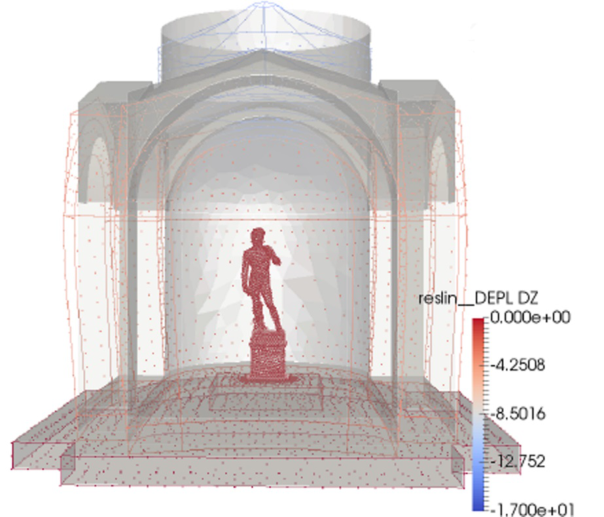
Moreover, the development of virtual reconstructions may lead to sha- ring detailed digital models of the experienced heritage, be it the exhibition repertoire of a museum, or the destination of a travel and knowledge itine- rary undertaken, allowing the creation of “vast diffuse databases”(Ibidem) useful for the increasingly in-depth and up-to-date reconstruction of monu- ments, sites and transformation processes inherent to cultural heritage (see Figure 1).
Since the new technologies “make it possible to disseminate information linked to the construction of personalized visit and knowledge paths, there is a real possibility of providing in-depth thematic information according to the level of training, knowledge, education and profession of each visitor (and therefore to the users’ interests, so much so that we can speak of ‘customiza- tion’ also for the sector of guides and visit experiences), through the creation
Digitisation and Enabling Technologies for Inclusive Use of Cultural 427
Figure 1: Galleria dell’Accademia di Firenze, project “D.A.V.I.D. - Defense of Cultural Heritage and Assessment of Vulnerability through Innovative Technologies & Devi- ces” - second project selected by Toscana Region for the protection of the Museum’s architectural and artistic heritage through the support of the most advanced geomatic survey and diagnostic technologies. (Source: https://www.gonews.it/2020/05/11/galler ia-dellaccademia-di-firenze-unifi-e-regione-insieme-per-il-progetto-d-a-v-i-d/).
of personalized ‘libraries’ and specific playlists of the topics favored by the users to be reviewed and retraced even at the end of the tour”(Giusto, Buono, 2020, pp. 281–282). From this perspective, culture and tangible and intangible heritage are taking on an increasingly central role in national development policies, since “culture narrates the authenticity of places and their uniqueness, facilitates the circulation and exchange of ideas and values, and promotes development, social cohesion and relationships” (PST 2017-2022, p. 47).
In addition, there are the ‘strong repercussions that digital culture is also having in terms of Digital Humanities’. On the one hand, neurosciences ‘benefit’ from digital systems and languages to experiment with models capable of scientifically advancing the wealth of available knowledge, with previously unthinkable techniques and tools to probe and measure perceptual responses to external stimuli (think of the use of contemporary art as a tool to generate/measure reactions induced in the brain and the effects that such data may have in terms of management and cultural heritage); on the other hand, it is precisely neurosciences that enrich and enhance the role of digital tools and digital technologies. In a world where ‘humanity tends more and more to narrate itself in unprecedented ways thanks to pervasive technology’, documenting this incessant and comprehensive dialogue seems an unmissable
428 Giusto and Buono
opportunity to learn about the essence of man and his journey (see Calveri, Nuzzo, 2019).
In this sense, “the increasingly close intertwining of narrative and techno- logy is an essential factor in assessing how art, creativity, education but also the market are changing” (Ibidem).
DIGITISATION, ICT, AND INNER AREAS The revitalization of marginal territories concerns issues of local development through the valorization of tangible and intangible resources and refers to smart tourism, as defined in the European Union’s policy documents (see OECD, 2018) which focus on: collaboration and cooperation between insti- tutions, individuals and businesses to create added value to ‘tourism’ also in terms of environmental and social fallout, so that it is perceived as an asset by the community; on the development of ‘smart tourism’ for the enhancement of historical-cultural, environmental and social heritage; on the implementation of technological and social innovation through the sustaina- ble development of local identities and the enhancement of personal talent (see Morvillo, Becheri, 2020).
In this sense, the tools of digitalisation and digital inclusion represent an unparalleled opportunity to promote and extend quality tourism that is cultu- red and attentive to the development of centres in marginalized areas, acting as a driving force not only from a strictly economic point of view but above all as an opportunity to rediscover and launch a new cultural trend capable of promoting knowledge and enhancement of the area’s many resources going beyond the current range of users and impact. Some help in terms of a sustai- nable, fair and quality tourist offer is provided by the opportunity to “enlarge the existing UNESCO areas and sites”in order to widen their scope of impact, intersecting them with the enhancement of existing territorial tourist districts (see PST 2017-2022, p. 65).
In the case of the Inland Areas of Alta Irpinia, which are part of the tourist district of the same name established by Decree of the Ministry of Culture and Tourism on 30/06/2016, the themes of planning an integrated and sustaina- ble tourist offer and digitalisation could provide an indispensable support for knowledge and enhancement of areas and contexts rich in history and culture - artistic, architectural, settlement - but also in artisan and productive know- ledge which, more difficult to map and ‘incentivize’, constitute a propulsive resource in terms of future enhancement (see Giusto, 2020).
By using new information and digital technologies (digital tools and digi- tal devices) as indispensable tools for the dissemination, sharing and systemic networking of the tangible and intangible heritage of the territory, it will be possible to encourage integrated and sustainable approaches to the themes of experiential and quality tourism, favoring the design of slow cultural iti- neraries - paths and routes, journeys and literary parks, site-specific digitised historical reconstructions - capable of bringing together several professionals, enhancing and promoting the cultural identity of places and social cohesion policies, for the promotion of responsible tourism that “works as a lever for the development of territories, because it multiplies the educational potential
Digitisation and Enabling Technologies for Inclusive Use of Cultural 429
intrinsic to the practice of tourism, combining the sustainable development of tourism with the well-being of citizens” (see IT.a.cà., 2021-2022).
In a context full of quality attractions, it is therefore appropriate to con- figure innovative development models for a tourist offer oriented to the integrated use of resources. Tourism, as an activity strongly linked to the quality and accessibility of natural, historical-artistic and cultural resources in a broad sense, represents a driving force for the socio-economic revival of the whole territory, oriented to start cross-fertilization processes between clusters.
It is no coincidence that the thematic guide to tourism investment publi- shed by the European Commission recommends interventions “in line with one or more thematic objectives and investment priorities; (...) focused on a better valorization of local cultural and tourism resources; [which] pro- mote innovation and diversification of products, processes and services, as well as specialization for niche markets, in order to counter dependence on low added value and temporary work”\(https://ec.europa.eu/regional_policy /it/policy/themes/tourism, 2014-2020). Particular attention should be paid to the creation of a new tourism model focused on the (sustainable and respon- sible) use of cultural heritage, based on (innovative) integration with other territorial resources (agri-food traditions, craftsmanship, nature, landscape, environment), in line with the premises of the National Strategy for Inner Areas (SNAI).
In this sense, the Area of Alta Irpinia lends itself to become an “open syste- mic laboratory” in which to experiment with new forms of management of territorial resources, to stimulate and develop multi-sectoral ‘transversal’ fer- tilization processes through the definition of an “open (or cross) cluster of Alta Irpinia” model based on the technological upgrading of existing enter- prises and the birth of innovative enterprises to guarantee an offer of products and services aimed at an integrated, adaptable and sustainable usability model.
Cross-clustering, as a strategy for the valorization and networking of resources, will foster: Sustainability, through practices to preserve the envi- ronment and natural resources aimed at local community inclusion; Accessi- bility, through easy and adaptive use to a wide range of users; Digitisation, for a strategic use of digital technologies able to improve the tourism experience and help local businesses to grow and innovate; Enhancement of cultural heritage and the creativity industry, so that the tourism experience is streng- thened; Co-design, through forms of social inclusion within and outside communities to foster innovative practices and integrated participation.
CONCLUSION
Tourism, cultural heritage and the creative industry are some of the privi- leged themes in terms of the National Strategy of Intelligent Specialisation, where the sector of sustainable cultural tourism is combined with the the- mes of creativity, publishing, design, fashion, cultural entrepreneurship - in a word: Made in Italy - contributing to the broader and more widespread exploitation of our cultural heritage, leading to the definition of a true index
430 Giusto and Buono
of tourist attractiveness of Italy in terms of cultural heritage and creativity, eloquently documented by the numerically substantial network of UNESCOs sites spread across the peninsula (see PST 2017-2022, p. 41; Buono, Giusto, 2021). Through the promotion and extension of inclusive and responsible cultural tourism to inland areas and to little-known and little-used sites and destina- tions, made accessible and competitive thanks to the use of new tools and enabling technologies, it will be possible to respond to the demand for servi- ces and the need to repopulate and enhance ‘minor’ historical contexts and centres that have remained on the margins of cultural and tourist enhance- ment policies usually reserved for cities of art and regions and contexts with recognised landscape attractions, by fostering the encounter between “(...) an almost inexhaustible pool of ‘contents’ that are looking for tools able to give them a voice (...) in the eyes of potential users never reached through traditional valorization systems: (…) [and the] new digital technologies that do not limit themselves to communication but directly ‘enter’ people’s lives and that need (...) contents and information to be conveyed, interconnected and combined” (Aliprandi, Dal Palazzolo, 2019).
REFERENCES
Aliprandi, Damiano, Dal Palazzolo, Luca. (2019). Cultura e digital transformation: tracce di una svolta (forse già avvenuta). Symbola, https://www.symbola.net/approfondimento/cultura-e-digital-transformation-tra cce-di-una-svolta-forse-gia-avvenuta-di-damiano-aliprandi-e-luca-dal-pozzolo/. Battino, Silvia. Lampreu, Salvatore. (2017). Strategie di valorizzazione e promozione in chiave turistica del patrimonio culturale nelle aree interne. un caso in Sardegna, ANNALI DEL TURISMO n. VI, pp. 83–105. Buono, Mario. Giusto, Rosa Maria. (2020). Giacimenti Culturali Made in Italy.
Design e tecnologie per la conoscenza del patrimonio italiano. MD JOURNAL, n. 9, pp. 210–219. ISSN 2531-9477 [online], ISBN: 978-88-85885-07-3 [print] Calveri, Claudio, Nuzzo, Diego, (October 28, 2019). Atlante Digitale e Letteratura 4.0 quando il web aiuta a crescere. Corriere del Mezzogiorno Website: https:// corrieredelmezzogiorno.corriere.it/napoli/arte_e_cultura/19_ottobre_28/atlante- digitale-letteratura-40-ecco-rubriche-web-corrmezz-a22a291e-f9a2-11e9-82f2- 3ce2ac196e6a.shtml Digital Cultural Heritage and Tourism - Recommendations for Cultural Institutions,
Technological Observatory for Cultural Heritage and Activities: http://www.oteb ac.it/index.php?it/363/patrimonio-cutlurale-digitale-e-turismo. European Guidance Tourism (2014-2020): https://ec.europa.eu/regional_policy/ it/policy/themes/tourism, and the guidance tourism 2014–2020. Giusto, R.M. (2020–2021) “Economy of Beauty and Culture. Routes for the Integrated Sustainable Enhancement of the Internal Areas of Alta Irpinia”, in: Knowledge Dynamics and Innovation-driven policies towards urban and regional transition”- NMP 2020, Bevilacqua, Carmelina, Calabrò, Francesco, Della Spina, Lucia (Eds.). vol. 2, pp. 147–156, https://doi.org/10.1007/978-3-030-48279-4_14. Giusto, Rosa Maria. Buono, Mario. (2020). La ri-scrittura del patrimonio culturale
nell’Era digitale/The re-writing of cultural Heritage in the digital Era, BOLETÍN DE ARTE, Revista del Departamento de Historia de Arte Universidad de Malaga, n. 41, pp. 279–283: 281-282. ISSN 0211-8483.
Digitisation and Enabling Technologies for Inclusive Use of Cultural 431
Giusto, R.M., Buono, M. (2021) “Kalokagathìa, Made in Italy and Cultural Heritage in Campania Region”, in: AHFE 2021, LNNS 277, Raposo, Daniel, et al. (Eds.), pp. 150–157, https://doi.org/10. 1007/978-3-030-80415-2_19. IT.a.cà., Manifesto 2021-2022. https://www.festivalitaca.net/il-manifesto-nazionale
-di-it-a-ca-festival-del-turismo-responsabile/. Morvillo, Alfonso, Becheri, Emilio, eds. (2020). Rapporto sul turismo italiano, XXIV edizione - 2019-2020. Roma: CNR edizioni, pp. 171–305. OECD, Report 2018 “Tourism Trends and Policies”. https://www.oecd-ilibrary.org/
docserver/tour-2018-en.pdf?expires=1633531098&id=id&accname=guest&ch ecksum=CB92CF59CC040674229F60DE40A7B304. Palombini, Augusto. (2010). Narrazione e virtualità: possibili prospettive per la comunicazione museale, DIGITALIA, VII, n. 1, pp. 9–22. PST - Piano Strategico di Sviluppo del Turismo 2017-2022, Italia paese di viaggia-
tori, Ministero dei Beni e delle Attività Culturali e del Turismo, http://documenti. camera.it/Leg17/Dossier/Pdf/AP0113.pdf, 104. Ragonese, Ruggero. (2010). Guide turistiche: un’introduzione, E/C, special series, Anno IV, n. 6, pp. 5–18. http://www.ec-aiss.it/, p. 7.
LISTED IN THE AHFE DIGITAL BOOKSTORE CATALOGUE
Explore the complete digital volume
Human Dynamics and Design for the Development of Contemporary Societies
Read this individual research paper free through the original publisher, or explore the full digital proceedings book.
ISBN 978-1-958651-01-8
Explore this ISBN in the AHFE Bookstore ↗Listed in the July 2026 bookstore catalogue; search by ISBN to confirm current availability · Digital book purchase optional