Caio Miolo De Oliveira, Rita Assoreira Almendra, Ana Rita Lourenço, Tiago Leitão (2022). Community Engagement Methodology for the Academic Design Curriculum. In: Human Dynamics and Design for the Development of Contemporary Societies. AHFE Open Access, vol. 25, pp. 62–69. https://doi.org/10.54941/ahfe1001372
Design profession has become quite resignified over time, being increasingly associated with an approach to involve people working collaboratively to co-create new opportunities for the welfare, solve complex problems or even favor innovation processes, whether they are applied in business environments or in the social sphere. By acting in this scope, Design is articulating social innovation processes, as it is developing strategies, whether through products or services, so that the actors related to the existing context can be active agents of transformation. In synergy with this approach, there is another participatory aspect, originating from other areas of knowledge: Community Engagement Methodology. This encompasses a process for providing information, empowering the community to identify solutions to their needs, as well as influencing priorities and strategic decisions. In this context, despite having enough theoretical and practical research implemented to favor community engagement, it appears that the academic curricula of Design courses do not work so specifically with community engagement/ implementation of social innovation processes. Thus, this paper reveals a methodology developed during PhD research in Design that aimed to favor the social reintegration of offenders and ex-offenders. This methodology, made up of different methods, was created in codesign with a Portuguese social cooperative, which was one of the promoters of a project co-founded by the European Union, between 2017 and 2020. The methodology was applied to professionals of the Criminal Justice System who work within the scope of reintegration in four countries (Portugal, Italy, Romania, and Germany), who evaluated it very positively. Therefore, the purpose of this article is to reveal the community involvement methodology created and propose ways that it can be implemented in Design curricula, to encourage and favor the development of solutions and improvements in different social contexts.
Design suffers and continues to undergo many changes over time. Initially the area was closely linked to art and architecture, related to the creation of products, brands, packaging and editorial materials. Due to its intensely investigative, analytical, and creative potential, which it explores to solve problems or create new products/services, Design has come to be valued as
Community Engagement Methodology for the Academic Design Curriculum 63
a process, to be used by other areas of knowledge to innovate and solve the problems that affect them. Thus, Design came to be identified as a “provider of methodologies and methods” to solve complex problems, such as those that may be related to social innovation processes.
Social innovation is recognized as a process in which social actors orga- nize themselves, reusing existing elements, whether material or immaterial, to improve certain situations, solve problems or even generate better well-being. As a result, there is an improvement in the ways of life of society. When the designer is a participating actor, he collaborates by providing tools to supply different stages of the process, such as developing empathy for the reality of the participants, stimulating creativity, facilitating communication and colla- boration between the members of these communities, in order to make the process even more participatory (Jégou and Manzini; 2006; Meroni, 2008; Meroni and Sangiorgi, 2011; Chick, 2012; Manzini and Staszowski, 2013; Freire, 2011; de Oliveira et al. 2021).
On the other hand, in addition to the approach of social innovation through Design, there is another area that also proposes greater interaction of members of a community, with a bias towards “community policing”, with the objective of obtaining greater commitment and active participation of citizens on political decisions: the community engagement (Myhill, 2012). This one, despite working with a very civic participation, does not explore as many empathic and creative methods as the first one.
This paper reveals how a methodology was created and implemented, gui- ded by both approaches, so that the Criminal Justice System (CJS) creates strategies to engage Civil Society Organizations (CSO) in the problem of social reintegration of (ex) offenders, from increased participation and com- mitment, to prevent and control the risk of criminal recidivism. This social innovation process was developed between 2017 and 2021, it was part of the “MOBI” project, co-founded by the Erasmus+ program of the European Union, carried out by transnational organizations from four countries: Por- tugal, Italy, Romania, and Germany. Among the authors of the methodology is a Portuguese social solidarity cooperative, Aproximar, and a Design resea- rcher, who developed his doctoral thesis on this theme of social reintegration. It is worth noting that the researcher, his supervisor, and the managers of the cooperative are the authors of this paper.
Based on the successful implementation of the methodology developed, the objective of this article is to propose guidelines for the implementation of the methodology in academic design curricula, to facilitate the articulation of students and teachers with civil society, and, in this sense, to encourage the development of social innovation processes in universities.
DESIGN FOR SOCIAL INNOVATION AND COMMUNITY ENGAGEMENT Before approaching what Design for social innovation is about, it’s necessary to define what social innovation is. This refers to new forms of organiza- tion of society, in order to solve social problems, generate opportunities for the common good, or create more sustainable ways of life. When it is a
process of social innovation guided by Design, the aim is to provide tools to enable members of these communities to participate in a collaborative and active way in the pursuit of such purposes. The results obtained should be improvements for society, as well as the development of capacities to act and collaborate (Jégou and Manzini; 2006; Meroni, 2008; Meroni and Sangiorgi, 2011; Chick, 2012; Manzini and Staszowski, 2013; Freire, 2011; de Oliveira et al. 2021).
The role of designers in this context can take place either as a catalyst for the process, or by participating in different activities involved, such as: creation of strategies to enable its members to participate in a collaborative and active way, research opportunities for the community, interpreting social needs, designing tools to support the understanding of interaction, among others (Meroni, 2008; de Oliveira et al. 2021; Oliveira, 2021).
On the other hand, the community engagement approach, which is not linked to the area of ⣋⣋Design, but which is believed to corroborate with it, and therefore was also explored. This relates to the scope of police servi- ces (linked to the CJS) and its partner organizations in community matters, which is also known as: “community policing”, with the perspective of obtai- ning commitment, engagement, and active participation from citizens with measures and political decisions (Myhill, 2012). In this approach, it is pro- posed that social actors are no longer just citizens with the right to vote, choose their representatives, contribute with their taxes, to be active agents that participate collaboratively in the planning of improvement strategies. Community involvement encompasses several activities, such as: providing information, empowering the community to identify problems and even solu- tions to their needs, defining priorities to be implemented, strategic decisions, among others (Myhill, 2012; UNODC, 2006).
For successful community engagement, so that the relationship between the police and the community works well and is efficient, some attributes that the team should be aware of are highlighted: organizational commi- tment and that there will be a change in culture; integrated work, so that work belongs to all individuals, not just teams; power must be shared, so that the community actually has an active role and a sense of belonging in the process; adaptation and flexibility to adapt different approaches that corroborate to meet the needs of the community; existence of metrics for performance management related to performance and effective community involvement; implementation of training/training to develop participants’ competences, both for the police and for the communities; trust between actors; development of a two-way communication; collaborative work in a multidisciplinary way; and supply and search of resources to favor the articulations (Myhill, 2012; UNODC, 2006; MOBI, 2019).
THE METHODOLOGY DEVELOPED Based on theoretical research on both approaches, Design for social innova- tion and community engagement, the Aproximar cooperative team developed an adaptable and customizable methodology and methods to be explored in the different methodological phases. The team involved in the creation
Community Engagement Methodology for the Academic Design Curriculum 65
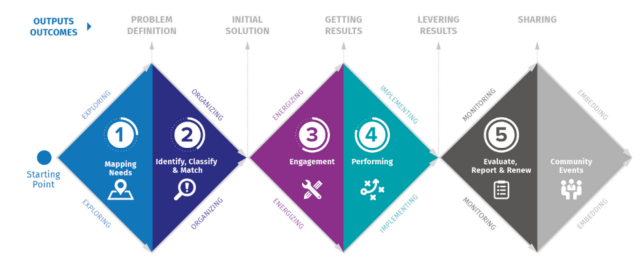
Figure 1: Community engagement methodology (MOBI, 2019).
comprised professionals from different areas: a psychologist, a designer, a criminologist, two social workers and a sociologist. The methodology concei- ved, as part of the MOBI project, co-founded by the European Union, focused on engaging CSO in solving the needs of the CJS, regarding the social reintegration of offenders or ex-offenders.
Although the social reintegration of these people is a responsibility of the CJS, the other social actors, such as families, the circle of friends and civil society organizations, also play a fundamental role in supporting the recon- struction of their lives. The proposal was to develop a more society-centered model, to share responsibility and power with the community, especially civil society organizations. These play a key role in helping with this problem, as they can provide the system with important resources to reduce recidivism, by providing decent work positions and supporting the development of skills for (ex) offenders (MOBI, 2019; Oliveira, 2021).
In this context, a methodology composed of five phases was created, as shown in Figure 1, and described below.
The first phase, Mapping of needs, has an “opening” phase for understan- ding the needs, as well as identifying which of them are the most relevant to be worked on during the following phases. This phase will serve to answer questions such as: what are the causes of the problem or what are the impacts of this problem. At the end of this intensely exploratory phase, there is the “problem definition”.
In the second phase, Identify, classify and match, there is a period of syn- thesis, of organizing what was defined in the previous phase and mainly identifying key actors to act on the strategy to be planned, gaps in infor- mation that can be better explored, what kind of interest or responsibility the mapped actors will have in the process.
In the third phase, Engagement, again exploratory, serves mainly to devise strategies on how the community engagement actions will be carried out. The procedures will be defined, the resources that can be allocated to meet the needs, ways of making contacts with the actors, the levels of participation expected to be reached, what are the stages of the involvement process, dead- lines for developing each activity, possible limitations, which engagement techniques will be used, among many other issues.
The fourth phase, Performing, proposes to monitor the implementation of the ideas created, the objectives set and recognize if what was planned in the previous phase is being carried out in a timely and orderly manner and if the resources are being used efficiently and effectively.
Finally, in phase 5, Evaluate, Report and Renew, there is the conclusion of the community engagement process and possible renewal for a new process to address another problem. At this stage, the efficiency of the implemented process will be initially evaluated, and valuable feedback will be provided, on issues such as, the best techniques to be used, the most appropriate locations, what does not work so well and could be better done.
After designing the methodology, 24 tools (methods) were designed, which can be explored in each of the phases. For each of the tools, a code was created that suggests in which phases they are most recommended. Among the tools designed, there were some that were already widely used in Design processes, such as: Word cloud, SWOT analysis, Stakeholders map, Storybo- ard, Empathy map, Problem Tree and other more unusual ones, created by the Aproximar team, such as: It’s match? Priorities Definition, Engagement Evaluation.
Implementation of the Methodology After creating the methodology and drawing up methods, a meeting of the MOBI project partnership was used (held in Rome, Italy, between June 25th and 27th, 2019, to test them with professionals who represent each of the organizations and work with social reintegration of (ex) offenders. There were 22 professionals from four countries: Portugal, Italy, Romania, and Germany.
On the first day of the meeting, the first phase of the methodology was explored; on the second day, phases 2 and 3; and the third day was intended to present the ideas conceived and an overall assessment of the methodology and methods. Phases 4 and 5 were not tested as it would require implementing the ideas, and this would not be possible in such a short time.
In general, the evaluations were very positive, and suggestions were made for improvements in methodology and methods. After the meeting, the Apro- ximar team worked on improvements and sent corrections to the partners who were responsible for (really) implementing the methodology with the SJC in their respective countries.
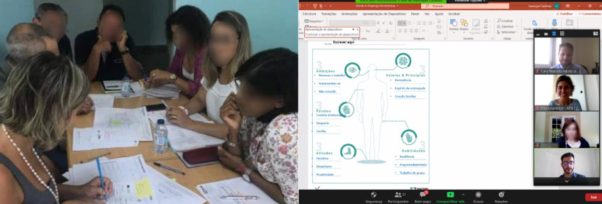
The implementation was monitored only in Portugal, which was very well evaluated by the participants, professionals who work with the social rein- tegration of (ex) offenders. The participants, in co-design with professionals from Aproximar, managed to develop a community awareness plan and a blended-learning training course for the employability of young people aged between 16 and 30, serving time in the community. The project was imple- mented in July of the following year, during the COVID 19 pandemic, so it was carried out online.
The training implemented was training for trainers, that is, the training of professionals to give the course to young people was carried out. Figure 2 is a composition of images containing the strategy creation phase carried out throughout 2019 and the implementation of the course, in 2020.
Community Engagement Methodology for the Academic Design Curriculum 67
Figure 2: Implementation of the methodology and course created (Oliveira, 2021).
Proposal for Implementing the Methodology in Academic Design Curricula Based on the research carried out and the good evaluation that was made by the people who used the methodology and methods, it is proposed here that these are explored in a university context, in academic design curricula, so that students are active agents to involve society and participate in social innovation processes. In addition, the proposal also aims to provide an inno- vative and validated methodological basis, which was built by exploring two distinct approaches: Design and Community Engagement.
Thus, it’s proposed that the methodology be explored minimally within a discipline, which focuses on social innovation. Considering this scenario, in which there is a subject of about 40 hours/class, divided into 10 classes, the following sessions are proposed
Sessions 1 and 2: theoretical background on both Design for Social Innovation and Community Engagement approaches. In addition to reve- aling the theories, it is suggested to show cases that explored these approaches.
Session 3: Divide the classes into groups of 3 to 4 people and ask them to research possible existing problems in the context in which they live, in their cities and choose one to apply the methodology. It is suggested here that the search for organizations that work in areas of social inclu- sion is also encouraged, as was the case of the investigation, in which the doctoral researcher found the Aproximar cooperative and started to contribute, initially as a volunteer, in projects for social innovation. It is quite common to have organizations that need designers to support them and do not have contacts or means to hire them, or they can hire them, but they do not know that Design students can work in this social environment.
Session 4: define which techniques can be explored throughout the design phases, especially the first phase, to mapping needs. It is suggested to encourage that, in addition to the community chosen to work, students seek more partners to involve in the project, such as students from other courses that are related to the problem, professionals, institutions, etc.
Session 5: Provide feedback on how phase 1 went and plan for phase 2.
Session 6: Provide feedback on how phase 2 went and plan for phase 3.
Sessions 7-8: provide feedback on how phase 3 went and plan for phase 4.
Session 9: provide feedback on how phase 4 went and plan for phase 5.
Session 10: provide feedback on how phase 5 went and hold a closing moment and share impressions about the processes developed.
It is relevant to mention that as social innovation processes are not linear and can take longer than expected, as it depends on many factors, with the involvement of external participants, among other issues that cannot always be controlled, it is suggested that the final phases, 4 and 5, are more flexible and do not necessarily need to be carried out within the discipline.
CONCLUSION
From the research carried out, it was possible to recognize the qualities of the Design and Community Engagement approaches, as well as to explore both in synergy to build a methodology to explore in social innovation processes.
The article also served to reveal how a process of social innovation can be implemented and to pay attention to the causes that can be worked on and lack of strategies and people to collaborate, such as the problem worked on in the MOBI project, of community engagement to contribute to reintegra- tion of (ex) offenders. It was also possible to propose the configuration of a curricular structure that can be implemented in Design courses, providing a strong bibliographic review, methodology and creative methods to favor working with communities.
For future research, it is suggested to implement the methodology as pro- posed in this article is to verify how the methodology replication process takes place, answering questions such as: how did the students appropri- ate the methodology? Were you able to implement it with the communities? What were the impressions of the participants involved? What other actors were involved in the process besides the chosen community? Did community members feel engaged? What was the level of engagement? What were the results achieved in the processes developed?
It is believed that such research into the implementation of the methodo- logy in the curricula can have very positive effects in the academic sphere of Design, as well as for society. The present article serves mainly to provide an initial basis for the proposal revealed here.
REFERENCES
Chick, A. (2012). Design for social innovation: Emerging principles and approaches. de Oliveira, C.M., Almendra, R.A., Leitão, T., Lourenço, A.R.A. (2021). The Adaptation of a Design Research-Action for Social Innovation Within the Criminal Justice System in Times of Pandemic. In: Markopoulos E., Goonetilleke R.S., Ho A.G., Luximon Y. (eds) Advances in Creativity, Innovation, Entrepreneurship and Communication of Design. AHFE 2021. Lecture Notes in Networks and Systems. Springer, Cham. Freire, K. (2011). Design de Serviços, Comunicação e Inovação Social: um estudo
sobre serviços de atenção primária à saúde. Dissertação de Mestrado – Pontifícia Universidade Católica do Rio de Janeiro.
Community Engagement Methodology for the Academic Design Curriculum 69
Jégou, F., Manzini, E. (2006). Collaborative services: social innovation and design for sustainability. Milano: Edizioni Poli.design. Manzini, E., Staszowski, E. (2013). DESIS Network, Public and Collaborative:
Exploring the intersection of design, social innovation and public policy. The New School. Meroni, A. (2008). Strategic design: where are we now? Reflection around the foundations of a recent discipline. Strat. Des. Res. J. 1(1), 31–38. Meroni, A., Sangiorgi, D. (2011). Design for services. Gower Publishing, Farnham. MOBI (2019). Metodologia de Envolvimento Comunitário no Sistema de Justiça
Criminal - IO3. Myhill, A. (2012). Community engagement in policing: Lessons from the literature. Oliveira, C.M.M. (2021). O desenvolvimento de uma plataforma habilitante para reinserção social: pessoas que cumprem pena em reclusão ou na comunidade: um processo de inovação social através do Design. Lisboa: FA. Tese de Doutoramento. UNODC, C. (2006). Non-Custodial measures: Social Reintegration. Criminal Justice
Assessment Toolkit. United Nations, New York.
LISTED IN THE AHFE DIGITAL BOOKSTORE CATALOGUE
Explore the complete digital volume
Human Dynamics and Design for the Development of Contemporary Societies
Read this individual research paper free through the original publisher, or explore the full digital proceedings book.
ISBN 978-1-958651-01-8
Explore this ISBN in the AHFE Bookstore ↗Listed in the July 2026 bookstore catalogue; search by ISBN to confirm current availability · Digital book purchase optional