Ying-Chia Huang, Wei-Hao Yang (2022). University footballers’ preference for smart trousers. In: Human Factors and Wearable Technologies. AHFE Open Access, vol. 29, pp. 17–28. https://doi.org/10.54941/ahfe1001470
This paper describes the development of smart trousers for self-training purposes during Covid-19, based on the requirements of two footballers from a Taiwanese University team. The two professional athletes aimed to be able to adapt their play as a result of self-training data that would be received visually from the smart trousers. The researcher collected feedback via two interviews, undertaken during the design preparation and garment fitting phases to ensure the garment design would be ready for production.The semi-structured interview technique and Kawakita Jiro method were adopted by the researcher. Firstly, the study investigated the footballer’s preferred smart trouser design in interview. Secondly, smart trousers were developed as initial garment prototypes, both virtually and physically. Thirdly, after the two athletes had been fitted with and worn the trousers for self-training purposes, the researcher issued a questionnaire and conducted a second interview to collect wearer feedback. The results showed that using both emulator data for a virtual prototype and physical garment sample in the step of prototype development has high degree of accuracy to assist pattern-making, fitting and sizing. The users’ feedback focused on three issues: pocket size, comfort of hem stitching, and label position.
Covid-19 has had a huge impact on people’s lives, including those of athletes (Fadlullah, Fouda, Pathan, Nasser, Benslimane and Lin, 2020). As Andreato, Coimbra and Andrade (2020) pointed out in their paper, the major challen- ges during the Covid-19 pandemic for athletes have been to maintain their training regimens, good mental health and nutrition. Due to uncertainties surrounding when they may be able to return to competitive sporting events, many athletes have been required to maintain their level of physical activity and discipline independently through self-training. According to Leppänen, Aaltonen, Parkkari, Heinonen and Kujala (2014) and Meurer, Silva, Baroni (2018) athletes are undertaking steps to guarantee retention of mobility, flexi- bility, body weight exercises, core stabilization, balance, and proprioception for injury prevention at home. The Fédération Internationale de Football Association (FIFA) has suggested to footballers that they engage in running, plyometric, strength and balance exercises, if they only have access to basic equipment and limited space (Silvers-Granelli, Mandelbaum, Insler, Bizzini,
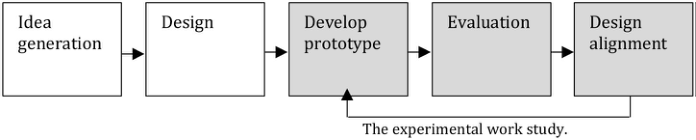
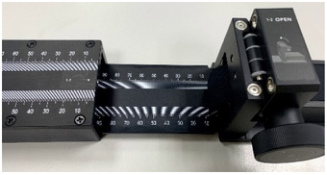
Figure 1: The final three steps in developing this study’s smart garment.
Pohlig, Junge, Snyder-Mackler and Dvorak, 2015). Self-training at home is also an important consideration for anyone needing to exercise particu- lar muscles, and develop their skill level, either with or without equipment, such as Switch, Nike Training Club (Tsai, 2020). Many professional sports, including the National Basketball Association (NBA) (Li, Cao and Wang, 2019), Premier Soccer Leagues (Yu, Yu and Yu, 2018), and the Major League Baseball (MLB), have adopted smart clothing as a tool to improve spor- ting performance and injury prevention (Hanuska, Chandramohan, Bellamy, Burke, Ramanathan, Balakrishnan, 2016).
In January 2022, the Asian Cup (AFC) was held in India, and the national team of Taiwan football returned to this competition for the first time since 2008 (Yen, 2022). This team is looking forward to obtaining a sufficiently high ranking to attend the FIFA world cup. There are five Taiwanese nati- onal footballers who attend the school team at Fu Jen Catholic University. Therefore, this research studied their preferences as the basis for the deve- lopment of smart trousers to enhance the self-training performance of these footballers during the Covid-19 pandemic.
METHODS
This study assisted Suh, Carroll, and Cassill (2010) with the product develo- pment procedure. This research focused on prototype development, evalua- tion and design alignment. The prototype development step included creating virtual and physical smart trousers via CLO 3D (see Figure 1). For the eva- luation step, two footballers answered the questionnaire, which employed a five-point Likert scale. The IBM Statistical Package for the Social Sciences (SPSS) Statistics 24 was used for data analysis. For the interviews, a semi- structured format and the Kawakita Jiro method were implemented. In the step for design alignment, the smart trousers were aligning by following the users’ feedback. Moreover, based on the garment sizing chart for the footbal- lers, the researcher was able to develop six sizes of smart trousers for male and female football athletes.
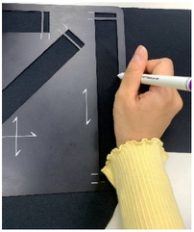
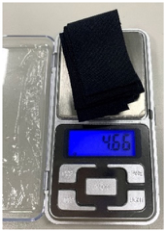
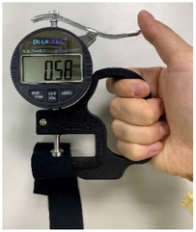
Prototype Development This study involved developing a prototype for smart trousers by adopting the CLO 3D fabric kit, virtual garment prototype fitting and a pre-test of physical garment fitting to collect evaluation data. Firstly, the researcher gained a data set from the CLO 3D textile kit utilizing a stencil to cut the fabric, and using a scale to measure textile weight, taking thickness gauge gain textile thickness,
University Footballers’ Preferences for Smart Trousers 19
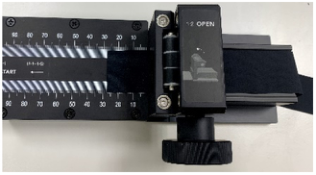
Figure 2: Using a stencil to cut fabric.Figure 3: Scale for textile weight measurement.Figure 4: Thickness gauge to measure textile.
adopting a stretch test and bending test (see Figure 2 to Figure 7) to build an emulator data set for the textile kit (see Table 1).
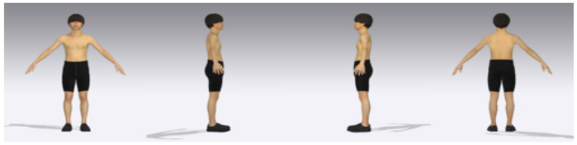
Secondly, using the emulator data set in CLO 3D with the garment pattern to establish virtual smart trousers to evaluate fit issues by following textile kit data for each size and gender of avatars. Taking male and female trou- sers in size M for example, these whole view evaluations helped to address pattern-making problems before the garment construction step (see Figure 8 and Figure 9).
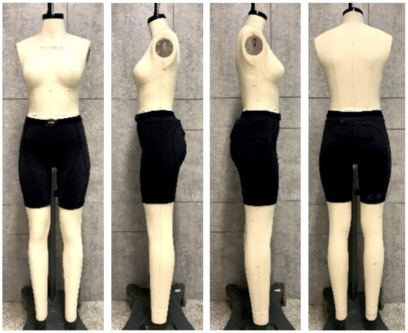
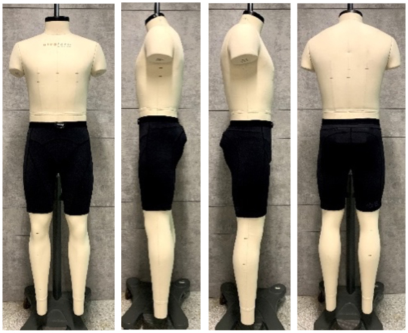
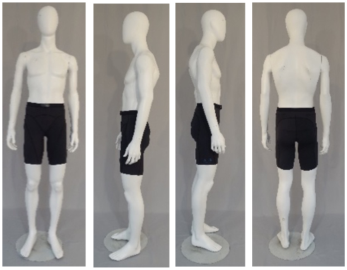
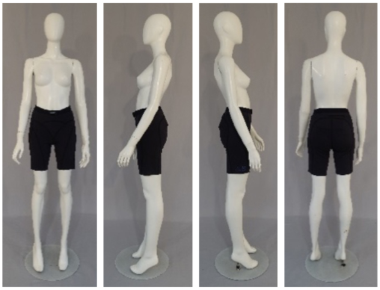
Thirdly, after constructing the smart trousers, this study used male and female stands of size M to evaluate the design details for garment fit before
20 Huang and Yang
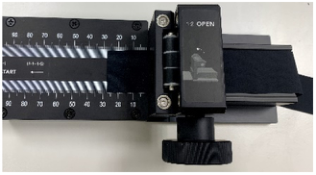
Figure 5: Adopting a stretch test device to gain data.Figure 6: Bending test device to collect textile bending data.Figure 7: Digital force gauge and size.Figure 8: Avatar fitting for female size M.Figure 9: Avatar fitting for male size M.
live users physical fitting (see Figure 10 and Figure 11). The trouser samples carried an electronic device from Zentan Technology, able to detect physio- logical information, such as electrocardiography, global positioning system, heart rate, cadence, running pace, speed, distance, and calories burned (see
University Footballers’ Preferences for Smart Trousers 21
Table 1. Emulator for textile kit data.
Table available in the original PDF paper.
CLO 3D Textile kit data list Object
Textile Number SU-0140 Type Knitted fabric Fabric density
Figure 10: Physical garment fitting for female size M.
Figure 12). This electronic device can connect with a smart phone applica- tion via blue tooth. This study adopted Wahoo Fitness as intermediate tool for this example. It is available as a free to download sports application.
22 Huang and Yang
Figure 11: Physical garment fitting for male size M.Figure 12: This study uses the TP3 electronic device from Zentan Technology. Its measurements are: length 6.5cm × width 3.5cm × depth 0.6cm.Figure 13: Screenshot for exercise distance and time from the smart phone application from one of the interviewees.
Figure available in the original PDF paper.
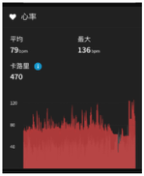
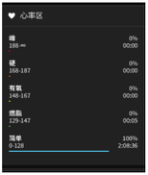
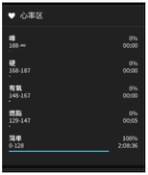
In March 2020 during the Covid-19 pandemic, the researcher invited a male and a female University football team leader to participate: Mr. Hsu age 31 and Miss. Chen age 25. They were required to share their user feedback after wearing the smart trouser, and to engage in self-training (both dyna- mic and static). The smart trousers offer footballers exercise data visually, including distance, time, the average and maximum heart rate, and running dynamics (see Figure 13 to Figure 16).
Evaluation: Questionnaire and Interview This questionnaire included twelve questions, two relating to the user’s back- ground, five questions regarding satisfaction with the fit of the smart trousers, one question about the electronic device, three questions on users’ subjective feelings about the garment, and one question on expected selling price.
University Footballers’ Preferences for Smart Trousers 23
Figure 14: This image showed heat rate information with average and maximum.Figure 15: Five kinds of data analysis relating to heart rate.Figure 16: Screenshot illustrating running dynamics.
1. Age 2. Gender 3. Smart trousers’ style 4. Smart trousers’ appearance 5. Functionality of textile 6. Garment fit while doing static training 7. Garment fit during sports training 8. Satisfaction with the function of the electronic device 9. Smart trousers’ suitability for self-training 10. Overall satisfaction 11. Likely to recommend the smart trouser to other athletes 12. Price range for purchase The questionnaire was designed implementing a Likert scale for the five variables.
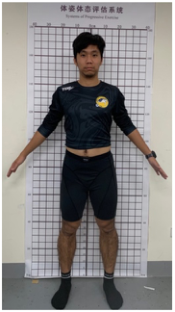
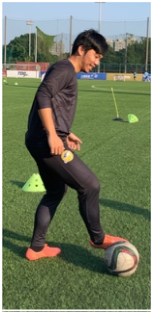
Figure 17: Mr. Hsu took a photo wearing the garment for the pre-test in front of systems for progressive exercise.Figure 18: Mr. Hsu wore the smart trouser to practice with the football.
2 - Low satisfaction 1 - Dissatisfied The data sets obtained were analyzed using IBN SPSS Statistics 26 and Microsoft Excel 16.46 version.
When answering the questionnaires, the male and the female participants selected very satisfied (5) for most of the questions. However, they expressed low satisfaction (2) with regard to appearance (see Figure 17 to Figure 20). Therefore, the researcher held two interviews to clarify the concerns. Both identified three problems: need to increase the pocket size, to relocate the heat transfer label, and improve the stitching at the hem to be more comfortable.
Design Aliginment Due to the signal connection distance between electronic device and smart phone being under 15 meters, the footballers requested the inclusion of a pocket for their mobile phones on the lower body to retain a good signal. The- refore, the smart trousers were redesigned to include a pocket wide enough and deep enough to carry the largest mobile phone available at that time. The
University Footballers’ Preferences for Smart Trousers 25
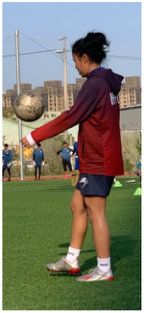
Figure 19: This study took the fit photo for the smart trousers statistically from a pre-test by Miss Chen.
Figure available in the original PDF paper.
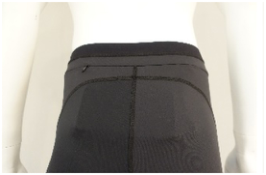
Figure 20: Miss Chen wearing the smart trousers to complete her exercises.Figure 21: The pocket for carrying the smartphone is located at the back waist of the lower body.
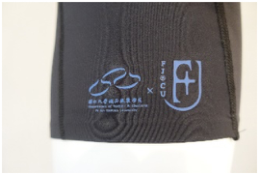
pocket width size was 14.5 centimeter (see Figure 21). The two footballers both agreed the heat transfer label would be best located on the front flank of the left leg (see Figure 22). The interviewees both indicated that using two needle four thread stitch to link the hems of the trousers was lack comfor- table. However, in the final design high elastic adhesive film was applied to secure the trouser hem.
26 Huang and Yang
Figure 22: This photo shows a heat transfer label layout in the front flank of the left leg using high elastic adhesive film in the trousers’ hem to improve wearer comfort.Table 2. The male smart trousers size chart in centimeters. (Huang et al., 2021).
Table available in the original PDF paper.
Garment size Waist size Hip size Thigh size S size 74.4 92.2 52.4 M size 79.8 96.8 55.3 L size 93.5 107 59
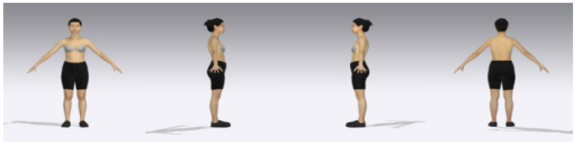
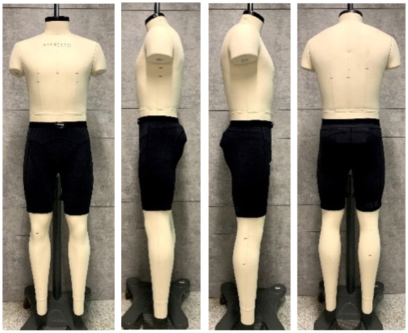
Figure 23: Four views of male smart trousers for size M.Table 3. The female smart trousers size chart in centimeters. (Huang et al., 2021).
Table available in the original PDF paper.
Garment size Waist size Hip size Thigh size S size 67.7 89.63 50.5 M size 70.5 95.5 54.5 L size 76.8 100.3 57.3
Based on the sizing chart (Huang, Shih, Huang, Ho, 2021) and the body measurements of the footballers, the researcher developed three sizes of trouser patterns for the two genders (see Figure 23 and Figure).
CONCLUSION
This study developed an initial prototype for smart trousers based on vir- tual and physical requirements for athletes’ self-training during Covid-19 pandemic. The researcher held interviews to collect garment fit data and feed- back from two professionals. This included the opportunity to evaluate and
University Footballers’ Preferences for Smart Trousers 27
Figure 24: Four views of female smart trousers for size M.
refine the trouser sample following their subjective comments, to prepare the garment for production. There are three findings:
The research utilized a textile kit with textile emulator data. It made virtual three-dimensional garment in CLO 3D gaining a higher degree of accu- racy compared with the traditional garment sampling procedure. This step helped to resolve the garment sample problem before physical garment construction.
In the garment prototype step, the study employed questionnaires and interviews to collect users’ feedback. The two interviewees indicated they were well satisfied with the smart trousers’ style, textiles, garment sta- tical and active fitting, the function of the electronic device as effective for self-training and to recommend to other athletes. However, they were concerned about pocket size in reference to the location of the smart phone, the comfort of the stitching at the hem and the position of the heat transfer label. The prototype was aligned with the user feedback
Sizing charts for university footballers were consulted to develop six sizes of garment for male and female footballers. The smart trousers are now ready for garment production and further testing.
ACKNOWLEDGMENT
This research was funded by the Taiwan Ministry of Science and Techno- logy (MOST 109-2221-E-030-006- ). Fu Jen Catholic University Institutional Review Board agreed to this research. The Certificate of Approval for this Amendment is FJU-IRB NO: C108064.
REFERENCES
FADLULLAH, Z., FOUDA, M. M., PATHAN, A.-S. K., NASSER, N., BENSLI- MANE, A. & LIN, Y.-D. 2020. Smart Iot SolutIonS for CombatIng the CoVID- 19 PanDemIC. IEEE Internet of Things Magazine. Institute of Electrical and Electronics Engineers.
28 Huang and Yang
ANDREATO, L. V., COIMBRA, D. R. & ANDRADE, A. 2020. Challenges to Athletes During the Home Confinement Caused by the COVID-19 Pandemic Strength and Conditioning Journal, 42, 1-5. LEPPÄNEN, M., AALTONEN, S., PARKKARI, J., HEINONEN, A. & KUJALA, U.
2014. Interventions to prevent sports related injuries: A systematic review and meta-analysis of randomised controlled trials. Sports Med, 44, 473–486. SILVERS-GRANELLI, H., MANDELBAUM, B., INSLER, O. A., BIZZINI, M., POHLIG, R., JUNGE, A., SNYDER-MACKLER, L. & DVORAK, J. 2015. Effi- cacy of the FIFA 11+ injury prevention program in the collegiate male soccer player. Am J Sports Med, 43. LI, Y., CAO, J. & WANG, Y. Implementation of Intelligent Question Answering
System Based on Basketball Knowledge Graph. 2019 IEEE 4th Advanced Informa- tion Technology, Electronic and Automation Control Conference (IAEAC), 2019 Chengdu, China. IEEE 2601-2604. YU, F. T. S., YU, E. H. & YU, A. G. 2018. The Art of Learning: Neural Networks and Education, Boca Raton, Florida, CRC Press. HANUSKA, A., CHANDRAMOHAN, B., BELLAMY, L., BURKE, P., RAMANA-
THAN, R. & BALAKRISHNAN, V. 2016. Smart Clothing Market Analysis. In: SIDHU, I. (ed.). California: University of California, Berkeley. YEN, W. 2022. Taiwan in position to advance at Women’s Asian Cup 2022 [Online].
The Central News Agency in Taiwan: CNA English News. [Accessed January 26 2022]. UH, M., CARROLL, K. E. & CASSILL, N. L. 2010. Critical Review on Smart Clothing Product Development. Wilson College of Textiles, 6, 1.
LISTED IN THE AHFE DIGITAL BOOKSTORE CATALOGUE
Explore the complete digital volume
Human Factors and Wearable Technologies
Read this individual research paper free through the original publisher, or explore the full digital proceedings book.
ISBN 978-1-958651-05-6
Explore this ISBN in the AHFE Bookstore ↗Listed in the July 2026 bookstore catalogue; search by ISBN to confirm current availability · Digital book purchase optional