Hilal Al-Maqbali, Amr Mohamed Abdel Kader, Jawaher Albalushi, Mika Luimula, Calin Calbureanu-Popescu (2022). Impact of image features on visual attention: An eye-tracking study. In: Usability and User Experience. AHFE Open Access, vol. 39, pp. 380–387. https://doi.org/10.54941/ahfe1001732
The study is theoretical in the sense that it examines the visual attention in reference to tourism images and builds on this research by integrating the eye movement data from the tourism ads. It offers direction in selecting better images for promotional purposes in tourism by underscoring the needs for considering specific features of images necessary for diverse and unique markets. In this study, eye tracking measurements with survey data research design will be employed in comprehending how foreign people are attracted to visuals used in tourism marketing in Oman. Ultimately enabling further investigation into the impact of image features on the traveler's attraction towards the tourism images in Oman and how the influence varies between the travel teams. Strictly speaking, the following image features were investigated: (1) underexposure vs overexposure, (2) monochromatic vs chromatic and (3) image with human presence and without. We are using Tobii eye tracking glasses pro-2, a wearable tool to collect real and accurate visual attention. The study was performed at Turku University of Applied Sciences in Finland. The experiment managed to recruit eighty-six participants (students and staff) from different age ranges. After the participants read the instruction paper, they were instructed to wear the Tobii eye tracking glasses, while sitting in a room Infront of 42-inch Tv screen. Participants were instructed to browse images on screen and selecting the most attractive image to move to another screen and so on. Dwell times (DTs) for AOIs (area of interests), first fixation, fixation duration and number of fixations were collected. Statistical analysis show significant impact of the image features on people visual attraction and attention.
The tourist’s experiences, images, and photographs play a significate role in endorsing a good memory about the destinations and highly reflect touri- sts’ satisfaction. Also, taking photos to become rooted deeply in the overall travel experience with very limited tools, tourists were highly valued for taking photos, or souvenirs from travel destinations this was when there were not that many high-tech cameras or smartphones. Consequently, this repre- sents the relatively common behavior among tourists of taking memories
Impact of Image Features on Visual Attention: An Eye-Tracking Study 381
from the traveled destinations. Nowadays with a wide variety of media and smartphones, taking photos in travel become very trendy.
Sharing destinations photographs can be a source of information and influ- ential impact on other choices of travel and selected destinations choices. For instance, tourists take photos of the most attractive destination or record videos of the activities there, e.g., sky diving, hiking, eating food, dancing, wearing traditional clothes, ...etc. This can indirectly create the attention and traveling motivations among others who have been shared with. s (Cao et al., 2010). As a result, tourists also use photographs and images as a vital tool to determine the preferred destination choices of certain cultures or preferences (Garrod, 2008). The decision-makers in the tourism sector, recently, put too much attention toward the promoted images as they already know that most of the tourist destinations’ choices is relying on the images and photographs of the destinations. This justifies why the official tourism authority has its own visual database to provide needed information and recommend destina- tions based on the time, events, weather, activities, and used to be updated continuously (Cao et al., 2012).
Eye-Tracking Methods in Tourism Eye-tracking is a psychophysiological technique typically used to measure an individual attentional process. It is basically, used for observation and documentation of the records of a person’s unconscious eye movements when looking at any content such as images, magazines, websites. etc. (Wilson, 2012).
Eye-tracking recently also, has been used widely in tourism sectors for the purposes of testing tourist attention using images and media and inve- stigating the influence of the promoted images among their decision-making process. Also, the push of any tourism product e.g. destination is a risky deci- sion and the potential tourists have to make the decision based on the images of the selected tourism product (e.g. beach, mountain, castle, dessert, etc.) (Djafarova and Andersen 2010; Kotler, Bowen, and Makens 2010).
To overcome this risk and successfully communicate the intangible value of the proposed destination, marketers rely heavily on imagery and media (Djafarova and Andersen 2010). This means that their only tool to pursue the potential tourist and influence his attention and his/her decision process in the image. Consequently, most of the tourism countries improve the images of their destination and track the behavioral changes of tourists from time to time. Actively, the eye-tracking methodology has been used Also, to raise the understanding of potential tourists’ attention to and engagement with tourism images. By doing so, tourism countries will reduce the cost of time and random promotions, to targeted promotions.
This study is arguing that media and images can be one of these factors that influence tourist emotions and motivation and their decision-making process especially with the current uncontrolled high exposure to virtual advertisements, promotions, and tourism websites. Also, the images with their different variables, quality, human, colors, resolution play a significant role in attacking tourists’ attention.
Figure 1: Participant conducting the experiment.
The research focused on three elements of the image features which are: the level of Exposure, the use of monochromatic photos versus chromatic photos, and the presence of human factor in the touristic image versus its absence. The research conducted the testing in cooperation with Turku University of Applied Sciences in Finland, where a total of 86 testing subjects from different age groups participated in the experiment. An eye tracking device (Tobii eye tracking glasses pro-2) was utilized to examines the visual attention of images representing a variety of Omani touristic point of attraction.
EXPERIMENT SCENARIO The Experiment aim is to identify the images features for touristic areas from Oman, and results are to be used in tourism campaigns organized by the Ministry of Tourism & Heritage in Oman. The research conducted the testing in cooperation with Turku University of Applied Sciences – Finland. where a total of eighty-six testing subjects from different age groups participated in the experiment. An eye tracking device (Tobii eye tracking glasses pro2) was used to track the visual attention that spent by participant on images representing a variety of Omani touristic point of attraction (i.e., sea views – Mountain Views – Historical Monuments, etc.).
An experimental interface was designed to examine the testing image featu- res in order to increase the precision of our sampling data. At the experiment, ten different screens were separately displayed on TV screen, and participants were asked to click on the most attractive images based on their own experie- nce and preference. The experimental interface allows participants to move to next screen without interruption by mouse clicking. The experimental inter- face was designed taken into consideration not to include the eye movements when clicking to next screen.
The participant was asked to read the consent form before starting the experiment. Then after that, participant was asked to wear the Tobii eye tra- cking glasses pro2 to do the calibration and start the experiment, see Figure 1. An instruction of the experiment was given on the screen and participant asked to use the mouse to follow up. Following the eye-tracking testing, par- ticipant was requested to complete a short survey. At this paper we study three image features (1) Image exposure, (2) Image chromatic/monochromatic and (3) the presence of human in image.
Impact of Image Features on Visual Attention: An Eye-Tracking Study 383
Table 1. Collected eye tracking metrics (Al Maqbali et al., 2013, Pooleat al. 2006, Jacob et al. 2003).
Table available in the original PDF paper.
Eye metric Definition Indicator Number of fixations Efficiency in infor- mation search.
number of times (points) on area of interest (AoI) where our eyes stop to scan the scene Exact total time spent on scanning the scene (extracting information).
The AOI is more appealing.
Total dura- tion of fixations Average pupil diameter The pupil can range in diameter from 1.5mm to 8mm. Changing in the range refers to spending effort on cognitive workload. Number of Visits
the number of times that have looked at a particular AOI
Comparison and interest at a particular AOIs. Time to first Visit
The time to first fixation to a particular AOI on all media.
Better attention get- ting to a particular AOI.
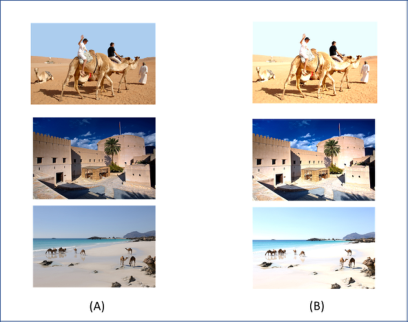
Figure 2: Screen Frame for Images of (A) Normal Exposure versus (B) Over Exposure.
RESULTS AND DISCUSSION
Through this experiment, we made separate screens to study each image fea- tures so that we controlled for other factors. In addition to studying the participant’s choices (by mouse click), visual movement was also collected. Table 1 shows the collected eye tracking metrics and their indicators.
The Impact of Image Exposure on User Visual Behavior At the experiment, we study the impact of exposure feature (the lightness or darkness of an image). Figure 2 shows the screen that used to collect the visual attention to study the exposure feature where two columns of images
Table 2. Results of the statistical analysis of the eye movements for the image exposure feature.
Table available in the original PDF paper.
Metric Mean P value Over exposure Normal Exposure Number of fixations 8.7 11.5 P<0.005 Total duration of fixations 3.29 5.13 P<0.005 Average pupil diameter 3.447 3.514 0.572 Number of Visits 5.447 5.835 0.02 Time to first Visit 0.00063 0.00058 0.754
were shown in the screen. Two areas of interest were collected (A) images with normal exposure and (B) images with over exposure.
Table 2 show the results of the statistical analysis of the collected eye tracking metrics. Number and total duration of fixations and number of visits spent on the normal exposure images are significantly more than the over exposure images (P<0.05). Participants statistically significant attend to appeal and paying more interest to the normal images than the over exposure images. The average pupil diameter was not significant difference between the over and normal exposure images (p = 0.572), this gives us a clear indication that a reasonable adjustment on the image exposure level does not impact on the cognitive effort. Also, the time to first fixation was not significantly dif- ference on image exposure level (p=). One possible explanation of this result is that the level of the image exposure does not significantly impact on the attention-grabbing first.
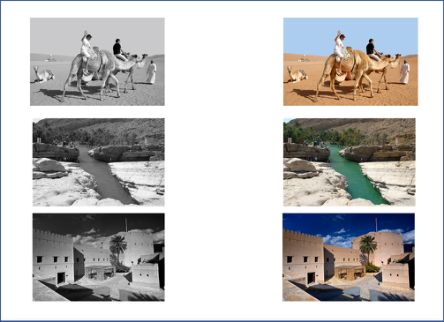
Impact of Chromatic and Mono Chromatic Images on Visual Behavior At the experiment, a screen with two columns of images: (1) chromatic and (2) mono chromatic, was shown for the participants. The two colu- mns show the same image content as shown in Figure 3. The eye tracking metrics were collected, and statistical analysis was conducted as shown in table 3. The results show that participants significantly spend more time on browsing chromatic images than mono chromatic images (number and total duration of fixation, p<0.005). Interestingly, the pupil significantly gets wider in the chromatic than the mono chromatic images (P = 0.004).one explanation for the significant difference on pupil diameter between chroma- tic and mono chromatic could be because of the color details on chromatic images require more cognitive effort. Furthermore, chromatic images signi- ficantly were more revisited and browsed than mono chromatic (p<0.005). An interesting result that mono chromatic was statistical significance on the attention-grabbing first comparing with chromatic images. In conclusion, we can say that mono chromatic is significantly grabbing the first attention, but the chromatic images are significantly more power of details, so participant significantly spend more time on browsing them.
Impact of Image Features on Visual Attention: An Eye-Tracking Study 385
Figure 3: Screen Frame for Monochromatic Images versus Chromatic Images.Table 3. Statistical analysis results of the eye movements for the image chromatic and mono chromatic feature.
Table available in the original PDF paper.
Metric Mean P value Chromatic Mono Chromatic Number of fixations 8.5 5.8 P<0.005 Total duration of fixations 4.4 2.3 P<0.005 Average pupil diameter 3.47 3.41 0.004 Number of Visits 3.3 2.9 P<0.005 Time to first Visit 0.6 0.48 0.02
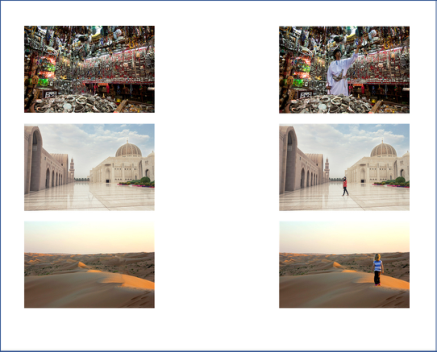
Impact of Human Presence in Tourism Image To evaluate the impact of human presence in tourism image, two columns of images were displayed on the screen as shown in figure 4. The two colu- mns show the same exact images content, but the only difference is the human presence. The results show that participants were significantly inte- resting on browsing the content of the images with human presence than the one without human presence (number of fixations, p = 0.023 & number of visits p = 0.028), although no significant difference was found on total duration of fixations (p = 0.176), table 4. One explanation for this result is that the human presence in tourism image has significant impact on attra- cting participant visual behavior. No statistical significance was found on the average pupil diameter (p = 0.674), because images show exact same con- tent and only difference is the presence of human. Interestingly, result show that images with human presence were significantly grabbed the first atten- tion (p = 0.017). Overall, results show significant impact of human presence in images on grabbing people attraction and attention than the image with- out human presence. This can conclude to that including human presence in image tourism show statistically significant factor to get people attention.
Figure 4: Screen Frame for Images without Human presence versus Human presence.Table 4. Statistical analysis results of the eye movements for image with human presence and without.
Table available in the original PDF paper.
Metric Mean () P value With Human Without Human Number of fixations 9.421 8.265 0.023 Total duration of fixations 4.317 3.894 0.176 Average pupil diameter 3.44 3.48 0.674 Number of Visits 4.939 4.626 0.028 Time to first Visit 0.643 0.799 0.017
CONCLUSIONS
Eighty-six participants were recruited at this eye tracking study to examine the impact of some image features on visual behavior. The experiment inclu- ded only Omani tourist images to identify best recommended image features for Omani tourist campaigns. Analyzing the collected data show that expo- sure, chromatic, human presence features have significant impact on people attention to tourist images for example, participant show that image with colors take significantly more time browsing them than mono chromatic ima- ges. However, the mono chromatic images statistically have more impact on the first attention. Another example that human presence and normal image exposure have significantly strong impact on people to spend more time browsing the image.
Our future work, we are planning to analyze the visual behavior com- paring with their selected choices (mouse clicks) and the collected survey data. Additionally, the data of this experiment will be compared with ano- ther experiment with other test subjects from different backgrounds, to find out the impact of people background and image feature on their visual beha- vior. We also plan to apply XR in tourism utilizing Varjo’s headsets with eye
Impact of Image Features on Visual Attention: An Eye-Tracking Study 387
tracking sensors together with iMotions software collecting biosensor data (Varjo, 2019). In our previous studies, we focused on collecting behavioral and performance data in maritime training (Markopoulos et al., 2021).
ACKNOWLEDGMENT
The research leading to these results has received funding from the Ministry of Higher Education, Research and Innovation (MoHERI) of the sulta- nate of Oman under the Block Funding Program. MoHERI Block Funding Agreement No MoHERI/BFP/UoTAS/01/2019.
REFERENCES
Al Maqbali, H., Scholer, F., Thom, J. A., & Wu, M. (2013). Using eye tracking for evaluating web search interfaces. In Proceedings of the 18th Australasian document computing symposium (pp. 2–9). Cao, L., Luo, J., Gallagher, A., Jin, X., Han, J., & Huang, T. S. (2010). Aworldwide
tourism recommendation system based on geotaggedweb photos. Paper presented at the Acoustics Speech and Signal Processing (ICASSP), 2010 IEEE International Conference on. Cao, L., Smith, J. R., Wen, Z., Yin, Z., Jin, X., & Han, J. (2012). BlueFinder: Estimate where a beach photo was taken. Paper presented at the Proceedings of the 21st international conference companion on World Wide Web. Djafarova, Elmira and Hans-Christian Andersen (2010). “Visual images of metaph-
ors in tourism advertising,” In Peter M. Burns, Jo-Anne Lester, and Lyn Bibbings (eds.) Tourism and Visual Culture, Volume 2: Methods and Cases, pp. 35–43. Cambridge, Mass: CAB International Garrod, B. (2008). Exploring place perception, a photo-based analysis. Annals of Tourism Research, 35(2), 381–401. Jacob, R. J., & Karn, K. S. (2003). Eye tracking in human-computer interaction and
usability research: Ready to deliver the promises. In The mind’s eye (pp. 573–605). North-Holland. Kozak, M. (2002). Comparative analysis of tourist motivations by nationality and destinations. Tourism anagement, 23 (3), pp. 221 – 232. Lustigová, Z., Jarolímková, L, Žufan, J. (2021). Evaluation of Tourist Decision-
Making Process by Eye-Tracking Method – Focused on Methodology Gap and Cross-National Comparison. Journal of Tourism and Services, 22(12), 89–104. doi: 10.29036/jots.v12i22.258 Markopoulos, E., Luimula, M., Calbureanu-Popescu, C., Markopoulos, P., Ranttila, P., Laukkanen, S., Laivuori, N., Ravyse, W., Saarinen, J., and Nghia, T. Neu- ral Network Driven Eye Tracking Metrics and Data Visualization in Metaverse and Virtual Reality Maritime Safety Training, In: Proceedings of the 12th IEEE CogInfoCom 2021, Sep 23–25, online, 2021, pp. 537–543. Poole, A., & Ball, L. J. (2006). Eye tracking in HCI and usability research.
In Encyclopedia of human computer interaction (pp. 211–219). IGI global. Varjo (2019) iMotions and Varjo announce integration of Varjo’s headsets into the iMotions 8.0 software for next level human behaviour research, DOI = https://varjo.com/company-news/ Wilson, A. (2012). Marketing research; An Integrated Approach. 3rd ed. Harlow:
Financial Times Prentice Hall, ISBN 978–0-273–71870-3.
LISTED IN THE AHFE DIGITAL BOOKSTORE CATALOGUE
Explore the complete digital volume
Usability and User Experience
Read this individual research paper free through the original publisher, or explore the full digital proceedings book.
ISBN 978-1-958651-15-5
Explore this ISBN in the AHFE Bookstore ↗Listed in the July 2026 bookstore catalogue; search by ISBN to confirm current availability · Digital book purchase optional