Kin Wai Michael Siu, Kwok Yin Angelina Lo, Yi Lin Wong, Chi Hang Lo (2022). Playful Public Design by Children. In: Human Factors in Communication of Design. AHFE Open Access, vol. 49, pp. 117–125. https://doi.org/10.54941/ahfe1002044
The design of public space and facilities in a country park aims to serve a wide scope of people with diverse needs and interests. Research on human factors should include users of different ages and capabilities. Children are often a forgotten category of users for collecting views and preferences in public design. Their voices and ideas are seldom heard and heeded. It is crucial to involve children in the design process to optimise outdoor recreational and educational experience in a country park. Playful Public Design by Children is a design research project which involved 1,023 children aged 3 to 18. They were guided to use a human factors (or ergonomics) approach to identify and solve problems in the real-life setting of Shing Mun Country Park in Hong Kong. The design research, spanning from 2019 to 2020, was conceived and co-led by a public design lab of a university and a group of art and design studios for children and teenagers. This paper reports an investigation of children’s perception of, observations on and concerns about the country park and the values underlying these concerns. Different phases engaged children in site research and visual-based design projects. For clarity and more in-depth discussion, this paper focuses specifically on children aged 8 -12. The projects allowed children to participate in observing the inadequacies of current park features such as space and facilities design. Research findings reveal children’s ability to embrace complexity in different design situations as they adopted the role as researcher, designer and change-maker. The common problem-solving strategies among their proposed design ideas reflect their concern for fun, fulfilment, adventure, action and harmony of different users (animals included) in the shared outdoor environment. Their proposed design solutions go beyond existing park design that covers only functional and physical aspects. Children’s perspective addresses other human factors such as psychological, emotional and social needs of different users resulting in an array of whimsical designs, such as zoomorphic gazebos, tree houses and observation towers for star-gazing, bird-watching, daydreaming and quiet reading. The significance of the research project is in the pedagogical practice that reveals children’s inherent creativity, design ability and potential as contributing citizens. The project changes urban children’s perception of nature, design and problem-solving strategies, and parents’ perception of design education in children’s creative development. Through the lens of children, designers can find a more well-rounded view inclusive of different human factors that can optimise users' interaction with the country park environment.
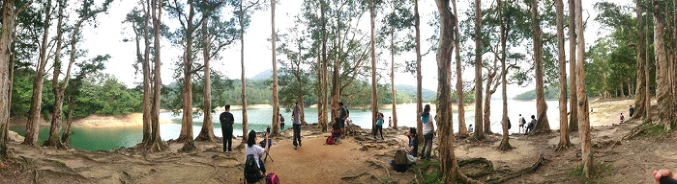
Figure 1: On-site research at Shing Mun Country Park, Hong Kong (by authors).
park, conflicts between humans and animals, and the need for more child- friendly recreational facilities. Children were engaged in site research and visual-based design projects to find inspiration from nature and to externalize ideas with hands-on mixed media.
Spanning for over two years, the research project gathered data from observations found in design processes, drawings and models. Children expressed ideas about the country park in an array of playful designs such as signages, structures and spaces. The research findings revealed children’s common concerns for security, comfort, hygiene and other fun factors and how they used design as a tool for change.
The two collaborative partners in this research are the Public Design Lab of The Hong Kong Polytechnic University School of Design and CreativeKids, a group of art and design studios in Hong Kong. The collaboration has helped to foster understanding among academics, professionals, educators, research- ers, parents and anyone interested in inclusive public design that shapes our shared environment.
CHILDREN AND PUBLIC DESIGN Definitions
Public Design and children’s participation in design are two key focuses of this research. The Convention on the Rights of the Child (United Nation, 1995) defines a child as a human being younger than 18 years old. In this research project, the participants were aged from 3 to 18. For brevity in this article, examples were drawn from the group of children aged 8 to 12. Public space refers to areas in the built and natural environments to which the public has access for gathering, communication and interaction (Altman & Zube, 1989; Hsia, 1994; Siu, 2007; 2015). Design can be an object or a chosen action taken to realize ideas, to meet a need or solve a problem. Public design can be described as the conception and realization of new things for all in a space that allows public access to social, cultural, academic or political interactions (Siu et al., 2021).
Children’s Participatory Design Druin (2002) identified four roles in participatory design: user, tester, infor- mant and design partner. The children in this research adopted three roles as researcher, designer and changemaker. Regardless of what role(s) they
Playful Public Design by Children 119
took, public design has a close relationship with participatory design, as it is essential to include all in public design so that the outcome meets the needs of all users, children included. Children’s intuitiveness and authenticity are valuable in a design process when researchers are genuinely interested in con- sidering the views, ideas and preferences of different categories of age and ability. Participatory design with children is becoming increasingly popular in academia and professional fields. For instance, Roussou, Kavalieratou and Doulgeridis (2007) involved children in the design of an online art education programme for the National Gallery of Art in Athens, Greece. Children par- ticipated in the design of inclusive safety signs in densely populated urban areas in Hong Kong (Siu et al., 2015; 2017). Jansson (2015) involved chil- dren in reviewing local play space management. Carrol, Witten, Asiasiga and Lin (2019) discussed ways to increase children’s participation in urban plan- ning by showcasing the process and outcomes of two participatory projects with children related to Auckland city life and the redevelopment of a city square.
Design Process and Design Thinking In a design process, children learn to identify problems and explore possi- ble solutions. Among professionals, the most common models of the design process are the two developed by IDEO and Stanford d.school. The five sta- ges of IDEO’s design thinking process are discovery, interpretation, ideation, experimentation and evolution (Brown & Katz, 2009). Stanford d.school’s five steps of design thinking are empathise, define, ideate, prototype and test (HPI & Stanford d.school, n.d.). Other scholars, researchers and designers have also studied the stages of the design process and found similar iterative outcomes.
Brown (2009) suggested that design thinking be taught to persons who do not know how to design. Children, driven by curiosity and innate creativity and having fewer restrictions and boundaries in thinking, may be particularly receptive to learning design thinking and process. Research studies have been made to investigate children’s design thinking skills in makerspaces using apps (Hatzigianni et al., 2021) and to identify indicators of idea fixation when children design (Schut et al., 2020). However, literature related to chil- dren’s design thinking or design process in the context of public spaces is still limited. How children perform design thinking and work in the process of public design is interesting and worthy of further exploration.
METHODOLOGY
A combination of qualitative and quantitative methods with an emphasis on visual-based research methods was used to provide a more comprehensive understanding of how children relate to public design (Creswell & Clark, 2011). Most of the qualitative inquiries drew textual data from a question- naire called Teachers’ Tool Questionnaire with three sections to describe chil- dren’s design process: inquiry, ideation and improvisation. The textual data were the design facilitators’/researchers’ observation of children’s responses
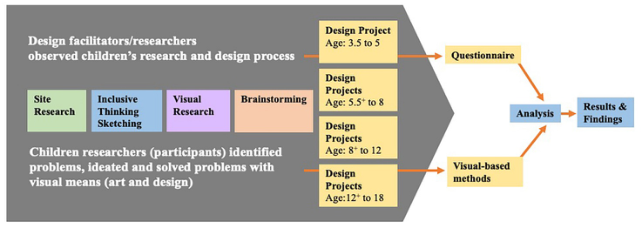
Figure 2: Research design (Siu et al., 2021) (by authors).
and perceptions during the playful design projects. Six pre-determined cate- gories were used to aid data entry: nature (animals and insects), nature (plants and scenery), human, activities, public space/facilities and others. The textual data were identified as codes and themes using reflexive thematic analy- sis (Braun & Clarke, 2012). The results, represented as quantitative charts, revealed children’s concerns, ideas and solutions on different age levels.
Child-friendly visual research methods in the form of worksheets, mind- maps, sketches, mixed media art and design models were used. Visuals helped children to give shape to their ideas or sensory experiences that are inde- scribable with words. As identified by Literat (2013), images generated or provided by children could be used in both the formative and evaluative sta- ges of research, and its flexibility and versatility have been acknowledged by researchers.
Playful design projects were designed as fun-filled visual-based entry points to help children approach the topics with enthusiasm. Children did not adhere to a prescribed set of ‘design processes’. Rather, they responded to the sensory stimulation of the country park and generated ideas during brain- storming and the tinkering process with materials. They were introduced to the mindset of design thinking, characterized by empathy for different users: human, animals and insects.
Research Design The research process took place in several stages (Figure 2). Starting with on-site research (sensory experience and observation), inclusive thinking ske- tching (from impression and/or imagination), visual thinking and represen- ting (depicting colours, shapes, lines and textures of the site), brainstorming (group discussion of the needs and problems identified in the site) and a range of playful design projects that engaged children in 2D and/or 3D artmaking and design. As the children observed the needs and problems in the country park, the design facilitators/researchers observed children’s concerns, ideas and solutions in their creative actions resulting in a rich body of data.
PLAYFUL DESIGN PROJECTS The 1,023 children participants from the studios of CreativeKids were divi- ded into four age groups (Table 1). Playful design projects were conducted
Playful Public Design by Children 121
Table 1. Research participants age groups and playful design projects.
Table available in the original PDF paper.
Group Name Age No. of Participants Playful Design Projects Preschool 3.5 to 5.5 423 Monkey Signages Design Junior 5.5+ to 8 262 Whirly Facilities, Playful Tools, Butterflies Design Intermediate 8+ to 12 304 Gazebos, Tree Houses & Observation Towers Design Senior 12+ to 18 34 Self-directed Design & Recycling Bins Design Total 1,023
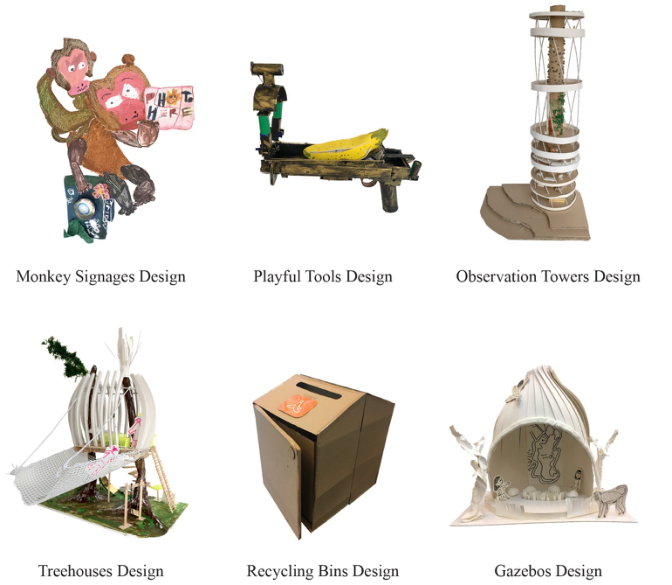
Figure 3: Examples of children’s design outcomes inclusive of human factors for optimizing users’ interaction with the country park environment (by authors).
by the design facilitators/researchers according to the children’s capabilities and interests (Figure 3). Each of the playful design projects involved briefing, brainstorming, ideating through drawing and improvising with a collection of upcycled materials.
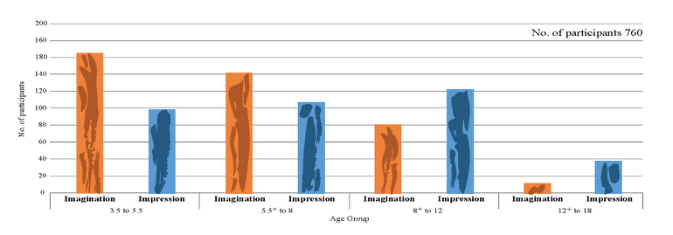
ANALYSIS AND DISCUSSION A close study of children’s sketches revealed that children’s perception of the country park could be based on two sources: imagination or impression. More children in the younger age group (aged 3 to 8) sketched according to
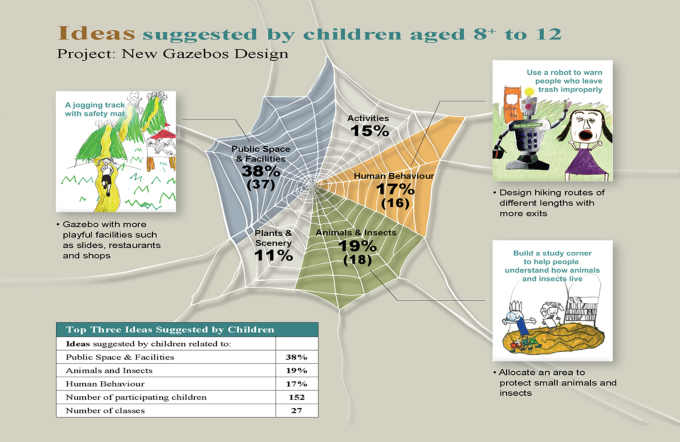
Figure 4: Children’s sketches based on imagination or impression (by authors).Figure 5: Examples of ideas to improve the country park by children aged 8+ to 12 (Siu et al., 2021) (by authors).
their imagination, whereas the older children (aged 8+ to 18) sketched from their impression (Figure 4). This difference could be interpreted as older chil- dren’s growing ability to draw ideas from an expanding body of knowledge and life experiences, not merely from imagined ideas or fantasy.
The textual and visual data from the playful design projects were grou- ped into three broad categories: ‘Concerns’ expressed, ‘Ideas’ and ‘Solutions’ proposed by the children. Different groups of children generated ideas for improving public space and facilities to cater to different users. Figure 5 shows some of the ideas such as a padded jogging track, a robot to warn people leaving trash improperly, an area to protect small animals and insects and a study corner to help people understand animal and insect habitat.
Among the abundant data, eight themes were identified reflecting chil- dren’s concern for: security, empathy, curiosity, comfort, hygiene, recreation,
Playful Public Design by Children 123
Table 2. Themes, subthemes and children’s problem-solving strategies.
Table available in the original PDF paper.
Themes Examples of Subthemes
Examples of Problem-solving Strategies (age: 8+ to 12)
Security Animals disturbing human
Segregation: Build a ‘monkeys only’ paradise with banana vending machines Empathy Well-being of animals Distraction: Make a gym for monkeys to use up their energy and burn fat from junk human food Curiosity Need knowledge of nature species
Education: Build an observation gazebo with a frame and nests to attract climbing plants and birds Comfort Lack of rest points Minimization: Design hiking routes of different lengths with more exits Hygiene Dirty and smelly toilets
Elimination: Remove squat toilets, install powerful fans to vent out smell and mosquitoes Recreation Boring recreational facilities
Incentivization: Install war game areas, a zip-line, stargazing campsites and a treehouse reading spot Refreshments Lack of food & drinks facilities Unattractive public facilities
Incentivization: Add more vending machines and a gazebo with a café Design & Aesthetics
Remediation: Improve boring designs with zoomorphic designs inspired by animals and insects
refreshments, design and aesthetics (Table 2). To be succinct, examples were drawn from only the group aged 8 to 12 to illustrate children’s problem- solving strategies.
CONCLUSION
The wealth of whimsical designs and data from the research offered more tangible clues to understanding children’s design capability, views and roles in participatory public design. Children might lack sophisticated verbal or written vocabulary but they made it up with the visual language. Paper prototypes, simple design drawings and models were effective tools for visualizing and communicating ideas. Driven by curiosity and imagination, children could come up with playful and potentially practical ideas that challenged adults’ assumptions on what was considered good design. These playful ideas offered fresh perspectives for designers to go beyond functional and physical aspects of public design to address other human factors such as psychological, emotional and social needs of different users. Without pretence or intention to impress, children expressed their honest and criti- cal opinions for more fun, adventure and harmony among different users (animals included) in the shared natural environment.
ACKNOWLEDGMENT
The authors would like to acknowledge the generous support of the Eric C. Yim Endowed Professorship in Inclusive Design, The Hong Kong Poly- technic University Central Research Grants; and the Agriculture, Fisheries and Conservation Department. Heartfelt appreciation goes to the concerted effort of the Public Design Lab and CreativeKids, and especially the 1,023 participating children.
REFERENCES
Altman, I., and Zube, E. H. (Eds.). (1989). Public places and spaces. New York, NY: Plenum Press. Braun, V., and Clarke, V. (2012). “Thematic analysis.” In H. Cooper, P. M. Camic,
D. L. Long, A. T. Panter, D. Rindskopf, & K. J. Sher (Eds.), APA handbooks in psychology®. APA handbook of research methods in psychology, Vol. 2. Research designs: Quantitative, qualitative, neuropsychological, and biological (pp. 57–71). https://doi.org/10.1037/13620-004 Brown, T. and Katz, B. (2009). Change by design: How design thinking transforms organizations and inspires innovation (1st ed.). New York, NY: Harper Business. Carroll, P., Witten, K., Asiasiga, L., and E.-Y. Lin (2019). “Children’s engagement
as urban researchers and consultations in Aotearoa/New Zealand: Can it increase children’s effective participation in urban planning?” Children and Society, 33, 414–428. Creswell, J. W., and Clark, V. L. P. (2011). Designing and conducting mixed methods research. Thousand Oaks, CA: Sage. Druin, A. (2002). “The role of children in the design of new technology.” Behaviour
and Information Technology, 21(1), 1–25. Hatzigianni, M., Stevenson, M., Falloon, G., Bower, M., and Forbes, A. (2021).
“Young children’s design thinking skills in makerspaces.” International Journal of Child-Computer Interaction, 27, 100216. HPI, & Stanford d.school.(n.d.). An introduction to design thinking process guide.
https://dschoolold.stanford.edu/sandbox/groups/designresources/wiki/36873/at tachments/74b3d/ModeGuideBOOTCAMP2010L.pdf Hsia, C. J. (1994). Public space (Chinese ed.). Taipei, Taiwan: Artists. Jansson, M. (2015). “Children’s perspectives on playground use as basis for children’s participation in local play space management.” Local Environment, 20(2), 165–179. Literat, I. (2013). “A pencil for your thoughts: Participatory drawing as a visual
research method with children and youth.” International Journal of Qualitative Method, 12, 83–98. Roussou, M., Kavalieratou, E., and Doulgeridis, M. (2007). “Children designers in the museum: Applying participatory design for the development of an art educa- tion program.” In T. Bekker, J. Robertson, & M. B. Skov (Eds.), Proceedings of the 6th international conference for Interaction design and children: Creativity and learning (pp. 77–80). New York, NY: Association for Computing Machinery. Schut, A., Klapwijk, R., Gielen, M., van Doorn, F., and de Vries, M. (2020). “Uncove-
ring early indicators of fixation during the concept development stage of children’s design processes.” International Journal of Technology and Design Education, 30, 951–972.
Playful Public Design by Children 125
Siu, K. W. M. (Ed.) (2007). Urban renewal and design: City, street, street furniture.
Hong Kong Special Administrative Region, China: SD Press, The Hong Kong Polytechnic University. Siu, K. W. M. (2015). Sustainability ambassadors: Promoting sustainability through children’s participation. Hong Kong: School of Design, The Hong Kong Polytech- nic University. Siu, K. W. M., Lam, M. S., and Wong, Y. L. (2015). “Designing signs for chil-
dren: A study of children’s drawing of safety signs.” Communication Design, 3(2), 106–123. Siu, K. W. M., Lam, M. S., and Wong, Y. L. (2017). “Children’s choice: Color associations in children’s safety sign design.” Applied Ergonomics, 59, 56–64. Siu, K. W. M., Lo, K. Y. A., and Wong, Y. L. (Eds.) (2021). Playful public design by
children. Hong Kong: The Hong Kong Polytechnic University. United Nations. (1995). Convention on the Rights of the Child. United Nations human rights: Office of the high commissioner. https://www.ohchr.org/en/profess ionalinterest/pages/crc.aspx
LISTED IN THE AHFE DIGITAL BOOKSTORE CATALOGUE
Explore the complete digital volume
Human Factors in Communication of Design
Read this individual research paper free through the original publisher, or explore the full digital proceedings book.
ISBN 978-1-958651-25-4
Explore this ISBN in the AHFE Bookstore ↗Listed in the July 2026 bookstore catalogue; search by ISBN to confirm current availability · Digital book purchase optional