Sam Anvari, Gabriella Hancock (2022). Interdisciplinary Design Teaching: A pedagogical approach to train hands-on UX/UI designers. In: The Human Side of Service Engineering. AHFE Open Access, vol. 62, pp. 21–27. https://doi.org/10.54941/ahfe1002536
The rapid growth in the prevalence of smart devices has created a significant demand for workforces with knowledge and experience in user-centered design. The new emerging designers are expected to be familiar with practical design research methods while delivering competitive visual results. An interdisciplinary pedagogical approach to design teaching can help students connect the practice of psychology, human factors, and graphic design. In this presentation, we will discuss our practical methods of forming an interdisciplinary design research team to work on a hands-on design challenge involving academia and industry for the usability of specialized medical devices.Our research focuses on enhancing the usability of Environmental Control Units (ECU) in the VA Hospital healthcare system. An ECU is a digital tablet with specific functionality to help patients with spinal cord injury disabilities to overcome their common day-to-day challenges such as: making a phone call or calling the nurse/help, switching on/off the lights, adjusting the bed, etc. This device has four modes of interaction: touch-based, sip-and-puff (pneumatic tube), eye-tracking, and voice-control. Veterans with SCI/D typically find ECUs useful, yet previous research has identified dozens of usability issues ranging from relatively minor or cosmetic to catastrophic (Hancock et al., 2020; Etingen et al., 2017). This multidisciplinary research project is ongoing between California State University Long Beach, the Spinal Cord Injuries and Disorders (SCI/D) Center at the Long Beach VA Hospital, and the device manufacturer, Accessibility Services, Inc.This research started in 2019 with heuristic analyses of the touch-based and eye-tracking modalities of the ECU device (Hancock et al., 2020a; Hancock et al., 2020b). Based on the heuristic evaluation findings, the team made a Beta version with improvements. The team were prepared to conduct A/B usability testing, but due to the COVID-19 Pandemic, accessing the hospital grounds got limited. In the summer of 2020, the design team developed a fully online digital prototype of the ECU interface to conduct remote A/B usability testing with a neurotypical population (i.e., CSULB students). This research has brought together students from graphic design and psychology to engage in a hands-on user-centered design project. Students from both practices received training to conduct remote user-testing sessions and post-processing the resulting data. Currently, the team is collecting data from its ongoing A/B testing between the Alpha and Beta versions of the interface. In the meantime, the team has begun to draft a new design (Omega version) based on the current and emerging findings to make design improvement suggestions to the device manufacturer.This paper will discuss how interdisciplinary design research creates unique opportunities for students in graphic design to learn human-factors psychology and how various design choices for interface features such as color, font, size, etc. will affect its usability and user experience outcomes. In contrast, students in psychology human factors learn about aesthetics and practical design solutions. As the resulting systems are for actual use by veterans with spinal cord injuries and disorders in collaboration with a government partner (the VA), the students also gain valuable service learning experience.
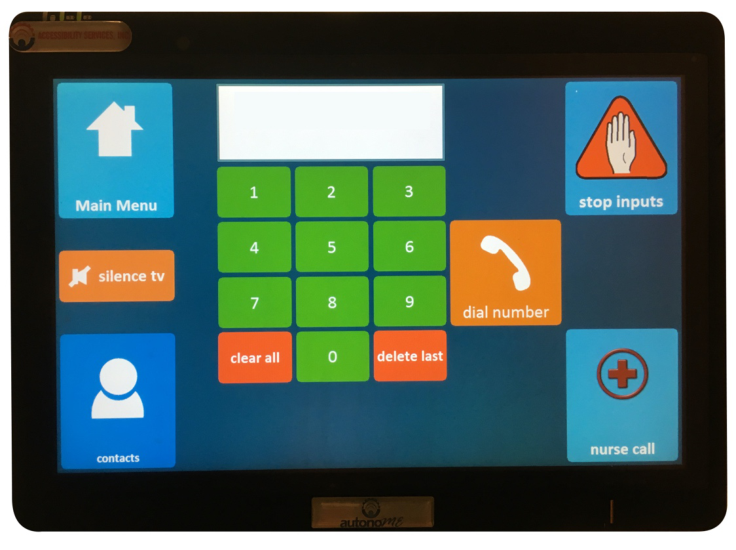
This design research project aims to enhance the usability of Environmental Control Units (ECU) in the Veterans’ Administration (VA) healthcare system (Figure 1). An ECU is a digital control, multi-purpose assistive technology with specific functionality to help patients with spinal cord injuries or disor- ders to perform daily routine tasks such as calling the nurse, adjusting the bed’s head or foot positions, answering phone calls, getting access to email accounts, watching television, etc. Users can control the ECU through four modes of interaction: touch-based, eye-tracking control, sip-and-puff (pneu- matic tube), and voice-control. Previous research has found ECUs helpful with primary stakeholder users (SCI/D patients), but numerous usability issues ranging from aesthetics to catastrophic errors were also observed (Bidassie et al., 2017). This multidisciplinary research project is ongoing between California State University Long Beach, the Spinal Cord Injuries and Disorders (SCI/D) Center at the Long Beach VA Hospital, and the device manufacturer, Accessibility Services, Inc.
This research started in 2019 with heuristic analyses of the touch-based and eye-tracking modalities of the ECU device (Hancock et al., 2020a; 2020b).
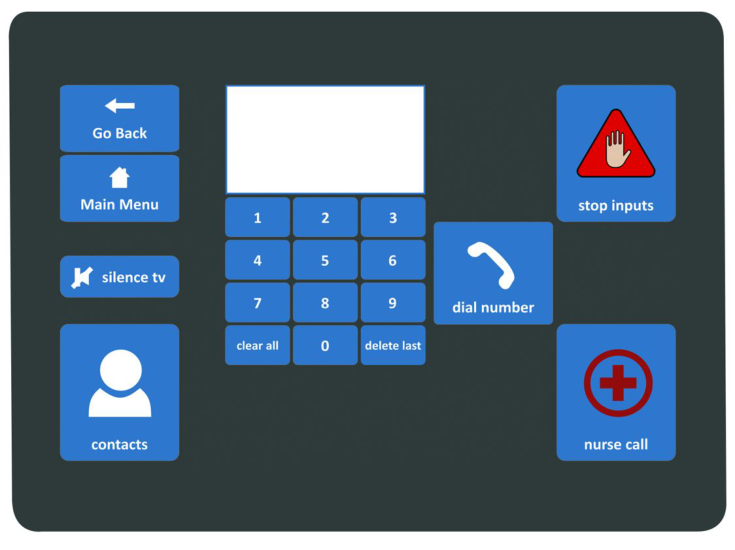
The heuristic evaluations were based on Shneiderman’s Eight Golden Rules for Interface Design and Nielsen’s 10 Heuristics for Interface Design (Shnei- derman, 1998; Nielsen, nd). Based on the findings of these evaluations, the team designed and digitally constructed a Beta version that addressed the issues most detrimental to effective usability and user experience (Figure 2). The next phase was to empirically investigate the effect of this more user- friendly interface by conducting A/B usability testing with actual end-users. However, due to the COVID-19 Pandemic, access to the veteran residents of the VA facility was rightly suspended until it is safe to resume. In the sum- mer of 2020, the design team consequently developed a fully online digital prototype of the ECU interface to conduct remote A/B usability testing with a neurotypical population (i.e., CSULB students) for comparison. Curren- tly, the team is post-processing over 90 hours of user-testing data from its ongoing usability testing between the Alpha and Beta versions of the inter- face. Also, the team has begun to draft a new design (Omega version) based on the current and emerging findings to propose design improvements to the device manufacturer.
Additionally, the design research team is preparing to conduct a qualita- tive design survey with SCI/ID patients at the Long Beach VA Hospital after receiving the necessary permissions in the Fall of 2022. The A/B testing and secondary design research findings will provide a pathway to design improve- ments on the ECU device. This research has brought together graphic design and psychology students to engage in a hands-on user-centered design project.
Interdisciplinary Design Teaching: A Pedagogical Approach to Train Hands-on 23
Figure 2: Screenshot of ECU beta version prototype.
BUILDING THE DESIGN RESEARCH TEAM As the focus of this design research project is to improve the usability of medical devices, it was essential to combine expertise from human factors psychology and graphic design to address the perceptual, cognitive, and beh- avioral aspects and to assess and modify the user interface in ways that synergistically enhance the visual communication and usability of the device, respectively. Therefore, two faculty leaders from the Graphic Design and Psychology Departments at California State University Long Beach worked together with a combined team of student researchers from each department.
The research began in 2019, after following all necessary government pro- tocols and with the support of the Director of the VA Hospital at Long Beach. To obtain the expertise necessary to complete the project, undergraduate and graduate students were recruited from a variety of academic areas including graphic design, psychology, human factors, and natural health and science disciplines. However, between these disciplines represented in the team the research strategies and workflow processes varied dramatically. Therefore, it was necessary to train the team in the required hands-on research, evaluation, and design methods to be used in the project.
TRAINING A MULTI-DISCIPLINARY STUDENT RESEARCH TEAM Each phase of the research required a specific set of research skills in the areas of research methods, human factors, psychology, and design. Students in graphic design have a solid knowledge base in visual communication design
24 Anvari and Hancock
through hierarchical information layouts such as typography, image-making, and color theory. These students are receiving training in human-centered design research methods and digital prototyping tools and developing presen- tation skills. On the other hand, students in human factors psychology receive education in various user experience research methods and usability evalua- tion techniques such as remote user testing and the quantitative analysis of various performance and self-report data. An interdisciplinary collaborative, hands-on project, such as this research, can serve as an incubator to allow students from both disciplines to develop an in-depth understanding of their training application. An in-class defined project can always help students understand the theory in an applied strategy. In contrast, a realistic project within the cross-disciplinary framework can provide hands-on experience and push students to think of solutions from different perspectives.
In the first phase, students received training to perform a heuristic evalu- ation of the ECU device’s touch-based and eye-tracking modalities on the operational in-patient ECU system at the VA Long Beach SCI/D Center (Hancock et al., 2020b; Etingen et al., 2017). This hands-on task created an opportunity for students in human factors psychology to put their for- mal education into hands-on practice. At the same time, it shed new light on the human side of design service for graphic design students by teaching them about design evaluation beyond subjective aesthetics. At the evaluation stage, the team combined strategies from psychology regarding the testing and observation of human behavior in response to a designed product and interface. In this regard, the team had to understand the relationship betw- een the psychology-based test and observation method of evaluation and the interpretation of the data to be used to inform the design of an improved interface. Based on the heuristic evaluation findings, the team designed a Beta version with improvements.
In Phase 2, conducted in the summer of 2020, the design team develo- ped a fully online digital prototype of the ECU interface to conduct remote A/B usability testing with a neurotypical population (i.e., CSULB students). Once again, this research brought together students from graphic design and human factors psychology to engage in a hands-on user-centered design pro- ject. Based on documented photos and videos collected during the heuristic evaluation of the ECU device, students deconstructed its user interface logi- cal flow. This process taught students from both disciplines to practice the design deconstruction method and reverse-engineer the device’s usability flo- wchart. The team began making interactive prototypes based on the heuristic evaluation scenario tasks. In order to accomplish the task, students began developing an identical digital prototype of the device. In this process, they learned various design prototyping tools such as Figma®, Sketch App®, Pro- toPie®, Invision-Studio®, and Adobe Xd®. Students in psychology learned design methods and digital prototyping tools in this process, and students in graphic design put their design knowledge into a practical hands-on expe- rience. Students from both disciplines learned about each other’s expertise. They helped the team as a whole to overcome practical challenges such as seamless communication and documenting the process, frequent meetings,
Interdisciplinary Design Teaching: A Pedagogical Approach to Train Hands-on 25
brainstorming on usability evaluation methods, and learning prototyping tools.
During Phase 3, students from both practices received training to conduct remote user-testing sessions and post-processing the resulting data. Currently, the team is collecting data from its ongoing A/B testing between the Alpha and Beta versions of the interface. In the meantime, the team has begun to draft a new design (Omega version) based on the current and emerging findings to make design improvement suggestions to the device manufacturer. Students in human factors psychology receive education on user-testing methods and usability evaluations. Their collaboration with graphic design students crea- ted an opportunity to cross-pollinate knowledge and applied methods across design and psychology disciplines. Students received training on conducting a systematic user-testing session via Zoom using the interactive prototype developed in Phase 2 of the research. Additionally, the team utilized and gai- ned experience in post-processing multiple pre and post-test questionnaires to evaluate user performance and experience. These psychometric assessment tools included the NASA Task Load Index, the Borg Rating of Perceived Exertion (RPE), the Dundee Stress State Questionnaire (DSSQ) to evaluate distress, task engagement, and worry; and the System Usability Scale (SUS). Students from both disciplines received training on data analysis and post- processing.
DISCUSSION AND IMPLICATIONS This interdisciplinary design research project created unique opportunities for students in graphic design to learn about human factors psychology meth- ods and how various design choices for interface features such as color, font, size, etc. will affect its usability and user experience outcomes. In addition, students in human factors psychology learned about design systems and pro- blem solving methods associated with user interface design. As the resulting systems are for actual use by veterans with spinal cord injuries and disorders in collaboration with a government partner (the VA), the students also gain valuable service-learning experience.
CONCLUSION
Academic interdisciplinary research has its challenges and requires faculty leaders who are willing to go above and beyond the standard practice of each discipline. As the research team grows, the simple team communica- tion and progress documentation becomes a task of their own yet create an opportunity for students to learn about team collaboration, project manage- ment, and professional practices. The interdisciplinary design research team can act as an incubator to pave the way for students to land on future care- ers in more industry-aligned ways. Students learn the relationships between products, use-cases, and natural user environments. It helps them gain deep knowledge of user personas to connect and capture important human-scale information about the users regarding patients, staff, and product manufa- cturers (all stakeholders). Students learn how heuristics and surveys can best
26 Anvari and Hancock
develop to align with actionable data in service design in medical environ- ments and usability and human factors for persons with varying skills and abilities. The surveys, questions, and observations directly lead to improved product performance and measurable improvements in customer safety and satisfaction. Participating in an interdisciplinary design research project can train students in human factors psychology to gain hands-on experience in conducting user-testing and data analysis in direct interaction with students in graphic design to enhance the usability and effectiveness of the product design. This collaboration also prepares students in graphic design to learn about design effectiveness metrics and overlook the design challenges from a broader perspective of human-centered design. Therefore, aligning the rese- arch with the product and interface design based on improving the customer experience is critical knowledge for training students in psychology, human factors, design, and UX as they are preparing for careers in these areas. It is necessary to note that proper training at each phase of the research improves the performance of the team members by enhancing the quality of the data collection through better tools and closer alignments with the end user for product improvements and customer safety and satisfaction. The research team is currently processing over 90 hours of recorded user-testing sessions to make design improvement suggestions. The next phase is designing the Omega version based on the heuristics and A/B testing results from the alpha and beta versions.
ACKNOWLEDGMENT
The authors would like to acknowledge the significant contribution of the students who tirelessly made an effort to push the project forw- ard amid the pandemic and the limitations imposed by it. Thank you: Nicole B. Mok, Aram Ayvazyan, Carmen L. Machado, Rebecca M.E. Chompff, Vivian Tran, Matthew T. Nare, Marielle Hanley, Alicia Aguilar, Kristen Brown, Destiny Gough, Ryan Karp, Yvette Apatiga, Yuji Shiraiwa, Yoshiko Mizushima, Joey Abe, Louise Bainco, Natalie Barr, Natalia Morales, Amy Huynh and Henry Tran.
REFERENCES
Bidassie, B., Vallette, M.A., James, T., Martinez, R., Etingen, B., Cozart, H., Weaver, F.M. (2017) Evaluating the roll-out of environmental control units in Veterans Affairs spinal cord injury centers: Workflow observations. International Journal of Healthcare, 3(2), 57–67. Etingen, B., Martinez, R.N., Valette, M.A., Dendinger, R., Bidassie, B., Miskevics,
S., Khan, H.T., Cozart, H.T., Locatelli, S.M., & Weaver, F.M. (2017) Patient perceptions of environmental control units. Experiences of Veterans with spi- nal cord injuries and disorders receiving inpatient VA healthcare. Disability & Rehabilitation: Assistive Technology 13(4), 325–332. Hancock, G.M., Anvari, S.S., Nare, M.T., Mok, N.B., Ayvazyan, A., Bai, X., McCoy, K.M., Mather, G.P., Machado, C.L., Chompff, R. M.E., McBride, A.S., & Morales, N. A (2020b) Heuristic Evaluation of Usability for Environmental Con- trol Units’ Eye-Tracking Interfaces at Veterans Affairs Spinal Cord Injuries and Disorders Centers, Proceedings of the 2020 International Symposium on Human Factors and Ergonomics in Health Care Virtual Conference: Springer.
Interdisciplinary Design Teaching: A Pedagogical Approach to Train Hands-on 27
Hancock, G.M., Anvari, S.S., Nare, M.T., Mok, N.B., Ayvazyan, A., McCoy, K.M., Bai, X., Mather, G.P., McBride, A.S., & Morales, N. (2020a) Environmental con- trol units for inpatient care at Veterans Affairs spinal cord injury centers: Heuristic evaluation and design recommendations. In: S. Yamamoto & H. Mori (Eds.), Human Interface and the Management of Information: Proceedings of the 22nd
International Conference of Human-Computer Interaction, pp. 23–38. Cham, Switzerland: Springer. Nielsen, J. (nd) Ten Usability Heuristics for User Interface Design. Retrieved from the Nielsen Norman Group website, http://www.useit.com/papers/heuristic/heuri stic_list.html, last accessed 2021/02/10 Shneiderman, B. (1998) Eight Golden Rules for Interface Design, Designing the User
Interface. 3rd edn. Addison Welsey, Boston, MA.
LISTED IN THE AHFE DIGITAL BOOKSTORE CATALOGUE
Explore the complete digital volume
The Human Side of Service Engineering
Read this individual research paper free through the original publisher, or explore the full digital proceedings book.
ISBN 978-1-958651-38-4
Explore this ISBN in the AHFE Bookstore ↗Listed in the July 2026 bookstore catalogue; search by ISBN to confirm current availability · Digital book purchase optional