Jens Neuhüttler, Philipp Christel, Truong Le, Günter Wenzel, Antonio Ardilio (2022). Potentials of a Metaverse for Smart Service Engineering. In: The Human Side of Service Engineering. AHFE Open Access, vol. 62, pp. 84–91. https://doi.org/10.54941/ahfe1002545
With the rapid emergence of metaverse activities, the question arises as to what influence the new virtual world will have on real world challenges of companies. In our paper we investigate the potential of the metaverse for a systematic development of smart services. For this purpose, we first present a model that links central technologies, elements, and interactions of the metaverse. Furthermore, the impact of the metaverse is examined along a reference model of smart service engineering. In particular, the potential for integrating customers in the development activity of testing is examined in more detail.
The metaverse is supposed to be the next stage of the internet. It is not just about virtual, augmented or extended reality – it is all in one, seamlessly combining cyberspace and physical reality. Technologies that bring us closer to the metaverse already exist. Companies like Google, Amazon and Micro- soft are building cloud infrastructure. Virtual or augmented reality glasses are developed by Facebook and Apple.
The metaverse market reached approximately $50 billion in 2020 and is expected to grow at a compound annual growth rate of 43% through 2028 (Emergen Research, 2021). In the U.S. already 58.9 million people used VR and 93.3 million used AR at least once per month in 2021. These numbers represent 17.7% and 28.1% of the U.S. population (Petrock et al., 2021).
With the rise of the metaverse, companies will have to face several busi- ness, social, political, communication, educational, technical, ethical, and legal issues in the near future (Sang-Min and Young-Gab, 2021). Among them, for example, is the question of how the metaverse can systematically support companies in the development of new offerings, such as smart servi- ces. Our goal is therefore to portray the metaverse and its relevant elements and derive implications how the metaverse can be used to promote service innovation. For this reason, a metaverse model is described and specific ideas for innovation in the field of smart service engineering within the metaverse are presented.
Potentials of a Metaverse for Smart Service Engineering 85
Understanding Metaverse Elements and Interactions With a combination of “meta”(beyond) and “verse”(universe) the metaverse refers to the next-generation internet in a three-dimensional space (Haihan et al., 2021). In this immersive virtual world people can interact with each other as avatars and with (software) applications, “using the metaphor of the real world but without its physical limitations” (Davis et al., 2009). Users in remote locations can interact in these permanent, computer-generated vir- tual worlds to work or play together in real time (Hendaoui, Limayem and Thompson, 2008). In this respect, metaverses differ significantly from online games in multiple ways. They provide a seamless persistent world where users can move around different regions without predefined destinations. On the technological side, for example, this requires specific communication proto- cols and rapidly scalable storage capacity on the servers that simulate the world. This means that the complexity of a metaverse is much higher than a computer game (Sanjeev et al., 2008).
The intention is that metaverses’ computer-generated virtual spaces will run parallel to the real world. It will be constantly active, and an unlimited number of people can participate simultaneously within a complete economic and civilization system. At the same time, any content such as images, digital objects, and wealth (which is based on data information) can be circulated in the metaverse. In the past, the metaverse was seen as an extended version of a single virtual world. The development shows that it is rather moving towards a large network of interconnected virtual worlds (Dionisio, Burns and Gilbert, 2013; Zhixin, Libai and Gang, 2021).
A potential success factor of the metaverse lies in the fact that many com- panies, organizations, and individuals are involved in making it happen. New content, experiences and transactions will be created by individuals, not by a single developer. Therefore, it can be modeled and modified by some or all users who inhabit it. The design is not predetermined. Operations can be supported by independent tools, technologically decentralized infrastru- cture, interoperability mechanisms, and security standards (Getchell et al., 2010; Zhixin, Libai and Gang, 2021). Another milestone in the evolution is the launch of new technologies that advance the metaverse. New enabling technologies (e.g. mobile, edge, and cloud computing), faster communica- tion infrastructures, and secure distributed data storage (e.g. blockchain) are necessary to achieve persistence, interconnectivity, and other relevant properties of the metaverse (Bingqing et al., 2021).
However, better device acceptance and good networking tools are not enough to establish the metaverse. It is necessary to understand how peo- ple are represented in the metaverse and how they interact with their avatars (Gonzalez-Franco, 2021). An avatar is the user’s visible character for inte- ractions in the metaverse. The term “player” is sometimes used to refer to a human controlling an avatar. This avatar is only limited by the rules of the metaverse (Falchuk, Loeb and Neff, 2018). These restrictions in the vir- tual space on the entire environment are significantly lower than in the real world. Real-world constraints such as time and distance can be disregarded (Vernaza, Armuelles and Ruiz, 2012). The avatar of any user can be rendered
86 Neuhüttler
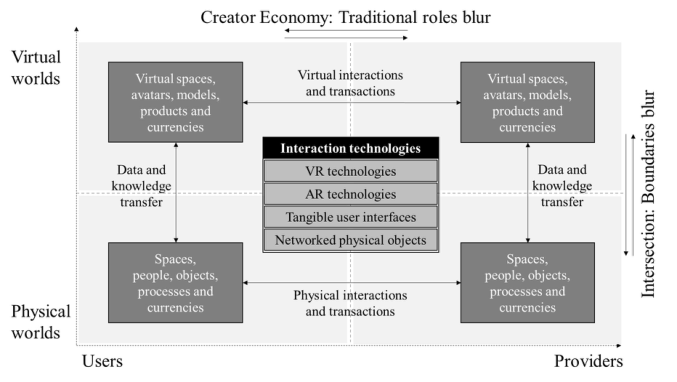
Figure 1: Conceptual model for explaining metaverse interactions.
in such a way to reflect the personality of the user. It is however possible to create avatars that have nothing in common with their owner. Since the envi- ronment is permanent, any changes made to the metaverse or a user’s avatar are long-lasting (Getchell et al., 2010).
The current understanding of the metaverse is built on the social values of Generation Z. In this generation online and offline selves are not fun- damentally different. This also has an impact on avatars (Sang-Min and Young-Gab, 2021). Since people can exchange ideas and interact socially and economically, it is no surprise that business is conducted in a virtual world. Products are used in the physical world even though they were purchased in virtual space (Vernaza, Armuelles and Ruiz, 2012). Although the meta- verse is considered human-centered computing, it has a distinctly positive impact, especially in terms of diversity, accessibility, humanity, and equality. The concepts of gender, race and even physical disability is weakened by the metaverse (Haihan et al., 2021). Based on the understanding of the metaverse, a metaverse model is presented in Figure 1 that merges the dimensions of the virtual and physical worlds, as well as the user and provider perspectives.
In the physical world, value creation of smart services takes place through the integration of various resources between users and providers, such as spaces, objects, people, processes and currencies. Physical resources can be enhanced in the metaverse by a virtual representation. Spaces and objects, for example, are simulated by virtual models and adapted using data from the physical world. People can be represented by avatars that carry out activi- ties, provide digital services or offer digital products. To enable interactions between the physical and virtual worlds, there is a constant exchange of data and knowledge.
The exchange of data and knowledge between the virtual and real world is supported by the interaction technologies of the metaverse, as are the interactions between users and providers. In the context of smart services, networked physical objects play a particularly important role, collecting and
Potentials of a Metaverse for Smart Service Engineering 87
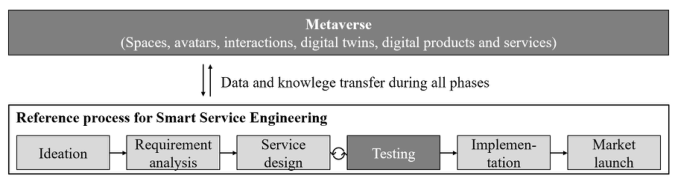
Figure 2: Smart service engineering reference model (Meiren/Neuhüttler 2019).
forwarding data on the location, state, usage and context of a physical object and thus function as a boundary object for interactions and service delivery between users and providers. Moreover, immersive technologies such as VR and AR enable the visualization of resources in the virtual world and various interactions and transactions between actors.
With technological progress and the shift of resources into cyberspace, the boundaries between the physical world and the virtual world are becoming increasingly blurred. Cyberspace is thus a reflection of reality and makes it possible to accompany, improve and control it. Reality is planned, tested and experienced with the help of virtual interaction technologies. The metaverse thus describes a concept in which solutions for the real world are created with the help of the virtual world.
The metaverse also offers the possibility of independent value creation, regardless of the real world. As a creator economy, there is a seamless transi- tion between the roles of user and provider, with avatars sometimes buying, selling or creating values. The interactions and transactions thus describe the metaverse marketplace, which is driven by user-generated content.
POTENTIALS FOR SMART SERVICE ENGINEERING Our paper aims to show potentials of the metaverse to improve smart service engineering. In a first step, a reference model according to Meiren/Neu- hüttler is introduced to gain a better understanding (see Figure 2). Smart Services describe data-based, individually configurable bundles of services, digital applications as well as products. Smart service engineering is seen as a systematic procedure for the development of these bundles, which combines activities, methods and tools in a targeted manner.
The reference model is structured as a task-based development process comprising six phases. During “Ideation”, suitable ideas are collected and subjected to an initial review. After deciding on an idea, requirements of relevant internal and external stakeholders are analyzed. During the design phase, detailed service concepts are drawn up. The concepts are then carefully tested in terms of their functionality, but also in terms of the perceived quality of stakeholders. In the iterative sequence of designing and testing activities, smart service concepts are successively developed into complete solutions that can be implemented. Once all components have been implemented, the mar- ket launch can begin. During the engineering of smart services, integration
88 Neuhüttler
of knowledge and resources of stakeholders is a key success factor. Due to the integrative and processual nature of services as well as their situational, context-specific and individual value deployment, customer-specific know- ledge and resources have to be taken into account in order to develop valuable and meaningful solutions.
Potentials of the metaverse for smart service engineering can be subdivided into two directions: On the one hand, existing activities can be moved into the metaverse. On the other hand, new concepts and possibilities for supporting development arise with technologies of the metaverse.
Potentials Through Shifting Development Activities to the Metaverse The metaverse holds potentials for the integration of stakeholders in all phases of smart service engineering. Activities from the real world can be partially relocated to the metaverse. Here, the advantages of the AI-based virtual worlds (e.g. ubiquitous availability and scalability as well as adapti- vity and a high degree of autonomy) and those of the real world (e.g. physical and social interactions between users and solution elements) can be combi- ned. As a result, a large number of test participants can be integrated into the development process at low cost. During ideation, for example, different development teams and users from all over the world can work collaborati- vely on ideas in the metaverse and implement them with simple visualization technologies or change first ideas quickly. In addition, requirements analysis is greatly simplified by initial idea prototypes and the possibility to interact with them via avatars.
A great potential of the metaverse can be seen for the activity of testing (activity 4 in Figure 2). In order to enable users to evaluate their quality perceptions about a smart service concept, it must be made experienceable and evaluable. Immersion in the interactive delivery process and environment must be made possible. Immersive technologies of the metaverse are particu- larly suitable for this. Virtual reality, which is a digital reality created by simple 3D visualizations or stereoscopic display forms, can be used to pro- vide a realistic experience of the devices and the environment. Furthermore, avatars can also be used in virtual reality to simulate interaction between different actors and users. Depending on the necessity of integrating real life elements, smart services can also be simulated with the help of mixed reality. One variant is augmented reality, which is a computer-based enhancement of perceived reality. Here, for example, test subjects can perform activities on a real physical object and receive relevant information, such as instructions, via data glasses. Another potential is seen for training activities of employees and customers during the market launch of new smart services. In virtual training rooms, employees and users can not only train the use of complex technical service components, but also practice process delivery in a concrete application context or even interact with other people via avatars.
Potentials for New Concepts to Support Development of Smart Services In addition to shifting activities, truly novel and innovative concepts can also be applied with the help of the metaverse. A first idea in this regard is the
Potentials of a Metaverse for Smart Service Engineering 89
concept of so-called “meta-personas”. A persona is a fictitious but speci- fic representation of a stakeholder group that helps developers to empathize with the needs and contextual situation of potential customers. Personas the- refore not only include socio-demographic information but are characterized and made tangible with the help of images, quotes, typical behavior, or emoti- onal states. Personas help development teams to understand the requirements background of a stakeholder group in order to be able to design the test in the most targeted way possible. Although personas can be used to support nearly all activities of smart service engineering, their application seems to be particularly relevant for requirement analysis as well as testing (Neuhüttler et al. 2019).
The metaverse offers decisive technical possibilities at this point. In addi- tion to the 3D virtualization of personas, the avatar can store character traits, needs, skills, and motivations, leading to fictitious customer avatars that react to new products and services according to their given nature. Required data to create such intelligent meta-personas can stem from a variety of sou- rces. Exemplary ones include previous usage data from networked physical objects at customers’ sites, relationship information from CRM systems, or evaluations of customer data from social media that can be used for contextu- alization. On the one hand, novel insights can be gained through data analysis and be translated into character traits of meta-personas. Thus, relevant tar- get groups can be characterized more precisely and in evidence-based manner. Moreover, past preferences and reactions to the introduction of smart services could be analyzed in detail. On the other hand, by applying AI technologies and especially predictive and prescriptive analysis methods, meta-personas could be used for forecasting and simulation of preferences and quality perceptions for entirely new smart service offers. Regarding the metaverse terminology, meta-personas represent fictitious avatars that have the chara- cteristics of a virtual presence, but also have a character with individual needs and preference profiles that enables them to act and make decisions autono- mously. The virtual presence of a meta-persona and its individual resource equipment could be used to evaluate ergonomic aspects, perceived process effort or ease of use. The fictional and autonomously acting character of intel- ligent meta-personas can be used to simulate selection and purchase decisions, expected customer experience as well as willingness to pay.
The use of autonomously acting and deciding personas may support or partially replace testing of quality perceptions with real users. This could be relevant for companies, if complex service bundles in different combinations must be tested very frequently and an integration of real test subjects would thus be difficult or highly costly to implement. Thus, the metaverse could lead to more extensive and continuously testing activities, resulting in a higher quality of smart services.
CONTRIBUTIONS, LIMITATIONS AND OUTLOOK We currently observe the rapid emergence of metaverse activities. Until now, no links have been established between the metaverse and the systematic development of smart services. In order to do so, our paper first presented a
90 Neuhüttler
metaverse model to illustrate interactions between users and providers and the connection between the real and virtual worlds. In the second step, we demonstrated the relationship between smart service engineering and meta- verse by taking a look on customer integration during development in general and testing in more detail. With intelligent meta-personas that can be used for validating new smart services in a more automated process, a first idea of a new concept was presented. Despite the high importance of customer inte- gration in service engineering, testing with customers is often implemented relatively late. This is due to the high effort required to visualize the predo- minantly intangible development objects, to find suitable test person and to generate valid and transferable findings. The metaverse - and in particular the skillful combination of activities that are carried out in virtual and physical space - can significantly support smart service engineering in the future. The first ideas and concepts are already available, and some are already being used individually and independently of each other. More innovative ideas, such as intelligent meta-personas, however, need to be investigated further. In order to provide a holistic support, an expansion of previous activities, concrete design of new ideas (e.g. meta-personas) and a merging and integration of activities and knowledge are required.
Our research comes with limitations. Metaverse studies have existed for years, but the information quickly becomes outdated. In addition, there are not enough studies that relate to product or service development. Our ideas for innovations in the smart service engineering process are therefore based on our own assessments. As the metaverse changes rapidly, further resea- rch is necessary to understand the impact of the metaverse on smart service engineering. Therefore, the innovation possibilities presented must be further investigated in upcoming projects.
REFERENCES
Bingqing, S., Weiming, T., Jingzhi , G., Linshuang, Z., & Peng, Q. (2021). How to Promote User Purchase in Metaverse? A Systematic Literature Review on Con- sumer Behavior Research and Virtual Commerce Application Design. Applied Sciences, vol. 2021, no. 11, pp. 2–29. Davis, A., Khazanchi, D., Murphy, J., Zigurs, I., & Owens, D. (2009). Avatars, Peo-
ple, and Virtual Worlds: Foundations for Research in Metaverses. Journal of the Asociation for Information Systems (JAIS), vol. 10, no. 2, pp. 90–117. Dionisio, J. D., Burns III, W. G., & Gilbert, R. (2013). 3D Virtual Worlds and the Metaverse: Current Status and Future Possibilities. ACM Computing Surveys, vol. 45, no. 3, article 34, 38 pages Emergen Research (2021). Metaverse Market, By Component (Hardware, Software),
By Platform (Desktop, Mobile), By Offerings (Virtual Platforms, Asset Mar- ketplaces, and Others) By Technology (Blockchain, VR & AR, Mixed Reality), By Application, By End-use, and By Region Forecast to 2028. Surrey, British Columbia, Canada. Falchuk, B., Loeb, S., & Neff, R. (2018). The Social Metaverse. Battle for Privacy.
IEEE Technology and Society Magazine, vol. 37, vo. 2, pp. 52-61. Getchell, K., Oliver, I., Miller, A., & Allison, C. (2010). Metaverses as a Platform for Game Based Learning. Proceedings of 24th IEEE International Conference on Advanced Information Networking and Applications (AINA), vol. 2010, pp. 1195–1202.
Potentials of a Metaverse for Smart Service Engineering 91
Gonzalez-Franco, M. (2021). Metaverse from Fiction to Reality and the Research Behind It. IEEE International Symposium on Mixed and Augmented Reality (ISMAR), vol. 2021, pp. 17–17. Haihan, D., Jiaye, L., Sizheng, F., Zhonghao, L., Xiao, W., & Cai, W. (2021). Meta-
verse for Social Good: A University Campus Prototype. MM ‘21: Proceedings of the 29th ACM International Conference on Multimedia, pp. pp. 153–161. Hendaoui, A., Limayem, M., & Thompson, C. W. (2008). 3D Social Virtual Worlds. Research Issues and Challenges. IEEE Internet Computing vol. 12, no. 1, pp. 88–92. Meiren, T & Neuhüttler, J. (2019). Smart Services im Maschinenbau – Systematische
Entwicklung digital unterstützter Dienstleistungen. wt-online, Vol. 109, No. 7/8, pp. 555–557. Neuhüttler, J., Ganz, W. & Spath, D. (2019). An Approach for a Quality-Based Test of Industrial Smart Service Concepts. Advances in Artificial Intelligence - Software and Systems Engineering 2019, pp. 171-182. Petrock, V., Keating, C., Mukhopadhyay, R., Watson, S. (2021). US Virtual and
Augmented Reality Users 2021. XR Use Expands Beyond Fun and Games. New York, NY: Emarketer. Sang-Min, P., & Young-Gab, K. (2021). A Metaverse: Taxonomy, Components, Applications, and Open Challenges. IEEE Access 2022, vol. 10, pp. 4209–4251. Sanjeev, K., Jatin, C., Changkyu, K., Anthony, N., & Pradeep, D. (2008). Second Life
and the New Generation of Virtual Worlds. Computer, vol. 41, no. 9, pp. 46–53. Vernaza, A., Armuelles V., I., & Ruiz, I. (2012). Towards to an Open and Interoperable Virtual Learning Enviroment using Metaverse at University of Panama. Technologies Applied to Electronics Teaching (TAEE), 2012, pp. 320–325. Zhixin, F., Libai , C., & Gang, W. (2021). MetaHuman Creator. The starting
point of the metaverse. International Symposium on Computer Technology and Information Science (ISCTIS), 2021, pp. 154–157.
LISTED IN THE AHFE DIGITAL BOOKSTORE CATALOGUE
Explore the complete digital volume
The Human Side of Service Engineering
Read this individual research paper free through the original publisher, or explore the full digital proceedings book.
ISBN 978-1-958651-38-4
Explore this ISBN in the AHFE Bookstore ↗Listed in the July 2026 bookstore catalogue; search by ISBN to confirm current availability · Digital book purchase optional