Khaled Hafez (2022). The Influence of Lifting Horizontal Distance Measurement Error on NIOSH Lifting Equation Assessment Outcomes. In: Physical Ergonomics and Human Factors. AHFE Open Access, vol. 63, pp. 170–178. https://doi.org/10.54941/ahfe1002610
Low back injuries are becoming increasingly costly due to the compensation costs and lost days of work. Most of these injuries are linked to manual material handling (MMH) activities. Several ergonomic assessment methods are available to assess the risk factors and determine the risk level for a given MMH job. The National Institute for Occupational Safety and Health (NIOSH) Lifting Equation is the most popular and frequently used ergonomic assessment method to assess MMH jobs. The load weight and horizontal distance are the most significant low back pain risk factors in such jobs. Errors in the measurements of load horizontal distance may influence the risk level obtained from the NIOSH Lifting Equation assessment method depending on the weight of the load being handled. Measurements of the horizontal distance variable measured by novice college students were used to examine NIOSH Lifting Equation sensitivity to the horizontal distance measurement errors with respect to the load weight. The results showed that even though errors in the horizontal distance measurements influenced the resulted lifting index values, that did not influence the resulting NIOSH Lifting Equation risk assessment outcomes for almost all lifting conditions.
Manual material handling (MMH) activities are associated with an increased risk of low back pain (LBP). Numerous risk assessment methods were deve- loped to assess the MMH tasks to help control and reduce the LBP cases. Almost all lifting assessment methods consider the lifting horizontal distance (i.e., distance between the body and load being lifted) and load weight as risk factors to increase the risk of LBP. The National Institute for Occupational Safety and Health (NIOSH) Lifting Equation by Waters et al. (1993) is the most popular and frequently used assessment method.
Measurements of MMH variables such as lifting horizontal distance, ver- tical height, and frequency are required to calculate different multipliers in the NIOSH Lifting Equation (NLE). These multipliers include the hori- zontal multiplier (HM), vertical multiplier (VM), distance multiplier (DM),
The Influence of Lifting Horizontal Distance Measurement Error 171
asymmetry multiplier (AM), frequency multiplier (FM), and coupling mul- tiplier (CM). The multiplier values range from 0.0 to 1.0. The lower the multiplier value, the worse the condition of the lifting variable. Additionally, the assessment method uses a load constant (LC) multiplier with a fixed value of 23 kg. The product of these multipliers represents the estimated recommen- ded weight limit (RWL). The lifting index (LI) value can then be estimated by dividing the weight lifted by the estimated RWL which represents the risk level associated with the assessed job.
It was established that the NLE LI is more sensitive to measurements of the horizontal location of the lift and lift frequency (Dempsey, 2002; Dempsey et al., 2001). Additionally, the authors described that measurements of lift frequency and horizontal distance tended to have the highest measurement errors due to the measurement difficulty during lifting. Other studies showed that horizontal distance measurement errors influence the calculation of NLE RWL (Elfeituri & Taboun, 2002; Waters, Baron, & Kemmlert, 1998).
It is known that errors in the horizontal distance measurement would influ- ence NLE LI values. However, the effect of horizontal distance measurement errors upon the calculated LI values may not influence the resulting risk cate- gory outcomes. Also, it is unknown if lifting heavier objects would influence the impact of horizontal distance measurement errors upon the NLE risk assessment outcomes. This may suggest that a margin of error in the mea- sured horizontal distance would be accepted from wearable sensors or video motion analysis systems. The aim of the current study, therefore, was to inve- stigate the impact of the horizontal distance errors upon the risk category outcomes with respect to lifting load weight.
METHODOLOGY
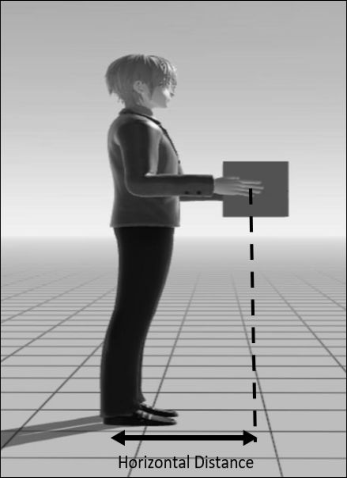
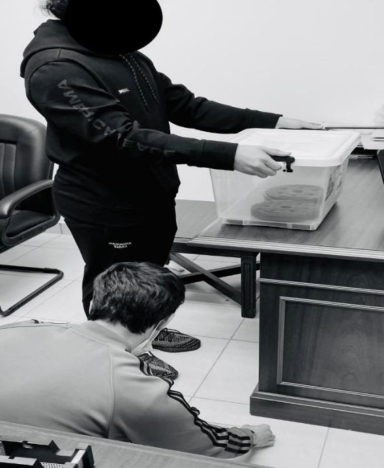
The current study recruited five male college students to manually measure the horizontal distance between the mid-point between the worker’s feet and the load being lifted during lifting using a tape measure. An expert in the NLE assessment method also manually measured the horizontal distance of the same lifting activities. The horizontal distance was measured as the hori- zontal line between the mid-point between the lifter’s inner ankles and the approximate projection of the lifter’s knuckle on the floor (see Figure 1). The horizontal distances at the lift destination only were measured. The novice raters (i.e., the students in the current study) were not provided with any training on manual horizontal distance measurements during lifting to assess the influence of horizontal distance measurement errors upon the NLE asses- sment outcomes. Also, to examine NLE’s sensitivity to the horizontal distance measurement errors with respect to the load weight, three load weights (i.e., 10kg, 15kg, and 20kg) were examined. Another male college student was recruited to perform the lifting activities. The lifter lifted from a table that was located to his left side and that represented the lift origin (see Figure 2). Then, he transported the load to another table that was located in front of him at three different horizontal distances, including close (i.e., 30cm), inter- mediate (i.e., 50cm), and far (i.e., 70cm). Thus, there were nine different lifting conditions. Each lifting condition was repeated twice for statistical significance. Each rater made a total of 18 horizontal distance measurements.
172 Hafez
Figure 1: The horizontal distance between body and load.Figure 2: Lifting destination.
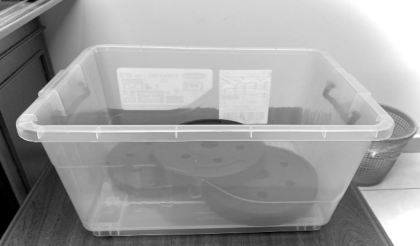
The lifting frequency was controlled using an automatic alarm generator that generated a tone every 30 seconds for a lift rate of two lifts per minute (i.e., 120 lifts per hour). The lifter was instructed to start lifting each time the tone sounded. A container (46x33x27.5cm) was used to carry the dif- ferent weights (see Figure 3). The other NLE variables were held constants.
The Influence of Lifting Horizontal Distance Measurement Error 173
Figure 3: Loaded lifting container.
These variables include vertical height (V = 94cm), vertical moving distance (D = 25cm), asymmetry angle (A = 0°), good hand coupling, and frequency (2 lifts/min.; work duration ≤8 hours).
The various multipliers were estimated based on the lifting variables to estimate the RWLs (Equation 1). Based on the examined lifting conditions, the frequency multiplier (FM) and coupling multiplier (CM) values were 0.65 and 1.0, respectively. Then, the LI values were estimated to consider the hori- zontal distance measured by each rater and different load weights. The LI was estimated as the ratio of the load weight (i.e., 10 kg, 15 kg, and 20 kg) and the estimated RWL (Equation 2). The LI values are classified into the follow- ing categories: LI = 0 (i.e., no risk), 0 < LI ≤1 (i.e., minimal risk), 1 < LI ≤3 (i.e., moderate risk), and LI > 3 (i.e., high risk). The risk category outcomes were compared to assess the influence of horizontal distance measurement errors upon the NLE risk assessment outcomes. It is expected that errors in the horizontal distance values will influence the LI values, but not the risk assessment outcomes.
Equation reproduced from the original PDF.
LI = (Actual weight) / RWL Equation (2) Root mean square error (RMSE) was used to measure the differences betw- een the novice raters horizontal distance measurements and the expert rater (i.e., reference) measurements. T-test Paired Two Sample for Means was car- ried out to examine whether the mean difference between pairs of each novice rater measurements and the reference measurements is statically significant or not. Also, to test whether the mean difference between pairs of each novice rater LI values and the reference LI values is statistically significant or not. Microsoft Excel “version 2103” was used to perform the descriptive and statistical analysis.
174 Hafez
RESULTS AND DISCUSSION
The reference horizontal distance measurements and measurements by the various novice raters are tabulated in Table 1. The novice raters overesti- mated the horizontal distance measurements as compared to the reference measurements. The measurements made by novice raters 1, 2, 3, 4, and 5 resulted the in RMSE of 9.24 cm, 9.61 cm, 7.64 cm, 11.73 cm, 10.95 cm, respectively, as compared to the reference measurements. Rater 3 measure- ments showed the lowest errors compared to the other novice raters, while rater 4 measurements showed the highest errors. The t-test results showed statistically significant (p = 0.00) differences between the novice raters hori- zontal distance measurements and the reference measurements. Also, table 1 shows the RMSE of the horizontal distance measurements with respect to the lifting conditions. The highest RMSE (i.e., 13.23 cm) was for horizon- tal distance measurements for lifting condition “e” which represents lifting a 15 kg load from the intermediate distance. The novice raters in the current study were not provided with any training on manual horizontal distance measurements during lifting, which might be the reason behind the inaccurate horizontal distance measurements.
Lifting index values resulted from the novice raters and the reference assessments are tabulated in Table 2. The t-test results revealed statistically significant (p = 0.00) differences between LI values resulted from the novice raters assessment and the reference assessment. These findings contradict fin- dings from Dempsey et al. (2001), in which Dempsey’s colleagues showed no significant differences between the LI values obtained using the horizontal distance measurements by the raters and the reference. Even though in the current study there were statistically significant differences between the LI values from the novice raters assessment and the reference assessment, these differences did not influence the NLE risk assessment outcomes (except for one lifting condition). For instance, the horizontal distance RMSE’s for lif- ting conditions “B,”“C,”“D,”“E,”and “G”were 9.89cm, 8.57cm, 11.85cm, 13.23cm, and 8.84cm (see Table 2), respectively, however, the resulted LI values for the assessment of these lifting conditions (i.e., using expert and novice raters’ measurements) were all in the moderate risk category zone (i.e., 1.0 ≤LI ≤3.0). Also, the horizontal distance RMSE’s for lifting conditions “F,” “H,” and “I” were 9.01cm, 8.23cm, and 8.91cm, respectively; however, the NLE risk level for these lifting conditions was high (i.e., LI > 3.0) using the expert and novice raters’ measurements. Only one lifting condition (i.e., “A”) showed different NLE risk levels due to differences between the reference and the novice raters’ horizontal distance measurements (i.e., RMSE = 9.89cm). The resulted LI values for this lifting condition using novice raters measu- rements were in the moderate risk zone (i.e., 1.0 < LI ≤3.0), while the LI value using the reference measurement was in the minimal risk zone (i.e., 0 < LI ≤1) (see Table 2). Load weight variable did not influence the impact of horizontal distance measurement errors upon the resulted risk assessment outcomes.
Previous studies showed the importance of accurately measuring the hori- zontal distance variable, among other LBP risk variables, to use in different
The Influence of Lifting Horizontal Distance Measurement Error 175
Reference Rater 1 Rater 2 Rater 3 Rater 4 Rater 5
Zone (cm) Load Weight (kg) Manual Horizontal distance Measurements (cm) HD RMSE (cm)
Lifting condition Horizontal Zone (cm) Load Weight (kg) NIOSH Lifting Equation LI Values HD RMSE (cm)
A 30 10 0.9 1.1* 1.2* 1.1* 1.3* 1.2* 12.05 B 50 10 1.5 1.8 1.8 1.7 1.8 1.7 9.89 C 70 10 2.1 2.4 2.4 2.1 2.4 2.3 8.57 D 30 15 1.3 1.7 1.9 1.6 1.9 1.9 11.85 E 50 15 2.1 2.8 2.6 2.6 2.8 2.7 13.23 F 70 15 3.1 3.5 3.4 3.4 3.6 3.6 9.01 G 30 20 1.9 2.4 2.3 2.3 2.5 2.3 8.84 H 50 20 3.1 3.5 3.2 3.6 3.6 3.7 8.23 I 70 20 4.2 4.9 4.6 4.6 4.6 4.9 8.91
* Different LI risk category zone than the reference assessment HD: horizontal distance
The Influence of Lifting Horizontal Distance Measurement Error 177
lifting assessment methods and accurately assess the required job. Marras et al. (2010) showed that manually measuring the lifting horizontal distance resulted in a mean absolute error of 10.9 cm, and thus, developed automa- ted instrumentation that enabled for measuring the horizontal distance with reduced mean absolute error (i.e., 4.1 cm). Another study reported a mean horizontal measurement error of 6.5 cm using a wearable inertial measure- ment unit (Barim et al., 2019). A later study further improved the wearable inertial measurement system performance to minimize measurement errors (Barim et al., 2020). They reported a mean horizontal distance measurement error of 2.2 cm. The current study findings showed that RMSE ranging betw- een 8.23 – 13.23 cm in horizontal distance measurements did not influence the NLE risk assessment outcomes (i.e., risk level). One can conclude that if such measurement errors resulted from the various horizontal distance mea- surement approaches such as a tape measure, wearable technologies, or video motion analysis, that may not influence the NLE risk assessment outcomes. Also, the findings showed that the assessment of lifting activities using the NLE may not represent the actual risk associated with those activities. The- refore, future work may modify the NLE HM equation and examine the influence of such an update upon the resulting LI value and the NLE asses- sment outcome (i.e., risk level) with respect to the changes in the horizontal distance measurement. Besides the modification of the HM equation, there might be a need to update the risk level thresholds to precisely distinguish the various risk levels associated with the different lifting tasks.
These findings might be limited to the lifting conditions (i.e., lifting weight, distance, height, vertical distance, asymmetry angle, coupling condition, and frequency) that were examined in the current study. The influence of the horizontal distance measurement errors on NLE assessment outcomes might be different when assessing lifting conditions different than those examined in the current study. Future studies may assess more various lifting conditions to further evaluate the effect of the horizontal distance measurement errors on NLE outcomes. Future work may also update the NLE HM equation to increase the sensitivity of the NLE assessment outcome to the changes in the horizontal distance measurements. Finally, future work may study the need to update the risk level thresholds to distinguish the various risk levels associated with the different lifting tasks.
CONCLUSION
The NLE is widely disseminated by occupational health and safety profes- sionals to assess lifting tasks. It is important to accurately assess the LBP risk level associated with assessed tasks. The current study findings showed that errors in the measurements of lifting horizontal distance resulted in sta- tistically significant different LI values. However, these values were in the same risk category zone, which showed that an RMSE of up to 13.23 cm in the horizontal distance measurement did not influence the NLE risk asses- sment outcomes. Finally, it was shown that the load weight did not influence the impact of horizontal distance measurement errors upon the resulted risk assessment outcomes.
178 Hafez
ACKNOWLEDGMENT
The authors would like to acknowledge the students from the Engineering college who participated in this experiment.
REFERENCES
Barim, M. S., Lu, M. L., Feng, S., Hughes, G., Hayden, M., & Werren, D. (2019, November). Accuracy of an algorithm using motion data of five wearable IMU sensors for estimating lifting duration and lifting risk factors. In Proceedings of the human factors and ergonomics society annual meeting (Vol. 63, No. 1, pp. 1105–1111). Sage CA: Los Angeles, CA: SAGE Publications. Barim, M. S., Lu, M. L., Feng, S., Hughes, G., Hayden, M., & Werren, D. (2020,
December). Accuracy of Estimating Hand Location During Lifting Using Five Wearable Motion Sensors. In Proceedings of the Human Factors and Ergonomics Society Annual Meeting (Vol. 64, No. 1, pp. 1269–1273). Sage CA: Los Angeles, CA: SAGE Publications. Dempsey, P. G. (2002). Usability of the revised NIOSH lifting equation. Ergonomics, 45(12), 817–828. Dempsey, P. G., Burdorf, A., Fathallah, F. A., Sorock, G. S., & Hashemi, L.
(2001). Influence of measurement accuracy on the application of the 1991 NIOSH equation. Applied Ergonomics, 32(1), 91–99. Elfeituri, F. E., & Taboun, S. M. (2002). An evaluation of the NIOSH Lifting Equation: a psychophysical and biomechanical investigation. International Journal of Occupational Safety and Ergonomics, 8(2), 243–258. Marras, W. S., Lavender, S. A., Ferguson, S. A., Splittstoesser, R. E., Yang, G., &
Schabo, P. (2010). Instrumentation for measuring dynamic spinal load moment exposures in the workplace. Journal of Electromyography and Kinesiology, 20(1), 1–9. Waters, T. R., Baron, S., & Kemmlert, K. (1998). Accuracy of measurements for the revised NIOSH lifting equation. Applied Ergonomics, 29(6), 433–438. Waters, T. R., Putz-Anderson, V., Garg, A., & Fine, L. J. (1993). Revised NIOSH
equation for the design and evaluation of manual lifting tasks. Ergonomics, 36(7), 749–776.
LISTED IN THE AHFE DIGITAL BOOKSTORE CATALOGUE
Explore the complete digital volume
Physical Ergonomics and Human Factors
Read this individual research paper free through the original publisher, or explore the full digital proceedings book.
ISBN 978-1-958651-39-1
Explore this ISBN in the AHFE Bookstore ↗Listed in the July 2026 bookstore catalogue; search by ISBN to confirm current availability · Digital book purchase optional