Utilization of data and information technologies is one of the expectations for the future in a health care domain. Although electronic health records are used in decision making for medical prescription in many hospitals, small nursing care providers are not able to effectively utilize data. We aim at development of an online rehabilitation service that utilizes data both for designing a rehabilitation plan for each patient and for a sustainability of the service. This paper presents a framework for the assessment of the rehabilitation that is data-driven but person-centered.According to the International Classification of Functioning, Disability and Health (ICF), in designing a rehabilitation plan, it is important to consider not only the maintenance and improvement of physical functions of a patient's body, but also his/her activities related to tasks and actions in a daily life and the participation or involvement in his/her life situation. Each patient has his/her own background in needs for the rehabilitation thus we focus on the person-centered care approach where a health care should be based on the unique person's needs. The rehabilitation plan should focus on the abilities of the person and encourage activity even though the data is actively used.The proposed assessment framework consists of a part for evaluating the effect of rehabilitation and that for extracting problems in operation of the online rehabilitation service. The part of rehabilitation effect evaluation is based on Japanese version of the Cardiovascular Health Study frailty index: weight loss, slow gait speed, low physical activity, exhaustion, and low grip strength. The part also includes questionnaire-based indices of subjective happiness and willingness for social activities. On the other hand, the part of the problem extraction for a sustainable operation of the service includes an interoperability between the nursing facility site and the patient's home in terms of an online service connecting them for a video-based rehabilitation exercise. The part is based on the questionnaires and interviews for workers at the nursing facility as well as those for the patient and family.In this case study, we introduce an example of the proposed framework at the step of a service design and discuss how to apply it to the service operation step. In a rehabilitation service domain, neither the data distribution platform nor the data bank is currently in operation. However, a rehabilitation assessment system utilized the platform and data bank would be in service in the future. For a sustainability of the service, it is important to successfully integrate data, technologies, and human as a stakeholder. In this paper, we also discuss a person-centered design for the integration with a focus on considering life backgrounds and sense of values of the patient as well as his/her home environment and risk management for the rehabilitation exercise.
In many hospitals, electronic health records are used in decision making for medical prescription. Data and information technologies are expected to be effectively utilized in health care domains in the future (Hu, 2022; Karim, 2019; Li, 2018; Taweel, 2011). They should be handled as one inte- grated system across both hospitals and nursing facilities. However, small nursing care providers are often not able to effectively utilize such data or technologies.
In this study, to evaluate the potential of an online rehabilitation service utilizing data and technologies in the future, we started a co-creation project between a national research institute in Japan, RIKEN, and a rehabilitation center at Shirakawa Hospital in Japan. The project aims to develop an online rehabilitation service that utilizes data both for designing a rehabilitation
A Data-Driven but Person-Centered Assessment Framework 409
service for each patient and for maintaining service sustainability. This paper presents a framework for the assessment of such rehabilitation that is data- driven but person-centered.
ISSUES ADDRESSED Data Utilization in Nursing Care Domains
The number of users of nursing care services is increasing in aging socie- ties due to the advancement of medical technologies. However, most nursing care providers suffer from labor shortage problems and expect work impro- vements or new care services that utilize data or information technologies to solve these issues. In Japan, the medical and nursing care domains are separated as both the social insurance system and various industries. This is one of the reasons why there is a difference in the advancement of data and technology utilization. Bigus presented a simulation framework for modeling incentives in a health care delivery system and provide an overview of how data-driven analytic methods can be integrated with the framework to ena- ble evidence-based simulation (Bigus, 2011). Regarding the data utilization at small nursing care providers, fact data of care workers’ operations which is necessary for the insurance system are registered, but there are few other uses of data even though such data has the potential to contribute to work improvements or better care services.
Person-Centered Care A data-driven approach is good for work improvements or better care servi- ces but is not enough for better quality of care services. Each user of a health care service has his/her own unique expectation for the service. This is because he/she has a unique life background such as their life environment, work history, hobbies, and sense of values. One important objective of nursing cares is to support users’ ability to live independently through rehabilitation etc. The recovery of physical functions through rehabilitation is not a main objective but a means for independent living. In the health care domain, a user-centered approach is often used to satisfy each patient’s demands (Pais, 2020; MacCaull, 2010). The COPM, Canadian Occupational Performance Measure, is an evidence-based outcome measure designed to capture a client’s self-perception of performance in everyday living and is used in many coun- tries (Carswell, 2004). However, high work efficiency will be more prioritized than this user-centered approach at care sites.
As one principle to deeply understand each patient, the person-centered care was introduced by Kitwood (Kitwood, 1992). The principle is derived from the context of dementia care but can be applied to other health care domains. The notion of personhood in the principle means that each per- son should be accepted as his/her being in terms of the social relationship even though strange behaviors caused by dementia might be present. Person- centered care is used in limited health care fields (Håkansson, 2019), and its practical framework is called DCM, Dementia Care Mapping (University of Bradford). The framework is utilized in many case studies (Brooker, 2015).
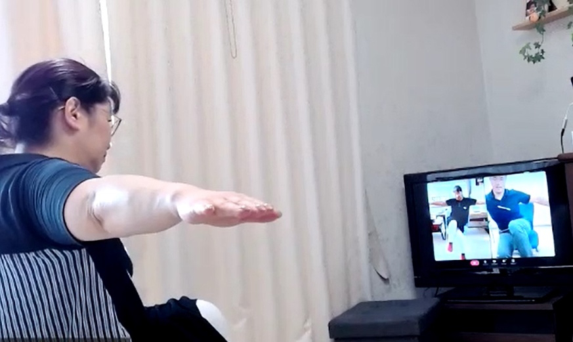
Figure 1: Online rehabilitation exercise.
However, it is not easy to operate under the framework at care sites due to there being too many operations in the DCM cycle. DCM is a framework for operating a service, not for designing it. To use the person-centered pri- nciple for designing a service, another approach is needed. In our project, we used this person-centered principle to design processes on the basis of design thinking. During the iteration of the design processes, we repeatedly held discussions from the viewpoint of person-centered care.
Sustainability of Services For a service to be sustainable, it is important to successfully integrate data, technologies, and humans as a stakeholder. Even if a data-driven and person-centered care service were well-designed and its effectiveness con- firmed through experiments, care workers may not accept it. To design a sustainable service, it is important for both those workers and designers to co-create it with agreements on issues addressed and ideas to solve them. In general, care workers are not familiar with design processes and are not motivated to join in design projects. Thus, designers should motivate them to cooperate in projects. Motivating users is also important for sustainabi- lity. Elderly people may hesitate to use a service with unknown technological devices. We should confirm the objective of the care for each user, should describe why the service is necessary for the care objective, and should make the users motivated to use such devices.
ONLINE REHABILITATION SERVICE We aim to develop an online rehabilitation service so that the opportunity for participating in rehabilitation exercise sessions will increase. Being able to participate not only at a nursing facility but also in one’s own home will make more care services possible under the current labor shortage situation. The user of such a service can exercise by watching a model exercise on a tablet screen that is connected to the nursing facility (Figure 1).
A Data-Driven but Person-Centered Assessment Framework 411
PROPOSED ASSESSMENT FRAMEWORK Toward the development of an online rehabilitation service, we defined an assessment framework that is data-driven but person-centered.
Data-Driven Assessment
Table 1 shows the data-driven part of the assessment framework. The fra- mework consists of a part for evaluating the effect of rehabilitation and that for extracting problems in operating the online rehabilitation service. The part for evaluation is based on the Japanese version of the Cardiovascular Health Study frailty index, which considers weight loss, slow gait speed, low physical activity, exhaustion, and low grip strength. This part also includes questionnaire-based indices regarding subjective happiness and willingness toward social activities as well as the measurements of the other physical functions of the body which are not included in the frailty index. Questi- onnaires and interviews are used for workers at a nursing facility and for patients and families to evaluate the indices. On the other hand, the part for extracting problems for sustainable service operation concerns interoperabi- lity between a nursing facility site and a patient’s home in terms of an online service connecting them for a video-based rehabilitation exercise. This part is based on questionnaires and interviews for care workers.
The assessment framework shown in Table 1 is based on a procedure to handle data in designing the service. The procedure consists of the follow- ing steps: defining the objective for data collection, defining the data and collection method, collecting the data through questionnaires, conducting interviews or exercises, converting the data through anonymization, tran- scribing or annotating the data, registering the collected data with meta-data, and analyzing the data to improve the current design for a better service. In the future, a processing step such as machine learning will be added in the case of massive data.
Person-Centered Assessment According to the ICF, International Classification of Functioning, Disability and Health (World Health Organization), in designing a rehabilitation plan, it is important to consider not only the maintenance and improvement of the physical functions of a patient’s body but also his/her activities related to tasks and actions in daily life and participation or involvement in his/her life situation. Each patient has their own background in terms of rehabilita- tion needs; thus, we focus on a person-centered care approach where health care should be based on a person’s unique demands. The rehabilitation plan should focus on the abilities of the person and encourage activity even though the data is actively used.
In accordance with this person-centered principle, we investigated the background of a target patient such as her willingness to enjoy sightseeing trips or her desire for her hand to recover so that she could cook. Getting an understanding of her backgrounds leads to making her effectively motivated before starting rehabilitation and to making it possible to build rapport with her even though the offer for her to participate in online rehabilitation was
Step Action or content Defining objective to collect data Evaluating effect of rehabilitation
Extracting problems in operation of service
Defining data and collection method
Cardiovascular Health Study frailty index by questionnaires
Care worker’s opinions by questionnaires and interviews Physical functions of body by measurement Subjective happiness and willingness toward social activities through questionnaires and interviews
Getting family’s opinions through questionnaires and interviews Getting care worker’s opinions through questionnaires and interviews
Video of the exercise by video capturing for reviewing Collecting Exercises, questionnaires, and interviews
Questionnaires and interviews Transcription
Converting Anonymization, transcription and annotation Registering Adding meta-data
Processing Machine learning etc. (for massive data in future) Analyzing Extracting effective indices Extracting operation problems
Utilizing Improving design for a better service
made by someone she had just met for the first time. This background infor- mation can be used to determine appropriate exercise content that did not require her to overextend her arms or legs.
Table 2 shows the proposed person-centered part of the assessment frame- work. The framework consists of four parts: introduction to make the user motivated to participate in online rehabilitation exercise, configuration of the home environment, individual care, which is the core part of person-centered design, and risk management. One important item in the individual care part is to motivate the user to engage in rehabilitation by listening to his/her inte- rests during an ice breaker session, not to motivate him/her with the objective of curing his/her disease. This is because the disease written in the care plan
A Data-Driven but Person-Centered Assessment Framework 413
Category Content Introduction Self-introduction sheets for first time visitors to reduce users’ anxiety in advance
Short-term informed consent that is easy-to-understand with visual presentation Explaining additional value of using unknown devices such as for video communication with family
Environment Sustainable and comfortable exercise in home: space for exercise, setup and clearing of device, device charging, easy-to-operate user interface, operation manual, and family support Independent participation through demonstration by staff at first time, experiencing a few trials with help of staff
Individual care
Preparing device systems considering individual disabilities such as an additional loudspeaker device for the hearing impaired Motivating a user to participate in rehabilitation by listening to his/her interests during an ice breaker, not motivating him/her with the objective of curing a disease
Helping the user recognize the effects of rehabilitation in accordance with his/her patterns (for example, participating in rehabilitation exercise on Friday, enjoying social activities on the weekend, and being asked about the effects the next week) Knowing what a user can and cannot do when operating a device and typical problems faced in operation
Offering several solutions for when the user fail in operating a device so as not to amplify his/her awareness of failure Risk management Preventing injury such as by using a safe chair on a non-slip floor and securing enough space for exercise
Providing information for emergency calls both from a user to the nursing facility and from the facility to the family Confirming health conditions and fatigue before, during, and after exercise
is not necessarily effective at directly getting the user motivated even though doctors or care workers focus on curing it. It is also important for a user to feel the effects of exercise in the context of daily life. For example, partici- pating in the rehabilitation exercise on Friday, enjoying social activities on the weekend, and being asked about the effects the next week will lead to users becoming aware of the effects. Moreover, customizing the environment for exercise is important. For the hearing impaired, a device system should be prepared in consideration of individual disabilities such as an additional loudspeaker device.
DISSCUSSION The assessment target described in this paper is the process of service design rather than the service or user themselves. Of course, service and user asses- sment is included in the process assessment. In general, a service design process includes defining the issue to solve and the value to deliver to users for user-centered design. Our proposed framework based on the person-centered principle provides a deeper understanding of individuals. However, customi- zing services to each user may cause service operation to be inefficient. This is why we also focus on the sustainability of the service and conduct a service co-creation project with care workers who will be service providers after the service is launched. We hope to find a balance between work efficiency and the customization for each user in the future.
On the other hand, data-driven assessment for the service design will play an important role in evidence-based design. It is organized as a cycle for hand- ling data, from defining the objective to collect data, utilizing the data, to reusing the data in order to improve the current design of a service. In nur- sing care domains, it is unknown what kinds of data for effective care services exist, so our research can provide unique case studies in which potential data is mined regarding nursing care domains. For the future, a data-storytelling approach (Zhang, 2020) is also important for better user understanding of the data-driven assessment. The data-storytelling could be used for both user-centered data exploration (Amyrotos, 2021) and development of a self-assessment system (Mingjie, 2009).
The proposed framework was created for designing a service, not for ope- rating it. However, insights into improving the framework could be used to improve service operation. The framework should be improved through the iteration of design processes. Improvement by iteration is also essen- tial in service operation. Moreover, both the data-driven approach and the person-centered one can be used for designing other services in nursing care domains. Online rehabilitation exercise is just one of the services offered by a nursing care provider. For example, the person-centered approach could be used for designing a community service where elderly people can enjoy social events regardless of their remaining abilities because the approach has a function to extract their life backgrounds and to motivate them in a polite way. Thus, from a long-term perspective, it is important to evolve the proposed framework so that it could distinguish between generic and service-specific parts. In addition, regarding a metrics for the data-driven and person-centered approach, the HEART (Happiness, Engagement, Ado- ption, Retention and Task success) framework (Rodden, 2010) could be utilized.
CONCLUSION
This paper presented a framework for assessing an online rehabilitation exe- rcise service that is data-driven but person-centered. We believe that our data-driven assessment framework will contribute to the digital transfor- mation such as for developing data-driven assessment systems for a wide variety of care services in the future, and our person-centered assessment
A Data-Driven but Person-Centered Assessment Framework 415
will contribute to preventing nursing care from being dependent on excessive amounts of data. Future work will include developing the above data-driven but person-centered assessment system as well as evaluating the proposed framework on the basis of data collected in an experiment.
ACKNOWLEDGMENT
We thank the care workers at the outpatient rehabilitation facility “Mago- koro” in Omuta city, Japan who cooperated in the co-creation project.
REFERENCES
Amyrotos, C., Andreou, P. and Germanakos, P. (2021) “Human-centred Persona Driven Personalization in Business Data Analytics” In Adjunct Proceedings of the 29th ACM Conference on User Modeling, Adaptation and Personalization (UMAP ‘21), pp. 175–180, ACM, New York, NY, USA. Bigus, J. P., Chen-Ritzo, C. -H. and Sorrentino, R. (2011) “A framework for
evidence-based health care incentives simulation” Proceedings of the 2011 Winter Simulation Conference (WSC), pp. 1103–1116. Brooker, D. (2005) Dementia Care Mapping: A Review of the Research Literature; The Gerontologist, Vol.45, Issue suppl_1, pp. 11–18. Carswell, A., McColl, M.A., Baptiste, S., Law, M., Polatajko, H. and Pollock, N.
(2004) The Canadian Occupational Performance Measure: A Research and Clini- cal Literature Review, Canadian Journal of Occupational Therapy, Vol.71, No.4, pp. 210–222. Håkansson Eklund, J., Holmström, I.K., Kumlin, T., et al. (2019) “Same same or different?” A review of reviews of person-centered and patient-centered care, Patient Educ. Couns., Vol.102, No.1, pp. 3–11. Hu, Y. and Wang, Y. (2022) “HSAACE: Design a Cloud Platform Health Sta-
tus Assessment Application to Support Continuous Evolution of Assessment Capabilities” In 2022 The 5th International Conference on Software Enginee- ring and Information Management (ICSIM) (ICSIM 2022), pp. 132–137, ACM, New York, NY, USA. Karim, S., Gide, E. and Sandu, R. (2019) “The Impact of Big Data on Health Care Services in Australia: Using Big Data Analytics to Categorise and Deal with Pati- ents” Proceedings of the 2019 International Conference on Mathematics, Science and Technology Teaching and Learning (ICMSTTL 2019), pp. 34–38, ACM, New York, NY, USA. Kitwood, T. and Bredin, K. (1992) Towards a theory of dementia care: Personhood
and well-being, Ageing and Society, Vol.12, No.3, pp. 269–287. Li, H., Cheng, Y., Li, Y., Ma, X. and Li, D. (2018) “Health Assessment System Based on Big Data Analysis of Meridian Electrical Potential” In Proceedings of the 3rd International Conference on Biomedical Signal and Image Processing (ICBIP ‘18), pp. 75–80, ACM, New York, NY, USA. MacCaull, W., Jewers, H. and Latzel, M. (2010) “Using an interdisciplinary appro-
ach to develop a knowledge-driven careflow management system for collaborative patient-centred palliative care” In Proceedings of the 1st ACM International Health Informatics Symposium (IHI ‘10), pp. 507–511, ACM, New York, NY, USA.
Mingjie, Z., Li, W. and Jianxin, Z. (2009) “Developing a computer system for health assessment” In Proceedings of the 2nd International Conference on Interaction Sciences: Information Technology, Culture and Human (ICIS ‘09), pp. 303–306, ACM, New York, NY, USA. Pais, S. (2020) “Integrating Patient-Generated Wellness Data: A User-Centered
Approach” In Proceedings of the Australasian Computer Science Week Multicon- ference (ACSW ‘20), Article 35, pp. 1–8, ACM, New York, NY, USA. Rodden, K., Hutchinson, H. and Fu, X. (2010) “Measuring the user experience on a large scale: user-centered metrics for web applications” In Proceedings of the SIGCHI Conference on Human Factors in Computing Systems (CHI ‘10), pp. 2395–2398, ACM, New York, NY, USA. Taweel, A., Speedie, S., Tyson, G., Tawil, A. R. H., Peterson, K. and Delaney, B.
(2011) “Service and model-driven dynamic integration of health data” In Pro- ceedings of the first international workshop on Managing interoperability and complexity in health systems (MIXHS ‘11), pp. 11–17, ACM, New York, NY, USA. University of Bradford: Dementia Care Mapping, https://www.bradford.ac.uk/ dementia/training-consultancy/ (Last accessed at January 3, 2023) World Health Organization: International Classification of Functioning, Disa-
bility and Health, https://www.who.int/standards/classifications/international- classification-of-functioning-disability-and-health/ (Last accessed at January 3, 2023) Zhang, Y. and Lugmayr, A. (2020) “Designing a User-Centered Interactive Data- Storytelling Framework” In Proceedings of the 31st Australian Conference on Human-Computer-Interaction (OZCHI’19), pp. 428–432, ACM, New York, NY, USA.
LISTED IN THE AHFE DIGITAL BOOKSTORE CATALOGUE
Explore the complete digital volume
Intelligent Human Systems Integration (IHSI 2023): Integrating People and Intelligent Systems
Read this individual research paper free through the original publisher, or explore the full digital proceedings book.
ISBN 978-1-958651-45-2
Explore this ISBN in the AHFE Bookstore ↗Listed in the July 2026 bookstore catalogue; search by ISBN to confirm current availability · Digital book purchase optional