Peioneti Lam, Jose Villa, John Christopher, Stephanie Brown, Linda Desimone, Wade Elmore, Seth Elkin-Frankston, Victoria Bode, Blake Mitchell (2023). Evaluating the effects of visual traits on individual marksmanship performance in a simulated fireteam engagement. In: Digital Human Modeling and Applied Optimization. AHFE Open Access, vol. 76, pp. 29–40. https://doi.org/10.54941/ahfe1003351
Enhancing fireteam lethality remains a key priority for the U.S. Army. Along with team dynamics, individual marksmanship performance is a core contributor to a fireteam’s lethality. When considering factors that affect marksmanship performance, an individual’s visual sensory and perceptual traits have been identified as having some of the most influential impacts, however, these insights have primarily been drawn from studies wherein participants completed individually based marksmanship tasks. From an operational perspective, Soldiers are more likely to engage in combat at the team level or higher, and thus, research investigating the effect of individual traits in the context of a team marksmanship task is warranted. The goal of this research is to evaluate individual traits by quantifying relationships between visual traits and marksmanship performance during a team marksmanship task and assess which traits are well defined between high and low performing individuals on the team. This research was completed using data from a cohort of 38 male, Infantry Soldiers who completed a simulated team shooting scenario (TSS) in teams of three at a 72-hour field exercise. Prior to the study onset, visual trait information was collected from each participant, to include dynamic visual acuity, field of view, and useful field of view data. These traits were compared to marksmanship performance gathered from the TSS task. The scenario represented an escalating firing engagement over five minutes. In this engagement, teams were situated in the center of a circle of 28 LED targets, which they were required to scan and engage when a designated hostile was displayed. During the scenario, the LED targets were dormant until activated at various times in different shapes to represent hostile or friendly targets. Weapon-attached sensor technology provided shot timing and placement data which was used to calculate team marksmanship outcomes (i.e., probability of target hits, percent of targets engaged).To explore the relationship between visual traits and marksmanship performance, a correlation analysis was conducted using baseline visual trait data and the TSS marksmanship data. Results of the analysis revealed a strong relationship between central vision processing and probability of hit (r = .32, p = .06). To assess differences in central vision processing between high and low skilled performers (high performers had a p(hit) greater than .3, N = 19), an independent t-test was conducted with marksmanship performance group as the independent variable and central vision processing accuracy as the dependent variable. Results of this analysis revealed a statistically significant difference (t(35) = 2.11, p = 0.04, d = .68), between the top half of performers (M = .92, SD = .03) and the bottom half of performers (M = .87, SD = .08). These results suggest that individuals with higher visual processing capabilities are more likely to perform better in realistic operational engagements with a dynamic setting requiring sector scanning. Findings of this study provide initial evidence that technological or training enhancements to marksmanship performance should consider addressing deficits in or augmenting central visual processing to improve probability of hit on the intended target.
Enhancing fireteam lethality remains a key priority for the U.S. Army (Head- quarters DOA, 2019a). Along with team dynamics, individual marksmanship performance is a core contributor to a fireteam’s lethality, operationally evidenced by the requirement for individuals to maintain a standard of mark- smanship competency in order to be deemed mission ready (Headquarters DOA, 2019b). When considering factors that affect marksmanship performa- nce, an individual’s visual sensory and perceptual traits have been identified as having some of the most influential impacts. Operationally, visual acuity standards have been required by the Army since World War II to ensure ade- quate marksmanship capability and combat readiness. (Wells et al., 2009).
Outside of personnel requirements, the reliance of marksmanship performa- nce on vision can be found with how current technological enhancements are implemented. Weapon sights, optics, and night vision goggles (NVGs) were all developed to enhance the soldier’s capability to detect, identify, and acquire stimuli from their visual field of view. Given the focus of operational requirements to enhance vision, it is necessary to understand how Soldiers’ baseline visual performance influence their marksmanship performance to determine requirement and technological needs.
Visuosensory Traits and Marksmanship Prior research exploring relationships between visual traits and marksman- ship have primarily focused on visual acuity, or the clarity of vision across distance. Two studies investigating the topic have found that an individual’s visual acuity is strongly predictive of their ability to discern between tar- gets (Hatch et al., 2009; Wells et al., 2009), and accuracy of engagements (Wells et al., 2009), with a significant drop in marksmanship performance occurring when Snellen acuity ratings decrease from 20/25, slightly degraded vision, to 20/50, significantly degraded vision, (Wells et al., 2009). An applied study in which color-perception was reduced through various commercial off-the-shelf (COTS) tinted protective eyewear found that visual acuity did not significantly decrease across tints, and neither did accuracy in a mark- smanship task (Hong Gao, et al., 2020), which provides further evidence that visual acuity needs to be affected before a difference in marksmanship performance is evident. Beyond visual acuity, research on the relationship between visual sensory traits and marksmanship performance is sparse. How- ever, a recent study investigating the effects of night vision goggles (NVGs) on room clearing found that soldiers were able to clear rooms significantly faster when they had panoramic view NVGs versus binocular NVGs, which was attributed to a wider field of view afforded by the panoramic NVGs (Hamilton et al., 2020). Although no information was provided on the accu- racy of engagements, results of the study provide evidence that other aspects of the marksmanship process, such as target detection, may be significantly influenced by visual traits beyond acuity.
Visuoperceptual Traits and Marksmanship Processing of the visual environment through attentional and cognitive pro- cesses (Martinez-Conde et al., 2004), has been shown to have an impact on marksmanship performance. A study conducted by U.S. Army Aviation Research Labs (USAARL) investigated relationships between visuoperceptual traits and marksmanship performance within the Engagement Skills Trainer 2000 simulated marksmanship system (Kelley et al., 2011). Their research found that construct measures relating to visual motor tracking and shifting attention were significant predictors of marksmanship performance metrics that include radius from center, aim trace, and proportion of hits (Kelley et al., 2011). These findings on visual motor tracking were supported by research exploring differences between expert clay-shooting marksman and non-experts which found the expert group performed significantly better in
Evaluating the Effects of Visual Traits on Individual Marksmanship Performance 31
visual tracking tasks than non-experts (Janelle et al., 2008), as well as a study of expert shotgun shooters using a similar task, wherein expert shoo- ters exhibited decreased latency between target movement and eye movement (Di Russo et al., 2003). Findings of these studies indicate an important relationship between tracking of the eye, attention, and marksmanship per- formance, and the studies of visual sensation metrics establish the importance of visual acuity and field of view in target acquisition and accuracy.
Current Study The reviewed research and findings are informative in understanding visual sensory and perceptual trait relationships with marksmanship performance, however, all but one study was completed using a single-shooter marksman- ship event. From an operational perspective, Soldiers are more likely to engage in combat at the team level or higher, and thus, further research inve- stigating the effect of individual traits in the context of a team marksmanship task is warranted. The goal of this research was to 1) quantify relationships between visual traits and variables of marksmanship performance during a team task and 2) assess if significantly correlated traits were different between high and low performing individuals on the team.
This research was accomplished using data from a cohort of soldiers who completed a simulated team shooting scenario (TSS) in teams of three as part of a larger experiment simulating a 72-hour field training exercise and had visual trait data collected prior. Those data were specific to visual traits that were expected to affect performance in a dynamic scanning task, including dynamic visual acuity, field of view, and useful field of view. While no lite- rature was found investigating dynamic visual acuity or useful field of view in relation to marksmanship, research drawn from the sport performance (Martin et al., 2012; Holliday, 2013; Yee et al., 2021) and driving domains (Ball et al., 2005; Edwards et al., 2006; McManus et al., 2015; Woutersen et al., 2018) suggest these traits may have an impact on marksmanship ability, which places similar visual demands on its participants.
METHOD
Participants Participants were drawn from 54 active-duty infantry Soldiers who com- pleted the TSS. Sixteen of those Soldiers had incomplete or missing sets of visual trait data, and thus were excluded for analyses. Therefore, these cur- rent analyses included 38 participants. All participants in this research were male, with ages between 19 and 31 years (M=23.2, SD=2.8), with 2.1 years of experience in the military on average (SD=1.41). Thirty-two participants self-reported having 20/20 vision without correction, while six self-reported 20/20 vision with correction. All participants were physically fit as judged by their self-reported physical fitness scores. All participants reported having met the Army standard rifle marksmanship qualification requirements using the M4 carbine, with an average score of 37 out of 40 hits (SD=3.2), and five individuals (13.2%) were left-hand dominant.
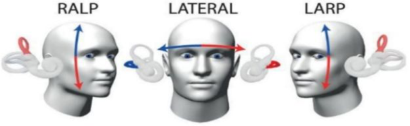
Test Procedures Dynamic Visual Acuity Dynamic visual acuity data was collected by administering a visual acuity assessment (Bailey & Lovie-Kitchin, 2013) in which participants were requi- red to read identified letters from a series of charts based on the standards established by the National Eye Institute’s Early Treatment Diabetic Reti- nopathy Study (ETDRS) (1995) while their heads were oscillated manually across the yaw (horizontal canal plane), left superior/anterior–right posterior canal plane (LARP), and right superior/anterior–left posterior canal plane (RALP). See Figure 1 for movement details. Participants were asked to ver- bally identify visual stimuli from the chart during the oscillations, and their responses were recorded and scored for correctness.
Field of View Field of view was measured using a customized perimeter based on the Bausch and Lomb Ferree-Rand Projection Perimeter design. The subject was seated during the assessment, and their head was placed on a chin rest that was adjusted to a position where their eyes were parallel and centered on the fixation point. The subject was instructed to fixate one eye on an illuminated light-node at the center of the visual field and continue to do so through- out the perimetry measurements, while tracking the movement of light nodes across several azimuths with their peripheral vision. The other eye was cove- red with an eye patch. The participant was instructed to verbally indicate when the light node (a white dot, 5mm in diameter, with a subtended visual angle of 0.9o) disappeared from their periphery and verbalize again when it reappeared in their periphery. The arithmetic mean of these two mea- surements was calculated as the limit of the visual field of that eye in the tested area. Visual field was tested in eight azimuths, including the superior, super-temporal, temporal, infero-temporal, inferior, infero-nasal, nasal, and super-nasal directions. The subject then switched the eye patch to the other eye and the process was repeated to test the second eye. Aggregate measures of left eye field of view, right eye field of view, and both eyes field of view were used for analysis.
Useful Field of View Useful field of view data were collected through a software program admi- nistered on a laptop. Participants were seated in front of the laptop in a
Figure 1: Illustration of RALP, Lateral, and LARP head movements courtesy of MacDou- gall, McGarvie, Halmagyi, Curthoys, & Weber (2013).
Evaluating the Effects of Visual Traits on Individual Marksmanship Performance 33
quiet room while completing the program with their eyes approximately 21 inches away from the screen. Participants completed three subtests within the program which measured central vision processing, divided attention, and selective attention. In the first subtest, the participant was instructed to indicate when they saw a stimulus appear on a screen, and then identify a target presented in a centrally located fixation box that was presented for varying lengths of time. In the second subtest, participants identified a target, but were also required to localize a simultaneously presented target displa- yed in the periphery of the computer monitor. The third subtest was identical to the second, except that the target displayed in the periphery was embed- ded in distractors, which required that participants to be selective with their attention and ignore non-relevant targets.
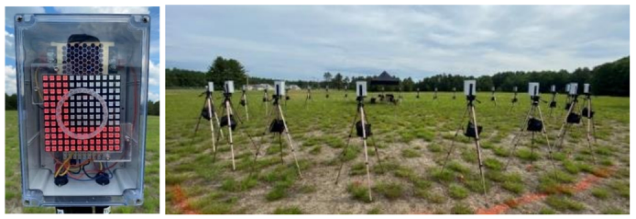
Team Shooting Scenario The TSS was a simulated, rapidly escalating, fireteam engagement condu- cted in teams of three over approximately six-minutes and was the same task methodology that was originally employed in Brown and colleagues’ investi- gation of team marksmanship performance (2022). Ordering was modified in this study to allow for teams to complete the task twice without the tar- get presentation being identical in both runs. Teams were located within a 2.5-meter engagement radius and were surrounded by a total of 28 light node target boxes that were activated to represent hostile or friendly targets. A layout of the scenario is shown in Figure 2. Prior to the scenario start, teams were briefed that they were to come up with a strategy in order to determine their sectors of fire, scan their areas for potential threats, and engage hostile targets which were at an approximate simulated 75m distance. Over time, the scenario escalated in difficulty, with the target saturation and presenta- tion changing each minute of the scenario. Marksmanship performance data was captured for each member with sensors attached to the weapon. Teams conducted this task two times during the larger study, prior to and in the middle of the 72-hour field exercise.
Figure 2: Example light box target with LED screen displaying a shape that repre- sents an enemy threat (left), placed on stands in a 360-degree circle (right) (courtesy of Brown et al., 2022).
Materials and Metrics Dynamic Visual Acuity Dynamic visual acuity data were collected with the procedures described above and a Bailey-Lovie paper eye chart (Adams et al., 2004). Participants were seated in a chair 10 feet away from the chart. A goniometer was used to mark points that were 45 degrees left and right of the chair, which were used to orient the participant’s head during RALP and LARP oscillations. The goniometer was also used to determine the boundaries for oscillations which were 20 to 30 degrees across respective. The metric for this task consisted of a Logarithmic Minimum Angle of Resolution score during each motion (LogMAR) (Bailey & Lovie-Kitchin, 2013). See Table 1 for description of metrics.
Field of View Field of view was measured using a customized perimeter based on the Bausch and Lomb Ferree-Rand Projection Perimeter. The perimeter contained light nodes along the arc of an arm that is positioned at one of several azimuths in relation to a subject’s head. The light nodes were moved into or out of the periphery by the experimenter with a toggle-switch controller. Metrics include the visual angle in degrees formed from the participant’s eye to the center point of gaze of the perimeter and from the eye to the maximum limit of vision, on eight different azimuths in a sphere around the participant’s head. To create an aggregate score for the left and right eye, field of view area was calculated using each azimuth score as a data point. To measure field of view area for both eyes, the left eye and right eye scores were summed. Table 2 contains a consolidated description of metrics for field of view.
Table 1. Description of dynamic visual acuity measures.
Table available in the original PDF paper.
Measure Description LogMAR Lateral Score calculated from number of correct lines, and letters on last
line read during lateral oscillation. LogMAR RALP Score calculated from number of correct lines, and letters on last line read during RALP oscillations. LogMAR LARP Score calculated form number of correct lines, and letters on last line read during LARP oscillations.
Table 2. Description of field of view measures.
Table available in the original PDF paper.
Measure Description Left Eye Field of View Area of vision for left eye calculated from radar graph of combined visual angles. Right Eye Field of View Area of vision for right eye calculated from radar graph of combined visual angles. Both Eyes Field of View Sum of areas from left and right eye field of view.
Evaluating the Effects of Visual Traits on Individual Marksmanship Performance 35
Useful Field of View Useful field of view data were collected using a customized application based on the dual-target task presented in Appelbaum et al.’s research (2011), ada- pted to include a psychomotor vigilance test and alternate timing metrics. The test was administered on a chorded laptop, and the participant used a mouse to indicate their responses. For this analysis, useful field of view accu- racy measurements were used, which were a percentage of correct responses for each subtest, including central vision processing, divided attention, and selective attention. See Table 3 for a further description of these metrics and their respective tasks.
Team Shooting Scenario For the TSS, participants used simulation M4 carbine rifles manufactured by LaserShot, Inc and had M68 close combat optics (CCO) attached to the weapons, both of which were mechanically zeroed before the start of the ses- sion. Marksmanship data was captured through two sensors attached to the right side of the weapon, including the FN Expert optical unit and ADPM Opal inertial measurement unit (IMU) sensors. Shots captured by the FN system were processed through NOS Pro software and verified by the IMU. The target system was composed of 28 light node boxes that were program- med to show “T” for hostile targets, and any form of an “L” for friendly targets (Figure 2). Ring reflectors were attached to the front and center of each light box for the FN sensor to record shot location. Refer to Brown and colleagues work on individual marksmanship for more information on these systems and shot data (2019).
Marksmanship lethality measures were drawn from measures previously used by Brown and colleagues (2022) in their study using the TSS task. These measures were calculated from the shot data gathered by the FN and IMU sensors and include probability of hit (p(hit)) and probability of engagement (p(engage)). P(hit) is defined as the ratio of shots fired to number of targets hit, and p(engage) is defined as the ratio of shots fired to targets presented. Refer to Table 4 for a description of these measures.
Statistical Analyses Individual visual traits and performance were used for these analyses. Pre- liminary inspection of the data revealed a normally distributed curve and
Table 3. Description of useful field of view measures.
Table available in the original PDF paper.
Measure Description Central Vision Processing Accuracy Percentage of correct responses within processing speed task – participant identifies visual stimuli in central vision presented at varying speeds. Divided Attention Accuracy
Percentage of correct responses within divided attention task – participant identifies central stimuli while localizing peripheral stimuli. Selective Attention Accuracy
Percentage of correct responses within selective attention task – participant identifies central stimuli and localizes peripheral stimuli within distractors.
Table 4. Description of lethality measures.
Table available in the original PDF paper.
Measure Description Probability of Hit (p(hit))
Ratio of shots fired to targets presented during scenario course.
Ratio of shots fired to shots landed on target (within 500mm of center). Probability of Engagement (p(engage))
there was no significant heterogeneity of variance. The first aim of the analy- ses was to explore and quantify relationships between the two sets of data. A correlation analysis was performed between the visual trait data and mark- smanship performance metrics. Next, we sought to explore if significantly correlated traits were different between high performing and low performing participants. To do this an independent t-test was conducted comparing the top half and bottom half of performers’ using significantly correlated visual traits and marksmanship metrics.
RESULTS
Relationships Between Visual Traits and Marksmanship Performance A correlation analysis was conducted to explore and quantify relationships between visual traits and marksmanship performance within the context of a dynamic team engagement. Results of the analysis revealed a relationship between useful field of view central vision processing accuracy and p(hit) that is trending towards significance, p = .057, r = .32. No other significant relationships were found. Refer to Table 5 below for all correlations.
Table 5. Correlation table between visual traits and marksmanship performance metrics for TSS.
Table available in the original PDF paper.
Visual Trait P(hit) P(engage) Lateral Visual Acuity Pearson’s r .01 .12 p-value .97 .52 LARP Visual Acuity Pearson’s r .20 .10 p-value .25 .55 RALP Visual Acuity Pearson’s r -.09 .14 p-value .60 .43 Left Eye Field of View Pearson’s r .04 -.09 p-value .84 .58 Right Eye Field of View Pearson’s r .06 -.07 p-value .74 .68 Both Eyes Field of View Pearson’s r .05 -.09 p-value .78 .62 Useful Field of View Central Vision Processing Pearson’s r .32 .002 p-value .06 .99 Useful Field of View Divided Attention Pearson’s r .11 -.01 p-value .51 .96 Useful Field of View Selective Attention Pearson’s r .12 .10 p-value .48 .55
Evaluating the Effects of Visual Traits on Individual Marksmanship Performance 37
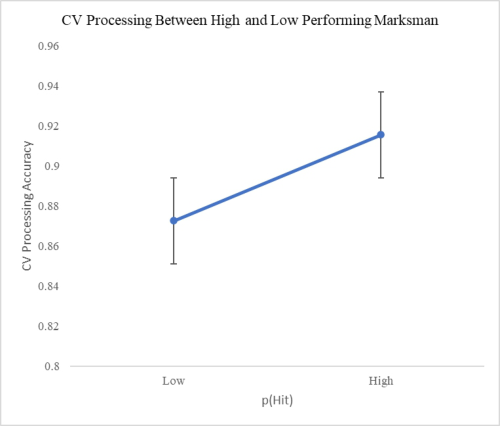
Figure 3: Central vision processing accuracy between high and low performing participants as determined by p(hit).
Central Vision Processing Between High and Low Performing Marksman Using results of the correlation analysis, central vision processing performa- nce in the useful field of view assessment was selected for further investigation to assess if measurements of this trait were significantly different between high and low performing participants in the TSS task. High and low perfor- mers were grouped as the upper and lower halves of all participants ranked by p(hit). The high performing group had an average p(hit) of .33 (SD = .08). The low performing group had an average p(hit) of.19 (SD = .05). Both groups contained 19 participants. Analysis using an independent t-test betw- een the two groups revealed a significant difference (t(35) = 2.11, p = 0.04, d = .68) in central vision processing accuracy scores, with the high perfor- ming group having significantly higher accuracy scores (M = .92, SD = .03) than the low performing group (M = .87, SD = .08).
DISCUSSION
This research sought to quantify relationships between visual traits and mark- smanship performance and determine if significantly correlated traits were notably different between high and low performing marksman within a novel dynamic team shooting assessment. Results showed some initial trends in the relationship between visual processing capabilities and marksmanship performance on a realistic, dynamic shooting task that warrant further explo- ration. In particular, results revealed that useful field of view central vision processing accuracy trended towards significant correlation with marksman- ship performance and was significantly different between high and low performing participants, while no significant relationships were found for metrics relating to field of view or dynamic visual acuity.
Useful field of view metrics that were expected to influence performa- nce due to their alignment with task requirements involved in attending to simultaneous targets did not have any significant relationship with p(hit) or p(engage). It could be reasoned that being able to divide and be selective with one’s attention, particularly to objects in the periphery, isn’t as impact- ful as the basic ability of processing when stimuli are within central vision. P(hit) was defined as a measure of engagement accuracy, which is primarily be driven by central vision, thus, it follows that the quicker an individual is able to bring a target into central vision, the more accurate their engagements would be. However, further research is needed to manipulate speed of stimuli entering central vision to clearly understand its impact on marksmanship performance.
Some limitations of this new methodology include sample size, lack of con- trol for the participant’s vision state during the shooting task, lack of control for environmental factors that could degrade vision, and equipment. Additi- onally, this study limited analysis to only dynamic visual acuity requirements, because while static visual acuity was measured, all participants had 20/20 vision corrected or uncorrected. Due to this lack of variability in our data, it was not possible to see differences in performance based on that varia- ble. Beyond visual acuity, when considering Hamilton and colleague’s study (2020) which provided evidence to support that a wider field of view may lead to improved target detection, and thus, higher engagements, our rese- arch did not show this finding. However, the task of clearing rooms as one moves through them and scanning a known radius may be inherently diffe- rent than the skills required for the TSS task, and the performance metrics were also different, with Hamilton and colleague’s using clearing speed, and this study using p(hit) and p(engage).
Implications of this research are that this novel Soldier performance assessment methodology showed some initial evidence in its sensitivity to capturing the effects visual traits have on marksmanship performance in a dynamic team setting, and thus, may be appropriate as an operational asses- sment of visual alterations impact on marksman lethality. To explore this, future iterations of this task will focus on experimentally manipulating vision, particularly field of view, throughout the task for a clearer understanding of the effects it has on marksmanship. Future research into the area of vision and marksmanship should seek to control for equipment effects on vision before conducting the task, as well as accounting for team-level factors that could contribute to individual performance. Additionally, aggregate, or interactive measures of “team vision” should be explored.
REFERENCES
Appelbaum, L. G., Schroeder, J. E., Cain, M. S., & Mitroff, S. R. (2011). Improved visual cognition through stroboscopic training. Frontiers in Psychology, 2, 276. B. Sekuler, Patrick J. Bennett, Mortimer Mamelak, A. (2000). Effects of aging on the
useful field of view. Experimental aging research, 26(2), 103–120. Bailey, I. L., & Lovie-Kitchin, J. E. (2013). Visual acuity testing. From the laboratory to the clinic. Vision research, 90, 2–9.
Evaluating the Effects of Visual Traits on Individual Marksmanship Performance 39
Ball, K. K., Clay, N. J., Wadley, V. G., Roth, D. L., Edwards, J. D., & Roenker, D. L.
(2005, June). Predicting driving performance in older adults with the useful field of view test: A meta-analysis. In Driving Assessment Conference (Vol. 3, No. 2005). University of Iowa. Brown, S. A., Lam, P., Christopher, J. J., Goodenough, R. R., Villa, J. D., Bode, V. G., & Mitchell, K. B. (2022). A Novel Methodology for Evaluating Military Teamwork and Team Marksmanship Performance. Digital Human Modeling and Applied Optimization, 46, 53. Di Russo, F., Pitzalis, S., & Spinelli, D. (2003). Fixation stability and saccadic latency
in elite shooters. Vision Research, 43, 1837–1845. Du Toit, P. J., Kruger, P. E., Tsotetsi, A., Soma, P., Govender, C., Henning, E., Naicker, L., Grant, R., Wood, P. S., &. Terblanche, E. (2011). Comparison of the performa- nces of male and female armed services recruits undergoing sports vision testing. African Journal for Physical, Health Education, Recreation and Dance, December (Supplement), pp. 1–11. Early Treatment Diabetic Retinopathy Study design and baseline patient characte-
ristics. ETDRS report number 7. (1991). Ophthalmology, 98(5 Suppl), 741–756. https://doi.org/10.1016/s0161-6420(13)38009-9 Edwards, J. D., Ross, L. A., Wadley, V. G., Clay, O. J., Crowe, M., Roenker, D.
L., & Ball, K. K. (2006). The useful field of view test: normative data for older adults. Archives of Clinical Neuropsychology, 21(4), 275–286. Hamilton, J. A., Roush, G., Kinney, L. M. J., Suss, J., & Biggs, L. A. T. (2020). Comparison of night vision technology for close-quarters combat operations: How field of view impacts live-fire scenarios. Human Factors and Mechanical Engineering for Defense and Safety, 4, 1–15. Hatch, B. C., Hilber, D. J., Elledge, J. B., Stout, J. W. & Lee, R. B. (2009) The effects
of visual acuity on target discrimination and shooting performance. Optometry and Vision Science, 86, 1359–1367. Headquarters DOA. (2019a). Army modernization strategy: investing in the future.
Washington, DC. Headquarters DOA. (2019b). Training and qualification – individual weapons.
TC 3–20.4. Washington, DC. Headquarters DOA. (2015). Soldier’s Manual of Common Task. STP 21-1-SMCT.
Washington, DC. Holliday, J. (2013). Effect of stroboscopic vision training on dynamic visual acuity scores: Nike Vapor Strobe® Eyewear. Hussey, E. S. (2007). Correcting intermittent central suppression improves binocular
marksmanship. Military medicine, 172(4), 414–417. Janelle, C. M., & Hatfield, B. D. (2008). Visual attention and brain processes that underlie expert performance: Implications for sport and military psychology. Mili- tary Psychology, 20(sup1), S39-S69. Kelley, A. M., Athy, J. R., King, M., Erickson, B., Chiaramonte, J., Vasbinder, M., &
Thompson, A. (2011). Think before you shoot: the relationship between cognition and marksmanship. Army Aeromedical Research Lab Fort Rucker AL Warfighter Health Division. Martin, W., Jelsma, J., & Rogers, C. (2012). Motor proficiency and dynamic visual acuity in children with bilateral sensorineural hearing loss. International Journal of Pediatric Otorhinolaryngology, 76(10), 1520–1525. MacDougall, H.G., McGarvie, L.A., Halmagyi, G.M., Curthoys, I.S., & Weber,K.P.
(2013). The video Head Impulse Test (vHIT) detects vertical semicircular canal dysfunction. PloS one, 8(4), e61488.
Martinez-Conde, S., Macknik, S. L., & Hubel, D. H. (2004). The role of fixational eye movements in visual perception. Nature reviews neuroscience, 5(3), 229–240. McManus, B., Cox, M. K., Vance, D. E., & Stavrinos, D. (2015). Predicting motor
vehicle collisions in a driving simulator in young adults using the useful field of view assessment. Traffic injury prevention, 16(8), 818–823. Scribner, D., & Morelli, F. (2020). A Methodology to Examine the Effects of Individual and Target Characteristic Factors on Marksmanship Task Performance Based Upon a Structural Shooting Model Framework. US Army CCDC Data and Analysis Center. Wells, K. H., Wagner, H., Reich, L. N., & Hardigan, P. C. (2009). Military rea-
diness: an exploration of the relationship between marksmanship and visual acuity. Military medicine, 174(4), 398–402. Woutersen, K., van den Berg, A. V., Boonstra, F. N., Theelen, T., & Goossens, J.
(2018). Useful field of view test performance throughout adulthood in subjects without ocular disorders. Plos one, 13(5), e0196534. Wu, T. Y., Wang, Y. X., & Li, X. M. (2021). Applications of dynamic visual acuity test in clinical ophthalmology. International journal of ophthalmology, 14(11), 1771–1778. Yee, A., Thompson, B., Irving, E., & Dalton, K. (2021). Athletes demonstrate
superior dynamic visual acuity. Optometry and Vision Science, 98(7), 777–782.
LISTED IN THE AHFE DIGITAL BOOKSTORE CATALOGUE
Explore the complete digital volume
Digital Human Modeling and Applied Optimization
Read this individual research paper free through the original publisher, or explore the full digital proceedings book.
ISBN 978-1-958651-52-0
Explore this ISBN in the AHFE Bookstore ↗Listed in the July 2026 bookstore catalogue; search by ISBN to confirm current availability · Digital book purchase optional