Fabien Bernard, Raphael Paquin, Kévin Dos-Santos (2023). Human Errors in Helicopter Maintenance: overview of recommendations for improving safety. In: Human Factors and Systems Interaction. AHFE Open Access, vol. 84, pp. 308–317. https://doi.org/10.54941/ahfe1003617
The maintenance is defined as the second cause of aviation incidents or accidents. Indeed, 12% of all aviation accidents were due to human factors/ergonomics (HFE) issues during maintenance activity (Hobbs, 2000). However, regarding the aviation history, Human performance has been studied from the very beginning in the aviation field, especially regarding fixed wing accidents (Maurino et al., 1993; Wiener & Nagel, 1988). Initially, the reliability of machines was the primary concern, and many attempts were made to improve the technology of the devices (Maurino et al., 1993; Wiener & Nagel, 1988). During the following decades, HFE raised as a discipline to design the flight deck and to investigate the interaction between human (pilot) and machine, particularly, during the training phase of the pilot in a simulator (Wiener & Nagel, 1988; Horeman et al., 2015). Safety and comfort in the cockpit and the passenger cabin were also improved by considering HFE principles during the subsequent decades (Spenser, 2008). The consideration of Human Factors in maintenance is more recent. Integrating HFE in maintainability increases the quality of maintenance activities and reduces the rate of mistakes/errors (Gruber et al., 2015). The design engineers in the maintainability department interact and collaborate with other engineering departments (e.g., aerodynamic, hydraulic and electric integration, and architecture) and support disciplines including aircraft maintenance manual to consider maintenance & HF criteria during design phases. This interaction could raise HFE culture between them could effectively affect the future maintenance activity. However, aviation accidents are not the only problem that demonstrates the need to improve HFE for maintenance activities. The health and safety of maintenance operators is also a key contributor to maintenance errors (Hobbs, 2000). Various studies have already highlighted the fact that maintenance activities can cause health problems (musculoskeletal disorders, stress, and high mental workload) and workplace accidents (AFIM, 2004; European Agency for Safety and Health at Work, 2010). In a survey of 2,500 maintenance operators from various industries (automotive, train, and aeronautics), AFIM showed that 62% of respondents considered their occupation to be dangerous. Another study performed in Europe showed that 15%–20% of accidents at work occurred in the field of maintenance, suggesting that maintenance tasks are the most dangerous activities in an industry (European Agency for Safety and Health at Work, 2010).In order to reduce the risk of error, and also improve the work condition of maintenance operator, one of the solution is to better understand the current feedback of customer’s daily activity. Airbus Helicopters has launched a huge campaign of preventive Human Factors analysis. In this frame, the most sensitive maintenance tasks on existing helicopters have been studied to impact the design, procedure, maintenance tools and training. These maintenance tasks mainly concern sensitive mechanical system (Main Rotors, Main Rotor Drives, Tail Rotor, Tail Rotor Drives and Rotor Flight Control) regrouping lots of critical parts. In this article, we will first present a brief background of Human Factors in aviation maintainability. Then we will describe the methodologies and tools used to assess Human Factors dimensions during the observation of sensitive maintenance tasks. Additionally, we will introduce the main results and outcomes of all this analysis, all tasks and helicopters combined. We will provide some safety recommendations and improvement in the design & maintenance procedure for future development, mainly by highlighting six categories (Work at Height, Foreign Object Damages, Incorrect assembly, Number of Operators requested to perform the maintenance task, Damage prevention, Damage identification).
Maintenance is defined as the second cause of helicopter incidents or acci- dents. More particularly, The European Aviation Safety Agency (EASA) assessed that, during 2007 and 2016, 6% of helicopter accidents were due to maintenance errors, also considered as Human Factors/Ergonomics (HFE) issues during maintenance activity (Hobbs, 2000). Another study explain that 14% to 21% of helicopter accidents, which occurred between 2005 and 2015 in the U.S. civil fleet, had flawed maintenance and inspection as causal factors (Saleh et al., 2019). Additionally, aviation accidents are not the only problems that demonstrate the need to improve HFE for maintenance activities. The health and safety of maintenance operators is also a key contributor to main- tenance errors (Hobbs, 2000). Various studies have already highlighted the fact that maintenance activities can cause health problems (musculoskeletal disorders, stress, and high mental workload) and workplace accidents (AFIM, 2004; EASHW, 2010). In a survey of 2,500 maintenance operators from vari- ous industries (automotive, train, and aeronautics), AFIM showed that 62%
of respondents considered their occupation to be dangerous. Another study performed in Europe showed that 15%–20% of accidents at work occurred in the field of maintenance, suggesting that maintenance tasks are the most dangerous activities in an industry (EASHW, 2010).
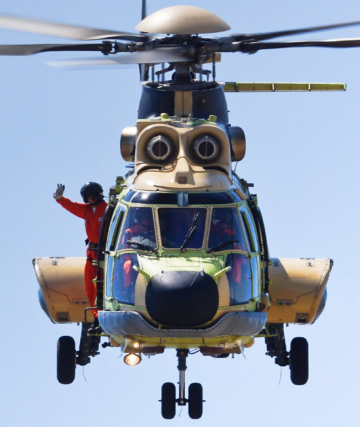
Even if Human performance has been studied from the very beginning in the aviation field history (Maurino et al. 2017; Wiener and Nagel, 1988), the studies and safety improvement were focused on the cockpit design (Wiener and Nagel, 1988; Horeman et al. 2015). In maintenance, HFE integration and consideration is more recent. Gruber et al., 2015, explain that HFE integration during the maintenance design process (maintainability) could increase the quality and the reliability of future maintenance activities, redu- cing the rate of mistakes/errors. In order to reduce the risk of errors, and also improve the work condition of maintenance operators, one of the solutions is to better understand the current feedback from customer daily activities. Airbus Helicopters launched a huge campaign of preventive Human Factor analysis in 2018 in cooperation with HeliOffshore (ref 16). In this frame- work, the most sensitive maintenance tasks for Human Factors on existing helicopters were studied to improve design, procedure, maintenance tools and training. These maintenance tasks mainly concern the dynamic systems identified as single load paths that do not tolerate maintenance errors: Main Rotors, Main Rotor Drives, Tail Rotor, Tail Rotor Drives and Rotor Flight Control. More particularly, we will focus our paper on the H225 program (Figure 1) that historically took part in the first HFE analysis. In this arti- cle, we will first present a brief background of Human Factors in aviation maintainability. Then we will describe the methodologies and tools used to assess Human Factor dimensions during the observation of sensitive mainte- nance tasks. Additionally, we will introduce the main results and outcomes
of all these analysis, all tasks analysed on H225. We will provide some safety recommendations and improvements in the design & maintenance procedure for future development.
STUDY CONTEXT Improving safety and safeguarding health remain major concerns of main- tainability studies among other criteria such as maintenance cost reduction for customers. These questions are all the more relevant regarding the stan- dards set for periodic maintenance tasks. Indeed, the ICAO (International Civil Aviation Organization) and ATA (Air Transport Association) define the standards which must be respected in order to increase availability while optimizing reliability, cost and maintainability (Dhillon and Liu, 2006; Flei- scher et al. 2006). According to the European standard EN 13303: 2010 “Maintenance and terminology of maintenance”, maintainability defines the “ability of a product to be maintained or repaired easily during maintenance operations that include functions for which it was designed”. This standard also specifies that the maintainability “can be quantified through appropriate measures or indicators” by expert design engineers in maintainability. Thus, in order to carry out objective and quantitative maintainability studies, design engineers use indicators as guidelines (De Leon et al. 2012; Berrah, 2002). More specifically, to assess Human Factors in maintenance, two existing methodologies were deployed in the Airbus Helicopters design office: Pre- liminary Ergonomics Assessment in Maintainability (PEAM) (Bernard et al. 2022) and Human Hazard Analysis (HHA) (Gill, 2019; Helioffshore, 2023). PEAM allows HFE integration in the aviation maintainability design office with regard to the health and safety of the maintenance operator perfor- ming activity on the helicopter. This methodology was developed following an industrial analysis and is designed according to three parts: (1) choosing the best simulation tool such as Virtual Reality, Augmented Reality, physi- cal mock-up, among others; (2) choosing the best HFE indicators such as cognitive workload, force or time duration, among others, and (3) choosing the measurement tools such as NASA TLX, Borg scale or clocking measure- ment (Bernard et al. 2022; Paquin and Bernard, 2022). The originality of the PEAM approach is its adaptation to each phase of the maintainability design process. Indeed, each simulation tool, in accordance with the work of Chite- scu et al., 2003 and Bernard et al. 2020, might have different efficiency levels depending on the design process phase. Therefore, a decision was made to distribute the simulation tools according to the design process phases. Once the best simulation tool is selected, PEAM provides a short HFE protocol to use it efficiently, according to the recommendations of Béguin et al. 1997 and Rabardel et al. 2014; which detail the implementation of structured and homogeneous protocols to ensure efficient simulations for a proper HFE analysis. When the maintenance task is performed and observed on simula- tion tool, some HFE indicators are assessed. PEAM approach is intended to be complete and adaptive to each simulation tool in order to study, if possi- ble, all the HFE dimensions (physical, cognitive and organizational) defined by The International Ergonomics Association. PEAM provides a result rating
Human Errors in Helicopter Maintenance 311
already understood by all design office stakeholders with a standard rating scale used in the maintainability analysis methodology & process (A to D, with A being fully compliant with HFE criteria and D being a problematic situation with regard to HFE criteria).
HHA is dedicated to the analysis of Human Errors. Initially, HHA was developed as a tool for managing human errors in fixed wing maintenance, operations and production. The developed methodology was used in a sli- ghtly modified form on Airbus aircraft programs. It has been specifically adapted for managing human errors in the field of aircraft and helicopter design, maintenance and operations. The adopted methodology takes tra- ditional aspects of the aircraft safety assessment process, particularly fault tree analysis, and couples them with a structured tabular notation called a human error modes and effects analysis (HEMEA). HEMEA provides data, obtained from the knowledge domain, in-service experience and known error modes, about likely human-factor events that could cause the critical failure modes identified in the fault tree analysis. In essence the fault tree identi- fies the failure modes, while the HEMEA shows what kind of human-factor events could trigger the relevant failure (Gill, 2019).
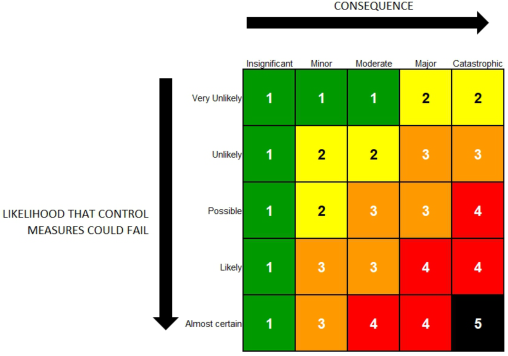
PEAM and HEMEA are used to complete a global risk matrix (Cox, 2008) dissociating the probability that the risk occurs, the impact for the operator and the impact for the helicopter in terms of airworthiness (e.g. Damage leading to a catastrophic situation). The risk matrix is detailed in Figure 2.
This matrix and global process were reviewed, with HeliOffshore acting as a neutral organization, to enhance operational safety in the Helicopter indu- stry and gathering actors such as operators and manufacturers. The use of this process and matrix is very efficient because it is adapted to the HFE non- specialists in the design office (composed mostly of design specialists with engineering & mechanical skills but without HFE skills and knowledge) (Ber- nard et al. 2019). The training on HFE in the design office facilitates better integration of and respect for the HFE recommendations coming from HFE analysis. The next paragraph will detail the method deployed to summarize the HFE analysis results.
Figure 2: Cox risk matrix (Cox, 2008).
OBSERVATION & RESULTS
Method
We followed all HFE analysis performed between 2018 and 2021 on the H225 helicopter, representing 88 maintenance tasks and 1057 risks and asso- ciated recommendations. For each main step of the HHA process, a working group was constituted as detailed hereafter:
HFE analysis: two HFE experts, 1 maintenance expert.
Maintenance error definition: two HFE experts, a maintenance expert and a Major Incident responsible.
Detailed recommendation: two HFE experts, a maintenance expert, and all design office stakeholders impacted by the recommendation.
RESULTS
In this context, in order to follow all HFE analysis and results, we built a database file to summarize and record the results. Errors and risks are defined using the literature (Graeber & Marx, 1993; Shanmugam & Robert, 2015). This literature details the main maintenance errors observed through some airlines and through the aviation accident analysis (fixed wing and helicopters combined). More than 150 maintenance tasks and accidents were studied over the literature reviewed. We propose in the next table 1 all categories of
Table 1. Categories of maintenance risks & errors.
Table available in the original PDF paper.
Code Categories Repartition (Over 1057 risks) (in %) Main Risks
22 Missing Aircraft parts
E1 Work at Height 12 Risk of falling E2 FOD (Foreign Object Debris) E3 Missing tools/protection E4 Incorrect assembly 5 Inappropriate action (part orientation & gesture) E5 Incorrect assembly (tightening torque) E6 Inappropriate action (sequence) E7 Number of operators 4 Inappropriate action E8 Damage prevention 5 Inappropriate action E9 Damage identification / Incorrect inspection
Table 2. Addressed recommendation according to the four type of categories.
Table available in the original PDF paper.
Code Recommendation E1 C1: Add paint marks on the helicopter to identify the area where the anchor points are authorized. C3: Add general documentation, with video, as a reminder of the work at height rules. C4: Reminder of the work at height rules during training. E2 C3: Specify that specific attention must be paid to FOD prevention, at the beginning of the work card. Reminder of the risk in the maintenance pro- cedure when the helicopter environment does not allow for storing of easily removed and new parts. The risk is all the greater as the physical and visual accessibility is degraded due to the general architecture and other elements set up in the work environment. C4: Reminder of the FOD risk, more particularly how to prevent it by improving work organization. E3 C3: Specify, at the end of the task, that all tools and protections installed for damage prevention must be carefully removed. Reminder of the risk in the maintenance procedure when the environment does not allow for easy sto- rage of maintenance tools. The risk is all the greater as the physical and visual accessibility is degraded due to the general architecture and other elements set up in the work environment. C4: Reminder of the FOD risk, more particularly how to prevent it by improving work organization. E4 C3: The work card must clearly specify and highlight the nature, number and position/orientation of all parts. Improve the detailed sequence and illustration (with a 3D illustration for example) to show the operator the best gestures and way of work to be adopted. Video can also added if the text cannot be improved. E5 C3: Add general documentation, with video, as a reminder of the tightening torque rules. C4: Reminder of the tightening torque rules during the training session. E6 C1: Improve the design to make the maintenance procedure simpler. For example, add paint marks with number on the part to indicate a sequence order to be followed carefully. C3: Improve the detailed sequence, by making the best order, with details to avoid any misunderstanding. If the task is long, breaks might be proposed at the strategic key points of the procedure, in order to ensure that the operators stays focused on their task. E7 C3: Add to the procedure the number of maintenance operators requested to perform the task or subtasks safely for the operator and to preserve architecture integrity. C4: Remind that for long, hard tasks (removal of heavy parts for example), several operators might be requested to avoid any error and injuries. E8 C1: Improve the design to reduce the risk of damage (for example, remove a fixed part installed on all helicopters, but used only to add an optional system, which is only requested by a few customers). C3: Add the need for temporary protection in the procedure, more parti- cularly if the accessibility is degraded with a risk of collision with sensitive parts. However, temporary protection might become a FOD risk. C4: Remind that all maintenance operator action can impact the helicopter architecture and global safety (of the operator, architecture integrity, and the flight).
Continued
Table 2. Continued.
Table available in the original PDF paper.
Code Recommendation E9 C3: In relation to the design office in charge of the maintained part, add the full inspection criteria. Add the measure to be performed and/or illustrations of damage to be detected, such as corrosion, deformation, etc. E10 C2: In relation to the design office in charge of the maintained part, an exi- sting measurement tool might be improved, or a new measurement tool might be developed. Additionally, when the visual and physical accessibility is very poor, a specific tool, such as a borescope, mirror, etc., might be proposed. C3: In relation to the design office in charge of the maintained part, add, in the procedure, the measurement tool to be used to clearly identify the damage. E11 C3: Specify in the procedure the reference to the existing standard practice and rules. E12 C3: The figure must be displayed from the operator’s point of view. E13 C3: The figure must be displayed in the applicable environment with surrounding elements. E14 C3: Add a note at the end of the task to recommend “independent inspe- ction”: Presence and position of all required visible parts. C4: Remind the student of the most sensitive task with the need for independent inspection at the task completion.
error initially anticipated and their repartition in percentage, over the 1057 determined risks.
The recommendation associated with each error was chosen thanks to a working group composed of various stakeholders of design offices and maintenance procedure department. These stakeholders are all impacted by the recommendations proposed at the end of the HFE analysis. The table 2 details all type of addressed recommendations, distributed in four categories:
C1: design change, to improve an existing design and make the maintena- nce tasks safer for operators.
C2: maintenance tool improvement to help operator to perform the task easily and in the most reliable way,
C3: maintenance procedure improvement (sequences, illustrations, etc.) might be proposed in relation to the Human Factors specialist from this department,
C4: Maintenance Training, to insist on the most common errors observed.
All these recommendations were selected as the best compromise, with regard to the ratio occurrence of the event and risks associated, impact cost on the industry to implement the recommendation.
DISCUSSION & CONCLUSION Categories of errors determined during the HFE analysis comply with the literature (Graeber & Marx, 1993; Shanmugam & Robert, 2015), making a similar observation. However, most of the literature is focused on the plane whereas our analysis is exclusively helicopter-oriented. This first analysis,
Human Errors in Helicopter Maintenance 315
performed on only one type of helicopter (Airbus Helicopters H225), shows that the most frequent risk is linked to incorrect inspection and FOD. All the associated recommendations affect one or more of the design, maintenance tool, procedure and training categories. The Maintainability department, per- forming the HFE analysis and addressing all the recommendations, works in close relationship with all other design office departments & maintenance procedure department. Indeed, the design engineers in the maintainability department interact and collaborate with other engineering (e.g. aerodyna- mic, hydraulic and electric integration, and architecture) departments and support disciplines, including aircraft maintenance procedures, to consider maintenance & HF criteria during design phases. This interaction could increase HFE culture within those departments and could effectively affect future maintenance activity. In our case of study, we only improved the situa- tion for one already certified & operated helicopter. In parallel, the industry is capitalizing on this work to directly implement the recommendations during the development of a new helicopter, through improved process & metho- dologies, rules & checklists and associated simulation tools. As detailed in the PEAM methodology in a previous section, simulation tools (Virtual rea- lity, augmented reality or physical Mock-Up for example) are already used to perform HFE analysis. It might be interesting to integrate the recommenda- tions within the methodology already in place during the design process to make HFE integration more efficient. However, the recommendations esta- blished in our study come from only one helicopter type, representing the heavy helicopter category only whereas light and medium categories exist, with different architectures and maintenance operations with different ope- rator usage & culture. To be exhaustive, the same kind of study should be performed on the other categories, firstly to ensure safety but also to con- tinue the capitalization on a wider helicopter type. In this context, since 2020, H175 & H160 helicopters have followed the same processes. In paral- lel, the maintainability department is systemically involved in major incident analysis with maintenance error root causes for the whole Airbus Helico- pters fleet. Therefore, in the near future, a deeper analysis will be performed to analyse the maintenance errors and associated recommendations coming from all helicopter types. Mainly, it should be interesting to statically analyse error repartition according to the helicopter area (main rotor, tail rotor, fli- ght control, hydraulic, suspension, etc.) and the type of helicopter. The same approach should be also used for the types of recommendations made during the analysis. This new study would improve the referential guideline for the design office and would help design stakeholders to better understand the future activity and risks for the maintenance operators.
REFERENCES
AFIM. (2004) French Association of Maintenance Engineers / Association française des ingénieurs et responsables de maintenance- santé et sécurité au travail : les métiers de la maintenance en première ligne. Guide nationale de la maintenance.
Béguin, P., & Weill-Fassina, A. (1997). De la simulation des situations de travail à la situation de simulation. La simulation en ergonomie: connaître, agir et interagir, 5–28. Bernard, F., Paquin, R., Devilliers G., Zare M. (2022). Methodology proposal to bet-
ter integrate Human Factors in aviation maintenance. Paper presented at Vertical Flight Society’s 78th Annual Forum and Technology Display. Dallas, USA. Bernard, F., Zare, M., Sagot, J. C., & Paquin, R. (2019). Integration of human factors into the design process of helicopter maintainability. Human Factors and Ergo- nomics in Manufacturing & Service Industries, 29(4), 350–360; 29: 350–360. https://doi.org/10.1002/hfm.20792 Bernard, F., Zare, M., Sagot, J. C., & Paquin, R. (2020). Using digital and physical
simulation to focus on human factors and ergonomics in aviation maintainabi- lity. Human factors, 62(1), 37–54. http://doi.org/10.1177/0018720819861496 Berrah, Lamia (2002). L’indicateur de performance: Concepts et Applications.
Cépadues-Editions. CEN/TC319. EN13306:2010, Maintenance-maintenance terminology. European Standard, Bruxelles 2010. Chitescu, C., Galland, S., Gomes, S., & Sagot, J. C. (2003). Virtual reality within a
human-centered design methodology. In 5th International Conference on Virtual Reality—Laval (pp. 99–104). Cox, L. A. Jr. (2008). What’s Wrong with Risk Matrices?. Risk Analysis, Vol. 28, No. 2. doi: 10.1111/j.1539–6924.2008.01030.x De Leon, P. M., Díaz, V. G. P., Martínez, L. B., & Marquez, A. C. (2012). A practical
method for the maintainability assessment in industrial devices using indicators and specific attributes. Reliability Engineering & System Safety, 100, 84–92. Dhillon, B. S., and Y. Liu (2006). Human error in maintenance: a review. Journal of Quality in Maintenance Engineering 12.1, 21–36. European Agency for Safety and Health at Work. (2010). Safe maintenance in
practice. Luxembourg: Publications Offices of the European Union. Fleischer, J., Weismann, U., & Niggeschmidt, S. (2006). Calculation and optimisation model for costs and effects of availability relevant service elements. Proceedings of LCE, 675–680. Gill, S. (2019). Use of human hazard analysis to enhance resilient performance of
helicopter maintenance systems. In REA Symposium on Resilience Engineering Embracing Resilience. Graeber, R. C., Marx, D. A (1993). Reducing human error in aircraft maintenance operations. In: Proceedings of the Flight Safety Foundation International Federa- tion of Airworthiness 46th Annual International Air Safety Seminar. Flight Safety Foundation, Arlington, VA, pp. 147–160. Gruber, M., De Leon, N., George, G., & Thompson, P. (2015). Managing by design.
Academy of Management Journal, 58(1), 1–7. Helioffshore (2021). Standardised Approach for Airframe Designers. Published online by Helioffshore. https://www.helioffshore.org/resources/human-hazard-an alysis Hobbs, A. N. (2000). Maintenance “error,” lessons from the BASI survey. Flight
Safety Australia, 4, 36–37. Horeman, T., Akhtar, K., & Tuijthof, G. J. (2015). Physical simulators. In M. Karahan, G. M. M. J. Kerkhoffs, P. Randelli, & G. Tuijthof (Eds.), Effective training of arthroscopic skills (pp. 57–69). Berlin, Germany: Springer.
Human Errors in Helicopter Maintenance 317
International Ergonomics Association. (2000). ≪What is ergonomics ≫, ≪IEA members ≫and ≪study programs. ≫Retrieved from https://www.iea.cc/index .php Maurino, D. E., Reason, J., Johnston, N., & Lee, R. B. (2017). Beyond avia-
tion human factors: Safety in high technology systems. New York, NY: Rou- tledge. McAtamney, L., & Corlett, E. N. (1993). Paquin, R., Bernard, F. (2022). Use of augmented reality for hybrid mock-up validation in aviation maintainability. Paper presented at 48th European Rotorcraft Forum, Zurich, Switzerland. Rabardel, P., Carlin, N., & Chesnais, M. (2014). Ergonomie: concepts et méthodes. Saleh, J. H., Tikayat Ray, A., Zhang, K. S., & Churchwell, J. S. (2019). Main-
tenance and inspection as risk factors in helicopter accidents: Analysis and recommendations. PloS one, 14(2), e0211424. Shanmugam, A., & Robert, T. P. (2015). Human factors engineering in aircraft maintenance: A review. Journal of Quality in Maintenance Engineering, 21(4), 478–505. https://doi.org/10.1108/JQME-05-2013-0030 Wiener, E. L., & Nagel, D. C. (Eds.). (1988). Human factors in aviation. Houston,
TX: Gulf Professional Publishing.
LISTED IN THE AHFE DIGITAL BOOKSTORE CATALOGUE
Explore the complete digital volume
Human Factors and Systems Interaction
Read this individual research paper free through the original publisher, or explore the full digital proceedings book.
ISBN 978-1-958651-60-5
Explore this ISBN in the AHFE Bookstore ↗Listed in the July 2026 bookstore catalogue; search by ISBN to confirm current availability · Digital book purchase optional