Eric Blake Jackson, Ingrid Pappel, Sadok Ben Yahia (2023). Transnational Innovation Networks, Population Aging and The Silver Economy: Challenges, Opportunities and the State of Play. In: Human Factors, Business Management and Society. AHFE Open Access, vol. 97, pp. 188–199. https://doi.org/10.54941/ahfe1003895
Globally, lower fertility rates combined with increased life expectancy and the transition of “baby boomers” toward retirement have contributed to an aging population in many societies. Ultimately, these demographic developments contain immense societal and economic implications for the public and private sectors. Subsequently, the term “Silver Economy” has been used to describe the delivery of products and services to older people, with a particular focus on leveraging Information Communication Technologies (ICTs) to improve the well-being of older citizens in multi-faceted domains: healthcare, the labor market, social care, mobility, housing, and many others. In an increasingly globalized knowledge economy, regional knowledge sharing, integration, and synergy can enable innovation in the Silver Economy and combat population aging. Transnational innovation networks (TINs) represent a pathway for achieving these goals. Although research exploring population aging, primarily from the EU, has grown in the literature over the past five years, there is a knowledge gap regarding transnational innovation approaches, platforms, and initiatives in the Silver Economy domain. Thus, this paper utilizes a literature review approach from a global perspective to survey the Silver Economy and population aging transnational innovation landscape. Our state-of-the-art review shows the importance of transnational knowledge flows enabled by TINs and subsequent innovations.
Some have posited population aging as our time’s most unprecedented demo- graphical challenge, impacting almost all facets of society and economic development (UN, 2020). Moreover, population aging is more acute in spe- cific regions and countries. In Japan, the Prime Minister recently commented that its rapidly aging society would cease to function if birthrates do not increase, requiring a new government organization to tackle the problem (The Guardian, 2023). In Europe, the demographic data shows one-third of Europeans will be over 65 by 2060 (European Commission, 2021), which has, and will have, immense structural implications socially, politically, and economically for the European Union.
Transnational Innovation Networks, Population Aging and the Silver Economy 189
The declining birth rates and longer life expectancy have urged nations and regions to respond through innovation and proactive policy approa- ches. Innovation spurs progress; it catalyzes novel products, services, and technologies that may be disruptive or incremental to the market. From a broader economic and political perspective, innovation enables indu- stries, regions, and nations to remain competitive in the global marketplace while fostering solutions to complex problems. Nevertheless, innovation has shifted from purely corporate impetus towards more transnational, collabo- rative local social networks (Walshok et al., 2012). Government funding for strong regional research universities combined with private sector capabili- ties and skillsets has produced strong innovation networks that span regions and even the world, impacting the global marketplace with new products, technologies, and services.
Concerning the global marketplace, the Silver Economy is a cross-cutting term, with an emphasis on innovation and the use of information com- munication technologies (ICTs), used to describe the socioeconomic impact population aging has on societies through the delivery and consumption of goods and services provided to those over the age of 50 (Earlenheim, 2021). In the EU, the projected economic output of the Silver Economy will reach 5.7 trillion dollars by the end of 2025, making it the third-largest economy in the world behind the US and China (European Commission, 2018).
As the silver economy and corresponding population aging challenges tran- scend borders, transforming knowledge, practices, technology, and human capital through transnational innovation networks (TINs) is one approach. Although TINs and cross-border knowledge-sharing are established research fields, their application to the silver economy is still lacking in the literature. This gap is due to research generally focusing on the “demand” side of the silver economy, with less focus on “supply” side dynamics (Laperche et al., 2018). This paper seeks to fill this research gap by conducting a state-of-the- art review mapping the linkages between transnational innovation networks, the Silver Economy, and population aging.
Subsequently, we pose the following RQs and objectives of the literature review: RQ1: In which contexts have previous research on TINs for popula- tion aging and the silver economy been presented in the literature? To answer RQ1, we identified, aggregated, and synthesized the following descriptive attributes from the literature: authors, research domain, regions, methods used, journals and conferences, and the study’s objective. RQ2: In the lite- rature, what types of TIN initiatives, pilots, or ICT-based solutions related to aging and the silver economy are present? To answer RQ2, we identified, aggregated, and synthesized recent literature describing initiatives, pilots, or ICT-based solutions facilitated, implemented, or designed by transnational innovation networks in the Silver Economy.
The paper is structured as follows: the next section describes transnati- onal innovation networks from a theoretical perspective. The second is the methodology summarizing the literature review procedures applied in this paper; the third section presents the literature review findings; the fourth is a discussion of the results; and lastly is the future work and conclusion.
TRANSNATIONAL INNOVATION NETWORK THEORY Innovation research focused on organizations in the 1980s, 90s, and early 2000s. (Washok et al., 2014). Nowadays, the framing of innovation litera- ture is through the lens of geographical regions. This geographical transition resulted in the recognition that innovation comprises social relations and stakeholder collaboration systematically. Subsequently, regional proximity is a primary factor in producing innovative outcomes between organizati- ons (Buzard et al., 2020). Familiarity and close regional connection “engen- ders trust, reduces transactions inefficiencies and information costs, and creates localized knowledge spillovers” (Calignano, 2021). On the other hand, the collaboration between international organizations from geograph- ically distant regions disrupts cognitive tunnel-vision and legacy approaches (Martin & Sunley, 2006). Different motivations exist between firms, star- tups, companies, research institutions, academics, and public sector agencies to form a TIN.
Washok et al. conceptualized this dynamic into four classifications. The first, Technology Sector Networks, are generally centered around global technology sectors and driven by private-sector firms, local businesses, deve- lopers, and investors who support local tech startups and other regional tech companies for penetrating other foreign markets. As the name implies, Identity-Based Social Networks view shared national or cultural heritage as a primary motivation for sharing knowledge, expertise, and job openings. Third, Civic and Philanthropically Enabled Networks, such as the Bill and Melinda Gates foundations, utilize their resources and capabilities to tackle various global challenges ranging from public health and entrepreneurship to social justice issues. The motivation is thus mainly altruistic and matches the principles or objectives of an organization.
Lastly, government Led Networks acknowledge that other geographi- cal regions have infrastructure or expertise worth leveraging for innovative outcomes. Government-led TINs have a close relationship with collabora- tive governance networks stemming from the New Public Governance theory. Traditionally, society views innovation as in the domain of the private sector. In contrast, the public sector sets appropriate market conditions for enabling innovation and growth. There has now been a paradigm shift where public innovation is a vehicle for introducing policy instruments, services, and pro- cedures that disrupt and, ideally, improve public governance (Sørensen and Torfing, 2018).
In this sense, policymakers view collaboration through private-public par- tnerships as more advantageous than silo-based decision-making for creating innovation that responds to population aging challenges. Subsequently, the public sector can implement different meta-governance mechanisms to for- malize these partnerships by designing collaborative formal or informal institutional spaces. The alignment of goals and strategic objectives via fina- ncial regulations, network facilitation, mediation, and fostering stakeholder participation combine to achieve public innovation and bring products to the market (Sørensen and Torfing, 2018).
Transnational Innovation Networks, Population Aging and the Silver Economy 191
Ultimately, TINs reflect different motivations, structures, and governance mechanisms to achieve various objectives in the Silver Economy and respond to challenges with population aging. The following subsection presents two real-life examples of TIN use cases in the literature.
Example Cases of TINs for Population Aging In Copenhagen, Cycling without Age was a local elderly care project a Danish social entrepreneur started in 2010. He recognized the limitations of nursing home residents’ mobility and proposed taking them on cycling trips down the street using a rickshaw, where he would listen to their life stories. The idea was popular with the residents and nursing home staff, so they applied for municipal funding. They then purchased other rickshaws on condition that the initiative created formalized infrastructure to support a local netw- ork of volunteers, social workers, caregiving institutions, and the elderly. Local National Associations for Cycling Without Age chapters were esta- blished, scaling the project to 52 countries as of 2021 (Cycling Without Age, 2021). Beyond improving quality of life and mobility, the initiative inspi- red new approaches for co-creating in the elderly care space in Denmark and worldwide (Sørensen and Torfing, 2018).
A more recent interregional example of an established Silver Economy TIN is the 2020 OSIRIS Baltic Sea Interreg Initiative. Institutionally, the initia- tive’s design involved research institutions, business incubators, companies, and public sector authorities from each Baltic state, Finland, and Denmark to form Smart Silver Labs (SSLs) in their respective country collaboratively. The objective was to share knowledge, practices, and expertise in digital tech- nologies and local Silver Economy conditions to help start-ups scale to new markets with innovative services and products. To unite the SSLs, an overa- rching Smart Silver Cluster was established to coordinate knowledge flows and outcomes. A digital collective intelligence platform, SilverHub.eu, was developed to facilitate OSIRIS transnational knowledge sharing and manage- ment between all stakeholders between the Smart Silver Cluster and platform users (Butt, 2022).
STATE-OF-THE-ART REVIEW METHODOLOGY In order to answer the research questions and objectives, the following search terms were used for title, abstract, and keyword search in both Scopus and Web of Science to identify the relevant state-of-the-art studies: (“transnatio- nal”OR “cross-border”OR “regional”OR “global”OR “international”OR “European”) AND (“innovation network”OR “collaborative network”OR “governance network” OR “public innovation”) AND (“silver economy” “elderly” OR “seniors” OR “aging” OR “population aging”). Due to the interdisciplinary nature of TINs and the cross-sectoral scope of the Silver Economy, we did not restrict our search to any particular field or region. The search included only relevant peer-reviewed English-language journal articles, conference proceedings, and books published between 2013-2023.
We deemed articles relevant if they met the above criteria and contained elements of leveraging transnational or cross-border networks for produ- cing innovative products, services, or policies for the older population. We extracted data through Excel spreadsheets and created meta-data and descri- ptive categories based on the research questions to simplify and organize the information more efficiently. Table 1 summarizes the descriptive attributes extracted from the studies for answering RQ, and Table 2 summarizes the attributes extracted for answering RQ2.
Our initial keyword-abstract-title search garnered 36 articles and books from Scopus and 40 from Web of Science. After removing duplicate studies, we conducted a thorough title and abstract screening to assess the articles’ relevancy within our given research questions and objectives. After this scre- ening and applying our relevancy criteria to both the Scopus and Web of Science results, 12 articles remained for synthesis and analysis.
Table 1. RQ1 state-of-the-art meta descriptive attributes.
Table available in the original PDF paper.
Attributes Description Article #, Author(s) Excel number and author names. Regions What regions are represented? Methods used What methods were used to collect data? Research field What research field or domain is the study conducted in? Journal or Conference Which journal or conference was the article published in? Study objective What was the purpose of the study?
Table 2. RQ2 state-of-the-art meta attributes.
Table available in the original PDF paper.
Attributes Description
What initiatives, pilots or solutions are presented in the study as a result of transnational innovation?
Initiatives, pilots, frameworks and solutions Type of transnational innovation network
Using Walshok et al.’s classifications, what type of TIN is presented?
SYNTHESIS AND ANALYSIS The first RQ of this review focuses on the descriptive attributes of the identified literature. The European-centricity of the literature reflects the geographical composition of the European Union as a Single Market. Most studies are from Europe or involve European stakeholders in some capacity (n = 7), followed by Asia (n = 3), global innovation networks (n = 2), and North America (n = 2). Although a small sample size, the dispersion of geo- graphic TINs and collaborative governance networks shows the global effects of population aging. The research domains can separate the composition of the journals. Most studies in the search (n = 9) were journal articles; the remaining were conference proceedings (n = 2), and we identified one book as relevant. Medicine was the primary research focus of the studies (n = 7).
Transnational Innovation Networks, Population Aging and the Silver Economy 193
Subsequently, medicine-based TIN studies appeared in the following medi- cal journals: Lancet Neurology, International Journal of Cardiology, AIDs Research and Theory, and Current Oncology.
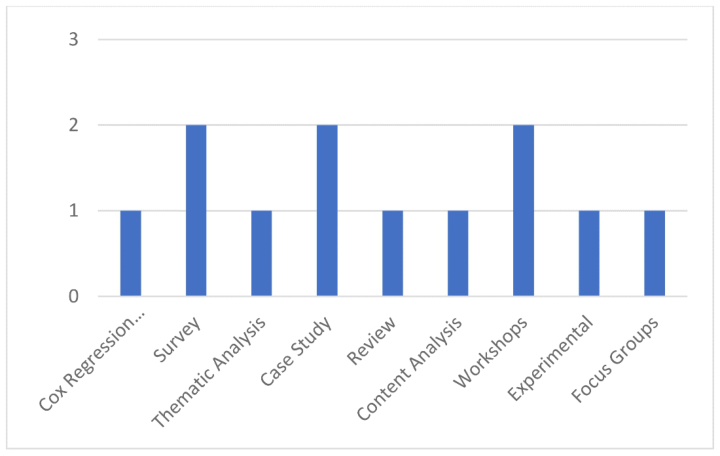
Researchers utilized surveys, thematic analysis, focus groups, and worksh- ops (See Figure 1) to investigate the human and social aspects of TINs, such as the cross-border challenges of establishing TINs and collaborative gover- nance network monitoring. Two studies implemented case study methods to present different use cases of TIN outputs related to population aging. Other studies focused on computer science (International Conference on eDemo- cracy and eGovernment and International Conference on Service Systems and Service Management) and public administration (Asia Pacific Journal of Public Administration). We classified the remaining research domains as “aging as a science,” with publications appearing in the Journal of Age and Ageing, Clinical Interventions in Aging, Open Longevity Science, and one book chapter appearing in Aging: From Fundamental Biology to Societal Impact. The methods implemented in the identified studies (See Figure 1) had high variance, and almost all were qualitative-based.
The review found various objectives (See Table 3) for leveraging TINs to combat population aging challenges. First is the challenge of monitoring TINs and collaborative governance networks from a developing region context (Teter, 2019), understanding cross-border barriers to establishing a TIN for senior care (Cao and Fang, 2019), and investigating the lack of regional coor- dination for healthy aging in the ASEAN (Pin et al., 2013). All three of these studies were from the Asian region. A second common objective is sharing experiences. These experiences range from reports of a European transna- tional healthy aging innovation network (Ilario, 2017) (Marva, 2023) to
Figure 1: Methods present from the state-of-the-art review.Table 3. RQ1 state-of-the-art meta attributes.
Table available in the original PDF paper.
# Authors Study Objective 1 Best et al. (2021) Develop imaging-based risk scores for stroke patients 2 Butt et al. (2021) Functionality elicitation for collaborative digital platform 3 Cao and Fang (2019) Focuses on the welfare portability of existing policies on cross-border eldercare services employed by Hong Kong and Macao 4 Ilario et al. (2017) Presents the results and experiences of EIP on AHA in Italy 5 Lassus et al. (2013) Evaluates the incremental value of plasma biomarkers to traditional clinical variables for risk stratification of 30-day and one-year mortality in acutely decompensated heart failure (ADHF) 6 Malva et al. (2023) Introduce regional collaborative innovation networks for EIP on AHA 7 O’Brien et al. (2020) Identify research priorities for people aging with HIV 8 Pin et al. (2013) Identify challenges and approaches to aging in the ASEAN region 9 Puts et al. (2016) review the present landscape of education, clinical care, and research in the area of cancer and aging in Canada through transnational collaboration 10 Reis et al. (2019) Develop a transnational toolkit for rapid and informal assessment of healthy lifestyles 11 Teter (2020) Identify challenges for monitoring collaborative governance networks 12 Van Der Cammen et al. (2017)
Understand design thinking and inclusive engineering methods for seniors
designing fall prevention devices for seniors (Van Der Cammen et al., 2017). Third is leveraging transnational knowledge sharing for producing medical innovations (Best et al., 2021) (Lassus et al., 2013) and novel strategies for approaching cancer (Puts et al., 2017), HIV treatment (O’Brien et al., 2020), and healthy aging for older people (Reis et al. 2019). Fourth is eliciting requi- rements for a digital collaboration platform for the Silver Economy (Butt et al., 2021).
The second RQ sets the framework for analyzing the content of the identified studies. We focused on a mixture of study outputs: initiatives, fra- meworks, pilots, and solutions targeting population aging challenges and the silver economy (See Table 4). Furthermore, we applied Walshok et al.’s TIN typology to identify the type of TIN presented in the studies. Based on our search results, the outputs from the Asian regional studies are generally more conceptual than in Europe and North America due to a lack of regio- nal coordination. Cao and Fang (2019) provide a potential network model for cross-border elder care between Macao and Hong Kong government age- ncies. Similarly, Teter (2020) presents a collaborative governance monitoring framework in the context of the ASEAN region, while Pin et al. (2013) iden- tified the need to establish a regional consortium and collaboration network for ASEAN to combat aging challenges.
Transnational Innovation Networks, Population Aging and the Silver Economy 195
Table 4. RQ2 state-of-the-art meta attributes.
Table available in the original PDF paper.
# Authors Initiatives, pilots, frameworks and solutions
Type of TIN (Warnock et. al) Civic and Philanthropic
1 Best et al. (2021) Microbleeds International Collaborative Network
Government-led
2 Butt et al. (2021) Silverhub.eu Government-led 3 Cao and Fang (2019) Network model of cross-border elder care between Macao and Hong Kong Government-led 4 Ilario et al. (2017) European Innovation Partnership on Active and Healthy Aging
Civic and Philanthropic
5 Lassus et al. (2013) Identified biomarkers that have prognostic value to clinical risk markers
Government-led
6 Malva et al. (2023) European Innovation Partnership on Active and Healthy Aging
Civic and Philanthropic
7 O’Brien et al. (2020) Framework of Research Priorities in HIV, Aging and Rehabilitation Government-led 8 Pin et al. (2013) Future establishment of a regional consortium/collaboration network
Civic and Philanthropic
9 Puts et al. (2017) Canadian collaborative transnational research network between investigators to improve health outcomes for older adults with cancer Government-led 10 Reis et al. (2019) Healthy lifestyle assessment Toolkit
Government-led 11 Teter (2020) Better monitoring practices for collaborative governance networks in a development context
ProFouND Government-led
12 Van Der Cammen et al. (2017)
Transnational knowledge flows in the health domain are critical drivers for producing innovations for older people. The accessibility of data sources contained in TINs, particularly in medicine, represents a highly valuable innovation enhancer. Puts et al. (2017) established a transnational research network among cancer specialists in the US, France, and Canada to exchange best practices. The result was a framework for improving health outcomes for older adults with cancer in Canada. Similarly, the byproduct of transna- tional knowledge sharing by HIV researchers from North America, Europe, and Australia was the creation of a holistic framework identifying the pri- orities of helping people age with HIV (O’Brien et al. 2020). Best et al. (2021) pooled data from 38 hospitals and 18 countries via the Microbleeds International Collaborative Network to create a novel imaging-based risk
Table 5. RQ2 state-of-the-art meta attributes.
Table available in the original PDF paper.
# Authors Initiatives, pilots, frameworks and solutions
Type of TIN (Warnock et. al) Civic and Philanthropic
1 Best et al. (2021) Microbleeds International Collaborative Network
Government-led
2 Butt et al. (2021) Silverhub.eu Government-led 3 Cao and Fang (2019) Network model of cross-border elder care between Macao and Hong Kong Government-led 4 Ilario et al. (2017) European Innovation Partnership on Active and Healthy Aging
Civic and Philanthropic
5 Lassus et al. (2013) Identified biomarkers that have prognostic value to clinical risk markers
Government-led
6 Malva et al. (2023) European Innovation Partnership on Active and Healthy Aging
Civic and Philanthropic
7 O’Brien et al. (2020) Framework of Research Priorities in HIV, Aging and Rehabilitation Government-led 8 Pin et al. (2013) Future establishment of a regional consortium/collaboration network
Civic and Philanthropic
9 Puts et al. (2017) Canadian collaborative transnational research network between investigators to improve health outcomes for older adults with cancer Government-led 10 Reis et al. (2019) Healthy lifestyle assessment Toolkit
Government-led 11 Teter (2020) Better monitoring practices for collaborative governance networks in a development context
ProFouND Government-led
12 Van Der Cammen et al. (2017)
score for stroke patients. Using an international collaborative network to evaluate plasma biomarkers, Lassus et al. (2013) obtained individual data from 5306 patients. Reis et al. (2019) developed a user-friendly transnatio- nal toolkit through the Healthy Lifestyle Innovative Quarters for Cities and Citizens (HeaLIQs4cities) TIN. The toolkit provides an informal assessment mechanism of eight well-being components of healthy aging.
One TIN that appeared in two studies was The European Innovation Par- tnership on Active and Healthy Aging. This TIN is a cornerstone facilitator in the European context for cocreating transnational solutions for innovation and healthy aging. From a Silver Economy perspective, Van Der Cammen (2017) presented the design of several products through the Prevention of Falls Network for Dissemination (ProFouND). This TIN focuses on inclusive
Transnational Innovation Networks, Population Aging and the Silver Economy 197
designs for fall prevention ICT solutions. One Silver Economy ICT solution presented in the literature was the SilverHub described in the previous section on TIN examples (Butt et al. 2021). Almost all TINs or collaborative gover- nance networks presented in the literature have some type of government funding or stakeholder participation. Thus, TINs in this aging context have hybrid elements of civic, government, and philanthropic objectives. Howe- ver, we deemed medical-based TINs as more civic and philanthropically-led. Given that the current makeup of TINs is complex, refined classifications for TINs may be neccessary.
CONCLUSION AND FUTURE WORK In conclusion, this state-of-the-art literature reviewed in this paper highlights the importance of TINs in addressing the challenges of population aging. The aging of populations in many countries is an issue that requires innova- tive solutions, and TINs can facilitate the exchange of knowledge and ideas that are critical in developing effective frameworks, approaches, and pro- ducts. By collaborating across borders, these networks can create a more comprehensive understanding of the issues at hand and develop innovative solutions to improve the quality of life for aging populations. The literature also underscores the need for policymakers to recognize the value of such networks and provide the necessary support to foster their growth and effe- ctiveness. Overall, this literature review demonstrates the significant potential of TINs in addressing the challenges of population aging and highlights the importance of further research in this area. Future work entails creating a holistic, integrative framework for TIN ecosystems concerning population aging challenges.
REFERENCES
Best, J. G., Ambler, G., Wilson, D., Lee, K. J., Lim, J. S., Shiozawa, M., Koga, M., Li, L., Lovelock, C., Chabriat, H. and Hennerici, M., 2021. Development of imaging- based risk scores for prediction of intracranial haemorrhage and ischaemic stroke in patients taking antithrombotic therapy after ischaemic stroke or transient isch- aemic attack: a pooled analysis of individual patient data from cohort studies. The Lancet Neurology, 20(4), pp. 294–303. Butt, S. A., Rava, K., Kangilaski, T., Pappel, I. and Draheim, D., 2021, July. Desi-
gning A Digital Collaborative Platform for the Silver Economy: Inception and Conceptualization. In 2021 Eighth International Conference on eDemocracy & eGovernment (ICEDEG) (pp. 47–54). IEEE. Buzard, K., Carlino, G. A., Hunt, R. M., Carr, J. K., & Smith, T. E. (2020). Localized knowledge spillovers: Evidence from the spatial clustering of R&D labs and patent citations. Regional Science and Urban Economics, 81, 103490. https://doi.org/10. 1016/j.regsciurbeco.2019.103490 Calignano, G., 2022. Not all peripheries are the same: The importance of rela-
tive regional innovativeness in transnational innovation networks. Growth and Change, 53(1), pp. 276–312. Cao, J. and Fang, H., 2019, July. Study on the welfare portability of cross-border eldercare services in Guangdong-Hong Kong-Macao Greater Bay Area. In 2019 16th
International Conference on Service Systems and Service Management (ICSSSM) (pp. 1–6). IEEE. Erlenheim, R. and Pappel, I., 2022, April. The Role of Service Design in Increasing Regional Innovation in the Silver Economy. In Electronic Governance and Open Society: Challenges in Eurasia: 8th International Conference, EGOSE 2021, Saint Petersburg, Russia, November 24–25, 2021, Proceedings (pp. 11–20). Cham: Springer International Publishing. European Commission. (2015). Silver Economy Study: How to Stimulate the Economy for Hundreds of Millions of Euros per Year. Retrie- ved from https://digital-strategy.ec.europa.eu/en/library/silver-economy-study-ho w-stimulate-economy-hundreds-millions-euros-year. Illario, M., De Luca, V., Tramontano, G., Menditto, E., Iaccarino, G., Bertorello,
L., Palummeri, E., Romano, V., Moda, G., Maggio, M. and Barbolini, M., 2017. The Italian reference sites of the European innovation partnership on active and healthy ageing: Progetto Mattone Internazionale as an enabling factor. Annali dell’Istituto superiore di sanita, 53(1), pp. 60–69. Laperche, B., Boutillier, S., Djellal, F., Ingham, M., Liu, Z., Picard, F., Reboud, S., Tanguy, C., & Uzunidis, D. (2018). Innovating for elderly people: The develo- pment of geront’innovations in the French silver economy. Technology Analysis & Strategic Management, 31(4), 462-476. doi: 10.1080/09537325.2018.1520975. Lassus, J., Gayat, E., Mueller, C., Peacock, W. F., Spinar, J., Harjola, V. P., van
Kimmenade, R., Pathak, A., Mueller, T., Metra, M. and Pascual-Figal, D., 2013. Incremental value of biomarkers to clinical variables for mortality prediction in acutely decompensated heart failure: the Multinational Observational Cohort on Acute Heart Failure (MOCA) study. International journal of cardiology, 168(3), pp. 2186–2194. Malva, J. O., Bultje, D., Traver-Salcedo, V., Carriazo, A. M., Illario, M., De Luca, V., Wozniak, L. A., Bousquet, J., Guldemond, N., Costa, I. and Canhão, H., 2023. Flagship initiatives for healthy living and active aging in Europe: the European Innovation Partnership on Active and Healthy Ageing and the Reference Sites. In Aging (pp. 31–47). Academic Press. Martin, R., & Sunley, P. (2006). Path dependence and regional economic evolution.
Journal of Economic Geography, 6(4), 395–437. https://doi.org/10.1093/jeg/lb l012 O’Brien, K. K., Ibáñez-Carrasco, F., Solomon, P., Harding, R., Brown, D., Ahluwalia, P., Chan Carusone, S., Baxter, L., Emlet, C., Restall, G. and Casey, A., 2020. Research priorities for rehabilitation and aging with HIV: a framework from the Canada-International HIV and Rehabilitation Research Collaborative (CIHRRC). AIDS research and therapy, 17(1), pp. 1–13. Pin, N. T., Muthuswamy, B., Michael, F., Richard, H., Maria Sofia, A. and
Seng Cheong, L., 2013. Research and policy to achieve healthy aging in Asia: Recommendations from an expert workshop. Open Longevity Science, 7(1). Puts, M. T., Hsu, T., Szumacher, E., Sattar, S., Toubasi, S., Rosario, C., Brain, E., Duggleby, W., Mariano, C., Mohile, S. and Muss, H., 2017. Meeting the needs of the aging population: The Canadian Network on Aging and Cancer—report on the first Network meeting, 27 April 2016. Current Oncology, 24(2), pp. 163–170. Reis, F., Sá-Moura, B., Guardado, D., Couceiro, P., Catarino, L., Mota-Pinto, A.,
Veríssimo, M. T., Teixeira, A. M., Ferreira, P. L., Lima, M. P. and Palavra, F., 2019. Development of a healthy lifestyle assessment toolkit for the general public. Frontiers in medicine, 6, p. 134.
Transnational Innovation Networks, Population Aging and the Silver Economy 199
Sørensen, E. and Torfing, J., 2017. Metagoverning collaborative innovation in governance networks. The American Review of Public Administration, 47(7), pp. 826–839. Teter, W., 2020. Fostering problem driven collaboration in a development context:
The ASEAN study of health workforce governance. Asia Pacific Journal of Public Administration, 42(2), pp. 89–110. The Guardian. (2023, January 23). Japan’s ageing population poses urgent risk to society, says PM. Retrieved from https://www.theguardian.com/world/2023/jan/ 23/japans-ageing-population-poses-urgent-risk-to-society-says-pm. Van der Cammen, T. J., Albayrak, A., Voûte, E. and Molenbroek, J. F., 2017. New
horizons in design for autonomous ageing. Age and ageing, 46(1), pp. 11–17. Walshok, M. L., Shapiro, J. D. and Owens, N., 2014. Transnational innovation networks aren’t all created equal: Towards a classification system. The Journal of Technology Transfer, 39, pp. 345–357.
LISTED IN THE AHFE DIGITAL BOOKSTORE CATALOGUE
Explore the complete digital volume
Human Factors, Business Management and Society
Read this individual research paper free through the original publisher, or explore the full digital proceedings book.
ISBN 978-1-958651-73-5
Explore this ISBN in the AHFE Bookstore ↗Listed in the July 2026 bookstore catalogue; search by ISBN to confirm current availability · Digital book purchase optional