Ephraim Suhir, Inna Bedny (2023). Probabilistic Analytical Modelling in Some Critical Human-in-the Loop (HITL) Problems, Its Role, Significance, Attributes and Challenges. In: Neuroergonomics and Cognitive Engineering. AHFE Open Access, vol. 102, pp. 28–38. https://doi.org/10.54941/ahfe1003002
Improvements in ergonomics engineering can be achieved through better work environment and other traditional efforts that directly affect human behaviors and performance. There is also a significant potential, however, for the improvement in ergonomics engineering tasks and problems through better understanding the role that various uncertainties play in the planner’s and operator’s worlds of work, when never-perfect human, never failure-free equipment and instrumentation, never hundred-percent-predictable response of the object of control (such as, say, car, train, or air- and spacecraft), and uncertain-and-often-harsh environments that contribute jointly to the never-zero likelihood of a mishap. By employing quantifiable and measurable ways of assessing the role and significance of such uncertainties and treating a human-in-the-loop (HITL) as a part, often the most crucial part, of a complex man-instrumentation-object-of-control system, one could improve dramatically the state-of-the-art in assuring success and safety of an ergonomics system. This can be done by predicting, quantifying and, if necessary, even specifying an adequate probability of a possible mishap. Nothing and nobody are perfect, of course, and the difference between a highly reliable ergonomics object, product, performance or a mission and an insufficiently reliable one is “merely” in the level of the never-zero probability of failure. Application of the probabilistic predictive modeling (PPM) concept provides a natural and an effective means for reduction failures. This is not the current practice though. The application of the PPM concept can improve the state-of-the-art in understanding and accounting for the human performance in a particular ergonomics undertaking. While the traditional statistical human-factor-oriented approaches are typically based on experimentations followed by statistical analyses, the PPM concept is based on, and starts with, physically meaningful and flexible probabilistic predictive modelling followed by highly focused and highly cost-effective experimentations geared to the chosen governing model(s). The PPT concept enables quantifying, on the probabilistic basis, the outcome of a particular HITL related ergonomics effort, situation or a mission. If the predicted outcome, in terms of the most likely probability of the operational failure, is not favorable enough, then an appropriate sensitivity analysis (SA) based on the developed and available algorithms can be effectively conducted to improve the situation. There are quite a few publications of the authors on the theme of the suggested presentation.The Systemic Structural Activity Theory (SSAT) is another tool that allows to analyze human performance and predict the probability of successful outcome not by just analyzing the existing software or equipment but to do it at the design stage. Application of SSAT improves efficiency and productivity and saves resources by making the design flows apparent at the early stages of the process.
INTRODUCTION: MOTIVATION AND BACKGROUND There is a significant potential for improvements in EE tasks and pro- blems through better understanding, through effective PPM, the role that various uncertainties play in the planner’s and operator’s worlds of work, when never-perfect human, never failure-free equipment and instrumenta- tion, never 100%-predictable response of the object of control (such as, e.g., a robot, a car, a railroad train, a marine vehicle, or an air- and space-craft) and uncertain-and-harsh environments contribute jointly to the outcome of a
critical HITL undertaking. In effect, the difference between a reliable human, system, object, product or a mission and an unreliable one is “merely”the dif- ference in the levels of their never-zero probabilities of failure. By developing and employing measurable and quantifiable ways of assessing the roles and significances of various critical uncertainties and treating a HITL as a part, often the most crucial part, of a complex human-instrumentation-object-of- control system and its interfaces one could assess and possibly assure the success and safety of an EE undertaking of importance, thereby improving dramatically the state-of-the-art in the EE field. The traditional, HF oriented, EE approaches are typically based on experimentations followed by stati- stical analyses. The probabilistic approach, based, first of all, on the PPM, facilitates, by providing prior quantitative assessments, a much better under- standing of the needs, attributes, challenges and results of integration human capabilities (cognitive/mental, physical, sensory, team dynamics, etc.) with a particular system. The ultimate goal of the HSI is, as is known, to optimize total system performance, including costs. Situations, in which the perfor- mance of the HITL and of the equipment/instrumentation contribute jointly to the outcome of a critical undertaking were addressed by Cosmides and Tooby, 1996; Gilovich, Griffin and Kahneman, 2002; Kahneman and Fre- derick, 2002, and, recently, by Suhir, Scataglini, and Paul, 2020; Suhir, Paul and Kaindl, 2020; Suhir and Paul, 2021; Suhir, 2021d; Suhir, Karwowski and Bedny, 2021. The primary HFE concern is the need for an in-depth understan- ding of the ergonomics and physics of possible failure, as well as the effective integration of the HF with the system’s attributes. This need drove hundreds of suggestions on how to improve possible HITL designs and operations. It has been recognized, particularly, that no essential progress is possible, if the considered measures and their effects are not quantified. This is true, generally speaking, for any engineering undertaking, not only those in the HFE domain (see, e.g., Watson, 2000; Paley, 2005; Chung, Rabe-Hesketh, Dorie, Gelman, and Liu, 2013; Vukovic and Lesaux, 2013; Suhir, 2015, 2017b, 2018a, b, 2019g, 2020b, c, e, 2021a, b, c, 2022a; Weixler, Som- merhoff and Ufer, 2019; Niss and Blum, 2020). Efforts were concentrated on maximizing the overall human-system performance through improvements in human MWL, but considering also the level of the HCF (see, e.g., Suhir, 2019f): it is the quantified HCF-to-MWL ratio, deterministic or random, that could be viewed as a suitable quantified characteristic of the ease of main- tenance, personnel safety, cost effectiveness and prevention of injuries and fatalities in an EE system of importance. This paper addresses, first of all, the significance, role, attributes and challenges in the probabilistic, “prior”, analytical (“mathematical”) modelling (see, e.g., Kahneman and Tversky, 1972, 1979; Tversky and Kahneman, 1974, 1983; Kahneman, Slovic and Tversky, 1982; Gigerenzer, Swijtink, Poster, Daston, Beatty and Krueger, 1989; Reeves and Lockhart, 1993; Liu, Lo and Wu, 1996; Fischbein and Sch- narch,1997; Suhir, 1997a,b, 2014a, 2016, 2017a; Macchi, 2000; Budgett, Pfankuch and Franklin, 2016; Reani, Davies, Peek and Jay, 2019) in some critical HITL tasks and problems, rather than statistical, “posterior”, evalu- ations (see, e.g. Hoffrage, Lindsey, Hertwig and Gigerenzer, 2000; Rastfeld, 2004; Brase, Fiddick, and Harris, 2006; Brase, 2014; Buehner and Ziegler,
30 Suhir and Bedny
2017; Bruckmaier, Binder, Krauss and Kufner, 2019), including the s.c. Baye- sian statistics (see, e.g., Chapman and Liu, 2009 and Suhir, 2014c). Here are several areas, in which PPD has been employed:1) probabilistic model- ling in engineering and applied science in general (see, e.g., Augusti, Baratta and Cascati, 1984; Hatchison, 1985; Suhir, 1974, 1997a,b; 2010;2019a,b; Bolotin, 1985); 2)medical applications (see, e.g., Eddy, 1982; Galestic, Gige- renzer and Straubinger, 2009; Garcia-Retamero and Hoffrage, 2013; Pighin, Gonzales, Salvadori and Girotto, 2016; Operskalski and Barbey, 2016; Suhir and Yi, 2017; McDowell, Galesic and Gigerenzer, 2018; Suhir, 2022a; Suhir and Bedny, 2022, 2022a); 3)aerospace applications (see, e.g., Suhir, 2009b, 2011, 2012a,b, 2019d,e, 2021e; Suhir and Mogford, 2011; Salotti and Suhir, 2014; Suhir, Bey, Lini, Salotti, Hourier, Claverie, 2014); 4) automated dri- ving applications (see, e.g., Suhir and Paul, 2020, 2022; Suhir, Scataglini and Paul, 2021; Suhir, 2022b); 5)application of the multi-parametric Boltzmann- Arrgenius-Zhurkov (BAZ) constitutive model (Suhir and Kang, 2013; Suhir 2020a); 6) role of trust (Suhir, 2019c; Suhir, Scataglini and Paul, 2021).
EXSAMPLES Medical/Aerospace Application
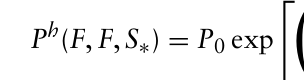
Let us address, as a suitable example of medical application of the PPM, pro- babilistic HSI in aerospace engineering, or, specifically, navigator’s (aircraft pilot’s or astronaut’s or even a train machinist or a car driver) performance vs. his/hers HCF, considering his/her state-of-health (SoH). The following double-exponential-probability distribution function (DEPDF) for the pro- bability of HnF, when performing in a mission of importance, or when encountering an off-normal situation, is suggested (see details in Suhir, 2021e):
!
!#
"
exp
.
1 −γTT∗−F2
1 −γSS∗t −G2
Equation reproduced from the original PDF.
G2
F2
0
0
This function enables evaluating the impact of three major factors, the MWL G the HCF F, and the progressed time t (possibly affecting the navi- gator’s performance, such as, e.g., the likelihood to make a mistake, and sometimes even his/hers health), on the probability of the HnF. Here P0 is the initial probability (t = 0) and at a normal (sufficiently low) level of the MWL (G = G0), S∗is the threshold (acceptable level) of the (supposedly con- tinuously monitored/measured, cumulative, effective, indicative, and possibly even multi-parametric) human health (“medical”) characteristic, such as, e.g., body temperature, arterial blood pressure, oxyhaemo-metric determination of the level of saturation of blood haemoglobin with oxygen, electrocardio- gram measurements, pulse frequency and fullness, frequency of respiration, measurement of skin resistance that reflects skin covering with sweat, etc. etc. (since the time t and the threshold S∗enter the above governing expres- sion as a product S∗t each of these parameters has a similar cumulative impact on the sought probability); γS is the sensitivity factor for the sym- ptom S∗; G ≥G0 is the actual (elevated, off-normal, extraordinary, possibly
Probabilistic Analytical Modelling 31
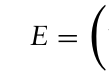
even time-dependent) MWL; G0 is the MWL at ordinary (normal) operation conditions; T∗is the mean time to error/failure (MTTF); γT is the sensitivity factor for this time; F ≥F0 is the actual (could be off-normal) HCF exhibited or required in a particular condition/situation of importance; F0 is the most likely (normal, specified, ordinary) HCF. There is a certain overlap between the levels of the HCF F and the MTTF T∗value, which has also to do with the human quality and performance. The difference is that T∗is a short- term characteristic of the navigator’s performance that might be affected, first of all, by his/hers personality and vulnerability to various influences, while the HCF is a long-term characteristic of the HITL, such as his/hers age, education, experience, ability to think and act independently and under pressure, and, if necessary, as a team player, etc. etc. The MTTF T∗might be determined for the given individual by using a highly focused failure-oriented- accelerated-testing (FOAT) on a flight simulator (Suhir, 2019b), whatever the appropriate definition of failure in such testing might be, while the HCF F, which should also be quantified, cannot obviously be evaluated experimen- tally and should be quantified using a specially designed methodology. It is noteworthy also that while the P0 value is defined as the probability of the HnF at a very low MWL level G, it could be determined and evaluated also as the probability of the HnFfor a hypothetical situation, when the HCF F is extraordinarily high, i.e., for a navigator who is exceptionally highly qualified (like, say, Captain “Sully” in the famous “miracle-on-the-Hudson” event (Suhir 2012a), while the MWL G is still finite, and so is the operation time t. The suggested governing DEPDF function has a nice symmetric form. Indeed, it reflects the roles of the “objective”, “external”, MWL+SoH impact
Equation reproduced from the original PDF.
, as well as of the “subjective”, “internal”, HCF+HE
1 −γSS∗t −G2 G2
0
impacts + =
.
1 −γTT∗−F2 F2
0
Here is the rationale below the structures of these expressions. The level of the MWL could be affected by the human’s state-of-health (SoH): the naviga- tor might experience a higher MWL, which is not only different for different individuals, but might be quite different for the same individual, depending on his/hers current, short-term, SoH, while his/hers HCF, although could also be influenced by the state of his/hers SoH, affects the probability of the HnF indirectly. In our approach the impact of the SoH could be measured/qu- antified by the navigator’s mean-time-to-error (MTTE) T∗, since the human error (HE) is, in effect, a failure in his/hers otherwise error-free performance process, is it not? When the human’s qualification is high, the likelihood of an error is most likely low, regardless of how harsh the external conditions are. Thus, in our model the “external” factor E=MWL+SoHis a more or less short-term characteristic of the human performance, while the “inter- nal” factor I=HCF+HE is a more permanent, a long-term characteristic of the navigator’s HCF. It is also noteworthy that the human’s mind (reflected by his/hers MWL) and his/her body’s SoH are closely linked, that such link is different for different individuals, and that is at present far from being well defined and more or less clearly understood. The suggested formalism is, of
32 Suhir and Bedny
course, just a possible and a highly tentative way to account for such a link. Difficulties may arise in some particular occasions when the MWL and the SoH factors overlap. It is anticipated therefore that the MWL impact in the suggested formalism considers, to an extent possible, various more or less most important influences other than the direct SoH related one.
HCF, unlike MWL, is, as is known, a relatively new notion in EE (Suhir, 2019g). HCF plays with respect to the MWL approximately the same role as strength/capacity plays with respect to stress/demand in structural analysis and in some economics problems. HCF includes, but might not be limited to, the following major qualities that would enable a professional human to successfully cope with an elevated off-normal MWL: age; fitness; health; personality type; psychological suitability for a particular task; professional experience and qualifications; education, both special and general; relevant capabilities and skills; level, quality and timeliness of training; performance sustainability (consistency, predictability); independent thinking and inde- pendent acting, when necessary; ability to concentrate; awareness and ability to anticipate; ability to withstand fatigue; self-control and ability to act in cold blood in hazardous and even life threatening situations; mature (reali- stic) thinking; ability to operate effectively under pressure, and particularly under time pressure; leadership ability; ability to operate effectively, when necessary, in a tireless fashion, for a long period of time (tolerance to stress); ability to act effectively under time pressure and make well substantiated decisions in a short period of time and in an uncertain environmental con- ditions; team-player attitude, when necessary; swiftness in reaction, when necessary; adequate trust (in humans, technologies, equipment); ability to maintain the optimal level of physiological arousal. These and other qualities are certainly of different importance in different human-in-the-loop (HITL) situations. It is clear also that different individuals possess these qualities in different degrees. Long-term HCF could be time-dependent.
To come up with suitable figures-of-merit (FoM) for the HCF, one could rank, similarly to the MWL estimates, the above and perhaps other qualities on the scale from, say, one to ten, and calculate the average FoM for each indi- vidual and particular task. Clearly, MWL and HCF measurements should use the same units, which could be particularly non-dimensional. Special psych- ological tests might be necessary to develop and conduct to establish the level of these qualities for the individuals of significance. The importance of con- sidering the relative levels of the MWL and the HCF in human-in-the-loop problems has been addressed and discussed in several earlier publications of the first author and is beyond the scope of this analysis.
In connection with the taken approach it is noteworthy also that not every model needs prior or even posterior experimental validation. In the author’s view, the structure of our governing model does not. Just the oppo- site: this model should be used as the basis of the FOAT to establish the MWL, HCF, and the levels of HE through the corresponding observed and recorded MTTF and his/hers SoH at normal operation conditions and for a navigator with regular skills and of ordinary capacity. These experiments could be conducted, e.g., on different flight simulators and on the basis of
Probabilistic Analytical Modelling 33
specially developed testing methodologies. Being a probabilistic, not a stati- stical model, the above equation should be used to obtain, interpret and to accumulate relevant statistical information. Starting with collecting statistics first seems to be a time consuming and highly expensive path often leading to nowhere. The possible FOAT procedure to establish the suitable DEPDF, with the detailed numerical examples could be found in Suhir, 2021e.
SSAT offers its own method of study of the complex medical procedu- res that have significant time span and high memory load. Building human algorithm of such procedures and allowing medical professionals to have externally presented images and steps would reduce the stress and improve reliability of the procedures (Bedny, Bedny, 2019).
Other medical applications of the PDfR concept are addressed in Suhi- rand Yi, 2017, for medical electron devices (“when reliability is imperative, ability to quantify it is a must”); in Suhir, 2020e and 2021c, to quantify medi- cal undertakings, such as, e.g., clinical cases, which are usually perceived as “unquantifiable”, but for which, in the author’s opinion, quantification is needed to make these undertakings successful; in Suhir, 2021b and 2022a to “pick the right surgeon”.
CONCLUSION
The probabilistic predictive modelling (PPM) concept in ergonomics engine- ering (EE), addressed in this analysis, is based on a physically meaningful modelling followed by a highly focused and highly cost-effective failure- oriented experimentations (FOEs) geared to the chosen predictive model(s). The concept enables quantifying, on the probabilistic basis, the outcome of a particular human-in-the-loop (HITL) effort and making the never zero pro- bability the human failure low enough and adequate for a particular system and application.
The reliability of human performance is thoroughly studied by the Systemic Structural Activity Theory (SSAT) (Bedny, Bedny, 2018). The reliability of the task performance is closely corelated with its complexity. Reduction of the task complexity leads to reduction of human errors and to improvement in the efficiency of performance. SSAT offers a range of methods such as building a human algorithm of task performance, building a probabilistic event tree, calculating the complexity of the task that allow to identify the critical points of the task performance and improve the efficiency of its design.
REFERENCES
Augusti, G., Baratta, A., and Cascati, F. (1984). Probabilistic Methods in Structural Engineering, CRC Press. Bedny, G. Z., Bedny, I. S. (2019) Applied and Systemic-Structural Activity Theory.
Advances in Studies of Human Performance, CRC Press, FL: Taylor and Francis. Bedny, G. Z., Bedny, I. S. (2018) Work Activity Studies Within the Framework of Ergonomics, Psychology, and Economics, CRC Press, FL: Taylor and Francis. Bolotin, V. V. (1985). Application of the Methods of the Theory of Probability and
the Theory of Reliability to Analysis of Structures, Foreign Technology Division, Air Force Systems Command, U. S. Air Force.
34 Suhir and Bedny
Boltzmann, L. (1886). The Second Law of Thermodynamics. Populare Schriften, Essay 3, Address to a Formal Meeting of the Imperial Academy of Science, 29 May. Brase G. L., Fiddick L. and Harries C. (2006). Participant Recruitment Methods and
Statistical Reasoning Performance. Q. J. Exp. Psychol.59. Brase G. L. (2014). The Power of Representation and Interpretation: Doubling Statistical Reasoning Performance with Icons and Frequentist Interpretations of Ambiguous Numbers. J. Cogn. Psychol. 26. Budgett S., Pfannkuch M. and Franklin C. (2016). Building Conceptual Under-
standing of Probability Models. Visualizing Chance, in Annual Perspectives in Mathematics Education. Mathematical Modelling and Modelling Mathematics, Hirsch C. R. and McDuffie A. R., eds., Reston, VA. Chapman G. B. and Liu J. (2009). Numeracy, Frequency, and Bayesian Reasoning. Judgm. Decis. Making 4. Chung Y., Rabe-Hesketh S., Dorie V., Gelman A., and Liu J. (2013). A Nonde-
generate Penalized Likelihood Estimator for Variance Parameters in Multilevel Models. Psychometrika 78. Cosmides L. and Tooby J. (1996). Are Humans Good Intuitive Statisticians After All?
Rethinking Some Conclusions from the Literature on Judgment under Uncertainty. Cognition 58. Eddy D. M. (1982). Probabilistic Reasoning in Clinical Medicine: Problems and Opportunities, in Judgment under Uncertainty: Heuristics and Biases, eds Kah- neman D., Slovic P. and Tversky A., New York, NY: Cambridge University Press. Fischbein E. and Schnarch D. (1997). The Evolution with Age of Probabilistic,
Intuitively Based Misconceptions. J. Res. Math. Educ. 28. Garcia-Retamero R. and Hoffrage U. (2013). Visual Representation of Statistical Information Improves Diagnostic Inferences in Doctors and Their Patients. Soc. Sci. Med. 83. Gigerenzer G., Swijtink Z., Porter T., Daston L., Beatty J. and Krueger L. (1989). The
Empire of Chance: How Probability Changed Science and Everyday Life, Cam- bridge University Press. Gilovich T., Griffin D. W. and Kahneman D. (2002). Heuristics and Biases: The Psychology of Intuitive Judgment. New York, NY: Cambridge University Press. Hoffrage U., Lindsey S., Hertwig R., and Gigerenzer G. (2000). Communicating
Statistical Information. Science 290. Kahneman D. and Tversky A. (1972). Subjective Probability: A Judgement of Representativeness. Cognitive Psychology, 3. Kahneman D. and Tversky A. (1979). Prospect Theory: An Analysis of Decision
Under Risk. Econometrics 47. Kahneman D., Slovic P. and Tversky A. (eds) (1982). Judgment Under Uncertainty: Heuristics and Biases, New York, NY: Cambridge University Press. Kahneman D. and Frederick S. (2002). “Representativeness Revisited: Attribute Sub-
stitution in Intuitive Judgment,” in Heuristics and Biases: The Psychology of Intuitive Judgment, Gilovich T., Griffin D., and Kahneman D., eds, Cambridge University Press, New York, NY. Liu I. M., Lo K. C., and Wu J. T. (1996). A Probabilistic Interpretation of “If- Then”. Q. J. Exp. Psychol. 49. Macchi, L. (2000). Partitive Formulation of Information in Probabilistic Problems:
Beyond Heuristics and Frequency Format Explanations. Organ. Behav. Hum. Decis. Process. 82.
Probabilistic Analytical Modelling 35
McDowell M., Galesic M. and Gigerenzer G. (2018). Natural frequencies do foster public understanding of medical tests: comment on Pighin, Gonzalez, Savadori, and Girotto (2016). Med. Decis. Making 38. Niss M. and Blum W. (2020). The Learning and Teaching of Mathematical Model-
ling. London: Routledge. Operskalski J. T. and Barbey A. K. (2016). Risk Literacy in Medical Decision- Making. Science 352. Paley J. (2005). Error and Objectivity: Cognitive Illusions and Qualitative Resea-
rch. Nurs. Philos. 6. Pighin S., Gonzalez M., Savadori L., and Girotto V. (2016). Natural Frequencies Do Not Foster Public Understanding of Medical Test Results. Med. Decis. Making 36. Reani M., Davies A., Peek N. and Jay C. (2019). Evidencing How Experie-
nce and Problem Format Affect Probabilistic Reasoning Through Interaction Analysis. Front. Psychol. 10 Reeves T. and Lockhart R. S. (1993). Distributional Versus Singular Approaches to Probability and Errors in Probabilistic Reasoning. J. Exp. Psychol. Gen. 122 Salotti J.-M. and Suhir, E. (2014). Manned Missions to Mars: Minimizing Risks of
Failure, Acta Astronautica, Vol. 93, January Suhir, E. (1974), Probabilistic Methods in Ship Structural Analysis and Vibrations, Nikolayev Institute of Naval Architecture (in Russian) Suhir, E. (1997). Applied Probability for Engineers and Scientists, McGraw Hill, NY Suhir E. (1997a). Probabilistic Approach to Evaluate Improvements in the Reliability
of Chip-Substrate (Chip-Card) Assembly, IEEE CPMT Transactions, Part A, 20(1). Suhir, E. (2009b), Helicopter-Landing-Ship: Undercarriage Strength and the Role of the Human Factor, ASME OMAE Journal, 132(1), Dec. 22. Suhir, E. (2010). Probabilistic Design for Reliability, Chip Scale Reviews, 14(6). Suhir, E. (2011). Predictive Modelling is a Powerful Means to Prevent Thermal Stress
Failures in Electronics and Photonics”, Chip Scale Reviews, 15(4). Suhir, E. and Mogford, R. H. (2011). Two Men in a Cockpit: Probabilistic Assessment of the Likelihood of a Casualty if One of the Two Navigators Becomes Incapacitated, J. of Aircraft, 48(4), July-August. Suhir, E., Bechou, L. and Bensoussan, A. (2012). Technical Diagnostics in Electronics:
Application of Bayes Formula and Boltzmann-Arrhenius-Zhurkov Model, Circuit Assembly, December 3. Suhir, E. (2012a). “Miracle-on-the-Hudson”: Quantified Aftermath, Int. Journal of Human Factors Modelling and Simulation (IJHFMS), 4(1). Suhir, E. (2012b), Likelihood of Vehicular Mission-Success-and-Safety, Journal of
Aircraft, 49(1) Suhir, E. and Kang, S. (2013), Boltzmann-Arrhenius-Zhurkov (BAZ) Model in Physics-of-Materials Problems, Modern Physics Letters B (MPLB), vol. 27, April. Suhir, E. (2014a). Human-in-the-loop (HITL): Probabilistic Predictive Modelling
(PPM) of an Aerospace Mission/Situation Outcome, Aerospace, No. 1. Suhir, E. (2014b). Human-in-the-loop: Probabilistic Predictive Modelling, Its Role, Attributes, Challenges and Applications, Theoretical Issues in Ergonomics Science (TIES), published on line, July. Suhir, E. (2014c). Three-Step Concept in Modelling Reliability: Boltzmann- Arrhenius-Zhurkov Physics-of-Failure-Based Equation Sandwiched Between Two Statistical Models, Microelectronics Reliability, Oct. Suhir, E., Bey, C., Lini, S., Salotti, J.-M., Hourlier, S. and Claverie, B. (2014), Anticipa-
tion in Aeronautics: Probabilistic Assessments, Theoretical Issues in Ergonomics Science (TIES), published on line, June.
36 Suhir and Bedny
Suhir, E. (2015). Human-in-the-Loop: Could Predictive Modelling Improve Human Performance? Journal of Physical Mathematics 07(01), Dec Suhir, E. (2016). Analytical Modelling Occupies a Special Place in the Modelling
Effort”, Short Comm., Journal of Physical Mathematics, 7(1). Suhir, E. and S. Yi (2017). Probabilistic Design for Reliability (PDfR) of Medical Electronic Devices (MEDs): When Reliability is Imperative, Ability to Quantify it is a Must, Journal of Surface Mount Technology (SMT), 30(1) Suhir, E. (2017a). Probabilistic Design for Reliability of Electronic Materials, Assem-
blies, Packages and Systems: Attributes, Challenges, Pitfalls, MMCTSE 2017, Cambridge, UK, Feb. 24–26, Plenary Lecture Suhir, E. (2017b). Human-in-the-Loop: Application of the Double Exponential Probability Distribution Function Enables Quantifying the Role of the Human Factor, Int. Journal of Human Factor Modelling and Simulation, 5(4) Suhir, E. (2018a). Aerospace Mission Outcome: Predictive Modelling, editorial,
Special Issue “Challenges in Reliability Analysis of Aerospace Electronics”, Aero- space, 5(2), May 22 Suhir, E. (2018b). Editorial, Quantifying Human Factors: Towards Analytical Human-in-the-Loop, Special Issue of the IJHFMS, 6(2/3) Suhir, E. (2019a). Failure-Oriented-Accelerated-Testing and Its Possible Application
in Ergonomics, Ergonomics International Journal, 3(2), April Suhir, E. (2019b), “Assessment of the Required Human Capacity Factor (HCF) Using Flight Simulator as an Appropriate Accelerated Test Vehicle”, Int. Journal of Human Factor Modelling and Simulation (IJHFMS), 7(1) Suhir, E. (2019c), Adequate Trust, Human-Capacity-Factor, Probability- Distribution-Function of Human Non-Failure and its Entropy, Int. Journal of Human Factor Modelling And Simulation (IJHFMS), 7(1) Suhir, E. (2019d). Human-in-the-Loop: Probabilistic Modelling of an Aerospace
Mission Outcome, CRC Press Suhir, E. (2019e), Probabilistic Reliability-Physics Models in Aerospace Human-inthe-Loop (HITL) Problems, Chapter 36, DHM and Posturography, Academic Press Suhir, E. (2019f), Mental Workload (MWL) vs. Human Capacity Factor (HCF): A
Way to Quantify Human Performance, in Bedny, G. and Bedny, I., eds., Applied and Systemic-Structural Activity Theory, CRC Press Suhir, E., Scataglini, S., and Paul G. (2020), Extraordinary Automated Driving Situations: Probabilistic Analytical Modelling of Human-Systems-Integration (HSI) and the Role of Trust”, In book: Advances in Simulation and Digital Human Modeling, Proc. AHFE 2020 Virtual Conf. on Human Factors and Simulation, and Digital Human Modelling and Applied Optimization, July 16–20, USA, Springer Suhir, E. and Paul, G., (2020), Avoiding Collision in an Automated Driving Situation,
Theoretical Issues in Ergonomics Science (TIES), March 23 Suhir, E., Paul, G. and Kaindl, H., (2020), Towards Probabilistic Analysis of Human- System Integration in Automated Driving, In: Ahram T., Karwowski W., Vergnano A., Leali F., Taiar R. (eds), Intelligent Human Systems Integration, 2020. IHSI 2020. Advances in Intelligent Systems and Computing, vol 1131. Springer, Cham Suhir, E. (2020a), Survivability of Species in Different Habitats: Application of Multi-
Parametric Boltzmann-Arrhenius-Zhurkov Equation, Acta Astronautica, v. 175 Suhir, E. (2020b), “Quantifying Unquantifiable” in Aerospace Electronics and Ergonomics Engineering: Review, J. of Aerospace Engineering and Mechanics, 4(2)
Probabilistic Analytical Modelling 37
Suhir, E. (2020c), Risk-Analysis in Aerospace Human-Factor-Related Tasks: Review and Extension, J. of Aerospace Engineering and Mechanics, 4(2), Nov. Suhir, E. (2020d), Aerospace Electronics Reliability Must Be Quantified to Be Assu-
red: Application of the Probabilistic Design for Reliability Concept”, Int. J. of Aeronautical Science and Aerospace Research (IJASAR), 7(3), Nov. Suhir, E. (2020e), Quantifying Unquantifiable: The Outcome of a Clinical Case Must Be Quantified to Make it Successful, Global Journal of Medical and Clinical Case Reports: published on line, Dec. 29 Suhir, E. and Paul, G. (2021) Probabilistic HSI Models, Paper #134, Int. Ergonomics
Associate Triennial (IEA) Conference, Vancouver, CA, June 13–18, Suhir, E. (2021a). Quantifying Unquantifiable in Vehicular Ergonomics, Advances in Simulation and Digital Human Modelling, Proc. of AHFE Suhir, E. (2021b). Picking the Right Surgeon: Quantitative Approach, Global Journal
of Medical and Clinical Case Reports, 8(3) Suhir, E. (2021c). Medical Undertakings Should Be Quantified to Have A Potential of Being Improved, Journal of Electronics and Sensors, Mini Reviews, 4(1) Suhir, E. (2021d). When Instrumentation and Human Performance Contribute Join-
tly to the Outcome of a Human-System-Integration (HIS) Mission: Brief Review, Paper #150, 2021 International Ergonomics Associate Triennial (IEA) Conf., Vancouver, CA, June 13–18, vol. 219, Lecture Notes in Networks and Systems, April 10 Suhir, E. (2021e), Astronaut’s Performance vs. His/Her Human-Capacity-Factor and State-of-Health: Application of the DEPDF, Acta Astronautica, Vol. HYPERLINK “https://www.sciencedirect.com/science/journal/00945765/178/supp/C”178, Jan. Suhir, E. and Paul, G. (2022). Probabilistic Human-System-Integration (HSI) Models:
Review and Extension, In Proc. of the 21st Congress of the International Ergonomics Association (IEA 2021) Suhir, E., Scataglini S. and Paul, G. (2021), Extraordinary Automated Driving Situations: Probabilistic Analytical Modelling of Human-Systems-Integration (HSI) and the Role of Trust, in: Cassenti D., Scataglini S., Rajulu S., Wright J. (eds), Advances in Simulation and Digital Human Modelling, AHFE 2020. Advances in Intelligent Systems and Computing, vol. 1206, Springer Suhir, E., Karwowski, W. and Bedny, I. (2021), Some Major Human Issues in Aero-
space Engineering: Review and Extension, Paper #154, 2021 Int. Ergonomics Associate (IEA) Triennial Conf., Vancouver, CA, June 13–18, 21st Congress of the Int. Ergonomics Ass. (IEA 2021), Black, N. L., Neumann, W. P. and Noy, I., eds., Lecture Notes, Vol. III: Sector Based Ergonomics, Springer. Suhir, E., Bedny, I. (2022). Surgeon’s performance: analogy with aircraft pilot’s challenges. In: Hasan Ayaz (eds) Neuroergonomics and Cognitive Engineering. AHFE (2022) International Conference. AHFE Open Access, vol. 42. AHFE International, USA. Suhir, E. (2022a). Quantifying Surgeon’s Performance: Probabilistic Approach,
British Journal of Surgery, 109(5). Suhir, E. (2022b), Driver Propensity to Fatigue and Drowsiness: A Probabilistic Approach, Theoretical Issues in Ergonomics Science (TIES), vol. 23. Suhir, E. (2023), Analytical Modelling of Electronic and Photonic Materials Relia-
bility: Perspective and Extension, ASME Journal of Engineering Mechanics and Technology (JEMT), in print. Tversky A. and Kahneman D. (1974), Judgment Under Uncertainty: Heuristics and Biases. Science 185.
38 Suhir and Bedny
Tversky A. and Kahneman D. (1983), Extensional versus intuitive reasoning: the conjunction fallacy in probability judgment. Psychology Reviews, 90. Vukovic R. K. and Lesaux N. K. (2013). The Language of Mathematics: Investigating
the Ways Language Counts for Children’s Mathematical Development. J. Exp. Child Psychol. 115. Watson J. (2000). Intuition versus Mathematics: The Case of the Hospital Problem, in Proceedings of the 23rd Annual Conference of the Mathematics Education Research Group of Australasia, eds Bana J., Chapman A. (Sydney: MERGA). Weixler S., Sommerhoff D. and Ufer S. (2019). The Empirical Law of Large Numbers
and the Hospital Problem: Systematic Investigation of the Impact of Multiple Task and Person Characteristics. Educ. Stud. Math. 100.
LISTED IN THE AHFE DIGITAL BOOKSTORE CATALOGUE
Explore the complete digital volume
Neuroergonomics and Cognitive Engineering
Read this individual research paper free through the original publisher, or explore the full digital proceedings book.
ISBN 978-1-958651-78-0
Explore this ISBN in the AHFE Bookstore ↗Listed in the July 2026 bookstore catalogue; search by ISBN to confirm current availability · Digital book purchase optional