Inna Bedny (2023). Application of Systemic Structural Activity Theory to Web Design. In: Neuroergonomics and Cognitive Engineering. AHFE Open Access, vol. 102, pp. 9–17. https://doi.org/10.54941/ahfe1003000
In this paper we are demonstrating application of the Systemic Structural Activity Theory (SSAT) to the design of the WEB pages. These days every company has a WEB presence. The Websites come in all shapes and sizes.In order to demonstrate how SSAT theory and methods can be utilized in the design of WEB pages we choose two websites of similar businesses in order to compare them and show how application of SSAT makes it easy to identify which version is a better choice for its users. The advantage of the SSAT methods is that they are formalized and allow to perform the step-by-step task analysis at the design stage. One of such methods is the probabilistic event tree. It allows to analyze the task and determine if the task flow leads to the successful outcome or failure. And in the latter scenario the user has to start over.The other SSAT method is to create the human algorithm of the task. Such algorithm provides the performance time and the task flow and demonstrates the probabilities of various versions of the task. This information is then utilized to determine complexity of the task performance. The higher the complexity of the task is the higher is the probability of the human errors. The preferable design of any website is the one that is the least complex for the users and allows the easy access to the most commonly used relative sources of information. The main objective of this paper is presenting the analytical methods of SSAT and their application to WEB design. The existing methods outside of SSAT consist mostly of observation and experiments. However, observation and experiments are not always available and efficient, especially for new design. Such methods are not sufficient for prediction of the efficiency of the end product. The concept of design is substituted in ergonomics by experimentation which reduces the external validity of the task analysis. Website users are dealing with tasks that include numerous decisions and are exceedingly variable. So, cognitive components of activity are extremely important. Streamlining of web design and improving the user experience is vital considering that such users come in all ages and have various levels of web user experience. This paper will show the way to minimize abandoned actions and improve the user experience when they are in a process of looking up information on the company website or are trying to place an order. We will show how the well-designed application saves customers time and benefit the company by saving the resources and attract the customer that are looking for the fast and easy access to what they are looking for.
Web usability advocates stress the importance of clarity, simplicity, and consi- stency in web design so that users can perform desired operations efficiently and effectively. If a website lacks these characteristics, users may become confused or frustrated and “take their business” to competing sites (Cappel, Huang, 2016).
In this paper we are going to compare two websites of some of the largest communication companies and show the shortcomings of their design. The intention of perfecting the user experience when designing the company web- site always competes with the deadlines and resources. It is rarely taken into account that the websites serve various users and purposes. The main concen- tration of the developing team is on making it work as soon and inexpensive as possible.
There are internal companies’ websites that are more forgiven than the external ones. The users of the internal ones know the business terminology and return to the same website functions numerous times. The customers on the other hand have much less patience if they cannot find the information they are looking for.
The methods we are going to suggest here allow to analyse the website design at the early stages of its development, find and eliminate the inconsiste- ncies, reduce the complexity of the most common tasks and their performance time. And as a result, to make sure that the user that visits the website for the first and often the only time successfully accomplishes the task at hand or find the information they looked for.
WEBSITES’ DESIGN ISSUES: LITURICHER REVIEW There is a significant number of papers already published on the topic of web usability. Some scientists even dedicated their study to the analysis and consolidation of such publication. The query of these authors resulted in a collection of 472 papers dating from 1982 to 2019 (Ruiz, Serral, and Snoeck, 2021). These are some of the most common recommendations they found in the papers they’ve analysed.
The following are the first five design principles with the highest centrality degree these authors have listed:
1. Offer informative feedback 2. Strive for consistency 3. Simple and natural dialog 4. Know the user 5. Minimize user’s memory load The most frequently followed guidelines by web designers were not to require horizontal scrolling and not to use splash pages. About 99% and 92% of sites, respectively, adhered to these practices (Cappel, Huang, 2007). However, we will show that the websites we choose to consider still require scrolling to find that the new information has been presented although it did not appear on the field that fits the screen.
Application of Systemic Structural Activity Theory to WEB Design 11
We only partially agree with the following statement. Today’s commercial web search engines are more powerful and user friendly than the electronic systems of the pre-Internet era. They utilize sophisticated algorithms that fil- ter and sort query results by relevance and accommodate untrained searchers who may have relatively low technical skills (Sandvig, Bajwa, 2011). People with low level computer skills still experience difficulty using commercial websites as we will demonstrate below.
The measures selected for the following study that compare Web Site Usa- bility Practices of Fortune 500 Versus INC. 500 Companies are organized into four categories:
1. features that help visitors locate information at a site; 2. features that help communicate a company’s identity to users; 3. the use of web design conventions; 4. the avoidance of web design errors (Huang, Cappel, (2012).
It is clear that Web usability research is still at early stages of development, and many discoveries lie ahead.
Some authors aimed to discover similar and different design requirements across laptop, iPad, and iPhone users. Users across three types of devices reported to have similar perspectives on the organization schemes of news, the importance of currency of news, the need for more powerful image search functions and algorithms, and better visibility of menus/buttons (Lu, Wang, Ma, 2013).
None of these papers consider goal directed human activity, they don’t discuss motives of the users that visit the website. And difficulties they face.
The research presented in the article “A Supporting Tool for Enhancing User’s Mental Model Elicitation and Decision-Making in User Experience Research” discusses the web design method called Card Sorting and its use- fulness in enhancement of the User Experience (UX) (Martın, Macıas, 2022). The authors offer a new statistical analysis of the Card Sorting results. The paper mentions decision making but it does not discuss it at the user level and the human factor of the web design is not considered.
The other study attempted to explore the following research questions (Sandvig, Bajwa, 2011):
1. Which User Interface (UI) enhancements provided by commercial search engines do searchers utilize? 2. How does task complexity influence perceptions of search effectiveness? 3. How does utilization of UI enhancements influence perceptions of search effectiveness? 4. What is the nature of the relationship between task complexity, utiliza- tion of UI enhancements, and perceptions of search effectiveness?
The above-mentioned authors came to the following conclusions: study participants expressed a dislike for clutter and too much information but also found the enhancements very helpful. Search engine designers face a trade-off between providing effective search enhancements and overloading searchers with information. Consequently, search engine designers may be
12 Bedny
able to increase searchers perception of search effectiveness by evaluating how frequently individual enhancements are utilized and eliminating those with low utilization.
Designers must also confront the fact that searchers expressed a strong pre- ference for “familiar” enhancements and layouts. They may initially respond negatively to new and unfamiliar enhancement until they become familiarized with them.
The next paper that attracted our attention discusses infrequent but essen- tial tasks and considered how many transitions were necessary to achieve such tasks in comparison with the more frequently used ones. This study has been conducted utilizing mobile phone, laptop, or TV (Min, Lee, 2019). The authors came to the following conclusions: the rare-essential functions have been neglected in the industry as well as in academia despite their importance in overall user experience. They outlined three types of user data they found relevant:
1. the mental model shared by potential users, 2. the visual context of a screen in which users make incorrect choices, 3. the cognitive bias leading to certain characteristic behaviour.
We are going to talk about website visitors or consumers. The requirements for designing a website should distinguish between the sites that are going to be used for the production purposes when the employees are trained to use them. There are also the company websites for the employees’ internal use. Such websites are frequently used by the same people and the company employees are familiar with their business terminology. The website visitors might get there for the first time or even the only time. They are not familiar with the business slang and are looking for quick and easy answers.
IMPROVING WEB DESIGN BY APPLYING SYSTEMIC STRUCTURAL ACTIVITY THEORY METHODS The listed above papers and many other ones on the subject give various recommendations on how to optimize the website usability. Here we want to suggest applying SSAT to the design and enhancement of the websites.
The analysis of the two websites of the major communication companies demonstrated that even the most often performed tasks are not sorely desi- gned and lead to a number of abandoned actions by the website users (Bedny, I., Bedny, G., 2011). The task we have analysed was to find the cell phone plan deals and prices.
The first screen of Company #1 listed the following options: Menu Deals Wireless Internet Accessories TV Prepaid Business When you click on Wireless or any other option the mane screen of your laptop does not change. No matter how many times you’ve repeated this action the result stayed the same. The screen is dominated by a picture that takes almost the whole field of the screen. Only the vertical scroll allows the user to see the next options.
Phones & devices Phone plan
Application of Systemic Structural Activity Theory to WEB Design 13
In our study we were looking for the phone plans, so we choose that option. Again, the next screen displayed only one option and the user would have to utilise the vertical scroll to see the plan choices. The same picture has not been removed when the user clicked on the menu options. Another obstacle after the visitor compared the plans is that you can’t click on the plan you like and order it.
We have tested the same task performance for Company #2. The laptop was a media of choice in both tests.
The first screen without scrolling down offered the following menu options: Shop Why Us Support When you choose Shop the following menu options dropped down: Shop all
Deals
Devices
Accessories
Plans
Home
Prepaid
Entertainment
Apps & add-ons
Business For the purpose of this study, we’ve used the option Plans. This action resulted in the following drop-down menu:
Plans
Shop all plans
Unlimited
International services
Connected devices
Those who serve
Student plans
Other plans
Bring your own device For the purpose of this study, we’ve chosen the option Unlimited. The next screen offers these options, still no valuable information has been provided.
Start with plans Start with phones Bring your phone When you choose Start with plan the Chatbot (Bedny, I., 2021) appears and the pop-up screen asks if you are a new customer, if your answer is Yes, it leads to an information gathering routine. They ask you to provide your zip code, and if you do, the attempt is made to gather your personal information. Still, no information about any of the plans has been provided. How many potential customers the company loses because they don’t want to provide their personal information before the information, they are looking for is offered?
14 Bedny
Optimising your website’s usability assists you in improving such impor- tant business indicators as a number of website visits and revenue. There are several factors that contribute to the user experience, but the way to improve it is by analysing your present website or the website you are designing by applying the methods developed within the SSAT framework. Then you can put your finding to use by making the appropriate changes. The following are the recommended SSAT methods.
Using a Human Algorithm of the Search
Table 1 is an example to a simple Human Algorithm that describes steps a user performs to accomplish the above-described search of the websites of Company #1 and Company #2. Such human algorithm of task perfor- mance can be built with various levels of decomposition (Bedny, G., 2015). It can include the performance time of each member of this algorithm and the probability of its performance. Such description allows to understand the transition from one step of the search to another. The decision-making points of such task description are the most informative ones. The more decisions and steps the user has to take the less satisfactory is his experience. Col- lecting the probabilities of the users abandoning the search will allow the web designers to make improvements and to reduce the number of potential customers dropping off the site because of their dissatisfaction with their user experience.
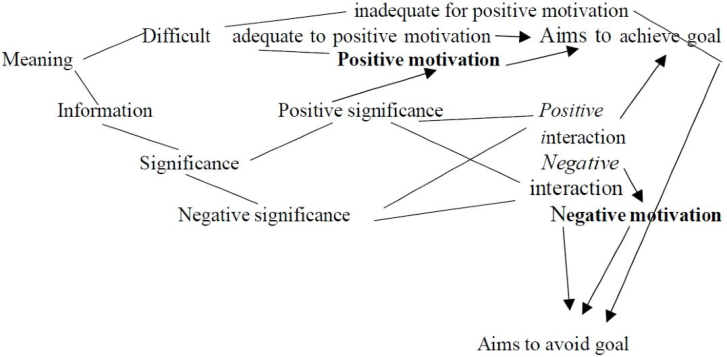
Figure 1 below demonstrates how the complexity of the task and diffi- culty of its performance affect the result of human performance depending on how significant the task is for the individual (Bedny, G., Bedny, I., 2019). It depicts the relationship between positive and negative task significance, and
Table 1. Human Algorithm of wireless phone plan search task (fragment).
Table available in the original PDF paper.
Company #1 Company #2 Member of the algorithm Probability Member of the algorithm Probability
Equation reproduced from the original PDF.
Click on the menu option Wireless
P = 1 The scree is updated. Find the next menu option
The mane field of the screen did not change. Make a decision:
Equation reproduced from the original PDF.
1. Click on the same option again. 2. Scroll down. 3. Abandon the search.
Read the drop-down menu and chose the option
Equation reproduced from the original PDF.
1. The screen still did not change. Make a decision to
Equation reproduced from the original PDF.
a. Scroll down. b. Abandon the search
* Probabilities are estimated by the web designers
Application of Systemic Structural Activity Theory to WEB Design 15
Figure 1: The role of relationship between positive and negative significance and adequate and inadequate difficulty of task in motivation (Bedny, G, Bedny, I., 2019).
adequate and inadequate difficulty of task in the light of users’ motivation to accomplish this task.
If the company wants to attract new customers web designers should take into account the correlation between the level of users’ motivation and the complexity of the search (see Figure 1).
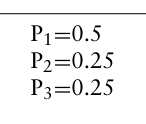
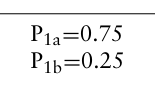
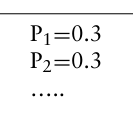
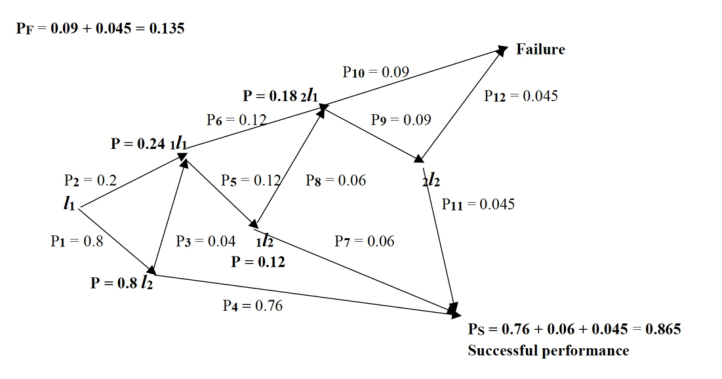
Using a Probabilistic Event Tree Another SSAT method is building a probabilistic event tree (Bedny, G., Bedny, I., 2019). The knots of such event tree are the decision-making points of the task performance where the probability of the next steps can predict the success or failure of the task performance. This event tree shows the relationship between logical conditions (decision-making) l that determine the probabilistic structure of the considered task. Logical conditions and their probabilities are depicted in bold and their outcomes are shown by connecting line along with their probabilities.
Utilisation of this method allows to predict the critical issues with the web- site design and make improvements that allow to minimize the failures of the users’ searches (see Figure 2).
Using Measures of Complexity of Task Performance Measures of complexity of task performance (Bedny, G., Bedny, I., 2018) presented in Chapter 8 of this book demonstrate that reduction of task com- plexity reduces the time of task performance and the effort to accomplish it. It also makes accomplishing it much simpler and more reliable. Knowing these measures allows to identify cognitive demands on the user and to find the measures of optimizing the web design.
16 Bedny
Figure 2: Event-tree model of the task performance (Bedny, I., 2019).
CONCLUSION
Systemic Structural Activity Theory (SSAT) is a relatively new and still deve- loping framework for the study of the efficiency of human performance and processes, equipment and software design. SSAT methods that have been developed within its framework are uniquely positioned to improve usabi- lity and efficiency of the websites during their design (Bedny, I.,2004, 2006). Application of these methods at the early stages of the website lifecycle significantly improve efficiency of the IT development process and result in significantly improved user experience. Study of the cognitive account of repetitive search patterns would highlight the defects of the web design.
We believe that the future research, a more extensive study of the web design that would apply the SSAT methods will confirm our recommendati- ons that applying these methods would be beneficial for the improvement of user experience and for the bottom line of the companies that are striving to enhance their websites.
REFERENCES
Bedny, G. Z., Bedny, I. S. (2019) Applied and Systemic-Structural Activity Theory.
Advances in Studies of Human Performance, CRC Press, FL: Taylor and Francis Group, pp. 106–125. Bedny, G. Z., Bedny, I. S. (2018) Work Activity Studies Within the Framework of Ergonomics, Psychology, and Economics, CRC Press, FL: Taylor and Francis Group. Bedny, G. Z. (2015). Application of Systemic-Structural Activity Theory to Design
and Training. CRC Press. Taylor & Francis Group. Bedny, I. S. (2021) Application of Systemic-Structural Activity Theory to the Design of BOTs and AI Software. Human-Intelligent Systems Integration. Volume 3, pp. 213–221.
Application of Systemic Structural Activity Theory to WEB Design 17
Bedny, I. S. (2019) Human Factor in Performing Computer Based and Computerized Tasks: Systemic-Structural Activity Theory Perspective, Science and education, Volume 3, pp. 47–53. Bedny, I. S. (2006) On systemic-structural analysis of reliability of computer-based
tasks. Science and Education, Odessa Ukraine: Volumes 7-8, pp. 58–60 Bedny, I. S. (2004) General characteristics of human reliability in systems of human and computer. Science and Education, Odessa Ukraine: Volumes 8-9, pp. 58–61 Bedny, I. S., Bedny, G. Z. (2011) Abandoned actions reveal design flaws: An
illustration by a web-survey task. In Bedny, G. Z. and Karwowski, W., ed. Human-Computer Interaction and Operators’ Performance: Optimization of Work Design with Activity Theory. London, UK and Boca Raton, Florida: CRC Press, pp. 149–185. Cappel, James J., Huang, Zhenyu (2007) A Usability Analysis of Company Websites, Journal of Computer Information Systems, Volume 48, pp. 117–123. Huang, Zhenyu, Cappel, James J. (2012) A Comparative Study of Web Site Usabi-
lity Practices of Fortune 500 Versus INC. 500 Companies, Information Systems Management, 29:2, pp. 112–122. Mart, Marina, Mac, Jos Antonio (2022) A Supporting Tool for Enhancing User’s Mental Model Elicitation and Decision-Making in User Experience Research, International Journal of Human–Computer Interaction, volume 39, pp. 183–202. Min, K., & Lee, S. (2019). Designing for “Raressential” Functions: Usage Patterns
and UI Guidelines for Infrequent but Essential Tasks. International Journal of Human-Computer Interaction, 35(18), pp. 1706–1728. Ruiz, J., Serral, Estefanía, Snoeck, M. (2021) Unifying Functional User Interface Design Principles, International Journal of Human–Computer Interaction, Volume 37, Issue 1, pp. 47–67. Sandvig, J. Christopher, Bajwa, Deepinder (2011) User Perceptions of Search Enh-
ancements in Web Search. Journal of Computer Information Systems 52:2, pp. 22–32. Yunhui Lu, Xin Wang, Yanfei Ma (2013) Comparing User Experience in a News Website across Three Devices: iPhone, iPad, and Desktop, Proceedings of the American Society for Information Science and Technology, Volume 50, Issue 1, pp. 1–3.
LISTED IN THE AHFE DIGITAL BOOKSTORE CATALOGUE
Explore the complete digital volume
Neuroergonomics and Cognitive Engineering
Read this individual research paper free through the original publisher, or explore the full digital proceedings book.
ISBN 978-1-958651-78-0
Explore this ISBN in the AHFE Bookstore ↗Listed in the July 2026 bookstore catalogue; search by ISBN to confirm current availability · Digital book purchase optional