Gregory Bedny, Waldemar Karwowski, Inna Bedny (2022). Time Study and Design. In: Advances in Ergonomics In Design, Usability & Special Populations: Part III. AHFE Open Access, vol. 20. https://doi.org/10.54941/ahfe1001291
This paper describes new basic principles that underline the successful application of time study in ergonomics. The main purpose of time study is estimation of time required to perform a task. Often, time for task performance is based upon actual performance studies in which measurement are taken. Time not only reflects the duration of human performance and the distinguishing features of external behavior but also specifies internal cognitive processes. The time study becomes particularly important in those professions that have time restrictions. The presented material can be used not only for studying human productivity and effectiveness of human performance but also in ergonomic design.
Traditionally time study has concerned with finding representative time for performance of production operations or tasks when a well-trained operator works at a normal pace (Barnes, 1980; Gal’sev, 1973; Karger, & Bayha, 1977). Barnes’s reference book provides detailed information in this area of the study. Time study emerged in the early twentieth century and the main objectives of this field were design and measurements of human work, adequate wages, increasing of productivity, etc. The term time study was originated by Taylor (1911) and utilized for determining time standards for performance of various production operations. In contrast Gilbreths’ (1917) approach was employed first of all for improving methods of performance based on motion study. This approach received the name motion and time study. Currently such terms as time study and motion and time study are used interchangeably.
1997; Bedny, Karwowski, 2007). In SSAT time study includes new non-traditional methods of analysis of temporal characteristics of activity. This approach allows us to describe time structure of the holistic activity and determine basic time parameters of variable activity. Such data is critically important in solving design problems. The proposed approach allows introducing new methods of time study in analysis an operator’s performance in automated control systems, including computerized systems. This approach is important not only in the ergonomics and work psychology but also in economics when studying efficiency of human work.
It is interesting that in industrial psychology textbooks this area of study is reduced to critical analyze of works of such scientists as F. W. Taylor or the Gilbreths. We would like first to discuss Gilbreths’ studies that have a special meaning in our work. Gilbreths were outstanding scientists and their basic ideas are widely used in contemporary time study and work analysis in general. However, their motion and time study system is not utilized directly because currently the powerful MTM-1 system that derives from Gilbreths’ ideas is applied for such studies. It is interesting that all symbolic models that are utilized in ergonomics are also based on Gilbreths’ ideas.
TIME STUDY FROM SYSTEMIC-STRUCTURAL ACTIVITY THEORY PERSPECTIVES Time not only reflects distinguishing features of external behavior but also specifics of internal psychic processes. Hence, chronometric studies play an impotent role in cognitive psychology. During time study a task is divided into elements and then a specialist determines duration of those elements. At the next step an expert determines duration of an entire production operation by summarizing execution time of all elements. However, elements of activity can be executed not only sequentially but in parallel; they can overlap in time partially or completely and appear in the structure of a task with various probability. This means that determining time of task performance or performance of a manufacturing operation cannot be reduced to summation of performance times of its individual elements. This is especially important to consider when analyzing contemporary tasks performed by an operator or user in human- machine or human-computer systems. Fraction of cognitive components of tasks noticeably increases during performance of such tasks. Variability of contemporary tasks also considerably increases. This requires introduction of a special method of task analysis. Standardized terminology and standardized units of analysis become particularly important. From the SSAT standpoint presently utilized terminology is completely inadequate for task analysis. For example, one of the most important stages of time study is selecting task’s elements and determining their duration. Only after that it is possible to determine the entire time of task execution (a standard time for a task). Drury (1995, p. 50) describes this stage by using a specific example:
Activities or elements are defined to occur between events. Thus the element ‘get washer’ might be defined to start at the event ’touch washer’ and end at the event ‘washer touches bolt’. Event definitions are not record on the observed sheet, only activity names. Farther Drury presents as an example activity names in the table. We list some of them: 1) NB from box to rail; 2) P U Nails; 3) Nail L: …. 6) Rail + NB to cage.
Here such common sense terms as activities, activity, elements, activity name, etc. are utilized. Human activity or human behavior and technological steps are not the same. For example, activity names “NB from box to rail, P U Nails, Rail + NB to cage” are not human activity elements from SSAT point of view. They are technological elements or steps in the task performance. What a worker really did (what cognitive or behavior actions were performed) remained unknown. The term ‘activities’ is critical in English translations of Activity Theory, yet it is frequently used in a non-Activity Theory sense to mean some bit of work people do (Diaper, Lindgaard, 2008). In Activity Theory human activity should be described in terms of human cognitive and behavioral actions. The same technological element as component of task can be performed by different human actions which are necessary to describe during time study. Currently there is no clearly defined terminology for description of human behavior or activity in psychology and ergonomics (Bedny, Chebikin, 2013). For example in action theory the term ‘action’ has similar meaning as the term ‘activity’ in Activity Theory. Terminology is critical factor in time study, when we try to determine duration of human activity during task performance. Traditionally time study is divided into two stages. The first stage is associated with determining an efficient method of performance and the second stage involves time study or determining standard performance time. These stages can be presented as follows:
Develop efficient method of task performance
Time study
Figure 1. Relationship between stages of time study (traditional approach)
Figure available in the original PDF paper.
According to SSAT this scheme is not entirely accurate. A method of task execution can be only preliminary determined at the first stage. At the next stage it is necessary to determine the temporal structure of activity, and hence performance time of the whole task. After obtaining this new information it becomes possible to develop a new adjusted method of task performance. Thus, these two stages according to SSAT approach have a loop structure as shown in the Figure 2. In complex situations the cycle can be repeated several times.
Develop method of task performance
Time study
Figure 2. Relationship between stages in time study according to SSAT approach Chronometric measurements (timing) of an entire operation is applied very seldom, when precision of time study is low. This method can be applied when production operation is used only for a very short period of time. In most cases during time study a production operation or task is divided into separate elements and their duration is measured separately. The beginning and end point (chronometrical points) for each element should be specifically indicated. Standard time is determined for each element of task. After that total standard time for each task is calculated. During chronometrical study time for manual components should be separated from machine time. Time standards for manual components of work are based on the principles developed in motion and time study. There are MTM-1 system rules that help to determine which motions can be performed in sequence and which can be performed simultaneously. We have developed more advanced rules that allow to determine which cognitive and motor actions can be performed in sequence and which can be performed in parallel (Bedny, Meister, 1997; Bedny, Karwowski, 2007). It is also necessary to identify the possibility of combining machine and manual elements of task. Only then the total time of task performance can be determined. Thus, the idea that analysis of labor and determining the time it takes can be reduced to a simple summation of time for individual task elements or motions is incorrect. All these ideas are important for studying any kind of human work. As can be seen, dividing human work into separate elements according to SSAT principles when main units of analysis are cognitive and behavior actions is an important aspect of time study.
Figure available in the original PDF paper.
Industrial psychologists are generally not familiar with the time study field. For example psychologists D. Schultz and S. Schultz (1986) point out that one of the shortcomings of motion and time analysis is job simplification that can lead to monotony, boredom, etc. However, the purpose of contemporary time study is not simplification, but rather optimization of work and determining required time standard for task performance. Some psychologists wrote that one drawback of traditional time study and design of human performance was associated with ignoring workers’ individual differences. However individual differences in performance can be accepted if it provides required level of productivity and safety.
Contemporary methods of time study are not well adapted for analyzing cognitive components of work. Temporal characteristics of mental actions can be determined utilizing experimental procedures developed in cognitive psychology and activity theory. The most important factor is what should be measured and how chronometrical data should be obtained and described in a standardizing manner. It is important to give a clear description of a beginning and an end of an activity element under chronometric study. Verbal description of an activity element should be accompanied by its graphic description which would assist in using the time standards in further applied studies with understanding of what specific cognitive action or several cognitive actions were performed by a subject during a measured period of time. Only after that obtained time standards can be used as reference data by other specialists. For example, when time standards for perceptual actions are developed it is important to give types of indicators that were used, verbally describe a beginning and an end of perceptual actions, and describe perception time of isolated data or of data perception in context of a complicate activity. In some cases it is important to indicate which strategies are used by a subject when he/she perceives information. When developing time standards researchers can use various instructions. For instance, an instruction can be given to perform an activity element with maximum speed or with optimal pace. Standard description of data about performance time of cognitive activity elements (usually, a separate cognitive action) is critical for further understanding of what was done in a considered time period (Bedny, 1987; Bedny, Karwowski, 2007). Pace of performance in such studies is a critical factor. A number of temporal characteristics of cognitive processes in activity theory and cognitive psychology is useless because of the lack of clear and standardize description of chronometrical data. In most cases, only professionals who perform chronometric measurements can understand their own description of the measured elements and using these results as reference data by other specialists is very difficult.
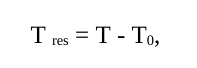
Another aspect of time study is analysis of a system’s reserved time. Time during which a human-machine system is transferred from an initial to a required state is called “time of the regulation cycle”. The operator’s task performance time often consists in substantial part of the cycle of regulation time which is an important system characteristic that influences a system reserved time. Reserved time is defined as a surplus of time over the minimum that is required to detect and correct any deviations of system parameters from an allowable limit and to bring the system back into tolerance. Thus,
Equation reproduced from the original PDF.
where T is time that cannot be exceeded without peril to the system; and T0 is the cycle regulation time.
From activity self-regulation point of view it is necessary to differentiate between objectively given reserved time and operator’s subjective evaluation of this time which are often not the same. This may lead to an inadequate evaluation of the situation and, more importantly, to the inadequate behavior of an operator in a critical situation.
Subjective perception of reserved time influences cognitive components of activity and emotionally-motivational state of an operator. Psychic tension can emerge even when objectively there is plenty of time for a task performance. Subjective perception of reserved time is an important component of a dynamic mental model of a situation. In general relationship between objective and subjective reserved time is an example of application of concept of self-regulation to studying temporal parameters of task performance. Emotionally-motivational state of an operator in time restricted conditions is an important aspect of analysis of a human-machine system.
PACE OF PERFORMANCE Activity is a process that is embedded in time. Therefore time study and task analysis in general cannot be performed without taking into consideration the concept of work pace. Unfortunately, work pace analysis in ergonomics is reduced to studying separate reactions. One of the first and the most widely known methods is measurement of reaction time that includes perceiving a stimulus and transferring this perception into a well-learned response. There is a simple reaction time, choice reaction time, reaction time to a moving object when, for example, a lathe operator cutting a piece of metal has to stop a machine’s cutting tool in an exact position. A reaction time depends on a reaction type. It has also been discovered that reaction time depends on stimulus modality, stimulus intensity, temporal uncertainty, stimulus-reaction compatibility, etc. However, in most cases reaction time does not reflect specifics of a task performance time. Human activity cannot be represented as a set of independent reactions performed with maximum speed. Some scientists suggest to utilize Fitts’ Law to study performance time of positioning actions. One specific aspects of Fitts’ experiment is that subjects had to move a metal stick between two targets with maximum speed. When transferring this result to a work environment, one can assume that each operator’s motor action is performed at a maximum pace, and each performed action does not depend on either previous or subsequent actions. In the special experiment we have demonstrated that motor and cognitive actions cannot be considered as independent and isolated from each other in a task structure. Pace of performance of such actions in a holistic structure of activity is much slower (Bedny, Karwowski, 2007). Cognitive and motor actions or operations have a certain logical organization; they influence each other and can be performed sequentially or simultaneously. Pace of performance of such actions is significantly different from speed of a reaction. Therefore time study of separate reactions and time study of cognitive actions in structure of activity have certain specificity. Analysis of data obtained in studies of simple reaction time, choice reaction time, performance time of positioning actions are not applicable for analysis of the real-world tasks. All the methods that consider human activity as a summation of independent responses that are performed with the maximum speed a subject is viewed as a reactive system that responds to stimuli. In reality, a subject formulates goals, regulates actions, changes his/her strategies, etc.
In studying the pace of work it is necessary to distinguish between two main scenarios: time study of blue color workers’ jobs (traditional time study), and determining a tasks performance time when an operator interacts with a complex technical systems. When it comes to traditional time study one should take into account that a worker performs the same task multiple times when it is necessary to maintain the same pace during work shift or significant periods of time. In the second situation an operator is monitoring a complex system and the role of mental components of a task and complexity of a task increase. An operator does not perform the same task multiple times but rather executes different kinds of tasks. This significantly increases uncertainty about some aspects of task performance. Variability of activity during task performance significantly increases emotional tension. As with the traditional time study and time study of the operator’s work, when serving complex technical systems the maximum pace cannot be sustained during work day.
There is no precise definition of work pace. Barnes (1980) defines work pace as the speed of operator’s motions. However, this definition is unsatisfactory because it ignores cognitive components of activity and logical organization of cognitive and behavior actions. Pace can be considered as speed of performing various components of activity that are structurally organized in time. Hence pace of performance can be defined as an operator's ability to sustain a specific speed (below maximum) of holistic activity structure that unfolds during task performance. This pace should be sustained during work shift and subjectively evaluated by an operator as an optimal pace. It has been discovered that the slowest workers’ pace of performance can be 2 times slower than the fastest blue color workers’ pace (Barnes, 1980). Hence, in a large group of workers who perform the same task by using the same method, the fastest operator would produce approximately twice as much as the slowest operator.
There is a lot of difficulty in pace evaluation. One widely used method of pace evaluation in industry is based on subjective judgment. This method is called rating. Rating is a process during which a specialist compares pace of a blue color worker performance with the observer’s own concept of normal or standard pace. The latest can be understood as an average worker’s pace that can be maintained during a shift without excessive mental and physical effort, assuming that quality of work wound be within the assigned standard. An average person walking on a level grade at 3 miles (4.8km.) per hour along a straight road is used to represent a normal walking pace. This criterion has been supported by physiological studies. It is a traditional type of activity that is also easy to compare with subjective feelings and psycho-physiological measurements. Physiological studies demonstrate that energy expenditure per unit of covered distance is minimal if the speed of walking is between 4-5 km/hour (Frolov, 1976). In evaluating a pace of performance experts use methods that were developed in psychophysics. These methods are based on a subjective evaluation of such phenomena as subjective scaling for evaluation of noise and brightness. Similarly, this method may be carried out for subjective evaluation of pace.
There are several different rating scales for evaluation of work pace. For example, there is a scale where the standard or normal pace is assigned a number 100. If the actual pace of performance is less than normal, it thus receives a number less than a hundred and if actual pace is higher than standard, it receives a number above 100. These kinds of scales are based on psychophysical methods. Pace is designated by numbers. The last number that is assigned to the real pace of performance should be “0” or “5” (70; 75; 80, etc). Pace evaluation can be done for individual elements of task whose duration is no more than 30 sec (Barnes, 1980). After evaluating pace of performing individual elements and measuring performance time a standardized performance time for each element of task is determined using the following formula.
S = T × P, where S is a standardized time for an element of task; T is time obtained during chronometrical measurements. P is a coefficient of pace performance (it defines relationship between evaluated by expert pace of performance and standardized pace of performance). For example, a real task element performance time is 0.30 min; pace of performance is 90. Therefore S = 0.30 × 90/100 = 0.27 min.
The other method based on physiological evaluation of a pace of performance is an experimental one. In cases when a practitioner evaluates medium and heavy physical tasks, physiological evaluation of a performance pace is possible. Oxygen consumption in calories per minute and heart rate in beats per minute can be utilized. It’s more difficult to evaluate a pace of performance when cognitive components of activity dominate in a task.
Expenditure of energy at 4.17 kcal/min is equivalent to a pulse rate of 100 beats/min. Analysis of the publications (Lehmann, 1962) and Rozenblat (1966) demonstrate that a pulse rate of 100 beats/min or 4.17 kcal/min should be used as the bench-mark for the boundary between acceptable and unacceptable strenuousness of work. It corresponds to the boundary between low and heavy physical work intensity according to Rosenblat’s classification. In work conditions when the pulse rate increases beyond this standard additional break time is recommended. Based on this data we developed the method of cost-effectiveness evaluation of ergonomic intervention during performance of heavy physical work (Bedny, Karwowski, Seglin, 2001).
Subjective judgment of a performer about his/her pace is also valuable. If a worker evaluates his pace as not optimal quality of work can deteriorate. It has been discovered that transition from very slow pace to the optimal one reduces amount of errors. Such pace is conveyed by the most positive emotional state of subjects during task performance. However farther increase of pace causes increase in error rate. The effortful pace that exceeds optimal level is evaluated as emotionally tensioned and more difficult. The difficult to achievable pace is considered as excessive and can be sustained only during very short period of time. Error’s rate is an important criterion for pace evaluation. It was discovered that subjectively optimal pace activates subjects and motivates them to seek the most efficient task performance strategies (Bedny, 1987). Gradual increase in pace is possible. After acquisition of optimal pace it is possible to perform with higher pace. Task performance with the pace that insignificantly exceeds the optimal pace stimulates better performance. Therefore the concept of optimal pace during training can be changed accordingly. Training with gradual increase in speed of task performance is known as “above real-time training”. This method has been applied in the air force pilot training (Miller, Stanney, D. Guckenbereg, and E. Guckenbereg, 1997).
It has been discovered that transition to the higher level of performance cannot be reduced to increase in the speed of performance. An ability to perform a task with the higher pace is accompanied by changes in the structure of activity (Bedny, 1987) which to a significant degree is a new kind of skills. It takes special training to prepare trainees to work with required pace.
The concept of pace of performance has not been studied in ergonomics. By trying to transfer results of reaction time studies to work environment one can assume that each operator’s action is performed at the maximum pace and that each action does not influence the previous or the subsequent action. However it is important to know not only a speed of isolated reactions, but also how much time is needed to perform the whole task and particularly when it’s performed in emergency conditions because a task is not a sum of independent reactions, but rather a system of logically organized cognitive and behavioral actions integrated according to a set goal. An operator never performs the task with the speed that is equivalent to the speed of the isolated reactions (Bedny, 1987).
A speed of cognitive actions mostly depends on their content because pace of cognitive processes is less regulated voluntarily. A person can widely voluntarily regulate a speed of a motor action but speed of cognitive actions depends primarily on the composition of mental operations within the cognitive actions. A degree of automaticity with which actions are performed depends on past experience and complexity of a task. The more complex the task is the less is the probability that this task can be performed with the high level of automaticity and the pace of performance will be lower as well.
Some methods of chronometrical analysis developed in cognitive psychology can be adapted for time study of cognitive components of activity. For example, Sternberg (1969) developed additive factor method which allows with some approximation determining duration of some cognitive stages of information processing. This method can be adapted for determining duration of cognitive actions. We developed the method of extraction of cognitive action and determining their duration from eye and mouse movement data which derives from SSAT principles of activity structure analysis (Bedny, Karwowski, Sengupta, 2008). There is evidence that event-related brain potential (ERP) can be used for mental chronometrical study. The ERP is registered as a series of voltage oscillation that are recorded from the surface of the scalp to indicate the brain’s electrical response to some environmental events. It should be noted that an attempt was made to create pre-determined time standards for cognitive components of activity which are based on physiological methods of study (Van Santen, & Philips, 1970). However, this system of time standards has certain disadvantages. Its time standards are excessively detailed and it is difficult to utilize them. Moreover, this system has never been fully published. We also explored the possibility of using the pace offered by system MTM-1. When assessing the pace we utilized experimental tasks performed at a pace suggested by the MTM-1 system and a faster pace. We analyzed the errors and subjective evaluation of the pace (Bedny, 1987). In the MTM-1 system pace of performance is equivalent to the walking speed of 5.7 km/hour (Smidtke & Stier, 1961). However, according to physiological data standard pace for physical job should be 4.8 km/hour. This pace guaranties that energy expenditure does not exceed 4.17 kcal/min or a workload that is equivalent to a heart rate of 100 beats/min. These are physiological criteria that are considered as a border between acceptable and unacceptable workloads during performance of physical work. MTM-1 system has been developed for mass production that utilized assembly lines for electronics where there are no substantial physical efforts. For such work pace of MTM-1 is considered to be optimal. However, according to the experimental data, pace offered by MTM-1 system is too high even for mass production (Smidtke & Stier, 1961). Gal’sev, (1973) recommend to use coefficient 1.1 – 1.2 to reduce the pace of performance. Only after this correction, physiological costs of performed work can approach the standard physiological levels. Level of automaticity of task performance in mass production is higher than during performance of tasks in automated or semi-automated system. Our study demonstrated (Bedny, 1987) that one has to consider three levels of pace for work activity: very high, high, and average. A very high pace is slightly slower than the operator's reaction time to various stimuli. This pace is possible only in those cases when an operator reacts to isolated signals, using discrete actions in highly predictable situations. For example, an operator can have a high level of readiness to push a button or throw a switch when a particular signal appears. A high pace is that in which an operator performs a sequence of logically organized mental and physical actions in response to appearance of various signals. It is essentially the same pace as the one offered by MTM-1 system for motor activity. Pace of performance for mental actions should be determined based on analysis of strategies of their performance in a particular situation. Conditions when an operator performs actions in a logically organized sequence lower the degree of her/his readiness to perform particular actions. An average pace is that in which an operator performs tasks at his/her own subjective time scale (when there are no time constraints).
CONCLUSIONS
In time study a professional pace is another important concept. However the concept of pace of performance has not been sufficiently studied in ergonomics. Trying to apply reaction time studies to work environment one can assume that each operator’s action is performed at the maximum pace and that each action does not influence the previous or the subsequent action. The task is not a sum of independent reactions, but rather a system of logically organized cognitive and behavioral actions integrated according to a set goal. An operator never performs a task with the speed that is equivalent to the speed of isolated reactions. The speed of cognitive actions mostly depends on their content because pace of cognitive processes is less regulated voluntarily. A person can widely voluntarily regulate a speed of a motor action but speed of cognitive actions depends primarily on the composition of mental operations within the cognitive actions.
REFERENCES
Barness, P. M. (1980). Motion and time study design and measurement of work. New York, John Wiley and Sons. Bedny, G. Z. (1987). The psychological foundations of analyzing and designing work processes. Kiev: Higher Education Publishers Bedny, G., Meister, D. (1997). The Russian Theory of Activity: Current application to design and learning. Lawrence Erlbaum
Associates, Publishers. Mahwah, New Jersey. Bedny, G.Z., Karwowski, W. (2007). A systemic-structural theory of activity. Application to human performance and work design. CRC, Taylor and Francis Bedny, G. Z., Chebykin, O. Y. (2013), Application of the basic terminology in activity theory. IIE Transactions on occupational
ergonomics and human factors. V. 1, No 182-92 Bedny, G. Z. Karwowski, W., Sengupta, T. (2008). Application of systemic-structural theory of activity in the development of predictive models of user performance. International Journal of Human – Computer Interaction. V. 24, # 3. 239 – 274. Bedny G., Seglin M. (1999). Individual Style of Activity and Adaptation to Standard Performance Requirement. Human
Performance, V. 12 # 1 pp. 59-78. Bedny, G. Z., Harris, S. (2005). The systemic-structural activity theory: Application to the study human work. Mind, Culture, and Activity: An International Journal, pp. 128-147. Bedny, G. Z., Karwowski, W., Seglin, M. H. (2001), A heart rate evaluation approach to determine cost-effectiveness an
ergonomics intervention. International journal of occupational safety and ergonomics. V. 7, No2, 121 - 133 Chebisheva, V. V. (1969). The psychology of vocational training. Moscow: Education Publishers. Diaper, D., Lindgaard, G. (2008), West meets East: Adapting activity theory for HCI & CSSW applications? Interacting with computers. The international journal of human-computer interaction. V. 20, No 2, 240-246 Drury, C. G. (1995), Designing ergonomics studies and experiments. In J. R. Wilson, E. N. Corlett (Eds.). Evaluation of human
work. A practical ergonomic methodology. Taylor and Francis, 113-141 Frolov, N. I. (1976). Physiology of movement. Leningrad: Science Publishers. Gal'sev, A. D. (1973). Time study and scientific management of work in manufacturing. Moscow: Manufacturing Publishers Karger, D. W., Bayha, F. H. (1977). Engineering work measurement (3rd ed.). New York: Industrial Press. Frolov, N. I. (1976). Physiology of movement. Leningrad: Science Publishers. Gilbreth, F. B., Gilbreth, L. M (1917), Applied motion study. Sturgis and Walton Co., New York. Rozenblat, V. V. (1975). Principle of physiological evaluation of hard labor based on pulse measurement procedures. In V. V.
Rozenblat (Ed.) Function of organism in work process (pp. 112-126), Moscow: Medicine. Schultz, D., Schultz, S. (1986). Psychology and industry today. An introduction to industrial and organizational psychology.
New York: Macmillan Publishing Company Smidtke, H., Stier, F. (1961). An experimental evaluation of validity of predetermined elemental time system. The Journal of Industrial Engineering. 3. pp. 182-204. Sternberg, S. (1969). The discovery of processing stages: Extension of Donder's method. Acta Psychological, 30, 276-315. Taylor, F. W. (1911). The Principles of Scientific Management, New York: Harper and Brothers Van Santen, J. H. & Philips, N. Y. (1970). Method and time study of mental work. Work study and management services. 14, #1,
21-27.
LISTED IN THE AHFE DIGITAL BOOKSTORE CATALOGUE
Explore the complete digital volume
Advances in Ergonomics In Design, Usability & Special Populations: Part III
Read this individual research paper free through the original publisher, or explore the full digital proceedings book.
ISBN 978-1-4951-2108-1
Explore this ISBN in the AHFE Bookstore ↗Listed in the July 2026 bookstore catalogue; search by ISBN to confirm current availability · Digital book purchase optional