The terms “brain-computer interface” and “brain-computer interaction” are closely related, but they emphasize different aspects of brain-computer systems. The ongoing misinterpretation of these terms has impeded the accurate classification of applications and research studies, making this clarification essential for advancing the field. The primary aim of this study is to clarify the confusion in the literature by highlighting the distinctions between “brain-computer interface” and “brain-computer interaction”, as well as to explore the relationship between these two concepts. Clarifying these definitions will help establish a more consistent theoretical framework and improve the comparability of research findings. Moreover, it will support the development of user-centered systems that integrate both technical performance and experiential dimensions. In doing so, this study seeks to contribute to a more coherent understanding of how humans and computers can communicate through neural activity. Through a conceptual analysis supported by a structured review of recent literature, the findings demonstrate that while the two terms are frequently used interchangeably, they reflect distinct emphases in both system design and research orientation. Brain-computer interface traditionally denotes the technical mechanism enabling neural signal translation and device control, whereas brain-computer interaction encompasses a broader, bidirectional, and user-centered perspective that integrates feedback, adaptability, and experiential dimensions. In conclusion, establishing clear and consistent use of these terms will contribute to a more coherent scientific discourse and facilitate progress toward intelligent, responsive, and ethically grounded brain-computer systems.
The human brain is widely regarded as the body’s most complex organ, often likened to an extremely advanced and powerful computer one whose full structure has never been fully duplicated or modelled (Martins et al., 2021). The rapid evolution of neuroscience and computing technologies has given rise to a new class of systems that enable direct communication between the human brain and external devices. Within this domain, the terms “brain-computer interface” and “brain-computer interaction” are often used interchangeably, yet they represent distinct conceptual perspectives. Researchers who prefer the term brain-computer interaction tend to Received January 15, 2026; Revised April 6, 2026; Accepted April 22, 2026; Available online July 20, 2026
2 Çakıt and Karwowski emphasize the bidirectional nature of this relationship, where information flows both from the brain to the computer and vice versa, facilitating real- time communication and feedback. This terminology highlights the dynamic and reciprocal exchange that allows for a more seamless integration between human cognition and computational systems. Conversely, the term brain- computer interface traditionally focuses on the interface aspect, essentially the point of connection between neural activity and an external device (Abdulkader et al., 2015; Kawala-Sterniuk et al., 2021). In this view, the primary goal is to establish direct communication pathways translating brain signals into commands that can control computers, prosthetics, or other systems. In contrast, brain-computer interaction extends this perspective by addressing issues of usability, adaptability, and user experience, focusing on how design principles can optimize the synergy between humans and technology. In sophisticated brain-computer interface systems, the field has gradually shifted from an exclusive emphasis on the interface such as the development of effective EEG devices and signal decoding algorithms toward a broader focus on interaction, encompassing adaptive feedback mechanisms, multimodal integration, and personalized user experiences. This transition signifies the progression toward technologies that are more intuitive, responsive, and centered on human needs.
Ultimately, the distinction between “interface” and “interaction” reflects an evolution in both research priorities and technological aspirations. While traditional brain-computer interface aim to enable device control through brain signals (Mridha et al., 2021), brain-computer interaction represents an advancement toward collaborative and adaptive systems that emphasize mutual, real-time feedback (Gao et al., 2021). Together, these concepts capture the field’s ongoing shift from static, one-way control mechanisms to dynamic, interactive technologies that more deeply integrate with human cognition and behavior. This conceptual clarification is essential for fostering theoretical coherence, improving the comparability of research findings, and guiding the development of next-generation human-centered neurotechnologies. The main goal of this research is to address the existing confusion in the literature by emphasizing the differences between “brain- computer interface” and “brain-computer interaction,” and by examining how these two concepts are related. Defining these terms more clearly will contribute to a consistent theoretical framework and enhance the comparability of research outcomes. Additionally, it will promote the creation of user-centered systems that balance technical efficiency with user experience. Ultimately, this study aims to foster a clearer understanding of the ways humans and computers communicate through neural signals.
WHAT IS THE DIFFERENCE BETWEEN THE TERMS “BRAIN- COMPUTER INTERFACE” AND “BRAIN-COMPUTER INTERACTION”?
The growing preference for the term “brain-computer interaction” reflects a broader shift in how researchers conceptualize the relationship between humans and technology. Advocates of this terminology argue that the word “interaction” better captures the complexity of modern neurotechnological systems, which are no longer limited to one-way command or control
Brain-Computer Interface Versus Brain-Computer Interaction 3 structures. Instead, these systems are envisioned as interactive environments in which both the user’s mental states and the computer’s computational processes continuously influence each other. This paradigm highlights adaptability, learning, and user experience elements that are central to next- generation neurotechnologies such as adaptive BCIs, closed-loop neural interfaces, and affective computing systems. Within this framework, the brain is not merely a signal generator, but an active participant in a co-evolving dialogue with the machine, resulting in systems that are more responsive, intuitive, and human-centered.
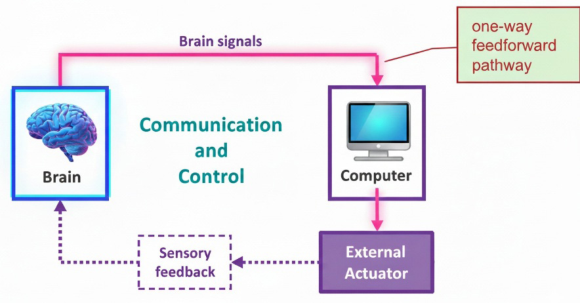
Figure 1: Brain-computer interface (adapted from Gao et al., 2021).
Traditional Brain-Computer Interfaces function as unidirectional, feedforward systems. In this model, information flows in a single direction: from the brain’s neural activity to an external computer. The fundamental purpose of this setup is to restore autonomy, specifically through applications that allow users to communicate their thoughts or manipulate their physical environment without the need for muscle movement (Gao et al., 2021) (Figure 1).
This interaction-oriented view also has significant implications for design and application. By acknowledging bidirectional communication, researchers can create systems that incorporate feedback mechanisms to adjust their behavior in real time based on the user’s cognitive or emotional states. Such systems can enhance user engagement, reduce mental fatigue, and improve overall performance in practical applications such as neurorehabilitation, assistive technology, entertainment, and cognitive training. In these contexts, the notion of “interaction” extends beyond functional control to include emotional resonance, usability, and personalization, thereby bridging the gap between technical performance and human experience.
Conversely, those who view the terms “interface” and “interaction” as interchangeable argue that the fundamental principles underlying both remain the same facilitating communication between neural and computational processes. From this standpoint, the distinction is primarily linguistic, as every interface inherently supports some form of interaction. This perspective emphasizes that even in unidirectional systems, feedback
4 Çakıt and Karwowski loops and user responses play critical roles, blurring the boundaries between the two concepts. For these scholars, refining terminology should not overshadow the technological and ethical challenges that define the field, such as signal interpretation accuracy, user consent, data privacy, and the psychological impacts of prolonged neural engagement with machines.
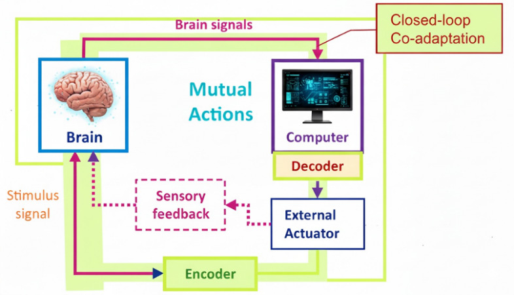
Figure 2: Brain-computer interaction (Adapted from Gao et al., 2021).
The brain-computer interaction operates as a closed-loop feedback system that places the brain at the center of the control logic (brain-in-the-loop). By unifying decoding (translating neural intent into action) and encoding (translating external data into neural stimuli), the system creates a truly bidirectional interface (Gao et al., 2021). This reciprocal relationship ensures that the interaction is not one-sided; instead, it facilitates a “mutual evolution” where the machine’s state and the user’s neural pathways simultaneously adapt and reshape one another (Figure 2). Ultimately, this ongoing debate underscores the interdisciplinary nature of neurotechnology research, which bridges neuroscience, computer science, cognitive psychology, and human- computer interaction. The evolution from “interface” to “interaction” reflects a maturing scientific and philosophical understanding of how humans and machines coexist and co-adapt. As brain-computer systems become increasingly integrated into daily life, achieving conceptual clarity will be essential not only for academic discourse but also for guiding ethical design, regulatory frameworks, and user-centered innovations that define the future of human–machine symbiosis.
STUDIES USED THE TERMS “BRAIN–COMPUTER INTERFACE” AND “BRAIN–COMPUTER INTERACTION” INTERCHANGEABLY From an initial pool of 408 articles, 192 duplicates were purged. The selection process then involved three phases of exclusion: a preliminary relevance check of abstracts and introductions, a secondary screening that eliminated 121 studies, and a final removal of 66 redundant articles involving outdated datasets. Ultimately, 29 papers met all criteria and were retained for the final study.
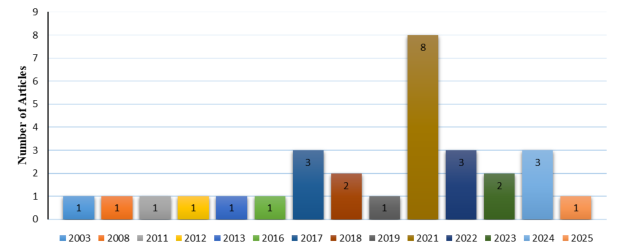
Figure 3: Number of included articles by year (n = 29).
Analysis reveals a marked surge in academic output within this domain, with a notable concentration of research appearing between 2021 and 2024. This trend underscores an escalating scholarly focus on the conceptual overlap between “Brain-Computer Interface” and “Brain- Computer Interaction,” terms that are increasingly treated as synonymous in contemporary literature. Notably, the volume of publications reached its pinnacle in 2021, signifying a key turning point in the field’s visibility and investigation (Figure 3).
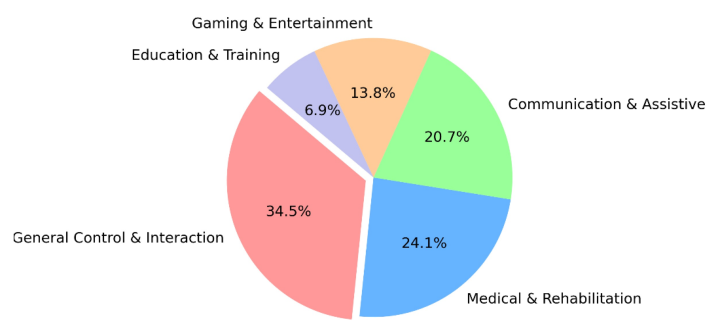
Figure 4: Distribution for application areas of included articles (n = 29).
The pie chart illustrates the distribution of research across various application areas (Figure 4). The distribution highlights several key trends in the field:
General Control & Interaction (n=10) (34.5%): The largest segment focuses on the foundational mechanics of brain-computer interaction or brain-computer interface, including signal processing, real-time data analysis, and developing more intuitive ways for humans to interact with digital environments.
Medical & Rehabilitation (n=7) (24.1%): A significant portion of the research is dedicated to restoring motor function, stroke recovery, and developing medical-grade neuroprosthetics.
Communication & Assistive (n=6) (20.7%): This category includes vital work on “mental spellers” and robotic aids designed to restore a voice and physical agency to individuals with severe motor disabilities.
Gaming & Entertainment (n=4) (13.8%): A growing sector that explores non-medical uses, such as neuro-feedback for gaming and consumer-level brain-interactive software.
Education & Training (n=2) (6.9%): A specialized niche focusing on pediatric attention training and assistive tools for special education environments.
The reviewed research reveals a broad and continually developing landscape in studies used the terms “brain–computer interface” and “brain– computer interaction” interchangeably, research over more than twenty years, tracing progress from early communication-based systems to contemporary AI-enabled neuroprosthetic technologies (Table 1). The findings indicate a significant technological evolution, moving away from simple, one-directional assistive solutions for paralysis toward advanced closed-loop frameworks that incorporate deep learning methods—such as convolutional neural networks, deep belief networks, and multiscale architectures to improve signal interpretation and adaptive user interaction.
The examined studies cover a wide range of application domains, including medical rehabilitation (such as stroke rehabilitation and motor function recovery), assistive communication systems (notably P300-based and mental spelling interfaces), as well as emerging non-clinical uses like attention training for children and immersive neuro-gaming environments. Overall, this body of work highlights a conceptual shift from traditional “Brain–Computer Interfaces” to the broader notion of “Brain–Computer Interaction,” stressing reciprocal adaptation and the collaborative integration of human neural processes with machine learning systems.
Table 1: Studies used the terms “brain–computer interface” and “brain–computer interaction” interchangeably (n = 29).
Table available in the original PDF paper.
Authors (Year) Aim of Study Application Area Tang et al. (2025) Compare action observation (AO) Soft robotic glove control.
modalities for motor imagery (MI) accuracy.
Kanagaluru & Sasikala (2024)
Improve MI classification via channel selection and rhythm extraction.
Assistive technology and rehabilitation.
Medical rehabilitation.
Shi et al. (2024) Enhance cross-subject EEG generalization using the DCDAN network.
Deng et al. (2024) Personalize MI action selection using eventrelated potential (ERP) models.
Rehabilitation for motor disorders.
Barnova et al. (2023)
Implement AI for BCI calibration, noise, and motor imagery.
Medical technologies for disabled patients.
Chugh & Aggarwal (2023)
Review signal processing and classification in hybrid BCI spellers.
Assistive technology and spelling.
Guo & Chen (2022)
Decode vowel and tone intent for speech- based interaction via fNIRS.
Spellers for severe motor disabilities.
(Continued)
Table 1: Continued.
Table available in the original PDF paper.
Authors (Year) Aim of Study Application Area Chang et al. (2022) Enhance children’s attention training through a gamified BCI system.
Pediatric attention and behavior.
Yang et al. (2022) Analyze how visual abstraction levels impact MI-BCI performance.
Restoring mobility and motor function.
Liu et al. (2021) Integrate BCI-based communication (AAC- VIP) into special education.
Classrooms for intellectual disabilities.
Iwane et al. (2021)
Characterize error potentials (ErrP) in continuous feedback loops.
Operation of brain- controlled devices.
Online MI-BCI systems.
Fu et al. (2021) Use Deep Belief Networks (DBN) to classify arm imagery in fNIRS.
Liu & Yang (2021a)
Optimize spatial-temporal classification of motor stages.
Motor stages classification tasks.
Xiao & Fang (2021)
Use deep CNNs to improve EEG recognition for limb rehabilitation.
Assistance for patients with limb dyskinesia.
Liu & Yang (2021b)
Improve MI classification using Dense M3D CNN architectures.
Motor imagery-based interaction.
Akamatsu et al. (2021)
Decode perceived image categories using shared multi-subject fMRI data.
Brain-computer interaction.
Elsayed et al. (2021)
Develop a robust, user-independent hybrid model for motor execution.
Motor Execution (ME) paradigms.
Salvaro et al. (2019)
Design a low-power, wearable IoT node for BCI spelling.
Portable BCI and communication.
Trachel et al. (2018)
Decode visuospatial attention shifts to enhance human-machine interaction.
Real-time target discrimination tasks.
Noor et al. (2018)
Evaluate the usability of BCI-based games for healthy users.
Entertainment and assistive technology.
Breitwieser et al. (2017)
Analyze the TiD event distribution system for real-time BCI.
Real-time experimental data processing.
Huang et al. (2017)
Couple human and computer vision via Bayesian models for retrieval.
Image retrieval in RSVP sequences.
Vourvopoulos et al. (2017)
Identify gaming experience elements that aid BCI control mastery.
Neurogame design and training.
Vourvopoulos & Badia (2016)
Use VR and motor priming to engage networks for stroke recovery.
Neurorehabilitation and motor imagery.
Berta et al. (2013) Characterize user states during gaming to support BCI adaptivity.
Personalized and adaptive game control.
van Erp et al. (2012)
Analyze the expansion of BCI into non- medical consumer sectors.
Gaming and non-medical applications.
Chen et al. (2011) Realize a fast mental speller based on a natural reading paradigm.
High-speed brain- computer interaction.
Ferrez & Millán (2008)
Detect error potentials (ErrP) to verify BCI response accuracy.
Human-robot interaction and intent verification.
Hinterberger et al. (2003)
Optimize spelling accuracy for paralyzed patients using the TTD.
Communication for totally paralyzed patients.
CONCLUSION
This study examined the conceptual distinction between brain-computer interface and brain-computer interaction, a distinction that is frequently blurred in contemporary neurotechnology research. The analysis shows that while the two terms are often used interchangeably, they represent different emphases: brain-computer interface focuses primarily on the technical linkage between neural signals and external devices, whereas brain-computer interaction reflects a broader, bidirectional, and user-centered perspective that incorporates feedback, adaptability, and experience. The literature review reveals a clear shift in recent years toward interaction-oriented frameworks, driven by advances in closed-loop systems, adaptive machine learning, and multimodal feedback. This shift is evident across diverse application domains, including rehabilitation, assistive communication, gaming, and education. However, inconsistent terminology limits theoretical clarity and complicates comparison across studies. Clarifying the relationship between these concepts is therefore essential for strengthening conceptual coherence, improving research comparability, and guiding the design of future human- centered brain-computer systems. As neurotechnologies continue to evolve, adopting precise and consistent terminology will support both scientific progress and responsible system development.
REFERENCES
Abdulkader, S. N., Atia, A., & Mostafa, M. S. M. (2015). Brain computer interfacing: Applications and challenges. Egyptian Informatics Journal, 16(2), 213–230. Akamatsu, Y., Harakawa, R., Ogawa, T., & Haseyama, M. (2021). Perceived image
decoding from brain activity using shared information of multi-subject fmri data. IEEE access, 9, 26593–26606. Barnova, K., Mikolasova, M., Kahankova, R. V., Jaros, R., Kawala-Sterniuk, A., Snasel, V., ... & Martinek, R. (2023). Implementation of artificial intelligence and machine learning-based methods in brain–computer interaction. Computers in Biology and Medicine, 163, 107135. Berta, R., Bellotti, F., De Gloria, A., Pranantha, D., & Schatten, C. (2013).
Electroencephalogram and physiological signal analysis for assessing flow in games. IEEE Transactions on Computational Intelligence and AI in Games, 5(2), 164–175. Breitwieser, C., Tavella, M., Schreuder, M., Cincotti, F., Leeb, R., & Müller-Putz, G. R. (2017). TiD—Introducing and benchmarking an event-delivery system for brain–computer interfaces. IEEE transactions on neural systems and rehabilitation engineering, 25(12), 2249–2257. Chang, D., Xiang, Y., Zhao, J., Qian, Y., & Li, F. (2022). Exploration of brain-
computer interaction for supporting children’s attention training: A multimodal design based on attention network and gamification design. International journal of environmental research and public health, 19(22), 15046. Chen, M., Guan, J., & Liu, H. (2011). Enabling fast brain-computer interaction by single-trial extraction of visual evoked potentials. Journal of Medical Systems, 35(5), 1323–1331.
Brain-Computer Interface Versus Brain-Computer Interaction 9 Chugh, N., & Aggarwal, S. (2023). Hybrid Brain–Computer Interface Spellers:
A Walkthrough Recent Advances in Signal Processing Methods and Challenges. International Journal of Human–Computer Interaction, 39(15), 3096–3113. Deng, H., Li, M., Zuo, H., Zhou, H., Qi, E., Wu, X., & Xu, G. (2024). Personalized motor imagery prediction model based on individual difference of ERP. Journal of Neural Engineering, 21(1), 016027. Elsayed, N. E., Tolba, A. S., Rashad, M. Z., Belal, T., & Sarhan, S. (2021). A deep
learning approach for brain computer interaction-motor execution EEG signal classification. IEEe Access, 9, 101513–101529. Ferrez, P. W., & Millán, J. D. R. (2008). Error-related EEG potentials generated during simulated brain–computer interaction. IEEE transactions on biomedical engineering, 55(3), 923–929. Fu, Y., Chen, R., Gong, A., Qian, Q., Ding, N., Zhang, W., ... & Zhao, L. (2021).
Recognition of Flexion and Extension Imagery Involving the Right and Left Arms Based on Deep Belief Network and Functional Near-Infrared Spectroscopy. Journal of Healthcare Engineering, 2021(1), 5533565. Gao, X., Wang, Y., Chen, X., & Gao, S. (2021). Interface, interaction, and intelligence in generalized brain–computer interfaces. Trends in cognitive sciences, 25(8), 671–684. Guo, Z., & Chen, F. (2022). Decoding lexical tones and vowels in imagined tonal
monosyllables using fNIRS signals. Journal of Neural Engineering, 19(6), 066007. Hinterberger, T., Kübler, A., Kaiser, J., Neumann, N., & Birbaumer, N. (2003). A brain–computer interface (BCI) for the locked-in: comparison of different EEG classifications for the thought translation device. Clinical neurophysiology, 114(3), 416–425. Huang, L., Zhao, Y., Zeng, Y., & Lin, Z. (2017). BHCR: RSVP target retrieval BCI
framework coupling with CNN by a Bayesian method. Neurocomputing, 238, 255–268. Iwane, F., Iturrate, I., Chavarriaga, R., & del R Millán, J. (2021). Invariability of EEG error-related potentials during continuous feedback protocols elicited by erroneous actions at predicted or unpredicted states. Journal of Neural Engineering, 18(4), 046044. Kanagaluru, V., & Sasikala, M. (2024). Two Class Motor Imagery EEG Signal
Classification for BCI Using LDA and SVM. Traitement du Signal, 41(5), 2743. Kawala-Sterniuk, A., Browarska, N., Al-Bakri, A., Pelc, M., Zygarlicki, J., Sidikova, M., Martinek, R., & Gorzelanczyk, E. J. (2021). Summary of over fifty years with brain-computer interfaces—a review. Brain sciences, 11(1), 43. Liu, T., & Yang, D. (2021a). A three-branch 3D convolutional neural network for
EEG-based different hand movement stages classification. Scientific Reports, 11(1), 10758. Liu, T., & Yang, D. (2021b). A densely connected multi-branch 3D convolutional neural network for motor imagery EEG decoding. Brain Sciences, 11(2), 197. Liu, Y., Zhou, Z., Wang, A., Samuel, R. D. J., & Kumar, P. (2021). Brain-computer
interaction enabled AAC for visual interactive paradigm. International Journal on Artificial Intelligence Tools, 30(06n08), 2140013.
10 Çakıt and Karwowski Martins, N. R., Angelica, A., Chakravarthy, K., Svidinenko, Y., Boehm, F. J., Opris,
I., Lebedev, M.A., Swan, M., Garan, S.A., Rosenfeld, J.V., Hogg, T., & Freitas, R. A. (2021). Human brain/cloud interface. In Advances in Clinical Immunology, Medical Microbiology, COVID-19, and Big Data (pp. 485–538). Jenny Stanford Publishing. Mridha, M. F., Das, S. C., Kabir, M. M., Lima, A. A., Islam, M. R., & Watanobe, Y.
(2021). Brain-computer interface: Advancement and challenges. Sensors, 21(17), 5746. Noor, A., Umer, A., Umar, A. I., Ahmad, Z., & Khan, M. (2018). Usability evaluation of brain-computer interaction (BCI), based game for normal users. Int. J. Comput. Sci. Netw. Secur, 18(6), 168–175. Salvaro, M., Benatti, S., Kartsch, V. J., Guermandi, M., & Benini, L. (2018). A
minimally invasive low-power platform for real-time brain computer interaction based on canonical correlation analysis. IEEE Internet of Things Journal, 6(1), 967–977. Shi, Y., Wang, Y., & Meng, H. (2024). Single-source unsupervised domain adaptation for cross-subject MI-EEG classification based on discriminative information. Applied Intelligence, 54(21), 10438–10454. Tang, X., Zhu, W., Liu, X., Wang, T., Guan, J., & Dang, X. (2025). Motor
Imagery Brain-Computer Interaction Using Different Modalities of Action Observation. IEEE Transactions on Instrumentation and Measurement. Trachel, R. E., Brochier, T. G., & Clerc, M. (2018). Brain–computer interaction for online enhancement of visuospatial attention performance. Journal of Neural Engineering, 15(4), 046017. Van Erp, J., Lotte, F., & Tangermann, M. (2012). Brain-computer interfaces: beyond
medical applications. Computer, 45(4), 26–34. Vourvopoulos, A., & Bermúdez i Badia, S. (2016). Motor priming in virtual reality can augment motor-imagery training efficacy in restorative brain- computer interaction: a within-subject analysis. Journal of neuroengineering and rehabilitation, 13(1), 69. Vourvopoulos, A., Bermudez i Badia, S., & Liarokapis, F. (2017). EEG correlates of
video game experience and user profile in motor-imagery-based brain–computer interaction. The Visual Computer, 33(4), 533–546. Xiao, X., & Fang, Y. (2021). Motor imagery EEG signal recognition using deep convolution neural network. Frontiers in Neuroscience, 15, 655599. Yang, C., Kong, L., Zhang, Z., Tao, Y., & Chen, X. (2022). Exploring
the visual guidance of motor imagery in sustainable brain–computer interfaces. Sustainability, 14(21), 13844.
Read this individual research paper free through the original publisher, or explore the full digital proceedings book.
ISBN 979-8-950676-09-3
Explore this ISBN in the AHFE Bookstore ↗Listed in the July 2026 bookstore catalogue; search by ISBN to confirm current availability · Digital book purchase optional