Natsumi Takahashi, Amna Javed, Youji Kohda (2023). Introducing low-code technology to promote diversity, equity and inclusion awareness in the workplace. In: The Human Side of Service Engineering. AHFE Open Access, vol. 108, pp. 161–170. https://doi.org/10.54941/ahfe1003117
The purpose of this study is to deepen the understanding of which Information and Communication Technology (ICT) services are effective in promoting diversity, equity, and inclusion (DEI) strategies in workplace knowledge management. Projects in a Japanese conglomerate company that adopted a low-code platform were selected for the case study. These cases focused on using low-code technology to carry out externalization and sharing of individual knowledge in the workplace. ICT services with low prerequisites for users, such as low-code technologies, are effective in supporting an organization's knowledge diversity management. This study explains a mechanism that promotes knowledge creation in organizations by using low-code technology, and from a practical perspective this research can help several workplaces to develop effective DEI strategies.
The purpose of this study is to explore how knowledge diversity manage- ment (Bassett, 2005) can be effectively implemented. We will analyze case studies to determine how to create an environment in which individuals can express and combine their diverse knowledge and experience in the work- place and how to create an environment in which they can take advantage of the diversity of their expertise. It has long been suggested that knowledge management is closely related to IT tools (Bhatt, 2001), and considered effe- ctive for organizational learning (Nonaka et al. 1996). While the options for information communication technology (ICT) services that are available to users are increasing, organizational management must provide enterprise systems that incorporate the perspective of diversity, inclusion, and equity (DEI) (Kirton and Greene, 2021) to create a work environment that treats everyone in the workplace as a key actor. However, DEI is a complex matter to implement in management of real workplaces because it involves many different meanings. Therefore, this paper reports on methods of using ICT to implement knowledge diversity management in the workplace.
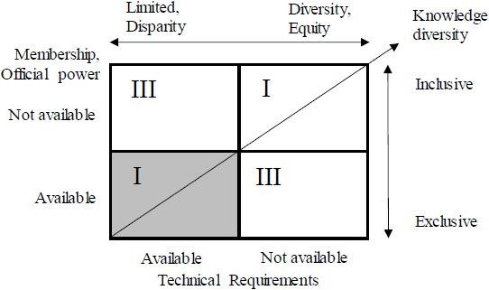
Problems with Current Knowledge Management Systems From the DEI Perspective Diversity management encompasses not only policies and practices related to race, disability, and gender discrimination but also broader issues involving other identities and cultural differences (Kirton and Greene, 2021). Diversity, equity, and inclusiveness (DEI) have become ubiquitous in public and acade- mic discussions; however, there is currently no clear consensus on the relative importance of each element, or even the appropriate order of elements. (Arsel and Scott, 2022) It is more important than ever for all colleagues, organiza- tions, and workplaces to take intentional and sustained action, individually and collectively, to promote and sustain DEI efforts. (Bandyopadhyay and Mahajan, 2022). The problems with traditional enterprise software develo- pment from a DEI perspective are as follows. Generally, when a company develops a system, it makes an investment and must get a return on that investment from system implementation. The main goals of system imple- mentation are cost reduction and work efficiency. The characteristics of enterprise IT system development are as follows: (1) the specifications are designed by specialized consultants, and program coding is done by IT engi- neers, so that general employees act only as users and do not participate in development; (2) individual characteristics are not included or avera- ged, because the purpose is to standardize and streamline workflows; and (3) “business IT system development environment” cannot be said to be an environment in which diverse knowledge is expressed and individuals can play an active role, as ICT is a special technical resource that can only be used by IT engineers; therefore, it is not a common resource that everyone can use. Figure 1 shows a general classification of human resources availa- ble to participate in a company’s ICT development. (I) represents the limited number of members who meet the technical requirements and are assigned to the project, and (II) represents those who cannot participate because they do not meet the necessary requirements. Typically, the area representing those who cannot participate (i.e., area II) is large.
Precedents for Features of No-Code/Low-Code Platform Development in Enterprises Recently, organizations have begun to use no-code/low-code development platforms (Bock and Frank, 2021) to create applications in workplaces. Organizations drive digital transformation by adopting low-code platform development (Sanchis et al., 2019), which can alleviate problems previously
Figure 1: Classification of person who available to participate in ICT development.
Introducing Low-Code Technology to Promote Diversity 163
encountered in software development. The main feature of a low-code deve- lopment platform is that flexible and low-cost applications can be created in a short time by combining components in a drag-and-drop manner via a visual interface, without the need for in-depth programming knowledge (Wang and Wang, 2021). This allows organizations to make their extant human resources available for application production, instead of requiring specialized software programmers. This can alleviate difficulties, including the sustainability of needed software development resources, as they require proficient ICT technicians and involve high running costs for program coding and maintenance (Bhattacharyya and Kumar, 2021). Although there are two designations for the service in the market—low-code platforms and no-code platforms (Chang and Ko, 2017)—the current study uses the term “low- code platforms” to unify the two, under the condition that they are handled by employees with no programming skills and are used without using any coding. Although there are an increasing number of cases in which low-code platforms are used for the digital transformation of companies (Waszkowski et al. 2019), there do not appear to be any case studies on the impact of such platforms on learning.
The Connection Between Organizational Learning Research and Low-Code Platforms The learning actors in organizational learning are the individual, the orga- nization, and the interaction between them; that is, learning occurs through the relationship between them (Shrivastava and Schneider, 1984). Organiza- tional knowledge is considered difficult to identify and assess (Tsoukas and Vladimirou, 2001) the process of organizational learning is also seen as a cyclical activity (Huber, 1990) (March and Olsen, 1976) that should be con- ducted repeatedly for as long as the organization exists. According to Aravi (1999), there are psychological barriers to knowledge transfer among people, and certain practices need to attract the organization’s interest in contribu- ting to the knowledge management system. However, it is often difficult for both the employee and the organization to manage the preparation for kno- wledge sharing and transfer (Hislop et al., 2018). We assume that low-code platforms promote organizational learning because there is less damage in the event of failure and the learning cycle can be based on the revision cycle. This is because members of the organization can make changes to the application specifications and can manage maintenance and operations after release by themselves, without having to ask the software vendor to do so.
Characteristics of the Low-Code Platform Focused on in This Study Application development on a low-code platform differs from conventional general corporate IT system development. This study focused on the follo- wing characteristics of the former; these features are considered to ensure inclusion of diversity in knowledge management in the workplace as well as fairness, in which everyone has the opportunity to participate and produce outputs. First, the range of human resources involved in development should be broadened. In application development, which requires program coding,
only programmers and other IT engineers can engage; in contrast, because low-code development does not require coding skills, non-IT engineers can participate in development without special training. The second characteristic is the diversity of the knowledge that can be approached. Unlike large-scale enterprise system development, which involves workflow standardization, small requirements at the individual employee level can be addressed in a low-code context. Since tacit knowledge (Nonaka and Takeuchi, 1995) at the individual level, which does not receive attention in core system develo- pment, can be approached thereby, the project will increase the expression of diverse knowledge that may not contribute to numerical targets (return on investment) at the corporate level. These characteristics are considered to promote an approach that draws out diversity of knowledge in the work- place; inclusion, which encourages participation of colleagues; and equity, which allows everyone to have opportunities to output and be evaluated— in other words, awareness of knowledge diversity and inclusion by everyone involved.
Figure 2 illustrates the classification of human resources who can partici- pate in IT technology development projects that have few technical require- ments for use, such as low-code platforms. (I) is the same as in Figure 1, that is, a member possessing IT skills who is assigned to the project. In the case of low-code development, people in (III) can also participate. The (III) area consists of individuals who do not have IT skills but participated in the deve- lopment based on an idea. In the case of a low-code platform, people in (III) have opportunities to participate in the development, which allows them to express their knowledge in a more diverse way. The grey (II) area represents those who cannot participate due to resistance.
Research Questions We believe that knowledge diversity management is a framework for reco- gnizing each other’s diverse values through the expression of knowledge and combining them to create new knowledge. To address this issue, the following research questions were posed.
1) What features influence when an ICT framework works well as a catalyst for knowledge transfer? 2) What environment is available to voluntarily gain awareness about DEI promotion in knowledge management at the individual level?
Figure 2: Classification of person who available to participate in low-code development.
Introducing Low-Code Technology to Promote Diversity 165
Research Method The following two research methods were used to analyse this case study.
(1) A comparative analysis of successful and unsuccessful cases to identify the elements that low-code platforms can contribute to organizational learning. (2) Detailed analysis of success stories using the results of interviews with organization members who participated in the case study framework, verifying whether value diversity was created by the hypothesis.
First, the features were estimated based on a case study analysis. A compa- rative analysis of successful and unsuccessful projects in company A, which is a large Japanese conglomerate where a low-code platform is used as an IT tool for knowledge management, was conducted to define elements chara- cteristic of successful projects. Japanese companies, including Company A, tend to engage in a bottom-up management approach, wherein production- site employees are the core of implemented improvement activities, such as through kaizen (Recht and Wilderom, 1998). There are some differences in the organizational culture between Western and Japanese companies; for example, employees in Japanese companies have more tacit knowledge and more difficulty expressing it (Nonaka et al., 1996). The definition of succes- sful cases is that organizational knowledge creation is a process of making knowledge created by individuals available to the organization, amplifying it, and linking it to the organizational knowledge system (Nonaka and Krogh, 2009); therefore, it is judged as whether the operation has continued. A success case describes the development of an organizational-learning esta- blishment from knowledge-sharing among individuals to the emergence of an organization in which knowledge is recognized as an organizational asset. The project was implemented by the first author as project manager, allowing the author to gain deep insight as an insider. This was followed by a validation of the hypothesis based on interviews with organization members. Interviews were conducted with eight main project participants in the organization, and a category-by-category summary was used to deepen understanding of the results.
Comparative Case Analysis
Table 1 presents a comparison of four projects, all of which were condu- cted at Company A to convert business knowledge into applications using a low-code platform as the development platform. Knowledge management by low-code platform projects aims to catalyze the transfer of knowledge through the manifestation of tacit knowledge and applications as executa- ble knowledge, which has been considered difficult to achieve thus far. The users in all four cases were people in the same department who handled the same business—administrative staff in charge of commercial affairs. The ove- rall trend is that Cases 1 and 2 were successful, but we can see from these results that the factors that contributed to success were that the scale of users involved in knowledge management using low code was not too large, the focus was on the expression of knowledge mainly by individuals, and the
Table 1. Comparison chart of the four projects.
Table available in the original PDF paper.
No. Case Summary Result Object User scale Creator
Success Personal tacit knowledge
1 Flamework for create takeover application with flamework
Same as above
Success Personal tacit knowledge
Department (around 50 people)
Unit (8 person) clerical and managerial staff 2 Business knowledge of experienced employees into a website Same as above
Partial success
Personal tacit knowledge
3 Application of tacit knowledge of skilled workers
Department (around 50 people)
4 Business process integration workflow
More than 1,000 people Outsourced development vendors
Failure Organization experiential knowledge
application requirements were not too complex. Both No. 2 and No. 3 are applications of the knowledge of skilled users, but No. 3 was too complex, with many application requirements, and the implementation was abandoned in the middle of the project. The results, showing that low code is unsuita- ble for developing systems with large, functional, and reliability-demanding specifications, are the same as in previous studies.
Interpretation of Best Practices Next, we take a closer look at case No. 1, where all group members succeeded in expressing their knowledge. The case study focused on one of the back- office departments that handled general commercial affairs; the knowledge- sharing project (Riege, 2005) facilitated business knowledge externalization and transfer in Department A using a low-code platform (Microsoft 365). Knowledge shared by employees is represented as knowledge that can be exe- cuted as an application, meaning that it has gained value of use (Ballantyne and Varey, 2006). The daily use of knowledge gained from accessing and uti- lizing the application provided constant feedback. The knowledge assets held by individuals are a sensitive issue; since individuals do not disclose their kno- wledge easily, there are cultural barriers to knowledge management (De Long and Fahey, 2000), and therefore, knowledge-sharing is not always possi- ble. To facilitate an organization’s knowledge-sharing, a framework and field “ba” for knowledge creation are needed (Nonaka et al., 2000). Accordingly, eight employees of Department A were asked to work within this framework for six months and execute it in their daily work. It is noteworthy that the knowledge units in Table 2 were provided by eight members of the group who performed administrative and clerical work, representing information that had never been included before. The reason these areas did not receive organizational attention was that, according to interviews with members, they were humble enough to say that their knowledge was not worth sha- ring or was not knowledge. As a result, 217 knowledge units were provided by the group for which no knowledge was supposed to exist, and 127 kno- wledge units were subsequently released as knowledge transfer applications
Introducing Low-Code Technology to Promote Diversity 167
Table 2. Number of knowledge units externalized and decrease due to team review.
Table available in the original PDF paper.
Stage Description Count of units Total (Original) 223 Original number of knowledge units shared by individuals at first
127
Valid numbers 217 The number of knowledge units after revied by team members
Number of knowledge units with use value Number of applications released 94 Number of units not used 90 The number of knowledge units released as an application
after being reviewed by group members and reconfigured or excluded. These valuable knowledge units were realized through opportunities for individual proactive participation in the development of the application, and through the dedicated participation of each group member in the externalization of tacit knowledge.
Domain Extended by Low-Code Platform Services Low-code technology in software development is not an entirely new tech- nological invention, as it has been used previously in the form of program coding automation and modelling languages. However, in recent years, chan- ges in the working environment due to the impact of COVID-19 from 2019, the rapid spread of online meetings, and the adaptation of people working in companies have increased opportunities for online collaboration. It is estima- ted that changes in the global environment and the evolution of information technology have coincided with the point where low-code platform develo- pment has become a general-purpose technology (GPT) in the workplace. The spread of low-code platforms in the workplace has expanded the range of human resources that can directly participate in ICT development. This implies that more diverse business knowledge can be implemented in such applications. Programming skills are aided by automated coding mechani- sms such as low-code platforms, allowing users to focus on the expression of their knowledge and directly utilize more diverse business knowledge, rather than just IT engineers and programming to develop ICT. Therefore, in future software development, it will be even more important to manage knowledge diversity, not only by focusing on numerical targets such as cost reduction but also by carefully review the idea from each individual.
Figure 3 illustrates how ICT services with fewer technical requirements, such as low-code, promote knowledge diversity management. The meanings of symbols (I), (II), and (III) are the same as in Figures 1 and 2, where (I) is a limited member with technical requirements and assignments. (II) represents personnel who have difficulty participating. The (III) area includes personnel who are not included in (I) but who can participate due to low-code speci- fications. In the case of low-code development, in addition to the ideas held by the members in (I), the ideas held by (III) will also be brought into play.
Figure 3: Promote knowledge diversity management with ICT support.
The management’s role is to actively include the members in (II). By using ICT services such as low-code platform, which can be used by any mem- ber of the workplace, knowledge diversity management can be promoted to include diverse ideas in the development process.
Summary of Findings and Answer to Research Question (1) What features influence when an ICT framework works well as a catalyst for knowledge transfer?
By implementing knowledge records as an application on the platform, knowledge is transformed from a static record to a knowledge application that can be executed by pushing a button. The knowledge provider can debug it, because it is executable. The dynamic nature of the record ensures the use value of the knowledge. When reading a written record, the reader must have the same knowledge as the author to interpret the record, and it will be difficult to understand the content accurately. On the other hand, with a reviewed application, because the business operation is guaranteed, it can be executed when the user wants to use it, thus helping the learner understand in real time. Furthermore, while this is ideal when knowledge is to be passed directly from person to person, it is not possible to pass knowledge on in this way without another person. It can be seen that the application plays the role of a catalyst, being generated once as knowledge successors who use the knowledge and then pulled out and used by the user when they need it. Thus, it can be said that the success of the framework is achieved because the applications in the low-code platform function as a recording method or common language that mediates knowledge transfer and serves as an actor in knowledge management.
(2) What environment is available to voluntarily gain awareness about DEI promotion in knowledge management at the individual level?
The framework enables organizations to bring to the surface tacit kno- wledge of individuals that has not yet been made public—knowledge that individuals have given up and hidden because they do not think it is worth sharing—and to ensure the diversity of knowledge. Although a low-code
Introducing Low-Code Technology to Promote Diversity 169
platform is not the perfect solution, it can function as a place for know- ledge creation by increasing the number of online human communication contacts and promoting the expression and use of the knowledge. In addi- tion, by providing opportunities for those around everyone to become aware of the diversity of knowledge that individual holds through expression, it is possible to recognize each other from the perspective of knowledge diversity at the individual level.
CONCLUSION
A major future challenge for knowledge management is to comprehensively support the knowledge work of diverse individuals by considering DEI and providing an appropriate ICT service environment. The learning actors in organizational learning are considered to be individuals, organizations, and the interaction between individuals and organizations (Shrivastava and Sch- neider, 1984). At the same time, ICT and data are handled more frequently in work than in the past, and ICT is part of organizations. Therefore, we suggest that the learning actors in organizational learning need to be consi- dered as individuals, organizations, or interactions with ICT. We found the characteristics which the new interaction that the low-code platform acts as a common language for interpreting information (Tuomi, 1999) in the organization. Low-code development is characterized by the fact that it does not require program coding, which means that ordinary users who are not programmers or IT specialists can create their own applications. Thus, ICT development is no longer a special resource but more like a common resou- rce that anyone can access. A low-code is just one example of how ICT can be used to promote knowledge diversity management in the workplace. We would like to contribute to the development of various initiatives to promote the awareness of DEI in the future.
REFERENCES
Alavi, M. and Leidner, D. (1999), “Knowledge Management Systems: Issues, Challenges, and Benefits”, Communications of the Association for Information Systems 1. Arsel, Z., Crockett, D., & Scott, M. L. (2022). Diversity, equity, and inclusion (DEI)
in the Journal of Consumer Research: A curation and research agenda. Journal of Consumer Research, 48(5), 920–933. Ballantyne, D. and Varey, R. J. (2006), “Creating value-in-use through marketing interaction: the exchange logic of relating, communicating and knowing”, Mar- keting theory, 6(3), pp. 335–348. Bandyopadhyay, K. R., Das, K., & Mahajan, R. (2022). Addressing diversity, equity
and inclusion (DEI) through service learning in management education: insights from India. International Journal of Educational Management, 36(4), 470–494. Bhatt, G. D. (2001), “Knowledge management in organizations: examining the interaction between technologies, techniques, and people”, Journal of knowledge management. Bhattacharyya, S. S. and Kumar, S. (2021), “Study of deployment of “low code no
code” applications toward improving digitization of supply chain management”, Journal of Science and Technology Policy Management.
Bassett-Jones, N. (2005). The paradox of diversity management, creativity and innovation. Creativity and innovation management, 14(2), 169-175. Bock, A. C. and Frank, U. (2021), “Low-code platform”, Business & Information
Systems Engineering, 63(6), pp. 733–740. Chang, Y.-H., and Ko, C.-B. (2017), “A Study on the Design of Low-Code and No Code Platform for Mobile Application Development”, International Journal of Advanced Smart Convergence, 6(4), pp. 50–55. De Long, D. W., & Fahey, L. (2000), “Diagnosing cultural barriers to knowledge
management”, Academy of Management Perspectives, 14(4), pp. 113–127. Holste, J. S. and Fields, D. (2010), “Trust and tacit knowledge sharing and use”, Journal of knowledge management. Huber, G. P. (1990), “A theory of the effects of advanced information technolo-
gies on organizational design, intelligence, and decision making”, Academy of management review, 15(1), pp. 47–71. Kirton, G., & Greene, A.-M. (2021). The Dynamics of Managing Diversity and Inclusion: A Critical Approach (5th ed.). Routledge. https://doi.org/10.4324/ 9781003186397. March, J. G. and Olsen, J. P. (1976), “Ambiguity and Choice in Organizations”,
American Journal of Sociology, 84, pp. 765–767. Nonaka, I. and Takeuchi, H. (1995), The knowledge-creating company: “How Japanese companies create the dynamics of innovation”, New York: Oxford University Press. Nonaka, I, Toyama, R and Konno, N. (2000), “SECI, Ba and Leadership: A Unified
Model of Dynamic Knowledge Creation”, Long Range Planning, 33 (1), pp. 5–34. Nonaka, I., Umemoto, K., and Senoo, D. (1996), “From information processing to knowledge creation: A Paradigm shift in business management”, Technology in Society, 18 (2), pp. 203–218. Nonaka, I and Von Krogh, G. (2009), “Perspective—Tacit Knowledge and Know-
ledge Conversion: Controversy and Advancement in Organizational Knowledge Creation Theory”, Organization Science, 20 (3), pp. 635–652. Recht, R. and Wilderom, C. (1998), “Kaizen and culture: on the transferability of Japanese suggestion systems”, International Business Review, 7 (1), pp. 7–22. Riege, A. (2005), “Three-dozen knowledge-sharing barriers managers must consi-
der”, Journal of knowledge management. Salisbury, Mark W. (2003), “Putting theory into practice to build knowledge management systems”, Journal of Knowledge Management, 7 (2), pp. 128–141. Sanchis, R., García-Perales, Ó., Fraile, F. and Poler, R. (2019), “Low-code as enabler
of digital transformation in manufacturing industry”, Applied Sciences, 10(1), pp. 12. Shrivastava, P. and Schneider, S., 1984. Organizational frames of reference. Human Relations, 37(10), pp. 795–809. Tsoukas, H., and Vladimirou, E. (2001), “What is organizational knowledge?”,
Journal of Management Studies, 38(7), pp. 973–993. Tuomi, Ilkka. (1999), “Data Is More than Knowledge: Implications of the Reversed Knowledge Hierarchy for Knowledge Management and Organizational Memory”, Journal of Management Information Systems, 16 (3): pp. 103–117. Wang, S. and Wang, H. (2021), “A Teaching Module of No-Code Business App
Development”, Journal of Information Systems Education, 32(1), pp. 1–8. Waszkowski, R. (2019), “Low-code platform for automating business processes in manufacturing”, IFAC-PapersOnLine, 52 (10), pp. 376–381.
LISTED IN THE AHFE DIGITAL BOOKSTORE CATALOGUE
Explore the complete digital volume
The Human Side of Service Engineering
Read this individual research paper free through the original publisher, or explore the full digital proceedings book.
ISBN 978-1-958651-84-1
Explore this ISBN in the AHFE Bookstore ↗Listed in the July 2026 bookstore catalogue; search by ISBN to confirm current availability · Digital book purchase optional