Beomyoung Jeong, Sung H. Han, Kimin Kwon (2023). Identification of Similar Experiences that Affect the Mental Model of Cryptocurrency Wallets. In: Usability and User Experience. AHFE Open Access, vol. 110, pp. 158–162. https://doi.org/10.54941/ahfe1003187
Blockchain services are unfamiliar and provide new or modified functions. Failure to utilize similar past experiences in the process of using unfamiliar services can lead to deterioration in the user experience. In this study, five major tasks were implemented to provide an overall experience of using a cryptocurrency wallet, and interviews were conducted regarding this experience. Thematic analysis was conducted on the participants’ responses to derive the types of experiences that affected each task process. This study will help build a user mental model of cryptocurrency wallets for follow-up studies.
Recently, user experience issues in blockchain-related services have been iden- tified. A related study found various problems related to user experience in cryptocurrency exchanges based on blockchain technology (Jang et al., 2020). This problem may occur when a user’s mental model does not match the service concept model (Nielsen, 2010).
A mental model represents a person’s way of thinking about how things work (Norman, 2013). Designing a service that matches the user’s mental model can lead to an effective user experience (Young, 2008). In particular, when creating a mental model for an unfamiliar service, a user can draw on a similar experience, that is, a past experience similar to a mediated experience (Kim, 2016).
Since blockchain services provide new or modified functions in addition to the functions of existing services, there is a clear difference from the way traditional existing services operate (Jang & Han, 2022). To ensure effective user experience, it is necessary to determine whether the user’s mental model is based on similar experiences during service use.
Therefore, this study aims to identify similar experiences during crypto- currency wallet use as a precursor to deriving a user’s mental model in a blockchain service. Due to its decentralized blockchain functions that can- not be experienced in existing services, a cryptocurrency wallet is a suitable service for checking whether a similar experience is being used.
Identification of Similar Experiences That Affect the Mental Model 159
METHOD
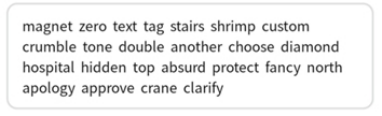
Five key tasks were selected to provide an overall experience of using a cryptocurrency wallet (Biernacki & Plechawska-Wójcik, 2021): creating a cryptocurrency wallet, receiving cryptocurrency, sending cryptocurrency, backing up the wallet, and recovering the wallet using mnemonic codes. A mnemonic code is an array of words used for the backup and recovery of the wallet’s private key (Rezaeighaleh & Zou, 2019) (see Figure 1). The D’CENT application, a cryptocurrency wallet offering all five tasks, was used as the test service.
Prior to the experiment, the participants received a brief explanation of blockchain and cryptocurrency. Afterwards, they performed the tasks according to the instructions and participated in interviews based on their experiences. The total experimental duration was approximately 60 min. For the test subjects, 42 people with no physical or mental problems in using cry- ptocurrency wallets were recruited. The participants’ average age was 25.6 (SD = 5.01) years; 27 of the participants were male and 15 were female. Among all participants, 23 had used a cryptocurrency wallet at least once in their life.
The interview consisted of questions regarding similar experiences related to the tasks performed and the reasons for those experiences being associated with the tasks. The participants’ answers were classified using a thematic analysis methodology. When multiple similar experiences were reported, each was recorded as a separate instance.
Figure 1: Mnemonic code (adapted from the D’CENT application).
RESULTS
Similar experiences mentioned for each task are listed in Table 1. The expe- rience most similar to creating a cryptocurrency wallet was the experience of creating a new account in a mobile banking application. There were also participants who identified the process of creating an ID in a mobile game as a similar experience. They reported that it could be created without requiring much personal information and that each wallet had a unique ID.
The tasks of receiving and sending cryptocurrencies were most frequently associated with similar experiences using mobile banking applications, fol- lowed by simple mobile payment applications. Regarding the wallet backup and recovery processes, most respondents said they had no similar experie- nce. Most participants agreed that this was because of their lack of experience using the backup and recovery of their wallets and their unfamiliarity with mnemonic codes.
Table 1. Key similar experiences mentioned by task.
Table available in the original PDF paper.
Task Similar Experience Count Creating a cryptocurrency wallet Mobile banking application 21 Other cryptocurrency wallets 8 Mobile game 3 Receiving cryptocurrency Mobile banking application 24 Mobile payment application 13 Nothing 5 Sending cryptocurrency Mobile banking application 27 Mobile payment application 18 Cryptocurrency exchange 3 Wallet backup Nothing 26 Mobile banking application 4 Personal information backup 4 Wallet recovery Nothing 17 Personal information and account recovery 13 Finding ID/Password 3
DISCUSSION
It seems that the user’s mental model of creating a cryptocurrency wallet and receiving and sending cryptocurrency is highly similar to that of a mobile banking application. This is because experience in the mobile banking appli- cation was most frequently mentioned as a similar experience in all three tasks. Therefore, a cryptocurrency wallet designed to have a procedure simi- lar to account creation, deposit, and remittance processes of mobile banking applications is expected to enable users to effectively utilize similar processes and provide optimal user experiences.
The task with the highest diversity of identified similar experiences was that of creating a cryptocurrency wallet, and responses were classified into eight categories. Since the wallet creation is a task that must be performed prior to the use of most services, the procedure is highly similar regard- less of the service type. Hence, a wider variety of similar experiences could be utilized in the cryptocurrency wallet creation task, compared with other tasks.
Most participants said that both the backup and recovery processes did not remind them of similar service experiences. This seems to be due to the decentralized nature of the blockchain technology. A decentralized wallet is a digital decentralized transaction system that enables direct transactions betw- een willing parties based on cryptographic proofs, without the need for a trusted third party (Nakamoto, 2012). Therefore, users must perform the backup and recovery processes by themselves using information provided by the system, such as mnemonic codes. Thus, the processes of backing up and restoring a cryptocurrency wallet can be considered a new and unique experience for participants.
A commonly cited similar experience to cryptocurrency wallet recovery was the recovery process in centralized systems, such as restoring an account or personal information. Although the detailed procedures are different
Identification of Similar Experiences That Affect the Mental Model 161
from those for the recovery of cryptocurrency wallets, participants percei- ved similarities because the ultimate goal of both tasks is to recover their data.
CONCLUSION
To provide an effective user experience in blockchain services, it is necessary to determine whether users develop mental models based on prior similar experiences while using various services. This study identified similar experi- ences in the process of using a cryptocurrency wallet. The findings can serve as the basis for establishing a user mental model for cryptocurrency wallets and identifying any usability problems resulting from improper mental model formation.
ACKNOWLEDGMENT
This research was supported by a National Research Foundation of Korea (NRF) grant funded by the Korean government (MSIP) (No. NRF- 2019R1A2C1086366). This research was supported by the MSIT(Ministry of Science and ICT), Korea, under the ITRC(Information Technology Research Center) sup- port program(IITP-2023-2018-0-01441) supervised by the IITP(Institute for Information & Communications Technology Planning & Evaluation.
REFERENCES
Biernacki, K., & Plechawska-Wójcik, M. (2021). “A Comparative Analysis of Cryptocurrency Wallet Management Tools,” Journal of Computer Sciences Institute, (21), pp. 373–377. Jang, H., & Han, S. H. (2022). “User Experience Framework for Understanding User
Experience in Blockchain Services,” International Journal of Human-Computer Studies, 15(102733). Jang, H., Han, S. H., Kim, J. H., & Kwon, K. (2020). “Identifying and Improving Usability Problems of Cryptocurrency Exchange Mobile Applications Through Heuristic Evaluation.”, In Advances in Usability, User Experience, Wearable and Assistive Technology: Proceedings of the AHFE 2020 Virtual Conferences on Usa- bility and User Experience, Human Factors and Assistive Technology, Human Factors and Wearable Technologies, and Virtual Environments and Game Design, Springer International Publishing, USA, 16–20 July, 2020, pp. 15–21. Kim, H. (2016). “The Effects of Prior Similar Experience on Presence of a VR Game:
Focusing on the Mediating Effects of Flow,” Master’s Degree Thesis, Sogang University, Seoul. Nakamoto, S. (2008). “Bitcoin: A Peer-to-Peer Electronic Cash System.,” Decentralized Business Review No. 21260. Nielsen, J. (2010) ‘Mental Models’, Nielsen Norman Group Website, October.
Available at: www.nngroup.com/articles/mental-models (Accessed: 17 October, 2010). Norman, D. (2013). The Design of Everyday Things: Revised and Expanded Edition.
Basic Books.
Rezaeighaleh, H., & Zou, C. C. (2019). “New Secure Approach to Backup Cryptocurrency Wallets,” 2019 IEEE Global Communications Conference (GLOBE- COM), IEEE, pp. 1–6. Young, I. (2008). Mental Models: Aligning Design Strategy with Human Behavior.
New York: Rosenfeld Media.
LISTED IN THE AHFE DIGITAL BOOKSTORE CATALOGUE
Explore the complete digital volume
Usability and User Experience
Read this individual research paper free through the original publisher, or explore the full digital proceedings book.
ISBN 978-1-958651-86-5
Explore this ISBN in the AHFE Bookstore ↗Listed in the July 2026 bookstore catalogue; search by ISBN to confirm current availability · Digital book purchase optional