Aimee Roundtree (2023). User Expectations of Facial Recognition in Schools and Universities: Mixed Methods Analysis. In: Usability and User Experience. AHFE Open Access, vol. 110, pp. 608–620. https://doi.org/10.54941/ahfe1003959
This project explores the relationship between community perception, expectations, and experiences with privacy risk and facial recognition technology used in schools and universities. The methodology includes a meta-analysis of current literature and content analysis of social media content on the subject matter. The meta-analysis revealed that positive attitudes about facial recognition technology used in schools only reflect a portion of the total surveyed. A sentiment analysis of tweets about facial recognition technology used in schools and universities revealed that concerns skyrocketed in 2020, probably caused by the pandemic forcing courses and academic activity online, thereby heightening awareness about facial recognition technology and its implications. Tweets expressed concern about privacy, ethics, and data management. Negative emotion spiked in discussions about unrest and conflicts, possibly due to news about facial recognition used in crowd control. Concerns about power differentials spiked in conversations about how facial recognition would affect academics and education. The trends in attitudes directly pertain to current and projected problems and negative implications of facial recognition on vulnerable populations, including children, seniors, ethnic minorities, and transgender populations. The heterogeneity of the U.S. market requires sensitivity to issues of diversity, equity, and inclusion. Recommendations include operationalizing lessons learned from user experience research. Future studies should investigate trade-offs between privacy, safety, and autonomy.
This project explores the relationship between perception, expectations, and experiences with risks and trustworthiness of facial recognition technology (FRT). It offers analyses of privacy attitudes—particularly those about appli- cations on university and school campuses—using recent surveys and social media comments. It employs a framework derived from UX, beyond fair- ness, and decolonized data science to analyze the data to help focus on the human experience and social engagement in setting privacy policy and pra- ctice. The UX framework invites community participation in all stages of research and design. Beyond fairness is an emerging ethic framework revising
User Expectations of Facial Recognition in Schools and Universities 609
traditional approaches (that generalize and make presumptions from homo- genous hypothetical premises and reinforce inherent inequities) and inviting ethical principles sensitive to real-world heterogeneity, outliers, and margi- nalization. Decolonized data science invites communities to lead discussions and set agendas about data collection, management, use, protection, security, and other parameters. All three influenced data analyses and reporting in this manuscript. This project will provide comprehensive public attitudes about using FRT in schools and universities.
BACKGROUND
Prior studies have examined facial recognition technology’s ethics, communi- cation, and user-centeredness. Codes of ethics that govern professionals who use and create facial recognition technology hold the technology accountable for honoring human rights, consent, and accountability (Roundtree, 2022). FRT research that includes user testing has revealed that the FRT needs to be more accurate and often fails to meet sampling standards necessary for validating and generalizing findings, particularly about vulnerable popula- tions such as young adults and marginalized groups (Roundtree, 2021a). The FRT software tested, study design, and topics covered in the literature left lingering questions about the technology’s potential clinical and ethical applications. The literature overwhelmingly needed to address the complexi- ties of facial change over time and the ethnicities that confound the accuracy of facial recognition software. Facial recognition bodes promising in scena- rios that require identification validation, but human factors research and policy intervention is needed to improve their development and use. The research calls for FRT algorithms to be held accountable for transparency about errors and bias. The codes of ethics reflect the responsibilities required of FRT leadership, professional organizations, and professionals, but fewer expectations for the accuracy and external validity of the software itself. Par- tnerships with the FRT industry may help focus FRT technology design on user-centered concerns (Roundtree, 2021b). Ethics research usually makes the business, financial, and economic case for FRT, with limited discussi- ons about the downsides or real-world cases of FRT successes and failures. According to the research, consumers weigh trade-offs between trust and convenience. The value of using FRT for safety in schools and health is often weighed against the risks of using visual data on minors and other vulnerable populations. What level of benefit was sufficient to outweigh risks remained a lingering question (Roundtree, 2021c). The technology has room for impro- vement in accuracy and precision in assessments of young adults and diverse populations. Developers and industry leaders must uphold FRT to fairness, responsibility, and transparency standards. Human-centered research on FRT has revealed that the development and testing of the technology could be expanded, as could the data sets used to test and refine the technology.
Other research in communication studies reveals more about regulations and public attitudes toward FRT in North America. FRT is underregulated, save for some state and local laws with limited regulatory protection (Rin- gel & Reid, 2023). There is tension between freedom of speech and personal,
610 Roundtree
private data–rules that protect first amendment rights versus those that would impose restraints on how FRT is used. The spectrum of possible regulation ranges from an FRT moratorium to regulations allowing states to impose FRT use requirements. First Amendment challenges are the least likely to impose an actual restraint on technology use. Two surveys of the U.S. public found that political ideology, trust in and deference to government and scie- nce, and beliefs about police predict FRT attitudes, as do factors such as crime television viewing (Brewer et al., 2021). Suspicion of police and government corresponded to negative FRT attitudes, and trust in science and police cor- responded to positive FRT attitudes. A case study of FRT use by police in Canada found that use violated regulations by using images without consent (Gildaris, 2023). The study discussed how privacy protections should include changes to different aspects of culture and life, including selfies, smartphone use, and phone upgrades and backups. Other vectors, such as attitudes about the government and police, inform public perception of FRT. Regulation should reflect the public’s interest and attitudes. Questions persist regarding public perception of FRT in school and university settings, particularly in self-reporting scenarios such as surveys and in settings such as social media content.
Prior studies also examined facial recognition technologies in school and university settings. The literature does not document the pervasive use of FRT in school and university settings. Instead, most of the literature reports alpha and beta tests of small-scale, short-term implementations and shares the hypothetical benefits of widespread, long-term implementations. Stu- dies report FRT to use in schools to save time and repetitiveness of taking attendance, student and campus security and safety from predators, and identification verification as a part of two-step authentication processes, registration, and participation in school activities (de Azevedo et al., 2022; Pimpan & Chorus, 2021; Hammash, 2022; Ratanaubol et al., 2020; Algh- amdia et al., 2020; Pillay and Adebanjo 2022, La et al. 2020). These systems automate other mundane tasks, such as email alerts about absences. The justification for testing and developing these systems included providing convenience, time-saving, accuracy, and safety. However, the studies indicate that such systems, real or hypothetical, would require training on standardi- zed photos and good lighting to map faces and make differentiations in cases such as twins.
Existing studies on pilot implementations of FRT in schools and universi- ties also often did not report samples or populations where these technologies were tested, leaving lingering questions about the generalizability of their findings. Furthermore, the systems faced false positives and negatives, even when the sample was small and relatively homogeneous (Hammash, 2022). There were also limitations with insufficient image resolution and quality, particularly cameras in public spaces and crowds or groups (Ratanaubol et al., 2020). The specter of real-world implementation of these technologies raises concerns about privacy, civil liberties, constant surveillance, and data misuse (Levy, 2010; Godett & Eckes, 2020). Other hypothetical implementa- tions included using FRT to detect levels of engagement in learning. However, such prospective implementations are controversial given the variety of facial
User Expectations of Facial Recognition in Schools and Universities 611
and cultural variables that would make standardizing such subjective imple- mentations difficult and inaccurate, if not impossible (Andrejevic & Selwyn, 2019). Expansion of FRT implementations into subjective assessments such as engagement threatens dehumanizing students, discriminating against vul- nerable populations (i.e., minorities, LGBTQ+, etc.) for whom FRT has proven less than accurate and precise, invading the right to be forgotten and obscure, the increase of authoritarianism and automation to the detriment of autonomy and personal and civil liberties. Questions linger about whether the issues FRT is meant to resolve in school and university settings are severe enough to warrant FRT and the trade-offs and risks they present. Current installations provoke potential violations of fourth amendment rights to pri- vacy, and some implementations have been halted due to unconstitutionality and potential FERPA violations (LoSardo, 2019). There is a lack of regula- tion and protocols necessary for ensuring best practices. Such regulations are essential to promote safety and privacy.
Two studies did ask students themselves their impressions of FRT. One study surveyed 62 high school students’ attitudes regarding FRT being deplo- yed on campus (Ebsary, 2018). The student had concerns about efficacy, safety, and privacy. Most students felt that FRT is restrictive (33.9%), pos- sibly acceptable for use at school entrances (37.7%), but uncertainly good for security (51.6%). They were also very concerned about improper data storage and use (59.7%). Most wanted the ability to opt out of FRT use and data storage (56.4%). They felt it generally appropriate to use FRT to moni- tor campuses for unauthorized people (36.8%) and for verifying their identity (62.1%) and surveillance (56.4%), but are suspicious of school administra- tion using the data for punishment purposes (56.4%). Most students were white (45.2%) or Asian/Pacific Islander (24.2%) and male (64.5%), ages 16 to 18 (83.9%). In another interview and cast study, eight participants at a public university shared their experiences and concerns regarding a pilot implementation of FRT (Fu & Lyu, 2022). Initial impressions ranged from discomfort, confusion, avoidance, and protests about FRT, to concerns about the decision-making processes that FRT will inform and upon which FRT will be implemented. The small sample size makes it difficult to generalize the findings. This study extends these findings by assessing the attitudes of a broader range of public participants.
METHODS
The methodology includes an integrative review and meta-analysis of current surveys on the subject matter. It also includes an analysis of tweets about the subject matter.
A meta-analysis of public opinion surveys provides insight into attitudes toward facial recognition in the United States. In the context of existing knowledge, this study aggregates public opinion representing several more opinions than preliminary studies reported in the background section. Infor- mation sources included original survey citations from the past ten years, dating from 2013 to 2023. Databases used included Google Scholar, Google, Scopus, ScienceDirect, Elsevier, Web of Science, PubMed, ERIC, IEEE Xplore,
612 Roundtree
JSTOR, and ACM. Keyword terms included survey, questionnaire, public, perception, attitudes, facial recognition, and facial recognition technology, among others, searched in titles and abstracts to identify articles where the keywords were the main focus. We included surveys reporting public perce- ption. Surveys were excluded if they did not report perceptions of school or university FRT use. Inclusion criteria specified surveys published betw- een 2010 and 2023. Reviews took place in two rounds by two reviewers. All results reported were compatible regarding the questions answered, and five-point Likert scales were converted to 3-point Likert scales for reporting (positive, neutral, or negative). Consensus determined study inclusion and data synthesis. Missing summary statistics and heterogeneous (mismatching) survey questions were excluded from the meta-analysis. Descriptive statistics were used to combine results using Excel formulas.
Natural language processing methods were applied to analyze social media content about FRT use in universities. Twitter advance search was enlisted using the keywords above (excluding the generic term schools). We follo- wed guidelines for APIs. We used descriptive statistics about the results. One human annotator checked the sample and computer-aided results. We anonymized all data and findings and will redact full quotes for privacy. No personal data, intellectual property, or confidential data was collected. We used Orange.si, LIWC, and Text Analytics for text categorization and topic modeling. Orange is an open-source machine learning and data visualization software. LIWC, or Linguistic Inquiry and Word Count, analyses language to understand thoughts, feelings, personality, and sentiment. Text Analytics uses natural language processing and machine learning to categorize text.
RESULTS
The search yielded 21 surveys. Some surveys contained demographic infor- mation, but some did not; therefore, this analysis does not include demogra- phics. A public opinion survey meta-analysis provides insight into attitudes about facial recognition in the United States. Pew Research, Schoen Cooper- man Research for the Security Industry Association, Nature, the Brookings Institute, The Standard, and Survey Monkey, among others, conducted surveys. Of all 21, most were published by organizations (n = 8), corpo- rations (n = 5), news outlets (n = 4), and peer-reviewed journals (n = 3). A total of 59,307 participants were included in these surveys.
Five of the 21 surveys contained questions regarding FRT use in schools and universities (Capers, 2020; Huang, 2022; Rainie et al., 2022, Security Industry Association, 2020, West, 2018). Of these five surveys, non-profit organizations published three, and corporations published two. The total number of participants in these five surveys that asked school- and university- related questions was 16,202. Two surveys included a question about FRT in schools (grades K to 12), including 3,000 participants; only 18.5% of the participants asked school- and university-related questions. About half of the participants in the two surveys (50%, n = 1490) were positive about using FRT in schools. About a third (32%, n = 960) were negative, and about a fifth (18%, n = 550) were neutral. Two surveys included a question about FRT
User Expectations of Facial Recognition in Schools and Universities 613
in universities, including 1487 participants, reflecting only 9% of the total participants who answered school- and university-related questions. About half (52%, n = 775) of these were positive about using FRT in university settings. About a third (34%, n = 513) were negative, and about a tenth (13%, n = 199) were neutral. Three surveys included a question about FRT being used in stadiums (a feature of both schools and universities), including 14,715 participants, reflecting 91% of the participants who answered school- and university-related questions. Of these, about half were positive about using FRT in stadiums (53%, n = 7836). Almost half were either neutral or negative (47%, n = 6879). In this case, one survey report aggregated neutral and negative; all were reported accordingly.
The percentages are smaller in light of the total number of participants in all five surveys. See Table 1.
The meta-analysis of public opinion surveys on public attitudes toward facial recognition revealed mixed attitudes about facial recognition used in schools and university settings. It only reflected a small proportion of the total participants surveyed. In aggregate, the trends reveal lingering que- stions. The studies reported various positive attitudes about using facial recognition in school and university settings. However, these findings only reflect a small number of all participants surveyed.
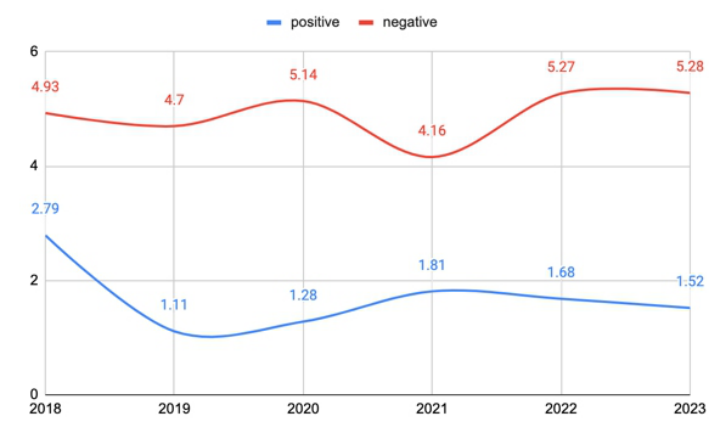
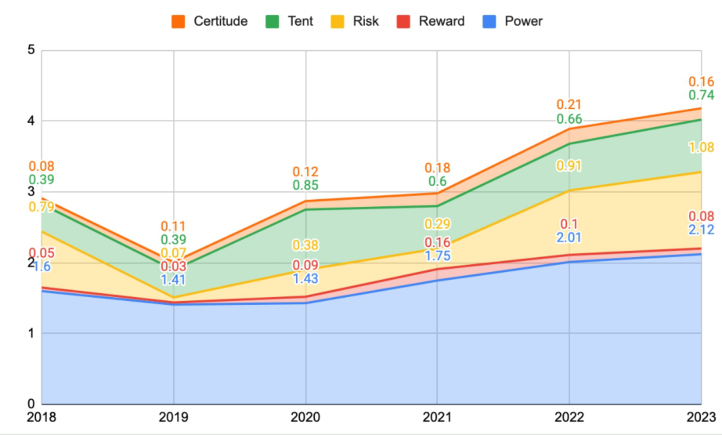
A sentiment analysis of 7184 tweets about facial recognition used on university campuses revealed that negative sentiment increased in 2020, pro- bably caused by the pandemic forcing courses and academic activity online, heightening awareness about facial recognition technology and its implicati- ons. See Figure 1. Social media content expressed concern about protecting privacy (n = 687) and compromising rights on campus (n = 364). Nega- tive content included words about unrest and conflicts, possibly due to news about facial recognition being used in crowd control during protests. There were concerns about power differentials in how facial recognition would affect academics and education, labor, politics, social issues, and unrest. See Figure 2. The trends in attitudes directly pertain to current and proje- cted problems and negative implications of facial recognition on vulnerable populations, including children, seniors, ethnic minorities, and transgender populations.
Table 1. Survey findings.
Table available in the original PDF paper.
Category Citations n Subtotal Subtotal % All % (n = 16,202) School+ SIA, West 1490 3,000 50% 9% School- SIA, West 960 3,000 32% 6% School= SIA, West 550 3,000 18% 3% University+ Capers, SIA 775 1487 52% 5% University- Capers, SIA 513 1487 34% 3% University= Capers, SIA 199 1487 13% 1% Stadiums+ Huang, Rainie, et al., West 7836 14,715 53% 48% Stadiums-= Huang, Rainie, et al., West 6879 14,715 47% 42%
Key: +positive, -negative, =neutral
614 Roundtree
Figure 1: Overall sentiment.Figure 2: Certitude, tentativeness, risk, reward, and power dynamics.
Analysis of social media content about facial recognition on college and university campuses posted from 2018 to 2023 provided insights. Negative tweets about facial recognition on campus rose in 2020 and 2022, proba- bly caused by the pandemic forcing courses and academic activity online, thereby heightening awareness about the technology and its implications. Positive sentiment increased in 2021, and negative emotions (including anger and anxiety) decreased. Topics included mentions of surveillance (n = 850), security (n = 632), police (n = 460), ethics (n = 418), law (n = 501), and
User Expectations of Facial Recognition in Schools and Universities 615
access control (n = 351) surrounding FRT. There were mentions of banning facial recognition in schools and universities (n = 475). There were mentions of FRT compromising civil liberties and individual rights (n = 364). They mentioned concerns about FRT used to identify students instead of suspe- cts. Mentions of law and privacy increased over time, as did mentions of surveillance and FRT reliability. Over the years, social media content ten- ded to increase discussions about the power dynamics of facial recognition, even while the discussion of rewards and risks of facial recognition evened out. Tweets became more tentative about facial recognition over the years. Concerns about power differentials spiked in conversations about how facial recognition would affect academics, education, labor, politics, social issues, and unrest.
Statements with certitude about FRT in schools and universities varied but grew from 2018 to 2023. See Figure 2. However, tentative statements about FRT in schools and universities increased over time and remained larger than statements with certitude. Furthermore, statements about risk increased over time, while statements about reward remained low or decreased. Overall, power differentials were a reoccurring sentiment. Questions and statements about power (i.e., the power of FRT, who has authority over FRT, and the power to opt out of FRT) persisted and were the most prominent sentiment.
Topic modeling and categorization revealed several domains of interest. See Table 2. Social media content discussed the politics of FRT used in schools and universities (n = 2351). Terms unique to the politics category include access control and ethics of using FRT in schools and universities. News about FRT in schools and universities was also a topic of discus- sion (n = 2081), such as using FRT for booking services and activities such as sections of classes. FRT as a computer application (n = 600) and as a technology (n = 593) used in schools and universities was also discus- sed, particularly in authentication, verification, security steps for managing remote work and remote classes, and time savings in tracking students for attendance. Using FRT at stadiums during sports events, at recess, and other leisure related to schools and universities was also mentioned (n = 909), particularly in the context of surveillance for security purpo- ses. Similar discussions emerged around governmental (n = 331) and social (n = 218) intervention in FRT used in schools and universities regarding FRT systems ensuring public safety and detecting weapons and suspects. Finally, discussions about bans and protests at particular schools and uni- versities in Michigan, China, and other location-specific stories also emerged (n = 398).
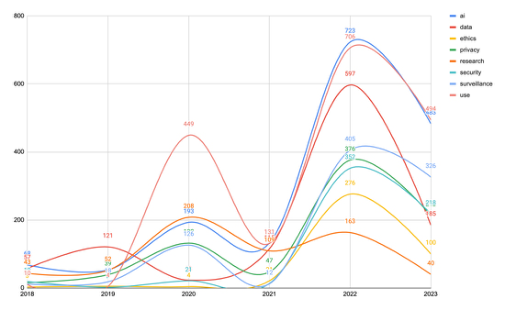
Term or mention frequency parallels topic modeling. See Table 3. The most common terms included concerns, statements, and questions about FRT use (n = 1794), FRT as artificial intelligence (n = 1672), and how FRT mana- ges data (n = 1098). Privacy (n = 823) and surveillance (n = 899) were the subsequent most common mentions. Also, while there were mentions of FRT being used for security purposes (n = 625), there were also questions, com- ments, and concerns about the ethics of using FRT in schools and universities (n = 409).
616 Roundtree
Table 2. Topic modelling and categorization.
Table available in the original PDF paper.
Topic Mentions Coherence Unique Identifiers Politics 2351 0.7 access control, advocates, artificial intelligence, ethical News 2081 0.7 booking Computers 600 0.77 management, reasons, reliability, remote workers, save time, tracking Leisure 909 0.78 physical security, video surveillance Tech 593 0.79 authentication, biometric security, cyber security, aim, verification Education 398 0.8 ban, discipline, Michigan, protesters, schools Government 331 0.8 public safety Society 218 0.79 digital displays, retail tech, store as a medium, systems, weapon detection
Over time, mentions of these key terms grew. See Figure 3. Particularly mentions about FRT being an artificial intelligence (and inheriting the issues
Figure 3: Most mentioned terms.
User Expectations of Facial Recognition in Schools and Universities 617
and concerns about AI) grew almost seven times from 2021 to 2022. Que- stions, comments, and Mentions of how FRT manages data grew almost five times from 2021 to 2022. Comments about the ethics of FRT grew about ten times from 2021 to 2022. Comments about privacy grew almost nine times from 2021 to 2022. Questions, comments, and concerns about FRT used for security grew almost 27 times from 2021 to 2022. Any questions, comments, and concerns about FRT being used for surveillance grew 33 times from 2021 to 2022. Comments about the need for or publication of FRT research grew less (about 0.5 times) from 2021 to 2022.
CONCLUSION
The findings from each analysis provide a rich network of insights. Quan- titative findings provided a wide-range baseline measure of public opinions. In aggregate, survey findings reported various positive attitudes about using facial recognition in school and university settings. However, these findings only reflect a small number of all participants surveyed. Social media fin- dings helped provide more context for the quantitative findings. Negative sentiment remained consistently higher than positive from 2018 to 2023, as did tentativeness (more than certitude) and discussions about the power and authority of and over FRT. The risk was also a more common point of discus- sion than the rewards of FRT. Topic modeling also reveals that politics and news about FRT were the most common topics, as were FRT as a technology for remote work and class, as well as for sports events and leisure activities at schools and universities. However, bans and protests against FRT applicati- ons in schools emerged as a less common but still coherent topic. Finally, FRT was increasingly associated with artificial intelligence (pros and cons). Que- stions, comments, and concerns about FRT used for surveillance and security grew over time, as did, to a lesser extent, questions about the ethics of using FRT in schools and universities. The combination shows that even though safety and security are compelling messages in deliberations about FRT used in schools and universities, tentativeness emerged across all domains, as did discussions of risks over rewards.
The findings enrich conclusions from prior research. Codes of ethics might need to reflect the unique nuances of each setting where FRT is deployed. Superficial public concerns about the fairness and accuracy of FRT parallel some of the issues reflected in the media and research regarding FRT’s false positives and negatives. Public tweets mentioned did not mention company names, so awareness of industry expectations and advancements might be low. However, almost half of the surveys were commissioned by industry, so findings might reflect a bias. Furthermore, questions and conversati- ons lingered regarding data management ethics and using FRT for school and university surveillance. Ethical questions remain regarding the trade- offs between security, safety, surveillance, privacy, and ethics regarding FRT used in schools and universities. Policies still do not regulate or help ensure fairness, transparency, integrity, safety, and responsibility of the technology. All agents involved--developers, industry leaders, and the artificial learning models they create--must be fair, responsible, safe, and transparent.
618 Roundtree
Future studies should examine real-world longitudinal cases of FRT imple- mented in schools to gain a better perspective on the wide adoption of the technology in schools and universities. Future studies should also weigh the trade-offs or ask the public to interview or survey the public to describe the critical inflection points and trade-offs that ensure their trust in the technology. These policies must account or address account for or address privacy, ethics, and responsible data management that gives the public some autonomy over their participation in testing, training, and implementation. Any literature or studies published about the pilot use of FRT in schools and universities should report the software’s benefits, risks, limitations, and weaknesses. Given the levels of tentativeness and questions about risk over reward, it will become necessary for public policymakers and others, human and other human referees, to have an integral role in RT deployment to ensure checks, balances, and fairness before widespread use.
More discreet testing and training are necessary in situ, and human factors and user-centeredness should be the guiding or governing principles. User testing should include more than just the practitioners deploying the techno- logy. It should also include the publics and groups upon whom the technology will be trained. FRT used in schools and universities must not violate existing privacy policies, laws, and regulations, especially in school and university settings. However, given the tentativeness of the public that might require additional levels of regulation and expectation formalized into policy and law, as the literature itself reveals to a limited extent, student concerns about efficacy, safety, privacy, and deployment in intimate settings like classrooms as well as concerns about data, privacy, ownership, and management.
Recommendations for best practices must attend to lessons learned from user experiences, perception, and ethics of deployment in vulnerable popula- tions such as children, seniors, and marginalized groups, including black, brown, and transgender populations. Questions linger about the bigger picture of privacy, bias, safety, and autonomy in new technology in preli- minary findings, particularly regarding vulnerable populations. The hetero- geneity of the U.S. market requires sensitivity to issues of diversity, equity, and inclusion. Systems engineers and others are beginning to understand humans’ role in technology systems. The core challenge is to balance successful hardware and software solutions with human-friendly implementations.
The trends in attitudes directly pertain to current and projected problems and negative implications of facial recognition on vulnerable populations, including children, seniors, ethnic minorities, and transgender populations. Best practices must attend to lessons learned from user experiences, perce- ption, and ethics of deployment in vulnerable populations such as children, seniors, and marginalized groups, including black, brown, and transgender populations. Questions of bias, safety, and autonomy persisted in preliminary findings, particularly regarding vulnerable populations. The heterogeneity of the U.S. market requires sensitivity to issues of diversity, equity, and inclu- sion. Limitations of this study include the constraints that Twitter imposes on tweet collection, redacting full quotations to respect best practices in internet research methodologies and respect of human subjects, inability to collect the entire year of 2023 data, and limitations inherent to natural language
User Expectations of Facial Recognition in Schools and Universities 619
processing software chosen for the project. Despite these limitations, the arti- cle uses mixed methods to verify and reveal valuable insights into the nuances of public attitudes about FRT used in schools and universities. Future studies should explore the value systems underpinning trade-offs between surveilla- nce and privacy, as well as real-world applications, to assess the strengths and weaknesses of FRT in schools and universities.
ACKNOWLEDGMENT
A research gift from the NEC Foundation funded this project.
REFERENCES
Alghamdi, R., Alsubaie, W., Alharthi, R., Alghamdi, W., Alboaneen, D. A., & Alqahtani, N. F. (2020, August). A Smart Attendance System for Imam Abdulrahman Bin Faisal University Using Facial Recognition. In Journal of Physics: Conference Series (Vol. 1627, No. 1, p. 012004). IOP Publishing. Andrejevic, M., & Selwyn, N. (2020). Facial recognition technology in scho-
ols: Critical questions and concerns. Learning, Media and Technology, 45(2), 115–128. Capers, Z. (2020). Facial Recognition Technology: Do Consumers Trust It? GetApp: https://www.getapp.com/resources/facial-recognition-technology/ de Azevedo, Y. C. A., de Jesus, L. R., de Araújo, W. F., da Silva Costa, F. F., Smith,
E., & de Lima, A. A. (2022). School attendance management system for students through facial recognition. ITEGAM-JETIA, 8(38), 15-23. Ebsary, N. J. (2018). Biometric Monitoring Using Facial Recognition, Data Collection, and Storage: Safety and Privacy Perceptions of High School Students. J Comput Sci Syst Biol, 11, 313–318. Fu, H., & Lyu, Y. (2022, February). Facial recognition interaction in a univer-
sity setting: impression, reaction, and decision-making. In Information for a Better World: Shaping the Global Future: 17th International Conference, iCon- ference 2022, Virtual Event, February 28–March 4, 2022, Proceedings, Part I (pp. 329–343). Cham: Springer International Publishing. Hammash, N. M. (2022). Electronic Clearance System Using Facial Recognition System: A Case Study Of Tikrit University. Webology (ISSN: 1735-188X), 19(3). Huang, J. (2022). Face of the Future: Key Findings. Cyberlink: https://www.cyberlin
k.com/faceme La, D. T., Tran, H. Q., Le, N. T., Nguyen, Q. L., Nguyen, T. T. A., & Van Pham, T. (2020, November). Design Integrated Staff Welcoming and Administration System Based on Facial Recognition for Smart University. In 2020 5th Interna- tional Conference on Green Technology and Sustainable Development (GTSD) (pp. 436–441). IEEE. Levy, A. (2010). Schools installs£ 9, 000 facial recognition cameras to stop students
from turning up late, and teachers could be the next target. Mail Online. Retrieved April 2, 2012. LoSardo, A. (2019). Faceoff: The fight for privacy in American public schools in the wake of facial recognition technology. Seton Hall Legislative Journal, 44(2), 6. Godett, B. & Eckes, S. E. (2020). Risk of Exposure: Considering Facial Recognition
Technology in the School Setting. Principal Leadership. NASSP.
620 Roundtree
Pillay, C., & Adebanjo, H. M. (2022, March). Implementing Facial Recognition to Safeguard Against Password Attacks at Universities. In 2022 Conference on Information Communications Technology and Society (ICTAS) (pp. 1–5). IEEE. Pimpan, P., & Choruk, K. (2021). A Study On Facial Analysis Techniques For Develo-
ping School Security System Using A Face Recognition System. NVEO-NATURAL VOLATILES & ESSENTIAL OILS Journal| NVEO, 2813-2820. Rainie, L., Funk, C., Anderson, M., & Tyson, A. (2022). The public is more likely to see facial recognition used by police as good rather than bad for society. Pew: https://www.pewresearch.org/internet/2022/03/17/public-more-likely-to-se e-facial-recognition-use-by-police-as-good-rather-than-bad-for-society/ Ratanaubol, C., Wannapiroon, P., & Nilsook, P. (2020). Digital Forensic Mana-
gement System Using Facial Recognition for Student’s Participation and Regi- stration in School Activities. International Journal of Education and Information Technologies. 14, 142–152. Roundtree, A. K. (2022, July). Facial Recognition Technology Codes of Ethics: Content Analysis and Review. In 2022 IEEE International Professional Commu- nication Conference (ProComm) (pp. 211–220). IEEE. Roundtree, A. (2021, July). Testing facial recognition software for young adults
and adolescents: An integrative review. In HCI for Cybersecurity, Privacy, and Trust: Third International Conference, HCI-CPT 2021, Held as Part of the 23rd HCI International Conference, HCII 2021, Virtual Event, July 24–29, 2021, Proceedings (pp. 50–65). Cham: Springer International Publishing. Roundtree, A. (2021, October). Facial Recognition UX: A Case Study of Industry- Academic Partnerships to Promote User-Centered Ethics in Facial Recognition. In Proceedings of the 39th ACM International Conference on Design of Communi- cation (pp. 240–246). Roundtree, A. K. (2021, June). Ethics and facial recognition technology: An inte-
grative review. In 2021 3rd World Symposium on Artificial Intelligence (WSAI) (pp. 10–19). IEEE. Security Industry Association. (2020). Schoen Cooperman Research SIA Facial Recognition Study. Securityindustry.org: https://www.securityindustry.org/wp-conten t/uploads/2020/11/Facial-Recognition-Study-Topline-Results-Final.pdf West, D. (2018). Brookings survey finds 50 percent of people are unfavorable
to facial recognition software in retail stores to prevent theft. Brookings: https://www.brookings.edu/blog/techtank/2018/10/08/brookings-survey-finds -50-percent-of-people-are-unfavorable-to-facial-recognition-software-in-retail -stores-to-prevent-theft/
LISTED IN THE AHFE DIGITAL BOOKSTORE CATALOGUE
Explore the complete digital volume
Usability and User Experience
Read this individual research paper free through the original publisher, or explore the full digital proceedings book.
ISBN 978-1-958651-86-5
Explore this ISBN in the AHFE Bookstore ↗Listed in the July 2026 bookstore catalogue; search by ISBN to confirm current availability · Digital book purchase optional