In disasters such as the Great East Japan Earthquake and water accidents, many residents do not take evacuation action even after warnings are given, or they are careless or negligent about the danger. Additionally, poor visibility is likely to lead to serious injuries and accidents such as falls and tumbles. In such a disaster or dangerous situation, warnings are a very effective way to warn people of danger but the final decision to evacuate or avoid is individual. Previous studies suggest a prevailing optimistic bias towards disasters among individuals, underscoring the importance of emotional factors, which often override scientific information, in promoting evacuation behavior. Traditional warnings typically leverage visual or auditory signals, which may not be effective under conditions of poor visibility. Vibrotactile warnings, on the other hand, do not rely on these senses and can effectively alert individuals to imminent danger. However, those remains unclear whether vibrotactile warnings can counteract the optimistic bias towards threats and foster emotional factors that stimulate evasion. In this study, we propose a shoe-based interface using vibrotactile sensation to promote instinctive danger avoidance and evacuation behavior in disasters and poor visibility. By harnessing the natural 'averse behavior' of living organisms, our interface incites instinctive danger avoidance via unpleasant vibrations and tactile sensations. We conducted an experiment to identify the location of a vibration motor and an experiment to identify the vibration pattern that causes unpleasant emotions. The results showed that a toe was appropriate for the former, and a vibration pattern with a constant vibration time and a decreasing stop time was appropriate for the latter. Then, to verify the effectiveness of the shoe-based interface produced based on the results as a warning, we conducted a comparison experiment with existing sound warnings. We evaluated subjects' avoidance success and emotional responses utilizing questionnaires and biological data. Two experiments were conducted: one without prior explanation and one with prior explanation. Results showed a slightly lower success rate in avoiding danger compared to the sound warning, but both warnings without prior explanations induced over 80% of unpleasant and negative emotions. The percentages were 66.7% and 57.1% for the vibration and sound warnings, respectively, with prior explanation. In a post-experiment question, over 90% of subjects expressed not wanting to proceed with either warning. Therefore, this interface is slightly inferior to existing sound warnings in terms of stopping walking, but it has similar functionality in inducing unpleasant emotions, not wanting to go on, and having difficulty becoming accustomed to the stimulus. Moreover, our interface has the potential to promote instinctive avoidance and evacuation behaviors by instilling a sense of crisis. While the effectiveness of this approach was demonstrated in VR scenarios, its real-world effectiveness is yet to be established. Additionally, we did not consider the strength of the vibration while investigating the mounting positions and patterns. Future research will aim to investigate the ideal strength and number of vibration motors to optimize the system's performance and conduct real-world testing to evaluate its efficacy.
In Japan, the number of water accidents has remained almost unchanged over the past 15 years from 2006 to 2022 (National Police Agency, 2022). These accidents mostly occur during fishing, particularly due to inattention to weather and sea conditions caused by poor visibility and carelessness and negligence toward danger, such as during nighttime (Japan Coast Guard, 2017). Moreover, a previous study stated that people tend to underesti- mate and have an optimistic bias toward disasters (Solberg et al., 2010). In addition, emotional factors are more important than judgments based on
scientific information in promoting evacuation behavior during a disaster. Communication that promotes an intuitive sense of crisis is also necessary to facilitate evacuation behavior (Ohtomo et al., 2020). However, people are not always present during dangerous situations. Therefore, it is important to feel a sense of crisis, even in situations where no one is present. Thus, to pro- mote evacuation and avoidance behaviors, it is necessary to prevent optimism and disregard for danger, which requires a sense of crisis.
In addition to the dark nighttime conditions mentioned earlier, there are other poor visibility conditions, such as dense fog and snowstorms. Stud- ies evaluating the visibility of warning signs under foggy conditions have reported that the visibility decreases as the visibility conditions change from clear to foggy (Munehiro et al., 2006). Thus, there is a risk of serious injury or accident under poor visibility conditions owing to its low visibil- ity. Vibrotactile warnings are effective under poor visibility conditions, as they do not interfere with the audiovisual senses. Research on this subject includes a warning system for back pain during work using vibrotactile feed- back (Kawano et al., 2013) and a basic study on a vibrotactile warning system for automobiles (Murata, 2011). Although these systems are effec- tive in providing danger warnings, their effectiveness in preventing optimistic biases toward danger and creating emotional factors that promote avoidance behavior is unclear.
In this study, we developed a shoe-based interface using vibrotactile sen- sation that promotes avoidance behaviors by instinctively inducing a sense of danger in people. This warning system is expected to provide a sense of danger and promote instinctive avoidance behavior even when there are no other people present.
In this study, we used the aversive behavior of creatures as a method to promote instinctive danger avoidance. This is an instinct of organisms that increases their probability of survival and refers to escape or avoidance behavior in response to what are called unpleasant emotions. Unpleasant emotions include tension, sadness, anxiety, aversion, and fear. In this study, we used vibrotactile stimuli to induce unpleasant emotions and aversive behavior and promote instinctive danger avoidance.
Using Foot The foot is indispensable to bipedal humans, and shoes are objects many peo- ple wear for their feet. Because the foot is in contact with the ground, walking motion is based on tactile information from the ground. In the absence of visual acuity, tactile and sensory information from the foot is particularly important and necessary for understanding the ground situation. Thus, the tactile and sensory perception of the foot is the most directly involved part of gait, which is influenced by the transmission of information to the foot.
186 Mito and Misaki
The foot and gait are closely related, and several studies have been conducted on this topic. Examples include research on floor-type gait guidance system without audiovisual attention (Okazaki et al., 2022) and the effect of sole stimulation on the center-of-gravity sway during walking (Ishiyama et al., 2016). In addition, a study reported that vibration stimulation of the legs is more effective as an alarm than stimulation of the back or abdomen in the elderly whose sensory functions are deteriorating (Murata et al., 2011).
In this research, we developed a method to avoid danger and provide warn- ings under poor visibility conditions. To this end, we created a shoe-based interface that directly affects walking behavior by stimulating the foot, as in the above research. However, the center-of-gravity shift during walking is dangerous under poor visibility conditions because it may lead to falling (Ishiyama et al., 2016); therefore, the sole was not stimulated in this research for safety reasons.
EXPERIMENT FOR DETERMINING THE POSITION OF VIBRATION MOTORS ON THE FOOT This particular experiment aims to determine the appropriate location of the vibration motor on the foot to fabricate a shoe-based interface. The foot has various parts, such as the toes and instep, that feel vibrations differently; therefore, it is necessary to determine the appropriate position of the foot as a stimulus that provides a warning. In additions, to convey danger as a warning, it is essential for the vibration to be effectively transmitted as a pre- condition. Therefore, the position where the vibration was most strongly felt on the foot was determined to be the appropriate location for the vibration motors in this experiment.
Method
The participants were seven healthy male university students in their 20s, all of whom were right-handed and right-footed. To simulate poor visibility, the participants were fitted with eye masks. Subsequently, they were asked to step on the spot, and vibration stimuli were applied to the toe, both sides, instep, and heel of their foot. Two vibration motors with a frequency of approxi- mately 216 Hz were used for the vibration. After applying the vibration to each site, the participants were asked to answer a questionnaire using the 5-step SD method (semantic differential scale method) to evaluate how they felt about the vibration intensity. Additionally, only the foot opposite to the dominant foot was subjected to vibration stimulation for safety reasons.
Result
Based on the results of the questionnaire responses, the Friedman test was conducted with a significance level of 5%. We found a significant difference in the perception of vibration intensity in each part of the foot (p = 0.0285 < 0.05). The toe is the site where the vibration is felt most strongly among the four parts of the foot: toe, both sides, instep, and heel. This may be attributed to the fact that the toes are technically similar to fingers, which have a long, thin structure that amplifies the vibration of the vibration motor, thereby
causing a stronger sensation. In this study, the toe was used as installation positions for the vibration motors.
EXPERIMENT FOR INVESTIGATING VIBRATION PATTERNS FOR UNPLEASANT AND NEGATIVE EMOTIONS This particular experiment aims to investigate the vibration patterns that cause people to feel unpleasant and negative emotions to induce averse behavior.
In this study, we measured the peripheral skin temperature and electro- dermal activity (EDA) using an E4 wristband (Empatica). These data were used to measure unpleasant emotions. Peripheral body temperature decreases when people are nervous or feel unpleasant emotions, such as disgust or fear (Shimada, 2004 and Ono, 2012). By contrast, EDA is used to assess emotions, arousal, stress, and tension. EDA is reported to increase during negative high arousal sessions or in states of stress or tension and remains almost unchanged at high values in states of negative low arousal (Dingding, 2018 and Mitsugi, 2021). In this study, we assumed that the participants felt unpleasant and negative emotions when their body temperature decreased and EDA increased.
Table 1. Five vibration patterns.
Table available in the original PDF paper.
Vibration Patterns
1. Constant vibration time and stop time 2. Constant vibration time and decreasing stop time 3. Constant vibration time and increasing stop time 4. Constant stop time and decreasing vibration time 5. Constant stop time and increasing vibration time
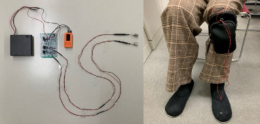
Figure 1: Developed device (left) and its appearance when worn (right).Table 2. Percentage of participants who felt unpleasant and negative emotions.
Table available in the original PDF paper.
Constant Stop
Constant Periodic Vibration
Constant Vibration Time Time
DS IS DV IV Percentage 57.1% 66.7% 57.1% 57.1% 57.1%
The participants were seven healthy male university students in their 20s, all of whom were right-handed and right-footed. The experiments were con- ducted under the same conditions as those described in the previous section. Vibration stimuli were applied to the toe in five vibration patterns (Table 1) while the participant was asked to step on the spot. After applying vibrations to each site, the participants were asked to answer a questionnaire using the 5-step SD method to evaluate how uncomfortable and tense they felt. In addi- tion, this experiment was conducted using a wristwatch-type wearable device, the E4 wristband (Empatica), to obtain the skin temperature and EDA data, which were used to evaluate unpleasant emotions. The evaluation was per- formed by comparing the obtained skin temperature and EDA data from the participants with the baseline measurements (average) to determine whether there was an increase or decrease in values. In this experiment, “vibration time” and “stop time” were defined as the times when the vibration motor was vibrating and when the motor was stopped, respectively.
RESULT
Based on the questionnaire results, we conducted the Friedman test at a sig- nificance level of 5%. The results of the Friedman test showed no significant difference regarding feeling uncomfortable based on the vibration pattern (p > 0.05). For the tension items, we found a significant difference based on the vibration pattern (p = 0.0032 < 0.05). Therefore, the vibration pattern with a constant vibration time and decreasing stop time was found to be the vibration pattern with the most tension.
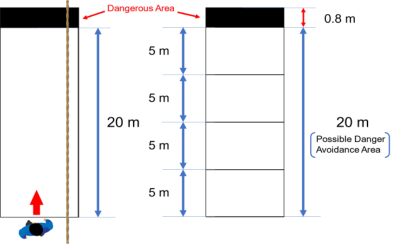
Figure 2: Model diagram of the experiment (left) and possible danger avoidance area (right).
Table 2 shows the percentage of participants who felt unpleasant emotions in each pattern using biological data. These results were based on data from six participants, excluding one participant whose data could not be measured owing to a measurement error during the experiment. The results showed that the vibration pattern with constant vibration time and decreasing stop time was considered appropriate for unpleasant and negative emotions.
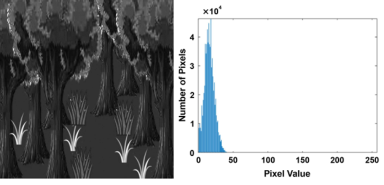
Figure 3: Illustration of poor visibility condition reproduced in VR (using Unity Asset: Fantasy Forest Environment) (left) and histogram of the actually presented footage (right).
OVERVIEW OF SHOE-BASED INTERFACE Fig. 1 shows the developed shoe-based interface. The left side of the figure shows the control part for controlling the vibration motor and connect- ing the M5StickC, batteries, and vibration motor. The right side shows its appearance when installed. The vibration motor was controlled remotely via a Bluetooth connection to the M5StickC using a smartphone. The control unit was placed in a pouch, and the vibration motor was attached to the shoe. Based on the experimental results in the previous sections, we mounted the vibration motor in the toe and set the vibration pattern with constant vibration time and decreasing stop time.
EXPERIMENT FOR EVALUATING THE EFFICACY OF THE SHOE-BASED INTERFACE IN PROVIDING WARNINGS IN POOR VISIBILITY CONDITIONS This particular experiment aims to verify whether the participant can avoid danger instinctively under poor visibility conditions by wearing the fabricated shoe-based interface device and verify its effectiveness in providing warnings under the said conditions. In this experiment, we compared the shoe-based interface with an existing sound warning. In addition, to prevent the partici- pant from falling, only the leg opposite to the dominant leg was stimulated, and the participant was guided to walk straight along a string to ensure safety.
Relationship Between Danger Avoidance and Stopping Distance In this experiment, we verified whether the participants were able to avoid danger after receiving a warning. Successful danger avoidance was defined in this experiment as the ability to respond to danger by avoiding it from a dis- tance at which it was possible to avoid or stop. To determine the distance at which danger avoidance was not possible, we referred to a study that inves- tigated the ability to suddenly stop when walking in terms of age and gender (Cheng et al., 1998). They reported that all ages, regardless of gender, must recognize the obstacle in front of them at approximately 0.77 m or more to achieve a 50% success rate in the task of stopping to avoid contact with an unexpected obstacle while walking at 1.3m/s.
190 Mito and Misaki
Table 3. Vibration and sound patterns at different distances.
Table available in the original PDF paper.
0≦x < 5 (Area 1)
5≦x < 10 (Area 2)
10≦x < 15 (Area 3)
15≦x < 20 (Area 4) Vibration Patterns V Time 1000 [ms] 1000 [ms] 1000 [ms] 1000 [ms] S Time 800 [ms] 500 [ms] 300 [ms] 100 [ms] Sound Patterns On Time 1000 [ms] 500 [ms] 100 [ms] 100 [ms] Off Time 1000 [ms] 200 [ms] 100 [ms] 50 [ms]
V Time: Vibration Time. S Time: Stop Time. On Time: Time that the sound continuously plays. Off Time: Time when no sound is heard.
Using this study as a reference, we set the distance at which danger avoid- ance is impossible to 0.8 m, and successful danger avoidance was defined as stopping at a distance greater than 0.8 m from the danger. Accordingly, the experimental conditions were set, as shown in Fig. 2. The total length was 20.8 m. As shown on the right diagram, the distance between 0 and 20 m from the starting point was defined as the possible danger avoid- ance area. If the participant stopped at the possible danger avoidance area, the participant was considered to have successfully avoided the danger. If the participant advanced more than 20 m to the danger area, the partic- ipant was considered to have failed in avoiding the danger. The possible danger avoidance area was divided into four, which were 5 m apart from each other.
METHOD
The participants were 16 healthy male university students in their 20s, all of whom were right-handed and right-footed. This experiment was designed as a comparative experiment conducted under identical conditions. It aimed to assess the effectiveness of the shoe-based interface, proposed in this study and utilizing tactile stimulation for the feet, in comparison to a sound warn- ing system based on the sound standards specified for household electrical appliances by AEHA (Association for Electric Home Appliances, 2018). To make the visibility as realistic as possible, we asked the participants to wear an HMD (Meta Quest 2) and reproduced the poor visibility conditions in VR. In addition, the VR view was set to move according to the gait of the participant. The participants were asked to walk straight through the area shown in Fig. 2 while viewing images with poor visibility reproduced by VR. Fig.3 shows illustration of poor visibility condition reproduced in VR and histogram of the actually presented footage. We compared the shoe-based interface with an existing warning system by measuring whether the subjects stopped after receiving the warning (success or failure of danger avoidance), the stopping distance, questionnaire responses, and biometric data using the E4 wristband. The participants listened to the warning sounds via wireless earphones (SONY WF-1000XM4). Table 3 shows the vibration pattern of the warning system and that of the warning sound of home appliances. Vibra- tion and sound patterns were set for each distance of the possible danger avoidance area so that the closer the participant approaches the danger area,
Table 5. Percentage of participants who felt unpleasant and negative emotions during the experiment (verification of effectiveness in danger avoidance).
Table available in the original PDF paper.
Without prior explanation With prior explanation Vibration Sound Vibration Sound
Percentage 83.3% 85.7% 66.7% 57.1%
The experiment was conducted under four conditions: two vibration and sound warnings without prior explanation and two vibration and sound warnings with prior explanation. The details of each warning are presented in Table 3. The participants were initially warned without prior explanation of an incoming warning, and subsequently warned with prior explanation. To counterbalance the warning, the 16 participants were divided into two groups; one group was given the vibration warning first, whereas the other was given the sound warning first. After being warned, we asked the partici- pants to answer a questionnaire using the 5-step SD method to evaluate their feelings of discomfort, tension, and sense of crisis. They were then asked to answer a questionnaire with the question “Do you still want to move forward despite receiving a warning (vibration or sound)?”
RESULTS
Based on the questionnaire responses, a Wilcoxon signed-rank sum test was conducted with a significance level of 5%. The results of the Wilcoxon signed- rank sum test showed no significant differences on items pertaining to feeling uncomfortable, tension, and a sense of crisis (p > 0.05) for both the shoe- based interface and the sound warning.
Table 4 shows the success rate of danger avoidance for each warning with and without prior explanation. The success rate of danger avoidance was higher with the sound warning, although the difference was only by one per- son in the cases with and without prior explanation. In addition, Table 4
192 Mito and Misaki
shows the stopping distances for each warning with and without prior expla- nation. A corresponding t-test was conducted with a significance level of 5% for the stopping distance for each vibration and sound warning. The t-test results showed p = 0.0496 (< 0.05) and p = 0.0331 (< 0.05) for the case without and with prior explanation, respectively. Therefore, we found a significant difference in the stopping distance for both vibration and sound warnings with and without prior explanation. In both cases, the stopping distance was shorter with the sound warning.
Table 5 shows the percentage of participants who felt unpleasant and neg- ative emotions as determined using their body temperature and EDA. Two participants failed to have their biological data measured, and several par- ticipants were unable to measure their EDA in each experimental condition. Therefore, we only presented the data of those who were able to measure both their temperature and EDA. The percentage of participants who felt unpleasant and negative emotions was 83.3% for the case of vibration warn- ing without prior explanation and 85.7% for that of sound warning without prior explanation, with the latter having a higher percentage. In the case of warnings with prior explanation, 66.7% of the participants felt unpleasant and negative emotions for the vibration warning and 57.1% for the sound warning, with the former having a higher percentage.
In addition, based on the results of the interview with the participants after the experiment, more than 90% of them did not want to move forward with receiving both warnings.
DISCUSSIONS The results in Table 4 indicate that the existing sound warning was more effective in preventing people from walking than the vibration-based, shoe- based interface. However, because the difference was only observed in one person, it was not considered a large difference.
Regarding unpleasant and negative emotions, we did not find a signifi- cant difference between the sound warning and the shoe-based interface using vibration in terms of discomfort, tension, and sense of crisis from the results of the questionnaire. However, the measured biological data showed that the percentage of unpleasant and negative emotions without prior explana- tion was more than 80% for both warnings (Table 5). Therefore, although both systems cause unpleasant and negative emotions, there are individual differences in the degree of unpleasantness.
Regarding the difference in the percentages between the cases with and without prior explanation, the percentages of feeling unpleasant and nega- tive emotions decreased by 16.6 and 28.6 points for the vibration and sound warnings, respectively. This implies that it is easier to become accustomed to sound as a stimulus compared to vibration. Additionally, habituation to warnings is thought to cause disregard or carelessness of warnings. Therefore, it is an important warning element that the user does not easily become accus- tomed to the stimulus and continues to feel unpleasant emotions. Therefore, the proposed system is superior in this respect.
The reason for the lower danger avoidance rate in this system may be due to the difference in the rates of sensory information perception and experience. The percentage of information perceived by the five senses is 11.0% and 1.5% for hearing and touch, respectively (Editorial Commit- tee on Educational Equipment, 1972), suggesting that there is a difference in the amount of information received by sensing the stimuli, and that sound may have been more important. The amount of information received by sensing the stimuli may have been greater for sounds. In this study, the installation position and vibration pattern were identified; however, the vibration intensity was not considered. The difference in perception should have been considered by increasing the vibration intensity. Another reason for the difference in experience is that most of the warnings in our surroundings are visual and auditory, and those used in this experi- ment are also used in home appliances; therefore, the sound can be easily understood as a warning. In the post-experiment interviews, several par- ticipants responded in this manner. This implies that the success rate of sound warnings is high because they are familiar to the participants through experience. Alternatively, about the vibration, more than half of the partic- ipants stopped walking after sensing something, despite their unfamiliarity with it as a warning. This can be interpreted as an instinctive avoidance of danger. In the interview conducted after the experiment, approximately 94% of the participants opt not to continue walking after receiving our warning, which is also the case with the sound warning. Therefore, we assume that the proposed interface may serve as a warning that calls for instinct.
CONCLUSION
In this study, we developed a shoe-based interface using vibrotactile sensa- tion that does not interfere with audiovisual perception under poor visibility conditions and instinctively promotes danger avoidance. Subsequently, we conducted a comparative experiment to validate the effectiveness of our proposed shoe-based interface, which relies on tactile foot stimulation. We compared its performance with that of a sound warning system adhering to the sound standards established for household electrical appliances by AEHA (AEHA, 2018). The results showed that the interface was slightly inferior to the existing sound warning in terms of the ability to stop a participant from walking; however, this was only observed in one of the participants. The interface exhibited similar and even better performance in terms of gener- ating unpleasant and negative emotions, and reminding people not to keep walking. Moreover, about the vibration, more than half of the participants stopped walking, as they sensed something despite their unfamiliarity with vibration as a warning. Therefore, the interface is considered to be effective in promoting instinctive danger avoidance. Future work will include increasing the intensity of vibration and the number of vibration motors to improve per- formance. This research is expected to provide a basis for to how to promote more effective avoidance behaviors.
194 Mito and Misaki
REFERENCES
Association for Electric Home Appliances (AEHA). (2018). “Guidelines for Auditory Signals for Improving the Usability of Home Appliances, 2nd Edition (Revised)”. (in Japanese). Atsuo, Murata., Susumu, Kemori., Makoto, Moriwaka., (2011). “Basic Study
on Automotive Warning Presentation to Front/Rear Danger by Vibrotactile Stimulation”. Journal of Human Factors. Vol. 47, No. 5, pp. 198–208, doi: 10.5100/jje.47.198. Cheng, Cao., James, A. Ashton-Miller., Albert, B. Schultz., Neil, B. Alexander. (1998).
“Effects of age, available response time and gender on ability to stop suddenly when walking”. Gait and Posture. Vol. 8 No. 2 pp. 103–109, doi: 10.1016/s0966- 6362(98)00029-0. Christian, Solberg., Tiziana, Rossetto., Hélène, Joffe. (2010). “The social psychology of seismic hazard adjustment: re-evaluating the international literature”. Natu- ral Hazards and Earth System Sciences. Vol. 10, Issue 8, pp. 1663–1677. doi: 10.5194/nhess-10-1663-2010. Dingding, Zheng., Kan, Kunze. (2018). “Emotion tracking and embodiment: cor-
relation between physiological signals and emotions”. Keio University Graduate School of Media Design. KeiO Associated Repository of Academic resources Web- site: https://koara.lib.keio.ac.jp/xoonips/modules/xoonips/detail.php?koara_id=K O40001001-00002018-0641. Don, Samitha, Elvitigala., Roger, Boldu., Suranga, Nanayakkara., Denys J. C.
Matthies. (2022). “TickleFoot: Design, Development and Evaluation of a Novel Foot-Tickling Mechanism That Can Evoke Laughter”. ACM Transactions on Computer-Human Interaction. Vol. 29, pp. 1–23, doi: 10.1145/3490496. Editorial Committee on Educational Equipment. (1972). “Handbook of Industrial Education Equipment Systems”. Nikkagiren Publishing Co., Ltd. Tokyo. Japan. (in Japanese). Japan Coast Guard. (2017). “Spring Report 2017”. Kazunori, Munehiro., Roberto, Tokunaga., Kiyoshi, Ninomiya. (2006). “A Study
on Visibility Evaluation of Roadside Objects under Dense Fog Conditions”. in proceedings of the 49th Technical Research Presentation of Hokkaido Regional Development Bureau. (in Japanese) Moe, Mitsugi., Kazutaka, Maruyama. (2021). “A preliminary study estimating audience excitement using EEG and EDA”. Proceedings of the Entertainment Computing Symposium (EC2021). pp. 370–374. Narin, Okazaki., Takatoshi, Yoshida., Alfonso, Balandra., Zendai, Kashino.,
Masahiko, Inami., (2022). “Preliminary Study on Foot Perception Towards Devel- oping a Floor-Based Navigation System”. The 27th Annual Conference of the Virtual Reality Society of Japan. ROMBUNNO.2B1-3. National Police Agency. (2022). “Overview of water accidents in 2022”. (in Japanese) Ryosuke, Ishiyama., Hideto, Kanzaki., Kyohei, Yamamoto., Ikumi, Suzuki. (2016).
“Effects of Different Plantar Stimulation Sites on Center of Gravity Sway and Lower Extremity Muscle Activity during Walking”. Physical Therapy Supplement. Vol. 43, No. 2, pp. 594, doi: 10.14900/cjpt.2015.0594. (in Japanese). Shoji, Ohtomo., Reo, Kimura., Yoshiaki, Kawata., Keiko, Tamura. (2020). “The Determinants of Residents’ Evacuation Behavior in the Torrential Rain in Western Japan in 2018: Examination of Survey Data of Victims in Okayama Prefecture”. J. Disaster Res., Vol. 15, No. 7, pp. 1011–1024.
Takako, Shimada. (2004). “Relationships Between the Affects of Comfort and Discomfort and Deep Skin Temperature and the Skin Conductance Level”. Japanese journal of nursing art and science. Vol. 3 No. 2, pp. 5–12, doi: 10.18892/js- nas.3.2_5. Taketoshi, Ono. (2012). “The Brain and Emotion: From Neurons to Behavior”.
Asakura Publishing Co., Ltd. Tokyo. Japan. (in Japanese) TriForge Assets. “Fantasy Forest Environment”. Unity Asset Store Web- site: https://assetstore.unity.com/packages/3d/environments/fantasy/fantasy-fore st-environment-free-demo-35361. (Accessed 7 January 2023). Tsuneo, Kawano., Yutaka, Fukui., Ryuhei, Okuno., Sho, Yokota., Towa, Muramatsu., Atsushi, Kosaki. (2013). “An Alarm System for Low Back Pain with Vibrotactile Feedback to the Low Back during Working”. Proceedings of the 2013 JSPE Autumn Conference. pp. 547–548, doi: 10.11522/pscjspe.2013a.0.547.0.
LISTED IN THE AHFE DIGITAL BOOKSTORE CATALOGUE
Explore the complete digital volume
Human-Centered Design and User Experience
Read this individual research paper free through the original publisher, or explore the full digital proceedings book.
ISBN 978-1-958651-90-2
Explore this ISBN in the AHFE Bookstore ↗Listed in the July 2026 bookstore catalogue; search by ISBN to confirm current availability · Digital book purchase optional