People with physical disabilities often spend a significant amount of time in a sitting position. As a result of paralysis affecting the lower body, they may be unaware that they are assuming a high-load posture, which can contribute to issues such as pressure ulcers, shoulder stiffness, back pain, muscle imbalances, and diminished physical function. While seating technologies have been proposed to correct sitting posture, most existing methods are primarily designed for hospital settings and lack interventions for daily posture. To address this gap, we have developed a mat-type pressure-sensitive sensor device that can be mounted on a wheelchair. This device comprises 32 seat sensors and 12 back sensors, which estimates sitting posture during daily activities and provides feedback to the individual through smartphone alerts, heatmap review, and expert remote advice on posture improvement and training. This study aimed to evaluate the effectiveness of the device and identify areas for improvement.Seventeen wheelchair users with physical disabilities, including individuals with spinal cord injuries or cerebral palsy, participated in a five-week user test. Ten participants received device feedback, while seven participants did not. The device's effectiveness was assessed by comparing pre- and post-intervention outcomes and comparing outcomes between the intervention and non-intervention groups. Physical function was evaluated using a reach test, changes in internal symptoms and postural awareness were investigated through a questionnaire, and sitting posture was evaluated by the device. Additionally, Semi-structured interviews were conducted with seven participants from the intervention group to gather their perspectives on device usage and potential improvements.The results of the study demonstrated that the intervention had a positive impact on several aspects of postural change, secondary health issues prevention, and physical function improvement. Statistically significant differences were observed in a limited number of items, such as the lateral reach test results and anxiety related to pressure ulcers. The wide variance in the physical and living conditions of the participants, coupled with the fact that the effects of secondary disability and physical function take time to manifest, might have contributed to the non-significance of certain results within the five-week study period.The interviews provided valuable insights into the future direction of device improvement. Participants expressed concerns about the disparity between their perceived posture and the posture indicated by the equipment, as well as the challenges in understanding how to achieve an ideal posture. There is a recognized necessity to develop a novel feedback method that allows individuals to comprehend their posture from an external perspective and guide them toward a posture with minimal strain.In conclusion, our study demonstrates the effectiveness of the wheelchair-mounted pressure-sensitive sensor device in improving sitting posture, preventing secondary disabilities, and enhancing physical function among individuals with physical disabilities. While statistically significant results were partly observed, further research is needed to establish the long-term effects of the intervention. Additionally, the findings underscore the necessity of developing a feedback method that enables individuals to understand the discrepancy between their perceived posture and the correct posture, thus facilitating targeted posture improvement in daily life.
Individuals with physical disabilities often spend extended periods in a seated position, making the maintenance of an appropriate sitting posture crucial (Nelham, 1981). Incorrect posture can lead to various complications, such as pressure ulcers, musculoskeletal issues like stiff shoulders and back pain, and imbalanced muscle conditions (Langford, 1994), ultimately impacting the ability to perform activities of daily living. To address these challenges, vari- ous methods called seating techniques have been proposed to correct sitting posture. For patients facing difficulties in supporting their upper body due to severe cerebral palsy or other conditions, some interventions involve securing the patient with a belt or similar device, under the guidance of health- care professionals (Angsupaisal et al., 2015; Kinose, 2017). Additionally, pressure-measuring devices, primarily used in hospitals, have been developed to ensure the proper dispersion of pressure when upper body support is pos- sible (Ma et al., 2017). Despite these advances, the focus on patients’ posture
in daily life remains limited, and there is currently no effective way to inter- vene in this area. Consequently, our study aims to fill this gap by testing a novel seating support device. The device utilizes a seat sensor integrated into a wheelchair, along with a feedback system, to promote improved sitting pos- ture in daily life, the objective of which is to enhance physical function and reduce the risk of complications like pressure ulcers.
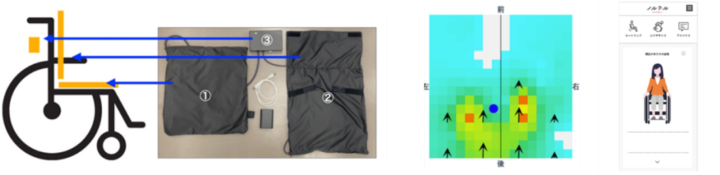
THE DEVICE The device used in this study, developed in collaboration with the Universal Training Center, Inc. (UTC), consists of a seat mat with 32 pressure-sensitive sensors and a back mat with 16 pressure-sensitive sensors (see Figure 1 left). It also includes a data processing and communication device using LTE radio waves attached to the wheelchair’s back, which estimates pressure values from each sensor and sends the data to the cloud. A smartphone applica- tion provides feedback to the user in three ways: a heatmap displaying seat pressure distribution (see Figure 1 middle), an icon display showing esti- mated upper body tilt (see Figure 1 right), and email alerts for postural tilt or high seat pressure. The heatmap displays 32 pressure-sensitive sensor val- ues at a frequency of one measurement per second, with a resolution of 256 points achieved by spline completion (Peters, 1994). Shear stress on the seat surface is estimated from 16 points on the back surface, represented by directional arrows. The icon displays upper-body tilt when the pressure dif- ference between left and right high-pressure points corresponding to the seat bones exceeds a certain threshold.
Additionally, users can receive feedback from experts through an advice mail system, with a weekly message from a physiotherapist providing sug- gestions for improvement. There is also a 20-min remote rehabilitation conducted weekly via online meetings. In this rehabilitation, the physical ther- apist assesses the user’s physical condition, reviews their week, suggests living improvements, provides instructions on decompression movements, and rec- ommends exercises. This feedback, automated and human-led, is intended to reduce postural disorders and buttock pressure in daily life using seat sensor data (Sugawara, 2022, 2023).
METHODOLOGY
In this study, we conducted user tests to assess the effectiveness and enhance- ments of the device. Seventeen participants with physical disabilities, includ- ing spinal cord injury, cerebral palsy, and other impairments, were recruited
Enhancing Daily Posture Correction: Testing a Feedback-Based Assistive Technology 197
based on the following three criteria: (1) Hoffer’s sitting ability classification (Koga, 2009) 1 or 2, (2) no pressure ulcers within the past 6 months, and (3) at least 3 h of daily wheelchair use with the ability to attach the device to the wheelchair.
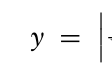
Ten participants utilized the device with feedback over a 5-week period, while seven participants engaged with the device without feedback. We com- pared pre- and post-intervention within the feedback group and between the feedback and non-feedback groups using a reach test to assess physical function, a questionnaire to investigate internal symptoms and changes in attitudes toward posture, and posture estimates using this device to evaluate sitting posture. In addition, a group interview was conducted to ask about areas for improvement. The reach test (Duncan, 1990) involved participants assuming a sitting posture and measuring the forward, right, and left exten- sions from the basic position. This test assessed physical abilities such as balance and shoulder joint range of motion. A physiotherapist (co-author 3) closely monitored the test, correcting any mistakes and ensuring safety. Five- point Likert scale questionnaires were conducted at the beginning and end of the user test, investigating introspection of secondary disabilities, postural awareness (see Table 1), and the usage of feedback. To analyze the results of the reach test and questionnaire, the statistical significance of differences was assessed using Wilcoxon’s signed rank test (two-sided, 5% level, small sam- ple) for pre- and post-intervention comparisons and Mann–Whitney’s U-test (two-sided, 5% level, small sample) for comparisons between the feedback and non-feedback groups. For evaluating sitting posture, participants were asked to assume an ideal posture for 10 s, and the deviation of left-right pressure ratio during this time was recorded. We used Equation 1 to deter- mine whether the deviation of the right half of the seat pressure decreased from before to after the intervention, indicating any postural improvement. Finally, we conducted semi-structured interviews with seven members of the feedback group who consented to participate. These interviews focused on device usability, the fit with their experience, postural improvements, and device-related suggestions. The interviews were conducted in group format with the subjects at each measurement session. By employing these method- ologies, we aimed to comprehensively assess the device’s effectiveness and gather valuable insights into its impact on users with physical disabilities.
Table 1. Sample questions of five-point Likert scale questionnaires.
Table available in the original PDF paper.
Questions about introspection of secondary disabilities and troubles
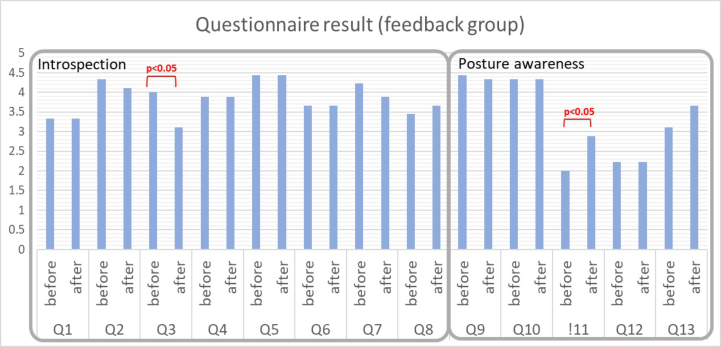
Q1. Do you feel anxious about bedsores? Q2. Do you feel hunched over daily? Q3. Do you experience a decreased range of motion of the shoulder joints? Q4. Do you feel stiff in the shoulders? Q5. Do you feel muscle tension or stiffness? Q6. Do you experience a decreased lung capacity? Q7. Do you feel that you are gaining weight (becoming obese)? Q8. Do you tire easily in daily life?
Questions about postural awareness
Q9. Is a correct posture important in your life? Q10. Do you feel that a correct posture and health are connected? Q11. Are you satisfied with the current measures to improve your posture? Q12. Do you feel able to sit correctly in a wheelchair? Q13. Are you aware of the need to maintain a correct posture on a regular basis?
Equation reproduced from the original PDF.
Wright Wright + Wleft −0.5
Wright Wright + Wleft −0.5
after −
before (1)
RESULT
The results of the user test are presented below. One participant from the feed- back group was excluded from the analysis due to a 2-week hospitalization during the study.
Seated Balance Change in seated balance was estimated from the seat sensor pressure distri- bution. If the value defined in Equation 1 is negative, there is an improvement trend, and if the value is positive, there is a worsening trend. However, if the absolute value is small (less than 0.01), it was decided that this would be considered to reflect no clear change. In the feedback group, improvement in this regard was shown in 4 out of 8 cases, with 2 cases showing no clear change and 2 cases worsening. In the non-feedback group, 5 out of 7 cases demonstrated worsening balance, and 2 cases showed no clear change. The comparison indicates that the intervention might bring patients closer to the correct posture.
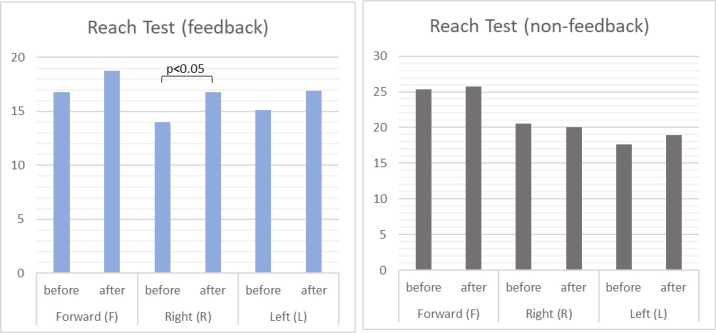
Reach Test The forward, rightward, and leftward reach test results before and after the user test are shown in Figure 2 for the feedback and non-feedback groups. The feedback group demonstrated improved mean reach distances in all directions, while the non-feedback group showed slight increases or decreases in mean reach distances. However, no significant differences were observed for forward and left directions of the feedback group or in comparisons between feedback and non-feedback groups.
Figure 2: Results of reach test (left: feedback group, right: non-feedback group).
Enhancing Daily Posture Correction: Testing a Feedback-Based Assistive Technology 199
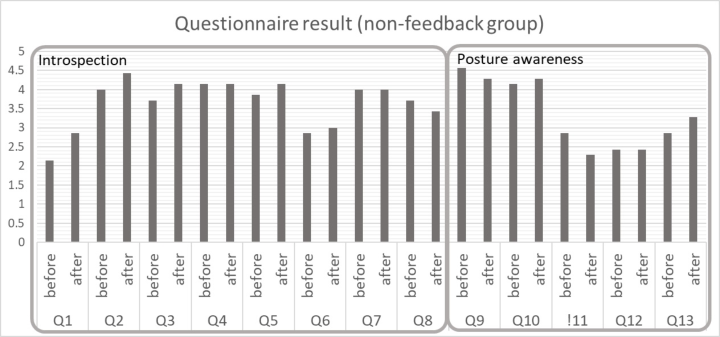
Questionnaire Results (Introspection, Posture Awareness) Figures 3 and 4 show the average scores for the questions on introspection and attitude awareness. The questionnaire survey revealed only two statisti- cally significant differences in pre- and post-intervention within the feedback group and between the feedback and non-feedback groups: a decrease in the mean score for Q3 (“Do you experience a decreased range of motion of the shoulder joints?”) after the intervention and an increase in the mean score for Q11 (“Are you satisfied with the current measures to improve your posture?”).
Figure 3: Questionnaire results of the feedback group.Figure 4: Questionnaire results of the non-feedback group.
Questionnaire Results (Utilization of Each Type of Feedback) Participants rated their ability to understand their posture, identify areas for improvement, and improve their posture using four feedback methods: remote rehabilitation, icon display, alert, and heatmap display. Although the scores for each item did not differ significantly, remote rehabili- tation heatmap feedback appeared to be utilized more than icon alert feedback.
Table 2. Mean of five-point likert scale questionnaires about utilization of each type of feedback.
Table available in the original PDF paper.
Group Interview Results In the interviews conducted with the feedback group, participants expressed views on discrepancies between the feedback and their introspection, the absence of such discrepancies, and potential improvements to the system. Table 3 provides excerpts of these findings.
Table 3. Excerpts from interviews with the feedback group.
Table available in the original PDF paper.
Enhancing Daily Posture Correction: Testing a Feedback-Based Assistive Technology 201
DISCUSSION
Based on the results of a 5-week user test, while only some parameters showed statistically significant differences, positive impacts of the introduction of this device on seated balance, physical function, and introspective symptoms were suggested. The primary goal of the feedback, both automated and human-led, was to directly improve seated posture. The seated balance metric defined in Equation 1 pertained to whether a user sat in an even position on the wheelchair seat and ensured that the body’s center of gravity was not shifted due to the upper body tilting. In the non-feedback group, none of the subjects showed improvement, whereas in the feedback group, half showed improve- ment, suggesting that feedback could promote correct posture. Further, an improvement in seated posture was anticipated to result in enhanced physical function. The reach test results are said to relate to seated balance capabili- ties and the shoulders’ range of motion. In the feedback group, there was a trend of increased distances in each direction in this test, suggesting poten- tial improvement in these physical functions. The large p-value regarding this trend might have been due to the diverse physical and living conditions of the disabled participants, resulting in high variance relative to the sample size. For more scientific evidence, further research with a larger sample size is needed. Lastly, preventing or mitigating secondary health problems was also expected from improving the seated posture. Statistically significant differ- ences were observed only in the shoulder joint, as shown in Figures 3 and 4. This might be more influenced by remote rehabilitation training guidance than feedback on daily seated posture. In fact, during the interviews, positive opinions about remote training guidance were offered. No significant differ- ences were found in other introspective symptoms. The large p-value might have been due to the diverse conditions of the disabled participants and the delayed onset of secondary impairments, making it difficult to see effects within the 5-week study period. Upon closer examination of the graphs, the non-feedback group was more concerned about bedsores, stooped posture, and muscle tension before and after the user test. This might have been due to a change in seat conditions, even though feedback was not provided, and the sensor mat was installed, possibly raising concerns about bedsores. Dis- comfort with the seat sheet was also mentioned in interviews. Additionally, guidance on secondary health problems such as bedsores, stooped posture, and muscle tension was provided during the user test, which might have increased concerns about these particular issues. However, in the feedback group, introspective symptoms had not deteriorated as much, suggesting that measures like pressure relief actions and expert advice might have alleviated their concerns. In conclusion, although further verification is required, this study found clear positive effects of the prepared automated and human-led feedback.
Next, we discuss the characteristics of each type of feedback that we pro- vided. Our initial hypothesis posited that users would find it challenging to visualize their upper-body posture using only heatmaps derived from seat sensor data. Hence, additional feedback mechanisms like icons and alerts were incorporated. However, the survey and interview results showed that
users preferred interpreting the heatmap to understand and reflect on their posture. This preference might be attributable to three potential shortcom- ings of icons and alerts when compared with heatmaps. The first is the issue of threshold values. While heatmaps display data without thresholds, icons and alerts only present information when a specific threshold is surpassed. Feedback from the interviewees indicated that, even if their upper body tilted to the right, an icon might still indicate a proper posture. Such a discrepancy between the feedback and users’ perception of their posture could hinder pos- ture improvement. Setting a universal threshold for individuals with physical disabilities could be challenging. Second, there is a time lag problem. Icons and alerts have a slower update frequency, causing a delay in reflecting pos- ture changes. In contrast, heatmaps display almost in real time, with a lag of about 4 s. Immediate feedback about incorrect posture is crucial for making timely adjustments. The third shortcoming is related to the fidelity of infor- mation. High-fidelity data can overwhelm users, making it hard to discern essential details. However, fidelity that is too low prevents the pinpointing of specific issues. The icons and alerts used in our study, for instance, had low fidelity, lacking precise direction and degree of posture improvement. Consid- ering these factors, it is plausible that users found heatmaps more beneficial than icons or alerts.
However, this study highlighted the insufficiency of relying solely on heatmaps for posture improvement, emphasizing the pivotal role of human feedback. Interviews revealed that, when attempting to rectify posture by referencing heatmaps, participants often adopted unnatural postures. How- ever, remote rehabilitation provided precise guidance, allowing them to make appropriate adjustments. Deriving a three-dimensional understanding of the upper body from the two-dimensional information of heatmaps and then discerning the deviation from the ideal posture is challenging, likely neces- sitating expert advice. However, it is impractical for every individual with physical disabilities to consistently seek professional guidance. Therefore, future research should explore novel feedback mechanisms, such as display- ing the user’s current posture and the ideal posture in a three-dimensional avatar form, making it easier to discern discrepancies. Moreover, feedback that integrates into daily routines is crucial. Multiple interviewees indicated the challenge of consistently monitoring posture-improvement notifications amidst daily tasks like working or housekeeping. This underscores the need for innovative solutions to incorporate feedback mechanisms into regular routines.
CONCLUSION
This study suggested that automated and expert feedback concerning every- day posture has the potential to positively influence posture adjustments, reduce the risk of secondary complications, and enhance physical func- tion. Furthermore, there is an implied need for a feedback mechanism that accurately depicts the current upper-body posture in real time and three dimensions.
Enhancing Daily Posture Correction: Testing a Feedback-Based Assistive Technology 203
LIMITATIONS The limitations of this study include a small sample size, a short research period of approximately 5 weeks, which may not be sufficient to observe changes in physical function or secondary complications, varying degrees of disabilities among the participants, and inconsistent shapes of the wheelchairs and mats used. Additionally, the duration of wheelchair usage in daily life varied among the participants, and issues such as equipment cords becoming unplugged also occurred. To achieve results with higher scientific validity, there is a need for more stringent screening criteria, a larger group of subjects, and longer user testing durations.
ACKNOWLEDGMENT
This work was supported by JST SPRING, Grant Number JPMJSP2106. The authors thank all those who participated in the study and members of Tokyo Institute of Technology’s Saijo laboratory. This work utilized Ope- nAI’s ChatGPT for initial drafting, which was thoroughly reviewed, edited, and supplemented by the authors. We therefore assume full responsibility for the final content of this publication.
REFERENCES
Angsupaisal, M., Maathuis, C. G. B., and Hadders-Algra, M. (2015) ‘Adaptive seating systems in children with severe cerebral palsy across International Clas- sification of Functioning, Disability and Health for Children and Youth version domains: A systematic review’, Developmental Medicine and Child Neurology, 57(10), pp. 919–930. Available at: https://doi.org/10.1111/dmcn.12762. Duncan, P. W. (1990) ‘Functional reach: A new clinical measure of balance’, Journal
of Gerontology, 45(6), pp. M192–197. Kinose, T. (2017) ‘Wheelchair seating to prevent pressure ulcers’, The Japanese Society of Prosthetics and Orthotics, 33(1). Koga, H. (2009) ‘Validation of the inter-rater dependability of the Hoffer Sit
Performance Classification (JSSC version)’, Rehabilitation Engineering, 24(2), pp. 92–96. Langford M. L. (1994) ‘Poor posture subjects a worker’s body to muscle imbalance, nerve compression’, Occupational Health & Safety, 63(9), pp. 38–40. Ma, C. et al. (2017) ‘Posture detection based on smart cushion for wheelchair
users’, Sensors (Switzerland), 17(4), pp. 6–18. Available at: https://doi.org/10. 3390/s17040719. Nelham, R. L. (1981) ‘Seating for the chairbound disabled person - A survey of seating equipment in the United Kingdom’, Journal of Biomedical Engineering, 3(4), pp. 267–274. Available at: https://doi.org/10.1016/0141-5425(81)90130-8. Peters, J. Ã. (1994) ‘Curvature continuous spline surfaces over irregular meshes’,
Department of Computer Science Technical Reports, p. 1440. Sugawara, M. (2022) Japanese patent 2022–135996. Sugawara, M. (2023) Japanese patent 2023–14126. Universal Training Center (no date). Available at: https://universal-training-center.co m/ (Accessed: 15 August, 2023).
LISTED IN THE AHFE DIGITAL BOOKSTORE CATALOGUE
Explore the complete digital volume
Emerging Technologies in Healthcare and Medicine
Read this individual research paper free through the original publisher, or explore the full digital proceedings book.
ISBN 978-1-958651-92-6
Explore this ISBN in the AHFE Bookstore ↗Listed in the July 2026 bookstore catalogue; search by ISBN to confirm current availability · Digital book purchase optional