Josue Franca (2023). The need of change in complex workplaces of the O&G industry – from controlling human error to understanding the resilience of systems. In: Emerging Technologies and Future of Work. AHFE Open Access, vol. 117, pp. 57–65. https://doi.org/10.54941/ahfe1004405
Since the first oil drilling in History, the Drake’s well in Titusville, Pennsylvania, until the present-day offshore wells, drilled in the ultra-deep waters of the Gulf of Mexico and the Brazilian Pre-Salt, two aspects have always been present: the notable risks of dealing with crude oil and the need of human adaptabilities in the work systems. From this adaptability, there will be two possible outcomes: the normal work, adaptive and productive, and the accident, unwanted and harmful. For the first, over a long time no attention was given, because if nothing went wrong, (supposedly) there is nothing to do, except to continue working. On the other hand, for this second, the accident, since the first occurrences, dating from the 1st Industrial Revolution, much has been developed, addressed, mainly, on the unwanted action of the human element in a linear system. However, the technological evolution of work systems has transformed linear production lines into current complex sociotechnical systems, where there are intense and dynamic interrelationships between people, machines, and processes, immersed in a distinct organizational culture. In this context, the maintenance of certain linear epistemological concepts for the analysis of risks, as well as the investigation of accidents, seems to be limited, when not mistaken, for understanding and intervening in nowadays complex workplaces. In addition, normal work, that is, work carried out without the occurrence of accidents, as it is what mostly happens, is a notable source of learning, being neglected precisely because it is normal. In view of these considerations, methodologies, and concepts capable of dealing with this, such as FRAM (Functional Resonance Analysis Method) and Safety-I & Safety-II, arises as adequate solutions. In this study, having the O&G Industry as background, some accidents with FRAM are re-examined, as well as some practices of learning from normal work through Safety-I & Safety-II, demonstrating the need of change in complex workplaces of the O&G industry, evolving from controlling human error to understanding the resilience of systems.
The origins of the modern oil and gas industry can be attributed to the establishment of the first operational commercial oil well, in Titusville, Penn- sylvania. On August 27, 1859, “Colonel”Edwin Drake and Uncle Billy Smith successfully drilled the first oil well, to a depth of 21m, using adapted salt mine drilling tools. These tools drilled by percussion, and were constructed with wood, ropes, leather, and some pieces of steel (Yergin, 2008). Because it was an adaptation, in an activity never performed before, accidents occurred frequently, especially because the workers were inside the well, subject to the impact of parts and contamination of the oil. It was also in the United States, but on the opposite coast, in California, that occurred the first off- shore activities. In 1896, Union Oil Company of California embarked upon a seminal endeavour, erecting a wooden derrick on a coastal pier, about 12 meters from the shoreline of Summerland (Sabin, 2004). This pioneering feat laid the groundwork for advanced technologies in offshore exploration and production, also increasing the risks, since the workplace now included the dangers of the sea (França, 2022). In these scenarios, both on land and at sea, the combination of workers without know-how, inhospitable work environments and adaptation of tools, led to the emergence of many errors, causing injuries and fatalities. Later, in 1901, applying modern techniques of rotary drilling, used in the construction of bridges, the Guffey Petroleum Company drilled the Lucas 1 well, in Texas, inaugurating the largest oil province in history (Stiles, Linsley & Rienstra, 2008). This rotary drilling retired percussion methods and added new risks, where the natural upwelling of the well brought its maximum production, but also extremely high pres- sures and the danger of a flow runway – blowout. The torque of the drill (auger) and the breakage of metal parts under tension were also added risks, requiring a level of training and preparedness of the team’s superior to any other job in the world at the time (Stiles, Linsley & Rienstra, 2008). Since then, the O&G industry has been marked by constant technological evo- lution, changing its process plants, and significantly increasing production levels (Yergin, 2012). Consequently, there was also an increase of the com- plexity and risks of the processes of extraction, production, refining, storage and distribution of petroleum and its derivatives. This complexity, in turn, increased the occurrence of errors in the operations and workplaces, with people being held responsible for these errors, especially highlighted in pub- lications that stated that about 80% of accidents were due to the individual action of workers, the unsafe acts (Heinrich, 1931). Since these people are the culprits, various programs, and behavioural initiatives, only focused on the individuals who erred, have been widely applied. This had no effect as accidents continued to happen, showing that the problem was not just peo- ple, but something in the work systems (Skalle, Aamodt, & Laumann, 2014). It became necessary, therefore, to focus on the functioning of these systems, in the interaction of people with the equipment, processes and work proce- dures, understanding the reason for the errors and correcting the failures that were arising in the system, and not in the people solely. With the most recent technological challenges brought by shale gas in the USA, offshore pre-salt
The Need of Change in Complex Workplaces of the O&G Industry 59
oil fields in Brazil and natural gas liquefaction in the Middle East (Yergin, 2021), the need to seek the roots of the causes of accidents became even more evident, and therefore a need of change in these complex workplaces of the O&G industry, departing from controlling human error to understanding the functioning and resilience of the work systems.
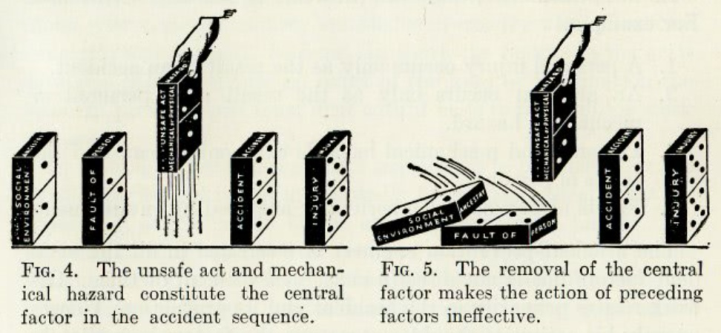
UNDERSTANDING HUMAN ERROR The defining attributes of human error are identified as an action performed by a human being, occurring at the interface between the human and a tech- nological system, exceeding tolerance limits set by pre-defined parameters, such as procedures (Hansen, 2006). These mistakes do not imply intentional actions, although there are intentional actions that results in undesired con- sequences, being these ones defined as not exactly an error, but an intentional action to do harm (Dekker, 2014). Antecedents for human error are identi- fied as cognitive ability, experience, bias, and prior knowledge during their interaction with process and machines (Hansen, 2006). Once this interaction is placed in a complex sociotechnical work environment, the error is also a complex phenomenon. However, since the 1st Industrial Revolution, until the end of 2nd WW, the complexity of the systems that made up the workplaces had not reached the current levels. In this way, theories, and concepts such as the Theory of Dominoes, shown in figure 1, were established as coherent and adequate to represent models of how work was performed (Heinrich, 1931).
Figure 1: Theory of Dominoes - industrial accident prevention book (Heinrich, 1931).
This model, as well as all the technical-scientific development on the sub- ject, allowed the modelling of other elements for understanding the error, such as the table of unsafe acts, also present in the Industrial Accident Prevention book. Both the Theory of Dominoes and this table (Heinrich, 1931) are fully consistent with the context – situational, organizational, and temporal – of its publication, the 30’s and 40’s, establishing itself with the epistemological basis of several other disciplines and theories, such as human reliability. However, with the technological evolution of work
60 França
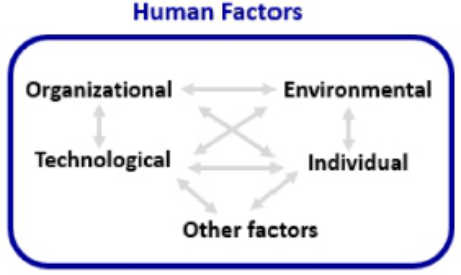
environments, especially those of the civil aviation, aerospace, and O&G industries, initially a small misalignment emerged, and more recently a large abyss, between such concepts and theories and complex sociotechnical work systems (Carayon, 2006). The maintenance of a linear conception, for a truly complex sociotechnical system, has systematically limited both the under- standing, and the solutions, of the (complex) problems that emerge from these ones. As much as the technological evolution of work systems has taken place, it is also necessary that the perception and modelling of them also evolve, in order to understand, as close to reality as possible, the real functioning of these complex systems. In this sense, the Human Factors approach, presented in Figure 2, has shown considerable suitability, since its understanding of the work is not focusing on the human being (and errors solely), but from him, from him perspective, regardless of an error has occurred, or not. For Human Factors, human error is a failure of the sys- tem itself, a symptom that this system may have deeper problems than just the proximal problems evidenced by the occurrence of the individual failure (Dekker, 2019).
Figure 2: Graphical representation of the human factors approach (França et al., 2020).
Human Factors are all factors that can influence human performance in their work activities; these factors act together and may be technological, environmental, organizational, and individual, among others (França et al., 2020). Noticing the complex reality of the work, an evolved approach of safety provides a more comprehensive and effective way to assess, manage and provide solutions in nowadays workplaces (Dekker, 2019). Daily, and in particular in O&G industry workplaces, workers deal with problematic tasks, unclear procedures, workload, difficult equipment, being necessary to manage trade-offs to get the work done. Comprehending that human error is normal in this sociotechnical context is very different from say- ing that it is ordinary, ignoring or minimizing its happening or roots. It is important, therefore, to not confuse error awareness with error compla- cency, they are completely different as well. This is the first step towards change from controlling human error to understanding the resilience of systems.
The Need of Change in Complex Workplaces of the O&G Industry 61
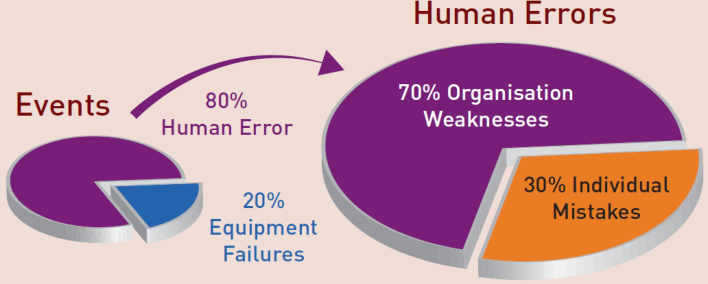
THE NEED OF CHANGE In view of all these statements, the need for this change is evident, in line with the already present (and inevitable) technological evolution of workplaces with the evolution of safety management systems, expanding, therefore, the perception and understanding of how work is actually performed in com- plex sociotechnical systems, such as the O&G workplaces. In fact, there is already institutions, universities and so on working on this change, pro- ducing an entirely updated framework to be prepared for complexity and develop resilience. The International Association of Oil & Gas Producers (IOGP), on its Report 621 – Demystifying Human Factors: Building con- fidence in human factors investigation (IOGP, 2018), presents an updated technical-scientific framework for understanding the functioning of complex workplaces, including a reframing and demystification of human error. In a very responsible approach, IOGP notices that since human error will never be eliminated entirely, it is needed to make sure that the most critical tasks and barriers are resistant to error. In special for accident investigations, IOGP points out the importance of when an investigation discovers a human error contributing to the chain of events, the inquiry cannot stop in this point; the team must keep searching for the conditions and systems that made them likely to happen (IOGP, 2018). Essentially, human error is a symptom that there are factors other than individual ones - technological, environmental and, above all, organizational, that contribute to the chain of events that lead to an accident (Hopkins & Kemp, 2021). In another publication, the Report 453 – Safety Leadership in Practice: A Guide for Managers (IOGP, 2019), IOGP reanalyses several accidents that occurred in the O&G industry, deep- ening the facts and data of the reports already published, discovering, through this necessary expansion of understandings, that behind the supposed human errors, there are deeply rooted organizational failures that affect and compro- mise the performance of workers. In Figure 3 there is a graphic representation of these discoveries, contained in this Report 453.
Figure 3: Graphical representation contained in the IOGP Report 453 (IOGP, 2019).
When the 80 percent human error is broken down further, it reveals that the majority of errors associated with events come from latent organisational
62 França
weaknesses (mostly the result of human and organisation actions in the past) whereas about 30 percent are caused by the individual worker who last touched the equipment or process (IOGP, 2019).
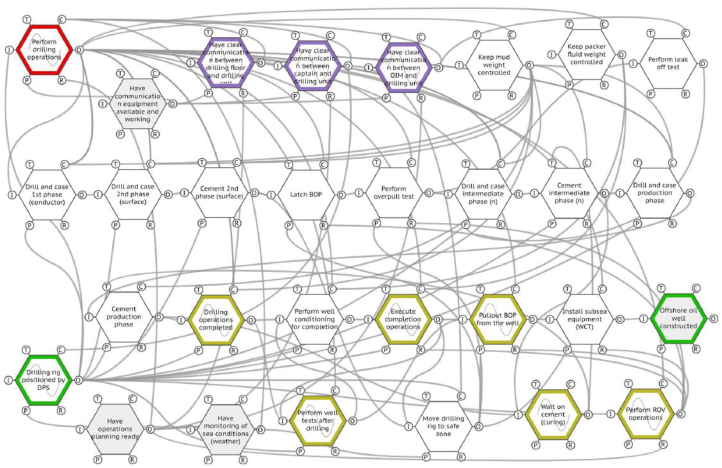
RESILIENCE IN SOCIOTECHNICAL COMPLEX SYSTEM It can be noted, based on the arguments presented here, that failure, although not desired, is something predictable in work systems, especially in those with high levels of complexity, characterizing the so-called complex sociotechnical systems. In these workplaces, something is needed that can understand the occurrence of this error, analyse it, and prepare for the mitigation of its con- sequences throughout the system. Having a robust system, in this scenario, seems advantageous and appropriate. System robustness can be defined as a system ability to receive some disturbances, settle this, and then come back to functioning. This implies that information is needed on how the system responds to different degrees of disturbance (Mens et al., 2011). A question arises from this: while the system is solving this, how is it working? In most systems, such as the nuclear power plant system, operation is stopped until the disturbance is completely corrected. The O&G industry is an extremely sui generis business segment: it needs the commercial agility of civil aviation, it has state-of-the-art technologies like the aerospace industry, it prospects an ore such as mining, it has process plants as the same as the chemical industry (pharmaceuticals, food etc) and it is regulated internationally as the nuclear industry. In Figure 4, there is an example of how complex is the O&G oper- ations, which is the modelling of the drilling of an offshore oil well with the FRAM (Functional Resonance Analysis Method).
Figure 4: FRAM modelling of the drilling of an offshore oil well (França et al., 2019).
The Need of Change in Complex Workplaces of the O&G Industry 63
A single solution, or a full solution from some other industry segment, will not be complete, or optimized enough, to meet O&G demands. In this way, it is necessary that all O&G industry management systems can contem- plate all its peculiarities, maintaining a constant state of adaptation to the dynamic and complex demands of its platforms, refineries, terminals, and dis- tribution complexes. It is therefore necessary not to be robust, but resilient, adaptive, keeping the system functioning without giving up of safety. This ability to sustain the required functioning and achieve system goals under a variety of operational conditions can be understood as the resilience of the system (Praetorius et al., 2015). One of these possible operational con- ditions is precisely the human error, a failure of the system that manifests itself in the individual action of a worker, at the end of the chain of events that leads to an accident. Human error, therefore, being the end of this line, is precisely the beginning of accident analysis and investigation. A system, a process, a safe workplace, therefore, will not be the one that is error-proof, but the one that devises ways to recognize and absorb the effects of this error, thus building the resilience of the entire system. To support this resilience development, Safety-II is a theoretical framework that comprises, in complex sociotechnical systems, that failures are just one aspect of a broader range of activities. It seeks to understand how organizations and systems can succeed and perform effectively in complex and dynamic environments, learning from failures (accidents) and success (normal work) simultaneously (Hollnagel, 2017). Unlike this, Safety-I only focuses on preventing failures and errors, being Safety-II the natural evolution of Safety-I, that only emphasizes the elimination of negatives (Hollnagel, 2014). And within the theoretical frame- work of the Safety-I & Safety-II, FRAM (Hollnagel, 2012) is one of the most suitable methodologies for recognizing, analysing, and developing the resilience of systems, stopping from simply controlling human errors, and moving forward to learn from it and normal work. This evolution, from Safety-I to Safety-II, is more than necessary, as O&G industry workplaces are already complex sociotechnical systems. But in this evolution, those Safety-I practices, theories, and initiatives that are aligned with Safety-II must be maintained, promoting an integrated evolution. The safety and resilience of systems, therefore, is Safety-I & Safety-II, it is past & present, it is fail- ures (accidents) and success (normal work), it is a continuous learning from everything that happens in the day-to-day work.
CONCLUSION
The evolution of the O&G industry from its inception to its current com- plex sociotechnical landscape has necessitated a paradigm shift in safety understanding. From early blame-focused models and the Theory of Domi- noes to contemporary human factors and systemic perspectives, the industry has transitioned from individual-centric views to recognizing the systemic nature of errors. This shift is exemplified by the IOGP recent reports (Report 453 and 621) which highlight the significance of organizational factors in accidents. Moreover, the call for resilience over mere robustness has led to the integration of Safety-I and Safety-II concepts, fostering a comprehensive
64 França
approach that learns from both failures and successes. Embracing tools like the Functional Resonance Analysis Method (FRAM), the O&G industry aims to enhance its capacity to navigate evolving challenges and ensure safety within a dynamic sociotechnical landscape, propelling it towards an even more technological future. In this non stoppable evolution, it is noticed that the workers involved in the daily operations of the O&G industry, immersed in increasingly advanced systems, are not the problem, but the solution to all emerging situations, learning and adapting both from failures and successes.
ACKNOWLEDGMENT
The authors would like to acknowledge all the workers that, indirectly or directly, contributed to this research.
REFERENCES
Carayon, P. (2006) Human factors of complex sociotechnical systems. Applied Ergonomics. Vol. 37, pp. 525–535. DOI: https://doi.org/10.1016/j.apergo.2006. 04.011. Dekker, S. (2014) The Field Guide to Understanding “Human Error”. 3rd Edition.
CRC Press, Boca Raton. Dekker, S. (2019) Foundations of safety science – a century of understanding accidents and disasters, 1st Ed. Taylor & Francis Group, CRC Press, Boca Raton. França, J. E. M., Hollnagel, E., Luquetti dos Santos, I. J. A. & Haddad, A. N.
(2019) FRAM AHP approach to analyse offshore oil well drilling and construc- tion focused on human factors. Cognition, Technology & Work Journal. DOI: https://doi.org/10.1007/s10111-019-00594 -z. França, J. E. M., Hollnagel, E., Luquetti dos Santos, I. J. A. & Haddad, A. N. (2020) Analysing human factors and non-technical skills in offshore drilling operations using FRAM (functional resonance analysis method). Cognition, Technology & Work Journal. DOI: https://doi.org/10.1007/s10111-020-00638-9. França, J. E. M. (2022). Do poço ao pixel: como a indústria de O&G impulsionou,
e é impulsionada, pela evolução tecnológica [in Portuguese]. Proceedings of the Rio O&G Conference, RJ, Brazil. DOI: https://doi.org/10.48072/2525-7579.rog. 2022.346. Hansen, F. D. (2006) Human Error: A Concept Analysis. Journal of Air Transportation. Vol. 11, n. 3. Heinrich, W. (1931) Industrial Accident Prevention: A Scientific Approach. McGraw-
Hill. Hollnagel, E. (2012) FRAM: The Functional Resonance Analysis Method: Modelling Complex Socio-technical Systems. 1st Edition, Ashgate. Hollnagel, E. (2014) Safety-I and Safety-II: The Past and Future of Safety Manage-
ment. 1st Edition, CRC Press. Hollnagel, E. (2017) Safety-II in Practice: Developing the Resilience Potentials. 1st Edition, Routledge. Hopkins, A. & Kemp, D. (2021) Credibility Crisis: Brumadinho and the Politics of
Mining Industry Reform. 1st Edition. CCH Australia. IOGP (2018) Report 621 – Demystifying Human Factors: Building confidence in human factors investigation. The International Association of Oil & Gas Producers (IOGP).
The Need of Change in Complex Workplaces of the O&G Industry 65
IOGP (2019) Report 453 – Safety Leadership in Practice: A Guide for Managers.
The International Association of Oil & Gas Producers (IOGP). Mens, M. J. P., Klijn, F., de Bruijn, K. M. & van Beek, E. (2011) The meaning of system robustness for flood risk management. Environmental Science & Police Journal. Vol. 14, 8, pp. 1121–1131. DOI: https://doi.org/10.1016/j.envsci.2011. 08.003. Praetorius, G., Hollnagel, E. & Dahlman, J. (2015) Modelling vessel traffic service
to understand resilience in everyday operations. Reliability Engineering & System Safety. Vol. 141, pp. 10–21. DOI: https:// doi. org/ 10. 1016/j. ress. 2015. 03. 020. Sabin, P. (2004) Crude Politics: The California Oil Market, 1900–1940. University of California Press. Skalle, P., Aamodt, A. & Laumann, K. (2014) Integrating human related errors
with technical errors to determine causes behind offshore accidents. Safety Science Journal. Vol. 63, pp. 179–190. DOI: https://doi.org/10.1016/j.ssci.2013.11.009. Stiles, J., Linsley, J. W. & Rienstra, E. W. (2008) Giant Under the Hill: A History of the Spindletop Oil Discovery at Beaumont, Texas, in 1901. Yergin, D. (2008) The Prize: The Epic Quest for Oil, Money, and Power. Simon &
Schuster. Yergin, D. (2012) The Quest: Energy, Security, and the Remaking of the Modern World. Penguin Books. Yergin, D. (2021) The New Map: Energy, Climate, and the Clash of Nations. Penguin
Books.
LISTED IN THE AHFE DIGITAL BOOKSTORE CATALOGUE
Explore the complete digital volume
Emerging Technologies and Future of Work
Read this individual research paper free through the original publisher, or explore the full digital proceedings book.
ISBN 978-1-958651-93-3
Explore this ISBN in the AHFE Bookstore ↗Listed in the July 2026 bookstore catalogue; search by ISBN to confirm current availability · Digital book purchase optional