Trygve Thomessen (2024). How to manage the safety of service robots operating in coexistence with demented patients. In: Cognitive Computing and Internet of Things. AHFE Open Access, vol. 124, pp. 85–93. https://doi.org/10.54941/ahfe1004706
The developing elderly wave is expected to give a considerable demand for robotic solutions in the elderly care, especially in the nursing homes, to compensate for the lack of human resources required to maintain the quality of the elderly care services. Thus, social service robots are expected to fill an important role in the future, by providing services like logistics, remote medical consultations, entertainment, physical training etc. However, new challenges appear when introducing service robots in an environment where residents with impaired cognitive skills, coexist with service robots. This, especially, since the patients cannot take care of themselves, and are formally NOT responsible for any unfortunate safety conflicts. Thus, compared to operating in e.g. a normal restaurant, a service robot in a in a nursing home requires additional attention to the risks mitigation to ensure a safe operation. This includes analysis of both additional physical risks in addition to new, interperceptual risks. This paper addresses the complexity of fulfilling the required safety of service robots operating in nursing homes, and an extended risk mitigation methods is suggested in order to minimize the unavoidable, residual risk.
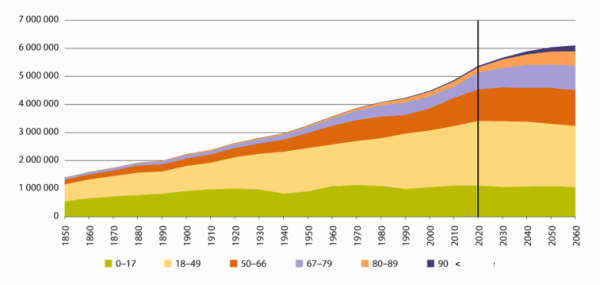
Robots are today mostly associated with industrial applications where the industrial robots operate inside physical fences, ensuring the safety. How- ever, during the last years, open factories have become popular (Kluy et al., 2021). These requires a higher level of risk mitigation and safety certifica- tion of the robots to guarantee a safety coexistence with humans. The open factories have put attention to the perceived safety because the robots may cause fair and stress (Akalin et al., 2022; Kluy et al., 2021). Additionally, this knowledge has been developed further enable a harmonic coexistence between service robots and humans in public areas (Hung at al., 2022; Salvini et al., 2020; Servaty et al., 2020; Christoforou et al., 2020; Holland et al., 2021; Eggleston et al., 2021). The current demographic development with “the elderly wave” forecast a huge lack of care givers during the next years. Only in a small country like Norway, with a population of 5.5 million people, the gap will be lack of
more than 40 000 nurses (Figure 1) in elderly care already in 2035 (Thomas et al., 2020). In the European Union, the gap is expected to be even more challenging.
Figure 1: The “elderly wave” in Norway (Thomas et al., 2020).
The application of modern IT and robot technology are among the few measures that can solve the resource challenge in the elderly care. A smart utilization of this, will release more time for value added work; hence, care and medical treatment of the residents.
This has led to a request for a new generation service robots for nursing homes, which can support the care workers and the patients with various services.
However, this rises new challenges related to the safety, and even though the service robot is certified according to a standard, like EN ISO 13482 (Salvini et al., 2022) for operating safely in an open, public environment, like a shop or a restaurant, this robot will not provide the required safety to operate inside a nursing home together with elderly people with impaired cognitive skills (Thomessen, 2024).
This paper considers the safety challenges that occurs, when applying ser- vice robots in nursing homes, and suggest a solution based upon an extension of the current standards and procedures.
Considerations About Safety When Operating in a Nursing Home The intention of using service robots is to provide additional resources that perform the desired tasks carefully and efficiently. This requires that the robot should
Run at highest, possible speed when executing the tasks
Operate closely to the human when direct interacted tasks are accom- plished Initially, the focus was to maximize the performance of the robots, within the frame of safety, however, recently the attention is put both to the physical and the perceive safety. Thomessen et al. (2020), developed in the project SAM4ROB, a new safety concept under the vision “humans and robots in
How to Manage the Safety of Service Robots Operating in Coexistence 87
safe and harmonic coexistence”. Thus, the focus was to provide the required safety, but in addition, to create a common understanding between the robots and the humans, in order to reduce the likelihood of safety conflicts.
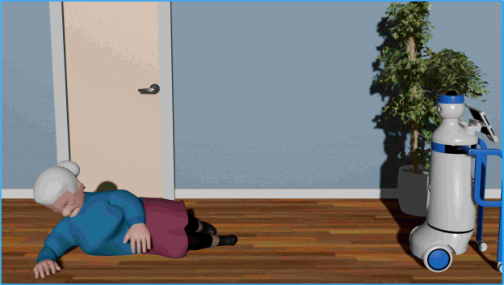
Figure 2: Special risk case: a person has fallen to the floor.
The following two terms were used:
Physical safety, or Safety; represented by measures to protect the humans against injuries
Comfort; represented by measures to enhance the perceived safety, and reduce the likelihood of unexpected safety conflicts between the human and the robot Basically, the physical safety, required one of the two basic requirements to be fulfilled (RIA, 2014):
All safety related hardware and software must be fail-safe, in practice redundant
Alternatively, the robot must be intrinsically safe, which is normally solved by limiting the performance of the servo motors
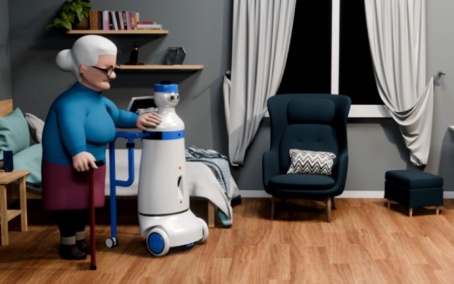
Figure 3: Special risk case: a person is leaning to the robot when it starts moving.
88 Thomessen
Furthermore, in order, to physically be able to operate a robot safely in practice, it’s also required that the humans are responsible, like
Wearing the required protective cloths
Not climbing over or under the fences covering the robot !
Not running or walking faster than 1.8m/s !
Use their knowledge from the safety training, during the daily work
Don’t try to harm or destroy the robot
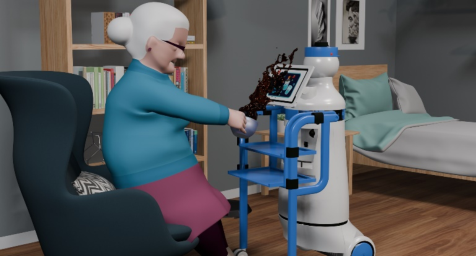
Figure 4: Special risk case: a dementia resident performs a harming action.
If any of these, latter conditions are violated by the human, he or she will be responsible for a potential accident.
In a nursing home, some additional risks must be considered:
The residents cannot take responsibility for themselves. Thus, there is no “irresponsible behavior”
Training of the residents cannot be done due other their impaired cognitive skills
The residents have reduced stability, and may use a cane when walking And, in addition to this complex risk situation, any fall may likely cause an irreversible injury, like a broken heap due to the elderlies’ brittle bone structure.
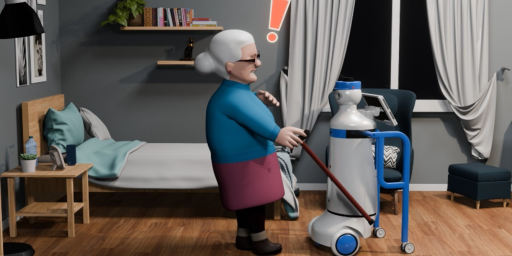
Figure 5: Special risk case: a resident falls when being surprised by the robot.
How to Manage the Safety of Service Robots Operating in Coexistence 89
Thus, regarding safety, the additional cases must be taken into account (Figure 2, 3, 4, 5):
The robot may hit a cane, due to a blind zone of the safety sensors
A resident may lean onto the robot, while the robot starts to move
An accident may be caused because the residents become surprised or afraid of the robot’s behavior
A resident may have fallen on the floor
A dementia resident may perform unexpected, violating actions. Thus, the robot must also be able to protect itself against harm
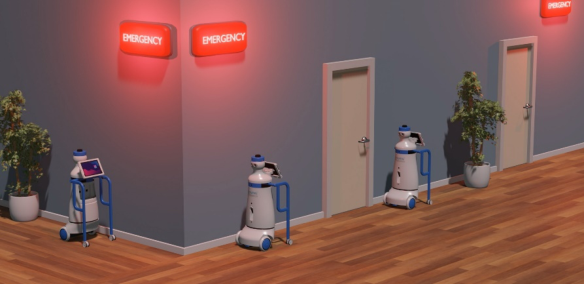
Figure 6: Emergency case: all robots must instantly be parked to ensure a free escape route.
This introduces two new, categories of safety measures:
Impaired-skill, Safety; represented by measures to prevent the human in cases where the human’s impaired physical skills may cause a risk
Interperceptual Safety; represented by measures to prevent the human and the robot, against accidents due to unexpected behaviour of the human Interperceptual safety requires functions that guarantee an appropriate response from the robot, to ensure both that the human is not injured, and that the robot is not harmed. Thus, also include functions complying with Asimov’s third law:
“A robot shall avoid actions or situations that could cause it to come to harm itself”.
Finally, the operation inside a nursing home, also requires preparation for emergency situations (Figure 6) caused by fire, accidents, sickness etc. In these cases, the robot must be prepared to make an immediate, sensible parking, to ensure free access.
90 Thomessen
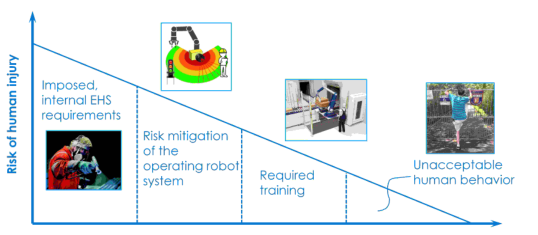
Figure 7: Risk conditions to be investigated during a normal risk assessment.
The Unavoidable Residual Risk All products sold within the EU must be certified according to the CE standard and marked with the CE symbol, demonstrating that the product complies with The Machinery Directive (ECS, 2006). This includes a risk assessment of the product, like a robot, itself. However, when setting up the robot to perform a task, an additional a risk assessment of the application itself, is required according to ISO 12100 (ECS, 2010).
A typical risk assessment of a robot application, requires the risk mitiga- tion to be considered in the following order (Figure 7): i. Imposed, internal EHS requirements; represented by the imposed risk- reducing measures that must be followed when staying inside the premises, or carrying out a specific work task ii. Risk mitigation of the robot system; represented by the necessary safety function of the system to prevent its use from causing a risk of injuries iii. Training of the users; represented by a formal training, to give the users of the robot system the necessary knowledge to avoid injuries. NB! The steps above must be fulfilled as far as possible before training can be used as a risk-reducing measure iv. Unacceptable human behavior; represented by unreasonable human behavior such as acts to commit suicide; climbing over the fences; crawl on the floor etc. NB! These risk factors need not to be to be taken into account during the risk mitigation of the robot system
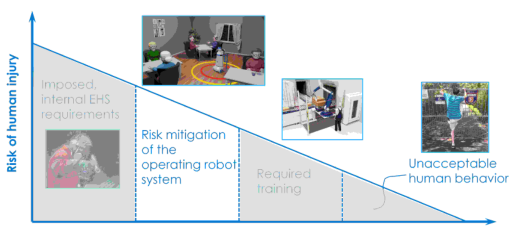
Figure 8: Risk conditions to be investigated during a risk assessment in a nursing home.
How to Manage the Safety of Service Robots Operating in Coexistence 91
However, for a service robot operating in a nursing home, the risk situation, is significantly changed Figure 8), because
There are no imposed EHS requirements for the residents, like wearing protective equipment or cloths
Dementia residents can’t be trained due to their impaired, cognitive skills
There is no “unacceptable human behaviour” due to the residents’ impaired cognitive skills
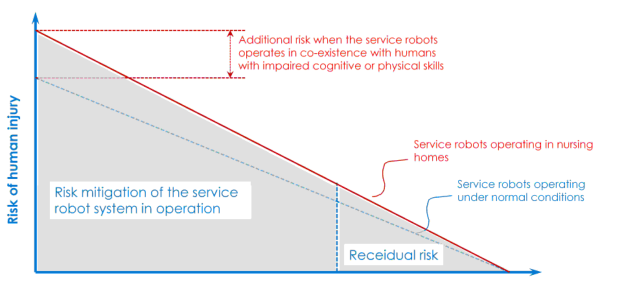
Figure 9: The unavoidable residual risk when applying robots in nursing homes.
Consequently, there will always be a residual risk when operating service robots in nursing homes. There are currently, no standards covering this, enhanced risk situation, except the conditions covered under the standard, ISO 13482 (RIA, 2020), describing the safety of service robots operating in a normal environment.
The Extended Risk Assessment for Robots in Nursing Provided that the service robot is certified according to The Machinery Direc- tive (ECS, 2006), and fulfil requirements specified in RIA (2020), or has built-in safety functions representing the same level of risk mitigation, the next step is to carry out an extended risk assessment to comply with the risk conditions in the nursing home. This, also to demonstrate and document that the residual risk is reduced to a minimum; thus,
Analyse and document all potential risks, and apply a comprehensive risk assessment
Document that state-of-the art safety technology is applied to reduce the risks to a minimum During the risk assessment, the normal physical risks like collision etc. must be included. In addition, the following risks must be assessed:
Risks due to impaired mental and physical skills of the residents
Risks due to instant illness, falling etc.
Risks due to the perception of the service robot, by the residents
Risks due to unexpected behavior of the residents, due to dementia
92 Thomessen
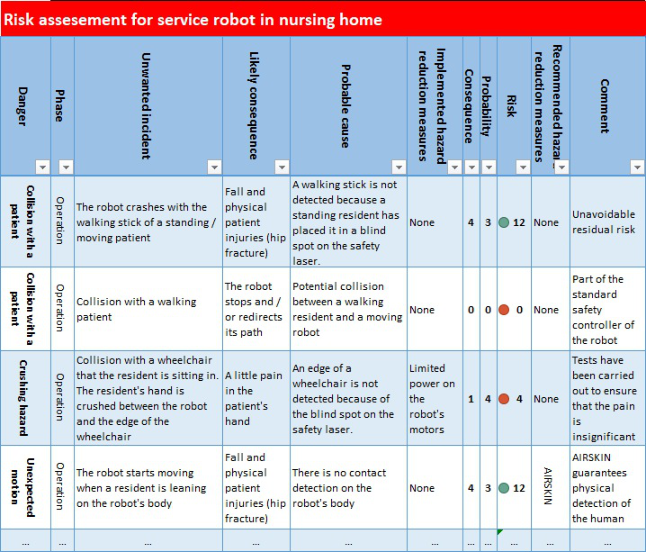
After the risk assessment has been completed (Figure 10), the unavoid- able residual risk must basically be covered by an insurance, providing the necessary human care, in case of accidents.
However, the challenge is to be able to do the necessary risk mitigation, while achieving the required performance, and thus, the benefit of the service robot in operation. Basically, this a trade-off between the desired motion speed and proximity to the residents when proving services, and the accepted residual risk.
Figure 10: Example, cut from an extended risk assessment in nursing home.
CONCLUSION
Introduction of service robots in nursing has an important potential to enhance the welfare and compensate for the lack of health care workers. However, this creates new challenges related to safety, since many of the res- idents in the nursing homes have impaired cognitive skills, and thus, cannot take responsibility for themselves.
This paper considered these new challenges, and suggest an extended risk assessment, in order to reduce the residual risk to a minimum.
However, the residual risk cannot be eliminated, expect by moving the robot into a corner and shutting down the power.
Thus, an insurance is required to provide that any, even hypothetical risk, can be covered appropriately.
How to Manage the Safety of Service Robots Operating in Coexistence 93
ACKNOWLEDGMENT
This research has been financed by PPM Robotics AS, in co-finance with The Norwegian Research Council (332692 RACS), Innovation Norway (2021/583542 ZatSuYo˜u), and the EUROSTARS! Programme (E!12433 SAM4ROB).
REFERENCES
Eftychios G. Christoforou et al. (2020). The upcoming role for nursing and assistive robotics: Opportunities and challenges ahead, frontiers in Digital Health December. European Committee for Standardization (2006). The machinery directive, 2006/42/EC. European Committee for Standardization (2010). Safety of machinery – General
principles for design – Risk assessment and risk reduction, ISO 12100. European Committee for Standardization (2014). Robots and robotic devices – Safety requirements for personal care robots, ISO 13482. Gurvinder S. Virk (2012). Personal care robot safety, DOI: 10.1142/ 9789814329927_0162. Gurvinder S. Virk et al. (2012). Safety for emerging service robots, DOI: 10.1142/9789814374286_0112. Jane Holland et al. (2021). Service robots in the healthcare sector, Robotics 2021, 10. Karen Eggleston et al. (2021). Robots and labour in the service sector: evidence from
nursing homes, National Bureau of Economic Research, Working Paper 28322. Lillian Hung at al. (2022). Technological risks and ethical implications of using robots in long-term care, Journal of Rehabilitation and Assistive Technologies Engineering, vol. 9. Lina Kluy et al. (2021). Working with industrial cobots: The influence of reliability
and transparency on perception and trust, Proceedings of the 2021 HFES 65th International Annual Meeting. Michael Thomas, Astri Syse (2020). A historic shift: More elderly than children and teenagers, Statistics Norway June 2020, www.ssb.no. Neziha Akalin et al. (2022). Do you feel safe with your robot? Factors influenc-
ing perceived safety in human-robot interaction based on subjective and objective measures, Int. J. Human–Computer Studies 158 (2022) 102744. Pericle Salvini et al. (2020). On the Safety of Mobile Robots Serving in Public Spaces, Identifying gaps in EN ISO 13482:2014 and calling for a new standard, ACM Transactions on Human-Robot Interaction, November. Ricarda Servaty et al. (2020). Implementation of robotic devices in nursing care.
Barriers and facilitators: an integrative review, BMJ Open September. Robotic Industries Association (2020). Industrial mobile robots - Safety requirements, ANSI/RIA R15.08. Syed Atif Mehdi et al. (2010). Use of an autonomous mobile robot for elderly care,
doi: 10.1109/ATEQUAL.2010.30. Trygve Thomessen (2024). A safety concept for service-robots operating in nursing homes, The 2024 16th IEEE/SICE International Symposium on System Integration Ha Long, Vietnam 8–11th January 2024. Trygve Thomessen et al. (2020). Safe Area Monitoring (SAM) for Open, Fenceless
Factory Automation, E!12433, www.sam4rob.com.
LISTED IN THE AHFE DIGITAL BOOKSTORE CATALOGUE
Explore the complete digital volume
Cognitive Computing and Internet of Things
Read this individual research paper free through the original publisher, or explore the full digital proceedings book.
ISBN 978-1-964867-00-7
Explore this ISBN in the AHFE Bookstore ↗Listed in the July 2026 bookstore catalogue; search by ISBN to confirm current availability · Digital book purchase optional