Min Hye Kim, Min Ju Kim, Joonmee Choi, Ken Nah (2024). Human Factors Design Study for Home Beer-Brewing Machine in Residential Space: focused on In-depth Interviews of South Korean MZ Generation. In: Human Factors in Communication of Design. AHFE Open Access, vol. 136, pp. 94–102. https://doi.org/10.54941/ahfe1004972
The purpose of this paper is to extract and understand the significance of home-drinking culture and living spaces among the emerging customer group, the South Korean MZ generation, contributing to the activation of the Home Beer-Brewing Machine market. To achieve this, the paper conducted a literature review to explore the conceptual shifts in drinking behaviors and living space perceptions of the South Korean MZ generation following social trends. Drawing from the obtained results, recent studies within the last decade were gathered to explore the link between home drinking culture and the evolution of residential spaces among the Korean MZ generation. Analyzing from a Human Factors perspective, the study aimed to validate the diverse roles and meanings of residential spaces. After, In-depth interviews were implemented with 31 individuals from the MZ generation born between 1982 and the early 2000s to extract their meaning of home-drinking culture and living spaces. The analysis and diagnosis of the interviews revealed that experience and communication are central elements in home-drinking culture, while emotion and personalization are key factors in living spaces. Expanding on these findings, the conceptualization of home-drinking culture for the MZ generation was redefined, and the core values of home-drinking culture based on the MZ generation were typified and presented. Therefore, looking forward to future studies, this study anticipates that its results will serve as foundational data for future developments in the Home Beer-Brewing Machine market.
As modern society undergoes rapid changes, the MZ generation in South Korea is exhibiting diverse lifestyles and values. They tend to pursue a bet- ter quality of life and value of place with premium experiences. Particularly noteworthy is their drinking culture, which is seen to influence residential spaces. The drinking culture of the MZ generation has evolved into a cul- ture where the consumption goes beyond merely purchasing and consuming liquors. It involves combining emotional consumption with tangible con- sumption, embracing a culture that appreciates both taste and experience.
Human Factors Design Study for Home Beer-Brewing Machine in Residential Space 95
According to the 2017 South Korea National Statistical Yearbook, the craft beer market is expanding annually within the liquor market. This growth can be attributed to factors such as increased preference for low-liquor bev- erages, rising women’s liquor consumption, and the popularity of home drinking. In line with this trend, various home Beer-Brewing Machines are being developed (Lee, 2019). Furthermore, regarding residential spaces, the MZ generations express their preference for lifestyles and interiors that evoke emotional responses. Companies are trending towards releasing products tailored to their interior design trends and customer needs while strength- ening their live commerce activities and marketing strategies (Park, 2022). Aligned with these trends, it is important to gain a tangible understanding of the psychological characteristics of the MZ generation and the specific areas for product improvement. Additionally, academic research based on Human Factors theory is necessary to determine the design direction for Home Beer-Brewing Machines, improving user-friendly environments for The MZ generation.
Therefore, this paper comprises a review of existing literature and In-depth interviews with users. Through a literature review focused on the evolved ‘home drinking’ culture of the MZ generation and recent studies within the last decade, this paper analyzed trends in the meaning of home drinking cul- ture and residential spaces. After, In-depth interviews were conducted with 31 users using the affinity diagram method for analysis. In conclusion, this paper derived the key elements of characteristics specific to the MZ genera- tion, home drinking culture, and residential spaces. Furthermore, it discussed the directions for the future activation of the Home Beer-Brewing Machine market.
LITERATURE REVIEW
The Characteristics of the MZ Generation in South Korea The MZ generation in the United States, born between the 1980s to the early 2010s, is often referred to as the “adulthood” generation. They tend to delay independence and commonly continue living with their parents or family into adulthood. This generation exhibits a strong dependence on parental financial support and is significantly influenced in their decision-making by their parent’s opinions. Moreover, they also heavily rely on social media for product research and discovery. They favor purchasing limited edition items from mono-brand stores1 or opting for second-hand luxury2 products that reflect their individuality and values. Additionally, there is a notable desire for innovative designs among this generation.
The term “MZ generation” in South Korea collectively refers to Mil- lennials born from the early 1980s to the early 2000s and Generation Z
1Mono-brand Store: A store that exclusively sells products from a single brand, giving customers a dedicated space to explore and purchase their collection. 2Second-hand luxury: Where to buy pre-owned luxury items, such as designer bags, shoes, and other high-quality goods, at discounted prices.
born from the mid-1990s to the early 2000s (Kim, 2019). The MZ gen- eration is familiar with the digital environment, prioritizes mobile usage, possesses strong communication skills, and demonstrates empathy through social media networks. They are emerging as influential customers in the distribution market. The MZ generation exhibits consumer traits that prior- itize individual happiness over group dynamics, favor sharing to ownership, and emphasize experiences rather than material belongings. They also drive the ‘value-driven consumption’ and ‘flexing consumption’ culture, prioritiz- ing differentiated individuality or beliefs over the price of products. This underscores the demand for diverse marketing strategies targeting the MZ generation, offering distinctive experiences such as fun, rarity, and ethical consumption (Song, 2022).
The MZ generation, moreover, giving precedence to individual prefer- ences and desires, actively seeks experiences that allow them to cultivate their unique tastes, particularly with drinking. This is highlighted by the introduc- tion of DIY drinking kits and subscription services, indicating a more solid presence. Additionally, the MZ generation is price-sensitive and values diver- sity in preferences for the taste and aroma of liquors (Lee, 2023). This trend has emerged, mainly among the MZ generation, favoring rare and premium spirits, deviating from conventional drinking consumption patterns. They seek to enjoy unique and flavorful drinks in their own space, moving away from group-oriented and standardized drinking gatherings. Recently, due to COVID-19, there has been a decrease in dining out and socializing, leading to an additional increase in home drinking culture. This includes engaging in in-home parties and solo drinking, as the time spent at home has extended. In response to this consumption trend, various unique craft beer products are being introduced in South Korea, aiming to capture the attention of the MZ generation customers who seek differentiated experiences.
The Meaning of Residential Space to the MZ Generation The significance of residential spaces is on the rise as they serve as the pri- mary domain of human activity, exerting psychological influences such as self-esteem, emotions, and overall stability (Kim, 2019). The MZ generation demonstrates distinct attitudes and values in life compared to older gener- ations, leading to unique characteristics in their residential lifestyles. They prefer solitary activities over social interactions and emphasize work-life balance, seeking to maximize their time spent at home (Kim, 2021). Fur- thermore, with an increasing amount of time being spent at home, the need for design changes in residential spaces among the MZ generation is grow- ing. Valuing their alone time and possessing a self-centered and individualistic nature, they reflect their preferences in the living environment by customiz- ing it. They seek a life of consumption and experience in their unique space, utilizing various mediums (IoT, television, iPad, PC, etc.) to consume and experience digital content. Recently, there has been an increase in individu- als, often referred to as “home people3,” who enjoy activities that are readily available outside, within the comfort of their personal space.
3Home People (Home-Jok): a person or group of people who like to enjoy leisure at home rather than going outside.
Human Factors Design Study for Home Beer-Brewing Machine in Residential Space 97
Home Drinking Culture and Residential Space of the MZ Generation According to Hong Jun, a public relations adviser for the South Korea Liquor Importers Association, customer preferences for liquors have diversified, leading to emerging trends such as ‘homebrewing,’ where individuals make and drink personalized liquors at home, and ‘home- tending(home+bartending),’ where they create cocktails themselves at home. Thus, personalized products tailored to the preferences and lifestyles of the MZ generation are playing a significant role in the market. The Home Beer- Brewing market, in particular, gains attention due to the spread of home drinking culture.
These social changes also influenced the interior of residential spaces. As the MZ generation spent more time at home, their interest in interior dec- orating grew, leading them to seek out unique decorations for their homes. During the home drinking consumption process, uniquely designed bottles of liquors play a significant role in creating a distinctive space tailored to the preferences of the MZ generation. Interestingly, among those unable to pur- chase expensive spirits like whiskey, there is a significant presence of trading empty bottles on online platforms such as Dang-geun Market (Carrot Mar- ket)4 and Junggonara (Used Product Market)5. This reflects the changing lifestyle of the MZ generation and the evolving trends in liquor consumption (Shim, 2018).
The spread of home drinking culture is changing homes into spaces where people express themselves, communicate, and have fun, instead of just places to live (Kim, 2019). Therefore, it is essential to enhance the home drinking experience by utilizing a home Beer-Brewing Machine tailored to the taste and lifestyle of the MZ generation, while also complementing the design and interior of residential spaces.
IN-DEPTH INTERVIEW Interview Process and Method
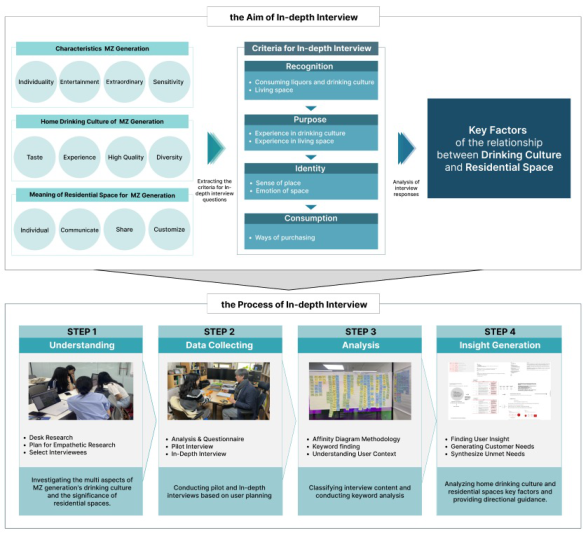
Drawing on the analysis of prior studies Figure 1, keywords on the charac- teristics of the Korean MZ generation, their home drinking culture, and the meaning of their residential spaces were extracted. Based on this, perceptions, purposes, identity, and consumption related to the home drinking culture and residential spaces of the MZ generation were set as criteria for the In- depth interview questions. The process of In-depth interviews was designed based on Nigel Cross’s 4-stage design process. As illustrated in ‘The Pro- cess In-depth Interview’ in Figure 1, the In-depth interview begins with the Understanding stage, which involves pre-research and planning, progresses through the Data Collecting stage where interviews are conducted, followed by the Analysis stage where the collected data is analyzed. The entire pro- cess concludes with the Insight Generation stage, in which key findings and 4Dang-geun Market (Carrot Market): a smartphone app that facilitates easy local transactions for used products. 5Junggonara (Used Product Market): an online second-hand trading platform that enables users to buy and sell used products on the internet, without being restricted to a specific region and with a wide range of users.
implications are derived. The participants of the In-depth Interviews were 31 participants (16 males and 15 females) in 20s and 30s, the MZ genera- tion in South Korea, with drinking experience from various occupations. The In-depth interview questions were designed to ensure that they were easily understandable, focusing on the meaning of liquors, reasons for consump- tion, experiences pursued in drinking culture, and their consumption values. In addition, we wanted to explore perceptions and their usage of residential spaces, as well as experiences of home drinking within residential spaces.
Figure 1: The aim and process of in-depth interview (adapted from Park, 2020).
INSIGHT ANALYSIS
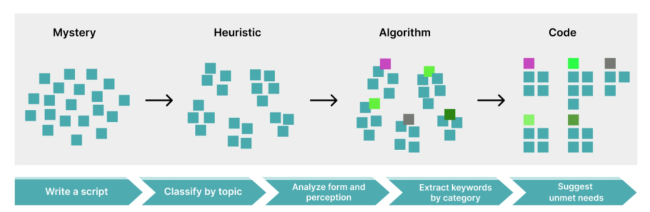
Figure 2: Method of interview analysis: knowledge funnel & affinity diagram (adapted from Park, 2023).
Human Factors Design Study for Home Beer-Brewing Machine in Residential Space 99
As a method for analyzing interviews, the affinity diagram technique, applying Roger Martin’s concept of the Knowledge Funnel was used. As shown in Figure 2, the Knowledge Funnel classifies the interview comments, referred to as “Mystery,” into topics, constructs an appropriate heuristic, and analyses algorithms corresponding to each topic in detail to derive codes. Subsequently, the process involves contextual conceptualization of the mean- ing of interview comments. Therefore, in this paper, a five-step methodology was employed, encompassing data analysis, the creation of interview scripts, thematic categorization, understanding user behaviors and perceptions, and extracting keywords as well as presenting latent needs (Unmet Needs).
Insight Analysis through the above process can be organized as follows. In common, the drinking culture among the MZ generation is directly related to personal emotions, serving to relieve or share emotions with others. It was observed that there exists a desire for efficient consumption and something uniquely personal within the MZ generation. Regarding residential spaces, it was observed that the purposes of these spaces are not clearly defined, and individuals prefer to subdivide or change the shape according to personal tendencies and lifestyles.
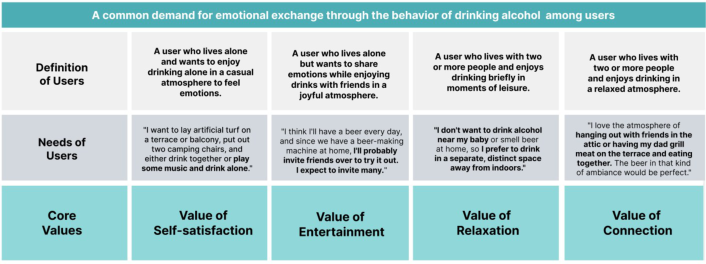
Figure 3: Definition and needs of users with their core values.
Through this, users were classified into four categories as defined in Figure 3: 1) those who live alone and enjoy drinking alone in a relaxed atmo- sphere to experience emotions, 2) those who live alone but prefer to share drinks with friends in a pleasant atmosphere, sharing emotions, 3) those who live with others and briefly enjoy drinking in moments of relaxation, and 4) those who live with family and enjoy drinking in a relaxed atmo- sphere. Based on this classification, the core values for each user were derived as Value of Self-satisfaction, Value of Entertainment, Value of Relaxation, and Value of Connection. When explained according to importance, it is as follows:
Value of Self-satisfaction: It signifies the core values of users who live alone and prioritize solitary time in their own space, especially for those in single-person households. They highly value personal satisfaction and happiness and tend to minimize external constraints. Additionally, they
exhibit a strong desire to enjoy entertainment while drinking alone in a relaxed atmosphere.
Value of Relaxation: It refers to the core values of users living with two or more members, facing a lack of spare time due to parenting or work- related responsibilities. They have a desire to alleviate daily fatigue, engage in light conversations, and acquire positive energy.
Value of Entertainment: It is a core value keyword for users who live alone but have excellent sociability and prioritize interpersonal relationships. They prefer sharing experiences, and they have a desire to communicate and share joyful experiences through home drinking parties.
Value of Connection: It represents the core values of users living with family members, who prefer socializing over drinks in a comfortable and warm atmosphere with family or friends. They seek to enhance bonds, communicate, and share special moments through drinking gatherings.
By synthesizing the Insight Analysis above, the design direction of the Home Beer-Brewing Machine, which considers the core aspects of drinking culture with residential space, and the core values of the MZ generation, can be described as follows.
Considering the diverse types of households within the MZ generation, it is advantageous to develop products of various capacities, ranging from small household sizes to large party sizes. Introducing products with user- friendly and convenient features would be beneficial. Furthermore, Home Beer-Brewing Machines must create enjoyable experiences where customers can create their own space and engage in communication. To achieve this goal, it is essential to integrate a design that facilitates easy movement of the product and seamlessly aligns with interior aesthetics, taking into account adaptable lifestyles that can influence changes in the form of residential space and its utility. Therefore, it is necessary to provide customers with options to choose the color of the product when considering its visual aspects. This allows users to expand their range of choices, providing an opportunity to select products that align with their personality, preferences, and needs. These considerations in the design aspect can enhance the competitiveness of the product, increase customer satisfaction, and serve as a crucial factor for growth and development.
CONCLUSION
The purpose of this paper is to extract the meaning of the home drinking culture, one of the characteristic drinking cultures of the emerging MZ gen- eration in South Korea, and its relationship with residential spaces, and to propose the direction of Home Beer-Brewing Machine by confirming the changing characteristics according to the trends of the times.
Furthermore, as a study aimed at providing foundational data for activat- ing the Home Beer-Brewing Machine product market, an analysis of previous studies was conducted to confirm the necessity of In-depth interviews. The significance of this paper lies in deriving the core aspects of the MZ gener- ation, the core values of their home drinking culture, and residential space through the results of In-depth interviews, and thus, the direction for Home
Human Factors Design Study for Home Beer-Brewing Machine in Residential Space 101
Beer-Brewing Machine product design can be presented. Therefore, in sub- sequent research, we hope that the specific design developed based on the results derived from this paper will be implemented, leading to the high util- ity of Home Beer-Brewing Machines not only in the South Korean market but also in overseas regions where home-party culture has flourished. In conclu- sion, it is also hoped that the results of this paper will serve as the foundation for the design direction of the next-generation Home Beer-Brewing Machine, contributing to market expansion with enhanced customer satisfaction.
ACKNOWLEDGMENT
This paper was supported by Korea Institute for Advancement of Technol- ogy (KIAT) grant funded by Korea Government (MOTIE) (P0012725, HRD Program for Industrial Innovation).
REFERENCES
Cross, N. (2023). Design thinking: Understanding how designers think and work.
Bloomsbury Publishing. Dubberly, H. (2004) How do you design?. Dubberly Design Office. Hong, M. H. (2023). A study of the MZ Generation’s Perceived Values and Tendencies in Consumption and Their Leisure Activities. Unpublished master’s thesis. Graduate School of Business Administration Jeju National University. IDEO. (2019) IDEO Design Thinking, IDEO’s Design Thinking. Blog, https://design
thinking.ideo.com/#designers-mindset. IDEO. (2022) The Design Thinking Process, IDEO Website, https://www.ideou.com/ blogs/inspiration/design-thinking-process. Jee, E. Y., & Lee, H. J. (2021). Mid-aged Persons’ Housing Consciousness and At-
Home Activity Characteristics Reflecting COVID-19 Situation. Korean Journal of Human Ecology, Volume 30, No. 5. Kim, E. J., & Kwon, O. J. (2013). Interior Color Preference Survey and Planning of Small Apartment unit - Focusing on 20∼30s Adults-. Korean Housing Asso- ciation, Proceedings of the 2013 Symposium on Housing Studies, Volume 25, No. 2. Kim, G. J. (2022) The outlook for the alcoholic beverage market... Home-
brewing is experiencing rapid growth as tastes diversify, Maeil Busi- ness Economy Korea, https://www.mk.co.kr/economy/view.php?sc=50000001 &year=2022&no=690066. Kim, S. D. (2021). Changing Trends in Housing among the MZ Generation.
CHUNGBUK Issue & Trend, No. 45. Kim, Y. W., & Chung, H. S. (2019). Research on the Color Preference on Residential Space by Self-Esteem of the Millennials. Study on Basic Morphology, Volume 20, No. 6. Kwon, J. Y. (2019) The taste is there, but I can’t quite describe it..., in the NEWS,
https://www.inthenews.co.kr/news/article.html?no=17268. Lee, H. J., & Kim, Y. J. (2019). A study on the Common Space Design of Co-housing for the young single-person household. Unpublished master’s thesis. The Graduate School of Design in Ewha Womans University. Lee, H. S., Kim, S. H., & Kim B. R. (2019). Beer Selection Properties of Consumers:
Focusing on Comparative Analysis of Domestic, Imported and Craft Beer. Journal of the Society of Industrial Management Systems, Volume 42, No. 3.
Lee, K. A., & Nah, K. (2012). A study of FEEM (Function-Emotion-Experience- Meaning) Model and Development its Evaluation Tool and Conceptual Model for Space Design. Unpublished doctoral dissertation. International Design school for Advanced Studies (IDAS). Lee, K. M. (2023). An Empirical Study on Purchase Decision Factors Based on the
Emerging Consumer Culture of Traditional Liquor. Unpublished master’s thesis. Graduate School of Kyonggi University. Lee, S. J. (2023). Consumers’ Preferences based on Brand Elements in Brand Collaboration - Focusing on Convenience Store Craft Beer. Korean Design Forum, Volume 28, No. 1. Park, J. H. (2015). A Study on the Development of Design Process and Methods
based on the Cultural Differences for Korea. Unpublished doctoral dissertation. International Design School For Advanced Studies (IDAS) of Hongik University. Park, J. H. (2020). A Study on User Experience and Perception of Vehicle Interior Space. Korea Institute of Design Research Society, Volume 5, No. 4. Park, J. H. (2023). A Study on the Role and Meaning of Living Space and TV in the
Digital Age-Focused on In-depth Interview. Journal of the Korean Society Design Culture, Volume 29, No. 4. Park. H. J., Kyung, M. Y., Lee, J. H., & Suk. H. J. (2022). Participatory Research of the Preference for Residential Lightning: The Living Space of Generation MZ. Archives of Design Research, Volume 35, No. 2. Qian, H., Kang, B. K., & Kim, S. H. (2013). Research and Application of Ergonomics
in the Portable Flashlight Design. Journal of the Korea Contents Association, Volume 13, No.10. Seon, Y, & Lee, C. W. (2022). Design of Craft Beer Packaging Applying Consumer Emotion - Focusing on Gangseo Beer. Journal of Brand Design Studies, Volume 20, No. 4. Shim, W. S. (2018). A Study on Market Segmentation by Beer Selection Preference
and Lifestyle Types. Journal of Distribution Management Research, Volume 21, No. 5. Shin, T. S., & Chung, D. S. (2017). A study of Design Satisfaction of Rehabilitation Medical Device on Ergonomics Perspective – Based on the Stationary Training Equipment-. Unpublished master’s thesis. The Graduate School of Techno Design in Kookmin University. So, S. G., & Cho, M. J. (2022). MZ Generation’s Residential Space Use Behaviors and
Spatial Improvement Requirement – Focused on the Youth Generation Living in Multi-family Housing in Seoul Metropolitan Areas-. The Architecture Institute of Korea, Proceedings of the 2022 Spring Academic Conference, Volume 42, No. 1. Song, I. J. (2022). A Study on the User Experience Design Characteristics of Large-Scale Retail Spaces with Background Entertainment Elements. Unpublished master’s thesis. Graduate School of Hanyang University. Tim, B. (2010). Change by Design: How Design Thinking Transforms Organizations
and Sparks Innovation. Gimm-young Publishers. Yoon, E. B. (2022). MZ Generation Seeking Different Places Even If It’s Uncomfortable: Standing and Drinking Coffee or Alcohol at Nowadays ‘Hot Places’. Maeil Business Economy.
LISTED IN THE AHFE DIGITAL BOOKSTORE CATALOGUE
Explore the complete digital volume
Human Factors in Communication of Design
Read this individual research paper free through the original publisher, or explore the full digital proceedings book.
ISBN 978-1-964867-12-0
Explore this ISBN in the AHFE Bookstore ↗Listed in the July 2026 bookstore catalogue; search by ISBN to confirm current availability · Digital book purchase optional