Christoph Szedlak, Bert Leyendecker, Ralf Woll (2024). Unveiling Decision-Making Dynamics through Wearable Sensors in Business Simulation Games: A survey. In: Human Factors and Wearable Technologies. AHFE Open Access, vol. 141, pp. 1–9. https://doi.org/10.54941/ahfe1005049
Stress is a psychophysiological reaction to events or demands within business simulation games, necessitating the use of sensors for measurement. This article is grounded in a literature analysis of stress measurement in on-field settings, aiming to extrapolate methodologies for application in business simulation games. Specifically, the study derives selection criteria for wearables in business simulation game scenarios from the limitations and challenges associated with reliable stress measurement. The findings contribute valuable insights into the adaptation of stress measurement methods to the unique context of business simulation games, discussing ethical considerations.
In recent years, wearable technology has rapidly emerged as a transforma- tive force in healthcare, driven by its potential to revolutionize the field. The integration of silicon electronics and soft electronic materials, coupled with advancements in microfabrication, has facilitated seamless incorpo- ration of sensing technologies with skin (Yang et al., 2019; Heikenfeld et al., 2019). Moreover, the landscape of commercial wearable technolo- gies has shifted from mainstream consumer health wearables to encom- pass wearable medical technology. Fitness tracker giants, including Apple Watch and Fitbit, for example have obtained FDA clearance for their ECG features, reflecting a move toward more medically-oriented applications (FDA, 2018). Despite the rapid advancement of technology and the con- tinuous improvement of low-energy, self-powered systems with increasing accuracy, wearables have not yet been utilized for the analysis of human decision-making behaviour in an experimental setting. For this reason, the current work classifies and prospects wearable sensor technology and its application. A particular emphasis is placed on the challenges associ- ated with utilizing these devices for monitoring mental stress in business simulation games, shedding light on its impact on participants’ perfor- mance and their involvement in these controllable and simplified business environments.
Business Simulation Games Business simulation games have become a prevalent instrument, particularly in the education of executives and management. These tools simulate realis- tic decision-making scenarios within a complexity-reducing model, providing learners with practical experiences (Bloetz, 2015). Through interaction with simulated scenarios, participants can adeptly solve complex problems, make strategic decisions, and experience the consequences of their actions in a protected environment. Beyond their recognized role as effective teaching and learning arrangements, the simplicity of execution and minimal resource requirements make business simulation games an attractive tool for research purposes (Shah & Ward, 2003). They enable the analysis of participant behaviour under controlled conditions and the examination of strategic deci- sion processes. This application allows for hypothesis testing, exploration of dynamic relationships, and the derivation of practical insights into complex systems and decision structures (Niemeyer, 1984). The significant advantage lies in participants being able to fully engage in realistic decision situations without the long-term consequences of their actions, emphasizing the versa- tility and potential of business simulation games in both educational and research contexts. While business simulation games take place in a pro- tected and controllable environment, they aim not to restrict participants in their natural behaviour (Bloetz, 2015). Consequently, the focus shifts towards wearables designed for on-field mental stress detection, in order to avoid technology-induced constraints on participants’ performance and involvement in the business simulation game.
Stress Detection Using Wearable Sensors Stress is commonly acknowledged as a significant factor contributing to var- ious health issues, posing potential dangers if not addressed (Koussaifi et al., 2018). In a study by Ogorevc et al. (2011), the effects of mental stress on specific psychophysiological parameters were examined, evaluating subjects under both mental stress and physical tasks. The introduction of stressors led to elevated levels of heart rate (HR), galvanic skin response (GSR), and blood pressure (BP). Interestingly, the psychophysiological parameters exhib- ited weaker responses during mental stress tests compared to physical activity. Thus, an analysis of mental stress necessitates rigorous consideration of the simulation game design.
Monitoring stress with a single physiological signal is feasible; however, the outcomes may be inconclusive. Outcomes based on a single physiologi- cal signal can be enhanced through contextual and behavioural information (Tivatansakul & Ohkura, 2015). Tang et al. (2014) proved that leverag- ing activity information has the potential to enhance the system sensitivity in stress detection when utilizing only a GSR-sensor. A reliable analysis of mental stress must, therefore, be conducted through a measurement system comprising multiple sensors or in conjunction with additional context and behaviour-related analyses.
Unveiling Decision-Making Dynamics Through Wearable Sensors 3
Search Strategy and Data Collection In order to gain insight into the current landscape of stress detection using wearables, a literature review was carried out. This involved delving into rel- evant research articles through a keyword search across databases such as IEEE Xplore and ScienceDirect, extending until July 2023. Keywords for this research domain were selected to identify academic articles centered around on-field stress detection using wearables. The research delineated three pri- mary aspects, and the subsequent keywords were chosen and combined with Boolean operations:
i) mental stress detect*; mental stress measure*; mental stress recognition; mental stress asses* ii) work*; office; on field; daily life; real life; employ*; job; professional; person; organization iii) wearable, *sensor; Internet of Things (IoT); bio-signal monitor Inclusion criteria were established to specify the characteristics that eligible research papers must possess, including considerations such as
i) publication date, restricting selection to papers published between 2016 and 2023; ii) publication type, encompassing both conference and journal papers; iii) relevance, involving a thorough examination of research paper titles and abstracts, with a specific emphasis on papers concentrating on mental stress detection, utilizing wearable sensors for data collection Conversely, exclusion criteria were applied to eliminate research articles that did not meet predetermined standards, also eliminating duplicates and reviews. In addition, articles that employed sensors in their methodology were deemed irrelevant to the scope of the review. Articles monitoring stress in a controlled laboratory environment were not considered. 46 papers were not available as full-text, hence they were eliminated.
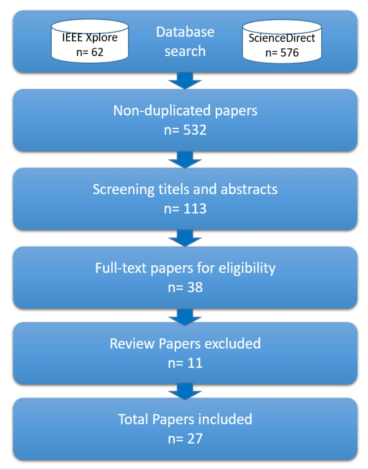
A total of 638 papers were initially retrieved through these keywords, cul- minating in the selection of 27 papers after meticulous evaluation. The search strategy is elucidated in Figure 1.
Stress Detection Using Wearable Sensors The literature review presents an overview of selected papers published across diverse journals, showcasing the extensive discourse on stress detec- tion. Twenty-two journals have contributed, with the majority providing a single article and only two journals presenting multiple articles on the subject, demonstrating a broad range of perspectives from medicine to manufacturing.
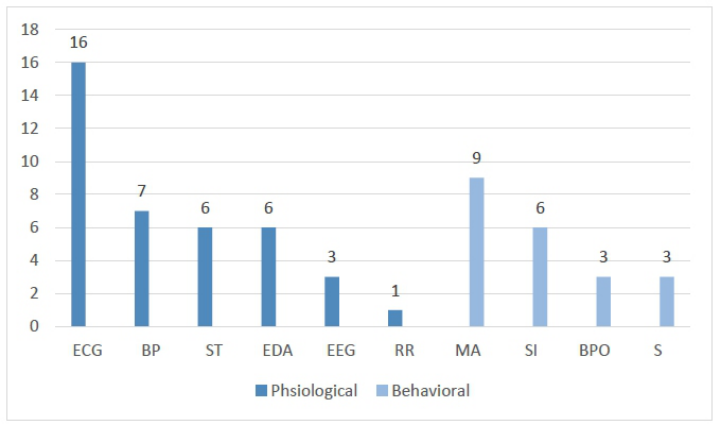
Wearable sensors, predominantly wrist-worn devices (Tervonen et al., 2020), chest bands (Mauss et al., 2016), and smartwatches (Li et al., 2018), were utilized for measuring the ECG signal (Chen et al., 2019). The most common parameter analysed for mental stress detection was Heart Rate Variability (HRV). Despite Electrodermal Activity (EDA) being considered a sensitive biomarker for mental stress, fewer studies focus on its measurement
using wearables in working environments (Betti et al., 2018). Measurement is exclusively done via non-invasive wrist devices. Technological advancements in sensor technology are enabling non-invasive EEG measurement outside the laboratory, reducing the risk of poor data quality due to improper sen- sor application (Betti et al., 2018; Jebelli et al., 2018). BP, measured through wrist devices, was used as an indicator of mental stress, with studies primar- ily concentrating on chronic stress consequences rather than the immediate response to situation-induced stressors (Mauss et al., 2016). Wearables were also employed for capturing respiration rate (RR) and skin temperature (ST) (Rodríguez-Arce et al., 2020), with over three-quarters of the studies uti- lizing multimodal systems that combined various data collection methods (Betti et al., 2018; Chen et al., 2019). In addition to physiological data, wearables were used to capture behavioural aspects for mental stress assess- ment, particularly focusing on movement and activity (MA) (Garcia-Ceja et al., 2018). Social interaction (SI) (Maxhuni et al., 2021), body posture (BPO) (Ghosh et al., 2022), speech (S) emphasis, and rhythm were also anal- ysed (Muaremi et al., 2016). Behavioural aspects were often recorded by smartphones and predominantly analysed in combination with physiological signals using additional wearables. Validation of measurements was con- ducted in 22 studies through the perceived stress of workers. Data collection involved self-report questionnaires, employing standard (12) and customized questionnaires (10) to capture specific aspects such as perceived team conflict as a stressor. Frequently used assessment tools included NASA-TLX (Cic- carelli et al., 2022), STAI (Booth et al., 2022), and EMA (Tervonen et al., 2020), while clinical analysis, combining physiological data with blood and urine specifics, was infrequently employed. Cortisol salivary analyses were predominantly used in hospital contexts. However, Betti et al. (2018) showed positive results for mental stress detection based on the correlation of cortisol values and physiological sensor responses.
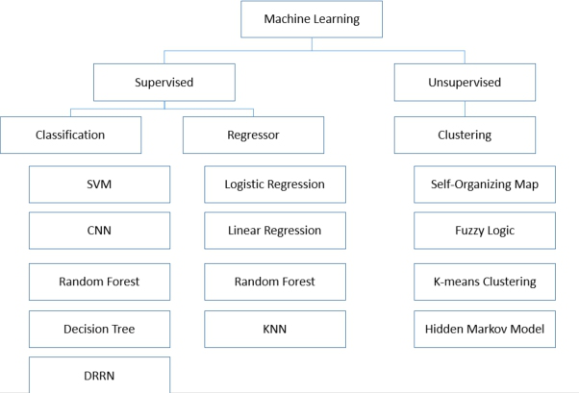
The determination of stress levels is a common practice among researchers, with a predominant reliance on machine learning (ML), particularly utiliz- ing classification approaches differing into three classes (low, medium high) with a maximum of five. Only four articles relied on statistical analysis. It is noteworthy that all the reviewed literature employs either supervised or unsu- pervised learning methodologies. Figure 3 illustrates stress calculation using ML algorithms. Convolutional Neural Network (CNN), Deep Recurrent Neural Network (DRNN), and decision trees, notably with additional con- text (Gjoreski et al., 2017), exhibit high predictive power (>90% accuracy). Support Vector Machines (SVM) achieved a promising 87.30% accuracy in Jebelli et al. (2018). Random Forest excels in considering both physiological and behavioural data (Booth et al., 2022). Five works employed unsuper- vised methods. Calibration involved laboratory-induced stress reactions or labelled stress levels using collected data. In statistical analyses, regression models, including elastic-net, linear, and logistic regressions, dominate.
Unveiling Decision-Making Dynamics Through Wearable Sensors 5
Figure 1: Flow chart describing the search strategy of the literature review.Figure 2: Absolute frequency of employed measurement variables.
Special Requirements for Measuring Mental Stress in Business Simulation Games While simulations occur within controlled, laboratory-like settings enabling the manipulation of specific environmental parameters, the primary focus remains on portraying a simplified reality. Beyond the gaming perspective, Niemeyer (1984) underscores the intricate link to system theory. Whether
depicting an existing system for research insights or forecasting the behaviour of a planned system, it is imperative not to constrict participant behaviour through additional elements like intricate measuring instruments. Ideally measuring tools should, exhibit resilience against motion artefacts. Apart from the restriction on freedom of movement, the selected instruments should not instigate supplementary stress by strongly evoking memories of labora- tory or hospital conditions. The placement of medical electrodes for an ECG or EEG is consequently viewed as suboptimal. Invasive stress measurement methods are likewise considered inappropriate. Considering the research con- text, the chosen instruments should be facile to place and not necessitate the presence of medical professionals (Chen et al., 2019). Consequently, the appropriateness of wearables needs preliminary testing under controlled con- ditions, and the resultant data is utilized to calibrate the business simulation model (Egilmez et al., 2017). Particularly, this necessitates a smooth inte- gration into the business simulation game environment without the risk of disrupting continuous measurement. Existing literature highlights the most promising outcomes from multimodal approaches. Thus, ensuring technical interoperability is crucial, not only with the simulation instruments but also with other measurement tools. Irrespective of the simulation game, instru- ments inducing invasive physical discomfort, raising substantial data security concerns, or collecting untrustworthy data warrant exclusion. The following criteria are used to assess the performance of wearables in this context:
1. Exclusion Criteria: These criteria identify factors that may disqualify wearables from consideration due to their potential to induce physical discomfort, unreliable data output, or inadequate data security measures. 2. Selection Criteria: These criteria outline the key considerations for select- ing wearables, focusing on aspects such as wearability, integration into the simulation environment, sensory impact, discretion, perceived privacy, perceived intrusiveness, adaptability, interference with social interactions, robustness, and application-specific requirements.
Figure 3: Detecting mental stress using machine learning techniques.
Unveiling Decision-Making Dynamics Through Wearable Sensors 7
These criteria provide a comprehensive framework for evaluating wear- ables in business game environments and will serve as the basis for our comparative analysis in the subsequent sections. Table 1 presents the criteria used for evaluating wearables in business game environments, as described above.
Table 1. Selection criteria for wearables to measure mental stress in business simulation.
wearables that exhibit inconsistent or unreliable data output
wearables that cause any invasive physical discomfort, such as skin irritation or pain, to prevent additional stress induced by the physical presence of the device. unreliable data output limited data security measures wearables that lack robust data security measures, protecting participant information from unauthorized access and potential stress related to privacy concerns. Selection Criteria wearability Assessing the extent to which wearing the wearable restricts participants’ freedom of movement, e.g. typing, and whether it potentially triggers stress-inducing factors by reminding them of laboratory conditions. integration Referring to how well the wearable can be integrated into the specific business game environment to ensure seamless alignment with the context and no adverse impact on the simulation experience including the wearable’s compatibility and interoperability with other technologies sensory-impact Checking whether wearing the wearable causes sensory impacts such as heat, pressure, or discomfort that could induce stress. discretion Evaluating how discreet and inconspicuous the wearable is to ensure participants do not attract undue attention perceived privacy Evaluating perceived wearables privacy to ensure participants feel secure regarding their privacy and that additional stressors do not arise due to privacy concerns. perceived intrusiveness
Assessing how intrusive participants perceive the wearable to be, taking into account factors such as size, weight, and visibility to avoid any psychological discomfort or stress caused by the perceived intrusiveness. adaptability Referring to how well the wearable can be adjusted to different body types, demographics etc. to ensure it is equally suitable for all participants and does not introduce additional stress e.g. due to fit issues. interference with social interactions
Assessing the extent to which wearing the wearable interferes with participants’ social interactions to ensure the devices do not hinder communication or collaboration. robustness Assessing the accuracy of data collected by the wearable under diverse environmental conditions and its susceptibility to bias during natural movement. application Referring to the susceptibility to errors in sensor attachment and the necessity of medical professionals for flawless data collection.
CONCLUSION
In conclusion, business simulations games offer a simplified yet control- lable representation of reality, unlocking insights into decision-making pro- cesses. Integrating wearables for measuring mental stress in these simulations enhances our understanding of participant performance and involvement. Care must be taken to ensure the instruments themselves do not induce
significant stress. Reliable results necessitate the incorporation of multi- modal systems, emphasizing the need for early consideration in the design phase. Research addressing the integration aspect is currently lacking, with addressing added requirements for measurement systems compared to on- field applications. Additionally, exploring subjects’ perceptions of stress analysis remains an essential avenue for further investigation.
REFERENCES
Betti, S. et al., 2018. Evaluation of an integrated system of wearable physiological sensors for stress monitoring in working environments by using biological markers. IEEE Trans. Biomed. Eng, 65(8), pp. 1748–1758. Bloetz, U., 2015. Planspiele und Serious Games in der beruflichen Bildung. Bonn:
Bundesinstitut für Berufsbildung. Booth, B. et al., 2022. Towards robust stress prediction in the age of wearables modeling perceived stress in a longitudinal study with information workers. IEEE Trans Affect Computing, Band 13, pp. 2201–17. Chen, C., Li, C., Tsai, C.-W. & Deng, X., 2019. Evaluation of mental stress and heart
rate variability derived from wrist-based photoplethysmography. Proceedings IEEE Eurasia Conference Biomedicine Engnineering Healthcare Sustainability, Okinawa Japan, pp. 65–68. Ciccarelli, M. et al., 2022. Human work sustainability tool. Journal of Manufacturing Systems, Band 62, pp. 76–86. Egilmez, B. et al., 2017. UStress: Understanding college student subjective stress using
wrist based passive sensing. Proc. IEEE Int. Conf. Pervas. Comput. Commun. Workshops, Koan USA, pp. 673–678. FDA, 2018. De Novo Classification Request for ECG Application, Apple Inc.. [Online] Available at: https://www.accessdata.fda.gov/cdrh_docs/reviews/DEN180044.pdf. [Zugriff am 22 12 2023]. Garcia-Ceja, E., Osmani, V. & Mayora, O., 2018. Automatic Stress Detection in Working Einvironment From Smartphones Accelerometer Data: A first step. IEEE Journal Biomedical Health Information, 20(4), pp. 1053–1060. Ghosh, S. et al., 2022. Classification of mental stress from wearable physiological
sensors using image-encoding based deep neural network. Biosensors, 12(12), pp. 1153–1156. Heikenfeld, J. et al., 2019. Accessing analytes in biofluids for peripheral biochemical monitoring. Natural Biotechnologies, Band 37, pp. 407–419. Jebelli, H., Hwang, S. & Lee, S., 2018. EEG-based workers’ stress recognition at
construction sites.. Autonom Construction, Band 93, pp. 315–324. Koussaifi, M., Habib, C. & A. Makhoul, 2018. Reeal-time stress evaluation using wireless body sensor networks. Proceedings Wirelss Days, pp. 37–39. Li, F. et al., 2018. Photoplethysmography based psychological stress detection with
pulse rate variability feature differences and elastic net. International Journal of Distribution Sensor Networks, Band 14. Gjoreski, M., Luštrek, M., Gams, M. & Gjoreski, H., 2017. Monitoring stress with a wrist device using context. Journal of Biomedical Infomration, Band 73, pp. 159–170. Mauss, D., Jarczok, M. & Fischer, J., 2016. The streamlined Allostatic Load Index a
replication of study results. Stress, Band 19, pp. 553–558.
Unveiling Decision-Making Dynamics Through Wearable Sensors 9
Maxhuni, A. et al., 2021. Unobtrusive Stress Assessment Using Smartphones. IEEE Trans Mobility Computing, Band 20, pp. 2313–2325. Muaremi, A., Arnrich, B. & Tröster, G., 2016. Towards Measuring Stress with Smart-
phones and Wearable Devices drucing Work Day and Sleep. Bionanoscience, Band 3, pp. 172–183. Niemeyer, K., 1984. Planspiel. In: Management Enzyklopädie. Landsberg: Moderne Industrie, pp. 694–700. Ogorevc, J., Podlesek, A., Geršak, G. & J. Drnovšek, 2011. The effect of mental stress
on psychophysiological parameters. Proceedings IEEE Interneational Symposium Medical Meassure Application, pp. 294–299. Rodríguez-Arce, L., Lara-Flores, Portillo-Rodríguez, O. & Martinez-Mendez, R.,
2020. Towards an anxiety and stress recognition system for academic environ- ments based on physiological features. Comput. Methods Programs Biomed, p. 190. Shah, R. & Ward, P., 2003. Lean manufacturing: context, practice bundles, and performance. Journal of Operations, Band 21, pp. 129–149. Tang, T., Yeo, L. & Lau, D., 2014. Activity awareness can improve continous stress
detection in galvanic skin response. Proceeding IEEE Sesnors, Calencia Spain, pp. 1980–1983. Tervonen, J. et al., 2020. Personalized mental stress detection with self-organizing map: From laboratory to the field. Computer Biological Medicine, Band 124. Tivatansakul, S. & Ohkura, M., 2015. Improvement of emotional healthcare
system with stress detection from ECG signal. Proceedings 37th Annual Inter- national Conference IEEE Engingeering Medical Biological Society, Milan Italy, pp. 6872–6975. Yang, J. et al., 2019. Electronic skin: recent progress and future prospects for skinattachable devices for health monitoring, robotics, and prosthetics. Advanced Materials, 31(48).
LISTED IN THE AHFE DIGITAL BOOKSTORE CATALOGUE
Explore the complete digital volume
Human Factors and Wearable Technologies
Read this individual research paper free through the original publisher, or explore the full digital proceedings book.
ISBN 978-1-964867-17-5
Explore this ISBN in the AHFE Bookstore ↗Listed in the July 2026 bookstore catalogue; search by ISBN to confirm current availability · Digital book purchase optional