Haotian Ju, Fangli Song, Wei Wang, Jun Zhang, Chen Qi, Le Du (2024). Extending Fitts’ Law With Finger Swiping: A Study on Stroke Gesture Dynamics in Commercial Applications. In: Human Factors in Design, Engineering, and Computing. AHFE Open Access, vol. 159, pp. 1695–1705. https://doi.org/10.54941/ahfe1005737
In the rapidly evolving landscape of smartphone technology and micro-interaction design, our research aims to extend the applicability of Fitts' Law to better understand and model the dynamics of finger stroke gestures on smartphone commercial applications. Traditional interpretations of Fitts' Law, which primarily rely on distance (D) and target width (W) to quantify task difficulty (ID) in gesture input, may not be sufficient in capturing the complexities inherent in touchscreen interactions with commercial applications. To address this research gap, we propose an adaptation of Fitts' Law that incorporates dynamic physical parameters to better align with the execution of single-finger stroke gestures. Our classification of stroke gestures into two distinct types and the introduction of three new parameters – initial swiping velocity (V_start), final swiping velocity (V_end), and maximum swiping acceleration (A_max) – form the core of our modified model. Through a series of controlled experiments, we validate our models, demonstrating clear distinctions between Type I and II stroke gestures and achieving a high level of predictive accuracy (R² > 0.9).Our findings highlight the significant influence of individual biomechanical differences on movement time (MT) within a single stroke gesture, underscoring that the performance of gestures is not solely determined by target dimensions (D and W) but also by individual factors. Despite the challenge in precisely calculating D and W for complex gesture designs, our study emphasizes that incorporating dynamic parameters effectively explains the observed gesture parameter randomness in commercial applications, thereby enhancing the ecological validity of Fitts' Law.However, acknowledging limitations, we recognize the need for further investigation into a broader range of multi-touch gestures, such as pinch-to-zoom and rotation. Additionally, it awaits a deeper exploration of how individual biomechanics, cognitive states, and task complexities interplay to influence gesture execution time. Future research should strive to fill these knowledge gaps, ultimately leading to a more holistic understanding of multi-touch gesture behavior and improved design guidelines for gestural interfaces.In conclusion, this research contributes a refined Fitts' Law model, which accurately represents two types of stroke gestures in commercial smartphone applications. We also explore individual differences, informing design principles for future gesture interactions.
With the widespread adoption of smartphones in recent years, multi-touch gestures have played a crucial role in user interactions. How to accurately evaluate the effectiveness of gesture design has become an urgent issue. Fitts’ law has been widely used in the evaluation of traditional human- computer interaction interfaces (Barakat et al., 2013). However, for modeling interaction with touchscreens, simply applying Fitts’ law may not be accurate enough (Crossman and Goodeve, 1983). Meanwhile, classic Fitts’ law and its modified forms are based on typical pointing tasks experiments, but these experiments have significant differences from the current practical findings (Priya and Joshi, 2023). Despite this, the core idea of Fitts’ law describing human information input flux still holds. Previous research modifying Fitts’
law on touchscreen achieved results with some limits (Scott Mackenzie, 1992) (Sambrooks and Wilkinson, 2013) (Zhao et al., 2018). Therefore, a reasonable approach is to combine the two-dimensional characteristics of the mobile interface while taking into account the finger movement features of users.
In our study, we analyzed the dynamic characteristics of single-finger swiping gestures and redefined and unified the measurement methods for different types of thresholds. Through an experimental collection of physical data on user operation of single-finger swiping gestures using commercial apps, we evaluated the modification of Fitts’ law for single-finger swiping gestures. We hope that this research will enhance Fitts’ law to better explain the dynamic characteristics of complex gestures on smartphones, enabling designers and developers to have a deeper understanding of gesture interaction design, and providing new research ideas for other researchers.
Related Research Fitts’ law defines task difficulty (ID) and movement time (MT) to describe the relationship between human performance in manipulating a pointing device and the size of the target or the distance from the target (Paul, 1954). The general mathematical form of one-dimensional Fitts’ law is as follows:
D
Equations and mathematical formulas are available in the original paper PDF.
We
A large number of studies have extended the original one-dimensional Fitts law to multidimensional scenarios. It was firstly put forward several different two-dimensional task-oriented rectangular target formulas (Mackenzie, 1992). On this basis, a weighted Euclidean model with a formula to adapt to the influence of proximity angles was proposed (Accot and Zhai, 1997). There are many ways to calculate the W including the area method, height- width method, and introducing angle variable (Kopper et al., 2010). A model tailors W to the movement direction towards the target (Jacob et al., 2011). Research indicated that Fitts’s law can be used to model purposeful scrolling interactions (Caroline et al., 2006). A search defined target size as the smaller dimension of a 2D shape and compared the usability of Fitts’ law on different mobile devices (Sandi et al., 2015). It was also found that experiments on Fitts’ law ignore other factors like the arrangement of the buttons and the layout of UI (Priya et al., 2023). A simple linear model based on the concept of constant maximum scrolling speed was proposed (Andersen, 2005). There are also other models proposed to model dynamic revealed targets with different environments, such as handheld devices (Bevan and Fraser, 2016) and multi-touch displays (Zhao et al., 2011). McGuffin and Balakrishnan studied the application of Fitts’ law in acquisition tasks, where the difficulty index is calculated from the extended target width (McGuffin and Balakrishnan, 2002). Guiard and Beaudouin-lafon introduced a scale variable and proposed a model that applies Fitts’ law by defining a “zoom distance” (Soukoreff and MacKenzie, 2004). A two-handed interaction experiment using a stylus and joystick validated the model. Zhao et al.
Extending Fitts’ Law With Finger Swiping: A Study on Stroke Gesture Dynamics 1697
proposed a modified formula after experimentation to meet the fitting degree of Fitts law for different Types of touch gesture tasks (Zhao et al., 2015).
The thumb’s operation on mobile devices is constrained by its three key joints: the Interphalangeal Joint (IPJ), the Metacarpophalangeal Joint (MCPJ), and the Carpometacarpal Joint (CMCJ) (Barakat et al., 2013). And longer thumbs cover a greater area of the screen Ji (Kim and Ji, 2019). Additionally, studies show that the average maximum swiping speed on phones ranges from 25 to 28 cm/s (Bevan and Fraser, 2016). Interaction tasks also affect thumb movement. Conversely, browsing or scrolling tasks may increase thumb movement speed (Karlson et al., 2008). Experienced users demonstrate greater skill and speed in touch screen operations compared to novices (Henze et al., 2011).
The Refined Model of Fitts’s Law With the increasing of interaction design, users can trigger gestures through various methods such as acceleration. Fingers can start moving on the screen or mid-air, which makes calculating complexly. It means that we need to adjust and expand the definition of D and W. We try unify thresholds and stroke gestures. For dynamic parameters, we can treat them as dynamic D and W. D can be defined as the threshold required for acceleration to reach. W can be defined as the range of variation to reach this threshold (Zhao et al., 2011). Crossman et al. have found that users are more sensitive to the perception of achievable areas (Crossman and Goodeve, 1983), so we define the target width as the threshold range allowed by the system for completing gestures accurately. This definition includes S(the achievable screen area), V0(the minimum achievable speed), and maxA (the maximum acceleration) allowed by the finger (to reflect the impact of physiological factors on the target width). Finally, W can be expressed as: = s ∗(V −V0 ) ∗(maxA).
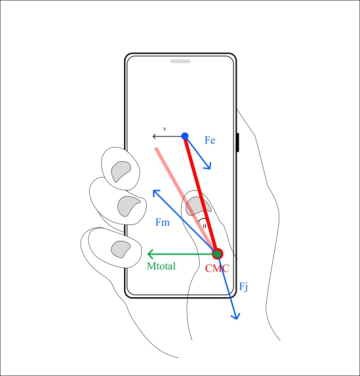
Figure 1: Simplified biomechanical modeling of thumb rigid rods.
Fj · rj
When executing the swiping gestures, the biomechanical of the thumb’s Carpometacarpal (CMC) joint limit its movement speed and range of angles (Kawanishi et al., 2018). These limitations may lead to deviations in thumb movements from the predictions of Fitts’ law. When a user holds a phone (see Figure 1), let Fm represent the muscular force, rm represent the force arm (the vertical distance from the joint to the muscular force application point), Fj represents the joint reaction force, rj represents the force arm of the joint reaction force, Fe represents the external load (Valero-Cuevas et al., 2003), re represents the external load’s force arm, then the total torque Mtotal can be expressed as: Mtotal = (Fm · rm) −
+ (Fe · re) Swiping gestures with a single finger fall into two categories, distinguished by the presence of a distinct control object and the linearity in the object- finger movement relationship.
Type I Swiping: Lack a defined control object or linear movement correlation. Users complete these gestures based on innate movement patterns, disregarding set distance or speed thresholds.
Type II Swiping: Involve a clear control object with linear movement correlation. These are characterized by two phases: initially, the finger overcomes static friction and accelerates; subsequently, guided by visual and tactile cues, the finger decelerates.
For rotational motion, Newton’s second law can be expressed as Mtotal = I · α. Where Mtotal is the total torque, L is the moment of inertia about the rotation axis, which can be regarded as the rotational mass that depends on the shape and mass distribution of the finger, and α is the angular acceleration. Where r is the distance from the rotation axis to the contact point. The swiping distance of the thumb is related to the angular displacement of the thumb joint. In a rotational system, linear displacement can be calculated by multiplying the rotation radius and the angular displacement. Combining previous expressions we get:
From the two formula above, we can find that the nonlinear changes in the total torque of the thumb cause changes in the distance and the angle of finger rotation. This results in even if the values of D and W remain constant, MT still exhibits strong randomness. Therefore, D is redefined as the straight-line distance from the starting point to the endpoint of the user’s movement process, and W is defined as s ∗v −v0) ∗a, where s is the area of the target region, v0 is the velocity threshold, v is the user’s movement speed, and a is the peak acceleration of the user’s movement. Constant total torque sees Type I swiping’s movement time positively linked with the reciprocal of ending velocity and acceleration. Conversely, varying torque negates this direct correlation for Type II swiping, prompting the use of average speed instead. Therefore, we use average speed instead of acceleration to describe the movement time of Type II swiping (Brogmus, 1991).
Based on the discussion above, we propose the following research hypothesis: There are two modified Fitts’ law formulas for Type I and Type II:
Extending Fitts’ Law With Finger Swiping: A Study on Stroke Gesture Dynamics 1699
s ) + c ∗(endV −V0 ) + d ∗(avgV −V0 ) In the new modified formulas, there are four parameters a, b, c, and d. We will try to fit the formula through experiments and obtain the values, evaluating our models.
Experiment Thirty volunteers (15 males and 15 females) participated in this experiment. All participants were right-handed, with 22 aged between 18 and 27 years old, 8 aged between 28 and 42 years old, and an average age of 26.7 years old. The average hand length of male participants was 189.32 millimeters (SD = 8.44), the average palm width was 86.73 millimeters (SD = 6.07), the average thumb length was 58.77 millimeters (SD = 6.73), and the average index finger length was 70.98 millimeters (SD = 4.47). The average hand length of female participants was 174.85 millimeters (SD = 8.55), the average palm width was 75.55 millimeters (SD = 6.16), the average thumb length was 54.65 millimeters (SD = 6.46), and the average index finger length was 65.85 millimeters (SD = 4.22).
The experiment was conducted to simulate everyday scenarios of smartphone usage. The device used in the experiment was an Android phone. Participants completed 10 different task (see Table 1). Each task was repeated 5 times to ensure the reliability of the data.
Table 1. Experimental Operations.
Table available in the original PDF paper.
Tag Type Operation Name 1 II Single Finger Vertical Swipe - Enter app slowly 2 II Single Finger Vertical Swipe - Enter app quickly 3 II Single Finger Horizontal Swipe – Switch app once 4 I Single Finger Horizontal Swipe – Fast app switch 5 II Single Finger Horizontal Swipe – Switch once 6 I Single Finger Horizontal Swipe - Fast switch 7 I Single Finger Vertical Swipe - Exit app 8 I Single Finger Vertical Swipe - Pull down 9 I Single Finger Vertical Swipe - Swipe down on homescreen 10 I Single Finger Vertical Swipe - Swipe down on app
We utilized Android’s API to develop a listener program that records gesture data from experimental tasks. This data encompasses finger touch counts, positions, velocity components, and timestamps. The program captures screen feedback, logging it locally. Additionally, several proxy metrics were established to thoroughly detail user tasks (See in Table 2).
Table 2. Calculation method of processing indicators.
Table available in the original PDF paper.
Name Definition Calculation Method Unit
q startV The start instantaneous speed (Vx_start)2 −(Vy_start)2 pixel/s q (Vx_end)2 −(Vy_end)2 pixel/s endV The ended instantaneous speed
v (t) pixel/s
maxV The maximum instantaneous speed x(t + 1t)−x(t)
1t pixel/s
avgV The average instantaneous speed
pixel/s2
d dta (t)
maxA The maximum instantaneous acceleration q
(X1 −X2)2 −(Y1 −Y2)2 pixel
distance The linear distance between the start and end positions
Time.end −Time.start ms
segTime The time of completing the touch gesture
Results Analysis The ANOVA test yields significant differences on all indicators across Type I (4, 6, 7, 8, 9, 10) and Type II (1, 2, 3, 5) operations ( See Table 1), summarized as follows: For ‘distance’, (F = 46.67, P<.001); ‘segTime’, (F = 297.15, P<.001); ‘startV’, (F = 420.15, P<.001); ‘endV’, (F = 575.66, P<.001); ‘maxA’, (F = 208.09, P<.001); ‘maxV’, (F = 244.84, P<.001).
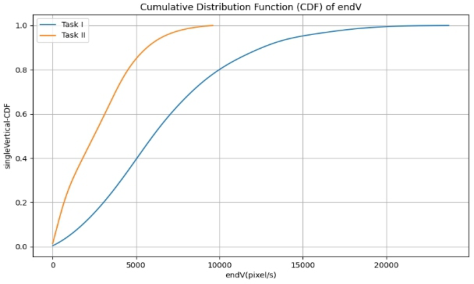
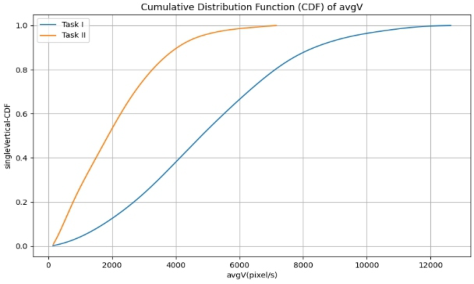
Figure 2 and Figure 3 show the cumulative distribution function (CDF) of endV and avgV of Type I and Type II. By comparing the CDF plots of these two variables, we can find when the total torque is constant, the endV and the 1 avgV of the finger motion are positively correlated with the motion time of Type I swiping. In Type I swiping, shorter times correlate with faster endV, explaining the tendency for quicker gestures to larger distances and velocities. Conversely, Type II swiping exhibit a different pattern: changes in total torque don’t consistently relate to motion time. This discrepancy likely stems from individual factors. Thus, the 1 avgV isn’t a reliable measure for predicting Type II swiping times.
Figure 2: CDF of endV.
Extending Fitts’ Law With Finger Swiping: A Study on Stroke Gesture Dynamics 1701
Figure 3: CDF of avgV.
We tested three fitting algorithms—least squares, gradient descent, and genetic algorithms—to assess their efficacy. Least squares showed limitations with non-linear datasets, while genetic algorithms tended to overfit locally. Consequently, we adopted a combination of gradient descent and least squares for optimizing the modified Fitts’ law equation.
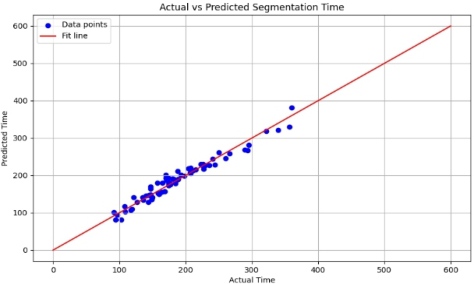
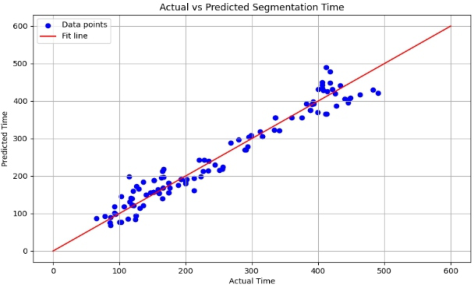
The fitting results of the correction formula for single-finger vertical swiping (Type I):
Figure 4: The fitting results of the correction formula for single-finger vertical swiping (Type I).
s ) −20 ∗(endV −V0 ) −21 ∗(maxA) The refined model exhibited a high fitness (R2 ≈0.96), indicating that the model can accurately capture the variations in experimental data. This high degree of explanatory power suggests that the hypothesis of introducing variables endV and maxA has significant predictive value in statistics. The Type I correction formula revealed that the biological force applied by fingers has a decisive impact on the randomness of MT during movement. The user’s finger movement pattern is more influenced by the sustained application of
biological force, which may lead to non-linear characteristics in the motion process and a tendency to reach a stable speed. Although this stability is achieved in randomness, it still reflects a predictable pattern of movement.
The fitting results of the correction formula for single-finger vertical swiping (Type II):
Figure 5: The fitting results of the correction formula for single-finger vertical swiping (Type II).
s ) −5 ∗(endV −V0 ) −107 ∗(avgV −V0 ) The goodness of fit of the modified formula for Type II is still high (R2 ≈0.91).The modified formula explains that the MT of Type II single- finger swiping gesture is more randomly affected by the target area and the distance of finger swiping. Compared with the end speed, the average speed can better reflect the phased finger movement and its subsequent deceleration trend during the entire finger movement process. That is to say, compared with Type I single-finger swiping, the feedback regulation during gesture execution has a far greater impact on MT randomness than the biomechanical characteristics of the finger itself.
DISCUSSION
We found that the trend of finger swiping speed can be used to predict the execution time of Type II single finger swiping. During the finger movement process, the trend of speed change can reflect the difficulty and stage of gesture execution, which can also be used to predict the execution time. Screen size may have a certain degree of impact on experimental results, which is also reflected in the research of Priya et al. (2023) (Tao et al., 2020).
Differences in Type I and II formulas highlight distinct finger motion control mechanisms in multi-touch inputs, illustrating the intricate nature of smartphone interaction performance. This complexity stems from the interplay of physical, biomechanical aspects, and UI design. Type I tasks are governed by inherent factors like finger strength, flexibility, reflecting in
Extending Fitts’ Law With Finger Swiping: A Study on Stroke Gesture Dynamics 1703
freeform gestures like swipes in unbounded spaces. Performance here leans on natural movement patterns and physiological limits. Conversely, Type II tasks emphasize target-directed actions; users adjust trajectories and speeds guided by on-screen elements, like icons. In these cases, average speed and smooth movement are pivotal for efficient, accurate task completion.
In addition, we also found that the area of the target region and the distance of finger swiping can compensate for each other to affect the execution time of Type II single-finger swiping. This means that under the same target area (Okada and Akiba, 2010), the longer the finger swiping distance, the longer the execution time; while under the same swiping distance, the larger the target area, the shorter the execution time (Crossman and Goodeve, 1983). Overall, our research results reveal that the execution time of Type II single-finger swiping is affected by multiple factors, including human factors, the changing trend of finger swiping speed, the area of the target region, and the distance of finger swiping.
CONCLUSIONS
Our research aimed to assess traditional Fitts’ law models for describing multi-touch gesture input on mobile devices and propose adjustments for real-world user behavior. We found classic Fitts’ parameters insufficient, lacking a predictable link between movement time and target dimensions. Gesture times followed a Poisson distribution, indicative of random influences, with individual biomechanical differences contributing notably to this variability. Consequently, the standard Fitts’ model fails to precisely model multi-touch gesture input on mobiles under prevailing design paradigms.
ACKNOWLEDGMENT
This research was sponsored by the National Key Research and Development Program (2021YFF0900605), the Research Fund for Humanities and Social Sciences of the Ministry of Education (22YJA760082), the Science and Technology Innovation Program of Hunan Province (2022WZ1039), Lushan Lab Research Funding, Guangdong OPPO MOBILE Telecommunications Corp. Ltd. and the Fundamental Research Funds for the Central Universities. The authors would like to acknowledge the support of the participants in this study.
REFERENCES
Accot J, Zhai S (1997) Beyond Fitts’ law: models for trajectory-based HCI tasks.
In: Proceedings of ACM CHI 1997 conference on human factors in computing systems, pp. 295–302. Andersen, T. H. (2005). A simple movement time model for scrolling. CHI ‘05 Extended Abstracts on Human Factors in Computing Systems. Barakat, M. J., Field, J., & Taylor, J. (2013). The range of movement of the thumb.
Hand (New York, N. Y.), 8(2), 179–182.
Bevan, C., & Fraser D. S. (2016). Different strokes for different folks? Revealing the physical characteristics of smartphone users from their swipe gestures. International Journal of Human-Computer Studies, 88(), 51–61. Brogmus, G. E. (1991). Effects of Age and Sex on Speed and Accuracy of Hand
Movements: And the Refinements they Suggest for Fitts’ law. Proceedings of the Human Factors Society Annual Meeting, 35(3), 208–212. Caroline Appert and Jean-Daniel Fekete (2006) OrthoZoom scroller: 1D multiscale navigation. In Proceedings of the SIGCHI Conference on Human Factors in Computing Systems (CHI ‘06). Association for Computing Machinery, New York, NY, USA, 21–30. Crossman, E. R. F. W., & Goodeve, P. J. (1983). Feedback Control of Hand-
Movement and Fitts’ law. The Quarterly Journal of Experimental Psychology Section A, 35(2), 251–278. Fitts, Paul M. (June 1954). “The information capacity of the human motor system in controlling the amplitude of movement”. Journal of Experimental Psychology. 47 (6): 381–391. Henze, N., Rukzio, E., & Boll, S. (2011).100, 000, 000 taps. Proceedings of the 13th
International Conference on Human Computer Interaction with Mobile Devices and Services (MobileHCI ‘11). Jacob O. Wobbrock, Kristen Shinohara, and Alex Jansen. (2011) The effects of task dimensionality, endpoint deviation, throughput calculation, and experiment design on pointing measures and models. In Proceedings of the SIGCHI Conference on Human Factors in Computing Systems (CHI ‘11). Association for Computing Machinery, New York, NY, USA, 1639–1648. Karlson, A. K., Bederson, B. B., & Contreras-vidal, J. L. (2008). Understanding One-
Handed Use of Mobile Devices. Handbook of Research on User Interface Design and Evaluation for Mobile Technology, (), 86–101. Kawanishi, Y., Oka, K., Tanaka, H., Okada, K., Sugamoto, K., & Murase, T.
(2018). In Vivo 3-Dimensional Kinematics of Thumb Carpometacarpal Joint During Thumb Opposition. The Journal of hand surgery, 43(2), 182.e1–182.e7. Kim, H. C., Ji, Y. G. (2019). Natural Thumb Zone on Smartphone with One-Handed Interaction: Effects of Thumb Length and Screen Size. In: Bagnara, S., Tartaglia, R., Albolino, S., Alexander, T., Fujita, Y. (eds) Proceedings of the 20th Congress of the International Ergonomics Association (IEA 2018). IEA 2018. Advances in Intelligent Systems and Computing, vol. 824. Springer, Cham. Kopper, R., Bowman, D. A., Silva, M. G., & Mcmahan, R. P. (2010). A human
motor behavior model for distal pointing tasks. International Journal of Human- Computer Studies, 68(10), 603–615. Ljubic, S., Glavinic, V., Kukec, M. (2015). Finger-Based Pointing Performance on Mobile Touchscreen Devices: Fitts’ law Fits. In: Antona, M., Stephanidis, C. (eds) Universal Access in Human-Computer Interaction. Access to Today’s Technologies. UAHCI 2015. Lecture Notes in Computer Science (), vol. 9175. Springer, Cham. McGuffin, M. J., & Balakrishnan, R. (2002). Acquisition of expanding targets.
Proceedings of the SIGCHI Conference on Human Factors in Computing Systems Okada, H., & Akiba, T. (2010). Fitts’ law Index of Difficulty Evaluated and Extended for Screen Size Variations. INTECH Open Access Publisher. Priya, K., Joshi, A. (2023). Fitts’ Throughput Vs Empirical Throughput: A
Comparative Study. In: Abdelnour Nocera, J., Kristín Lárusdóttir, M., Petrie, H., Piccinno, A., Winckler, M. (eds) Human-Computer Interaction – INTERACT 2023. INTERACT 2023. Lecture Notes in Computer Science, vol 14142. Springer, Cham.
Extending Fitts’ Law With Finger Swiping: A Study on Stroke Gesture Dynamics 1705
Sambrooks, L., & Wilkinson B. (2013). Comparison of gestural, touch, and mouse interaction with Fitts’ law. Proceedings of the 25th Australian Computer- Human Interaction Conference: Augmentation, Application, Innovation, Collaboration, (),. Scott mackenzie, I. (1992). Fitts’ law as a Research and Design Tool in Human-
Computer Interaction. Human–Computer Interaction, 7(1), 91–139. Soukoreff, R. W., MacKenzie, I. S., 2004. Towards a standard for pointing deviceevaluation, perspectives on 27 years of fitts’ law research in hci. Int. J. Hum.–Comput. Stud. 61 (6), 751–789. Tao, D., Wang, T., Tan, H., Cai, J., Zhang, X. (2020). Understanding One-Handed
Thumb Interaction with a Mobile Touchscreen Device: Effects of Keyboard Size, Gap and Button Shape. In: Ahram, T., Falcão, C. (eds) Advances in Usability and User Experience. AHFE 2019. Advances in Intelligent Systems and Computing, vol 972. Springer, Cham. Valero-Cuevas, F. J., Johanson, M. E., & Towles, J. D. (2003). Towards a realistic biomechanical model of the thumb: the choice of kinematic description may be more critical than the solution method or the variability/uncertainty of musculoskeletal parameters. Journal of biomechanics, 36(7), 1019–1030. Zhao, J., Soukoreff, R. W., Balakrishnan, R. (2011). A model of multi-touch
manipula-tion. In: Proceedings of the 2nd Annual Meeting of the Graphics, Animation, and New Media, GRAND. Zhao, J., William soukoreff, R., & Balakrishnan, R. (2015). Exploring and modeling unimanual object manipulation on multi-touch displays. International Journal of Human-Computer Studies, 78(), 68–80. Zhao, S., Dragicevic, P., Chong, M. K., Ramos, G., & Balakrishnan, R. (2018). The
effects of finger size on touch performance, perceived comfort, and muscle activity. International Journal of Human-Computer Studies, 115, 31–50.
LISTED IN THE AHFE DIGITAL BOOKSTORE CATALOGUE
Explore the complete digital volume
Human Factors in Design, Engineering, and Computing
Read this individual research paper free through the original publisher, or explore the full digital proceedings book.
ISBN 978-1-964867-35-9
Explore this ISBN in the AHFE Bookstore ↗Listed in the July 2026 bookstore catalogue; search by ISBN to confirm current availability · Digital book purchase optional