Stephanie Daphne Prado Jimenez, John Rey-Galindo, Rosa Rosales-cinco, Carlos Aceves-gonzalez (2024). Collecting Anthropometric Data from the Perspective of Ergonomics. A Learning Experience for Industrial Engineering Students. In: Human Factors in Design, Engineering, and Computing. AHFE Open Access, vol. 159, pp. 2017–2023. https://doi.org/10.54941/ahfe1005769
1 Ergonomics Research Center, University Center of Art, Architecture and Design University of Guadalajara, Calzada Independencia Norte 5075, Huentitan el Bajo 44100, Mexico; Department of Industrial Engineering, University Centre of Exact Sciences and Engineering, University of Guadalajara, Blvd. Marcelino García Barragán 1421, 44430 México ↗
2 Ergonomics Research Center, University Center of Art, Architecture and Design University of Guadalajara, Calzada Independencia Norte 5075, Huentitan el Bajo 44100, Mexico ↗
3 College of Health, Psychology and Social Care, University of Derby, Kedleston Rd, Derby DE22 1GB, United Kingdom ↗
The correct collection of anthropometric measurements is crucial in the field of ergonomics, especially for the design of tools and workspaces that adapt to the physical characteristics of the users. This article presents an educational proposal for industrial engineering students in a Public University in Mexico, focused on the teaching of anthropometric data collection techniques from an ergonomic perspective. The implementation of this proposal aims to improve the training of future professionals in Industrial Engineering with a solid knowledge of the application of ergonomics, ensuring the accuracy and relevance of the data collected in real contexts. The methodology used in the study included the design of a theoretical-practical educational programme, implemented in a university course from the perspective of institutional design and using theBenjamin Bloom’s cognitive levels and Gerald Grow’s model of self-directed learning by stages. The effectiveness of the programme was assessed through tests of practical knowledge and the accuracy of data collected by the students in supervised practice. The results of the study showed a significant improvement in the students' theoretical and practical knowledge of anthropometric measurement collection and its application in a real project. The study concludes that the educational proposal implemented is effective in teaching students the techniques of collecting anthropometric dimensions using a real case study and that students approach the problem from its real context and not just the reading of the problem, which allows them to learn to apply theoretical knowledge.
Anthropometry, the study of the measurements and proportions of the human body (Pheasant, 1996), is a fundamental discipline in industrial engineering, especially from the ergonomics approach. Anthropometry has many uses in a variety of areas, such as ergonomics, and one of these is in engineering; examples of the application of anthropometry in ergonomics often include the design and layout of the spaces in which people work (Dianat, Molenbroek & Castelluci, 2018). Based on the user-centred design approach, the correct application of anthropometric principles can improve safety, efficiency and comfort in the design of workspaces and systems (Dianat, Molenbroek and Castelluci, 2018; Hanson et al., 2009; Laios and Giannatsis, 2010; Kushwaha and Kane, 2016). Therefore, it is essential that the workplace is adapted to the body size and mobility of the workers (Kroemer and Granjean, 1997).
However, despite the importance of the structure of the human body in design from an ergonomics perspective, it has often been ignored by engineers (Avila-Chaurand et al., 2007); and education is often limited in the curricula of industrial engineering careers in Mexico. In this context, the need arises for a certification in anthropometry for industrial engineering students at the University of Guadalajara, which not only provides knowledge but also awareness of the vital importance of anthropometry in the design of human- object-environment systems. This certification aims to fill this academic gap and also provide future engineers with a competitive advantage in the challenging job market by empowering them with relevant practical and theoretical skills. This publication showcases a certification programme in anthropometry aimed at industrial engineering students at a public university in Mexico.
The certification was designed to give comprehensive training in the collection and analysis of anthropometric data from the pedagogical theories of instructional design. The Instructional design is defined by Serrano and Pons (2008) as a discipline that seeks to achieve the “maximum possible effectiveness and efficiency in the planning and operation of teaching and learning processes”. The use of instructional design in the certification of anthropometry for industrial engineering students is justified by its ability to provide an organized and sequential structure, tailored to the specific needs of the students. This approach facilitates the understanding and retention of knowledge, promotes the development of essential practical skills through activities and formative assessments, and allows for continuous evaluation of student progress. Together, these features maximize the efficiency and effectiveness of the learning process, ensuring that students acquire the necessary skills for proper practice of anthropometry.
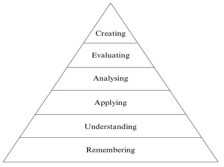
The six cognitive levels of Benjamin Bloom (Md Kamal & Hashim, 2010) (see Figure 1) and the self-directed learning model by stages of Gerald Grow (Grow, 1991) (see Table 1) were used to develop the knowledge and being of the students of Industrial Engineering, from the instructional design.
Collecting Anthropometric Data From the Perspective of Ergonomics 2019
Figure 1: The cognitive levels of Benjamin bloom (adapted from Md Kamal & Hashim 2010).Table 1. The staged self-directed learning model (adapted from Zhang & Zheng, 2014).
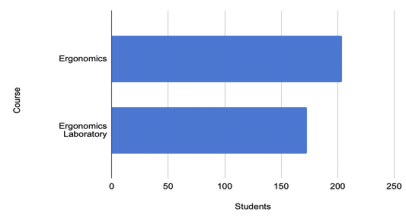
CERTIFICATION FOR INDUSTRIAL ENGINEERING STUDENTS IN ANTHROPOMETRIC DATA COLLECTION A total of 377 university students divided into 15 groups participated in the certification, coming from the Industrial Engineering course, specifically from the Ergonomics and Ergonomics Laboratory subjects (see Figure 2). The students were in the middle of the semester in these subjects. This situation allowed them to acquire prior knowledge of ergonomics and basic fundamentals of anthropometry, which facilitated a faster deepening of these topics during the training. This prior knowledge allowed the Certification in Anthropometric Data Collection to have a total duration of 4 hours, distributed in two sessions of 2 hours each. The first session was dedicated to theory, while the second focused on practice. The certification teaches students how to make one-dimensional direct manual measurements. This measurement protocol is an easy and inexpensive method, and is often the most commonly used method in design/products for the working population (Dianat, Molenbroek and Castelluci, 2018).
Description of the Sessions Objectives of the first session of the certificate were: (1) Identify the concepts of anthropometry. In Bloom’s taxonomy this objective is at the Apply level and in the self-management stage 2 of Grow’s theory, where the student is the interested party and the teacher is the motivator and guide; (2) Reason about the anthropometric dimensions that will be collected through a real problem with the purpose of having a critical vision for the decision making in the creation of anthropometric sheets. In Bloom’s taxonomy this objective is found in the Analyse level and in the self-management stage 3 of Grow’s theory, where the student is involved and the teacher is a facilitator. The topics
discussed in the certification to achieve the objectives of the first session are described in Table 2.
Figure 2: Graph of the number of students in ergonomics and ergonomics laboratory.Table 2. Topics discussed in session 1.
Table available in the original PDF paper.
Subject Sub-theme Introduction: Description of the certificate and the problematic Description of the certification Objectives of the certification Description of the problem of lack of compatibility between furniture and users. Importance of knowing the anthropometric measurements of the users and the compatibility with the furniture they use. Description of the problems when there is a mismatch in the furniture. Introduction to Anthropometry Definition and objectives of anthropometry. History and evolution of anthropometry. Importance of Anthropometry Types of Anthropometry Applications in ergonomics Anthropometric adjustment Relevant concepts Anthropometric Measurement Methods:
Post 1 and Post 2
Manual measurement Elements to consider prior to anthropometric data collection Anthropometric Sheet Equipment used and instruments (variable height bench, anthropometric caliper, stadiometer and scale). Standard measurement techniques. Description of measurement positions and somatometric points Accuracy and Consistency of Measurements
Consent and respect for participants
Factors affecting the accuracy of measurements. Procedures to ensure consistency. Ethics and Considerations in Anthropometry
The problem addressed in the first session was that of university furniture and its compatibility with the students’ body dimensions The aim was to know whether the university furniture complied with the ergonomic demands, in particular, whether it met the anthropometric requirements. During the first session, the certificate trainer and the students discussed what dimensions should be taken into account in order to know whether there is a compatibility between the school furniture and the users. A series
Collecting Anthropometric Data From the Perspective of Ergonomics 2021
of anthropometric dimensions and their somatometric points, as well as the physical elements that constitute the school furniture, were explained to the students. Then, students were asked to list the ones they considered appropriate to know whether there was compatibility with the furniture, justifying the relationship between the anthropometric measurements and the components of the school furniture. Finally, the certificate instructor explained the criteria for determining the appropriate relationship between human body dimensions and furniture dimensions, showed, according to previous ergonomics studies, which anthropometric measurements were important for an anthropometric adjustment of the furniture.
The second session was a practical one, lasting 2 hours, where students applied the knowledge acquired in the first session and measured 16 anthropometric dimensions in university students. The 16 dimensions were divided into two groups (see Table 3). For the second session the aims were: (1) Use measuring instruments with precision to achieve accurate and reliable measurements and (2) Perform accurate anthropometric measurements using manual methods to obtain reliable data. In Bloom’s taxonomy these objectives are found in the Apply level and in the self-management stage 2 of Grow’s model where the student is the interested and the teacher is the guide.
During the practice where students performed anthropometric measurements, the lead instructor and the professors of Ergonomics and Ergonomics Lab provided real-time guidance and feedback to ensure that measurements were performed correctly and accurately.
Table 3. Anthropometric dimensions.
Table available in the original PDF paper.
Post Anthropometric Dimensions Post 1 Weight Height Post 2 Seated height Seated shoulder height Height at elbow seated Seated thigh height Knee height seated Popliteal height Buttock-popliteal length Buttock-knee length Elbow-elbow width Seated hip width Forearm length Seated thorax width Maximum body depth Deltoid width
RESULTS
During the theory and practical sessions, the students showed a high level of commitment and professionalism in understanding anthropometry and
performing the anthropometric measurements. This is related to the fact that having worked on the basis of a real problem close to the students’ experience, there was a clear change in their willingness to carry out the exercises and allowed for better progress in the knowledge and application of the anthropometric technique. During the practical session, most of the students managed to complete the measurements of the 16 dimensions within the allotted time and with accuracy, demonstrating a good understanding of the techniques learned in the theoretical session. Of the measurements taken by the students during the anthropometry practice, 220 measurements were considered reliable on the basis of the evaluation criteria. This means that these 220 measurements were taken accurately by the students from the required somatometric points and using the equipment accurately.
During the practical the students received immediate feedback, allowing them to correct errors and improve their techniques in real time. The importance of correct posture and alignment of the measuring instruments was also emphasised in order to obtain accurate results, and these results could be used to determine the compatibility between the furniture and the students. The handling of the instruments and the identification of the somatometric points were recognised as the main difficulties. Nevertheless the abilities of the students showed a significant improvement with the guidance provided by the instructors and as the practice progressed.
CONCLUSION
The importance of anthropometry lies in its ability to optimize the design of systems, equipment, and work environments, thereby enhancing both efficiency and safety (Dianat, Molenbroek and Castelluci, 2018). The knowledge gained through this certification provides future engineers with a competitive advantage by raising awareness about the significance of anthropometry in workplace design and preparing them to design solutions that consider human dimensions and capabilities, which is essential in the creation of industrial products and processes. Generally, research related to anthropometrics and workstations is related to optimum clearance and reach dimensions, improved working postures, protective clothing, hand tools, equipment, and arm reach boundaries (Dianat, Molenbroek and Castelluci, 2018). The use of instructional design in teaching anthropometry ensures that students not only acquire knowledge but also develop practical skills and a deep understanding of the subject. This instructional method, by focusing on clear learning objectives and adaptive teaching strategies, facilitates a more comprehensive and effective education (Love, Anderson, and Haggar, 2019). In conclusion, certification in anthropometry, reinforced by robust instructional design, is an essential component in the training of competent industrial engineers who are well-prepared for the demands of the current job market.
Despite the benefits of certification, it is believed that incorporating greater complexity into this model, aligned with Bloom’s taxonomy levels, could achieve a more significant impact on students. This would enable
Collecting Anthropometric Data From the Perspective of Ergonomics 2023
them to design workspaces using information obtained from anthropometric measurements, with the teacher acting as a consultant and the students taking a self-directed approach. Such an enhancement aims to foster learning and skills that can be effectively applied in professional settings.
ACKNOWLEDGMENT
We want to thank all the students who participated, the Department of Industrial Engineering and the professors of the Ergonomics and Ergonomics Laboratory of the University Centre of Exact Sciences and Engineering of the University of Guadalajara.
REFERENCES
A’vila, C. R., Prado, L. L. R., Gonza’lez, M. E. L. (2007). Dimensiones antropome’tricas de poblacio’n latinoamericana. Me’xico. Universidad de Guadalajara. Dianat, I., Molenbroek, J. and Castellucci, H. I. (2018) ‘A review of the methodology and applications of anthropometry in ergonomics and product design’, Ergonomics, 61(12), pp. 1696–1720. doi: 10.1080/00140139.2018.1502817. Grow, G. (1991). Teaching Learners to be Self-Directed. Adult Education Quarterly,
41, 125–149. Hanson, L., Sperling, L., Gard, G., Ipsen, S., Vergara, C. O., (2009). Swedish anthropometrics for product and workplace design. Applied Ergonomics, 40, pp. 797–806. Kushwaha, D. K., Kane, P. V., 2016. Ergonomic assessment and workstation design
of shipping crane cabin in steel industry. International Journal of Industrial Ergonomics, 52, 29–39. Laios, L., Giannatsis, J., 2010. Ergonomic evaluation and redesign of children bicycles based on anthropometric data. Applied Ergonomics, 41, 428–435. Love, L. M., Anderson, M. C., & Haggar, F. L. (2019). Strategically Integrating
Instructional Designers in Medical Education. Academic medicine : journal of the Association of American Medical Colleges, 94, 1, p. 146. https://doi.org/10. 1097/ACM.0000000000002475 Serrano, JM., & Pons, RM. La concepción constructivista de la instrucción. Revista Mexicana de Investigación Educativa, 2008, 13 (38), pp. 681–712. Zhang, Chi & Zheng, Jack. (2014). Profiling and Supporting Adult Learners.
10.4018/978-1-4666-4655-1.ch001.
LISTED IN THE AHFE DIGITAL BOOKSTORE CATALOGUE
Explore the complete digital volume
Human Factors in Design, Engineering, and Computing
Read this individual research paper free through the original publisher, or explore the full digital proceedings book.
ISBN 978-1-964867-35-9
Explore this ISBN in the AHFE Bookstore ↗Listed in the July 2026 bookstore catalogue; search by ISBN to confirm current availability · Digital book purchase optional