Lee Ostrom, Torrey Mortenson (2024). The Consequences of Poor Human Factors at a Super Critical Coal Power Plant, A Case Study. In: Human Factors in Design, Engineering, and Computing. AHFE Open Access, vol. 159, pp. 2232–2238. https://doi.org/10.54941/ahfe1005791
This case study will provide an overview of the impact that a lack of human factors integrated into the operation of a super critical coal fired power plant (CPP). The CPP was of modern design, with a digital control system; however, the plant lacked human core human factors considerations, such as: human factored procedures; sufficient operator training; adequate supervision of the workforce; poor to nonexistent labeling; and operating staff frequently operating outside of procedures and standard practices. The significant consequences of this absence were that the plant’s turbine was destroyed twice, and the generator was destroyed once. The cost of the damage was in the tens of millions of dollars. The CPP was owned by a major utility and supplied power to several smaller, local utilities. The following is a specific example of how the lack of human factors led to the costly damage at this CPP, in this case turbine damage. The plant was in a startup phase and an operator heard some chatter on his radio and left his duty station to discuss what he heard with a fellow operator. The operator then proceeded to the turbine lube oil (TLO) skid. The TLO supplies lubrication and coolant to the turbine. It also provides the seal for the generator’s hydrogen coolant. The operator, unsatisfied with his understanding of the situation, decided to adjust the TLO valve. The TLO valve is a 6-way valve. The 6-way valve was manipulated inappropriately by the operator and turbine lube oil was shutoff to the turbine and generator hydrogen seal. Communications did not occur between the control room personnel and the operator prior to position changes; plan of action was not validated with other operators prior to taking the action. The mental model of the worker did not align with the potential consequences of operating a valve for oil flow to the turbine running at 3600 RPM. The consequences of turbine damage were caused by a failed mechanical stop in the valve, which allowed the valve to fully isolate turbine lube oil. Further, human factors was not considered with regard to the operation of the valve. There was no clear way to ensure proper valve lineup, e.g., no markings, no immediate feedback that desired end-state was achieved. At the time there were no procedures for operating the valve and training on operating the valve was lacking. In fact, the valve had only been operating a few times in the life of the CPP, despite the the original equipment manufacturer recommending regular manipulation to ensure working order. The turbine was severely damaged and a small explosion occurred in the TLO filter due to hydrogen back up into the tube oil. The generator was not affected in this incident. Animations of the TLO valve incident and a detailed description of this incident will be provided during the presentation.
This paper will discuss the human factors issues associated with the loss of lube oil to the turbine at a supercritical coal fired power plant (SCPP). The loss of lube oil led to damage to the turbine and an extended shutdown of the plant. The loss of turbine lube oil (TLO) to the turbine was one of several events that were the focus of a lawsuit brought by CORE, an electric cooperative utility in Colorado, against Public Service of Colorado, a power generation company and operator of the SCPP.
Most of the information that was used to write this paper was obtained from direct observations made in the plant; interviews; review of procedures; and court documents. The sources of the remainder of the information are referenced accordingly.
SUPERCRITICAL COAL FIRED POWER PLANT A SCPP operates at much higher temperatures and pressures as compared to conventional coal fired plants (Energy Education, 2024). Typically, SCPP operate at 374o C (705o F) and at 22 MPa (3190 psi). At these temperatures and pressures water becomes a supercritical fluid, meaning
The Consequences of Poor Human Factors at a Super Critical Coal Power Plant 2233
it is neither a fluid or a gas and the water converts to steam with less energy than in a conventional plant. SCPPs are, therefore, more efficient than a conventional plant. SCPP plants have energy efficiencies of approximately 44%, compared with conventional coal plant efficiencies of approximately 33%. Additionally, there are less emissions as well from a SCPP.
Comanche-3, the SCPP where the incidents occurred had been in operation since 2010 and had an operating capacity of 1252 Mw (Comanche Power Station, 2024). This plant sold power to several utilities, including CORE, the electric cooperative that serviced approximately 180,000 customers.
TURBINE LUBE OIL INCIDENT There were several very significant events that occurred at the plant. The focus of this paper will be on the loss of lube oil to the turbine.
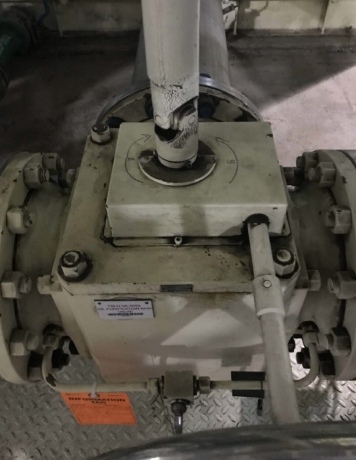
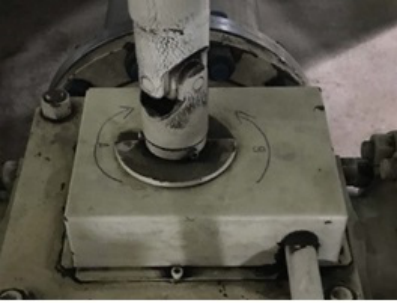
Overview of the Turbine Lube Oil Incident The plant was in a startup phase. Operator 1 heard some chatter on his radio and left his duty station to discuss what he heard with a fellow operator. The operator then proceeded to the turbine lube oil skid (TLO). The TLO supplies lubrication and coolant to the turbine. It also provides the seal for the generator’s hydrogen coolant. The operator thought he was changing the TLO valve lineup from one train to the other. The TLO valve was a 6-way valve (Figure 1). The TLO valve was operated by turning the wheel in either direction. Figure 2 is a closeup of the labelling on the valve. The 6-way valve was manipulated inappropriately by the operator and TLO was shutoff to the turbine and generator hydrogen seal. Communications did not occur between the control room personnel and the operator prior to position changes; plan of action was not validated with other operators prior to taking the action. Mental model of the worker did not align with the potential consequences of operating a valve for oil flow to the turbine running at 3600 RPM. Consequences were impacted by a failed component (Mechanical stop), which allowed the valve to isolate turbine lube oil. It was not determined whether the operator broke the mechanical stop, or it was already broken. Further, human factoring was not conducive to ensure proper valve lineup (no markings, no immediate feedback that desired end-state was achieved). At the time there were no procedures for operating the valve and training on operating the valve was lacking. In fact, the valve had only been operating a few times in the life of the SCPP. However, the original equipment manufacturer said that the valve should be manipulated on a regular basis to ensure it worked properly. The turbine was had damaged to the point it needed to have major repairs, and a small explosion occurred in the TLO filter due to hydrogen back up into the lube oil. The generator was not affected in this incident.
2234 Ostrom and Mortenson
Figure 1: 6-way valve (Public Service of Colorado).Figure 2: Closeup of labelling on the valve (Public Service of Colorado).
Labelling Issues Referring to Figure 2, labelling in the plant was not consistent, and, as Figure 2 demonstrates, the labelling could be just writing with permanent markers. From a human factors’ perspective, the labelling on the valve is confusing (EPRI, 1988, ANSI/ASME, 2022). On the right side of the valve there is a curved arrow indicating how to engage the B-train. On the left side of the valve there is a curved arrow indicting how to engage the A-train. There is no indication about how to close the valve or where both lube oil trains are engaged.
The Consequences of Poor Human Factors at a Super Critical Coal Power Plant 2235
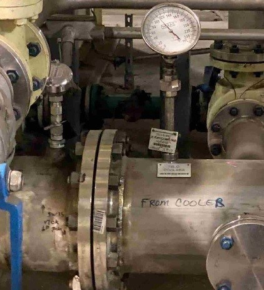
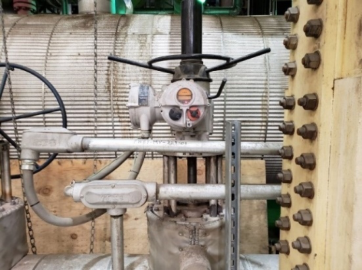
Figure 2 is one example of non-human factored label in the plant. Figures 3 and 4 provide additional examples.
Figure 3: Poor labelling example 1 (Ostrom, 2023).Figure 4: Poor labelling example 2 (Ostrom, 2023).
Communication Issues Communication amongst the plant operators was also noted to be problematic. Problems that contributed to the TLO valve incident included:
1. The Senior Operations Manager, Operations Manager and two other operators performed operations on the TLO system and did not explicitly communicate with to Operator 1 what they had done. Even though Operator 1 was assigned to the turbine during startup.
2. Operator 1 had a hearing defect and was working in an environment with a noise level above approximately 90 dBA. The RCA report stated that he heard some radio communications about the TLO system but was unsure what he heard. SCPP had not provided Operator 1 with radio equipment that would compensate for his hearing defect. The ambient noise level at various locations in the plant during the tour was measured as between approximately 89 to 92 dBA. A portable sound level meter was used to make
2236 Ostrom and Mortenson
these measurements. When an announcement was made the public address (PA) sound level, and it was approximately 94.7dBA.
3. Operator 1 and Operator 2 held a meeting in a room near the turbine and discussed plant operations without including supervisors or control room staff. The operators concluded their meeting and Operator 1 made an operating decision and did not communicate that decision with supervision, or the control room staff. It was not evident if he communicated his decision with the other operators.
4. Operator 1 did not communicate his perceived findings on his inspection of the TLO coolers to supervision or the control room staff.
5. Operator 1 manipulated the position of the TLO valve and did not communicate this with supervision or the control room staff. It appears he also did not communicate this with the other operators.
6. A company report provides a defense of sorts for the lack of communications between the operators and supervision and the control room staff by blaming it on the COVID-19 protocols. However, effective communications during the pandemic occurred in all sectors of industry and society. SCPP failed to develop an effective communication protocol during the pandemic.
The operators also did not always communicate to the control room personnel about their actions because they said, they were told not want to bother them.
Procedure Problems that Contributed to the Turbine Lube Oil Incident Procedures at the SCPP were not human factored and the procedure writers guide that the plant was using did not provide adequate guidance on how to effectively write procedures that meet human factors guidance. Second, the SCPP procedures that were reviewed were inadequate and did not meet human factors principles (NRC, 1982, Ostrom et al., 1992). For instance, as more thoroughly explained above, the TLO procedure did not provide guidance for changing the TLO six-way valve location and did not provide any warnings about what could go wrong if the valve was positioned incorrectly.
The procedures were inconsistent in formatting and language. The procedures reviewed would not have provided the needed guidance for Operator 1 to properly adjust the TLO valve. Abnormal and emergency operating procedures were embedded at the end of the TLO procedure. These procedures are normally by themselves in a binder or electronic format, coded by the entry conditions.
The procedures that were developed prior to June 2020, and from a human factors’ perspective, are not well written and are difficult to follow. It is doubtful that operators followed the procedures developed before June 2020 because of the way they were written. Indeed, in many cases an operator could not follow a procedure if they had wanted to. Instead, operators likely relied on tribal knowledge to operate the plant.
The Consequences of Poor Human Factors at a Super Critical Coal Power Plant 2237
In addition, the procedures written after June 2020 also have numerous human factors issues. The problems with the procedures are:
Steps in the procedures contain multiple actions. Procedure steps should only contain one action.
The steps have embedded warnings and cautions. Warnings and cautions are to be presented in a procedure in a distinctive manner, so operators are clued into them.
Actions in a procedure step must contain a verb.
A procedure must have actions to be accomplished. A document without actions is for information and is not a procedure.
Language in the procedures is not clear.
There is ambiguous language regarding parameter metrics that direct operators to take actions.
Hold points also contain ambiguous language.
Lastly, the plant procedures did not always match plant conditions. For example, the plant’s startup procedure had several parameters that were unverifiable due to the absence of sensors that the procedure called out.
SUMMARY AND CONCLUSION
The Senior Operations Manager and Operations Manager and two operators performed operating functions without communicating them to Operator 1.
Operator 1 heard some communications on his radio, then left his post where he was assigned to bubble ammonia and went to a conference room near the control room and had a discussion with one or two other operators. He then proceeded to the TLO skid and manipulated the TLO valve, closing the flow of cooling/lubricating oil to the turbine bearings. The turbine failed after the oil flow was closed off.
Plant personnel tend to use tactile and aural means to determine plant parameters, rather than instrumentation.
Operator 1 performed operations outside of procedures.
Operator 1 and other operators operating decisions and made changes to equipment controls in the plant and did not communicate with the control room or to supervision prior to performing the operations.
Operators felt that communicating with the control room “bothered” them and they avoided doing so.
The TLO procedure did not provide the necessary steps to safely change the configuration of the TLO valve.
The OJT materials lacked training on the operation of the TLO valve and there is no supporting information that Operator 1 had any training on the TLO valve’s operation.
The labeling of the TLO valve was not adequate. Generally, the labeling in the plant was inconsistent and lacked adherence to human factors principles.
Operator 1 relied on his assumptions about how the Comanche 3 TLO system operates, rather than how it operates.
2238 Ostrom and Mortenson
In conclusion, applying human factors principles is important in every industry. Assuming that human factors is only important in industries such as nuclear and aviation negates the need for proper procedures, communications, training, and labeling in other high consequential industries.
REFERENCES
ANSI/ASME (2022) A13.1 Pipe Labeling Requirements, Accessed August 2022, https://www.graphicproducts.com/articles/ansiasme-a131-pipe-labeling-re quirements/. Global Energy Monitor (2024), Comanche Power Station, Accessed August 2024, https://www.gem.wiki/Comanche_power_station. Energy Education (2024), Supercritical Coal Plant, Accessed August 2024, https://energyeducation.ca/encyclopedia/Supercritical_coal_plant. EPR, (1988) Effective Plant Labeling and Coding (EPRI NP-6209). Ostrom, L T, Hill, S G, Close, J A, Lash, J D, and Hemming, W C. (1991) Developing
an emergency procedures writers’ guide: A case study. United States: N. p.
LISTED IN THE AHFE DIGITAL BOOKSTORE CATALOGUE
Explore the complete digital volume
Human Factors in Design, Engineering, and Computing
Read this individual research paper free through the original publisher, or explore the full digital proceedings book.
ISBN 978-1-964867-35-9
Explore this ISBN in the AHFE Bookstore ↗Listed in the July 2026 bookstore catalogue; search by ISBN to confirm current availability · Digital book purchase optional