Lingyue Li, Lie Wang, Yiwen Chen (2024). Public Perception of Built Environment in Urban Street: A Text Emotion Analysis Approach. In: Human Factors in Design, Engineering, and Computing. AHFE Open Access, vol. 159, pp. 432–437. https://doi.org/10.54941/ahfe1005608
Liveability can be measured by various factors that matter for quality of life, but people’s perception and feelings toward the city, especially the built environment, is considered fundamental to the evaluation of urban liveability. Most previous studies described liveability-oriented urban built environments as spaciousness, bright and convenient with objective indicators, but attributes such as pleasant and comfortable are difficult to assess objectively. Traditional methods such as questionnaire surveys or interviews are likely to produce bias with small sample size or are time consuming if collecting large sample of data. Development of big data and machine learning approach makes it possible to evaluate people’s subjective perceptions toward the built environment. Exploring an urban street area in Shanghai, this research applies a Chinese natural language processing (NLP) tool to the text database and assesses the public perception toward built environment through a 0-1 score system. NLP is a machine learning technology that enables computers to interpret, manipulate and comprehend human language. The result indicates that the NLP emotion analysis is able to quantify people’s perceptions toward built environment and reveals the extent of the perceptions, which would significantly aid human-centred design of urban built environment.
Although there are significant differences in liveability research between Europe, the United States and Asia, countries at different stages of development seem focus on human settlements and built environment in the earl period of liveable cities construction. For the past few decades, liveability-oriented design has been guided by numerous classic theories. The design approach, however, confronts challenges in recent years with the development of cities. Traditional liveability-oriented urban design centred on the construction or improvement of physical environment, lacking concerns on the actual perception and feelings of space users on the environment. Liveability can be measured by various factors that matter for quality of life, but people’s perception and feelings toward the city, especially the built environment, is considered fundamental to the evaluation of urban
Public Perception of Built Environment in Urban Street 433
liveability (Ooi & Yuen, 2009; Sheikh & van Ameijde, 2022). Previous research evaluating liveability primarily relies on macro, city-level statistics and liveability index, examinations on micro, individual-level liveability perceptions are limited (Khorrami et al., 2021). In other words, most existing studies on liveable environment depend on objective indicators, the subjective preferences of individuals are largely overlooked. Against the background of new data environment, availability of big data and machine learning makes it possible to evaluate people’s subjective preferences on the built environment (Rout et al., 2018). Applying a text emotion analysis approach of natural language processing, this research explores such possibility in an urban street of Shanghai and reveals how the public perceive the micro, street-level built environment therein.
TEXT EMOTION ANALYSIS AND THE URBAN STREET CASE IN SHANGHAI Most previous studies described liveability-oriented urban built environments as spaciousness, bright and convenient with objective indicators, but attributes such as pleasant and comfortable are difficult to assess objectively (Huang, Wang, Wu, & Yue, 2024). Evaluating subjective preferences, traditional methods such as questionnaire surveys or interviews are likely to produce bias with small sample size or are time consuming if collecting large sample of data. In recent years, development of new data and machine learning makes the detection of subjective preferences possible. Text emotion analysis (or emotion detection) represents a branch of sentiment analysis that extracts or analyses emotions from the text (Acheampong, Wenyu, & Nunoo-Mensah, 2020). In new data environment, a large amount of text data generates from individuals every day, which provide raw sources for text mining and emotion analysis. In association, development of natural language processing (NLP) further aids text emotion analysis as NLP empowers computers to understand human languages in the form of texts by deploying linguistics techniques (Khurana, Koli, Khatter, & Singh, 2023). As a branch of NLP, sentiment analysis extracts opinions, ideas, thoughts from human languages, and its subfield, the text emotion analysis seeks to identify finer-grained attitudes – positive, negative or neutral, or emotions – happy, sad or angry from human language (Cambria & White, 2014). This research applies a Chinese NLP package with well-trained skills on extracting keywords, translation, text emotion analysis, text classification etc. to a micro, street-level built environment in Shanghai, to test the validity of the approach and reveal how the public perceive therein.
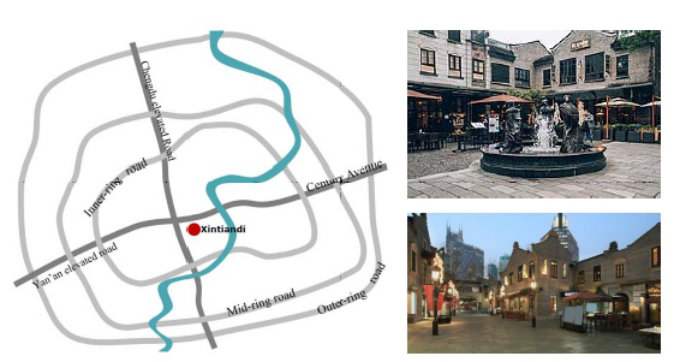
The chosen urban street area is Xintiandi, a fashionable pedestrian street composed of old-style Shikumen residences and modern architecture (Figure 1). It is an affluent car-free shopping, eating and entertainment area attracting lots of visitors, entertainers and local citizens every day. As a famous leisure consumption area in Shanghai, Xintiandi is an icon for people to check in, leaving substantial comments and text messages online. This research collects these human-left language texts in Xintiandi from January to July in 2024 as a base for text emotion analysis. A total of 721 records
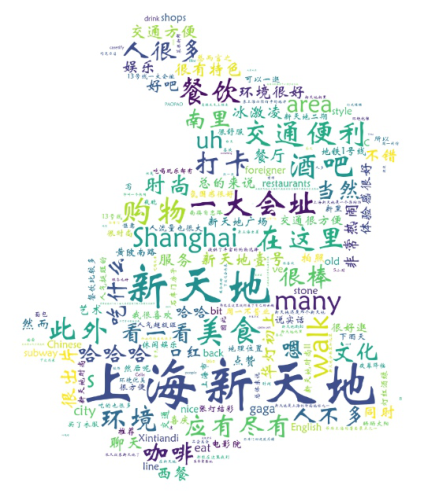
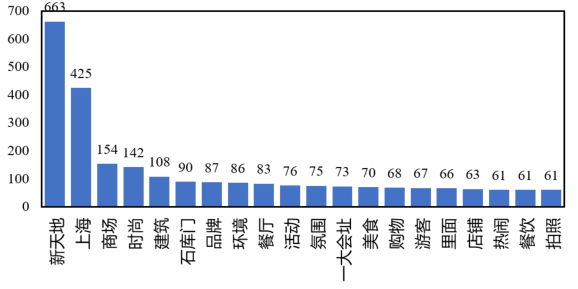
were collected. A word cloud map shows that in the perception of people, Xintiandi is walkable, alive with restaurant, coffee shops and convenient in traffic (Figure 2). A word frequency analysis further unveils that Xintiandi (新天地) and Shanghai (上海) are overwhelmingly high among all the texts, followed by shops (商场), fashion (时尚), architectures (建筑) (Figure 3).
Figure 1: Location and street view of Xintiandi in Shanghai.Figure 2: Top 20 word frequencies of text analysis in Xintiandi, Shanghai (2024).
Public Perception of Built Environment in Urban Street 435
Figure 3: Word cloud of Xintiandi, Shanghai (2024).
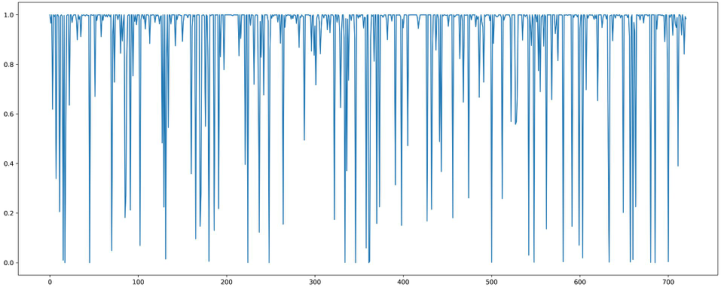
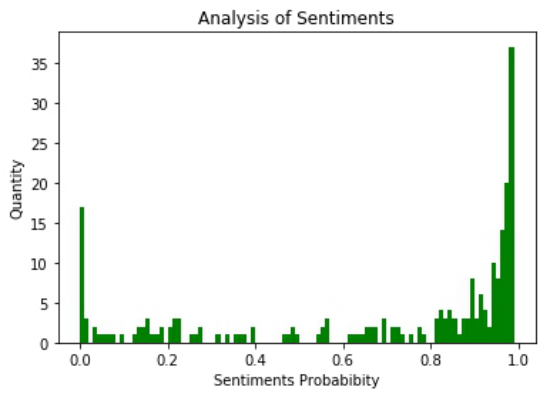
PUBLIC PERCEPTION OF BUILT ENVIRONMENT IN XINTIANDI, SHANGHAI In this research, the value obtained by text sentiment analysis is between 0 and 1. When the result is greater than 0.5, the sentiment is relatively positive, and the closer it is to 1, the more positive the sentiment is; when the result is less than 0.5, the sentiment is relatively negative, and the closer it is to 0, the more negative the sentiment is; values close to 0.5 is considered neutral. The result suggests that people’s perception toward the environment of Xintiandi is generally positive (Figure 4, 5 and Table 1), with an average sentiment value of 0.90. Sentiment values in the first seven months in 2024 are relatively even, March and May got the highest values over 0.92 while April’s value was the lowest at 0.875. Ratio of sentiment value less than 0.5 range from 5% to around 11%. Interestingly, neutral sentiments were not many, as majority of people’s perception values either exceed 0.8 or were less than 0.2, implying that people have strong desire to express their feelings. The approach thus is valid to assess the public attitude toward the built environment they stay and experience.
Figure 4: Values of sentiment analysis in Xintiandi, Shanghai (2024).Figure 5: Distribution of SnowNLP sentiment value in Xintiandi from 0 to 1 (2024).Table 1. Distribution of SnowNLP sentiment values in Xintiandi, Shanghai (2024).
Table available in the original PDF paper.
Months Sentiment Value Ratio of Value <= 0.5 Ratio of Value > 0.5 January 0.894 8.85% 91.15% February 0.893 10.31% 89.69% March 0.924 5.83% 94.17% April 0.875 11.90% 88.10% May 0.921 8.60% 91.40% June 0.902 5.81% 94.19% July 0.892 10.62% 89.38%
CONCLUSION
This study applies text emotion analysis approach to assess public perception toward a micro urban street in Shanghai. As a subfield of natural language processing, text emotion analysis is workable for identifying public perception toward built environment in a city, as evidenced in this research. With quantifiable results, the extent of people’s perception can be identified and linked to other built environment factors for correlation analysis. Doing so, how characteristics of built environment affect people’s subjective feelings can be evaluated, which would significantly aid human-centred design of urban environment. Packages of text emotion analysis use in this research is just one of the methods to unveil the actually existing perceptions of the public, with further development of artificial intelligence and emotion models, more approaches are expected to come out for supplement and optimize the analysis for human-centred urban design.
ACKNOWLEDGMENT
The authors would like to acknowledge the National Key R&D Program of China (No. 2023YFC3805301-01) for funding this research.
Public Perception of Built Environment in Urban Street 437
REFERENCES
Acheampong, F. A., Wenyu, C., & Nunoo-Mensah, H. (2020). Text-based emotion detection: Advances, challenges, and opportunities. Engineering Reports, 2(7), e12189. Cambria, E., & White, B. (2014). Jumping NLP curves: A review of natural language
processing research. IEEE Computational intelligence magazine, 9(2), 48–57. Huang, J., Wang, Y., Wu, K., & Yue, X. (2024). Livability-oriented urban built environment: What kind of built environment can increase the housing prices? Journal of Urban Management. Khorrami, Z., Ye, T., Sadatmoosavi, A., Mirzaee, M., Fadakar Davarani, M. M.,
& Khanjani, N. (2021). The indicators and methods used for measuring urban liveability: a scoping review. Reviews on environmental health, 36(3), 397–441. Khurana, D., Koli, A., Khatter, K., & Singh, S. (2023). Natural language processing: state of the art, current trends and challenges. Multimedia tools and applications, 82(3), 3713–3744. Ooi, G. L., & Yuen, B. (2009). World cities: Achieving liveability and vibrancy.
Singapore: World Scientific Publishing Company. Rout, J. K., Choo, K.-K. R., Dash, A. K., Bakshi, S., Jena, S. K., & Williams, K. L.
(2018). A model for sentiment and emotion analysis of unstructured social media text. Electronic Commerce Research, 18, 181–199. Sheikh, W. T., & van Ameijde, J. (2022). Promoting livability through urban planning: A comprehensive framework based on the “theory of human needs”. Cities, 131, 103972.
LISTED IN THE AHFE DIGITAL BOOKSTORE CATALOGUE
Explore the complete digital volume
Human Factors in Design, Engineering, and Computing
Read this individual research paper free through the original publisher, or explore the full digital proceedings book.
ISBN 978-1-964867-35-9
Explore this ISBN in the AHFE Bookstore ↗Listed in the July 2026 bookstore catalogue; search by ISBN to confirm current availability · Digital book purchase optional