Alessia Nicoletta Marino, Joy Ciliani, Giulia Teverini, Patrizia Marti (2025). Grasping the complexity of UX in the Long-term in Interaction with Embodied Conversational Agents. In: Intelligent Human Systems Integration (IHSI 2025): Integrating People and Intelligent Systems. AHFE Open Access, vol. 160, pp. 307–317. https://doi.org/10.54941/ahfe1005836
To comprehensively evaluate the experience of interaction between humans and ECAs (Embodied Conversational Agents), it is essential to consider a complex entanglement of dimensions that dynamically develop over time. This paper provides a review of the available methods to evaluate the human-ECAs interaction, and discusses the relation between this experience of use over time. The research was carried out through a systematic literature review, on 5 databases: Scopus, ACM, Web of Science, PubMed and IEEE Xplore. Findings reveal that over 147 publications on human-ECAS interaction, only 13 address the experience evaluation. Of these, only 3 face evaluate the user experience with ECAs over time. The majority of these evaluation methods concentrate on momentary experiences, neglecting the long-term perspective. The paper provides a map of methods to evaluate several user experience dimensions of interactions with ECAs, highlighting the importance to apply these methods not only on the momentary interaction but repeatedly over time.
Virtual assistants represent an increasingly widespread technology across various sectors, such as healthcare, education, finance, commerce, and retail. Their popularity is due to their ability to offer tailored solutions for each user, while ensuring portability and continuous availability. These assistants can interact with users through text-based, dialogue-based, or a combination of both methods; they stand out for the variety of interaction modes, personalities, and aesthetic appearance. Among the most innovative forms, we find embodied conversational agents (ECAs), a type that replicates human-like characteristics and communicative methods, making the interaction similar to natural human-to-human communication. ECAs are dialogue systems with a virtual body that can appear in different forms: two-dimensional or three-dimensional, human or fantasy characters, and they may display either the entire body or just the head. The human body is considered a form of “situated intelligence,” as its characteristics allow for
the transmission of messages both verbally and non-verbally, which helps convey the meanings of the conversation more effectively. In fact, in addition to voice, ECAs use gestures, eye and body movements, facial expressions, etc. Through these modes, the fundamental elements are formed to build trust and understanding between the agent and the user (Cassell et al., 2000). Indeed, the growing use of ECAs is tied to their ability to establish meaningful relationships, leading to collaborative behavioral responses, trust in the system, a desire to interact, and the elicitation of emotions and social perceptions such as presence or personality in the system. User responses to these interactions vary greatly depending on the design characteristics, which involve both aesthetic factors and intrinsic aspects of the interaction modes (Loveys et al., 2020).
The user experience developing in the interaction with these systems is the result of a complex entanglement of perceptions, physical and psychological reactions, emotions, beliefs, preferences, and behaviours, occurring before, during, and after use (Hassenzahl, 2013). Although it is important to measure initial impressions and momentary experiences of interaction with ECAs, it is fundamental to also monitor how the UX evolves over time (Marti et al., 2016), to embrace how trust, bonding, and empathy dynamics emerge beyond the measurement of momentary hedonic and pragmatic UX indicators (Kujala et al., 2011).
This paper provides an overview of the UX mostly evaluated UX dimensions of interaction with ECAs, mapping them to documented methodology, and discussing their applicability over time.
USER EXPERIENCE AND TIME While most of the UX evaluation methods documented in literature focus on different UX dimensions of momentary interactions, only few of them question how the UX changes over time and how to evaluate such a change. A commonly overlooked element which lays a fundamental role in UX design is time (Roto et al., 2011). Indeed the UX can be classified in:
Anticipated Experience: relates to the expectations of using a product, influenced by others’ opinions or advertising.
Momentary Experience: occurs in the ‘here and now’ and is characterized by a very short time frame, immediately transforming into memory.
Episodic Experience: includes a series of moments that become the subject of reflection; the overall result may differ from the simple sum of individual momentary experiences.
Remembered Experience: the interaction is repeated over time, and perceptions evolve, leading to the selection of significant, positive, or negative elements that influence the final judgment and the future behaviours (Marti, 2016). To fully understand the complexity of UX and evaluate the interaction between people and ECAs, it is essential to adopt a longitudinal perspective to study how the UX evolves over time. Evaluation methodologies focus mainly on the momentary experience, without considering how the experience changes over time. In what follows we provide an overview of methodologies
Grasping the Complexity of UX in the Long-Term in Interaction 309
to evaluate how the experience of interaction with ECAs develops over time with the objective of assessing the state of the art and identifying dimensions influencing the human-ECAs interaction (Karapanos et al., 2009).
RESEARCH QUESTIONS In this work, we provide an overview of the UX dimensions of interaction with ECAs to consider in the short and the long term. More in detail, we aim to address the following research questions:
RQ1: What are the UX dimensions of Human-ECAs interaction? RQ2: What are the methods to evaluate the UX dimensions of human- ECAs interaction?
RQ3: What methods evaluate the UX with ECAs over time?
METHODOLOGY
To answer the research questions, first we performed a systematic literature review, followed by a comparison of the results with a database of UX evaluation methods over time (AllAboutUX.org).
For the systematic review, five databases were consulted: Scopus, ACM, Web of Science, PubMed, and IEEE Xplore, to which we applied the search string: (UX OR “user experience”) AND (evaluation) AND (embodied OR human*) AND (conversational OR digital OR smart OR Interactive OR Intelligent OR artificial) AND (avatar OR character OR assistant OR agent*), to all the abstract.
We conducted a screening by removing results that lacked an author, duplicates, publication types (conference proceedings, book chapters, books), articles not written in English, and publications still in progress. Then, we reviewed the abstracts and applied exclusion criteria, which included the absence of an evaluation and human-likeness. Finally, we read the full text of the remaining articles, applying additional exclusion criteria such as the use of VR, AR, MR, and robots. Additionally, the analysis seeks to identify the application of longitudinal methods in relation to demographics, application domains, and interaction duration, as well as to highlight the most commonly used evaluation indicators. Finally, the results of the systematic review were compared with the extensive collection of UX evaluation methods mapped on the AllAboutUX.org platform to identify any inconsistencies or missing data.
RESULTS
Initially, 471 publications were identified, which were narrowed down to 13 articles after filtering for exclusion criteria. Of the 13 studies evaluating the UX with ECAs, only 3 considered long-term evaluations: Hurmuz et al., 2020; Hurmuz et al., 2022; Richards et al., 2024. Therefore most of UX evaluation methods with ECAs focus on anticipated and momentary experiences, largely neglecting the evaluation of long-term experiences.
Table 1. Table summarising the evaluation methods emerging from the systematic review.
Table available in the original PDF paper.
Reference Short-Term Evaluation Over-Time
Interview
Arellano, D. et al. 2014 Questionnaire Bai, SZ. et al. 2024 STM text analysis Gong, L. et al. 2007 Questionnaire Hurmuz, M.Z.M. et al. 2020 Semi-structured interviews, TAM, SUS, Willing to pay, EQ-5D-5L, SMAS-s, Working Alliance Interview Hurmuz, M.Z.M. et al. 2022 Semi-structured interviews, TAM, SUS, Willing to pay, EQ-5D-5L, SMAS-s, Working Alliance
Narayanan, S. et al. 2002 Interview, Video analysis Prendinger, H. et al. 2006 Questionnaire, Video analysis, Model of Lang Richards, D. et al. 2024 Informal feedback Survey Working Alliance Schmidt, M. et al. 2022 Empathy interview, Thinking aloud, Video analysis, SUS, SEQ Spiliotopoulos, D. et al. 2020 UX questionnaire Wang, LY. et al. 2024 Performance algorithms Weiss, B. et al. 2017 Attrakdiff questionnaire Woo, J. et al. 2024 Questionnaire, Synchrony (Sync) and Entrainment Loop (EL), CBT, STAI, K10, CC test, KS test, DTW, Welch’s t-test
RQ1: What Are the UX Dimensions of Human-ECAs Interaction?
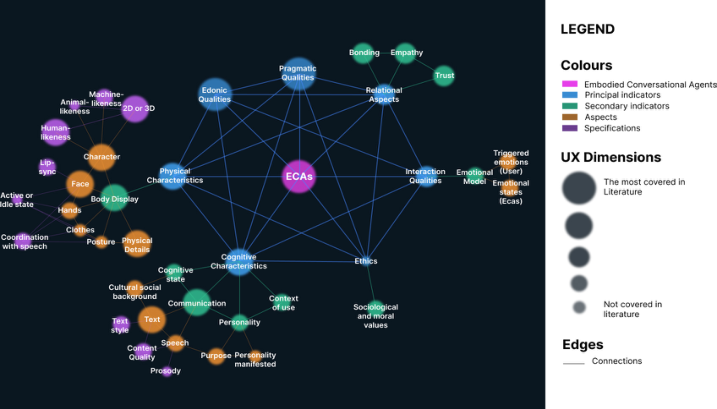
Figure 1 depicts the main UX dimensions documented in literature to evaluate the human-ECAs interaction.
Figure 1: Dimensions of human-ECAs interaction.
Grasping the Complexity of UX in the Long-Term in Interaction 311
The Figure reveals that the UX of ECAs can be numerous, including aspects such as aesthetic design, personality, degree of autonomy, and the ability to establish a relationship. From the systematic review, it was possible to identify seven main UX dimensions of Human-ECAs interaction: pragmatic qualities, hedonic qualities, physical characteristics, cognitive characteristics, ethics, interaction qualities and relational aspects. ECAs and users usually converse to achieve common goals. This interaction, based on shared purposes and intuitive communication, allows both agents to act as true collaborative partners rather than mere automated tools (Breazeal et al., 2004). Consequently, when evaluating ECAs, it is essential to consider relational aspects. These agents, in fact, can adapt their personality, appearance, and behavior based on the user’s implicit or explicit preferences, aiming to develop a friend relationship (Stronks et al., 2002). For instance, relational aspects like empathy, trust, bonding as conversations progress, creating a deeper connection. Designing an empathetic ECA, capable of understanding and adequately responding to the user’s emotions, not only improves the quality of responses but also makes the experience more satisfying, fostering a more natural communication with the agent (Yalçın, 2020). To be accepted and efficiently used, an agent must be perceived as trustworthy: trust is built through consistent and predictable behaviors, which not only enhance system performance but also promote positive interactions. Conversely, a lack of trust can compromise the system’s effectiveness, leading the user to doubt responses or follow incorrect guidance (Moradinezhad et al., 2021). Another crucial aspect that is gaining increasing attention is ethics. This highlights the need to adopt an “ethics by design” approach in the design of ECAs, ensuring that ethical principles are considered from the earliest stages of development and not limited to mere regulations. Integrating ethics into the process is essential to protect users’ autonomy and ensure that technologies genuinely meet their needs. Technologies, in fact, can pose risks to users, such as the use of “dark patterns” or persuasive techniques that manipulate user behavior (Mulvenna et al., 2017). Therefore, adherence to ethical principles becomes a central element in the evaluation of ECAs.
RQ2: What Are the Methods to Evaluate the UX Dimensions of Human-ECAs Interaction?
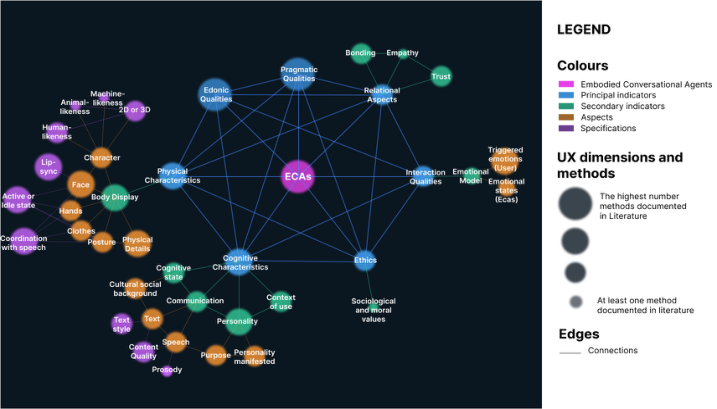
Our systematic review reveals that several methods are used to evaluate the UX with ECAs, most of them focus on the short-term interaction, few others address the interaction over-time. As shown in Figure 2, short- term evaluations typically involve interviews, questionnaires, surveys, and standardized tools such as the System Usability Scale (SUS) (Brooke, 1996) and the Technology Acceptance Model (TAM) (Davis, 1989; Davis et al., 1989). Additional UX evaluation methods include tools like the AttrakDiff questionnaire (Law et al., 2009), User Experience Questionnaire (Law et al., 2009), Empathy Interview (Nelsestuen et al., 2020), and Thinking Aloud method, as well as physiological measures based on the Lang model (Lang, 1995). Other methods applied in this context include the Structural Topic
Model (STM) (Du et al., 2010) and interpersonal synchrony with the agents (Sync and EL) (Woo et al., 2023). Long-term assessments often rely on recurring interviews and questionnaires to measure aspects like system usability, the Working Alliance (Shaked, 2017), and user perception. Besides UX-specific methods, other evaluative scales from different fields are also used. For instance, in medical projects, specific scales such as the EQ-5D- 5L (Van Reenen et al., 2019), Self-Management Ability Scale (SMAS-s) (Steverink, 2009), State-Trait Anxiety Inventory (STAI) (Spielberger et al., 1971), and Kessler Psychological Distress Scale (KS Test) (Kessler et al., 2002) are employed. In fields like negotiation or marketing, evaluations may also consider how much users are Willing to pay for future use of the system.
Figure 2: UX evaluation methods mapped on dimensions of human-ECAs interaction.
RQ3: What Methods Evaluate the UX With ECAs Over Time?
As mentioned earlier, only three articles considered long-term evaluation. Although limited in number, they provide an important perspective on long-term UX methods. We decided to compare these with the methods available on the AllAboutUX platform. AllAboutUX is an online resource dedicated to UX, with methods validated in the literature designed to support professionals, researchers, and students in deepening and applying UX practices. The platform provides a wide range of evaluation methods and tools, enriched by articles, case studies, and resources that cover various aspects of user experience. From the analysis of the three articles, it emerged that the methods used for long-term evaluation include interviews, usability interviews, and the working alliance method. These methods were applied using repeated sampling designs, with evaluations conducted at regular intervals on the same target group.
Grasping the Complexity of UX in the Long-Term in Interaction 313
In two articles, interviews were specifically designed to evaluate users’ experiences with the system in question, intending to gather qualitative interaction data. One article examined the system’s usability and employed the working alliance method, developed in psychotherapy by Bordin. In this context, the quality of the relationship between users and ECAs was investigated not only from a functional perspective but also a relational one. None of the long-term evaluation methods available on AllAboutUX were applied in the studies analyzed. The AttrakDiff questionnaire, applicable for both short and long-term evaluations, was used in only one article limited to the short term. We can conclude that while the methods available in the literature offer various longitudinal evaluation methods capable of addressing hedonic and pragmatic aspects, it largely overlooks other relational factors such as bonding, ethics, and trust, that could directly influence the long-term experience. These factors can be found in other disciplines, such as in psychotherapy with the working alliance method and can be adapted in the UX context to evaluate the experience with an ECA.
DISCUSSION
Our research findings highlight that most UX evaluation methods currently used in the field of ECAs tend to focus momentary interactions, overlooking how the UX develops over time. This focus has led to an emphasis on dimensions related mainly to usability and other indicators pertinent to the research context, such as patient well-being in the medical field. This approach runs the risk to not fully capture the complexity of humans-ECAs experience evaluation.
Despite the paucity of longitudinal methods, some strategies could help to bridge this gap. One possible solution is to use momentary UX evaluation methods repeated over time. This approach allows for the collection of data on how users interact with a system or service in different moments and contexts, providing a more comprehensive and dynamic view of their experiences.
Our research reveals that some UX dimensions have been more extensively explored than others (Figure 2). Hedonic and pragmatic qualities, for example, have numerous well-established methods for evaluation, such as the System Usability Scale (SUS), the Technology Acceptance Model (TAM), the AttrakDiff questionnaires and the User Experience Questionnaire (UEQ and UEQ+) (Schreep et al., 2021). In contrast, aspects such as relational and ethical dimensions are still underexplored. As for physical, cognitive, and relational characteristics, there are no standardized tools; however, they can be investigated using interviews and questionnaires like the previously mentioned UEQ+. Specific aspects of physical characteristics, such as lip- sync, active or inactive states, and coordination with speech, can be evaluated with comparative algorithm accuracy methods. For cognitive characteristics, the personality traits of ECAs can be analyzed using archetypes like those of Jungor or Aaker (Garcia et al., 2018), or tools such as the OCEAN questionnaire (Castillo et al., 2018). To examine the relationships that an ECA can establish with users, elements such as trust, bonding, and empathy
are considered. An example of a method for measuring bonding is the Working Alliance, and for trust, the General Trust Scale (Jasielska et al., 2021), both coming from the fields of psychology and sociology. Another central aspect are the Interaction qualities, that can be evaluated using standardized methods like PrEmo (Desmet, 2003) or Emocards (Desmet et al., 2001), as well as questionnaires and interviews. Finally, for ethics, the European guidelines are a useful reference.
CONCLUSION
In conclusion, to properly evaluate the UX in interaction with ECAs, it is important to identify different dimensions impacting the quality of interaction and selecting the right method to evaluate not only the momentary UX but also how the UX develops over time. For a comprehensive evaluation of this technology, it is essential to consider its multifaceted aspects, including pragmatic and hedonic qualities, physical and cognitive characteristics, ethics, interaction qualities, and relational aspects. Through a systematic review, we identified the main UX dimensions in human-ECAs interaction, as well as the evaluation methods to assess these dimensions. While certain UX dimensions are assessed through different evaluation methods, other dimensions like trust, bonding and empathy are seldom explored. In any case, very few studies are reported in the literature that address the UX with ECAs as it evolves over time. Notably, only three articles employed long-term evaluation methods, revealing a gap in tools for longitudinal UX analysis, while several methodological tools prove effective in capturing momentary UX. Although these methods capture only snapshots of the UX at specific points, their repeated application over time could help explore how the UX changes over time.
REFERENCES
AllAboutUX Website: https://experience.aalto.fi/all-about-ux-blog/. Arellano, D., Manresa-Yee, C., & Helzle, V. (2014). Let me Listen to Poetry, Let me See Emotions. Journal of Universal Computer Science, 20(7), 1006–1025. Bai, S., Yu, D., Han, C., Yang, M., Gupta, B. B., Arya, V.,... & Zhao, J.
(2024). Warmth trumps competence? Uncovering the influence of multimodal AI anthropomorphic interaction experience on intelligent service evaluation: Insights from the high-evoked automated social presence. Technological Forecasting and Social Change, 204, 123395. Bordin, E. S. (1983). A working alliance based model of supervision. The counseling psychologist, 11(1), 35–42. Breazeal, C., Gray, J., Hoffman, G., & Berlin, M. (2004, September). Social robots:
Beyond tools to partners. In RO-MAN 2004. 13th IEEE International Workshop on Robot and Human Interactive Communication (IEEE Catalog No. 04TH8759) (pp. 551–556). IEEE. Brooke, J. (1996). SUS: A quick and dirty usability scale. Usability Evaluation in Industry. Cassell, J. (2000). Embodied Conversational Agents: Representation and Intelligence
in User Interfaces. AI Magazine, 22(4), 67–67. https://doi.org/10.1609/AIMAG. ~V22I4.1593
Grasping the Complexity of UX in the Long-Term in Interaction 315
Castillo, S., Hahn, P., Legde, K., & Cunningham, D. W. (2018, November).
Personality analysis of embodied conversational agents. In Proceedings of the 18th International Conference on Intelligent Virtual Agents (pp. 227–232). Cong, L. (2007). Is happy better than sad even if they are both non-adaptive? Effects of emotional expressions of talking-head interface agents. International Journal of Human-Computer Studies, 65(3), 183–191. Davis, F. D. (1989). Perceived usefulness, perceived ease of use, and user acceptance
of information technology. MIS quarterly, 319–340. Davis, F. D., Bagozzi, R. P., & Warshaw, P. R. (1989). User acceptance of computer technology: A comparison of two theoretical models. Management science, 35(8), 982–1003. Desmet, P. M. A. (2003). Measuring emotion. M. Blythe, A Monk, K. Overbeeke,
& P. Desmet, P., Overbeeke, K., & Tax, S. (2001). Designing products with added emotional value: Development and application of an approach for research through design. The design journal, 4(1), 32–47. Du, L., Buntine, W., & Jin, H. (2010). A segmented topic model based on the two-
parameter Poisson-Dirichlet process. Machine learning, 81, 5–19. Garcia, D. M. P., Lopez, S. S., & Donis, H. (2018, July). Voice activated virtual assistants personality perceptions and desires: Comparing personality evaluation frameworks. In Proceedings of the 32nd International BCS Human Computer Interaction Conference. BCS Learning & Development. Hassenzahl, M. (2013). User experience and experience design. The encyclopedia of
human-computer interaction, 2, 1–14. Hurmuz, M. Z., Jansen-Kosterink, S. M., Beinema, T., Fischer, K., Op den Akker, H., & Hermens, H. J. (2022). Evaluation of a virtual coaching system eHealth intervention: A mixed methods observational cohort study in the Netherlands. Internet interventions, 27, 100501. Hurmuz, M. Z., Jansen-Kosterink, S. M., op den Akker, H., & Hermens, H. J.
(2020). User experience and potential health effects of a conversational agent- based electronic health intervention: Protocol for an observational cohort study. JMIR research protocols, 9(4), e16641. Jasielska, D., Rogoza, R., Zajenkowska, A., & Russa, M. B. (2021). General trust scale: Validation in cross-cultural settings. Current Psychology, 40, 5019–5029. Karapanos, E., Zimmerman, J., Forlizzi, J., & Martens, J. B. (2009, April). User
experience over time: An initial framework. In Proceedings of the SIGCHI conference on human factors in computing systems (pp. 729–738). Kessler, R. C., Andrews, G., Colpe, L. J., Hiripi, E., Mroczek, D. K., Normand, S.
L.,... & Zaslavsky, A. M. (2002). Short screening scales to monitor population prevalences and trends in non-specific psychological distress. Psychological medicine, 32(6), 959–976. Kujala, S., Roto, V., Väänänen-Vainio-Mattila, K., Karapanos, E., & Sinnelä, A.
(2011). UX Curve: A method for evaluating long-term user experience. Interacting with computers, 23(5), 473–483. Lang, P. J. (1995). The emotion probe: Studies of motivation and attention. American psychologist, 50(5), 372. Law, E. L. C., Roto, V., Hassenzahl, M., Vermeeren, A. P., & Kort, J. (2009, April).
Understanding, scoping and defining user experience: A survey approach. In Proceedings of the SIGCHI conference on human factors in computing systems (pp. 719–728).
Loveys, K., Sebaratnam, G., Sagar, M., & Broadbent, E. (2020). The Effect of Design Features on Relationship Quality with Embodied Conversational Agents: A Systematic Review. International Journal of Social Robotics, 12(6), 1293–1312. https://doi.org/10.1007/S12369-020-00680-7 Louwerse, M. M., Graesser, A. C., McNamara, D. S., & Lu, S. (2009). Embodied
conversational agents as conversational partners. Applied Cognitive Psychology, 23(9), 1244–1255. https://doi.org/10.1002/acp.1527 Marti, P., & Iacono, I. (2016, September). Anticipated, momentary, episodic, remembered: The many facets of User eXperience. In 2016 federated conference on computer science and information systems (fedcsis) (pp. 1647–1655). IEEE. Moradinezhad, R., & Solovey, E. T. (2021). Investigating trust in interaction with
inconsistent embodied virtual agents. International Journal of Social Robotics, 13(8), 2103–2118. Mulvenna, M., Boger, J., & Bond, R. (2017, September). Ethical by design: A manifesto. In Proceedings of the European Conference on Cognitive Ergonomics (pp. 51–54). Narayanan, S., & Potamianos, A. (2002). Creating conversational interfaces for
children. IEEE Transactions on Speech and Audio Processing, 10(2), 65–78. Nelsestuen, K. A. R. I., & Smith, J. U. L. I. E. (2020). Empathy interviews. The Learning Professional, 41(5), 59–59. Ruttkay, Z., Noot, H., Dormann, C., (2002). Evaluating ECAs - What and How?. In
Proc. of the AAMAS02 Workshop on Embodied Conversational Agents, 2002. Prendinger, H., Becker, C., & Ishizuka, M. (2006). A Study In Users’physiological Response To An Empathic Interface Agent. International Journal of Humanoid Robotics, 3(03), 371–391. Richards, D., Caldwell, P. H., Abdulrahman, A., von Huben, A., Waters, K., & Scott,
K. M. (2024). Reengineering eAdvice for Long Waitlists: A Tale of Two Systems and Conditions. Electronics, 13(14), 2785. Roto, V., Law, E., Vermeeren, A. P. O. S., & Hoonhout, J. (2011). User experience white paper. Bringing clarity to the concept of user experience. Result from Dagstuhl Seminar on Demarcating User Experience, September 15–18 (2010). Disponible en ligne le, 22, 06–15. Schmidt, M., Glaser, N., Riedy, T., Rietta, C., Huszti, H., Wagner, J.,... & Modi, A.
C. (2022). Learning experience design of an mHealth intervention for parents of children with epilepsy. International journal of medical informatics, 160, 104671. Healthcare technology letters, 4(3), 83–87. Schrepp, M., Sandkühler, H., & Thomaschewski, J. (2021). How to create short forms of UEQ+ based questionnaires? Shaked, N. A. (2017). Avatars and virtual agents–relationship interfaces for
the elderly. Spiliotopoulos, D., Makri, E., Vassilakis, C., & Margaris, D. (2020). Multimodal interaction: correlates of learners’ metacognitive skill training negotiation experience. Information, 11(8), 381. Steverink, N. (2009). Self-Management Ability Scale: SMAS-30/versie 2. Achtergrond, handleiding en scoring. Spielberger, C. D., Gonzalez-Reigosa, F., Martinez-Urrutia, A., Natalicio, L. F., & Natalicio, D. S. (1971). The state-trait anxiety inventory. Revista Interamericana de Psicologia/Interamerican journal of psychology, 5(3 & 4). Stronks, B., Nijholt, A., van Der Vet, P., Heylen, D., & Machado, A. (2002).
Designing for friendship: Becoming friends with your ECA. Proc. Embodied conversational agents-let’s specify and evaluate them, 91–97.
Grasping the Complexity of UX in the Long-Term in Interaction 317
Van Reenen, M., & Janssen, B. (2019). EQ-5D-5L user guide: Basic information on how to use the EQ-5D-5L instrument. Website: https://tinyurl.com/vscyjkf. Weiss, B., Wechsung, I., Hillmann, S., & Möller, S. (2017). Multimodal HCI:
exploratory studies on effects of first impression and single modality ratings in retrospective evaluation. Journal on Multimodal User Interfaces, 11, 115–131. Wang, L., Wu, Y., Yang, Y. L., Liu, C., & Jin, X. (2024). Identity-consistent transfer learning of portraits for digital apparel sample display. Computer Animation and Virtual Worlds, 35(3), e2278. Woo, J., Pelachaud, C., & Achard, C. (2023, February). Reciprocal adaptation
measures for human-agent interaction evaluation. In Proceedings of the 15th International Conference on Agents and Artificial Intelligence, ICAART 2023. Woo, J., Shidara, K., Achard, C., Tanaka, H., Nakamura, S., & Pelachaud, C.
(2024). Adaptive virtual agent: Design and evaluation for real-time human-agent interaction. International Journal of Human-Computer Studies, 103321. Yazid, M. A., & Jantan, A. H. (2019). An integrated conceptual model of visually impaired users’ experience and technology acceptance of a website. Int J Adv Trends Comput Sci Eng, 8(1–4), 318–322.
LISTED IN THE AHFE DIGITAL BOOKSTORE CATALOGUE
Explore the complete digital volume
Intelligent Human Systems Integration (IHSI 2025): Integrating People and Intelligent Systems
Read this individual research paper free through the original publisher, or explore the full digital proceedings book.
ISBN 978-1-964867-36-6
Explore this ISBN in the AHFE Bookstore ↗Listed in the July 2026 bookstore catalogue; search by ISBN to confirm current availability · Digital book purchase optional