Robert Marohn (2025). Navigating Shared Space: A Preliminary Field Study Analyzing Pedestrian Path Modifications in Response to Autonomous Sidewalk Robots. In: Human Interaction and Emerging Technologies (IHIET-AI 2025): Artificial Intelligence and Future Applications. AHFE Open Access, vol. 161, pp. 131–140. https://doi.org/10.54941/ahfe1005904
As autonomous robots become more common in urban environments, understanding interactions with pedestrians is crucial for ensuring smooth human-robot coexistence. Serve Robotics, a leader in sustainable urban logistics, operates autonomous sidewalk robots in West Hollywood, California, USA delivering food and packages. These robots, guided by sensors and AI, navigate pedestrian-heavy sidewalks. Their presence raises questions about how pedestrians adjust their walking paths to accommodate the robots. This preliminary field study was designed to gather initial insights into these behaviors, laying the groundwork for a larger, statistically significant study to be conducted in the future.Guided by Proxemics Theory, which examines how individuals manage personal space, this study investigates pedestrian responses to Serve Robotics’ delivery robots. The research question focuses on how pedestrians modify their walking paths when encountering these robots. By documenting observable changes in pedestrian movements—such as veering, slowing down, stopping, or moving closer to the edge of the sidewalk or street—the study identifies patterns influenced by environmental factors like sidewalk width, pedestrian density, and proximity to the robot.Conducted as a preliminary observational field study, the researcher acted as a non-participant observer, documenting interactions between pedestrians and robots in real-world conditions on West Hollywood’s sidewalks. Data were collected on key behaviors, including deviations in path, stops, and speed changes in response to robot movements. Additionally, environmental factors such as time of day, weather, and pedestrian density were recorded. Video recordings, with appropriate consent signage, were used to analyze specific pedestrian behaviors and accurately measure deviations from original paths.This preliminary study utilized both quantitative and qualitative methods. The quantitative analysis specifically measured the frequency and degree of swerving, where pedestrians veered off their original walking path. It also tracked the number of stops or pauses pedestrians made in response to the robots, as well as changes in walking speed, such as slowing down or speeding up when approaching the robots. Additionally, the study recorded proximity of pedestrians to the robots, quantifying how close they allowed the robots to come before altering their path. Data were collected under various conditions, including sidewalk width (narrow versus wide) and pedestrian density (low, moderate, or high). These metrics helped identify behavioral patterns, such as whether narrower sidewalks or faster-moving robots resulted in more significant path deviations or stopping. Qualitative thematic analysis categorized pedestrian responses—such as avoidance, curiosity, or neutrality—based on observational data.Findings from this initial study provide important insights into how autonomous robots impact pedestrian traffic flow. Key behavioral trends identified in this phase of the research can inform the design of human-centered robots that navigate urban environments without causing pedestrian discomfort or creating bottlenecks. Serve Robotics and similar organizations may benefit from adjusting robot speed and proximity to pedestrians or implementing signaling mechanisms to reduce pedestrian path alterations. Insights also suggest potential municipal policies regarding where and how robots should operate on sidewalks to minimize disruptions.Initial findings underscore the need for more extensive research to develop a fuller understanding of pedestrian responses to autonomous robots. A larger study will build on the groundwork established here, aiming to help optimize the design and integration of autonomous systems into public spaces, enhancing pedestrian experiences and advancing the adoption of autonomous technologies. The findings from both this preliminary research and a future larger study will contribute significantly to the broader Human-Robot Interaction field and inform the development of robotic systems designed for more seamless interaction in real-world settings.
Autonomous delivery robots are increasingly being deployed in urban environments for last-mile delivery tasks. Serve Robotics has pioneered the use of sidewalk robots for delivery in areas such as West Hollywood, California. While the technology offers numerous benefits, it raises new challenges concerning human-robot interaction, particularly in shared public spaces. Research Question: How do pedestrians modify their walking paths when approaching or passing Serve Robotics’ autonomous delivery robots on urban sidewalks? This paper aims to understand these interactions and their implications for the design of human-centered robots that minimize disruption in public spaces.
LITERATURE REVIEW
Research in human-robot interaction (HRI) has primarily focused on controlled environments (Mead & Mataric, 2016). Few studies have examined how robots affect pedestrian behavior in real-world public settings (Rios-Martinez et al., 2015). Current studies suggest that autonomous
robots, though non-human, are treated as obstacles by pedestrians, influencing their path choices (Walters et al., 2009).
Proxemics Theory, developed by Edward Hall, examines how humans use personal space (Hall, 1959). This theory is central to understanding how pedestrians respond when robots encroach upon their space in public environments. Pedestrians tend to maintain personal distance from perceived obstacles, including robots.
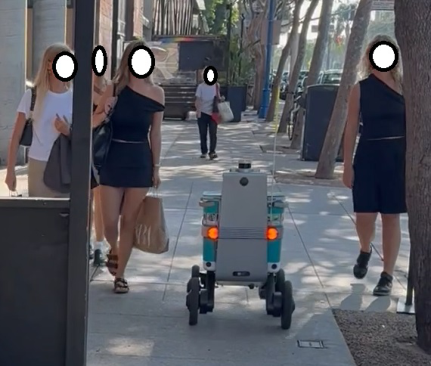
Figure 1: Pedestrians swerving to avoid autonomous sidewalk robot.
Research on path optimization suggests that pedestrians alter their paths to avoid obstacles, including autonomous systems (see Figure 1). Autonomous robots, by sharing public spaces, prompt changes in pedestrian movement, leading to slower walking speeds or altered paths. Understanding these changes is key to designing robots that respect pedestrian space (Sisbot et al., 2007).
METHODOLOGY
Study Design This study employed a non-participant, observational field study in West Hollywood, California, where Serve Robotics’ robots regularly operate. The researcher observed and documented 25 interactions between pedestrians and autonomous delivery robots on public sidewalks, recording key variables such as path alterations, speed changes, and proximity to the robot. Field studies are ideal for capturing spontaneous human-robot interactions as they occur in everyday urban settings.
Data Collection Methods & Variables To accurately collect and measure data variables related to pedestrian behavior, environmental factors, and robot behavior were identified (see Table 1). For any deviations from original paths, pedestrian behaviors such as
Navigating Shared Space: A Preliminary Field Study Analyzing Pedestrian Path 133
veering, stopping, or walking closer to the street, were recorded using video footage, with notified consent.
Table 1. Variable categories and respective variables used in data collection.
Table available in the original PDF paper.
Variable Category Variable Pedestrian Behavior Veering, stopping, speed adjustments Environmental Factors Sidewalk width, pedestrian density, and presence of obstacles Robot Behavior Speed, proximity to pedestrians, and direction of movement
DATA ANALYSIS This section provides an example of the analysis carried out on the pedestrian behavior in response to autonomous sidewalk robots. Additional analysis focusing on various environmental and behavioral factors, such as sidewalk width, pedestrian density, and robot-specific characteristics like speed and proximity are not presented due to paper length restraints. Data was categorized to identify patterns and correlations between these variables and how pedestrians altered their paths when encountering the robots. The analysis was further enriched by examining the emotional and social responses of pedestrians through qualitative data. Categorization of pedestrian behaviors is presented in Table 2.
Table 2. Categorization of pedestrian behaviors.
Table available in the original PDF paper.
Behavior Type Definition Sub-Categories Example/Notes Veering Lateral shift in walking path
- Minimal (<1 meter) Slight deviation to avoid robot - Moderate (1-3 meters) Moderate path change - Significant (>3 meters) Large veer to the side Stopping Pedestrian stops completely
- N/A Stopped to let robot pass Speed Adjustments
Changes in walking speed
- Slowed down Slowed down as robot approached - Speed up Increased walking speed near robot
Table 2 categorizes pedestrian behaviors into veering, stopping, and speed adjustments, illustrating the range of reactions observed during the study. Each pedestrian behavior, such as veering, stopping, and speed adjustments, was carefully measured and categorized based on the degree of the response. This categorization ranged from minimal changes, like slight deviations in path, to significant alterations, such as large detours or complete stops. These analyses provided insights into how pedestrians adjusted their movements when encountering autonomous robots, giving a clearer picture of the impact these robots might have on human walking patterns.
In addition to pedestrian behavior, an analysis was conducted on environmental factors and robot behavior not presented due to paper
134 Marohn
length constraints. Environmental factors such as sidewalk width, pedestrian density, and the presence of obstacles were systematically examined from the data gathered to determine how they influenced pedestrian reactions. Sidewalk width was categorized into narrow, moderate, and wide, and the results indicated that narrower sidewalks often resulted in more significant path alterations. Pedestrian density was analyzed by grouping foot traffic into low, moderate, and high categories, revealing that higher densities led to increased path deviations as pedestrians had less space to navigate around the robots. The presence of obstacles also played a role, with more crowded or obstructed areas leading to more dramatic behavioral changes.
Robot behavior was another critical aspect of the analysis. Key variables such as robot speed, proximity to pedestrians, and the direction of approach were assessed to understand how they influenced pedestrian behavior. Robots moving at higher speeds were found to trigger more significant pedestrian reactions, including stopping or veering to avoid sudden interactions. Proximity was similarly important, with robots that came within 1 meter of pedestrians causing more apparent discomfort and pronounced behavior modifications. The robot’s direction of approach, whether head-on, lateral, or following, also influenced how pedestrians reacted, with head-on approaches causing the most significant disruptions to pedestrian movement. Together, these analyses offered an initial understanding of the interplay between environmental conditions, robot behavior, and pedestrian responses.
RESULTS
The results from the 25-sample observation provide a way to quantitatively and qualitatively think about and make sense of how pedestrians modify their walking behavior in response to autonomous sidewalk robots. The findings, though limited in scope due to the smaller sample size, demonstrate how the data can be analyzed with larger statistically significant samples sizes in future studies.
Quantitative Findings The data revealed that pedestrian path alterations were common when interacting with autonomous robots, particularly in response to the robot’s speed, proximity, and direction of movement. Key behavioral patterns were identified by systematically collecting data on veering, stopping, and speed adjustments.
Path Alterations Veering Behavior: 44% of pedestrians (11 out of 25) adjusted their paths when encountering the robots (see Table 3). Of those:
Key Insight: Most veering behaviors were minor, but the degree of veering increased in more constrained environments, such as narrow sidewalks or during high-density pedestrian traffic.
Stopping or Slowing Down: 20% of pedestrians (5 out of 25) either stopped or slowed down when approaching the robots. This behavior was most common when robots moved at higher speeds or approached
Navigating Shared Space: A Preliminary Field Study Analyzing Pedestrian Path 135
pedestrians head-on. These interactions suggest that pedestrians experienced uncertainty or discomfort when the robot’s movement was perceived as unpredictable or too rapid.
No Reaction: 36% of pedestrians (9 out of 25) exhibited no significant alteration in their path. These individuals walked past the robot without making noticeable adjustments to their walking speed or trajectory.
Table 3. Breakdown of 44% of pedestrians veering behavior.
Table available in the original PDF paper.
Percentage of Pedestrians Veering Behavior 20% (5 out of 25) exhibited minimal veering (less than 1 meter) 16% (4 out of 25) displayed moderate veering (1-3 meters) 8% (2 out of 25) demonstrated significant veering (over 3 meters)
Environmental Influences Pedestrian behavior was notably affected by the available sidewalk width and pedestrian density. Narrow sidewalks and high-density areas led to more significant path alterations as pedestrians navigated around both the robot and other people.
Sidewalk Width: Pedestrian reactions were strongly influenced by the available sidewalk space. On narrow sidewalks (less than 2 meters wide), 40% of pedestrians exhibited moderate to significant veering to avoid the robot. On wider sidewalks (over 4 meters), 75% of pedestrians showed either no path alteration or only minimal veering. This suggests that pedestrians were more likely to alter their paths in environments where space was constrained.
Pedestrian Density: In areas with higher pedestrian density (more than 8 people per minute), significant path alterations were more common. In these high-density areas, 30% of pedestrians either stopped or made significant deviations (over 3 meters) to avoid both the robot and other pedestrians. Conversely, in low-density environments (fewer than 3 people per minute), path deviations were minimal, with 70% of pedestrians passing the robot without substantial alterations.
Robot Characteristics Pedestrian reactions to autonomous robots were influenced by both the speed and proximity of the robots. Faster-moving robots and those approaching within close range elicited more pronounced path alterations, with head-on encounters being particularly disruptive.
Speed and Proximity: The speed of the robot significantly impacted pedestrian behavior. Robots moving at higher speeds (faster than typical human walking speed) prompted more pronounced path alterations, with 20% of pedestrians opting to stop or slow down. In contrast, slower-moving robots (at or below typical human walking speed) caused fewer significant deviations. Proximity was also a major factor: 40% of pedestrians reacted
136 Marohn
more strongly when robots approached within 1 meter, either by stopping, veering significantly, or altering their speed.
Direction of Approach: Pedestrians were more likely to modify their paths when robots approached them head-on. In these instances, 32% of pedestrians stopped or veered significantly compared to only 8% when the robot crossed paths laterally or followed from behind. This finding suggests that head-on encounters are perceived as more intrusive or difficult to navigate.
Qualitative Findings The qualitative data revealed additional insights that provided context for the quantitative findings:
Avoidance Behavior: 16% of pedestrians exhibited avoidance behaviors, such as veering or stepping aside even when there was sufficient room to pass without significant deviation. This behavior was particularly evident when the robot approached rapidly or directly blocked the pedestrian’s path. These avoidance actions suggest that some pedestrians prefer to maintain a larger personal buffer when navigating around autonomous robots.
Curiosity: 8% of pedestrians showed signs of curiosity, such as slowing down to observe the robot, pointing it out to others, or using their phones to take pictures or videos. This behavior was more common in less crowded environments, where pedestrians had the time and space to engage with the technology. These interactions indicate that robots can generate interest and interaction in situations where they are novel or unusual.
Neutral Reactions: The majority of pedestrians (64%) exhibited neutral reactions, continuing their path without making significant adjustments. These neutral behaviors were more common in wide, low-density sidewalk environments where the robot’s presence posed less of an obstacle. In these cases, pedestrians appeared more comfortable sharing space with the robots and did not view them as disruptions.
Spatial Findings: While spatial data from this small sample size is limited, patterns in path deviations were observed: High-Density Areas: In areas with high pedestrian density, significant path deviations were common. Pedestrians often veered into the street or moved closer to building edges to avoid both the robots and other pedestrians, creating areas of congestion. These deviations were often greater than 3 meters, especially in narrow spaces where maneuvering was limited. Such patterns suggest that pedestrians are more likely to make significant changes to their path when constrained by both environmental factors and robot proximity.
Low-Density Areas: In low-density areas, path deviations were minimal. Pedestrians typically walked past the robots without substantial changes to their trajectory, reflecting a more relaxed and fluid interaction. In these environments, robots appeared to integrate more seamlessly with pedestrian flow.
Deviation Distance: The average deviation distance varied based on sidewalk width and pedestrian density. On narrow sidewalks, the average
Navigating Shared Space: A Preliminary Field Study Analyzing Pedestrian Path 137
deviation was 2 meters, while on wider sidewalks, the average deviation was only 1 meter. This data suggests that space availability plays a significant role in pedestrian willingness to share pathways with robots.
Summary of Results The data demonstrate that pedestrians do modify their paths in response to autonomous sidewalk robots, with the extent of these alterations influenced by environmental factors (such as sidewalk width and pedestrian density) and robot-specific characteristics (such as speed and proximity). The combination of quantitative and qualitative analysis provides a stronger understanding of how pedestrians navigate shared spaces with robots, identifying key factors that contribute to pedestrian comfort or discomfort. These findings may offer valuable insights into how autonomous robots could be designed and operated to reduce pedestrian disruptions in urban environments.
DISCUSSION
The results from this 25-sample observation provide valuable insights into pedestrian behavior when interacting with autonomous sidewalk robots. Although the small sample size limits statistical significance, the consistency of observed behaviors is compelling and suggests trends that warrant further investigation. This pilot study lays the groundwork for a larger-scale study that could yield more definitive, statistically significant results.
Limitations of the Current Study The primary limitation is the small sample size of 25 observations, which constrains the ability to generalize findings to broader urban populations. The limited number of interactions between pedestrians and robots restricts the ability to detect significant patterns across varying environmental conditions and demographics. While trends emerged—such as veering, stopping, or slowing down—these cannot be confirmed as representative of how the general public may behave around autonomous robots.
Additionally, the data was collected in a specific geographic area, which may not reflect conditions elsewhere. Factors like local pedestrian norms, sidewalk width, and density could vary significantly in other regions. The study was also conducted over a limited number of days, preventing it from accounting for variability in weather, time of day, and seasonal pedestrian traffic patterns. A larger sample size is needed to more rigorously analyze relationships between variables, such as robot speed, proximity, and pedestrian reactions, using statistical methods like regression analysis.
Importance of the Findings Despite these limitations, the findings are compelling and align with existing research on human-robot interaction and proxemics. Even with a small sample, clear patterns of behavior emerged. For instance, 44% of pedestrians altered their paths when encountering robots, with varying degrees of veering and stopping. The effects of sidewalk width, pedestrian density, and robot
138 Marohn
speed on pedestrian behavior are consistent with previous studies on crowd dynamics and obstacle avoidance (Rios-Martinez et al., 2015).
The findings suggest that pedestrians adjust their behavior in constrained environments, with greater veering on narrow sidewalks and more frequent stopping when robots approached head-on. These behaviors reflect common responses observed in human interactions with other mobile obstacles.
Call for a Larger Study The preliminary findings underscore the need for a more comprehensive, statistically significant study to confirm the trends observed here. A larger sample size would allow for more robust quantitative analysis, including exploring relationships between environmental factors (e.g., sidewalk width, pedestrian density) and pedestrian reactions through correlation and regression analysis.
Future studies should also investigate variations in pedestrian behavior across demographics such as age, gender, and familiarity with autonomous technology. For example, older pedestrians or those unfamiliar with robots may exhibit different behaviors than younger, more tech-savvy individuals. Additionally, incorporating a broader range of conditions—such as different weather patterns, times of day, and locations—would enhance the study’s external validity.
A larger sample would allow for a deeper exploration of interactions between pedestrians and robots, such as reactions to multiple robots in close proximity or how group dynamics affect pedestrian paths. Understanding these subtleties is essential for informing robot design and urban planning to minimize disruptions.
Implications for Design and Policy The findings from this study offer practical insights for improving the design of autonomous robots and the planning of urban spaces. One key implication is that robot behavior should be dynamically adjusted based on the surrounding environment. For example, reducing robot speed in high- density pedestrian areas or avoiding direct head-on approaches can help minimize disruptions. Ensuring that robots maintain a comfortable distance from pedestrians, especially in narrower spaces, may be crucial for fostering positive interactions.
A study such as this is important in considering urban infrastructure planning for robot deployment; especially if more robots are introduced into public spaces and even compete for shared public space with pedestrians (Nourbakhsh, 2013). In areas where sidewalks are narrow or pedestrian traffic is dense, cities may need to consider strategies such as widening sidewalks or designating specific lanes for autonomous robots to reduce conflicts. Additionally, scheduling robot operations during off-peak times could help minimize pedestrian-robot interactions in crowded areas.
Similarly, robot manufacturers will need to consider the implications of this type of study and pedestrian reaction such as path modifications in response to the presence of their autonomous sidewalk robots in public
Navigating Shared Space: A Preliminary Field Study Analyzing Pedestrian Path 139
spaces. This will be necessary because they will be seen as the root cause of any problems associated with issues arising from discomfort pedestrians feel following Proxemics Theory.
By thinking through design and policy recommendations using data based on studies such as this one and larger studies, autonomous robots can better integrate into public spaces, ensuring pedestrian comfort and safety while maintaining efficiency in their operations.
CONCLUSION
While the 25-sample observation is not statistically significant, the consistency of the observed behaviors provides enough evidence to justify a larger, more rigorous study. The patterns identified in this pilot research— particularly regarding the influence of sidewalk width, pedestrian density, and robot speed—offer a strong starting point for future investigations. Expanding the sample size and including a broader range of conditions will be critical for confirming these findings and developing actionable insights for robot design and urban policy. The results of this study suggest that autonomous robots can coexist with pedestrians in urban environments, but thoughtful design and planning will be essential to ensure seamless integration.
REFERENCES
Aiello, J. R. (1987) ‘Human spatial behavior’, in Stokols, D. and Altman, I.
(eds.) Handbook of environmental psychology, New York: John Wiley & Sons, pp. 389–504. Bailenson, J. N., Blascovich, J., Beall, A. C. and Loomis, J. M. (2001) ‘Equilibrium theory revisited: Mutual gaze and personal space in virtual environments’, Presence: Teleoperators and Virtual Environments, 10(6), pp. 583–598. Burgoon, J. K. (1978) ‘A communication model of personal space violations:
Explication and an initial test’, Human Communication Research, 4(2), pp. 129–142. Hall, E. (1963). A system for notation of proxemic behavior. American Anthropologist, 65, 1003–1026. Hall, E. T. (1959). The silent language. NewYork: Doubleday Company. Hall, E. T. (1966). The hidden dimension. Chicago: Doubleday Company. Hall, E. T., Birdwhistell, R., Bock, B., Bohannan, P., Diebold, A., Kimball, S. and Vogt, E. Z. (1968) ‘Proxemics’, Current Anthropology, 9(2/3), pp. 83–108. Liebman, M. and Shinnar, R. (1973) ‘Proxemics and the architecture of social
interaction’, Sociometry, 36(4), pp. 416–427. Mead, R. and Mataric, M. J. (2016) ‘Proxemics and performance: Social spacing and attention in human-robot interaction’, Proceedings of the Tenth Annual ACM/IEEE International Conference on Human-Robot Interaction, pp. 293–300. Nourbakhsh, I. R. (2013) Robot futures. Cambridge, MA: MIT Press. Rios-Martinez, J., Spalanzani, A. and Laugier, C. (2015) ‘From proxemics theory to socially-aware navigation: A survey’, International Journal of Social Robotics, 7(2), pp. 137–153. Satake, S., Kanda, T., Glas, D. F., Imai, M., Ishiguro, H. and Hagita, N. (2009)
‘How to approach humans?-Strategies for social robots to initiate interaction’,
140 Marohn
Proceedings of the 4th ACM/IEEE International Conference on Human Robot Interaction, pp. 109–116. Sisbot, E. A., Marin-Urias, L. F., Alami, R. and Simeon, T. (2007) ‘A humanaware mobile robot motion planner’, IEEE Transactions on Robotics, 23(5), pp. 874–883. Takayama, L. and Pantofaru, C. (2009) ‘Influences on proxemic behaviors in human-
robot interaction’, 2009 IEEE/RSJ International Conference on Intelligent Robots and Systems, pp. 5495–5502. Walters, M. L., Dautenhahn, K., Koay, K. L. and Syrdal, D. S. (2009) ‘Robot etiquette: Results from user studies involving a fetch robot’, ACM Transactions on Human- Robot Interaction, 2(1), pp. 12–19.
LISTED IN THE AHFE DIGITAL BOOKSTORE CATALOGUE
Explore the complete digital volume
Human Interaction and Emerging Technologies (IHIET-AI 2025): Artificial Intelligence and Future Applications
Read this individual research paper free through the original publisher, or explore the full digital proceedings book.
ISBN 978-1-964867-37-3
Explore this ISBN in the AHFE Bookstore ↗Listed in the July 2026 bookstore catalogue; search by ISBN to confirm current availability · Digital book purchase optional