Sergio Staab, Nadia Günter, Ludger Martin, Johannes Luderschmidt (2025). Comparison of Two Smartwatch-Based Approaches for Real-Time Activity Classification in the Care Context. In: Human Interaction and Emerging Technologies (IHIET-AI 2025): Artificial Intelligence and Future Applications. AHFE Open Access, vol. 161, pp. 496–505. https://doi.org/10.54941/ahfe1005942
This work presents a comparative analysis of two approaches to the classification of human activities. These approaches offer the potential for the automation of caregivers’ documentation of activities performed by patients, which could facilitate improvements in the treatment of diseases.Both approaches are based on integrating smartwatch technology with a neural network, enabling the real-time classification of activities. The integration of sensor technology into a patient's daily life via a smartwatch can facilitate the treatment of their disease and provide information about disease progression and disease-related changes. The smartwatch offers the ability to sample accelerometer, gyroscope, gravity, and position data at a frequency of 20 hertz (Hz), which is then transmitted to a recurrent neural network called Long Short-Term Memory (LSTM) for real-time classification.The implemented real-time classification provides immediate and precise indications regarding the temporal occurrence and probability of performing one of the defined activities. The primary distinction between the two classification methodologies pertains to the implementation of the LSTM network. One approach involves the operation of the Long Short-Term Memory (LSTM) neural network on a server, while the other employs direct operation on the smartwatch. This distinction yields notable contrasts in performance and functionality.The findings indicate that the server-based smartwatch model exhibits superior classification accuracy and more comprehensive functionalities, whereas the model implemented on the smartwatch demonstrates enhanced flexibility.Based on data obtained from smartwatch sensors, activities that are very similar can be classified flexibly, irrespective of location and in real-time. The insights gained about patients' motor skills provide the potential for nursing staff to be supported in the care of their patients with neurological diseases.
Comparison of Two Smartwatch-Based Approaches for Real-Time Activity Classification 497
INTRODUCTION
Demographic changes are leading to an aging population and a higher demand for care, while the workforce declines. The falling birth rate amplifies this trend, placing an unsustainable strain on the healthcare system, as outlined by England and Azzopardi-Muscat.
This study aims to ease the burden on care staff by supporting their daily tasks and streamlining the documentation of motor skills, which is essential for early disease detection. Documenting patients’ activities is often time- consuming, so two approaches for digitalizing this process were developed.
We present two real-time human activity classification methods to automate patient movement documentation, thus reducing care staff workload. Using a smartwatch and a Long Short-Term Memory (LSTM) neural network, both methods detect and classify activities in real-time to improve patient care through precise, mobile motor activity tracking.
This study focuses on comparing two live classification methods for human activity recognition via smartwatch technology. The first approach executes the LSTM model on an external server, requiring a stable network connection. To counter network dependency, the second approach embeds the LSTM directly on the smartwatch, enabling offline classification and reducing reliance on constant connectivity.
Since many care devices rely on network connections, and stable access isn’t always guaranteed, the second approach allows direct smartwatch-based classification, enhancing resilience against network issues. Each method has distinct performance variations, presenting unique advantages and limitations in documentation potential.
This paper provides the following contributions: 1. An approach to real- time activity recognition using smartwatches that transmit their data to an LSTM network on an external server. 2. An approach to real-time activity recognition using a smartwatch where the LSTM network is integrated directly into the watch. 3. A comparison of the two smartwatch technologies in terms of performance and applicability.
Both smartwatch approaches offer the ability to classify activities. The smartwatches provide sensor data in real-time, including values from the accelerometer, gyroscope, and gravity sensors, at a rate of 20 Hz. This data is then processed by a recurrent neural network, specifically the Long Short-Term Memory (LSTM) network. This enables the flexible and precise classification of everyday activities, thereby providing valuable data for the improvement of disease management and care support.
The structure of this work is as follows: The next section reviews related work in health information technologies, human activity recognition, and smartwatch classification. This is followed by an overview of the project structure for the two classification models, along with a discussion on real-time motion recognition and the machine learning tool. The Activity Recognition section covers the activity recognition process, presents live classification results, and offers a comparative analysis of the two approaches. The paper concludes with a summary and final insights.
RELATED WORK
The following section presents a selection of related work on human activity recognition and smartwatch classification. These studies are collectively concerned with the analysis of human movement using smartwatches. Subsequently, the current state of research in this field is discussed, along with the potential contributions of this work.
As asserted by Lopes de Faria and Vieira, the advent of technological advancement has led to the emergence of novel intelligent devices, including the smartwatch, which is becoming increasingly prevalent in our daily lives. Such devices are frequently utilized for health-related purposes, particularly in the healthcare sector, for the detection of human movement. Wearable devices, including smartwatches, are gaining prominence as tools for monitoring daily activities and assessing health.
The detection of mental and physical disorders and the provision of support to those experiencing difficulties can lead to significant improvements in users’ health, as evidenced by Malu and Findlater. Many of these applications rely on data collected by sensors on smartwatches, including heart rate monitors, GPS, accelerometers, and gyroscopes. For instance, Brezmes et al. have successfully employed an accelerometer to measure a range of human activities.
In their work, Alpert et al. conclude that the majority of clinical staff view health data generated by smartwatches as a method of reducing workload, promoting patient motivation, and enhancing the relationship with the patient.
According to Liu et al. wearable health monitoring systems have emerged as a prominent area of research, attracting significant attention from the academic community.
In addition to activity classification, the rapid progress of smartwatches in the health field is also worthy of note. Bienhaus provides an overview of the fundamentals and applications of smartwatches, with a particular emphasis on their accelerated development in the health sector. He asserts that the health-related functions of smartwatches have a beneficial impact on quality of life, particularly for individuals requiring care, and are therefore becoming increasingly appealing.
The article by Klucken, Gladow, and Hilgert also delineates the functionalities of smartwatches and the requisite developmental status for the utilization of smartwatches in the medical field. The authors employ studies to illustrate the potential health improvements. However, for medical use, the technology must be enhanced and clinically adapted, necessitating the development of complex algorithms to process the data accurately.
The results of these studies demonstrate the potential of smartwatches to facilitate advancements in the healthcare sector. The devices’ ability to classify human movement activities using sophisticated algorithms holds significant promise.
Comparison of Two Smartwatch-Based Approaches for Real-Time Activity Classification 499
PROJECT STRUCTURE Our project is divided into two distinct approaches. The first approach focuses on detecting eating, drinking, and writing activities through the classification of an ML model that has been specifically trained and operates on a server. The second approach for recognizing eating, drinking, and writing is based on direct classification on the smartwatch. Both approaches are described in detail below.
First Approach - Classification Operates on a Server
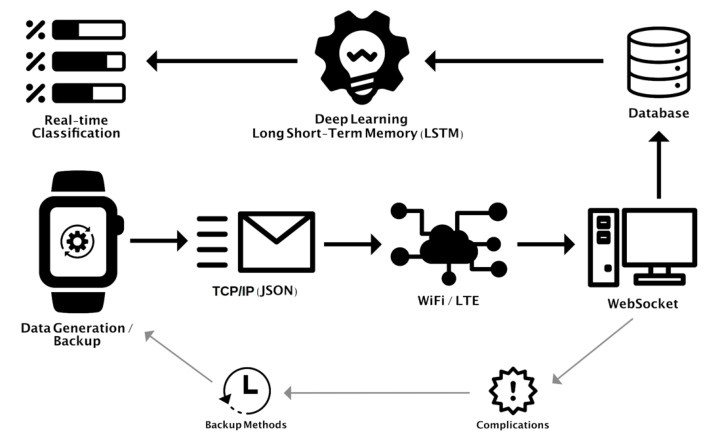
Figure 1 provides an overview of this project, presenting a standalone Wear OS application for the Google Pixel Watch 2.
Figure 1: Overview from data generation to live classification.
The application includes methods for capturing motion and health data, a temporary data backup in the smartwatch’s memory, tools for data tagging, and an interface for exchanging sensor data with a web server via a WebSocket. In case of connectivity issues, backup mechanisms can initiate a retransmission of the sensor data collected during a session.
The data collected on the smartwatch is transmitted to a website on a server, where it can be processed, displayed and analysed in real time. The Google Pixel Watch 2 is used, which is equipped with sensor technologies that form the basis for tracking interaction and health data.
The communication between the smartwatch and the web server is a TCP/IP communication between a NodeJS WebSocket.
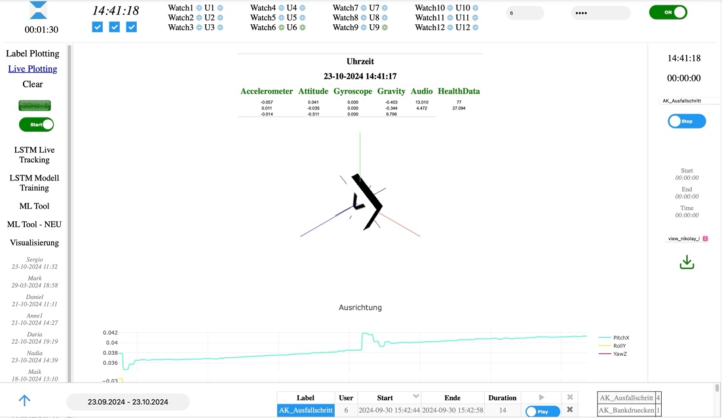
Figure 2 illustrates the web dashboard. The globe icons in the header represent the 12 possible users. As soon as a user logs in via the WebSocket or their watch, the icon turns green.
Figure 2: Web dashboard for classifying and analysing movement data via registered watches.
The desired sampling rate (hertz) can be configured in the left menu, after which tracking begins. A WebSocket sends the command to the smartwatch, which streams data packets at the specified rate. Labels for activities can be set up in the right menu and managed below, allowing real-time data flow into the MySQL database.
This automated data aggregation enables efficient tracking and labeling of thousands of data points quickly. The application is configurable, allowing the integration of additional sensors and attributes as needed.
Before classification, data undergoes pre-processing. For the test and training sets, movement sequences were standardized to approximately ten seconds. At a 50 ms interval (20 data points per second), this results in 200 data points per sequence.
The classification model uses a Long Short-Term Memory (LSTM) network Hochreiter and Schmidhuber, a recurrent neural network (RNN) architecture. Key elements of an LSTM memory cell include input, forget, and output gates, which manage each cell’s state via an activation function. LSTMs are well-suited for sequential sensor data processing due to their capacity to capture temporal dependencies over long periods, addressing the vanishing gradient issue Ashry et al. As Oluwalade et al. note, this architecture effectively learns temporal dependencies and retains crucial sequences, enabling accurate real-time motion classification in patient monitoring.
For real-time classification, users access a webpage with a simple interface to select their username and the delay between classifications. Once initiated, communication between the client and server is managed through asynchronous WebSockets. Live classifications, including class labels and their probabilities, are sent to the client in JSON format as they are processed on the server with the exported model.
Comparison of Two Smartwatch-Based Approaches for Real-Time Activity Classification 501
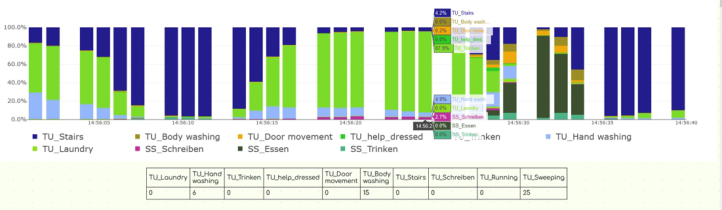
Figure 3 presents a bar chart, generated by the LSTM-System, that illustrates the classification probability of various activities within the care sector, as identified by the Google Pixel Watch in the context of real-time activity recognition.
Figure 3: Example of a graph generated by the LSTM system illustrating the classification probability of care activities.
The Y-axis represents the classification probability, and the X-axis the timestamp of the classifications. Each classified activity is assigned a unique color in this diagram, which is used to color the associated bars. Since each classification contains the probability for each of the four classes, the probabilities of all four charts in a classification amount to 100%. The bar chart enables the nursing staff to monitor the classification of their patients’ activity data in near real-time.
Second Approach Implemented Locally on the Smartwatch
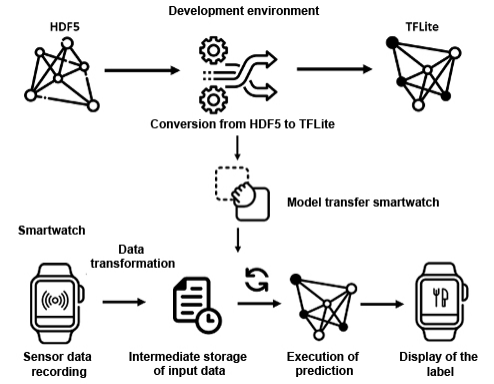
Figure 4 shows the development and deployment process for implementing and realising the smartwatch application.
Figure 4: Development and deployment process for the implementation of the smartwatch application.
To make the classification model autonomous, network-independent, and less prone to connection errors, we developed an LSTM-based approach directly on the Galaxy Watch 5. This smartwatch implementation classifies activities in real time without server-side processing, which reduces connectivity issues in care settings.
The smartwatch app leverages sensors like the accelerometer, gyroscope, and magnetometer to collect and process motion data on the device. An optimized LSTM model on TensorFlow Lite (TFLite) enables real-time recognition, classifying activities such as eating, drinking, and writing, with immediate results displayed on the watch. Unlike the server-based solution, all data processing is local, ensuring continuous operation without network dependence.
The user-friendly interface provides start and stop buttons, displays recognized activities, and tracks the prediction count. Users can customize prediction frequency and start tracking to enable continuous, reliable activity recognition, even in low-connectivity environments. This development is based on the master’s thesis by Mark Fries.
ACTIVITY RECOGNITION This section evaluates the two classification approaches described above. The aim of this evaluation is to test which classification approach is best suited for recognising human activities in the care sector and has a higher classification accuracy of everyday activities.
Assessment of the Model Conversion In the evaluation of the model conversion, Accuracy, Recall, Precision and F1-Score were used as the main performance metrics, with F1-Score being the most important metric. To evaluate the performance of the model implemented on the smartwatch, the results were compared with those of the original server-based model. Both models were tested in the development environment and on the smartwatch to identify possible differences. Specific test data was used for the tests and a method called create_sequences was developed for data preparation, which creates sequences without a sliding window approach.
The test results showed small differences between the models in terms of accuracy, recall, precision and F1 score, with deviations of only about 0.44%. This indicates a high level of consistency between the models. The results suggest that the performance of the TFLite model, even if tested under idealised conditions, could be representative for use on the smartwatch. The values determined are compared in Table 1 below. They indicate a reliable performance of the model, even under the resource-limited conditions of a smartwatch.
Battery Capacity In order to evaluate the performance and efficiency of the smartwatch application in the context of live classification, it is essential to analyse the energy consumption. For continuous activity-related services, such as those
Comparison of Two Smartwatch-Based Approaches for Real-Time Activity Classification 503
required for activity monitoring in the care sector, a long battery life is necessary, as mobile devices are worn continuously and need to collect data continuously.
Table 1. Analysis results of the battery capacity.
However, as smartwatches have a limited battery capacity (e.g. Google Pixel Watch 2: 306 mAh (8), Samsung Galaxy Watch 5: 410 mAh (14)), frequent data collection and a server-based approach can put a heavy strain on the battery. The battery consumption of the classification models on the Google Pixel Watch 2 and the Samsung Galaxy Watch 5 is tested for thirty minutes at a frequency of 20 Hz to assess the impact of the classification models on battery life. In order to obtain valid test results, it was ensured before the test that no other background processes were running on the watch. The results of the test are shown in Table 2.
Table 2. Comparison of the battery consumption of the classification models on Google Pixel Watch 2 and Samsung Galaxy Watch 5 at 20 Hz over 30 minutes.
The “Start battery capacity” and “Stop battery capacity” columns in the table reflect the battery percentage of the smartwatches at the beginning and end of the test. The results indicate that energy consumption varies with data processing methods. The Samsung Galaxy Watch 5, which performs classification locally, uses less battery compared to the Google Pixel Watch 2, which depends on a continuous network connection to transmit data. This constant connection leads to faster battery drain on the Pixel Watch 2, requiring more frequent charging. Notably, the Galaxy Watch 5’s local classification approach is more efficient, with consumption rates of 6–9% compared to 10–12% for the Pixel Watch 2.
Now, two experiments on the daily classification of everyday activities follow. These experiments evaluated real-time classification of activities, with three participants. Data acquisition involved 12 features per activity, using a label duration of 15 seconds at a frequency of 20 Hz. Activities included two similar combinations of arm positions and movements (eating and drinking) and one distinct activity (writing). Each activity was performed ten times for fifteen seconds, with the smartwatch worn on participants’ dominant hands.
Experiment 1: Classification on the Samsung Galaxy Watch 5. In this live classification, using the locally implemented model, writing was distinctly recognized due to its unique movement pattern, achieving accurate classification in all ten attempts. Drinking was correctly classified nine out of ten times, while eating was correctly identified in seven of ten attempts, likely due to movement similarity between eating and drinking. This suggests that distinct movements are easier to classify.
Experiment 2: Classification on the Google Pixel Watch 2. With the server- based model, the Pixel Watch 2 also accurately classified writing in all trials, drinking in all cases, but correctly identified eating in only six of ten cases. This suggests that the movement pattern for eating has less distinctive characteristics, impacting detection accuracy.
Comparison: Both models demonstrated high accuracy in recognizing writing, as its movement sequence has unique characteristics. Similarly, drinking was well recognized, with the server-based model showing slightly higher precision. Eating proved challenging to classify, due to its similarity to drinking. These results confirm that distinct movement patterns improve classification reliability, and show that the implementation environment (local vs. server-based) has minor but measurable effects on precision.
CONCLUSION
In this work, two approaches for real-time classification of daily activities in a care context were evaluated: a server-based model and a locally implemented model on the smartwatch.
The server-based classification approach utilizes the Google Pixel Watch 2, which allows central storage and extensive processing of movement data on a web server. This approach offers high processing power, flexibility, and a user-friendly interface for monitoring and analyzing activity recognition through a web dashboard. The classification accuracy was solid, with precise results for activities such as writing and drinking; however, the constant network connection led to increased battery consumption.
The locally implemented approach on the Samsung Galaxy Watch 5 aims to minimize network dependency and execute autonomous real- time classification directly on the smartwatch, without relying on an external server connection. This enhances reliability in care facilities with limited network availability and connectivity issues, while reducing energy consumption through local data processing. The Galaxy Watch 5 demonstrated more efficient battery life and minimal loss of classification accuracy.
Overall, the server-based approach achieved better classification results and more detailed data analysis, while the local method excelled in mobility and reduced energy consumption. For applications requiring continuous connectivity and detailed analysis, the server-based approach is ideal; however, where stable network connections are not available, local classification provides an effective and resource-efficient solution.
Comparison of Two Smartwatch-Based Approaches for Real-Time Activity Classification 505
REFERENCES
Alpert, J. M., Manini, T., Roberts, M., Kota, N. S. P., Mendoza, T. V., Solberg, L. M., Rashidi, P.: Secondary care provider attitudes towards patient generated health data from smartwatches. npj Digital Medicine 3(3) (2020), https://doi.org/ 10.1038/s41746-020-0236-4. Ashry, S., Ogawa, T., Gomaa, W.: CHARM-deep: Continuous human activity recognition model based on deep neural network using IMU sensors of smartwatch. IEEE Sensors Journal 20(15), 8757–8770 (Aug 2020). https://doi.org/10.1109/jsen.2020.2985374 Bienhaus, D.: Smartwatch und Wearables im Gesundheitsbereich: Grundlagen und
Anwendungen. Gesellschaft für Informatik e. V., Bonn (2016). Brezmes, T., Gorricho, J. L., Cotrina, J.: Activity Recognition from Accelerometer Data on a Mobile Phone. pp. 796–799. IWANN ‘09, Springer-Verlag, Berlin, Heidelberg (2009), https://doi.org/10.1007/978-3-642-02481-8 120. England, K., Azzopardi-Muscat, N.: Demographic trends and public health in
Europe. European Journal of Public Health 27(suppl 4), 9–13 (Oct 2017). https://doi.org/10.1093/eurpub/ckx159 Igor Lopes de Faria, V. V.: A comparative study on fitness activity recognition.
In: Proceedings of the 24th Brazilian Symposium on Multimedia and the Web. pp. 327–330. WebMedia ‘18, Association for Computing Machinery, New York, NY, USA (2018). https://doi.org/10.1145/3243082.3267452 Fries, M.: Integration und Bewertung von Machine-Learning-Algorithmen zur Sensordatenklassifikation auf WearOS-Smartwatches. Masterthesis Google: Google pixel watch 2 - technische daten (2024), https://store.google.com/d
B.:„ Wearables” in der behandlung neurologischer erkrankungen – wo stehen wir heute? Der Nervenarzt 90(8), 787–795 (Jul 2019). https://doi.org/10.1007/ s00115-019-0753-z Liu, Y., Pharr, M., Salvatore, G. A.: Lab-on-skin: a review of flexible and stretchable electronics for wearable health monitoring. ACS nano 11(10), 9614–9635 (2017) Malu, M., Findlater, L.: Toward Accessible Health and Fitness Tracking for People
with Mobility Impairments. In: Toward Accessible Health and Fitness Tracking for People with Mobility Impairments. p. 8. ACM, New York, NY, USA (6 2016). https://doi.org/10.4108/eai.16-5-2016.2263329 Oluwalade, B., Neela, S., Wawira, J., Adejumo, T., Purkayastha, S.: Human activity recognition using deep learning models on smartphones and smartwatches sensor data. In: Proceedings of the 14th International Joint Conference on Biomedical Engineering Systems and Technologies - HEALTHINF. pp. 645–650. INSTICC, SciTePress, Vienna, Austria (01 2021). https://doi.org/10.5220/ 0010325906450650 Samsung: Galaxy watch 5 vs. galaxy watch 5 pro: Buying guide (2024), https://www.samsung.com/de/mobile-phone-buying-guide/galaxy-watch-5- vs-galaxy-watch-5-pro/, accessed: 2024-11-01
LISTED IN THE AHFE DIGITAL BOOKSTORE CATALOGUE
Explore the complete digital volume
Human Interaction and Emerging Technologies (IHIET-AI 2025): Artificial Intelligence and Future Applications
Read this individual research paper free through the original publisher, or explore the full digital proceedings book.
ISBN 978-1-964867-37-3
Explore this ISBN in the AHFE Bookstore ↗Listed in the July 2026 bookstore catalogue; search by ISBN to confirm current availability · Digital book purchase optional