Salman Asghar (2025). Challenges and Opportunities in Inclusive Design and Human Factors: A Case Study of Designers in Pakistan’s Industrial Sectors. In: Design for Inclusion. AHFE Open Access, vol. 169, pp. 25–37. https://doi.org/10.54941/ahfe1006151
Developing countries represent 17% of the global population, comprising over 1.3 billion individuals, with this proportion projected to increase to 50% by 2050. Over the past three decades, design paradigms such as Inclusive Design, Design for the Third Age, and Universal Design have emerged, emphasizing the development of accessible and equitable solutions. This study investigates the implementation of these approaches within Pakistan, analyzing progress, challenges, and actionable insights derived from professionals across multiple design-related industries.Data collection involved 105 participants from sectors including architecture, civil and urban planning, electronics, manufacturing, beverages, and design consultancy. The findings indicate that Corporate Social Responsibility (CSR) initiatives frequently serve as catalysts for inclusive design practices. However, only 36% of surveyed organizations reported having dedicated CSR roles, with the manufacturing and beverage sectors exhibiting the highest levels of adoption. Notably, 33% of respondents were unfamiliar with the concept of inclusive design, highlighting a critical awareness gap.Key drivers for the adoption of inclusive design were identified, encompassing social responsibility, market expansion, innovation, brand enhancement, customer satisfaction, and shifting demographic trends. Conversely, significant barriers include limited resources, insufficient guidance and awareness, resistance to cultural change, weak legislative frameworks, and perceptions of design complexity and cost. Comparative sectoral analysis further revealed disparities in levels of engagement and understanding.This paper underscores the pressing need for strategies that promote awareness, capitalize on motivating factors, and address obstacles to inclusive design. Such initiatives can empower designers to better address the needs of diverse populations, fostering business growth while enhancing quality of life and human well-being.
aspects, especially in developing countries like Pakistan. The demographic transition towards aging populations is particularly evident in industrialized nations, primarily due to improvements in healthcare systems, elevated living standards, and better working circumstances (United Nations, 2019; Hussain et al., 2012). The U.S. Census Bureau’s 2022 American Community Survey (ACS) indicates that roughly 12.7% of the civilian noninstitu- tionalized population in the United States claimed a disability during the five-year period from 2016 to 2020 (U.S. Census Bureau, 2024). In 2019, cognitive impairments were identified as the most common handicap among children aged five years and older. American Indian and Alaska Native children displayed the highest disability rates at 5.9%, and Asian children showed the lowest rates at 2.3% (Erickson et al., 2020). Moreover, children residing below the poverty line had a greater incidence of disability (6.5%) in contrast to those above the poverty barrier (3.8%) (Mitra et al., 2017). These data highlight the urgent necessity to tackle the distinct obstacles encountered by children with disabilities across diverse demographic and socioeconomic categories.
Mobility impairments are the most often reported functional disability among adults in the United States, with the Centers for Disease Control and Prevention (CDC) indicating that one in five adults experiences a kind of disability (Courtney-Long et al., 2015). These impairments frequently intensify gaps, as individuals with disabilities face substantial obstacles to equitable access in healthcare, education, and work opportunities (World Health Organization [WHO], 2021).
Data from the European Commission’s study, European Comparative Data on Persons with Disabilities, indicates that roughly 24.9% of individuals aged 16 and older in the EU-27 reported a disability or activity limitation in 2020, equating to an estimated 92 million individuals. The prevalence of disability among EU Member States varied significantly, from 12% to 24.8% (Grammenos et al., 2022). These findings correspond with global trends, highlighting the urgent necessity for inclusive policy actions to rectify disparities in accessibility and guarantee equity (WHO, 2021). The research underscores significant disparities in employment, education, and poverty rates between those with disabilities and those without, emphasizing the necessity for specific actions to promote inclusion and establish fair possibilities (Mitra et al., 2017; WHO, 2021).
Developing nations such as Pakistan encounter unique problems and opportunities in executing inclusive design initiatives, shaped by swift urbanization and population expansion. Alongside China, India, and Bangladesh, these countries represent 42% of the global population, including a notable percentage of older persons (37%) and individuals with disabilities (6%) (CIA World Factbook, 2014; United Nations, 2019). This demographic distribution highlights the necessity for an inclusive design approach that addresses the varied needs of users, especially elderly folks and those with impairments (Hussain et al., 2015; Komashie et al., 2021).
Although wealthy countries have progressed in promoting inclusive design and including human aspects, these approaches are still insufficiently examined in developing regions such as Pakistan. Current study mostly
Challenges and Opportunities in Inclusive Design and Human Factors 27
emphasizes obstacles and remedies in developed areas (Wildenbos et al., 2018; Shinohara & Wobbrock, 2011), resulting in a constrained comprehension of the distinct issues encountered by designers in Pakistan’s industrial sectors. Notwithstanding this disparity, data indicates that utilizing participatory design approaches in resource-limited settings can augment inclusion and boost outcomes for underrepresented populations (Hussain et al., 2012; Sanders & Stappers, 2008).
This study investigates the obstacles and prospects associated with the incorporation of inclusive design and human aspects in Pakistan’s industrial design methods, emphasizing their capacity to transform the country’s industrial environment. This research proposes the creation of a complete framework to guarantee accessibility and inclusion in industrial design processes in Pakistan, informed by worldwide best practices.
Global Demographics and Relevance of Inclusive Design The increasing percentage of elderly folks and those with disabilities in the worldwide population underscores the pressing necessity for inclusive design in products, places, and services. These demographic changes require specific financial and legal actions to successfully meet the requirements of these groups (Wildenbos et al., 2018; United Nations, 2022; WHO, 2021). Nonetheless, the characteristics and magnitude of these alterations differ significantly among areas. Developing countries like Pakistan, India, and Bangladesh are disproportionately affected by swift population expansion, leading to increased disability rates and aging demographics (World Bank, 2021; United Nations, 2019). This demographic shift has distinct issues in guaranteeing accessibility and inclusion across multiple socioeconomic sectors.
Designers, planners, and ergonomists must emphasize the development of accessible and fair environments that cater to the different demands of these expanding groups. Inclusive design, which incorporates user-centered and participatory methodologies, provides a means to fulfill these objectives by addressing a wide range of user needs (Hussain et al., 2015; Sanders & Stappers, 2008). Evidence indicates that recognizing factors that promote the adoption of inclusive practices, such as user advocacy, and tackling obstacles, such insufficient awareness and resources, are critical measures for facilitating extensive implementation (Hussain et al., 2012; Shinohara & Wobbrock, 2011; WHO, 2021).
In poor nations such as Pakistan, where resources for inclusive design are limited, it is essential to combine global best practices with locally informed solutions. Prior research indicates that inclusive design methodologies must be tailored to the distinct cultural and economic settings of these locations to effectively mitigate inequality (Grammenos et al., 2022; Mitra et al., 2017). These initiatives can markedly improve accessibility and equity, while promoting social and economic inclusion.
28 Asghar and Hussain
Inclusive Design: Challenges and Implementation Barriers The British Standards Institute (2005) defines inclusive design as “the design of mainstream products and services that are accessible and usable by the maximum number of individuals without requiring special adaptation or specialized design.” Frameworks such as Universal Design and Design for All prioritize equal access and usability for diverse populations, including the elderly and those with disabilities (Preiser et al., 2015; Imrie & Luck, 2014; WHO, 2021). These principles constitute the basis for tackling challenges related to the global execution of inclusive design.
Extensive research has investigated the factors affecting the adoption of inclusive design across various contexts. Vanderheiden and Tobias (2000) identified several obstacles in the United States, including technical difficulties, insufficient experience, and a lack of comprehensive market data. In Japan, budgetary limitations and inadequate understanding impeded adoption (Kobayashi et al., 2021). In the UK, misconceptions about inclusive design, notably its assumed applicability solely to the elderly or disabled, have impeded its broad adoption, as observed by Keates and Clarkson (2004). Research conducted by Sims (2003) and Goodman et al. (2006) indicated that apprehensions regarding expenses, time, and ambiguous business advantages hindered firms from implementing inclusive policies, while insufficient resources and training intensified this hesitance.
Developing nations such as Pakistan have increased challenges due to a lack of awareness among designers, policymakers, and manufacturers on the importance and potential of inclusive design. Existing protocols frequently overlook the needs of elderly adults and those with impairments, resulting in significant accessibility shortcomings (Hussain et al., 2015; Komashie et al., 2021; WHO, 2021). Rectifying these weaknesses by heightened awareness and the promotion of inclusive design principles presents opportunities for social equity and economic growth by expanding market access to excluded areas.
SCOPE AND METHODOLOGY This study examines the facilitators and obstacles to the implementation of inclusive design and human factors within Pakistan’s industrial sectors, emphasizing the distinct problems and opportunities faced by designers. The project seeks to deliver practical insights to enhance design processes and foster inclusivity within the national industrial sector.
A study was conducted to examine the viewpoints of professionals from many sectors, including architecture, urban planning, manufacturing, electronics, drinks, services, and design consultation. The study complied with the ethical guidelines of the affiliated academic institution, guaranteeing that subjects gave informed permission. A detailed directory of design firms was compiled, and preliminary outreach was executed via unsolicited queries to assess their readiness to engage. Upon the explicit communication of the study’s aims, participants engaged in design processes were recruited. The study’s key themes, including industry-specific insights,
Challenges and Opportunities in Inclusive Design and Human Factors 29
fundamental motivations, impediments, and comprehension of inclusive design vocabulary, were visually depicted in a mind map (Figure 1).
Figure 1: Key focus areas of inclusive design in Pakistan: methodology, insights, drivers, and awareness.
Figure available in the original PDF paper.
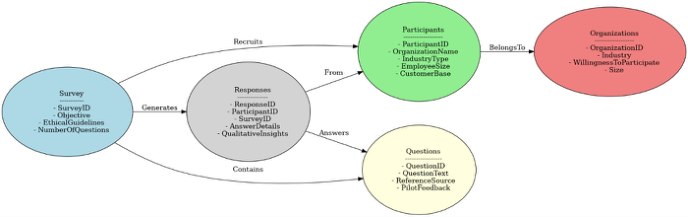
A survey was administered to design experts in several sectors, including architecture, civil and urban planning, manufacturing, electronics, drinks, services, and design consultancies, to attain this purpose. The poll adhered to the ethical standards of the affiliated academic institution. A directory of design firms was established, and cold-call queries were conducted to assess their desire to engage. After an explanation of the study’s objectives, representatives involved in design processes were recruited for participation. The mind map (Figure 1) illustrates the central themes of the study, encompassing methodology, industry-specific insights, key drivers, and the level of awareness regarding inclusive design terminology. The Entity Relationship Diagram (ERD) provides a visual representation of the interconnections between survey components, participant groups, and responses within the context of the study on inclusive design (Figure 2). For the purpose of data collection a questionnaire was developed with reference to the method employed in the Engineering Design Centre’s Inclusive Design survey at the University of Cambridge (Coleman, 2001). Additional questions were included based on U.S. and Japanese studies. A pilot poll showed participants’ inadequate grasp of “inclusive design,” “universal design,” and “design for all.” The questionnaire was amended to include a two-page section defining these terms with examples to fill this gap. Participants were given everyday scenarios like disabled people’s ATM and escalator struggles to improve comprehension.
Figure 2: ERD showing survey, participants, organizations, questions, and responses in inclusive design research.
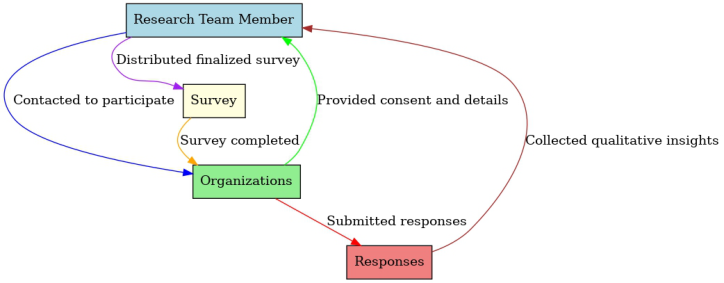
A research team member was available during the survey to address questions and collect additional qualitative insights. The finalized survey
30 Asghar and Hussain
was distributed to a wide range of organizations varying in size, from small businesses with up to 250 employees to large enterprises with over 5,000 employees. Efforts were also made to include organizations with diverse user bases, ranging from 1,000 to over 1 million customers.
A total of 105 responses were collected, representing a diverse cross-section of industries. The study provides valuable insights into the challenges and opportunities of integrating inclusive design and human factors in Pakistan’s industrial sectors while addressing gaps in awareness and implementation.
Figure 3: Sequence diagram depicting the survey process, from distribution to response collection.
RESULTS
Overview of Survey Responses The survey gathered 105 responses from various industries, including architecture, electronics, beverages, manufacturing, and design consultants. These respondents represented diverse organizations, ranging from small firms (up to 250 employees) to large corporations (over 5,000 employees) (Table 1). The companies also served a wide range of customers, from fewer than 1,000 to over 1 million (Table 1).
Table 1: Distribution of employees and customers by company size.
Table available in the original PDF paper.
Number of Employees
Frequency (Employees)
Percent (%) (Employees)
Number of Customers
Frequency (Customers)
Percent (%) (Customers)
22 21.0
Up to 250 23 21.9 Up to 1,000 15 14.3 251–1,000 31 29.5 1,001–10,000 11 10.5 1,001–5,000 28 26.7 10,001–100,000 13 12.4 Over 5,000 23 21.9 100,001–1 Million Total 105 100.0 Over 1 Million 44 41.9 Total 105 100.0
Challenges and Opportunities in Inclusive Design and Human Factors 31
Human Factors and Ergonomics in Inclusive Design The survey also explored the role of Human Factors (HF) and Ergonomics in promoting inclusive design across industries. Respondents highlighted the importance of HF principles, including usability, accessibility, and user- centered design, in addressing the needs of diverse populations.
Ergonomic Considerations in Design: Respondents emphasized that ergonomic interventions, such as designing user-friendly interfaces and adaptable tools, could significantly enhance product inclusivity.
Workplace Integration: Industries like manufacturing and electronics noted that inclusive ergonomic practices in workplaces, such as adjustable workstations and accessible equipment, could improve worker productivity and reduce injury risks.
Human-Centered Solutions: Respondents from architecture and civil planning sectors identified the need for urban infrastructure that accommodates all users, such as barrier-free walkways and accessible public transportation.
The findings revealed that while many organizations acknowledged the importance of HF and Ergonomics, implementation remains inconsistent, with key barriers being a lack of expertise and resource allocation.
Figure 4: Human factors and ergonomics: awareness and implementation.
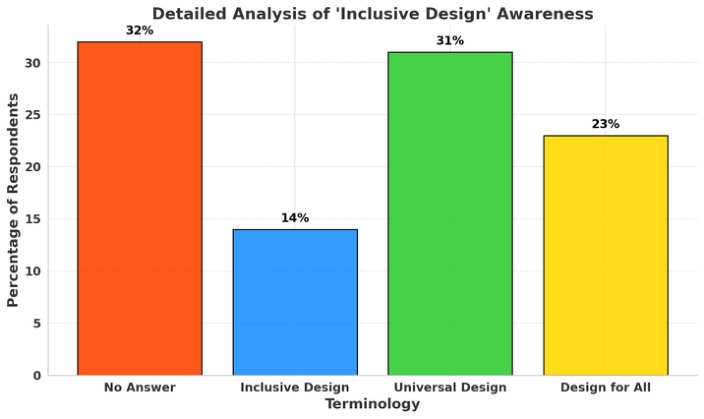
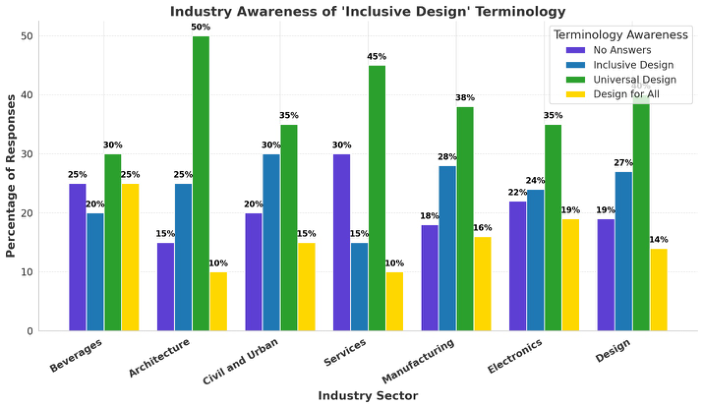
Awareness of Inclusive Design Terminology The survey revealed a significant lack of awareness regarding inclusive design terminology. While 68% of respondents were familiar with “Universal Design,” only 14% recognized “Inclusive Design,” and 23% understood “Design for All.” This lack of awareness was most pronounced in the services
32 Asghar and Hussain
and manufacturing sectors, which demonstrated limited understanding compared to architecture and electronics (Figure 2).
Figure 5: Awareness of inclusive design terminology across industries.
Drivers and Barriers of Inclusive Design Drivers Key drivers identified by respondents included:
Social Responsibility Awareness (Mean: 3.20, SD: 0.89): The most influential driver, emphasizing ethical obligations in design practices.
Innovation and Differentiation (Mean: 3.09, SD: 0.87): Particularly significant in manufacturing.
Human-Centered Approaches: HF and ergonomic principles were recognized as critical for innovation and differentiation in design, highlighting their role in addressing user diversity.
Barriers Prominent barriers included:
Lack of Resources and Guidance (81% agreement): A significant limitation across all sectors.
Perception of Complexity (70.5% agreement): Many respondents believed inclusive design required substantial effort and expertise.
Resistance to Change: Cultural and organizational resistance to adopting new HF and ergonomic practices were noted in traditional industries like manufacturing.
Challenges and Opportunities in Inclusive Design and Human Factors 33
Table 2: Perceived drivers and barriers to inclusive design.
Table available in the original PDF paper.
Category Key Element Agreement (%) / Mean Drivers Social Responsibility Awareness 3.20 (Mean) Innovation and Differentiation 3.09 (Mean) New Market Opportunities 3.13 (Mean) Barriers Lack of Resources/Guidance 81% Perception of Complexity 70.5% Resistance to Organizational Change 72.4%
Figure 6: Drivers and barriers of inclusive design.
Summary The results underscore the importance of integrating Human Factors and Ergonomics into inclusive design practices. Emphasizing usability, accessibility, and workplace ergonomics can drive innovation and improve user experiences across industries. However, significant gaps in awareness and resource allocation remain, requiring targeted efforts to address these challenges and promote HF-based design principles.
DISCUSSION
This study highlights the critical need for inclusive design adoption in Pakistan’s industrial sectors, addressing the challenges and opportunities inherent in the region’s demographic and industrial landscape. Similar to global trends, changing demographics in Pakistan, including an aging population and a significant percentage of individuals with disabilities,
34 Asghar and Hussain
underscore the importance of promoting inclusive design methodologies to ensure safe, accessible, and equitable environments.
Awareness of Inclusive Design The study found that awareness of inclusive design terminology remains a significant challenge, with only 14% of respondents recognizing the term “Inclusive Design.” “Universal Design” was the most familiar concept, with 31% awareness, while “Design for All” was understood by 23% of respondents. These findings suggest a widespread lack of knowledge, particularly in sectors such as services and manufacturing, where understanding of inclusive design was negligible. Efforts to increase awareness through targeted training and information dissemination are essential for fostering inclusive practices.
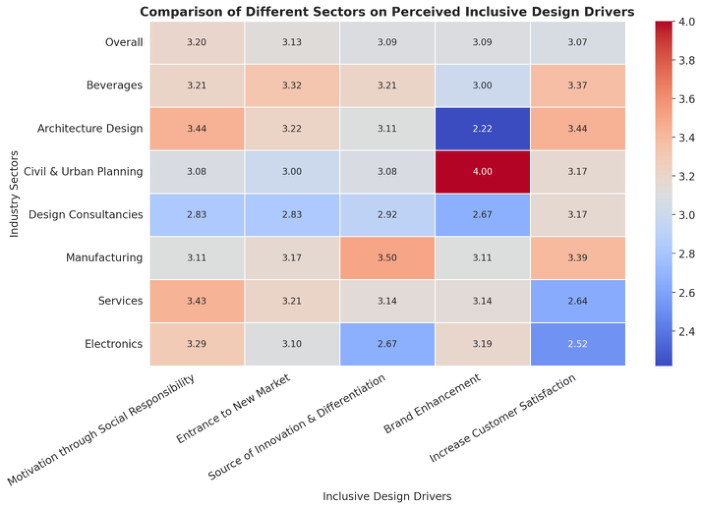
Drivers of Inclusive Design Motivation through social responsibility (Mean: 3.20, SD: 0.89) emerged as the most influential driver, reflecting the ethical imperative recognized by respondents. Other significant drivers included market entry opportunities (Mean: 3.13), innovation and differentiation (Mean: 3.09), and brand enhancement (Mean: 3.09). These findings align with international studies from the UK, USA, and Japan, emphasizing the global relevance of these factors.
Sectoral variations were notable:
Civil and Urban Planning: Brand enhancement was prioritized as the most significant driver.
Manufacturing: Innovation and differentiation ranked highest, indicating the sector’s focus on product development.
Beverages: Customer satisfaction and demographic trends were key motivators.
Despite the importance of these drivers, consumer dissatisfaction and exclusion metrics were perceived as less critical, indicating a lack of mechanisms for assessing user needs and market gaps.
Barriers to Inclusive Design The most prominent barriers identified were:
Lack of Resources and Guidance: Cited by 81% of respondents, this barrier reflects the limited availability of tools, training, and expert consultation necessary to implement inclusive design practices.
Lack of Awareness: Highlighted by 78.1% of respondents, particularly in sectors such as civil and urban planning, where awareness initiatives are urgently needed.
Cultural and Organizational Resistance: Difficulty in changing established business practices (72.4%) and a perception that inclusive design is complex (70.5%) hinder progress.
Challenges and Opportunities in Inclusive Design and Human Factors 35
Some respondents perceived inclusive design as compromising aesthetics (41.9%) or as an unachievable goal (23.8%). These misconceptions highlight the need for education and demonstration of the practical benefits of inclusive design.
Recommendations and Broader Implications Promoting inclusive design in Pakistan requires a multi-faceted approach:
Sector-Specific Strategies: Tailored interventions addressing unique drivers and barriers in each industrial sector are essential. For example, emphasizing brand enhancement in civil planning and innovation in manufacturing can maximize impact.
Government and Policy Support: Policies mandating inclusive design, along with incentives for compliance, can help address systemic barriers. Providing resources, guidance, and training opportunities is crucial to empowering organizations.
Awareness Campaigns: Targeted initiatives to increase understanding of inclusive design and its benefits are vital. Highlighting successful examples of inclusive practices can inspire adoption across sectors.
Advancing Human Factors and Ergonomics Integrating human factors and ergonomics into inclusive design practices is key to creating environments that are not only accessible but also efficient and user-centered. By addressing usability, adaptability, and accessibility, inclusive design can foster a culture of innovation and inclusivity.
This study demonstrates the potential for inclusive design to transform industrial practices in Pakistan, offering opportunities to enhance social equity and economic growth. Addressing the identified drivers and barriers will enable organizations to better cater to diverse populations, ensuring that inclusive design is recognized not only as a social responsibility but also as a strategic advantage.
FUTURE WORK
As this project is focused on capturing the perceptions of designers on inclusive design drivers and barriers, working in different industrial sectors of developing countries such as Pakistan, India, China and Bangladesh. future work will be focusing on collecting the data from other countries including China and India as they are covering a major portion of the population in developing countries. The authors welcome dialogue with other researchers wishing to collaborate in future studies.
ACKNOWLEDGMENTS
The authors acknowledge the valuable contributions of industry professionals and experts whose insights have informed this study. The data underpinning this research reflects extensive engagement with key stakeholders, whose experiences have been instrumental in shaping the findings. This work also builds on prior efforts in the field, drawing from
36 Asghar and Hussain
established methodologies and sectoral knowledge to advance the discourse on inclusive design.
REFERENCES
British Standards Institute. (2005). Inclusive Design: Managing Inclusive Design. Coleman, R. (2001). Inclusive Design: Design for the whole population. Springer. Courtney-Long, E. A., Carroll, D. D., Zhang, Q., Stevens, A. C., Griffin-Blake, S., Armour, B. S., & Campbell, V. A. (2015). Prevalence of disability and disability type among adults—United States, 2013. Morbidity and Mortality Weekly Report, 64(29), 777–783. https://doi.org/10.15585/mmwr.mm6429a2 CIA World Factbook. (2014). The World Factbook: Demographic statistics. Central
Intelligence Agency. Retrieved from https://www.cia.gov/the-world-factbook/. Erickson, W., Lee, C., & von Schrader, S. (2020). Disability statistics from the 2019 American Community Survey (ACS). Cornell University Disability Statistics. Retrieved from https://disabilitystatistics.org. Goodman, J., Dong, H., & Clarkson, J. (2006). Barriers and drivers of inclusive
design in the UK. Design Studies, 27(5), 602–622. Grammenos, S., Priestley, M., & Watson, N. (2022). European Comparative Data on Persons with Disabilities. European Commission. https://ec.europa.eu Hussain, S., Sanders, E. B.-N., & Steinert, M. (2012). Participatory design
with marginalized people in developing countries: Challenges and opportunities experienced in a field study in Cambodia. International Journal of Design, 6(2), 91–109. Hussain, S., Sanders, E. B.-N., & Steinert, M. (2015). Inclusive design in the context of developing nations. Design Issues, 31(2), 67–79. https://doi.org/10.1162/desi_a_00323 Imrie, R., & Luck, R. (2014). Designing inclusive environments. Routledge. Komashie, A., Ward, J. R., & Clarkson, P. J. (2021). Systems approaches to inclusive design: Integrating human factors in developing countries. Ergonomics, 64(3), 343–357. https://doi.org/10.1080/00140139.2020.1861417 Kobayashi, M., Sato, K., & Takahashi, K. (2021). Universal design in Japan: Progress
and challenges. Journal of Accessibility and Design for All, 11(2), 128–145. Mitra, S., Posarac, A., & Vick, B. (2017). Disability and poverty in developing countries: A multidimensional study. World Development, 104, 199–211. https://doi.org/10.1016/j.worlddev.2017.02.005 Preiser, W. F. E., Smith, K. H., & Baird, G. (2015). Universal Design Handbook.
McGraw Hill. Sanders, E. B.-N., & Stappers, P. J. (2008). Co-creation and the new landscapes of design. CoDesign, 4(1), 5–18. https://doi.org/10.1080/15710880701875068 Shinohara, K., & Wobbrock, J. O. (2011). In the shadow of misperception:
Assistive technology use and social interactions. Proceedings of the SIGCHI Conference on Human Factors in Computing Systems, 705–714. https://doi.org/10.1145/1978942.1979044 United Nations. (2019). World Population Prospects 2019: Highlights. Department of Economic and Social Affairs, Population Division. https://population.un.org/ wpp United Nations. (2022). World Population Prospects 2022. United Nations Department of Economic and Social Affairs. U.S. Census Bureau. (2024). American Community Survey (ACS), 2016–2020 five-
year estimates. Retrieved from https://www.census.gov.
Challenges and Opportunities in Inclusive Design and Human Factors 37
Wildenbos, G. A., Peute, L. W., & Jaspers, M. W. M. (2018). A framework for evaluating mHealth tools for older patients on usability. International Journal of Medical Informatics, 114, 66–75. https://doi.org/10.1016/j.ijmedinf.2018. 03.012 World Bank. (2021). World Development Indicators 2021. The World Bank
Group. World Health Organization [WHO]. (2021). Disability and health. Retrieved from https://www.who.int/news-room/fact-sheets/detail/disability-and-health.
LISTED IN THE AHFE DIGITAL BOOKSTORE CATALOGUE
Explore the complete digital volume
Design for Inclusion
Read this individual research paper free through the original publisher, or explore the full digital proceedings book.
ISBN 978-1-964867-45-8
Explore this ISBN in the AHFE Bookstore ↗Listed in the July 2026 bookstore catalogue; search by ISBN to confirm current availability · Digital book purchase optional