Masayuki Ihara, Hiroko Tokunaga, Tomomi Nakashima, Hiroki Goto, Yuuki Umezaki, Yoko Egawa, Shinya Hisano, Takashi Minato, Yutaka Nakamura, Shinpei Saruwatari (2025). Evolving the narrative utilization ecosystem with life story interpretation and generative AI tools. In: Human Factors in Aging and Special Needs. AHFE Open Access, vol. 174, pp. 45–58. https://doi.org/10.54941/ahfe1006293
In nursing care, providing high-quality, individualized care requires a deep understanding of each care recipient’s narratives (Guendouzi et al. 2015). These narratives are rarely recorded or organized for practical use, making it challenging for novice care workers to effectively incorporate them into caregiving. To address these issues, we propose a “narrative utilization ecosystem” aimed at improving the quality of nursing care services (Ihara et al. 2025). This paper outlines the proposed ecosystem and presents case studies for collecting and analyzing narrative fragments by revisiting familiar locations from the care recipient’s past. Additionally, we define the requirements for prompt engineering of a generative AI-based care advisory tool that provides advice grounded in person-centered care principles (Kitwood et al. 1992).The proposed narrative utilization ecosystem consists of three core components: collecting narratives, analyzing them, and applying them in caregiving settings. Narrative fragments are often gathered during initial assessments when a care recipient begins using nursing services. Daily conversations are another common method for collecting narratives. For individuals with dementia, opportunities to recall and share old memories are especially valuable. To facilitate this, we conducted case studies in which an individual with dementia walked with an accompanying care worker around familiar locations, such as former homes, schools or playgrounds. During these walks, we recorded their conversations and the scenery they observed. In one-hour walking sessions, the care recipient spoke for approximately 10 minutes. Out of 165 recorded utterances, 84 were brief responses like “Yeah, that’s right,” and 33 were expressions of uncertainty, such as “I don’t know,” referring to directions or places. However, we also gathered meaningful narrative fragments, including 11 statements related to location recognition (e.g., “There was company housing beyond here”) and 9 observations about vacant homes (e.g., “No one lives there anymore”). This approach encouraged storytelling by prompting the care recipient with questions linked to shared visual cues, enabling the construction of richer narratives from the collected fragments. Analysis revealed that asking questions to reaffirm the past, rather than replaying it, was particularly effective in eliciting narratives from individuals with dementia.When designing generative AI tools for handling narratives, it is essential to prioritize the emotional sensitivity of individuals with dementia and minimize burden on care workers. Through discussions with dementia care and AI experts, we identified key design requirements, including the ability to adapt to the recipient’s daily mood and fatigue levels, considering the current rapport between care workers and recipients, and avoiding both labeling care recipients with dementia and blaming failures in care on dementia.Our future work will focus on developing AI tools that meet these requirements and testing them in real-world care settings. We also plan to continue collecting and structuring additional narrative fragments to enhance the ecosystem's effectiveness.Guendouzi, J. et al. (2015). Expanding Expectations for Narrative Styles in the Context of Dementia. Topics in Language Disorders. 35. 237-257. 10.1097/TLD.0000000000000061.Ihara, M. et al. (2025). Narrative Utilization Ecosystem for Person-Centered Care. Proc. of Intelligent Human Systems Integration: Integrating People and Intelligent Systems (IHSI 2025). (to appear)Kitwood, T. et al. (1992). Towards a theory of dementia care: Personhood and well-being, Ageing and Society, 12(3), 269-287.
It is important for care workers to understand the narratives of each care recipient, i.e., the background and stories of their lives, in order to provide high-quality individualized care (Guendouzi et al., 2015). However, the fragments of narratives obtained in the caregiving setting are often only usable by skilled care workers. Recording and sharing these narrative fragments so that the entire care team, including novice care workers, can utilize them has proven difficult. Generative artificial intelligence (GAI) is a promising solution, and its applications have led to increased applications in healthcare. GAI, which can present information from multiple perspectives based on large datasets, has various potential uses, such as advising care workers on possible reasons for care refusal by care recipients. We evolve the narrative utilization ecosystem proposed in our previous paper
(Ihara et al., 2025) by incorporating GAI tools. This paper outlines the ecosystem and presents two case studies: one on narrative collection through walks with care recipients with dementia in familiar areas and one on defining the requirements for developing GAI tools. Through the analysis of these case studies, we discuss the evolution of the proposed ecosystem and its potential use in caregiving settings.
ISSUES ADDRESSED Person-Centered Care
The principle of person-centered care emphasizes having a deep understanding of care recipients (Kitwood et al., 1992), primarily in specific healthcare contexts (Håkansson et al., 2019). In healthcare, a user- centered approach is often used to meet the individual needs of patients (Pais, 2020; MacCaull et al., 2010). However, in caregiving settings, efficiency may sometimes take priority over this user-centered approach due to the care workers’ workload or lack of experience. Staff shortages increase the workload and mental burden of care workers, and they may prioritize task efficiency over understanding the feelings of the care recipients, leading to inadequately individualized care (Ihara et al., 2023).
Collecting Narratives From People With Dementia Narratives are often not fully utilized in care practices. There are various factors at play, such as challenges on the care recipient’s side (e.g., lack of rapport, leading to reluctance to disclose) and on the care worker’s side (e.g., excessive workload, varying communication skills among workers). Narrative fragments are typically obtained from initial assessments when care recipients first use care services or from conversations in daily care. The initial assessment is conducted through interviews with the care recipient and family members who know the recipient well, and the information is recorded on a standardized form. However, many items on these forms are for recording basic attributes like hobbies, with few sections for recording detailed life episodes or the underlying values behind them. Due to dementia making it difficult to recall past memories, the narratives that can be collected from daily conversations at the care facility are limited. Moreover, care workers are often too busy to take notes during every time their care recipients speak.
Use of Generative AI With the spread of ChatGPT, the use of GAI has become more commonplace, and experts in healthcare have been reviewing its potential (Rodriguez et al., 2024). Care workers in dementia care have also evaluated the responses of ChatGPT in a previous study (Aguirre et al., 2024). Examples of using GAI to support care workers include chatbots (Espinoza et al., 2023) and tools that address both the care worker’s intentions and the care recipient’s profile (Hasan et al., 2024). In addition, the motivational effects of GAI have been analyzed (Sung et al., 2025). However, when using GAI for caregiving, the core principle of care, respecting dignity and supporting
Evolving the Narrative Utilization Ecosystem 47
independent living, should not be neglected. It is essential to consider the various aspects associated with the use of GAI. Previous studies have analyzed the safety of patients and person-centered care from an ethical perspective (Hoelscher et al., 2024), the need for integrating GAI support with human feedback (Sezgin et al., 2024), the importance of empowering people with dementia through GAI and considering societal attitudes (Souval et al., 2025), and highlighted issues of bias, privacy, and transparency (Treder et al., 2024). As indicated in these studies, a cautious approach is required when using GAI. Although many cases focus on enhancing productivity through GAI, there is an ongoing debate about balancing person-centered care with operational efficiency, and the so-called “productivity paradox” regarding GAI technology (Wachter et al., 2024). To create a GAI tool that provides dementia care advice based on a deep understanding of the care recipients, this paper introduces the preliminary results of defining system requirements based on discussions with experts in person-centered care.
NARRATIVE UTILIZATION ECOSYSTEM System Components
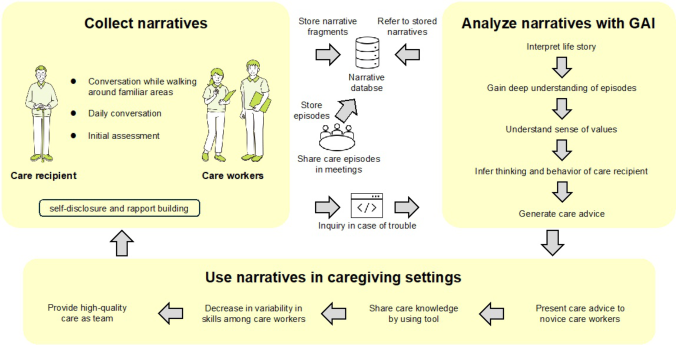
Narratives are an effective approach to improving dementia care (Elfrink, 2023; Heersmink, 2022; Hughes, 2014; Randall, 2016). We aim to improve the rapport between care workers and care recipients, encourage further self- disclosure from the recipients, and collect more narratives by providing care services tailored to the recipients’ values. Our ecosystem consists of three components: narrative collection, narrative analysis with GAI, and the use of narratives in caregiving settings (Figure 1).
Figure 1: Narrative utilization ecosystem.
In the narrative collection, narrative fragments are gathered through not only initial assessments and daily care but also conversations in familiar areas such as a hometown. The results of the initial assessments are recorded on sheets and stored in the narrative database. Narrative fragments obtained
in daily care are also stored in the same database through sharing care episodes during regular team meetings. Speech recognition and transcription technologies are used to convert these spoken narratives into text. Similarly, conversations between care workers and recipients recorded during the walks are stored in the database. In the narrative analysis component, the collected fragments are analyzed by GAI. Using a set of rules based on care recipients’ personal backgrounds and values, the system can detect their needs from the narratives and provide care advice. The care workers utilize the analyzed narratives to understand the care recipient’s preferences, values, and needs to provide high-quality, individualized care and support the care recipient’s independent living.
This paper analyses those components of the narrative utilization ecosystem through two case studies to explore the feasibility of the ecosystem.
Narrative Collection Through Walking in Familiar Areas Even for people with dementia, who struggle with recalling the past, having conversations while walking in familiar locations allows them to remember past experiences through visual and auditory stimuli as well as the overall atmosphere of the surroundings (Odzakovic et al., 2020). We expected care recipients to be stimulated by familiar locations to recall memories and to talk about the people, objects, and events that were important to them in the past. However, to achieve this, given that individuals with dementia are often elderly and experience declining cognitive and physical abilities, collecting narratives through outdoor activities requires strict attention to safety and health considerations.
Deep Understanding of Life History The speech of individuals with dementia tends to be fragmented and scattered, making it necessary to combine these fragments to interpret their life stories. A deep understanding of care recipients’ past experiences makes easier to grasp their underlying values. Understanding these values provides an advantage in daily care, as it helps predict their thought patterns and behavioral motivations (Miller et al., 2019).
Development of Generative AI Tools Conventional GAI typically estimates behavioral motivations based on rational and commonsense reasoning. In reality, human thoughts and behaviors are influenced by individuality and values shaped by life history, making rationality and commonsense knowledge alone insufficient. To address this issue, our AI tools utilize collected narratives while also incorporating knowledge from person-centered care experts.
CASE STUDY: NARRATIVE COLLECTION Experiment Overview
To collect narratives in areas that facilitate memory recall, we conducted an experiment in which a person with dementia walked through places he had
Evolving the Narrative Utilization Ecosystem 49
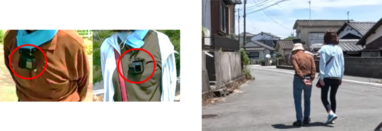
previously lived in or visited, accompanied by a care worker. The participant was an 87-year-old man who uses the Living Aeru care facility in Omuta City, Japan and had been diagnosed with Alzheimer’s-type dementia. He was certified as requiring care level 2 on a five-point scale in Japan (5 is the highest level of care required). The participant was encouraged to talk about past experiences based on the scenery while walking and in response to questions from the care worker. The participant and the care worker wore a video camera, and they followed a predetermined route while recording both the surrounding scenery and their conversation as video files (Figure 2). The accompanying care worker used both the scenery they could see and knowledge about the participant from daily care to encourage him to talk about past episodes, but sometimes he responded and sometimes he did not. All their conversations and scenes while walking were recorded by the video cameras. To prepare for unexpected problems, two experimenters walked behind the participant and care worker.
Figure 2: Narrative collection (L: wearing video camera, R: walking in familiar area).
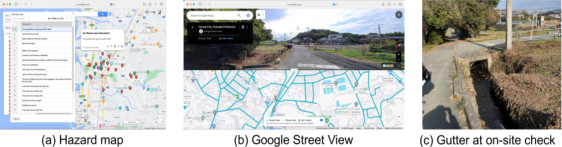
Risks of Walking Outdoors With Individuals With Dementia We identified the potential health and safety risks of walking outdoors with a person with dementia through an assessment conducted by dementia care experts and defined appropriate countermeasures for each risk (Table 1). Additionally, we analyzed a map of the experiment area and identified hazardous locations, such as intersections without traffic lights (Figure 3 (a)). To prepare for situations where the participant might become agitated or fail to follow the care worker’s instructions, we also established specific criteria for terminating the experiment, for example, if the participant crossed a particular bridge leading into an unfamiliar town. Furthermore, in addition to verifying the walking route through Google Street View (Figure 3 (b)), we conducted an on-site check to identify potential hazards such as gutters and steep slopes (Figure 3 (c)), which are difficult to detect in online maps. The details of our risk management can be found in our previous research (Ihara et al., 2024).
Table 1: Risks of walking outdoors with people with dementia.
Table available in the original PDF paper.
Risk Remarks Countermeasures Awareness of situation Accompanying care worker assists as needed.
Unable to properly understand surrounding situation Unable to understand where they are Forgets route taken Forgets purpose of going out and does not achieve it Auditory perceplion Cannot hear surrounding environmental sounds Does not notice car horn
Accompanying staff stops them.
Establish criteria for discontinuing experiment, such as exceeding area boundaries, abnormal emotional states, and not following staff instructions Visit misidentified places
Causes trouble by repeatedly entering same store Causes trouble by entering someone’s home Wear GPS Memory loss Goes missing because they cannot remember where they are
Gap between memory and present
Gets lost because they do not recognize the location after it has changed over the years Assumptions and misunderstandings about landmarks
Ask them in advance for information about places to stop by Determine how much they know about destination Traffic accident
Ignores traffic lights Walks on road instead of sidewalk Other traffic rule violations
Do not stop by store during experiment
Know in advance about traffic violations in their daily life Money management
Unable to shop because they do not have money Unable to calculate total amount needed Steals because they cannot shop Inability to request assistance
Wear GPS Keep help card with contact information in their bag
Does not know how to ask for help Cannot find anyone to rely on, so they keep walking away Tris to manage things on their own because they do not feel bired or anxious Not wearing clothes appropriate for the temperature of that day Clothing inappropriate for weather
No sense of time Follow usual dementia care
Accompanying staff advises them. Prepare communication system in case they feel unwell Going out at night
Evolving the Narrative Utilization Ecosystem 51
Figure 3: Various risk checks for walking route.
Narrative Collection Results The total duration of the recorded conversation in the video files was 70 minutes. The dialogue between the participant and the care worker was manually transcribed, and annotations were added using the ELAN annotation tool developed by the Max Planck Institute for Psycholinguistics. The total speaking time of the participant was approximately 10 minutes, the details of which are summarized in Table 2.
Among the 165 recorded utterances, 84 were short responses such as “Yeah, that’s right,” while 33 were statements indicating disorientation, such as “I don’t know,” which reflected his inability to recognize his current location or direction. However, meaningful narrative fragments were also collected. There were 19 utterances in which he recalled past memories. Additionally, there were 11 comments related to place recognition, such as “There was company housing beyond here,” and 9 comments regarding empty houses, such as “No one lives there anymore.”
Table 2: Category and frequency of subject’s utterances.
Table available in the original PDF paper.
Category of Utterance Frequency Example
2 Can you still walk?
Short response 84 Yeah. Unable to understand location or route 33 I don’t understand. Old memories 19 I used to swim here. Able to understand location or route 11 There were company houses here. Impressions about empty houses 9 No one lives here anymore. Looking for someone to ask directions 4 Is there someone who can help? Checking surroundings 3 What is that? Consideration for accompanying care worker
CASE STUDY: DESIGN OF A GENERATIVE AI TOOL Requirement Definition
When designing a GAI tool for handling narratives, it is important to prioritize the feelings of people with dementia and minimize the burden on care workers. To develop a tool that meets these requirements, we held workshops with experts of dementia care and AI to extract important perspectives for the design and to define requirements.
Table 3: Results of requirement definition.
Table available in the original PDF paper.
Category Requirements System Implementation Respect for individuals Utilize narratives of individuals Individual narrative database (Core part) Consider daily changes in condition of individuals
Individual narrative database (History of changes in mental/physical state) Accept unique behaviors of individuals rather than making common-sense judgments
Person-centered care guideline
Core: Large-scale language model of GAI Additional: Person-centered care guideline Do not attribute problems to dementia Encourage long-term behavioral changes Dialogue with care recipient
Confirm mutual understanding with individual Provide gradual advice that helps expand care worker’s thinking Utilization of information and knowledge
Staff consideration guideline
Utilize expert knowledge Core: Large-scale language model of GAI Additional: Expert knowledge database Considerations for staff
Consider benefits and burdens to staff
Care provider’s policies file
Provide advice aligned with care provider’s policies
Consider rapport between staff and individuals Improve operational efficiency Enhance staff skills Considerations for care service company Consider negative impact on surroundings
Large-scale language model of GAI As shown in Table 3, the requirements were classified into five categories: respect for the individual, dialogue with the care recipient, utilization of information and knowledge, considerations for staff, and considerations for a care service company. Regarding respect for the individual, it is necessary to consider daily fluctuations in the care recipient’s condition such as mood and fatigue, and to avoid blaming dementia as the cause of care failure. Regarding dialogue with the care recipient, the tool should align with the recipient’s pace, check if communication is effective during the conversation, and provide incremental advice for care workers. Regarding the utilization of information and knowledge, it is important to control sensitive information
Evolving the Narrative Utilization Ecosystem 53
such as details about a disease, and reference medical and psychological knowledge. Regarding considerations for staff, the AI should adjust its advice based on the current level of rapport between the care worker and recipient. Finally, regarding considerations for the care service company, the tool should align with the company’s policies while also considering the negative impact on other users at the facility.
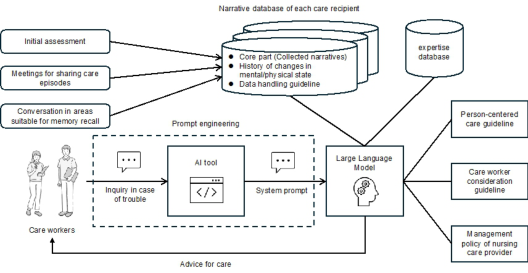
System Configuration We organized the methods for implementing each defined requirement and created a system architecture diagram (Figure 4). The narrative database for each care recipient consists of three components: core part of information gathered from their life history, past experiences, and circumstances; a history of changes in their daily mood and fatigue; and guidelines for handling sensitive information. For respecting the individual, the narrative database and the large-scale language model (LLM) of GAI alone are not sufficient. While LLMs are effective for general person-centered care, the insights obtained from discussions based on the knowledge and experience of person- centered care experts may not always align with general common sense, so these insights should be defined separately as a person-centered care guideline. For example, the discussions on extracting important perspectives or insights from narratives gathered during walks in familiar areas should be stored in the person-centered care guideline. The LLM alone may not be sufficient for consideration of care workers such as current rapport between the care worker and recipient, so it should be defined as a separate guideline as well. Regarding the care service company, the company’s policies should be articulated and organized into a management policy file. Lastly, while it may eventually be possible to address some medical and psychological aspects using LLMs, expert knowledge may be required, so a separate expert knowledge database will be prepared.
Figure 4: System architecture diagram of GAI tool.
DISCUSSION
Interpretation of Life History This section attempts to interpret the life story of a care recipient based on the narratives collected during a walk experiment in familiar areas. Among the statements obtained in the experiment were comments about empty houses in the town and a lost coal mine train. Combining these statements with other narrative fragments obtained during daily care makes it possible to gain deeper insights of his life story. For example, the care recipient may have felt uncomfortable because the town is not as lively as it used to be, when the coal mining industry was still active and the roads were crowded with playing children. Pragmatically interpreting the statement “There are many empty houses,” it becomes possible to understand the care recipient’s feeling of sadness about the loss of a once vibrant town. In another example, the care recipient might reflect on how he used to wave to the train his father drove when he was a coal mine train driver, but now that train no longer exists. A pragmatic interpretation of his statement “It’s because that train is gone,” while pointing to the train tracks, reveals his disappointment about the train that provided many happy memories no longer being around. The first episode highlights the effect of the walk in familiar areas, as it allows him to sense the atmosphere of the surroundings, such as the many empty houses and the absence of people walking on the street. The second episode shows the effect of discussing past experiences while pointing at familiar landmarks. During the walk, there were cases where care workers facilitated joint attention to the visible scenery or buildings and asked probing questions that could be answered with “yes” or “no,” which promoted the care recipient to narrate past memories. In one observed example, the care worker prompted joint attention to a kindergarten building by saying, “Look, there is the kindergarten,” and by repeating the question, the care recipient shared a story: “There used to be a kindergarten only for children whose parents worked in the coal mining company’s housing, and I went there.” For people with dementia, questions aiming to bring back memories of the past are difficult to answer, whereas questions that prompt recognition of the past are easier to respond to. Even if the person’s conversation abilities have declined, presenting information that helps recognition through joint attention and repeating probing questions can encourage them to share their narrative.
The experimental results showed that it is possible to collect narrative fragments from people with dementia to interpret their life stories. By storing these fragments in a database and implementing a system architecture that allows GAI to refer to the database, it will be possible to provide care advice based on the narrative (See Figures 1 and 4).
Utilization of GAI Tools in Caregiving Settings We first discuss the division of roles among GAI, care workers, and experts. Speech recognition and automatic transcription technologies are used to transcribe speech to text at meetings where care workers share care episodes, but many incorrect sentences arise due to the informal style of
Evolving the Narrative Utilization Ecosystem 55
spoken language and dialects. However, GAI excels at ignoring incorrect sentences, prioritizing and extracting necessary parts, and classifying them as care advice. The errors from the automated recognition can also be easily identified by the care workers. This suggests that GAI tools do not need to provide perfect advice; they can be used as a supplement to the care workers’ understanding, as long as they assist the care workers’ decision-making process. In addition, GAI has the flexibility to focus on certain aspects of the event to analyze, organize information accordingly, and present results to the user in a particular way. Therefore, when providing advice to care workers in caregiving settings, it is crucial to design the prompts in a way that benefits both the care recipient and the care worker. Expert knowledge is required in this prompt engineering process.
Next, we discuss the three main situations in which the GAI tool can be utilized to a care worker. The first is when the care recipient refuses assistance in front of the care worker, and the care worker is currently struggling with the situation. The second is when the care worker uses the GAI tool during free time to reflect on their own care practices. The third is when the care worker uses AI as a supplementary tool for learning in a group setting. In the first situation, the care worker may need to make quick decisions, so the advice from the GAI tool should be presented in a concise manner with carefully selected options to ensure fast comprehension. When the situation is not urgent, as mentioned in the requirement definition in Table 3, the tool can provide gradual advice that helps expand the care worker’s thinking. In the second situation, where the care worker can take more time to read and understand information, providing advice from multiple perspectives with a bit more detail is effective. In the third situation, in addition to being a tool for supporting training events, the GAI can also serve as a facilitator in meetings where care episodes are shared. For example, when a care worker shares their struggles with care, the GAI could bring up psychological insights of the care recipient and possible effective care methods for discussion, enhancing the educational effect for meeting participants.
CONCLUSION
In this paper, we have investigated the use of GAI to collect the narratives of people with dementia to help care workers better understand their care recipients and provide more individualized care. Our key contributions are threefold. First, we designed and implemented an experiment to collect narrative fragments safely and effectively from care recipients with dementia through risk management and probing questions that assist recognition. As a result, we demonstrated the potential to collect narrative fragments during special occasions such as walking around familiar places. Second, we demonstrated through analysis that integrating narrative fragments obtained from various situations allows for a deeper understanding of the care recipients’ life histories. This integration is valuable as it offers an effective approach to providing sensitive care for individuals with dementia, who are often less likely to self-disclose. Third, we defined the
requirements for a GAI tool for narrative utilization that is not feasible with LLMs alone and discussed its application in caregiving settings. This marks an important step toward the development of a practical GAI tool grounded in the principle of person-centred care. The limitations of this study include insufficient consideration of ethical issues and the narrative analysis based on only one care recipient. However, the experiment and analysis presented can be considered valuable examples for gaining a deeper understanding of people with dementia. The design example of the GAI tool can also serve as a reference for future uses of GAI in the caregiving field. Future work includes increasing the number of case studies of narrative analysis and further specifying the components of the GAI tool’s system configuration, and evaluating the effectiveness of the care advice provided by the tool.
ACKNOWLEDGMENT
We would like to thank the employees of the nursing facility Living Aeru for cooperating in the experiment.
REFERENCES
Aguirre, A., Hilsabeck, R., Smith, T., Xie, B., He, D., Wang, Z., Zou, N. (2024).
Assessing the Quality of ChatGPT Responses to Dementia Caregivers’ Questions: Qualitative Analysis. JMIR Aging; 7: e53019. https://doi.org/10.2196/53019 Elfrink, T. (2023). Exploring Life Story Books in Dementia Care: the potential of digital reminiscence interventions. [PhD Thesis - Research UT, graduation UT, University of Twente]. University of Twente. https://doi.org/10.3990/ 1.9789036558143 Espinoza, F., Cook, D., Butler, C. R. et al. (2023). Supporting dementia caregivers in
Peru through chatbots: Generative AI vs structured conversations. https://doi.org/ 10.14236/ewic/BCSHCI2023.11 Guendouzi, J., Davis, B., Maclagan, M. (2015). Expanding Expectations for Narrative Styles in the Context of Dementia. Topics in Language Disorders. 35, pp. 237–257. https://doi.org/10.1097/TLD.0000000000000061 Håkansson Eklund, J., Holmström, I. K., Kumlin, T., Kaminsky, E., Skoglund, K.,
Höglander, J., et al. (2019). “Same same or different?” A review of reviews of person-centered and patient-centered care, Patient Educ. Couns., 102(1), pp. 3–11. https://doi.org/10.1016/j.pec.2018.08.029 Hasan, W. U., Zaman, K. T., Wang, X. et al. (2024) Empowering Alzheimer’s caregivers with conversational AI: A novel approach for enhanced communication and personalized support. npj Biomed. Innov. 1, 3. doi: 10.1038/s44385-024- 00004-8. Heersmink, R. (2022). Preserving Narrative Identity for Dementia Patients: Embodiment, Active Environments, and Distributed Memory. Neuroethics 15, 8. https://doi.org/10.1007/s12152-022-09479-x Hughes, T. (2014). Stories of professional care: Narrative analysis of accounts from
people with dementia. Prof Doc Thesis University of East London School of Psychology. https://doi.org/10.15123/PUB.4063
Evolving the Narrative Utilization Ecosystem 57
Hoelscher, S. H., Taylor-Pearson, K., Wei, H. (2024). Charting the Path: Nursing Leadership in Artificial Intelligence Integration into Healthcare, Nurse Leader, Vol. 22, Issue 6, pp. 763–772, ISSN 1541–4612. https://doi.org/10.1016/ j.mnl.2024.07.011 Ihara, M., Tokunaga, H., Nakashima, T., Saruwatari, S., Goto, H., Umezaki, Y.,
and Motoe, M. (2023). Facilitating Empathy for Care Recipients -Analyzing Care Behaviors Towards Person-Centered Care-. Design, User Experience, and Usability. HCII 2023. Lecture Notes in Computer Science. Vol. 14034. Springer, Cham. https://doi.org/10.1007/978-3-031-35705-3_26 Ihara, M., Tokunaga, H., Nakashima, T., Goto, H., Umezaki, Y., Minato, T., Nakamura, Y., and Saruwatari, S. (2024). Towards Narrative-Based Technology to Assist People with Dementia When Outing, Human Systems Engineering and Design (IHSED 2024): Future Trends and Applications, Vol. 158, pp. 1–10. Ihara, M., Tokunaga, H., Nakashima, T., Goto, H., Umezaki, Y., Minato, T.,
Nakamura, Y., Saruwatari, S. (2025). Narrative Utilization Ecosystem for Person- Centered Care, Intelligent Human Systems Integration (IHSI 2025): Integrating People and Intelligent Systems, Vol. 160, pp. 1–11. Kitwood, T., Bredin, K. (1992). Towards a theory of dementia care: Personhood and well-being, Ageing and Society, 12(3), pp. 269–287. MacCaull, W., Jewers, H., Latzel, M. (2010). Using an interdisciplinary approach
to develop a knowledge-driven careflow management system for collaborative patient-centred pal-liative care, In: Proceedings of the 1st ACM International Health Informatics Sympo-sium (IHI ‘10), pp. 507–511, ACM, New York, NY, USA. https://doi.org/10.1145/1882992.1883073 Miller, L. M., Whitlatch, C. J., Lee, C. S., Caserta, M. S. (2019). Care Values in Dementia: Patterns of Perception and Incongruence Among Family Care Dyads. The Gerontologist, 59(3), pp. 509–518. https://doi.org/10.1093/geront/gny008 Odzakovic, E., Hellström, I., Ward, R., Kullberg, A. ‘Overjoyed that I can
go outside’: Using walking interviews to learn about the lived experience and meaning of neighbourhood for people living with dementia. Dementia. 2020;19(7):2199–2219. https://doi.org/10.1177/1471301218817453 Pais, S. (2020). Integrating Patient-Generated Wellness Data: A User-Centered Approach, In: Proceedings of the Australasian Computer Science Week Multiconference (ACSW ‘20), Article 35, pp. 1–8, ACM, New York, NY, USA. doi: 10.1145/3373017.3373052 Randall, W. (2016). Narrative Environments for Narrative Care: The Need to Honor
People’s Stories. International Journal of Human Caring. 20, pp. 1–4. https:// doi.org/10.20467/1091-5710-20.3.142 Rodriguez, D., Lawrence, K., Gonzalez, J., Brandfield-Harvey, B., Xu, L., Tasneem, S., Levine, D., Mann, D. (2024). Leveraging Generative AI Tools to Support the Development of Digital Solutions in Health Care Research: Case Study. JMIR Hum Factors; 11: e52885. https://doi.org/10.2196/52885 Sezgin, E., McKay, I. (2024). Behavioral health and generative AI: A perspective on
future of therapies and patient care. npj Mental Health Res 3, 25. https://doi.org/ 10.1038/s44184-024-00067-w Souval, H. D., Haber, Y., Tal, A., Simon, T., Elyoseph, T., Elyoseph, Z. (2025).
Transforming Perceptions: Exploring the Multifaceted Potential of Generative AI for People With Cognitive Disabilities. JMIR Neurotech; 4: e64182. doi: 10.2196/ 64182.
Sung, G., Guillain, L., Schneider, B. (2025). Using AI to Care: Lessons Learned from Leveraging Generative AI for Personalized Affective-Motivational Feedback. Int. J. Artif. Intell. Educ. https://doi.org/10.1007/s40593-024-00455-5 Treder, M. S., Lee, S., Tsvetanov, K. A. (2024). Introduction to Large Language
Models (LLMs) for dementia care and research. Frontiers in dementia, 3, 1385303. https://doi.org/10.3389/frdem.2024.1385303 Wachter, R. M., Brynjolfsson, E. (2024). Will Generative Artificial Intelligence Deliver on Its Promise in Health Care? JAMA. 331(1): pp. 65–69. doi: 10.1001/ jama.2023.25054.
LISTED IN THE AHFE DIGITAL BOOKSTORE CATALOGUE
Explore the complete digital volume
Human Factors in Aging and Special Needs
Read this individual research paper free through the original publisher, or explore the full digital proceedings book.
ISBN 978-1-964867-50-2
Explore this ISBN in the AHFE Bookstore ↗Listed in the July 2026 bookstore catalogue; search by ISBN to confirm current availability · Digital book purchase optional