Bankole Fasanya, Efrem Reeves, Precious Fasanya (2025). Empirical Analysis of Earbud Output Levels Across Various Devices for User Safety. In: Safety Management and Human Factors. AHFE Open Access, vol. 189, pp. 84–94. https://doi.org/10.54941/ahfe1006573
Earbuds are recognized for their ability to eliminate or reduce surrounding noise, allowing users to concentrate on specific tasks. However, this primary function can be compromised by introducing additional hazards when used across multiple devices. This study examines the variability in decibel (dB) outputs of a single pair of earbuds across three different devices while maintaining the same volume setting. The earbuds chosen for this investigation were the Billboard model, commonly used on airlines, and tested with a laptop, desktop, and a cell phone. To measure the output of the earbuds, a GRAS 45CB Acoustic Test Fixture was employed. All devices were procured from a retail store to simulate typical product usage. Data collection took place in a controlled acoustic laboratory. The results indicated that, at each tested volume level, the average difference in dBA between the left and right ear was 3 dBA or more. Furthermore, the analysis revealed that 23% of the output readings for the right ears between devices and left ears between devices collected by the GRAS 45CB from the earbuds at volume levels of 20, 40, 60, 80, and 100 across all devices fell below 3 dBA. In contrast, 47% of the output measurements surpassed 10 dBA. Moreover, 30% of the average output differences were recorded at 3 dBA or higher. The National Institute for Occupational Safety and Health (NIOSH) recommends that for every increase of 3 dBA, the recommended exposure time should be halved, which aligns with the just noticeable difference (JND) threshold for human sound detection. The findings from this study reveal that the Billboard earbuds do not provide a consistent output across different devices at the same volume level. Consequently, the researchers advocate for an intervention to standardize the design of earbuds to enhance user safety.
As we often say, hearing is the light of the body, and the loss of it can isolate an individual from their surroundings. With technological advancements, engineers are continually developing innovations to improve life, but sometimes, these technologies intended to promote health and safety may have unintended adverse effects on the human body. While hearing loss may initially seem like a problem affecting only the individual, it extends beyond them, impacting their relatives and neighbors as well. According to
Empirical Analysis of Earbud Output Levels Across Various Devices for User Safety 85
Dehankar and Gaurkar (2022), untreated hearing loss in adults has indirect health, psychosocial, and economic consequences, contributing to social isolation and a decreased quality of life. Furthermore, the costs associated with lost productivity, special education, and medical treatments for hearing, speech, and language disorders can exceed $30 billion annually (NIDCD, 1991). As of 2019, the Johns Hopkins Cochlear Center for Hearing and Public Health reports that approximately 38.2 million Americans (14.3%) experience some degree of hearing loss (Clason, 2009). Lately, the World Health Organization (WHO) issued a concerning report stating that around 1.1 billion young people are at risk of experiencing potentially life-altering hearing loss due to exposure to loud noise. Hearing loss is also on the rise among adolescents, with cases increasing by more than 30% between 1988 and 2006 (Shargorodsky et al., 2010). Study indicates that many young people today are experiencing hearing loss at concerning rates, likely due to prolonged exposure to loud noise (Schessel, 2012). One possible explanation for this trend is highlighted by Fasanya’s (2013) study, where 10% of college students who participated in an audiometric test had their hearing thresholds shift to such an extent their data were excluded from the analysis. This period coincides with the rapid rise of technological advancement, which has led more people to engage in activities that expose their bodies to potential hazards. Whether it’s playing with toys, participating in band practices, or engaging in motorsports, many of these activities fail to adequately assess the associated risks. Research by Mick et al. (2014) and Kim et al. (2009) highlights that noisy toys, band practices, motorsports, and loud environments in theaters and nightclubs can all contribute to hearing damage. Personal music players, typically used with earphones or headphones, produce sound at powerful levels, with maximum volumes ranging from 78–136 dB (Jokitulppo et al., 1997).
Indeed, devices like MP3 players, smartphones, tablets, and computers have become some of the most common sources of music for people across all age groups, from children to adults. Many students use earbuds, believing they help block out surrounding noise and allow them to focus better on their tasks. However, this practice can put their hearing at risk. Technological advancements have enhanced accessibility to cellphones and the regular use of earbuds for individuals in both developed and developing countries, across all generation. Fasanya and Strong, 2018 concluded in their study that about 84% of all respondents in the preliminary survey use earbuds on daily basis. The author further emphasized that the use of earbuds is prevalent among Generations Y and Z. While it is clear that absolute volume and duration of exposure to loud sounds are the primary risk factors for hearing loss, it is also possible that volume settings vary among listeners based on the design of the earbuds whether they are over-ear, in-ear, or on-ear (Thompson, 2012) as well as the type of device to which the earbuds are connected (e.g., laptop, phone, tablet). It is important to note that earbuds are not the sole cause of hearing loss; many factors can contribute to hearing degradation associated with their daily use. These factors include the design of the headphones, their fit, impedance, sensitivity, personal hearing sensitivity, audio processing and
equalization settings, cable length, and the age and condition of the earbuds. Practically, the impact of these variables is relative and contingent upon the connection used. For instance, one model of earbuds connected to three different devices may not exhibit any variability in performance regarding design type, cable length, age, or impedance, as only one earbud type is involved. However, the electric circuitry of earbuds significantly influences voltage inputs; thus, connecting different types of earbuds to the same devices can result in varying outputs. There is a common misconception among the public that a single pair of earbuds should function the same across different devices. The goal of this study is to examine the variability in decibel (dB) outputs of a single pair of earbuds across three different devices while maintaining the same volume setting on all the devices. As such, we hypothesized that a Billboard earbud model will produce different output in dBA when connected with a laptop, a desktop, and a cell phone on the same volume setting across the devices.
Study Objectives The following objectives were formulated to achieving the primary goal of the study:
1. Submitted protocol for Institution Review Board (IRB). 2. Purchased devices for data collection. 3. Calibrated equipment (GRAS 45CB ATF,software, computer, cell phones and headphones) for data collection. 4. Connected Billboard earbud with each of the tested devices for data collection.
METHODOLOGY: MATERIALS The three (3) different devices employed for data collection in this study are: the Microsoft Surface Book SW6 model, a Dell desktop computer, and the Samsung Android Galaxy S8 model SM-G950U. The earbud used for this research is an in-ear Billboard earbud, which is commonly used on board airplanes. The selection of in-ear earbuds was informed by research indicating that a significant majority of young adults use in-ear models on a daily basis (Osmano˘glu et al., 2024; Widen et al., 2017). All devices and the earbuds were acquired from retail stores to simulate the typical purchasing experiences of users. The study experiment was conducted at the U.S. Army Aeromedical Research Laboratory (USAARL) located in Fort Rucker, Alabama.
Five distinct volume level settings (20, 40, 60, 80, and 100) were employed in this study, with these settings established based on findings from prior research. These levels were purposefully selected to reflect the different volume intensities commonly reported by typical earbud users (Fasanya and Strong, 2018). For the calibration process, the sensitivities for both the right and left ears were normalized to 14.35 mV/Pa and 15.92 mV/Pa, respectively, with a Reference Microphone calibrated at 49.8 mV/Pa. The calibrated offsets in decibels (dB) for the right ear, left ear, and the Reference
Empirical Analysis of Earbud Output Levels Across Various Devices for User Safety 87
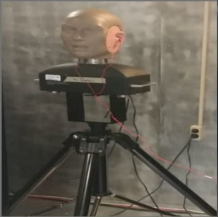
Microphone were measured at −1.2 dB, −2.1 dB, and −0.9 dB, respectively, ensuring accurate sound pressure level measurements. Figure 2 illustrates the GRAS 45CB Acoustic Test Fixture (ATF) alongside the Testing Lab Setting during the data collection phase, providing a visual context for the equipment and environment used in the study.
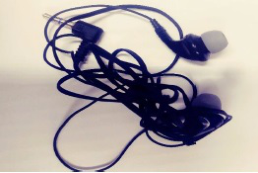
Figure 1: Billboard earbud.
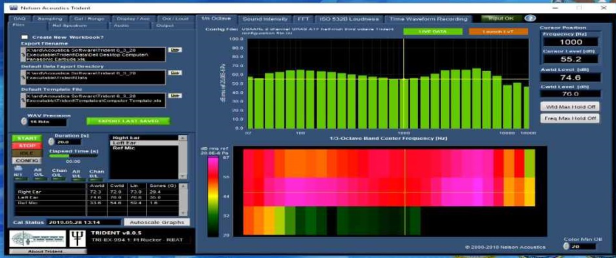
Figure 2 illustrates the GRAS 45CB Acoustic Test Fixture (ATF) utilized for this study, along with the setup that was employed when the cellphone was connected for data collection. This configuration was essential for obtaining accurate sound measurements while ensuring that the devices operated effectively in conjunction with the acoustic test fixture. Figure 3 displays a screen print of the Nelson Acoustics software, which was instrumental in facilitating data acquisition throughout the study. The software enabled the systematic collection and analysis of audio data, providing researchers with the necessary tools for evaluating sound characteristics effectively. Data from both the left and right ears were collected independently in one-third (1/3) octave bands, as supported by the findings in the Honeycutt report of 2019, titled “Why Do We Equalize in 1/3 Octave Bands.”The author concluded that utilizing 1/3-octave bands is mathematically more convenient than relying on critical bands for analysis and equalization purposes. As noted in the report, “1/3-octave bands have become the de facto standard” (Honeycutt, 2019, p. 2). This reasoning justifies the implementation of 1/3-octave bands in this study, aligning with established practices in acoustic research.
Figure 2: GRAS 45CB Acoustic Test Fixture (ATF) and testing lab setting during data collection.
DATA ACQUISITION At the conclusion of each run or test, all one-third octave band frequencies ranging from 31.5 Hz to 16,000 Hz for all volume levels across the devices were exported from the software and compiled into an Excel spreadsheet. The average values from the comprehensive dataset across all volumes are provided in Table 1, measured in decibels A-weighted (dBA). This meticulous data collection allows for detailed analysis regarding the sound output from the devices. The testing process involved evaluating all one-third octave band frequencies from 31.5 Hz to 16 kHz on each ear, corresponding to the Billboard earbud connected to the three devices at each volume level examined. This systematic approach ensured that the data captured comprehensive sound characteristics across the selected frequency range and volume settings, allowing for a robust analysis of earbud performance. To ensure the reliability and consistency of the recorded data, the results obtained from the experiment were compared with the manual data found in the GRAS 45CB Acoustic Test Fixture (ATF) manual. This comparison was critical in validating the accuracy of the measurements and confirming that the data collected aligned with established standards, thereby reinforcing the credibility of the findings presented in this study.
Figure 3: Nelson Acoustics Trident software that measures the third octave band centre frequency sound is used for the recording. All parameters at each click and both right and left ears with the start and stop button for the software processing are included on the display box shown in the ScreenPrint.Table 1: Earbud average values from the comprehensive dataset across all volumes in dBA.
Empirical Analysis of Earbud Output Levels Across Various Devices for User Safety 89
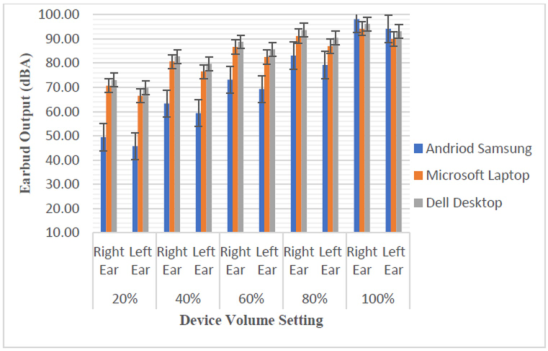
DATA ANALYSIS AND RESULTS Data collected from the Nelson Acoustics TRIDENT software, recorded with the devices, were exported into a spreadsheet for further analysis. The data processing and analysis were carried out using MS Excel version 2020 (Microsoft, Redmond, WA, USA). For each frequency level and volume setting, the corresponding sound pressure level for the earbud was measured and recorded. These measurements provided insight into how different frequencies and volume settings affected the sound output of the devices. Figure 4 illustrates the variations in the dBA output levels across the different device for both ears. The figure highlights the differences in sound pressure levels, offering a visual comparison of how each brand performed under the same testing conditions.
The results revealed notable differences in the sound output, measured in dBA, between the left and right ear when using the earbuds, across all volume levels and frequencies. Specifically, for the Android Samsung device, the average difference was found to be 3.8 dBA across all tested volume levels. For the Microsoft Surface Book laptop, the difference was slightly higher at 4.2 dBA, while the Dell Desktop Computer showed an average difference of 3.1 dBA. A total of 30 datasets were collected across all volume levels (20, 40, 60, 80, and 100), allowing for a comprehensive comparison of sound pressure levels.
Figure 4: Variations in the dBA output levels across the different device for both ears.
Further analysis of the outputs revealed variability between devices. Among the 30 datasets collected, it was found that 23% of the right-ear output readings, when comparing devices, and 23% of the left-ear readings across devices, measured by the GRAS 45CB from the earbuds at all volume levels, were below 3 dBA. In contrast, 47% of the output measurements exceeded a difference of 10 dBA, indicating a significant disparity in the sound pressure levels between devices. Additionally, 30% of the average
output differences across all datasets were found to be 3 dBA or greater. These findings suggest considerable variability in sound output not only between the left and right ears but also between the different devices used, underscoring the potential impact of device-specific characteristics on the overall listening experience.
DISCUSSION
Research has demonstrated that teenagers exposed to high noise levels through earphones in noisy environments, as well as those who use headphones for over 80 minutes a day, have a 20%–25% higher prevalence of potential hearing loss compared to their peers (Byeon, 2020). The impact of earbud/headphone use on the hearing health of young adults is a growing concern that requires attention. Many young people now rely on these devices on a daily basis, either to block out surrounding noise or to enjoy music without disturbing others.
Typically, most users tend to use a single type of earbud across all their devices, rarely purchasing different ones for different uses. This has led to the common misconception that one earbud type is universally suitable for all devices, a belief that this study challenges. The findings from this research clearly demonstrate significant variability in the dBA outputs of the Billboard earbud when connected to three different devices, even at the same volume settings. These results suggest that a single earbud may not perform consistently across all devices, debunking the idea that “one size fits all.” This variability underscores the importance of understanding how different devices can influence the audio output in dBA and highlights the potential risks to hearing health, especially among frequent users of such devices.
The findings from this study further highlighted significant differences in the sound output, measured in dBA, between the left and right ears when using the Billboard earbud connected to a single device. While it is understandable that the circuitry within the earbud could influence the output, it is unexpected for this effect to result in such noticeable disparities between the two ears. Given that the same earbud was used on the same device, the variation in output should not have been as large as the 3-dBA difference observed in this study.
The National Institute for Occupational Safety and Health (NIOSH) suggests that for every 3 dBA increase in sound level, the recommended exposure time should be halved. This recommendation aligns with the just noticeable difference (JND) threshold for human sound detection, which is the smallest change in sound level that a person can perceive. When the difference between ear outputs reaches 3 dBA, as seen in this study, it could potentially have a significant impact on hearing, especially over extended listening periods.
These findings suggest that the Billboard earbuds do not provide a consistent sound output, even when used with the same device at the same volume setting. This inconsistency may pose a risk to hearing health, as individuals might not be fully aware of the discrepancies in sound exposure between their left and right ears, potentially leading to uneven sound levels
Empirical Analysis of Earbud Output Levels Across Various Devices for User Safety 91
and an increased risk of hearing damage. The study underscores the need for greater awareness of the variability in earbud performance and its implications for long-term hearing health. In 2014, Fasanya, et al research on JND in sound detection revealed that some people could detect as low as 2 dBA change in sound difference. If the intensity of 2 dBA holds for some people then the output in dBA differences that is 10 dBA and higher between devices is significant to cause hearing damage for the perpetual users of Billboard earbud across different devices.
This finding is important because it suggests that even slight changes in sound levels, as low as 2 dBA, can be perceptible to the human ear. If such small differences are noticeable to some listeners, then larger discrepancies, such as the 10 dBA or higher differences found between devices in this study, are particularly concerning.
When the sound output differs by 10 dBA or more between devices, as observed with the Billboard earbud, it becomes a significant concern for perpetual users these devices for extended periods of time. Prolonged exposure to these larger discrepancies in sound output could potentially lead to hearing damage over time, especially for people who love using the device and may not realize the extent of the variation in sound exposure between their left and right ears, or between different devices. Given that sound intensity levels of 10 dBA or more represent a substantial difference, they pose a real risk to the hearing health of individuals who consistently use the Billboard earbud across various devices.
CONCLUSION
It is important to be mindful of our surroundings and show respect for the people around us, but equally, we must remain vigilant about the health risks associated with use of some everyday products, such as earbuds. Many adults mostly use headphones or earbuds on a daily basis, often believing that a single pair of earbuds can be used interchangeably with different devices. This assumption leads to a lack of awareness about the potential risks posed by inconsistent sound output, which may vary depending on the device being used.
This study provides compelling evidence that the Billboard earbud, under current manufacturing standards, does not consistently deliver a uniform output in dBA between the right and left ears when connected to a single device. Additionally, it demonstrated significant variation in the output across different devices, even at the same volume level. The inconsistency in the output raise concern, as prolonged use of earbuds with fluctuating sound levels could increase the risk of hearing damage, particularly when users are unaware of these disparities.
In light of these findings, it is crucial for consumers to be more discerning about the devices they use with their earbuds and to consider the potential long-term effects on their hearing health. Manufacturers, too, should take these inconsistencies into account and strive to improve the consistency of sound output across different devices, ensuring that users are not unknowingly exposed to potentially harmful audio levels. Ultimately,
this study underscores the need for greater awareness of the health risks associated with the daily use of earbuds and highlights the importance of consistency in audio devices to protect users’ hearing health. Findings from this study further highlights the importance of ensuring consistent and safe audio levels to prevent long-term hearing damage, particularly for those who use earbuds frequently and across different devices. Consequently, the researchers advocate for an intervention to standardize the design of earbuds to enhance user safety. The findings from this study further calls for a thorough reassessment of headphone design standards and a more comprehensive evaluation of people who are habitual users of earbuds’ hearing health. Proper investigation of the increase concern over the potential effects of earphone use on hearing, it’s worth the collaborative efforts of earbuds manufacturers and health experts to establish more rigorous safety standards for production. The extent of increase of hearing loss related to earphone use, coupled with the relatively limited body of literature on the long-term impact of such devices, highlights a gap in both research and regulation.
While it is well-established that prolonged exposure to loud sound, such as that from headphones and earbuds, can have detrimental effects on hearing, the full extent of the risks is still not fully understood, especially in the context of everyday use across various devices. The inconsistency in dBA output levels, as revealed in this study, further complicates the issue, as users may unknowingly subject themselves to unsafe listening environments. This underscores the need for more extensive research into the relationship between earphone design, usage patterns, and hearing health outcomes.
In addition to improving design standards, regular assessments of users especially those who use earphones and headphones frequently are necessary to monitor the impact on their hearing over time. Early detection of hearing issues can help prevent irreversible damage, allowing for timely intervention and better management of hearing health. The findings of this study make it clear that addressing these concerns proactively is essential for safeguarding individuals’ hearing well-being in the long run. The findings also caution frequent headphone users that no single pair of headphones or earbuds will produce the same decibel output across different devices, so they shouldn’t be treated as one-size-fits-all. These findings are especially relevant for high school and college students, who represent the future workforce of the nation and should be protected from hearing damage early on. It’s crucial for manufacturers to take these insights into account and work toward developing standardized manufacturing processes for headphones and earbuds to promote safer use for all users.
ACKNOWLEDGEMENT
The authors express their gratitude to the USAARL Auditory Protection and Prevention Group for their assistance during data collection. Special thanks are extended to Master Victor Fasanya for organizing all materials for transportation to USAARL. The authors declare that there are no conflicts of interest related to this work.
Empirical Analysis of Earbud Output Levels Across Various Devices for User Safety 93
REFERENCES
Byeon, H. (2021). Associations between adolescents’ earphone usage in noisy environments, hearing loss, and selfreported hearing problems in a nationally representative sample of South Korean middle and high school students. Medicine (Baltimore). 100: e24056. 10.1097/MD.0000000000024056. Clason, D. Hearing loss statistics at a glance. Available from: https:// www.healthyhearing.com/report/52814-Hearing-loss-statistics-at-a-glance. [Accessed 12.06.2024]. Dehankar, S. S., and Gaurkar, S. S. (2022). Impact on hearing due to prolonged use
of audio devices: a literature review. Cureus, 14(11). Fasanya, B. K., Strong, J. D. (2018). Younger Generation Safety: Hearing Loss and Academic Performance Degradation Among College Student Headphone Users. In: Arezes, P. (eds) Advances in Safety Management and Human Factors. AHFE 2018. Advances in Intelligent Systems and Computing, vol. 791. Springer, Cham. https://doi.org/10.1007/978-3-319-94589-7_51 Fasanya, B. K. Uzochukwu, B. M. and Idoye, E. P. (2014). Importance of
Just-Noticeable-Differences (JNDs) in Auditory Signal Detection Task-Gender Differences. International Journal of Engineering Research and Innovation (IJERI), 5(2) 81–87. Fasanya, B. K. (2013). “Quantitative Analyses of Acceptable Noise Level for Air Conduction Listening,” Doctoral Dissertation, North Carolina Agricultural and Technical State University. https://digital.library.ncat.edu/dissertations/118 Honeycutt, R. “why most equalize in 1/3 Octave Bands” Available from: https://
www.prosoundtraining.com/2019/07/26/why-equalize-in-1-3-octave-bands/ [Accessed 01.11.2023]. Jokitulppo, J. S., Björk, E. A., Akaan-Penttilä, E (1997). Estimated leisure noise exposure and hearing symptoms in Finnish teenagers. Scand Audiol. 26: 257–62. 10.3109/01050399709048017. Kim, M. G., Hong, S. M., Shim, H. J., Kim, Y. D., Cha, C. I., Yeo, S. G., (2009).
Hearing threshold of Korean adolescents associated with the use of personal music players. Yonsei Med J. 50: 771–6. 10.3349/ymj.2009.50.6.771. Mick, P., Kawachi, I., Lin, F. R. (2014). The association between hearing loss and social isolation in older adults. Otolaryngol Head Neck Surg. 150: 378–84. 10.1177/0194599813518021. National Institute on Deafness and Other Communication Disorders (NIDCD).
(1991). 1990 annual report of the National Deafness and Other Communication Disorders Advisory Board. Washington, D. C.: Government Printing Office. (DHHS publication no. (NIH) 91–3189). Osmano˘glu, H., Dizdar, H. T., Koçyi˘git, A. A. (2024). The effects of music listening time with headphones on hearing thresholds among the young population. The Egyptian Journal of Otolaryngology, 40(1), 13. https://doi.org/10.1186/s43163- 024-00574-9 Schessel, DA. “Headphones & Earphones Can Cause Permanent Hearing Loss. Stony Brook, School of Medicine”. Available from: https:// medicine.stonybrookmedicine.edu/surgery/blog/headphones-and-earphones- can-cause-permanent-hearing-loss-what-you-need-to-know. [Accessed 11.09.2024]. Shargorodsky, J., Curhan, S. G., Curhan, G. C., and Eavey, R. (2010). Change in
Prevalence of Hearing Loss in US Adolescents. JAMA. 304(7): 772–778. https:// doi: 10.1001/jama.2010.1124
Thompson D. “How Headphones Changed the World,” Retrieved from The Atlantic website. Available from: https://www.theatlantic.com/technology/archive/2012/ 05/how-headphones-changed-the-world/257830/. [Accessed 12.01.2024]. Widen, S. E., Båsjö, S., Möller, C., Kähäri, K. (2017). Headphone listening habits and
hearing thresholds in swedish adolescents. Noise and Health, 19(88), 125–132. https://doi: 10.4103/nah. NAH_65_16
LISTED IN THE AHFE DIGITAL BOOKSTORE CATALOGUE
Explore the complete digital volume
Safety Management and Human Factors
Read this individual research paper free through the original publisher, or explore the full digital proceedings book.
ISBN 978-1-964867-65-6
Explore this ISBN in the AHFE Bookstore ↗Listed in the July 2026 bookstore catalogue; search by ISBN to confirm current availability · Digital book purchase optional