James Badu, Natalia Andreassen, Rune Elvegard, Salman Nazir (2025). From Gaps to Gains: Exploring How Professional Diversity Influences Situational Awareness in Collaborative Environments. In: Training, Education, and Learning Sciences. AHFE Open Access, vol. 193, pp. 102–114. https://doi.org/10.54941/ahfe1006651
This study explores the dynamics of group performance in a situational awareness (SA) context, examining how professional backgrounds and familiarity with key domains such as CBRNE (Chemical, Biological, Radiological, Nuclear, and Explosives) and Maritime Search and Rescue (SAR) influence overall performance. The findings reveal that professionally diverse groups could be critical in enhancing overall performance by utilizing collective expertise and bridging knowledge gaps among members.It was observed that professionally diverse groups could demonstrate a levelling effect, where members with limited or no familiarity in specific domains benefit from the expertise of their peers. Thus, participants with "little familiarity" in CBRNE achieved higher average SA scores in collaborative groups compared to their baseline performance, likely due to shared knowledge and collective problem-solving. This suggests that group interactions can mitigate the impact of individual knowledge gaps, fostering an environment where participants complement each other’s strengths.Furthermore, it was observed that professionals with higher familiarity in Maritime SAR, such as those with "Good" or "Very good" familiarity, consistently scored higher across all SA levels. Similarly, participants with "No familiarity" in Maritime SAR showed improved total SA scores when placed in mixed-expertise groups, underscoring the importance of group dynamism in bridging expertise gaps.This study highlights the importance of group composition and collaboration in enhancing situational awareness for all members in a dynamic environment. By balancing diverse professional backgrounds, collaborative environments enable robust decision-making and skill development, offering valuable knowledge for training and operational strategies in high-stakes environments.
In high-risk operations, such as search and rescue (SAR) and chemical, biological, radiological, nuclear, and explosives (CBRNE) scenarios, the performance of diverse teams is important to ensure successful outcomes (Badu et al., 2024). These operations demand rapid decision- making, continuous communication, and effective collaboration among team members with varying expertise. Despite the inherent challenges presented by diverse professional backgrounds, this diversity often acts as a strength, promoting innovative problem-solving and adaptive strategies
From Gaps to Gains: Exploring How Professional Diversity Influences SA 103
in dynamic and uncertain environments (Salas & Cannon-Bowers, 2001; Weick & Sutcliffe, 2011). To address the complexities of such environments, situational awareness (SA) emerges as a key factor enabling teams to make informed decisions under pressure (Endsley, 1995).
The integration of professionals from distinct domains, such as firefighters, paramedics, hazardous material experts, and law enforcement personnel, often creates a dynamic relationship of expertise and cognitive approaches. However, this diversity also introduces challenges, including potential conflicts in communication and varying levels of familiarity with operational procedures. The leveling effect, which occurs when team interactions equalize knowledge and expertise differences, plays a significant role in mitigating these challenges and enhancing team effectiveness (Edmondson, 1999).
This paper examines the role of SA and diversity and their leveling effect on multidisciplinary team performance during SAR and CBRNE operations. By exploring these concepts, we aim to provide information about the processes that enable teams to achieve optimal performance in high-stakes environments. The study may have implications for designing teams, training programs, and organizational strategies that optimize performance in high- pressure environments.
THEORETICAL BACKGROUND Situational Awareness in Multidisciplinary Teams
SA is widely recognized as a critical component of effective team performance in dynamic and high-risk settings. Endsley (1995) defines SA as “the perception of elements in the environment within a volume of time and space, the comprehension of their meaning, and the projection of their status in the near future.” In multidisciplinary teams, achieving shared SA is particularly challenging due to the varied perspectives and expertise of team members. Research by Cooke et al. (2013) emphasizes that shared SA emerges through effective communication and interaction, enabling teams to align their understanding of the situation and coordinate actions effectively.
Distributed SA, which refers to the collective understanding of the environment distributed across team members, is crucial in SAR and CBRNE operations. Studies by Fiore and Salas (2004) highlight that distributed SA allows teams to leverage individual expertise while maintaining a cohesive understanding of the operational context. This is particularly important in scenarios in which team members must rely on each other’s specialized knowledge to make informed decisions.
Diversity and Team Effectiveness Professional diversity within teams can significantly impact performance, particularly in high-stakes operations. Page (2008) argues that diversity fosters creativity and innovation by introducing varied perspectives and problem-solving approaches. However, managing this diversity effectively requires addressing potential conflicts arising from differences in communication styles, priorities, and expertise levels (Jehn et al., 1999).
In crisis settings, diversity can enhance team adaptability and resilience. Weick and Sutcliffe (2011) describe how diverse teams are better equipped to manage unexpected events by integrating multiple viewpoints and expertise. This adaptability is essential in SAR and CBRNE operations, where the dynamic nature of incidents demands continuous adjustment to evolving situations.
Leveling Effect and Knowledge Sharing The leveling effect refers to the process by which team interactions equalize differences in knowledge and expertise, enabling more effective collaboration (Edmondson, 1999). In multidisciplinary teams, this effect is achieved through open communication, trust, and a psychologically safe environment. Research by Burke et al. (2006) emphasizes that training programs designed to enhance team cohesion and communication can facilitate the leveling effect, allowing teams to overcome disparities in expertise and focus on collective goals.
Knowledge sharing is a key mechanism underlying the leveling effect. Salas (2015) highlights the importance of creating an environment where team members feel comfortable sharing their knowledge and asking for clarification. This is particularly relevant in SAR and CBRNE operations, where timely and accurate information exchange can mean the difference between success and failure.
Domain-Specific Familiarity and SA Domain expertise plays a critical role in shaping situational awareness and decision-making. Endsley and Jones (2011) argue that familiarity with specific operational contexts enhances an individual’s ability to perceive and interpret environmental cues accurately. In multidisciplinary teams, balancing domain-specific expertise with a shared understanding of the mission is essential for effective performance.
Training programs that simulate real-world scenarios can help bridge gaps in domain-specific familiarity among team members. Burke et al. (2006) highlight the benefits of scenario-based training in improving team adaptability and shared SA. By exposing team members to realistic challenges, such training fosters a deeper understanding of each other’s roles and responsibilities, enhancing overall team performance.
METHOD
Study Design This study was an explanatory design in which we collected quantitative data from a team of participants involved in a table exercise that focused on discussing a dynamic crisis response operation involving two domains: CBRNE or maritime SAR. The exercise was conducted in September 2024. An anonymous questionnaire focused on measuring the teams’ SA. The overall purpose was to measure SA, with a particular emphasis on understanding the dynamics of team diversity and its role in the SA
From Gaps to Gains: Exploring How Professional Diversity Influences SA 105
of the particular teams. We used this approach to help analyze and interpret collaborative tabletop exercises as pedagogical tools for enhancing experiential learning outcomes (Brunero et al., 2021).
Scenario for the Tabletop Exercise The tabletop exercise was about a nuclear-powered icebreaker, NS Exercise, that was related to a SAR with radiological and nuclear emission. The aim of the exercise was to enhance the participants’ understanding of the national maritime nuclear safety and preparedness and the challenges associated with the organizational complexity of maritime SAR operations in the context of a radiological or nuclear crisis. The activities were structured into two discussions, providing an understanding of the roles, responsibilities, and national organizational frameworks of national emergency preparedness systems, specifically in ordinary SAR and complex situations.
The exercise starts with a message received by the Coastal Radio North: “Mayday, Mayday, Mayday. This is NS EXECISE in position 68
50′11.9′′N 11
46′03.4′′E. Wind NNE 5m/s, Sea 2m, cloudy and no precipitation. We are a nuclear-powered icebreaker, 152 m in length, 20,000-ton displacement, and a crew of 120 onboard. We are currently fighting a fire and have two severely injured crew with life- threatening injuries. Fire has severely damaged multiple systems on board. Communications are unreliable. We are dead in the water and cannot make way” (Exercise directive).
The situation (Situation 1) is an ordinary SAR operation without radioactive emissions to air or water, nor is there any information on damage to the nuclear reactor. Five hours later, the situation becomes more complex (Situation 2). NS EXERCISE reports on reactor damage, and emissions to sea or air are unavoidable: “We are experiencing a loss of coolant with our nuclear reactor. This has resulted in damage to the reactor’s core fuel elements. We are unable to contain the release of fission products into the environment. They are escaping the BALDRON through the atmosphere and seawater. We have an additional critical casualty who is exposed to fission products. He must be evacuated immediately.” (Exercise directive).
The scenario allowed for a discussion of responding to an SAR operation in an radiologically hazardous environment in the Arctic.
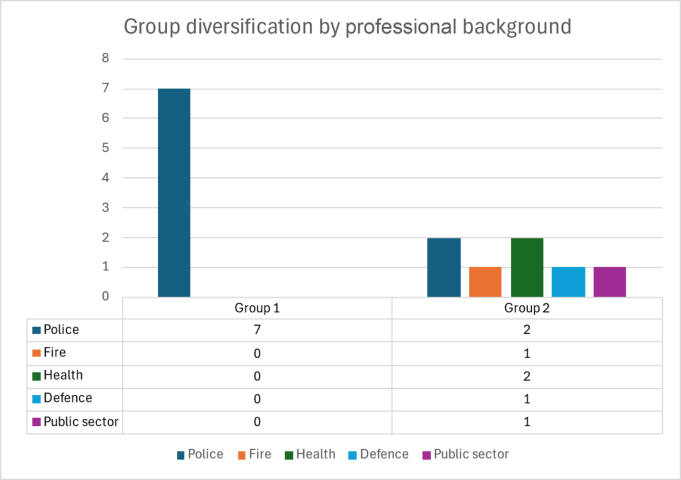
Participants Thirty-seven (37) people from 6 groups participated in the tabletop exercise. The participants were from various sectors, including the police service, fire service, health service, defense, and the civil service. For this paper, we used results from only two groups out of the six groups. This is because the two groups used were specially designed to reflect homogeneous and heterogeneous group members (see Figure 1). In this way, we could explore how professional diversity and group composition influence the situational awareness performance of individuals with varying levels of domain-specific familiarity in high-stakes decision-making environments.
Figure 1: Participants’ group diversification by professional background.
All Group 1 members were police officers, while Group 2 was a heterogeneous group that included participants from the police, fire, health, defense, and public sectors. This characteristic of group composition provides an insightful basis for exploring how professional diversity influences familiarity with specialized topics, such as CBRNE and maritime SAR, as well as situational awareness.
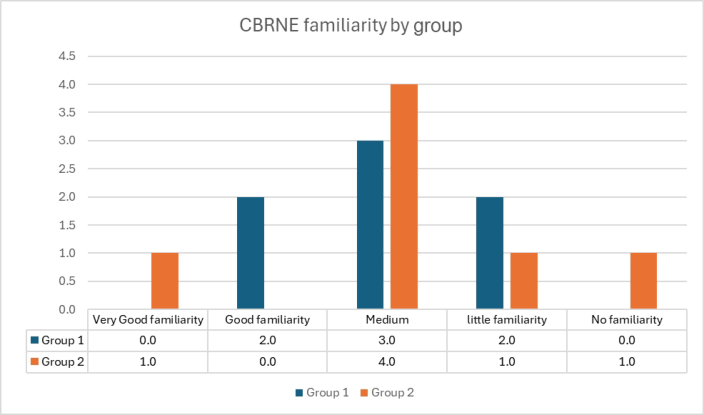
Figure 2: CBRNE familiarity by group.
From Gaps to Gains: Exploring How Professional Diversity Influences SA 107
Regarding CBRNE familiarity (see Figure 2), Group 1 members demonstrated greater overall familiarity with the concepts, with no members indicating either “no familiarity” or “very good familiarity.” In contrast, Group 2 members showed a more diverse distribution of familiarity levels, with one participant reporting “very good familiarity” and another reporting “no familiarity.” This distribution suggests that the homogeneous composition of Group 1 contributed to a consistent medium-to-good level of familiarity, while the professional diversity in Group 2 resulted in varying levels of familiarity, possibly due to the participants’ different professional backgrounds.
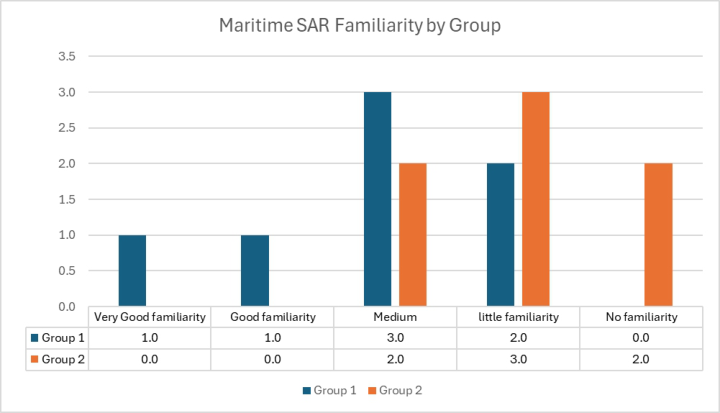
Figure 3: Maritime SAR familiarity by group.
For maritime SAR familiarity (see Figure 3), Group 1 again showed a strong medium-level familiarity, with one member indicating “very good familiarity”and none reporting “no familiarity.” On the other hand, Group 2 displayed a higher number of participants reporting “little familiarity” and “no familiarity.” The participants’ background history suggests that Group 1’s homogeneous composition may likely contribute to a more uniform level of familiarity, while Group 2’s diversity may lead to broader variability in knowledge levels. The implications of this for the teams’ shared situational awareness could be that Group 1’s consistent familiarity may enhance coordinated decision-making in high-stakes scenarios, particularly in contexts where shared expertise, such as CBRNE, is critical. In contrast, Group 2’s diversity offers the advantage of a multidisciplinary perspective but introduces challenges in achieving a shared understanding, particularly in areas requiring highly specialized domain knowledge.
Data Collection Based on the study’s research question, we collected data using a questionnaire to explore how professional diversity and group composition influence the situational awareness performance of individuals with varying levels of domain-specific familiarity in high-stakes decision-making environments.
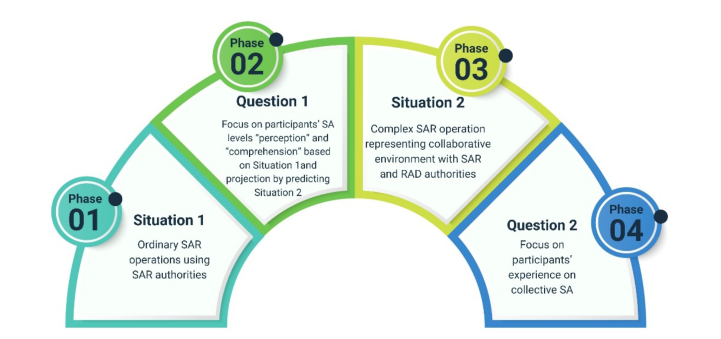
Figure 4: Development of the exercise and data collection.
The development of the tabletop exercise (see Figure 4) began with a relatively routine search and rescue (SAR) scenario that included the potential risk of a nuclear accident. At this stage, the response involved organizations within the maritime SAR emergency preparedness system. The exercise was then paused to administer a questionnaire designed to evaluate the participants’ situational awareness (SA) across three levels: how accurately they captured the information from Situation 1 (perception), how well they understood the details of Situation 1 (comprehension), and how accurately they predicted the more complex Situation 2 that would follow after the pause (projection). To assess these aspects, four questions were posed at each SA level, with four possible answers for each question, only one of which was correct. This structure allowed for an objective measurement of the participants’ performance on the first two SA levels. Performance at Level 1 (perception) was based on the participants’ ability to identify and recall key elements from the environment, while Level 2 (comprehension) assessed their understanding of the situation as it was presented in the initial discussion. Situation 2 introduced a more complex scenario requiring collaboration between organizations from both emergency preparedness systems. Questions evaluating the third level of SA (projection) were administered before the second discussion to test the participants’ ability to accurately predict the future status of the scenario. This approach enabled a focused evaluation of the participants’ prediction abilities in a dynamic and high-stakes environment.
From Gaps to Gains: Exploring How Professional Diversity Influences SA 109
RESULTS
The aim of this study was to explore how professional diversity and group composition influence situational awareness (SA) performance among individuals with varying levels of domain-specific expertise in high-stakes decision-making environments. Therefore, the analysis focused on SA scores across different groups, as well as their relationship to familiarity with CBRNE and SAR.
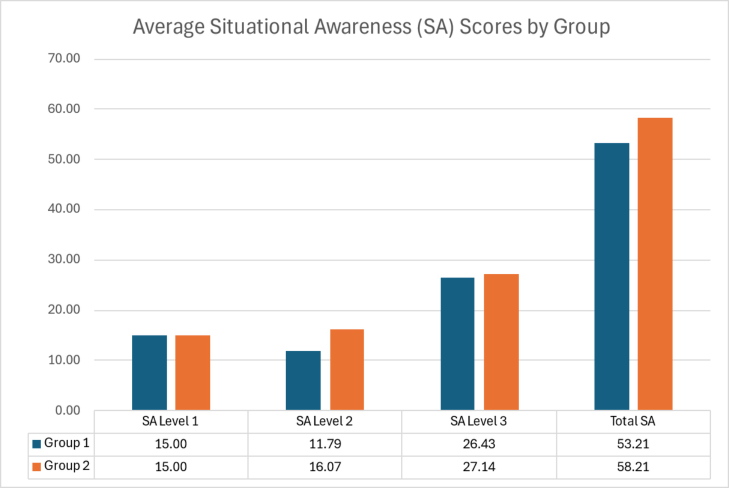
Situational Awareness Performance by Group The average SA scores, including Levels 1–3 and Total SA, were compared between Groups 1 and 2 (see Figure 5). The results indicate that Group 1 achieved an average total SA score of 53.2% (with average scores of 15%, 11.8%, and 26.4% for Levels 1, 2, and 3, respectively). On the other hand, Group 2 achieved an average total SA score of 58.2% (with average scores of 15%, 16.1%, and 27.1% for Levels 1, 2, and 3, respectively). Thus, Group 2 outperformed Group 1 across all levels of SA, except level 1, where average scores were the same.
Figure 5: Average situational awareness scores by group.
However, since the aim of the study was to explore how professional diversity and group composition influence the situational awareness performance of individuals with varying levels of domain-specific familiarity in high-stakes decision-making environments, we further analyzed the group’s performance when it comes to the participants’ familiarity with CBRNE and maritime SAR.
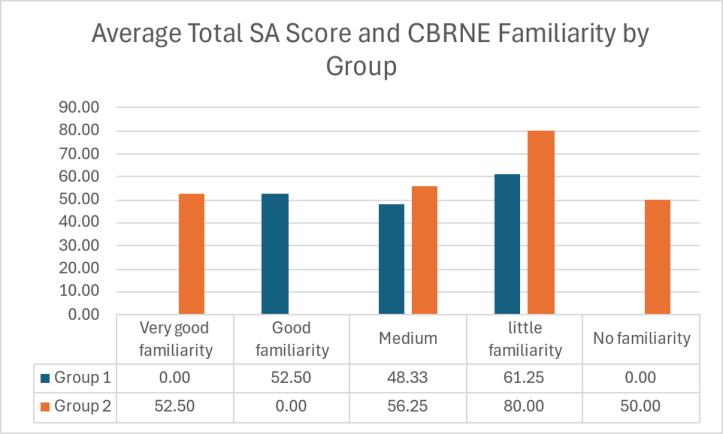
CBRNE Familiarity and SA Performance First, the relationship between CBRNE familiarity and total SA performance was examined (see Figure 6). Individuals were categorized into groups based on their level of familiarity with CBRNE concepts. The results showed that participants with “little familiarity”achieved the highest total SA scores (with Group 2 participants having 80% on average and Group 1 participants having a little over 61%). Participants with “medium familiarity” followed, with Group 2 participants having 56.25% and Group 1 participants having 48.33%. Also, participants with “good familiarity” and “very good familiarity” had 52.5% each, and participants with “no familiarity” had an average SA score of 50%.
Figure 6: Average total SA scores and CBRNE familiarity by group.
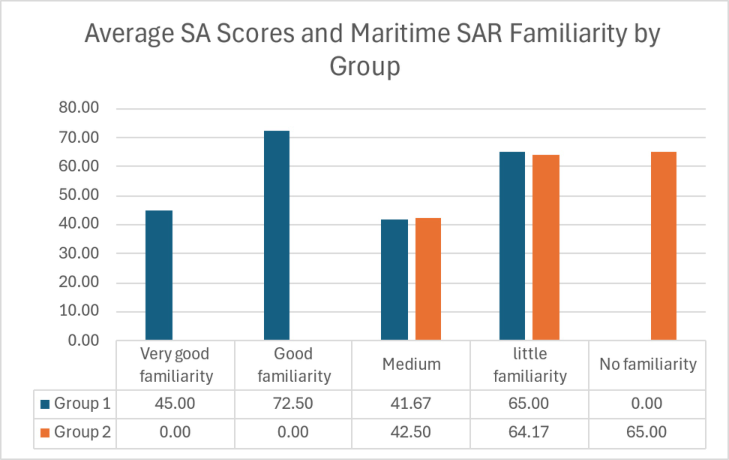
Maritime SAR Familiarity and SA Performance Moreover, we analyzed the Group SA scores based on familiarity with maritime SAR (see Figure 7). Participants were grouped by familiarity level. The findings indicated that participants with “good familiarity” from Group 1 had the highest score, with an average total SA score of 72.5%. This is followed by participants with “no familiarity” from Group 2, with an average total SA score of 65%. Then, participants with “little familiarity” follow (with Group 1 having an average score of 65% and Group 2 having 64%), whereas participants with “very good familiarity” and “medium familiarity”had an average total score of 45% and around 42%, respectively.
From Gaps to Gains: Exploring How Professional Diversity Influences SA 111
Figure 7: Average total SA scores and maritime SAR familiarity by group.
DISCUSSIONS Professional Diversity and the Leveling Effect
The results of this study highlight the critical role that professional diversity plays in enhancing situational awareness (SA) within collaborative environments. The concept of the “leveling effect” is strongly supported by the findings, particularly through the performance improvements of individuals with limited familiarity in domain-specific contexts such as CBRNE and maritime SAR. For instance, participants with “little familiarity” with maritime SAR achieved a good average SA score (65%) when mixed with other professionals with very good and medium familiarity with maritime SAR activities (see Figure 7). This suggests that collaborative dynamics enable these individuals to leverage the expertise of more knowledgeable team members (Burke et al., 2006). It can further be argued that the benefit for a person with little expertise could be much better if they collaborate with a team (group) with more diverse backgrounds and expertise (Edmondson, 1999). We see this with Group 2 participants who have little CBRNE familiarity having the highest average score of 80% (see Figure 6). Thus, this seems to align with the theoretical perspective that diverse groups mitigate individual deficiencies through shared knowledge and problem-solving (Salas, 2015).
The leveling effect is particularly evident in Group 2, which outperformed Group 1 across most levels of SA despite similar initial conditions (see Figure 5). This suggests that professional diversity within Group 2 may have fostered more effective knowledge sharing, thereby enabling individuals with varying levels of domain familiarity to achieve a collective understanding that exceeded individual capabilities. These results underline the importance
of curating teams with complementary expertise to optimize collaborative performance in high-stakes scenarios (Page, 2007).
We would like to mention that while the findings emphasize the importance of balancing diversity in teams, they do not sufficiently address challenges or strategies associated with it, such as team conflict management and communication barriers. Thus, while diversity brings a breadth of perspectives and experiences, the ability to integrate these into a unified approach could depend on effective communication and mutual understanding (Jehn et al., 1999).
Domain Familiarity and Group Composition The study also highlights the critical role of domain familiarity as a key driver of individual SA performance, yet the interplay with professional diversity highlights nuanced dynamics. For instance, participants with “good familiarity” in maritime SAR achieved the highest total SA scores (72.5%), pointing out the advantages of domain expertise in high-pressure environments (see Figure 7). However, the good performance of individuals with “little familiarity” (65%) in the same context suggests that group composition compensates for individual gaps in knowledge.
Thus, these results affirm the theoretical proposition that collaborative environments allow individuals with varying levels of expertise to benefit from a collective pool of knowledge (Cooke et al., 2013). For instance, Group 2 participants with no familiarity with Maritime SAR demonstrated significant performance improvements, likely due to the complementary skills and awareness of their more experienced peers (see Figure 7). This highlights the role of group composition in optimizing SA outcomes (Endsley & Jones, 2011), particularly when time constraints and uncertainties necessitate the rapid integration of diverse perspectives.
Interestingly, the reduced performance of Group 1 participants with “very good familiarity” (45%) and “medium familiarity” (41.67%) in maritime SAR suggests potential diminishing returns of expertise in collaborative settings (see Figure 7). This could be attributed to overreliance on personal expertise or misalignment with group processes. These findings point to the need for balanced expertise levels within teams so that no single member dominates the decision-making process, thereby ensuring equal participation and knowledge sharing (Burke et al., 2006).
STUDY IMPLICATIONS The findings from this study contribute to the understanding of how professional diversity and domain familiarity interact to shape SA outcomes. They suggest that strategically composed teams (featuring a mix of high- and low-familiarity members) could optimize performance by fostering collaborative dynamics that leverage both expertise and fresh perspectives. These results may influence training and team composition strategies in high- stakes domains, emphasizing the importance of team-building practices that prioritize diversity and balance.
From Gaps to Gains: Exploring How Professional Diversity Influences SA 113
In future applications, it would be valuable to explore the role of training interventions in enhancing the leveling effect and mitigating the challenges of professional diversity. Thus, understanding how individual learning curves evolve within diverse groups could provide actionable insights for designing more effective collaborative frameworks.
CONCLUSION
This study explored the impact of professional diversity and domain-specific familiarity on situational awareness (SA) performance in collaborative high-stakes environments. The findings show that diverse teams improve individual and team SA through the “leveling effect,” allowing members with limited domain familiarity to benefit from their peers’ expertise. This highlights the value of team interactions in bridging knowledge gaps and fostering shared understanding.
The results also demonstrate the importance of group composition in optimizing SA outcomes. While domain familiarity provides a cognitive advantage, collaboration within diverse groups allows fewer familiar participants to achieve significant gains, leveraging the collective expertise of the team. Interestingly, the reduced performance of participants with very high familiarity suggests diminishing returns in collaborative settings, highlighting the need for balanced expertise levels within teams.
These results emphasize the importance of designing teams with complementary skills and promoting effective collaboration to optimize performance in high-pressure scenarios.
ACKNOWLEDGMENT
The authors would like to acknowledge the help of subject matter experts from the Joint Rescue Coordination Centre Norway, the Norwegian Radiation and Nuclear Safety Authority, and the county governor of Nordland, as well as students at Nord University’s program masters in preparedness and emergency management, who gave consent and participated in the study.
The fourth author acknowledges the funding support from the “Centre of Excellence in Maritime Simulator Training and Assessment (COAST)” at the University of South-Eastern Norway.
The second and third authors acknowledge the support of the project “Collaboration Complexity in Nuclear Emergency Preparedness in the Maritime Arctic” (ATOMEX), funded by the Research Council of Norway, grant agreement No. 336285.
REFERENCES
Badu, J., Elvegard, R., Nazir, S., & Andreassen, N. (2024). Situation awareness in crisis management–A case study from the Arctic region. Training, Education, and Learning Sciences, 155(155). doi: 10.54941/ahfe1005395. Brunero, S., Dunn, S., & Lamont, S. (2021). Development and effectiveness
of tabletop exercises in preparing health practitioners in violence prevention management: A sequential explanatory mixed methods study. Nurse Education Today. doi: https://doi.org/10.1016/j.nedt.2021.104976.
Burke, C. S., Stagl, K. C., Salas, E., Pierce, L., & Kendall, D. (2006). Understanding team adaptation: A conceptual analysis and model. Journal of Applied Psychology, 91(6), 1189–1207. doi: https://doi.org/10.1037/0021-9010.91.6.1189. Cooke, N. J., Gorman, J. C., Myers, C. W., & Duran, J. L. (2013). Interactive
team cognition. Cognitive Science, 37(2), 255–285. doi: https://doi.org/10.1111/ cogs.12009. Edmondson, A. (1999). Psychological safety and learning behavior in work teams.
Administrative Science Quarterly, 44(2), 350–383. doi: https://doi.org/10.2307/ 2666999. Endsley, M. R. (1995). Toward a theory of situation awareness in dynamic systems. Human Factors, 37(1), 32–64. doi: https://doi.org/10.1518/ 001872095779049543. Endsley, M. R., & Jones, D. G. (2011). Designing for situation awareness: An
approach to user-centered design (2nd ed.). CRC Press. Fiore, S. M., & Salas, E. (2004). Why we need team cognition. In E. S. Fiore, Team cognition: Understanding the factors that drive process and performance (pp. 235–248). American Psychological Association. doi: https://doi.org/10.1037/ 10690-011. Jehn, K. A., Northcraft, G. B., & Neale, M. A. (1999). Why differences make a
difference: A field study of diversity, conflict and performance in workgroups. Administrative Science Quarterly, 44(4), 741–763. doi: https://doi.org/10.2307/ 2667054. Page, S. (2008). The difference: How the power of diversity creates better groups, firms, schools, and societies (New Edition ed.). Princeton University Press. Salas, E. (2015). Team training essentials: A research-based guide. Routledge. Salas, E., & Cannon-Bowers, J. A. (2001). The science of training: A decade of
progress. Annual Review of Psychology, 52, 471–499. Weick, K. E., & Sutcliffe, K. M. (2011). Managing the unexpected: Resilient performance in an age of uncertainty (Vol. 8). John Wiley & Sons.
LISTED IN THE AHFE DIGITAL BOOKSTORE CATALOGUE
Explore the complete digital volume
Training, Education, and Learning Sciences
Read this individual research paper free through the original publisher, or explore the full digital proceedings book.
ISBN 978-1-964867-69-4
Explore this ISBN in the AHFE Bookstore ↗Listed in the July 2026 bookstore catalogue; search by ISBN to confirm current availability · Digital book purchase optional