Jiayi Jiang, Xin Hu (2025). User Experience Research on Age-Friendly Products for the Elderly: Case Study in China. In: Human Factors in Design, Engineering, and Computing. AHFE Open Access, vol. 199, pp. 628–634. https://doi.org/10.54941/ahfe1006874
In the context of a rapidly aging global population, the needs and well-being of older adults have gained significant attention across social, economic, and design sectors. Within the field of age-friendly product design, Western countries have established a relatively comprehensive and mature system of products tailored to the elderly, while China’s market is still in a developmental and transitional phase with unique socioeconomic characteristics. This study seeks to address this gap by introducing innovative design concepts rooted in cross-cultural comparative analysis. By examining the subtle cultural distinctions that influence product acceptance and usability, this research aims to elucidate the actual needs and underlying preferences of Chinese seniors. The ultimate goal is to propose human-centered design strategies that can enhance the quality of life and overall happiness of the elderly population in China.To achieve these objectives, a multi-method research approach was employed, including structured questionnaires, in-depth user interviews, and systematic collection of feedback regarding the challenges and expectations expressed by elderly users when interacting with both Western and Chinese age-friendly products. The survey sample included 300 participants aged 60 and above from diverse urban and rural regions to ensure broad geographic coverage and balanced socioeconomic representation across different educational backgrounds. Additionally, comprehensive statistical analysis using independent samples T-tests was conducted on the survey data to identify significant differences in preferences, behavioral patterns, and psychological resistance among middle-aged and older adult participants when using comparable products from different cultural origins. The mixed-method research design emphasized both quantitative and qualitative dimensions to capture nuanced and holistic user experiences from multiple perspectives.The results indicate that key factors such as lifestyle conventions, health beliefs, and social support structures significantly shape the product experience of elderly users. These elements help explain the observed high dependence on family assistance, a collective approach to decision-making, and certain unique behavioral habits and emotional needs among Chinese seniors. For instance, products emphasizing individual independence were less favorably received compared to those specifically facilitating family interaction and intergenerational communication. Although existing academic research has increasingly focused on the intersection of aging and technology innovation, there remains a conspicuous lack of in-depth investigation into how cultural dimensions mediate the product experience of elderly users. This is especially true regarding empirical studies that capture the culturally specific preferences and emotional experiences of the elderly within the unique Chinese context.By integrating insights into cultural variability, this study offers tailored product design recommendations that align more closely with the realities and daily lives of Chinese elderly users. It concludes that incorporating culturally adaptive design principles is not only beneficial for product acceptance but also essential for promoting independent living and emotional well-being among the aging population. Furthermore, the research highlights the urgent need for inclusive design policies and educational frameworks that support the implementation and widespread adoption of age-friendly innovations. The findings provide valuable implications for designers, gerontologists, and policymakers aiming to develop sustainable and human-centered aging solutions in China and other similarly positioned societies. Future studies should continue to explore the dynamic interplay between cultural values and technological adoption in aging populations to bridge existing knowledge gaps.
Global population aging has become a critical societal issue, with the number of people aged 60 and above projected to exceed 2 billion by 2050, making China the largest aging nation (UN, 2022). This demographic shift presents significant challenges for healthcare, elderly care systems, and the design of age-friendly intelligent products. In Western countries, smart elderly care technologies—such as intelligent pill dispensers and health monitoring systems—have developed within a user-centered framework that emphasizes individual autonomy, privacy, and independent living. However, when such products are introduced into the Chinese context, their usability and acceptance are often limited due to cultural differences. Chinese elderly users generally rely more on family support, emotional reassurance, and community involvement, rather than fully autonomous self-management.
Smart medication reminder systems serve as a representative example in analyzing cross-cultural differences in product adoption. Western systems typically integrate automated dispensing, behavioral tracking, closed-loop remote monitoring, and privacy protection (Faisal et al., 2023), whereas Chinese products tend to prioritize affordability, basic prompting functions, and family-assisted supervision. However, issues such as cognitive overload, low trust, and emotional detachment often hinder long-term usage among Chinese elderly users (Hu, 2023). Therefore, there is an urgent need to
User Experience Research on Age-Friendly Products for the Elderly: Case Study in China 629
explore how cultural values, emotional expectations, and practical usability affect elderly users’ experience and willingness to adopt smart medication reminders.
This study aims to investigate the key usability barriers, functional needs, and emotional responses of Chinese elderly users when interacting with intelligent medication reminder products. It seeks to reveal the cultural mechanisms shaping trust, satisfaction, and adoption intention. The findings contribute theoretically by introducing a culture-based user experience framework and practically by providing localized design strategies that enhance usability, emotional connection, and long-term adherence. Ultimately, this research supports the development of age-friendly intelligent products that are both technologically efficient and culturally resonant in the Chinese elderly care context.
Global Overview of Age-Friendly Smart Products and Smart Medication Reminders As global aging intensifies, smart health management devices have become crucial for improving seniors’ quality of life. The World Health Organization’s healthy aging framework emphasizes maintaining functional ability, encouraging the use of smart products to support independence and health self-management (World Health Organization, 2021). Smart Medication Adherence Products (SMAPs) are prominent examples, widely used in home and community care (Faisal et al., 2023). These devices enhance medication adherence and reduce missed or duplicate doses through automated dispensing, audio/visual reminders, and data tracking (Arain, 2021). Liang et al. (2023) proposed a system using companion robots and wearables for closed-loop reminder-confirmation-recording management, significantly improving acceptability among older adults. SMAPs have evolved from simple mechanical reminders into integrated systems with remote monitoring and health feedback capabilities (Salmensuu et al., 2025). By connecting to healthcare platforms, they enable holistic health management, forming a key part of the global smart aging ecosystem (Faisal et al., 2023; Suzuki, 2024). Vieira et al. (2021) demonstrated that electronic pillboxes with alarm functions significantly improve medication adherence and stabilize blood pressure in elderly hypertensive patients.
User-Centered Design Principles for Chinese Older Adults User-Centered Design (UCD) is proven to enhance acceptance and satisfaction among elderly users. Wang (2023) identified visual impairment, memory decline, and limited dexterity as primary barriers for Chinese seniors, recommending large fonts, simplified steps, and voice prompts to improve usability and adherence. Faisal et al. (2023) highlighted that reducing information density and using color/icon differentiation are key to minimizing cognitive load. Olaleye (2024) emphasized emotional design, showing that gentle, encouraging messages alleviate anxiety and promote sustained use.
630 Jiang and Hu
Applying the Technology Acceptance Model (TAM), Zhou (2024) identified perceived usefulness, ease of use, social influence, and behavioral intention as core determinants for smart home adoption among the elderly. In the Chinese context, Wei et al. (2023) found that family support and community recommendations significantly boost adoption willingness. Huang et al. (2022) identified trust and privacy concerns as critical for continued use, while Hung (2023) attributed this to a cultural preference for collective decision-making and reliance on familial or medical authority.
Cultural Characteristics and Usage Preferences of Chinese Seniors Chinese older adults exhibit strong familial attachment and collectivist orientations. Wei et al. (2023) demonstrated that instrumental and emotional support from children significantly enhances perceived ease of use and adoption intention. Hung (2023) noted that recommendations from family or community often outweigh individual preference, with cost and service accessibility being major constraints.
Emotional factors are paramount; respectful and encouraging prompts enhance feelings of being cared for, fostering acceptance (Wei et al., 2023). Economically, seniors show high price sensitivity, preferring “core-feature, low-cost” versions (Hung, 2023).
Regional and educational disparities significantly impact usage. Cao (2022) found that lower education and cognitive impairment increase dependence on family or community assistance. Jiang et al. (2024) reported a substantial urban-rural digital health literacy gap, with rural elders relying more on in-person training. Luo et al. (2024) suggested that mHealth devices should be designed as “socio-emotional tools” embedded within support networks, as trust and social interaction are crucial for long-term use.
Challenges in the Practice of Smart Medication Reminders in China Despite rapid industry growth, several challenges persist. Device functionality is often compromised by network instability, and issues with false alarms/missed doses and packaging compatibility undermine user trust (Hu, 2023; Faisal et al., 2023). Inadequate technical support, product homogeneity, and a lack of unified standards hinder large-scale adoption and data interoperability (Hu, 2023; Wang, 2023). Hung (2022) emphasized that “cost, accessibility, and community service” are critical barriers. Wang et al. (2024) identified significant regional demand disparities linked to demographics, socioeconomic status, and smart aging knowledge.
Chapter Summary Existing literature is rich in technical efficacy but lacks empirical studies on cultural adaptation, emotional experience, and long-term motivation for Chinese seniors. A systematic analysis covering urban-rural disparities, family collaboration mechanisms, and contextualized interaction design is notably absent. This study employs a mixed-methods approach to address these gaps by focusing on the behavioral habits, psychological perceptions,
User Experience Research on Age-Friendly Products for the Elderly: Case Study in China 631
and emotional preferences of Chinese older adults, aiming to formulate actionable, localized design recommendations.
Methodology
Table 1: Reliability statistics.
Table available in the original PDF paper.
Measure Value Items Cronbach’s Alpha .894 26 Cronbach’s Alpha Based on Standardized Items .890 26
Reliability analysis of the 26-item scale showed excellent internal consistency, with Cronbach’s α = 0.894 and standardized α = 0.890, well above the 0.7 threshold, confirming strong measurement reliability for subsequent analysis.
Reliability analysis confirmed robust internal consistency across the three core dimensions, with Cronbach’s α coefficients ranging from 0.913 to 0.926. Descriptive statistics revealed a hierarchical pattern in elderly users’ attitudes: the Perceived Usability dimension received moderate ratings (M = 3.15– 3.31), while the Trust and Emotional Connection dimension showed systematically higher scores (M = 3.68–3.82). The Social Support dimension demonstrated stable performance (M = 3.43–3.56). These results indicate progressively stronger user acceptance moving from functional aspects to emotional and social dimensions, confirming the measurement instrument’s validity for assessing smart medication device adoption among elderly users.
Table 2: KMO and Bartlett’s test.
Table available in the original PDF paper.
Measure Value
.946
KMO Measure of Sampling Adequacy Bartlett’s Test of Sphericity Approx. Chi-Square: 4669.507 df: 325 Sig.:.000
To examine the scale’s structural validity, KMO and Bartlett’s sphericity tests were conducted. The results showed a KMO value of 0.946 and Bartlett’s test of sphericity reached significance (χ2 = 4669.507, df = 325, p < 0.001), indicating the data’s suitability for factor analysis. Principal component analysis with varimax rotation extracted three common factors with eigenvalues greater than 1, collectively explaining 61.570% of the total variance. All items demonstrated factor loadings exceeding 0.67 on their primary factors without cross-loading issues, revealing a clear factor structure that aligns well with the theoretical framework, thereby confirming strong structural validity of the scale.
632 Jiang and Hu
Table 3: ANOVA results summary (N = 306).
Table available in the original PDF paper.
Factor Group N Perceived Usability
Social Support
Significance Pattern
Trust & Emotional Connection
Education Primary or below
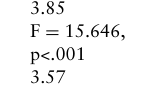
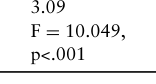
82 2.85 2.89 2.79 Primary < Other groups Junior high 128 3.47 3.50 3.32 High school 96 3.81 3.85 3.60 F/p-value F = 17.793, p<.001
Equation reproduced from the original PDF.Equation reproduced from the original PDF.
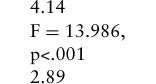
Never use 28 2.96 2.89 2.79 Inexperienced < Experienced Rarely use 68 3.01 3.43 3.32 Proficient 93 3.70 3.99 3.80 F/p-value F = 6.553, p<.001
Equation reproduced from the original PDF.
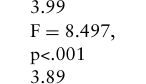
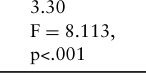
F = 5.759, p<.001 Age Group 60–69 154 3.47 3.89 3.77 Younger > Older 70–79 85 3.04 3.59 3.42 80+ 67 3.06 3.30 3.09 F/p-value F = 6.346, p=.002
Equation reproduced from the original PDF.Equation reproduced from the original PDF.
The study first verified the measurement instrument’s reliability, demonstrating strong psychometric properties. Descriptive statistics indicated generally positive attitudes among elderly users, particularly in the trust and emotional connection dimension (M = 3.68–3.82). However, ANOVA results revealed significant within-group differences, outlining four distinct user demarcations: First, a digital divide emerged where technology- inexperienced elders constituted a “technologically disadvantaged group” facing the greatest barriers in operational ease and trust building. Second, an education barrier showed systematically lower ratings across all dimensions among less-educated seniors. Third, a geographical pattern unexpectedly revealed stronger demand and acceptance among rural users than urban counterparts, potentially driven by more pressing healthcare needs. Fourth, an age-related decline showed markedly decreasing acceptance with advancing age, reflecting the dual challenges faced by the oldest-old. These findings collectively demonstrate that the elderly population is far from homogeneous, with attitudes and needs being co-shaped by digital literacy, educational background, geographical location, and age cohort.
CONCLUSION
This study demonstrates that cultural values fundamentally shape Chinese older adults’ acceptance of smart medication reminders. Users strongly preferred family-collaborative features over individual-focused designs, with emotional interaction being crucial for sustained use. While perceived usefulness remains relevant, social influence and emotional trust emerged as stronger adoption predictors in this collectivist context.
User Experience Research on Age-Friendly Products for the Elderly: Case Study in China 633
The research reveals significant demographic variations requiring segmented design strategies. Technical reliability, particularly offline functionality, requires urgent improvement. Theoretical contributions include proposing a culture-adapted TAM extension incorporating family support variables.
Future research should pursue longitudinal studies across diverse elderly care products and explore intergenerational co-design approaches. Ultimately, age-friendly technology must transcend functional performance to embrace cultural values, positioning smart devices as bridges in an aging society rather than technological barriers.
ACKNOWLEDGMENT
We extend our sincere gratitude to all the elderly participants who generously shared their experiences and insights. Special thanks are due to our research colleagues for their dedicated efforts in data collection and analysis. We are also grateful to the anonymous reviewers whose valuable suggestions significantly improved this paper. Finally, we appreciate all those who provided support and encouragement throughout this research journey.
REFERENCES
Arain, A. A. (2021). Smart medication adherence products for elderly: A review. Journal of Medical Systems, 45(4), 1–12. Chen, X., & Li, W. (2022). A study on the acceptance model of smart health management products for the elderly. Human Ergonomics, 28(4), 56–62. Faisal, S., Reichelt, F., & Olaleye, D. (2023). Design and usability of smart medication
adherence systems for older adults: A systematic review. International Journal of Medical Informatics, 170, 104–118. Hu, Z. (2023). Smart technologies for sustainable urban and regional development. Huang, X., Wang, H., & Li, M. (2022). A study on the willingness and influencing factors of Chinese elderly people to choose smart elderly care. Chinese Journal of Gerontology, 42(15), 123–135. Hung, J. (2022). Smart elderly care in the context of smart city initiatives in China:
Policy, practice, and challenges. Sustainable Cities and Society, 78, 103–115. Hung, J. (2023). Localization of smart medication reminder products in China: A focus on family collaboration and community support. Gerotechnology, 22(1), 45–58. Hyttinen-Huotari, K., Salmensuu, J., & Arain, A. A. (2024). Long-term benefits of
smart medication dispensers on health outcomes and life satisfaction. Journal of the American Geriatrics Society, 72(3), 567–578. Jiang, L., Cao, X., & Luo, M. (2024). Measuring digital health literacy among urban and rural elderly in China: A cross-regional study. Health Informatics Journal, 30(1), 1–15. Liang, Y., Suzuki, T., & Vieira, R. (2023). A companion-robot based medication
management system for older adults: Development and usability testing. IEEE Transactions on Neural Systems and Rehabilitation Engineering, 31, 1234–1243. Luo, M., Wei, J., & Huang, X. (2024). The role of trust and social interaction in the continued use of mHealth among elderly patients with chronic diseases in China. Computers in Human Behavior, 151, 107–118.
634 Jiang and Hu
Olaleye, D. (2024). The role of emotional design in alleviating anxiety and enhancing continued use intention of health technologies among the elderly. Behaviour & Information Technology, 43(2), 210–225. Reichelt, F. (2020). Modular automatic pillbox system: A user-centered design
approach for German elderly. Proceedings of the 2020 ACM Conference on Designing Interactive Systems (pp. 345–356). Salmensuu, J., Hyttinen-Huotari, K., & Faisal, S. (2025). From simple reminders to integrated health feedback: The evolution of smart medication systems. The Lancet Healthy Longevity, 6(2), e45–e53. Suzuki, T. (2024). Integrated smart health systems as a component of global aging-
in-place solutions. Journal of Aging and Environment, 38(1), 78–92. Vieira, R., Liang, Y., & Arain, A. A. (2021). The effectiveness of electronic pillboxes with alarm reminders in improving medication adherence among elderly hypertensive patients. Clinical Interventions in Aging, 16, 1025–1034. Wang, H. (2024). A study on regional differences in the demand for smart elderly
care services: A case study of Lanzhou. Society and Development, 22(3), 45–58. Wang, M. (2023). User experience-based design of smart pillboxes for the elderly.
Packaging Engineering, 44(10), 89–95. Wei, J., Zhang, L., & Liu, Y. (2023). The influence of family support and community recommendation on the adoption intention of smart home devices among the elderly. Applied Psychology, 29(2), 156–165. World Health Organization. (2021). Global report on age-friendly environments.
WHO Press. World Intellectual Property Organization. (2022). World population prospects 2022.
United Nations. Zhou, J., & Gao, F. (2024). A study on the adoption path of smart home products for the elderly based on the technology acceptance model. Industrial Engineering and Management, 29(1), 112–120.
LISTED IN THE AHFE DIGITAL BOOKSTORE CATALOGUE
Explore the complete digital volume
Human Factors in Design, Engineering, and Computing
Read this individual research paper free through the original publisher, or explore the full digital proceedings book.
ISBN 978-1-964867-75-5
Explore this ISBN in the AHFE Bookstore ↗Listed in the July 2026 bookstore catalogue; search by ISBN to confirm current availability · Digital book purchase optional