Paula Escudeiro, Sofia Resende, Francisca Escudeiro (2026). Improving Mobility Equity in Higher Education: Development of an inclusive Indoor Navigation System for Wheelchair Users. In: Intelligent Human Systems Integration (IHSI 2026): Disruptive and Innovative Technologies. AHFE Open Access, vol. 200, pp. 929–936. https://doi.org/10.54941/ahfe1007154
Throughout Europe, paraplegic and tetraplegic individuals face challenges related to inclusion due to the lack of infrastructure supporting their mobility within universities. Considering the average of paraplegic and tetraplegic wheelchair users in European higher education institutions, the Polytechnic Institute of Porto (ISEP) is estimated to have at least one person per year with such mobility limitations. This means that there is at least one individual who is prevented from moving freely through ISEP’s buildings because of a condition they did not choose to have. In response, ISEP InDoor Mapping is a project developed within ISEP’s Master’s in Informatics Engineering, aiming to enhance real-time accessibility not only to paraplegic and tetraplegic students, but for all wheelchair users that wish to navigate ISEP. The project entails the development of a mobile application operating as an indoor navigation system, using Beacons and a biometric system to detect the user’s position and provide accessible routes to their destinations. This application will feature specifications considering the physical implications of these two different conditions, reflecting the project’s careful consideration and rigor regarding paraplegic and tetraplegic wheelchair users. Its design prioritizes intuition and simplicity, ensuring that the user’s experience is as practical and seamless as possible. The app supports multiple input methods, allowing people with paraplegia or tetraplegia to control navigation through an EPOC brain-computer interface (BCI) via brain signals, integrated with wheelchair assistance. Additionally, a complementary web application collects data and statistics regarding the users’ experience, providing insights to optimize its functionality. The project further outlines its technological requirements, as well as its schedule, budget and team formation.
This research reinforces the team’s commitment to the cause and the achievability of the project’s goals - namely increasing the downloads of the app, engaging and retaining users, strengthening the institution’s reputation, and gathering feedback to improve it. The tests that were previously conducted, including Alpha and Beta tests related to the evolution of the project, have shown that the front office is the most incomplete sector.
Contrarily, the back office and database were both established and on the right track. With this information, improvements have been made to the three sectors, with a heavier focus on the front-office. The team is involved and dedicated to implementing whichever upgrades are necessary, aiming to get the best results possible out of this initiative. ISEP InDoor Mapping is a pioneer project with a technological background developed from scratch that intends to provide an inclusive and accessible experience within ISEP’s physical space, regardless of mobility limitations. Through ongoing development, rigorous testing, and dedicated teamwork, the project is expected to increase app adoption, strengthen user engagement, improve accessibility standards within the institution, and contribute meaningfully to inclusive education and mobility practices. Ultimately, it represents a significant step toward ensuring equitable access and autonomy for wheelchair users within higher education environments.
ISEP InDoor Mapping is a project developed during 2025 which targets paraplegic and tetraplegic people who frequent ISEP faculty buildings. The project started in the second semester of the first year of the master's degree in informatics engineering. It aims to make ISEP an accessible and welcoming space for people with motor disabilities, ensuring that all users, regardless of mobility limitations, can fully utilize its features. Europe’s total population is approximately 740 million (Worldometer, 2025). According to a report of the Parliamentary Assemble of the Council of Europe, around 330,000 people in Europe live with a spinal cord injury (SCI’s) (PACE, 2005), and 33.4% of them are between the ages of 18-30. This means that there are at least 33,4% of individuals who are prevented from moving freely through buildings because of a condition they did not choose to have. With this issue in mind, a designated team is working to build a mobile application, supported by an administrator website backend, which will function as an indoor navigation system, using Beacons to detect the user’s position and provide them with accessible paths to their destination. It will work for paraplegic and tetraplegic wheelchairs users, with the latter being supported by an EPOC device which allows navigation controlled by biometric signals. For the website, tools for managing and monitoring beacons in real time will be provided. An Adaptive Mobile Diary enables users to provide feedback on their navigation experience through text, images, video, and audio.
RELATED WORK
Literature reflects a significant advance in accessible navigation systems for wheelchair users. Projects like TrailCare (Barbosa et al., 2018) use GPS to exterior location and RFID to interior location, establishing communication with the integrated mobile application via Bluetooth and with the “wheelchair firmware software via RS-232” (Barbosa et al., 2018, p.2). This emphasizes the importance of data collection and central management of accessible routes. The ARSAWP, a project based on Augmented Reality, highlights the importance of offering wheelchair users multiple options, whether through alternative routes or information about each path’s accessibility level. It utilizes GPS coordinates to give real-time instructions (Braga et al., 2019). Furthermore,
Improving Mobility Equity in Higher Education 931 Lima et al. (2019) have created an application which has multiple web and mobile layers with intermediary APIs and spatial databases, achieving efficient management of georeferenced information. It also includes a “relational database with support to spatial data (PostGIS/PostgreSQL)” (Lima et al., 2019, p.948).
ISEP InDoor Mapping follows these trends by implementing navigation based on Beacons, a mobile application developed in .NET MAUI and a back-office for user, beacons, and routes’ management, all sustained by a CockroachDB PostgreSQL database. Additionally, it stands out by integrating an EPOC BCI dispositive, which allows interaction via brain signals for students with tetraplegia, emphasizing the project’s commitment with advanced technology.
METHODOLOGY
This project is based on an incremental and modular methodology structured in Work Packages (WP) defined in its beginning. Each package represents an organized group of interdependent tasks, allowing the teams to work in parallel. This approach has facilitated fast interactions, a progressive integration of functions, and a continuous monitoring of the progress of each party. The system was conceived through a distributed solution, encompassing three main components: a mobile application, a web application, and a database, and API. Considering the mobile application, composite architecture was chosen to provide a flexible and modular experience. The application includes a guest page, which is only accessible if the user chooses not to log in or register. This means that access to the guest page is conditional: users must explicitly opt out of authentication to view it. On the other hand, authenticated users gain access to an expanded set of features, including account settings and feedback reports. This structure ensures a tailored experience based on the user's status while maintaining a seamless navigation flow. The web application was developed under non-linear architecture, as this page is exclusively accessible to project administrators, eliminating the need for parallel pages. In this structure, every page can be accessed from any other page, allowing users to navigate freely between different functions. This ensures a smooth and flexible user experience.
PROJECT DESIGN There were four main objectives during the design of the project:
1. Increase App Adoption. To boost download numbers and user registration among students through sensibility campaigns, workshops and lectures, social media campaigns and by using email marketing and university site promotions.
2. Engage and Retain Users. To ensure that users continue using the app after the initial download by developing interactive tutorials for our product, in- app diary implementation for instant feedback, push notifications, and support systems.
3. Strengthening the University’s Reputation. To improve the institution’s reputation in the inclusion area through the promotion of article publications on accessibility/technology blogs and the participation in conferences on digital inclusion and in institutional campaigns on accessibility.
4. Gather Feedback and Improve the App. To attract an initial group of users to test the application and obtain feedback to implement possible improvements by recruiting alpha and beta testers, developing surveys, and collecting feedback.
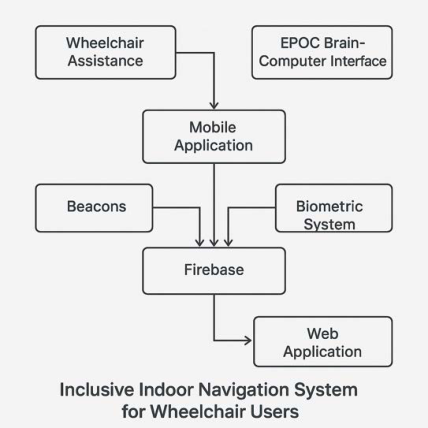
Figure 1 illustrates the technical design of the project, providing a basis to the information that will follow it.
Figure 1: Technical Design of ISEP InDoor Mapping.
Mobile Application The Mobile Application is designed to guide students through a building using advanced location tracking technology. The app activates automatically when students enter a specific access point, providing real-time navigation assistance to help them reach one of two designated classrooms. This app utilizes beacon technology to track the student’s location and offers directional guidance to ensure efficient navigation. Key features include a 360-degree interface at critical locations, such as the building entrance and classroom entrances, offering a virtual walkthrough to familiarize students with the environment. To enhance usability, the app supports multilingual accessibility and multiple input methods, allowing students with tetraplegia or paraplegia to use an EPOC brain- computer interface (BCI) to control navigation through brain signals and wheelchair assistance, ensuring an inclusive experience for all students. The estimated average session duration is 10 minutes per use.
Improving Mobility Equity in Higher Education 933 Web Application
The Web Application serves as an administrative and analytical platform for the mobile app. It was designed to provide statistics and data related to the usage of the mobile app, offering insights that can help improve its functionality and user experience. Through the web interface, administrators can manage the users’ credentials, beacons’ locations, provide interfaces for databases, and gather valuable feedback to refine the mobile app’s features. This will be a crucial tool for ongoing development, allowing for data driven decisions to optimize accessibility and navigation support for students with various mobility needs.
Hardware and Software Requirements The hardware requirements for the user vary depending on the section of the project. For the Mobile Application, the only requirement is an Android- compatible smartphone with Bluetooth capability. For the Web Application, the user needs a computer with an internet connection. Each member of the development team will require a computer, which will be covered using personal devices. Additionally, an Android-compatible smartphone will be necessary for testing, and beacons will be essential for fully implementing and evaluating the project.
Regarding software requirements, the Mobile Application must be developed in C# using the .NET MAUI framework in Visual Studio to ensure full functionality on Android-compatible devices. The Web Application is being developed in C# using the Blazor framework in Visual Studio. The API is also developed in C# within Visual Studio, utilizing a REST API framework. For data persistence, the system relies on a CockroachDB PostgreSQL database, able to store all the information referring to the beacons distributed throughout ISEP (location), users’ information (Name, email, type), the optional paths, and all the logs.
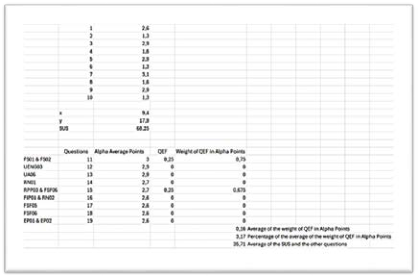
ALPHA TESTING For testing purposes, two alpha tests were conducted to see how the project was evolving. The first alpha test, directed on the 14th of April, presented the following results:
Figure 2: First alpha test.
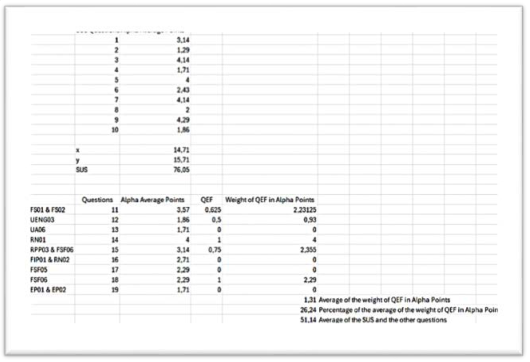
As is evident, the project was still a long way from finished, with the front office being very incomplete. However, the back-office and database were both established and on the right track. Regarding these results, improvements were made to the front and back office, with a heavier focus on the front office. Later, on May 4th, the second - and final - alpha test was conducted, leading to the following outcomes:
Figure 3: Second alpha test.
While still incomplete, the project has improved since the first alpha test. Nevertheless, further refinements are being made, especially in the front-end part, which was by far the weakest aspect of the whole process.
CONCLUSIONS
To summarize, ISEP InDoor Mapping is a pioneer project which represents a meaningful step toward creating a more accessible and inclusive academic environment for students with reduced mobility, particularly those living with paraplegia or tetraplegia. By leveraging beacon-based indoor navigation, developing a mobile application with advanced accessibility features - that are themselves adaptable regarding the mobility limitation of the user – and a web application which reflects administrative responsibility, the project promises to remove barriers that currently prevent at least one ISEP’s student (maybe, even more) from equally navigating the institution’s facilities independently and confidently. From the first steps of the project to the final tests, the team ensured that wheelchair users would not only be the target of the project, but would also be included within the process, providing feedback and a constructive, real-life analysis. While the testing phases revealed that there are improvements to be made, they have also demonstrated measurable progress and that the project is going in the right direction. Furthermore, the implementation of EEG-based EPOC technology, although a notable challenge due to its complexity and innovative nature, remains feasible within the estimated timeframe. ISEP InDoor Mapping stands to significantly improve the academic experience of students with paraplegia or tetraplegia and contribute to ISEP’s long-term commitment to inclusion and technological innovation. Through ongoing development, rigorous testing, and dedicated teamwork, the
Improving Mobility Equity in Higher Education 935 project is expected to increase app adoption, strengthen user engagement, improve accessibility standards within the institution, and contribute meaningfully to inclusive education and mobility practices. Ultimately, it represents a significant step toward ensuring equitable access and autonomy for wheelchair users within higher education environments.
ACKNOWLEDGMENT This work was developed at ISEP/GILT with the support of R&D GILT.
REFERENCES
Barbosa, J., Tavares, J., Cardoso, I., Alves, B. & Martini, B., 2018, ‘TrailCare: An indoor and outdoor Context-aware system to assist wheelchair users’, International Journal of Human-Computer Studies, vol. 116, pp. 1-14
Braga, R. A. M., Petry, M., Moreira, A. P. & Reis, L. P., 2019, ‘An innovative system to assist the mobility of people with motor disabilities. In Proceedings of the 2019 IEEE International Conference on Systems, Man and Cybernetics (SMC). IEEE
da Silva Lima, N., Leite, J.P., de Paiva, A. C., Maia, I. M., Silva, A., Junior, G. & Baptista, C., 2019, ‘Mobile Application for Crowdmapping Accessibility Places and Generation of Accessible Routes’, in Ahram, T., Falcão, C. (eds) Advances in Usability, User Experience and Assistive Technology. AHFE 2018. Advances in Intelligent Systems and Computing, vol. 794. Cham: Springer
Escudeiro, P. & Bidarra, J., 2008, ‘Quantitative Evaluation Framework (QEF)’, Revista Ibérica de Sistemas e Tecnologias de Informação, pp. 16–27 Escudeiro, P. & Gouveia, M. C., Oct 26 2023, ‘Empowering Deaf Learners: The
Promise of Sign Language MOOCs’, 22nd European Conference on e- Learning (ECEL 2023), ACPI publisher Escudeiro, P. & Escudeiro, N., 2012, ‘Evaluation of Serious Games in Mobile Platforms with QEF: QEF (Quantitative Evaluation Framework)’, in 2012 IEEE Seventh International Conference on Wireless, Mobile and Ubiquitous Technology in Education, pp. 268–271
Escudeiro, P., Galasso, B., Esdras, D. & Gouveia, M. C., Feb 272023, ‘Inclusive MOOC Supported by Assistive Technology’, in Massive Open Online Courses - Current Practice and Future Trends, IntechOpen. doi: 10.5772/intechopen.1001121
Escudeiro, P., Galasso, B., Teixeira, D., Gouveia, M.C. & Escudeiro, N., 2022, ‘Inclusive MOOC – Educational Content for Deaf People, a Portuguese Proof of Concept’, Cypriot Journal of Educational Sciences, vol. 17, no. 4, pp. 1285–1303
Parliamentary Assembly of the Council of Europe, 2005, Towards concerted efforts for treating and curing sinal-cord injuries: report of the Committee on Social Affairs and Health (Doc. 9689) [online]. Website https://assembly.coe.int/nw/xml/XRef/X2H-Xref- ViewHTML.asp?FileID=9680&lang=EN
Worldometer, n.d., European Population [online]. Website https://www.worldometers.info/world-population/europe-population/
Buerkle, A. et al. (2021) ‘An adaptive human sensor framework for human–robot collaboration’, The International Journal of Advanced Manufacturing Technology 2021 119:1, 119(1), pp. 1233–1248. Available at: https://doi.org/10.1007/ S00170-021-08299-2. Cimino, A. et al. (2024) ‘Simulation-based Digital Twin for enhancing human-robot
collaboration in assembly systems’, Journal of Manufacturing Systems, 77, pp. 903–918. Available at: https://doi.org/10.1016/J.JMSY.2024.10.024. Grushko, S. et al. (2021) ‘Improved Mutual Understanding for Human-Robot Collaboration: Combining Human-Aware Motion Planning with Haptic Feedback Devices for Communicating Planned Trajectory’, Sensors 2021, Vol. 21, Page 3673, 21(11), p. 3673. Available at: https://doi.org/10.3390/S21113673. Li, S. et al. (2023) ‘Proactive human–robot collaboration: Mutual-cognitive,
predictable, and self-organising perspectives’, Robotics and Computer- Integrated Manufacturing, 81, p. 102510. Available at: https://doi.org/10.1016/J. RCIM.2022.102510. Liu, H. and Wang, L. (2021) ‘Collision-free human-robot collaboration based on context awareness’, Robotics and Computer-Integrated Manufacturing, 67, p. 101997. Available at: https://doi.org/10.1016/J.RCIM.2020.101997. Nassiuma, I., Goh, Y.M. and Hubbard, E.M. (2024) ‘Positive and Negative
Reinforcement Nudges for Human-Robot Collaboration using a Mixed Reality Interface’, ACM International Conference Proceeding Series [Preprint]. Available at: https://doi.org/10.1145/3673805.3673844. Pereira, A. and Althoff, M. (2017) ‘Calculating human reachable occupancy for guaranteed collision-free planning’, IEEE International Conference on Intelligent Robots and Systems, 2017-September, pp. 4473–4480. Available at: https://doi. org/10.1109/IROS.2017.8206314. Suresh, P.; et al. (2024) ‘Open Human-Robot Collaboration using Decentralized
Inverse Reinforcement Learning’. Available at: https://www.merl.com (Accessed: 15 December 2025). Weistroffer, V. et al. (2022) ‘Using Physics-Based Digital Twins and Extended Reality for the Safety and Ergonomics Evaluation of Cobotic Workstations’, Frontiers in Virtual Reality, 3, p. 781830. Available at: https://doi.org/10.3389/ FRVIR.2022.781830/BIBTEX. Xia, G. et al. (2026) ‘A hierarchical human behavior modeling framework for safe
and efficient human-robot collaborative assembly’, Robotics and Computer- Integrated Manufacturing, 99, p. 103202. Available at: https://doi.org/10.1016/J. RCIM.2025.103202. Xia, S. et al. (2017) ‘A Survey on Human Performance Capture and Animation’, Journal of Computer Science And Technology, 32(3), pp. 536– 554. Available at: https://doi.org/10.1007/s11390-017-1742-y. Yang, X. et al. (2022) ‘Towards the Understanding of Nudging Strategies in Cyber-
Physical-Social System In Manufacturing Environments’, Proceedings of the ASME Design Engineering Technical Conference, 3-B. Available at: https://doi. org/10.1115/DETC2022-90863. Zhang, Z. et al. (2022) ‘Prediction-Based Human-Robot Collaboration in Assembly Tasks Using a Learning from Demonstration Model’, Sensors (Basel, Switzerland), 22(11), p. 4279. Available at: https://doi.org/10.3390/S22114279.
LISTED IN THE AHFE DIGITAL BOOKSTORE CATALOGUE
Explore the complete digital volume
Intelligent Human Systems Integration (IHSI 2026): Disruptive and Innovative Technologies
Read this individual research paper free through the original publisher, or explore the full digital proceedings book.
ISBN 978-1-964867-76-2
Explore this ISBN in the AHFE Bookstore ↗Listed in the July 2026 bookstore catalogue; search by ISBN to confirm current availability · Digital book purchase optional