Qingyu Zhao, Haoyu li, Pei-Luen Patrick Rau (2026). Sense of Agency in Brain-Computer Interface-Controlled Lower-Limb Rehabilitation Exoskeletons: Factors and Design Implications. In: Human-Computer Interaction & Emerging Technologies. AHFE Open Access, vol. 233, pp. 436–445. https://doi.org/10.54941/ahfe1007543
Brain-computer interface (BCI)-enhanced lower-limb rehabilitation exoskeletons can translate movement-related brain signals into assisted walking, thereby linking motor intention, robotic assistance, and sensory feedback. Existing evaluations of these systems mainly focus on decoding accuracy, gait control, safety, and clinical rehabilitation outcomes, but these indicators do not fully explain whether patients experience assisted walking as self-initiated and related to their own effort. This paper approaches this issue through the concept of sense of agency and proposes a loop-based analytical framework for BCI-controlled exoskeleton rehabilitation. It suggests that sense of agency depends not only on whether motor intention is accurately decoded, but also on whether the decoded command is triggered within a plausible temporal window, whether system responses remain stable across repeated training, whether robotic assistance preserves the patient’s perceived contribution, and whether sensory and contextual feedback can be meaningfully interpreted. On this basis, the paper argues that assisted walking may feel machine-driven when patients cannot integrate their intention, device response, limb movement, and feedback into a coherent process of self-attribution. Conversely, agency may be better supported when the system makes intention perceptible, assistance attributable, and shared control understandable. This perspective reframes the design significance of low-latency decoding, assist-as-needed control, and multimodal feedback: these features are not only technical or clinical indicators, but also important design conditions for supporting patients’ sense of agency during assisted movement.
Lower-limb rehabilitation exoskeletons have been widely investigated as wearable robotic systems for gait training, mobility assistance, and motor function recovery in patients with neurological impairments. In clinical rehabilitation, these systems can provide repetitive, task-specific, and physically supported gait training while reducing therapists’ physical workload and improving the consistency of training delivery (Bortole et al.,
Sense of Agency in Brain-Computer Interface-Controlled Lower-Limb 437 2015; Marchal-Crespo & Reinkensmeyer, 2009). However, exoskeleton- assisted rehabilitation does not automatically create an active rehabilitation experience for patients. Many systems generate movement assistance through pre-defined gait trajectories, therapist-triggered commands, joystick control, or mechanical control strategies. These approaches can help patients complete walking-like movements, but they do not necessarily ensure that patients initiate the movement through their own motor intention (Bortole et al., 2015; Ferrero et al., 2023).
Brain-computer interface technology offers one way to strengthen the active component of exoskeleton rehabilitation. A BCI records brain activity, identifies task-relevant neural patterns, and translates these signals into commands for an external device, thereby creating a non-muscular communication and control channel (Wolpaw et al., 2002). In motor rehabilitation, BCI systems are especially relevant because they can connect motor intention, device-mediated movement, and sensory feedback within a closed-loop training process (Daly & Wolpaw, 2008; Pichiorri et al., 2015). From this perspective, BCI-controlled exoskeletons should not be understood only as assistive machines that move the limbs. They should also be understood as rehabilitation systems that encourage patients to repeatedly engage motor-related neural processes during training.
Patients’ experience of assisted movement has received less attention in studies of BCI-controlled lower-limb exoskeletons. Existing studies have mainly emphasized technical and clinical outcomes, including decoding accuracy, gait control, safety, feasibility, and walking performance (Liu et al., 2017; Ferrero et al., 2023). These outcomes are important, but they do not fully explain whether patients experience assisted movement as self- initiated and connected to their own effort. This experiential dimension can be examined through sense of agency. Sense of agency refers to the subjective experience that one is the initiator or controller of one’s own actions and their consequences (Haggard, 2017; Moore, 2016). In BCI-controlled rehabilitation, sense of agency is directly relevant because the clinical goal is not only to produce limb movement, but also to support the patient’s voluntary involvement in motor recovery (Daly & Wolpaw, 2008; Pichiorri et al., 2015). A movement may be biomechanically successful, yet the patient may still experience it as externally imposed rather than self-generated. This distinction is central to lower-limb exoskeleton rehabilitation because the system does not merely produce external device outputs; it assists movements of the patient’s own limbs during walking-related tasks.
Sense of agency depends on how intention, action, sensory feedback, and contextual interpretation are related. Predictive accounts emphasize the match between expected and actual sensory consequences, whereas multifactorial accounts suggest that agency depends on several cues, including motor prediction, sensory feedback, environmental information, and higher- level judgment (Synofzik et al., 2008; Moore, 2016; Haggard, 2017). These accounts are particularly useful for BCI-controlled exoskeletons because the patient’s motor intention, the BCI decoding result, the timing of robotic assistance, and sensory feedback from the legs may not always be perfectly aligned. Prior work on BCI-mediated and embodied interaction also suggests that perceived control, feedback congruence, and sensorimotor relevance can
shape whether users experience mediated actions as their own (Evans et al., 2015; Caspar et al., 2021; Nierula et al., 2021). For lower-limb BCI-controlled exoskeletons, the key design challenge is to provide necessary motor assistance while preserving the patient’s sense of agency. Assisted walking should not feel merely like movement produced by a machine. Instead, patients should be able to experience assisted walking as movement connected to their own intention, effort, and participation. This paper therefore treats sense of agency as a central design consideration in BCI-controlled lower-limb exoskeleton rehabilitation. The paper does not aim to provide a systematic review of all empirical studies in this field. Rather, it develops a theory-guided conceptual analysis that integrates selected literature on sense of agency, BCI-mediated action, and rehabilitation robotics. The analysis examines how agency may be supported or weakened in the intention-action-feedback loop of exoskeleton-assisted walking. By clarifying these agency-relevant mechanisms, the paper aims to inform future system design and rehabilitation practice that better support patient engagement, self-efficacy, and active participation in recovery.
FACTORS SHAPING SENSE OF AGENCY IN THE BCI-CONTROLLED EXOSKELETON LOOP
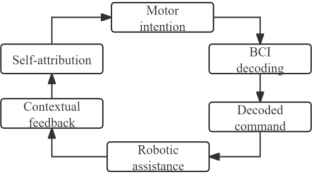
The patient’s sense of agency in BCI-controlled lower-limb exoskeleton rehabilitation depends on how motor intention is transformed into assisted walking. Agency is therefore not located in a single component of the system, such as the BCI decoder or the robotic controller. Instead, agency emerges from a mediated intention-action-feedback loop in which motor intention is detected, translated into robotic assistance, repeated across training cycles, and interpreted through sensory and contextual feedback. This loop-based analysis suggests that agency is not determined by one signal alone, but by the integration of motor, sensory, contextual, and inferential cues (Synofzik et al., 2008; Moore & Fletcher, 2012). This view also connects with human- machine interaction research that treats sense of agency as a design-relevant experience shaped by system control, feedback, and human-machine coupling (Yu et al., 2024).
In ordinary voluntary movement, intention, motor command, predicted sensory consequences, and actual bodily feedback are closely coupled. Comparator and forward-model accounts suggest that sense of agency is
Sense of Agency in Brain-Computer Interface-Controlled Lower-Limb 439 supported when the predicted consequences of an intended action correspond to actual sensory outcomes (Frith et al., 2000; Haggard, 2017). BCI-controlled exoskeleton rehabilitation changes the ordinary relation between intention and outcome because the system must infer the patient’s intention to initiate a step from movement-related neural activity and convert that intention into an executable command. The decoded command is therefore more than a classifier output. It is the point at which the patient’s intention enters the robotic control loop.
Once the decoded command brings the patient’s intention into the robotic control loop, assisted stepping can feel self-initiated only if the patient can relate the intention to move to the perceptual consequences of the step. Event- coding and ideomotor accounts suggest that actions are partly represented through their anticipated effects, rather than only through motor execution itself (Hommel et al., 2001). In lower-limb exoskeleton use, these anticipated effects may include leg movement, foot contact, weight shift, and body displacement. When the decoded command preserves a meaningful relation between the intended step and these expected effects, assisted movement can remain connected to the patient’s own intention. When the system misses the intention, misclassifies it, or triggers movement without a clear intention, the same movement may feel externally generated. Work on BCI-exoskeleton rehabilitation has therefore emphasized self-paced control, low-latency online decoding, and neurofeedback from brain to limb as ways to support active brain involvement during training (Liu et al., 2024).
After the intended action has been decoded, response timing further shapes the intention-movement relation. Even when the decoded command corresponds to the patient’s intended action, the assisted step may feel less self-generated if the system responds too late or at an unexpected moment. Research on intentional binding links agency to the perceived temporal coupling between voluntary action and its consequences (Moore & Obhi, 2012). Wegner and Wheatley’s account of apparent mental causation similarly emphasizes that the experience of will is strengthened when a thought precedes an action in a plausible temporal relation and is consistent with that action (Wegner & Wheatley, 1999). In BCI-controlled lower-limb exoskeletons, delays may arise from signal acquisition, neural decoding, control computation, or mechanical actuation. A long or variable delay can make the step feel more like a machine-produced event than a movement connected to the patient’s intention. Similar timing and control constraints have been discussed in human-machine interaction, where delay, automation constraints, and reduced decision control may limit users’ sense of agency in machine-mediated actions (Zanatto et al., 2024).
Beyond the timing of a single step, the patient’s sense of agency also develops through repeated interaction. Rehabilitation training depends on repeated intention-movement couplings through which patients learn whether their effort has a stable effect on the system. Consistent system responses may help patients develop a durable feeling of control. Inconsistent or unpredictable responses, by contrast, can make the control relation difficult for patients to interpret. The importance of stable coupling is consistent with cue-integration accounts, which suggest that agency depends on the reliability and weighting of multiple cues rather than on one mechanism alone (Moore & Fletcher,
2012). It is also supported by BCI-mediated agency research showing that perceived control and feedback congruence can influence whether users experience brain-machine actions as their own (Evans et al., 2015; Caspar et al., 2021).
While repeated interaction concerns the stability of the control relation over time, robotic assistance concerns the patient’s perceived contribution within each assisted movement. Assisted walking is not simply the output of the patient’s intention; it is a hybrid action produced through interaction between the patient and the exoskeleton. Substantial assistance may be necessary for safety, weight support, and gait completion, especially in patients with severe motor impairment. However, when robotic assistance dominates the movement, patients may experience walking as something done to them rather than something they actively participate in. Insufficient assistance can also weaken agency indirectly by producing repeated failure, fear, or frustration. The design issue is therefore not to minimize assistance, but to provide assistance in a way that preserves the patient’s perceived contribution. This interpretation is consistent with rehabilitation robotics approaches that emphasize adaptive or assist-as-needed control rather than fixed, excessive assistance (Marchal-Crespo & Reinkensmeyer, 2009). Reviews of lower-limb exoskeleton control strategies also show that assistance can be delivered through different control approaches with different clinical implications, reinforcing the importance of how assistance is provided (de Miguel-Fernández et al., 2023).
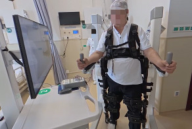
Figure 2: BCI-controlled lower-limb exoskeleton and treatment scenario (Adapted from RoboCT, 2026).
Finally, patients interpret assisted movement through sensory and contextual feedback. Multifactorial accounts of agency suggest that agency depends not only on motor prediction, but also on sensory feedback and higher-level attributional judgment (Synofzik et al., 2008; Moore & Fletcher, 2012). In lower- limb exoskeleton training, patients receive visual information about stepping, proprioceptive sensations from joint movement, tactile and pressure cues from limb-device contact and foot-ground interaction, and verbal feedback from therapists. These cues help patients judge whether the movement is connected to their own intention and effort. Feedback may be especially important in BCI-mediated action because the user’s intention is translated through a technological system rather than ordinary muscular execution. Evans et al. (2015) showed that visual feedback can strongly influence sense of agency for brain-machine actions, while HCI research also highlights the roles of system feedback, computer assistance, and joint human-computer action in shaping users’ feeling of control (Limerick et al., 2014). Weak, delayed, incongruent, or poorly explained feedback may lead patients to attribute the movement primarily to the machine. Feedback that clarifies the relation between intention,
Sense of Agency in Brain-Computer Interface-Controlled Lower-Limb 441 assistance, and bodily movement can instead support the experience of assisted walking as a shared but self-relevant action.
Taken together, the BCI-controlled exoskeleton loop shapes agency through several connected design and interaction conditions. These conditions do not all describe the same type of system component: some refer to processes within a single control loop, some refer to assistance and feedback conditions, and repeated interaction refers to stability across training cycles. They are grouped together because each condition influences whether patients experience assisted walking as self-initiated and effort- related. Table 1 therefore summarizes agency-relevant analytical dimensions across the interaction loop, rather than treating them as identical technical modules. This loop-based understanding shows that agency is not determined by decoding accuracy or movement execution alone. Instead, agency depends on how intention decoding, response timing, repeated interaction, robotic assistance, and feedback interpretation jointly support the patient’s experience of assisted walking as self-initiated and effort-related.
Table 1: Agency-relevant analytical dimensions across the BCI-controlled exoskeleton loop.
Table available in the original PDF paper.
Dimension Agency-Relevant Issue How It Affects Agency Key Support
Intention decoding
Frith et al., 2000; Hommel et al., 2001; Haggard, 2017
Whether the decoded command reflects the patient’s intended movement
Misdecoded, missed, or unintended commands may break the link between motor intention and assisted action.
Response timing
Wegner & Wheatley, 1999; Moore & Obhi, 2012
Whether assisted movement occurs within a plausible temporal window
Delayed or unexpected movement may make the step feel disconnected from the patient’s intention.
Repeated interaction
Whether intention– movement coupling remains stable across training cycles
Inconsistent responses may prevent patients from developing a stable feeling of control.
Synofzik et al., 2008; Moore & Fletcher, 2012; Evans et al., 2015; Caspar et al., 2021
Robotic assistance
Whether assistance preserves the patient’s perceived contribution
Marchal-Crespo & Reinkensmeyer, 2009; de Miguel-Fernández et al., 2023
Excessive assistance may make walking feel machine-driven, while insufficient assistance may produce failure or fear.
Feedback interpretation
Whether sensory and contextual feedback supports self-attribution
Limerick et al., 2014; Evans et al., 2015; Tomás et al., 2023
Weak or unclear feedback may make patients attribute movement to the machine rather than to their own effort.
PRESERVING AGENCY WITHIN ASSISTED MOVEMENT In assisted walking, the key design issue is not only how much support the exoskeleton provides, but whether patients can still recognize the movement as related to their own intention and effort. Because BCI-controlled exoskeletons mediate the relation between intention and movement, agency may be weakened when this mediation feels opaque or machine-driven. Design should therefore help patients interpret the device response, perceive their own contribution, and understand the shared nature of control.
Feedback is central to this process. A BCI-controlled exoskeleton may execute a step successfully, but patients may still feel passive if they cannot understand how their intention contributed to that movement. Feedback should therefore clarify the relation among intention detection, device response, and bodily movement, rather than only report task success or gait performance. Such feedback can support self-attribution by helping patients connect their intention with the assisted step (Synofzik et al., 2008; Moore & Fletcher, 2012).
Robotic assistance should also preserve the patient’s perceived contribution. Assist-as-needed control is valuable not only because it supports motor learning and task completion, but also because it can prevent assistance from becoming overly dominant. If assistance is excessive or opaque, walking may feel like something done to the patient. If assistance is insufficient, repeated failure or fear may also weaken agency. Assistance should therefore be delivered as support for a movement the patient initiates or attempts, rather than as a substitute for the patient’s own effort.
Shared control should be made understandable during repeated training. Missed intentions, false triggers, delayed responses, or inconsistent assistance may lead patients to believe that their effort has little influence over movement. Patients need to understand which aspects of walking are linked to their detected intention and which aspects are provided by robotic support for safety and completion. This understanding matters because agency in mediated action depends not only on actual control, but also on perceived control and feedback congruence (Evans et al., 2015; Limerick et al., 2014).
Overall, an agency-centered perspective reframes low-latency decoding, adaptive assistance, and multimodal feedback as more than technical or clinical requirements. These features can support patients’ sense of agency when they help patients experience assisted walking as a self-relevant action rather than as movement produced by the machine alone.
CONCLUSION
BCI-controlled lower-limb rehabilitation exoskeletons are commonly evaluated through decoding accuracy, gait assistance, safety, and functional performance. These indicators are important, but they do not fully capture whether patients experience assisted walking as part of their own action. This paper argues that sense of agency provides a useful perspective for examining this experiential dimension. In BCI-controlled exoskeleton rehabilitation, agency emerges from a mediated intention-action-feedback loop in which motor intention is decoded, translated into robotic assistance, repeated across training cycles, and interpreted through sensory and contextual feedback.
Sense of Agency in Brain-Computer Interface-Controlled Lower-Limb 443 The analysis suggests that assisted walking is more likely to feel self-related when patients can connect movement to their own intention, effort, and perceived contribution. From this perspective, intention decoding, response timing, repeated interaction, robotic assistance, and feedback interpretation should not be treated as isolated technical concerns. They should be understood as connected conditions that shape whether patients can attribute assisted movement partly to themselves rather than entirely to the machine. This view reframes low-latency decoding, adaptive assistance, and multimodal feedback as design concerns that support the patient’s interpretation of assisted walking, not only as technical or clinical requirements.
Because this paper offers a conceptual analysis rather than empirical validation, future studies should examine how sense of agency changes during BCI-controlled exoskeleton training and how it relates to engagement, self-efficacy, adherence, and rehabilitation outcomes. Such work may help develop more patient-centered rehabilitation approaches that consider not only whether assisted walking is successfully produced, but also how it is experienced by patients.
REFERENCES
Bertuccelli, M., Tortora, S., Pasinato, M., Trombin, E., Tasinazzo, W., Baba, A., Bisiacchi, P., Sparacino, G., Menegatti, E., & Del Felice, A. (2026). Quantitative assessment of human-exoskeleton integration through a neurophysiological marker of embodiment. Scientific Reports, 16, 3111. https://doi.org/10.1038/ s41598-025-33046-y Bortole, M., Venkatakrishnan, A., Zhu, F., Moreno, J. C., Francisco, G. E., Pons, J. L.,
& Contreras-Vidal, J. L. (2015). The H2 robotic exoskeleton for gait rehabilitation after stroke: Early findings from a clinical study. Journal of NeuroEngineering and Rehabilitation, 12, 54. https://doi.org/10.1186/s12984-015-0048-y Caspar, E. A., De Beir, A., Lauwers, G., Cleeremans, A., & Vanderborght, B. (2021).
How using brain-machine interfaces influences the human sense of agency. PLOS ONE, 16(1), e0245191. https://doi.org/10.1371/journal.pone.0245191 Collier, M. A., Narayan, R., & Admoni, H. (2025). The sense of agency in assistive robotics using shared autonomy. In Proceedings of the ACM/IEEE International Conference on Human-Robot Interaction. Cornelio, P., Haggard, P., Hornbæk, K., Georgiou, O., Bergström, J., Subramanian, S., &
Obrist, M. (2022). The sense of agency in emerging technologies for human- computer integration: A review. Frontiers in Neuroscience, 16, 949138. https:// doi.org/10.3389/fnins.2022.949138 Daly, J. J., & Wolpaw, J. R. (2008). Brain–computer interfaces in neurological rehabilitation. The Lancet Neurology, 7(11), 1032–1043. https://doi.org/10.1016/ S1474-4422(08)70223-0 de Miguel-Fernández, J., Lobo-Prat, J., Prinsen, E., Font-Llagunes, J. M., &
Marchal-Crespo, L. (2023). Control strategies used in lower limb exoskeletons for gait rehabilitation after brain injury: A systematic review and analysis of clinical effectiveness. Journal of NeuroEngineering and Rehabilitation, 20, 23. https://doi. org/10.1186/s12984-023-01144-5 Donati, A. R. C., Shokur, S., Morya, E., Campos, D. S. F., Moioli, R. C., Gitti, C.
M., Augusto, P. B., Tripodi, S., Pires, C. G., Pereira, G. A., Brasil, F. L., Gallo, S., Lin, A. A., Takigami, A. K., Aratanha, M. A., Joshi, S., Bleuler, H., Cheng, G., Rudolph, A., & Nicolelis, M. A. L. (2016). Long-term training with a brain- machine interface-based gait protocol induces partial neurological recovery in paraplegic patients. Scientific Reports, 6, 30383. https://doi.org/10.1038/ srep30383
Evans, N., Gale, S., Schurger, A., & Blanke, O. (2015). Visual feedback dominates the sense of agency for brain-machine actions. PLOS ONE, 10(6), e0130019. https:// doi.org/10.1371/journal.pone.0130019 Ferrero, L., Quiles, V., Ortiz, M., Iáñez, E., Gil-Agudo, Á., & Azorín, J. M. (2023).
Brain-computer interface enhanced by virtual reality training for controlling a lower limb exoskeleton. iScience, 26(5), 106675. https://doi.org/10.1016/j. isci.2023.106675 Frith, C. D., Blakemore, S. J., & Wolpert, D. M. (2000). Explaining the symptoms of schizophrenia: Abnormalities in the awareness of action. Brain Research Reviews, 31(2–3), 357–363. https://doi.org/10.1016/S0165-0173(99)00052-1 Gallagher, S. (2000). Philosophical conceptions of the self: Implications for cognitive
science. Trends in Cognitive Sciences, 4(1), 14–21. https://doi.org/10.1016/S1364- 6613(99)01417-5 Glawe, F., Schmeckel, T., Brauner, P., & Ziefle, M. (2025). Human autonomy and sense of agency in human-robot interaction: A systematic literature review. arXiv. https://doi.org/10.48550/arXiv.2509.22271 Guo, X., Li, P., Liu, H., & Ding, S. (2026). A systematic review of the effects of brain-
computer interface on lower limb motor function, balance function, and activities of daily living in stroke patients. Frontiers in Neuroscience, 19, 1641843. https:// doi.org/10.3389/fnins.2025.1641843 Haggard, P. (2017). Sense of agency in the human brain. Nature Reviews Neuroscience, 18(4), 196–207. https://doi.org/10.1038/nrn.2017.14 Hasan, S., & Alam, N. (2025). Comprehensive comparative analysis of lower limb
exoskeleton research: Control, design, and application. Actuators, 14(7), 342. https://doi.org/10.3390/act14070342 Hommel, B., Müsseler, J., Aschersleben, G., & Prinz, W. (2001). The theory of event coding: A framework for perception and action planning. Behavioral and Brain Sciences, 24(5), 849–878. https://doi.org/10.1017/S0140525X01000103 Hu, X., Li, N., Pang, M., Bai, S., Mo, J., Yao, S., Lu, Y., Huang, M., Di, J.,
Kang, Y., Tang, J., Zhang, H., Zhao, T., He, J., He, L., Xie, R., Liu, B., Xu, G., Hu, X., & Rong, L. (2026). Brain-computer interface-controlled exoskeleton training for lower-limb rehabilitation in spinal cord injury: A pilot randomized clinical trial. Annals of Neurology. https://doi.org/10.1002/ana.78144 Kalckert, A., & Ehrsson, H. H. (2012). Moving a rubber hand that feels like your own: A dissociation of ownership and agency. Frontiers in Human Neuroscience, 6, 40. https://doi.org/10.3389/fnhum.2012.00040 Kusumoto, D., Yeoh, W. L., Choi, J., Loh, P. Y., & Muraki, S. (2026). Human motor
responses to different assistance onset timings during powered elbow flexion. Applied Ergonomics, 134, 104721. Limerick, H., Coyle, D., & Moore, J. W. (2014). The experience of agency in humancomputer interactions. Frontiers in Human Neuroscience, 8, 643. https://doi. org/10.3389/fnhum.2014.00643 Liu, D., Chen, W., Pei, Z., & Wang, J. (2017). A brain-controlled lower-limb
exoskeleton for human gait training. Review of Scientific Instruments, 88(10), 104302. https://doi.org/10.1063/1.5006461 Liu, L., Li, J., Ouyang, R., Zhou, D., Fan, C., Liang, W., Li, F., Lv, Z., & Wu, X. (2024). Multimodal brain-controlled system for rehabilitation training: Combining asynchronous online brain–computer interface and exoskeleton. Journal of Neuroscience Methods, 406, 110132. https://doi.org/10.1016/j. jneumeth.2024.110132 Marchal-Crespo, L., & Reinkensmeyer, D. J. (2009). Review of control strategies for
robotic movement training after neurologic injury. Journal of NeuroEngineering and Rehabilitation, 6, 20. https://doi.org/10.1186/1743-0003-6-20
Sense of Agency in Brain-Computer Interface-Controlled Lower-Limb 445 McDonald, C., Fingleton, C., Murphy, S., & Lennon, O. (2022). Stroke survivor
perceptions of using an exoskeleton during acute gait rehabilitation. Scientific Reports, 12, 14185. https://doi.org/10.1038/s41598-022-18188-7 Moore, J. W. (2016). What is the sense of agency and why does it matter? Frontiers in Psychology, 7, 1272. https://doi.org/10.3389/fpsyg.2016.01272 Moore, J. W., & Fletcher, P. C. (2012). Sense of agency in health and disease: A
review of cue integration approaches. Consciousness and Cognition, 21(1), 59–68. https://doi.org/10.1016/j.concog.2011.08.010 Moore, J. W., & Obhi, S. S. (2012). Intentional binding and the sense of agency: A review. Consciousness and Cognition, 21(1), 546–561. https://doi.org/10.1016/j. concog.2011.12.002 Nierula, B., Spanlang, B., Martini, M., Borrell, M., Nikulin, V. V., & Sanchez-Vives, M.
V. (2021). Agency and responsibility over virtual movements controlled through different paradigms of brain-computer interface. The Journal of Physiology, 599(9), 2419–2434. https://doi.org/10.1113/JP278167 Pazzaglia, M., & Molinari, M. (2016). The embodiment of assistive devices—from wheelchair to exoskeleton. Physics of Life Reviews, 16, 163–175. https://doi. org/10.1016/j.plrev.2015.11.006 Pfurtscheller, G., & Neuper, C. (2001). Motor imagery and direct brain-computer
communication. Proceedings of the IEEE, 89(7), 1123–1134. https://doi. org/10.1109/5.939829 Pichiorri, F., Morone, G., Petti, M., Toppi, J., Pisotta, I., Molinari, M., Paolucci, S., Inghilleri, M., Astolfi, L., Cincotti, F., & Mattia, D. (2015). Brain- computer interface boosts motor imagery practice during stroke recovery. Annals of Neurology, 77(5), 851–865. https://doi.org/10.1002/ana.24390 Ramos-Murguialday, A., Broetz, D., Rea, M., Läer, L., Yilmaz, Ö., Brasil, F. L.,
Liberati, G., Curado, M. R., Garcia-Cossio, E., Vyziotis, A., Cho, W., Agostini, M., Soares, E., Soekadar, S., Caria, A., Cohen, L. G., & Birbaumer, N. (2013). Brain- machine interface in chronic stroke rehabilitation: A controlled study. Annals of Neurology, 74(1), 100–108. https://doi.org/10.1002/ana.23879 Synofzik, M., Vosgerau, G., & Newen, A. (2008). Beyond the comparator model: A multifactorial two-step account of agency. Consciousness and Cognition, 17(1), 219–239. https://doi.org/10.1016/j.concog.2007.03.010 Tomás, D. J., Pais-Vieira, M., & Pais-Vieira, C. (2023). Sensorial feedback contribution
to the sense of embodiment in brain–machine interfaces: A systematic review. Applied Sciences, 13(24), 13011. https://doi.org/10.3390/app132413011 Wang, K., Wang, Y., Li, M., Xu, M., & Ming, D. (2025). Challenges and prospects of BCI-based robot systems for stroke rehabilitation. EngMedicine, 2(4), 100102. https://doi.org/10.1016/j.engmed.2025.100102 Wegner, D. M., & Wheatley, T. (1999). Apparent mental causation: Sources of
the experience of will. American Psychologist, 54(7), 480–492. https://doi. org/10.1037/0003-066X.54.7.480 Wolpaw, J. R., Birbaumer, N., McFarland, D. J., Pfurtscheller, G., & Vaughan, T. M. (2002). Brain-computer interfaces for communication and control. Clinical Neurophysiology, 113(6), 767–791. https://doi.org/10.1016/S1388- 2457(02)00057-3 Yu, H., Du, S., Kurien, A., van Wyk, B. J., & Liu, Q. (2024). The sense of agency in
human–machine interaction systems. Applied Sciences, 14(16), 7327. https://doi. org/10.3390/app14167327 Zanatto, D., Bifani, S., & Noyes, J. (2024). Constraining the sense of agency in humanmachine interaction. International Journal of Human–Computer Interaction, 40(13), 3482–3493. https://doi.org/10.1080/10447318.2023.2189815
Read this individual research paper free through the original publisher, or explore the full digital proceedings book.
ISBN 979-8-950676-09-3
Explore this ISBN in the AHFE Bookstore ↗Listed in the July 2026 bookstore catalogue; search by ISBN to confirm current availability · Digital book purchase optional