Mao Mao, Pei-Luen Patrick Rau (2021). Should Internet of Things Be Human-like? Exploring Social Media Users’ Acceptance on Anthropomorphic Internet of Things. In: Advances in Affective and Pleasurable Design. AHFE Open Access, vol. 14. https://doi.org/10.54941/ahfe100557
This study examined how anthropomorphism of the Internet of Things (IoT) influences users’ accepting IoT services. The objective was to explore uses’ mental model of IoT, and develop an IoT mental model compatible with users’. A laboratory experiment was conducted with 36 college students. The independent variables were hierarchy of things (non-hierarchy, location-based hierarchy, function-based hierarchy) and level of anthropomorphism (no anthropomorphism, language anthropomorphism only, language and appearance anthropomorphism). Users’ ratings on acceptance, trust, and satisfaction were measured after interacting with IoT systems with different characteristics of anthropomorphism. Results indicated that uses’ mental model was more compatible with the one involving anthropomorphism of language than appearance. Compared with non-hierarchical structure, users’ mental model was more compatible with structure with hierarchy, and no significant difference between functional and locational hierarchy was observed.
The Internet of Things (IoT), first proposed in 1999 by MIT Auto-ID Labs, aims at connecting pervasive smart objects in an internet-like structure so as to interact with each other. More and more IoT services are becoming available for individual use, such as smart home service, healthcare for children and older adults, etc. Currently most IoT practitioners are utilizing the interaction paradigm of GUI (Graphical User Interface). The so-called WIMP (Windows, Icons, Menus and Pointer) metaphor has been the most dominant interaction model that users have been familiar with for long. In addition, as the trend towards computing into the real world, new interaction techniques (e.g., tangible user interface, ubiquitous computing) are becoming increasingly popular in technological products. For example, Siri on iPhone 4S is a noteworthy and successful product by enabling users “talk” to their cell phones and “issue” orders. Moreover, high intelligent social robots and agents interact with people in a natural way with the Affective and Pleasurable Design (2021) help of ubiquitous computing. These new techniques enable a new interaction paradigm: anthropomorphic interaction paradigm. By borrowing ideas of social media and human-like characteristics, anthropomorphic IoT can augment and enrich the physical world with social network services. While at the same time, home devices within the anthropomorphic interaction paradigm tend to become “friends” that are more human-like, engaging, approachable, and understandable to the users.
Anthropomorphic interaction paradigm helps users understand the relationship with large amount of things in ubiquitous contexts, based on their general social experience. But it may also be balanced by its negatives. For example, anthropomorphic user interface are regarded by some researchers as less efficient and reliable than the traditional GUI paradigm. On one hand, current techniques such as speech recognition, natural language processing fall short of human assistant (Catrambone, Stasko, & Xiao, 2002). On the other hand, users might have not been ready to interact with their familiar environment through new ways like talking or sending messages. It is also questionable whether the users accept the way that home devices behave like human or not. Thus it is essential to carefully study the trade-offs between traditional and novel interaction paradigms when introducing anthropomorphism into IoT.
Another issue of the anthropomorphic interaction paradigm is re-understanding of human-thing relationship. Since user mental model towards things and their relationship with things decide their attitudes towards anthropomorphic IoT technologies, it is worth studying user perception of hierarchy of things, that is, how user treat different things and group things together.
This study addresses how IoT mental model could be designed to stay consistent with user mental model. Two factors influencing the IoT mental model are examined: hierarchy of things and level of anthropomorphism. We are interested in how the two factors would shape user mental model of IoT, and would affect user acceptance on anthropomorphic IoT. Although researchers have realized the influence of users’ perception of things and how things present and perform in IoT smart systems, very few studies have been conducted to investigate these factors and no convincing explanations have been made. Only by recognizing and considering users’ perception and mental model towards IoT and anthropomorphic features can all stakeholders of related areas fully benefit from IoT technologies. The additional value of this study lies in the insights it provided for practitioners of IoT services.
THEORETICAL BACKGROUND HCI Interaction Paradigm on Internet of Things
GUI-based interaction paradigm is currently used in existing IoT system, through which users directly manipulate things with GUI elements. GUI-based paradigm corresponds to users’ long-term formed mental model of interaction with things. GUI-based systems react towards operations immediately, and automatically normalize all actions. This kind of visible manipulation mode fits users’ past experience very much, and supports users’ more complex tasks and functions as well, especially in complex interfaces. However, when organization of things are getting complex, a group of discrete GUI interfaces require many rotations, various background knowledge and more physical workload when executing (Zhang, Rau, & Salvendy, 2009).
Another IoT interaction paradigm—social-based interaction paradigm comes from anthropomorphic IoT. In this paradigm, personalized things performed as human beings in a social-network-like system. Breslin et al. (Breslin & Decker, 2007) proposed that future social network on Internet will consist of both human and objects, and people will be connected via items of interest related to their jobs, workplaces, and hobbies. Kamilaris et al. (Kamilaris & Pitsillides, 2010) recently proposed interaction with smart home using Facebook and evaluated the technology feasibility. Guinard et al. (Guinard, Fischer, & Trifa, 2010) proposed a platform to share devices with other people in existing social network.
Problems come out as well when integrating social network and IoT technologies, since previous theory of human- human interaction could not be directly translated to human thing interaction. One approach is Natural Language Interface (NLI). EXACT and Yourway devote to enable basic control over household appliance by speech or simple sentences input with the help of NLI (Yates, Etzioni, & Weld, 2003; Zhou, 2007). NLI has obvious advantages in input/output space and interface layout; and the less natural the command, the heavier users’ memory load.
However, NLI also suffers from low perceived predictability, complexity, invalid commands and serious problems of safety control (Zhou, 2007). How to design natural language interface, what level of natural language should be are still among the critical issues. Comparison results of GUI-based and social-based paradigm in IoT are shown in Table 1.
Table 1: Sample human systems integration test parameters HCI Interactive paradigms in IoT
User mental model Users have to manipulate every device directly, and every device has its own interface
Users and things act as members in the relation network, and the relationship could be defined by the user himself Interaction Style Graphical user interface (GUI) and WIMP
High Low
Dialog-based natural language interface (NLI) Requirement for knowledge of manipulation Direct manipulation High Low
Abstraction Level Low High
Perception of Human-object Interaction In order to study perception of human-object interaction, studies on user mental model of Internet’s appearing are reviewed, and then users’ perspective of human-object interaction in household context is discussed, considering currently there’re few studies on IoT from human cognitive aspects. A mental model is cognitive representation of something that defines a logical and believable estimation as to how a thing is constructed or how it functions (Heim, 2007), hypothesized to play a major role in cognition, reasoning, and decision-making. Advanced by the later birth of cognitive science, mental model was regarded as a way of describing the thought process when solving deductive problems (Johnson-Laird, 1986) and supplying people with a means of understanding the functioning of physical systems (Gentner & Stevens, 1983). When a person continues to modify his mental model in order to get to a workable result by interacting with the system, his mental models will be constrained by factors such as the user’s technical background, previous experiences with similar system, and the structure of the human information processing system (Norman & Draper, 1986).
User Mental Model of the Internet Internet brought new ways of gaining and processing information, as a result it changed user mental model towards human-machine interaction. Thatcher et al. (Thatcher & Greyling, 1998) found that people’s mental models of Internet were arranged into categories hierarchically ordered according to respondents’ experience with the Internet, and relatively high frequency of usage (with little conceptualization of the Internet’s structure, such as e-mailing and searching) display somewhat simple mental models of the Internet. Levin et al. reported that more expert Internet users having more elaborate, detailed and flexible mental models than novices, and are more effective to diagnose and recover from problematic situations occurring during Web using. Studies by Papastergiou (Papastergiou, 2005) indicated that high school students form simplistic, utilitarian mental models from what they see, while adults’ mental models from different ages follow roughly similar stages of evolution, from utilitarian to structural ones. All in all, most users mainly focus on their computers and activities, and do not perceive the Internet in terms of connections. For users holding the structural mental models, more frequent and sufficient use of the Internet leads to more elaborate mental models (Papastergiou, 2005).
Human-object Interaction in Household Environment A way of understanding human-thing relationship is to studying human strategy of grouping things. There are many factors corresponding to grouping strategy: things’ attributes, functions, location, task and household contexts. These factors will also influence the basic thoughts that things can only be used by people. The most common strategies are based on physical location and function. Users with location-based strategy group things according to Affective and Pleasurable Design (2021) their locations. They tend to have clear definitions for things with fixed locations and mono-functions. Location- based strategy comes from studies on smart home environments (Koskela & Väänänen-Vainio-Mattila, 2004) showing that in a familiar environment, human behaviour assumes certain regularities and thus certain action patterns (e.g. laundry in a particular time or particular place and way) are assumed.
Function-based strategy indicates that things are grouped, used and found according to their common functions, such as things for cleaning, things for entertainment. This kind of strategy comes from “Activity Centre”, the centre of certain activity and behaviours, around which a great many patterns of use revolve (Crabtree, Hemmings, & Rodden, 2002). For example, table plays as a coordination centre when adults may monitor the doing of schoolwork by children and as a site where young children may be occupied (doing drawing, crayoning, painting, etc.). Things with similar functions and same goals are easily grouped in certain “activity centres”, which forms a fundamental perception of human-thing relationship.
Effects of Anthropomorphic Qualities in Accepting IoT The tendency to ascribe human-like features to non-human entities is a natural disposition of human beings, known as anthropomorphism (Caporael & Heyes, 1997). People are likely to anthropomorphize objects that have human- like features, such as eyes (Haley & Fessler, 2005; Jipson & Gelman, 2007), hands (Woodward, 1999) or a human- like form (Aggarwal & Ann, 2007), or that behave in an apparently complex or intentional manner (N. Epley, Akalis, Waytz, & Cacioppo, 2008; Heider & Simmel, 1944).
In the era of information technology, computers, intelligent agents and social robots have always been favourite targets for anthropomorphic attributions. Reeves et al. (Reeves & Nass, 1996) claimed that anthropomorphism is modulated as a function of system features, that is the media equation paradigm (media=real life). Studies of Nass et al. (Nass, Steuer, & Tauber, 1994) indicated that people apply to computers politeness rules, gender stereo types, praise rules, human personalities, exactly as they do during interpersonal communication, since computers use natural language, interact in real time, and fill traditional social rules (e.g., bank teller and teacher), even experienced computer users tend to respond to them as social entities.
The study on the acceptance of anthropomorphic agents interface shows that the acceptance of agents strongly depend on traditional variables such as control, understanding, trust, and distraction (Schaumburg, 2001). Using humanoid embodiment and human voice-based communication significantly enhance user acceptance towards anthropomorphic agents (Qiu & Benbasat, 2009), and success of social agents highly depends on understanding the social dynamic underlying user-agent interaction (De Angeli, Johnson, & Coventry, 2001). Past studies about anthropomorphic features indicated that mind, body and personality are three most important factors affecting the success of personified agent (De Angeli et al., 2001). Thing’s “face” in the smart system, referring to “body”, was thought to help to increase users’ familiarity as the increasing of human appearance similarity. Studies on language revealed that communication is enough to build an effective agent, even without any visual help. Moreover, the communication styles of the same agents could be different with different context (e.g., entertainment and serious) to improve the social presence and user preferences.
THEORETICAL FRAMEWORK
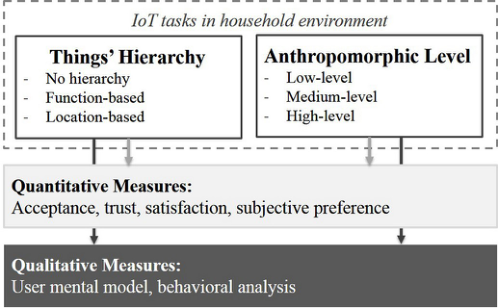
Figure 1. Research framework of user acceptance of anthropomorphic IoT
This paper focuses on the effects of things’ human-like qualities on user acceptance of anthropomorphic IoT in a social networking service environment. The two factors are hierarchy of things (e.g., no hierarchy, function-based hierarchy, location-based hierarchy) and anthropomorphic level (e.g., low, medium, and high). This study was carried out in a household context. The dependent variables were user acceptance (including perceived usefulness, perceived behaviour control, perceived behaviour control, attitudes towards using and perceived ease of use), satisfaction, trust, and subjective preference. Moreover, users’ mental model of the network of household things is measured by drawing their mental models. The dependent variables are highly important for measuring social media users accepting anthropomorphic IoT systems. Figure 1 shows the research framework: Hypothesis 1. Users are more likely to accept, trust, and satisfy when interacting with things organized in hierarchical rather than non-hierarchical structure, and the difference between hierarchical and non-hierarchical is larger than difference between location-based and function-based hierarchy.
In anthropomorphic IoT users “chat” with things through a natural language interface by typing in words. As the number of things and task complexity increase, the difficulty of manipulating and managing things increases heavily as well. Thus we raised the hypothesis: when users only interact with related agents, the amount of information decrease, thus workload decrease, as a result users’ subjective preference increases. Moreover, things are treated as tools and subordinates to fulfil tasks, thus we have to make sure they are perceived to be credible and able to provide engagement. What’s more, diversity of users’ grouping strategy makes users’ perceive little difference between different kinds of social hierarchies. That is to say, the two kinds of grouping strategies overlap in users’ minds. In this paper we will verify this hypothesis by measuring users’ subjective preference, perception and mental models.
Hypothesis 2. Users are more likely to accept, trust and satisfy when interacting with things with higher level of anthropomorphism than lower level, and the difference on acceptance, trust and satisfaction between low and medium levels are larger than those between medium and high levels.
Psychological researches aiming at user acceptance towards things’ anthropomorphic characters indicated that users who tend to accept anthropomorphism are more likely to avoid uncertainty and increase familiarity (Nicholas Epley, Waytz, & Cacioppo, 2007). A research about the effects of task on human-robot interaction verified through experiment that when human-like characteristics of robot match task and context, users process higher preferences and acceptance (Powers, Kiesler, & Goetz, 2003). In this paper, alternatively, the natural language with different anthropomorphic levels is associated with corresponding levels of tasks and contexts. For example, things used more determined and serious tones in the gas-leaking case. What’s more, human-like language helps to increase users’ familiarity, and increases user cognition on analysing related context. Thus we came up with the former part of hypothesis based on above evidence. Previous studies on conversation agents (De Angeli et al., 2001) showed that language is enough to create a high-engaged interaction environment while appearance anthropomorphism could only improve engagement to a little extend. We came up with the later part of hypothesis 2 based on this point.
METHODOLOGY
Participants Thirty-six participants were invited to take part in the experiment: 18 males and 18 females. In order to diminish the differences on education, computer literacy and network experience, all participants were students from Tsinghua University. All participants were among the age 18 to 25 (𝑀𝑒𝑎𝑛=21.36, SD=1.62). All participants had basic social media experience on mobile devices, and they had primary understanding of IoT and never used IoT related or smart home applications.
Participants interacted with a set of smart things in an IoT platform and were asked to complete a series of tasks and finish the post-test questionnaire. Three kinds of tasks combining social media and IoT were chosen in household context: 1) Tracking of things’ logistic information bought online; 2) Remote control of home appliances and communication among various things; 3) Monitoring the content of water, electricity and gas, carrying out emergency solution and suggestions automatically.
User Interface Prototypes The experiment interface was developed with Macromedia Flash CS 4. Participants used keyboard and mouse to interact with the interfaces, which simulated social network sites on iPhone showing on a laptop. Moreover, since NLI are not supported by the prototype, a trained experimenter “acted” as things in the observation room, communicating with participants according to certain scripts.
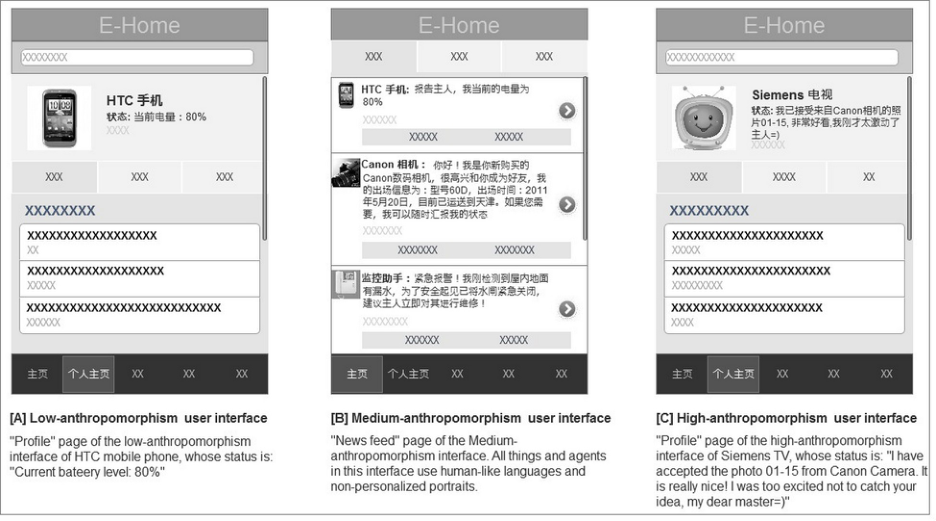
The low-anthropomorphism user interface involved neither appearance nor language anthropomorphism. That is, things in this interface had no human-like appearances and “talked” in machine-like language (using simple nouns and adjectives, simple sentences without subject and unaffectionate to make a contextual status report). For example, an air conditioner reported its status as “Temperature: 30 centigrade, humidity: 80%-. Figure 2-[A] shows a screen shot of the low-anthropomorphism-level interface.
The medium-anthropomorphism user interface contained human-like language including subjects, emoticons and punctuation symbols, but no human-like portraits. For example, an air conditioner reported its status as “Dear master, I have turned off myself since the temperature now is 30 centigrade, and the humidity is 80 %. It is noteworthy that the same level of autonomy and intelligence were maintained at a medium level (e.g. things always act as subordinates and let users to make ultimate decision) for both machine-like and human-like language. Figure 2-[B] shows a screen shot of the “news feed” page of medium-anthropomorphism user interface.
The high-level anthropomorphism user interface contained both appearance and language anthropomorphism (e.g. cartoon appearances and human-like language). A screenshot of the high-anthropomorphism user interface are shown in Figure 2-[C].
Figure 2. Anthropomorphic IoT user interface prototype
Experimental Design A 3×3 mixed design was conducted. The factor things’ hierarchy was within-subject design while the factor anthropomorphic level was between-subject design. Different kinds of hierarchy corresponded to different mental models, which significantly affect users’ attitudes and behaviour. In addition, it is natural for participants to interact with one specific level of anthropomorphic things during interaction. Thus the thirty-six participants were randomly assigned to three groups with certain anthropomorphic level. Each participant performed three groups of tasks: non- hierarchical, location-based hierarchy, and function-based hierarchy. The task group sequence was randomized as well.
Dependent variables Acceptance. Users will form attitudes and intention when using a novel technological product before they making efforts (Davis, 1989). Attitudes and intention will directly influence user behaviour using new technology. The five factors used in measuring acceptance in this study were perceived usefulness (PU) (Chin, Diehl, & Norman, 1988; Davis, 1989; Moore & Benbasat, 1991) , perceived ease of use (PEOU) (Chin et al., 1988; Davis, 1989), attitudes towards using or intrinsic motivation (C) (Davis, Bagozzi, & Warshaw, 1992, p. 1), perceived behaviour control (PBC) (Yi, Jackson, Park, & Probst, 2006), behaviour intention (BI) (Davis, 1989; Yi et al., 2006). We selected Intrinsic motivation (Davis et al., 1992) and perceived behaviour control (Yi et al., 2006) since these two factors were essential for users in unfamiliar situations such as the IoT system in this study. There were 15 questions in total in the acceptance questionnaire, measured by Likert 7-point scale.
Trust. Trust supplants contracts in providing the key sense of predictability in relationships. Previous studies proposed that people’s trust towards automation and AI systems (e.g. anthropomorphic IoT) mainly relied on efficacy and characters of the system itself (Lee & Moray, 1992). Since users mainly relied on things’ words to make decision in the IoT system, one of the factors contributing to trust was used: perceived reliability. We adopted the scales with five questions measuring trust towards computer systems in our study (Madsen & Gregor, 2000), and modulated “system” into “IoT” in our questionnaire. For example, “The IoT system always provides the advice I require to make my decision”, “The IoT system performs reliably”, “The IoT system responds the same way under the same conditions at different times”, “I can rely on the IoT system to function properly”, and “The IoT system analyses problems consistently”. The Cronbach’s α of perceived reliability is 0.85.
Satisfaction. Satisfaction is the level of satisfactory towards the interaction between human and system. We partially adopted QUIS 5.0 (Chin et al., 1988) in measuring user satisfaction, and made some modulations (e.g. replacing “software” with “IoT”). Items were consisted of “terrible/wonderful”, “difficult/easy”, “frustrating/satisfying”, “inadequate power/adequate power”, “dull/stimulating”, and “rigid/flexible”. We developed a 7-point Likert scale for users overall reactions to IoT systems.
Subjective preference. We asked users to rank different hierarchies after three groups of tasks, so as to measure their subjective attitudes and interaction effects. The type of things’ hierarchy on the top of ranking was rated 3, and the one on the bottom was rated 1. This score, denoted as “subjective preference”, was regarded as user attitudes towards things’ hierarchy.
User mental model of human-object relationship. Although users are familiar with the social network mental model, the theory of human-human interaction could not be directly used into human-object interaction. We think it necessary to measure users’ mental model when interacting with anthropomorphic IoT. Hence, users were asked to draw a picture of their perceived relationship with things in anthropomorphic IoT and explained their reasons orally (Thatcher & Greyling, 1998).
Procedures This experiment was conducted in HCI Lab at Tsinghua University. An Acer laptop with a 2.67 GHz processor, 2.00 GB memory and 14.1’’ screen was used for experimentation. Aside from the moderator, a backstage experimenter responded to participants’ input in the observation room.
Each participant was given a brief verbal introduction to the experiment was given to each participant by the moderator. Then the participant was asked to fill out an informed consent form and a general information questionnaire concerning his biographical information. Before the tasks started, the moderator demonstrated to the participant how to use the system, a brief practice session with four small tasks were carried out to help the participant understand user interface and the tasks to be performed. Following the practice session each participant had to complete three sections of tasks and complete a questionnaire investigating his self-reported measurement (including acceptance, trust, satisfaction, subjective preference) after each section.
On finishing all three sections of tasks, each participant was asked to draw the relationship with all the things in the IoT system in his/her mind. After a 10-minute post-test interview on reasons of drawing, the whole experiment was completed.
An important component of the human systems integration plan should be a verification and validation process that provides a clear way to evaluate the success of human systems integration. The human systems integration team should develop a test plan that can easily be incorporated into the systems engineering test plan. The effectiveness and performance of the human in the system needs to be validated as part of the overall system. It may seem more attractive to have stand-alone testing for human systems integration to show how the user interacts with controls or displays, how the user performs on a specific task. This methodology can address the performance of the human operator or maintainer with respect to the overall system. The most important thing is to develop a close relationship between human systems integration and systems engineering.
RESULTS
Participants The hypotheses were tested by 36 participants in the experiment. The results of t-test on biographical information between different anthropomorphic level groups showed that there was no significant difference on age and previous experience with IoT. Two questions were asked in the post-test interview to determine the construct validity of thing’s anthropomorphic level and hierarchy. The questions asked were as follows. (1) What were the main considerations when you decided the ranking of different organizations of things? (2) Do you think things were communicating with you in human-like language (only for participants from medium and high anthropomorphism group)? Did this difference influence your evaluation? The results showed that 80.56% participants noticed the differences in things’ hierarchy; 100% participants noticed the differences in language, only 50% participants in the high-level anthropomorphism group discovered the human-like faces of things. The percentages of participants who were aware of independent variables during the experiment were high. The paper-based questionnaires were provided after the participants had finished each section. The Cronbach’s Alpha of all questionnaires were 0.909 for perceived usefulness, 0.883 for perceived ease of use, 0.950 for attitudes to use, 0.870 for perceived behavior control, 0.921 for behavioral intention, 0.911 for trust questionnaire and 0.931 for satisfaction questionnaire, which were all above the generally acceptable level 0.7. The average scores of each questionnaire were used as the dependent variables, and represented users’ acceptance, trust, and satisfaction towards the anthropomorphic IoT service.
Hypothesis Testing MANOVA of acceptance (including perceived usefulness, perceived ease of use, attitude to using, perceived behaviour control and behavioural control), trust, and satisfaction were used to test the hypotheses. Since the subjective preference violated the MANOVA assumptions, the Kruskal-Wallis tests were performed on the tests of subjective preference on hierarchy.
Hypothesis 1. The intention of this hypothesis is to examine how thing’s hierarchy might influence users’ attitudes towards anthropomorphic IoT. The MANOVA test result indicates that hierarchy has no significant effects on users’ attitudes. Because the data of subjective preference violates the assumption of MANOVA even after possible transformations, the Kruskal-Wallis test was used for comparison. The comparison (chi-square=22.326, p=0.00001) indicated significant difference at the significant level 0.05. That is to say, different hierarchies indicate different preferences in users’ minds. In addition, the mean of function-based hierarchy (M=2.1944) is 31.64% higher than nonhierarchy (M=1.5000), whilst the mean location-based hierarchy (M=2.3889) is 37.2% higher than nonhierarchy. Thus we know that preference of hierarchical organization of things is significantly higher than that of non-hierarchical organization. Thus hypothesis1 was partially supported.
Hypothesis 2. Hypothesis 2 suggested that the level of anthropomorphism would influence users’ acceptance, trust and satisfaction, and the influence of language anthropomorphism would be larger than that of appearance anthropomorphism. According to MANOVA results in Table 2, significant differences in attitudes towards using (F=3.347, p=0.039) were maintained. The results of post-hoc multi-comparisons of the least square differences (LSD) using Tukey-Krammer adjustment showed that the significant differences existed between low-level and high-level (p=0.012), whilst no significant differences were found between low-level and medium-level or between medium-level and high-level. In addition, users perceive things with high-level and medium-level anthropomorphism as more attractive than things with low-level anthropomorphism. 5.97% increase of attitudes towards use was found between high and low, and 3.15% was found between medium and low. Thus hypothesis 2 was partially supported.
The MANOVA test result of subject evaluation indicated no significant differences of dependent variables with the interaction between anthropomorphic level and thing’s hierarchy, thus we regarded the two factors—things’ hierarchy and anthropomorphic level—as variables without correlation, and the correlation of these two factors were not discussed further.
Table 2: MANOVA results of anthropomorphic level on user acceptance Low-level Medium-level High-level
Table available in the original PDF paper.
Dependent Variables
F p M SD M SD M SD Perceived usefulness 6.22 0.70 6.23 0.58 6.17 0.58 0.153 0.858
Perceived ease of use 6.19 0.69 6.37 0.59 6.52 0.53 2.264 0.109 Attitudes towards Using 6.14 0.79 6.34 0.72 6.53 0.54 3.347 0.039*
During the debrief section after the experiments, users reported their preference of function-based or location-based hierarchical things, even though they did not realize the differences in manipulation with hierarchical agents and non-hierarchical things. Users’ mental model of relationship with things could explain this significant difference. That is, one-way communication with specific agents was thought as “time-saving”, “easy to manage” and more “reliable” than directly communicating with things, especially when the number of things reaches a large scale. It is worth noticing that only when the hierarchical organization is relatively stable and compatible with users’ mental model, can users accept certain organizations. For example, users rating function-based hierarchy higher thought that this extendable organization helps to improve efficiency of household tasks. In addition, users who prefer location-based hierarchy hold the opinion that this kind of organization made it easy to manage things and was more related to users’ cognition of household appliances. Moreover, some users also mentioned their perceived difference on things’ intelligent level and inequality with people. These users thought things were less reliable and less intelligent to be treated equally as people in the social media, whilst “agents” with higher “social hierarchy” were thought with higher reliability and equality with people.
Considering no significant differences in users’ acceptance, trust and satisfaction in testing hypothesis 1, several plausible reasons may explain this phenomenon. A very likely reason may be the similarity in manipulation among three groups of tasks. In this experiment, the differences among different hierarchies were highlighted more from conceptual than from manipulation side. We guess that the interaction style would weigh more in influencing users’ subjective evaluation. Second, similarity in manipulation may lead to learning effects, which made users perceiving no significant difference among different hierarchies. Even though Latin Square design was used, the effect of similar manipulation had larger influence on users’ attitudes, thus no significant differences were found in the test.
Hypothesis 2 was supported by the significant differences in attitudes towards use. The results that language anthropomorphism played a more important role in effecting user acceptance than appearance anthropomorphism consistent with previous studies (De Angeli et al., 2001) on social agents. On the other hand, this results may to some extends not correspond to researches on human-robot “uncanny valley” effects (Rau, Li, & Li, 2009; Woods, Dautenhahn, & Schulz, 2004), in which users’ evaluation would decrease as the increase of level of anthropomorphism after certain turning point. One possible explanation is that textual communication is different with speech communication. That is, users may be less sensitive in detecting smart agents’ tones and intonation, and the chances for negative evaluation due to inconsistency between experience and tones decrease. In addition, results of conversation analysis indicated that users tend to reply less in simple, asking-for-confirmation tasks, while they are more likely to initiate conversation when doing more complex tasks (e.g. tracking or multitasking). One possible reason is that users’ evaluation increases as the compatibility between context and language anthropomorphism increases. This finding needs further test because current data could not support influences of different compatibility between contexts and anthropomorphic level.
Even though attitudes towards use is the only one factor on acceptance showing significant effects in MANOVA, Affective and Pleasurable Design (2021) when making correlation analysis, the other three acceptance factors (perceived usefulness, perceived ease of use and perceived behavioural control) were highly positively correlated with using attitudes. One possible reason may be that current experiment tasks and conditions could not lead to users different evaluations on perceived ease of use, perceived usefulness and perceived behavioural control. Considering the positive correlation between attitudes and perceived ease of use, it is reasonable to believe that higher perceived ease of use may lead to higher attitudes towards using.
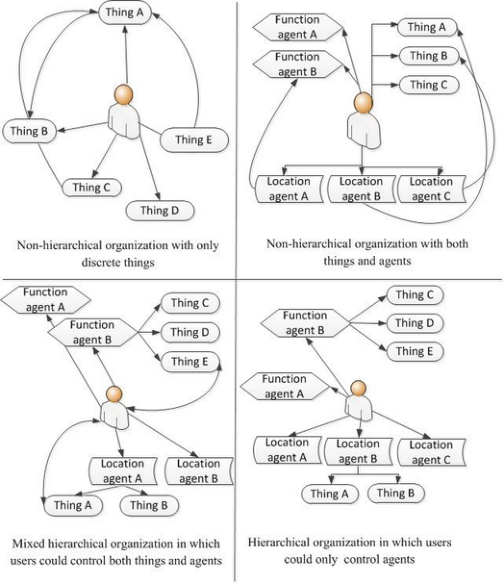
In order to figure out users’ perception of their relationship with things, users were asked to draw their perceived relationship with things on a piece of paper. Four major types were obtained after sorting (seeing Figure 2): non- hierarchical organization with only discrete things (2), non-hierarchical organization with both things and agents (8), mixed hierarchical organization in which users could control both things and agents (8), hierarchical organization in which users could only control agents (18). Results indicated that 72% users have the mental model with hierarchical organization of things, and the grouping strategy of things existed in non-hierarchical organization with both agents and things. Moreover, in the two kinds of hierarchical organizations, different kinds of grouping strategies co-exist. Users were more likely to directly manipulate agents, and listen to things’ or agents’ status report. Thus it is clear that the analysis results of mental model was consistent with the explanation household behaviour (Crabtree et al., 2002), that is, users were more likely to accept things organized by similar location or function. Activity centre could also be considered in further design of IoT systems.
Figure 3. User mental model of relationship with things
A limitation of the study lies in control of experiment condition and design of tasks. One major reason for not obtaining significant difference in subjective evaluation is the similarity in manipulation among three groups of tasks during the test. In further studies, it is possible to design different tasks according to different hierarchies except for conversations. Increasing the complexity of tasks and number of things is another solution towards this limitation, in order to provide a higher-realism experiment environment for users. Another limitation of the study is sampling. Undergraduate and graduate students have been recruited for testing the hypotheses empirically. This non- probabilistic sampling method and the small sample size limit the generalizability of the result. In future study, target users of IoT should be identified and recruited in experiment. It is also interesting to investigate the individual differences (e.g. experience, technological background) in the perception and acceptance of anthropomorphic IoT.
CONCLUSIONS
This study explored the effects of things’ hierarchy and anthropomorphic level on user acceptance, trust, satisfaction and subjective preference of anthropomorphic IoT. Anthropomorphic IoT is generally accepted by social media users. Considering users’ mental model of relationship with things, users are more likely to accept things organized with hierarchy; grouping strategies based on both location and function could exist in the system. Moreover, using human-like language is capable to support social context and efficient interaction in anthropomorphic IoT. However, the design of anthropomorphic IoT interaction paradigm should consider requirements in different tasks and contexts. In addition, exploring the extent of combining GUI-based and social-based interaction paradigm might better serve the IoT technology.
Based on the findings of the current study, several design guidelines for anthropomorphic IoT are proposed. 1) It is essential to organize things mainly based on function and location in IoT system, especially when a large scale of things is involved; 2) Provide customized grouping strategy in IoT systems; 3) Appropriate human-like language in communication with things is essential in smart IoT systems, but to what extent should language anthropomorphism be requires careful consideration and design; 4) The ultimate decision should be made by the user all the time to maintain users’ perceived control towards the novel, smart anthropomorphic IoT system; 5) IoT could consider both GUI and NLI model in system design.
ACKNOWLEDGE This study was funded by a National Science Foundation China grant 70971074.
REFERENCES
Aggarwal, P., & Ann, L. (2007). Is That Car Smiling at Me? Schema Congruity as a Basis for Evaluating Anthropomorphized Products. Journal of Consumer Research, 34(4), 468–79. Breslin, J., & Decker, S. (2007). The future of social networks on the internet: The need for semantics. Internet Computing,
IEEE, 11(6), 86–90. Caporael, L. R., & Heyes, C. M. (1997). Why anthropomorphize? Folk psychology and other stories. Anthropomorphism, Anecdotes, and Animals, 59–73. Catrambone, R., Stasko, J., & Xiao, J. (2002). Anthropomorphic agents as a user interface paradigm: Experimental findings and a
framework for research. In Proceedings of the 24th annual conference of the Cognitive Science Society (Vol. 166171). Retrieved from http://www.cc.gatech.edu/~stasko/papers/cogsci02.pdf Chin, J. P., Diehl, V. A., & Norman, K. L. (1988). Development of an instrument measuring user satisfaction of the humancomputer interface. In Proceedings of the SIGCHI conference on Human factors in computing systems (pp. 213–218). Washington, D.C., United States: ACM. Crabtree, A., Hemmings, T., & Rodden, T. (2002). Pattern-based support for interactive design in domestic settings (pp. 265–
276). ACM. Davis, F. D. (1989). Perceived usefulness, perceived ease of use, and user acceptance of information technology. MIS Quarterly, 319–340. Davis, F. D., Bagozzi, R. P., & Warshaw, P. R. (1992). Extrinsic and Intrinsic Motivation to Use Computers in the Workplace1.
Journal of Applied Social Psychology, 22(14), 1111–1132. De Angeli, A., Johnson, G. I., & Coventry, L. (2001). The unfriendly user: exploring social reactions to chatterbots (pp. 467– 474). Epley, N., Akalis, S., Waytz, A., & Cacioppo, J. T. (2008). Creating Social Connection Through Inferential Reproduction
Loneliness and Perceived Agency in Gadgets, Gods, and Greyhounds. Psychological Science, 19, 114–120. Epley, N., Waytz, A., & Cacioppo, J. T. (2007). On seeing human: a three-factor theory of anthropomorphism. Psychological Review, 114(4), 864. Gentner, D., & Stevens, A. L. (1983). Mental models (pp. 7–14). New York: L. Erlbaum Associates, Hillsdale. Guinard, D., Fischer, M., & Trifa, V. (2010). Sharing using social networks in a composable web of things. In Pervasive
Computing and Communications Workshops (PERCOM Workshops) (pp. 702–707). IEEE. Haley, K. J., & Fessler, D. M. T. (2005). Nobody’s watching?: Subtle cues affect generosity in an anonymous economic game.
Evolution and Human Behavior, 26, 245–256. Heider, F., & Simmel, M. (1944). An Experimental Study of Apparent Behavior. The American Journal of Psychology, 57, 243–
259. Heim, S. (2007). The Resonant Interface: HCI foundations for interaction design. Addison-Wesley Longman Publishing Co., Inc.
Jipson, J. L., & Gelman, S. A. (2007). Robots and rodents: Children’s inferences about living and nonliving kinds. Child Development, 78, 1675–1688. Johnson-Laird, P. N. (1986). Mental models: Towards a cognitive science of language, inference, and consciousness. Harvard
Univ Pr. Kamilaris, A., & Pitsillides, A. (2010). Social networking of the Smart Home. In Personal Indoor and Mobile Radio Communications (PIMRC) (pp. 2632–2637). IEEE. Koskela, T., & Väänänen-Vainio-Mattila, K. (2004). Evolution towards smart home environments: empirical evaluation of three
user interfaces. Personal and Ubiquitous Computing, 8(3), 234–240. Lee, J., & Moray, N. (1992). Trust, control strategies and allocation of function in human-machine systems. Ergonomics, 35(10), 1243–1270. Madsen, M., & Gregor, S. (2000). Measuring human-computer trust (pp. 6–8). Presented at the Proceedings of Eleventh
Australasian Conference on Information Systems, Citeseer. Moore, G. C., & Benbasat, I. (1991). Development of an instrument to measure the perceptions of adopting an information technology innovation. Information Systems Research, 2(3), 192–222. Nass, C., Steuer, J., & Tauber, E. R. (1994). Computers are social actors. In Proceedings of the SIGCHI conference on Human
factors in computing systems (pp. 72–78). ACM. Retrieved from http://dl.acm.org/citation.cfm?id=191703 Norman, D. A., & Draper, S. W. (1986). User centered system design; new perspectives on human-computer interaction. L.
Erlbaum Associates Inc. Papastergiou, M. (2005). Students’ mental models of the Internet and their didactical exploitation in informatics education.
Education and Information Technologies, 10(4), 341–360. Powers, A., Kiesler, S., & Goetz, J. (2003). Matching robot appearance and behavior to tasks to improve human-robot cooperation. Human-Computer Interaction Institute, 105. Qiu, L., & Benbasat, I. (2009). Evaluating anthropomorphic product recommendation agents: A social relationship perspective to
designing information systems. Journal of Management Information Systems, 25(4), 145–182. Rau, P. L., Li, Y., & Li, D. (2009). Effects of communication style and culture on ability to accept recommendations from robots.
Computers in Human Behavior, 25(2), 587–595. Reeves, B., & Nass, C. (1996). How people treat computers, television, and new media like real people and places. CSLI Publications and Cambridge university press. Schaumburg, H. (2001). Computers as Tools or as Social Actors? -The Users’ Perspective on Anthropomorphic Agents.
International Journal of Cooperative Information Systems, 10(1), 217–234. Thatcher, A., & Greyling, M. (1998). Mental models of the Internet. International Journal of Industrial Ergonomics, 22(4), 299–
305. Woods, S., Dautenhahn, K., & Schulz, J. (2004). The design space of robots: Investigating children’s views (pp. 47–52). Woodward, A. L. (1999). Infants’ ability to distinguish between purposeful and non-purposeful behaviors. Infant Behavior and Development, 22(2), 145–160. Yates, A., Etzioni, O., & Weld, D. (2003). A reliable natural language interface to household appliances (pp. 189–196). ACM. Yi, M. Y., Jackson, J. D., Park, J. S., & Probst, J. C. (2006). Understanding information technology acceptance by individual
professionals: Toward an integrative view. Information & Management, 43(3), 350–363. Zhang, B., Rau, P. L. P., & Salvendy, G. (2009). Design and evaluation of smart home user interface: effects of age, tasks and intelligence level. Behaviour & Information Technology, 28(3), 239–249. Zhou, L. (2007). Natural language interface for information management on mobile devices. Behaviour & Information
Technology, 26(3), 197–207.
LISTED IN THE AHFE DIGITAL BOOKSTORE CATALOGUE
Explore the complete digital volume
Advances in Affective and Pleasurable Design
Read this individual research paper free through the original publisher, or explore the full digital proceedings book.
ISBN 978-1-4951-2109-8
Explore this ISBN in the AHFE Bookstore ↗Listed in the July 2026 bookstore catalogue; search by ISBN to confirm current availability · Digital book purchase optional