Haoran Yu, Danhua Zhao (2026). Integrating Embodied Intelligence: A Three-Scenario Design Proposal for the Smart Vehicle Cabin. In: Human Factors and Ergonomics In Design. AHFE Open Access, vol. 210, pp. 43–52. https://doi.org/10.54941/ahfe1007424
The automotive industry is transitioning from "mechanical mobility tools" to the "Third Living Space." As Level 3+ autonomy reduces driving tasks, the cabin becomes a space for social interaction, work, and rest. However, current HMI remains trapped in "Screen-Centrism"—compressing 3D physical interactions into 2D GUIs—causing dual crises: cognitive overload for drivers and emotional alienation for passengers.This study constructs a design framework beyond GUI by introducing "Embodied Intelligence." Using an Explanatory Sequential Mixed-Methods design, we first conducted NLP on 145,820 social media entries to map user expectations, followed by Day Reconstruction Method inquiries with 30 families, revealing deep-seated pain points: "Black Box Anxiety" (rear-seat safety) and "Physical Barriers" to social interaction.Through phenomenological reduction, we propose the "Anchoring-Linking-Transforming" (A-L-T) framework: intelligence must build trust through Anchoring social roles, offload cognition through Linking multimodal environmental cues, and reconstruct social relations through Transforming physical space. As materialization, we present "Embodied-C"—featuring an eHMI System, Spatially Fluid Agent, and Modular Reconfigurable Console. This study offers a model for next-generation human-vehicle symbiosis, shifting from "Command-Control" to "Embodied Co-habitation."
The Neglected Body: Screen-Centrism & Its Crisis In the mechanical era, the driver-vehicle relationship was highly embodied, with the vehicle extending the driver’s Body Schema. With digital cockpits, this somatic presence is stripped away. The industry’s “Screen-Centrism”— replacing physical controls with touchscreens—creates a disembodied cage. This leads to an Epistemological Crisis: (1) Cognitive Tunneling: Drivers compress attention into hierarchical 2D menus, fracturing situational awareness and increasing eyes-off-road time. (2) Loss of Haptic Certainty: Touchscreens require visual confirmation, turning interaction into a conscious cognitive task rather than a motor reflex.
The automobile’s ontology is shifting. Per Oldenburg’s “Third Place,” the vehicle is becoming a primary habitat distinct from home and work. With L3/ L4 autonomy, it transforms into a mobile node for work, family socialization, and rest. The human-vehicle relationship must evolve from “Command- Execution” to “Symbiosis-Collaboration.” Yet, current HMI fails this shift; the cabin feels like a data container, causing Emotional Alienation.
Research Gap and Objectives We address the dual crisis of cognitive overload and emotional disconnection. The core question: In an era of screen saturation, how can we reconstruct the organic connection between humans, vehicles, and environment within physical space? The solution lies not in more computing power or higher resolution, but in a return to Embodied Intelligence—shifting from explicit, command-based interaction to implicit, environment-based interaction. This study aims to: critique the disembodied paradigm; identify latent user needs via mixed-methods research; construct the A-L-T theoretical framework; and propose the “Embodied-C” system as a concrete manifestation.
To address the methodological gaps identified in current literature, this paper is structured systematically. Section 2 establishes the theoretical landscape of embodied cognition. Section 3 outlines our mixed-methods discovery process to identify user pain points. Section 4 deductively constructs the Anchoring- Linking-Transforming framework. Finally, Section 5 validates this framework through the Embodied-C conceptual proposal as an independent research project, ensuring a rigorous connection between supporting literature and presented case studies.
THEORETICAL LANDSCAPE: RETURNING TO EMBODIMENT Embodied Cognition & Post-Phenomenology
Embodied Cognition (Varela et al., 1991) posits that cognition arises from the body’s sensorimotor engagement with the environment, challenging the brain-as-computer metaphor. In automotive UI, interaction must shift from task-oriented to experience-oriented, enhancing intuitive, body-based perception. Don Ihde’s philosophy distinguishes Hermeneutic Relations (human reads technology to understand world) from Embodiment Relations (technology becomes transparent, extending perception). Current screen- based interaction is hermeneutic; our goal is to achieve embodiment, where information is felt, not read.
Ambient Intelligence & Dynamic Affordances Ambient Intelligence (Weiser) advocates for “Calm Technology” that operates at the periphery of attention. In driving, peripheral cues (e.g., light displays) reduce cognitive load compared to focal screen warnings. Concurrently, Gibson’s Affordances—action possibilities offered by the environment—must become dynamic. Research on Kinetic Interiors (Fuest
Integrating Embodied Intelligence: A Three-Scenario Design 45 et al., 2021) suggests physical cabins must adapt to Non-Driving Related Tasks, reconfiguring to support fluid social scenarios informed by Hall’s Proxemics.
METHODOLOGY: MIXED-METHODS DISCOVERY This study employs an Explanatory Sequential Design to bridge the gap between abstract embodied cognition theory and concrete smart cabin design, moving from macro-trends to micro-behaviors.
Phase 1: Computational Ethnography via Big Data NLP To identify broad user expectations, we analyzed 145,820 social media entries from automotive and lifestyle platforms using Latent Dirichlet Allocation topic modeling. As shown in Table 1, the analysis revealed significant “Screen Friction” designated as Topic 01 and “Safety Anxiety” designated as Topic 04 regarding rear-seat passengers. This directly contrasts with the high aspiration for “Emotional Need” represented by Topic 03.
Table 1: Topic clustering and sentiment analysis of 145,820 user-generated content entries based on Latent Dirichlet Allocation.
Table available in the original PDF paper.
Topic Cluster ID
Primary Label
Top 5 Key Terms (Frequency)
Avg. Sentiment Score (0-1) Interpretation
0.24 (Negative)
Topic 01 Screen Friction
High frustration with current touch- based GUIs.
Glare (0.042), Fingerprint (0.038), Deep Menu (0.031), Lag (0.025), Distraction (0.022)
0.65 (Neutral)
Topic 02 Basic Performance
Hygiene factors; expected but not delighting.
Range (0.051), Charging (0.048), Acceleration (0.035), Chassis (0.029), Noise (0.021)
0.88 (Positive)
Topic 03 Emotional Need
Strong aspiration for empathetic, human-like interaction.
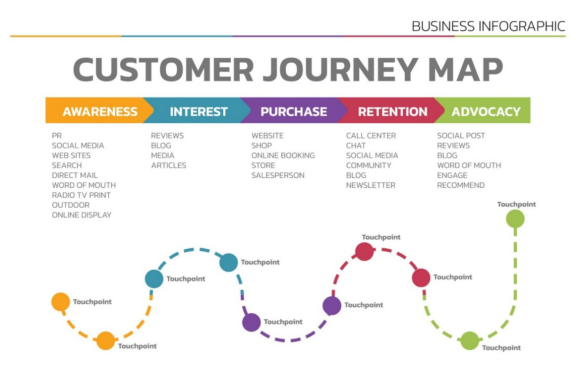
Deep qualitative research was conducted with 30 representative households to map specific pain points. This phase generated 324 behavioral touchpoints and over 60 User Journey Maps, as illustrated in Fig. 1. Triangulation of this data highlighted three critical failures: Epistemological Failure manifesting as Black Box Anxiety concerning unseen child status in the rear seat; Ontological Failure presenting as Physical Barriers created by fixed interior consoles during social stops; and Trust Failure resulting in Role Ambiguity caused by inconsistent voice assistant behavior.
Table 2: Demographic characteristics of the 30 representative households participating in the contextual inquiry.
Table available in the original PDF paper.
Characteristic Category Count (n) Percentage (%) Vehicle Type SUV (Smart EV) 22 73.3%
Sedan (Smart EV) 8 26.7% Family Structure Couple + 1 Child (0-3 yrs) 12 40.0%
Triangulation revealed three critical pain points: Pain Point I: Black Box Anxiety (Epistemological Failure): 68% of parents anxiety over unseen rear-seat child status. Design Requirement (DR1): Information Offloading to environmental media (light/sound).
Pain Point II: Physical Barriers (Ontological Failure): Fixed console creates social barrier during stops. Design Requirement (DR2): Spatial Mutability.
Pain Point III: Role Ambiguity (Trust Failure): Voice assistant’s inconsistent behavior causes confusion. Design Requirement (DR3): Role Anchoring.
LOGICAL DEDUCTION: THE A-L-T FRAMEWORK Drawing from the empirical pain points and embodied cognition theory, we deductively constructed the Anchoring-Linking-Transforming framework, commonly referred to as A-L-T, to guide the design process.
Anchoring: The Ontological Dimension To resolve Role Ambiguity, we utilize Contextual Anchoring with distinct State Personas. As defined in Table 3, the system switches between State α acting as the Co-pilot for high-authority driving tasks, and State β acting as the Host for high-emotion social tasks.
Linking: The Epistemological Dimension To address Black Box Anxiety, the strategy of Multimodal Linking offloads information to environmental media. Urgent information is linked to ambient light acting as the dorsal stream, while social information is linked to spatial audio and agent motion.
Transforming: The Physical Dimension To overcome Physical Barriers, we adopt Robotic Transformation where the hardware reconfigures its geometry to support the user’s social narrative.
CONCLUSIONCONCEPTUAL PROPOSAL: THE “EMBODIED- C”SYSTEM The A-L-T framework is materialized through the Embodied-C system, featuring three integrated subsystems.
Subsystem I: Rhythmic Light Domain Design Intent: The Rhythmic Light Domain (RLD) is designed to solve the “Muted Giant” problem of autonomous vehicles. Without a human driver to wave or nod, the vehicle must use light to articulate its intentions. We define this not as static lighting, but as “Kinetic Light Gestures”—using movement, direction, and rhythm to mimic human non-verbal communication.
48 Haoran and Danhua Interaction Logic A: The “Yielding” Gesture (Pedestrian Interaction) The Problem: At a crosswalk, a pedestrian sees the car slowing down but hesitates, unsure if the AI will suddenly accelerate.
Light Action (The Output):
Detection: The vehicle sensors lock onto the pedestrian.
Animation: The front matrix grille displays a sweeping green light flow. The light originates from the center of the grille and flows smoothly outwards to the sides, repeating in a loop.
Metaphor: This visual action mimics the human arm gesture of “opening the path” or saying “after you.”
User Feedback (The Outcome):
Visual Confirmation: The pedestrian perceives the lateral motion of the light, which instinctively suggests “clearance” rather than “collision” (which would be a looming, expanding light).
Behavioral Response: The pedestrian recognizes the invitation and crosses the street with confidence, reducing the “deadlock” time at intersections.
Interaction Logic B: The “Neural Lock-on” (Perceptual Acknowledgement) The Problem: Pedestrians often feel unsafe near autonomous vehicles because they don’t know if the car’s sensors have actually “seen” them, even if the car is moving slowly.
Light Action (The Output):
Tracking: As a pedestrian moves laterally across the vehicle’s field of view, a high-brightness “Digital Spotlight” (a cluster of white pixels on the matrix grille) moves in synchronization with them.
Animation: The light cluster follows the pedestrian’s trajectory like a pupil tracking an object.
Metaphor: “Eye contact” or “I am watching you.”
User Feedback (The Outcome):
Sense of Agency: The pedestrian confirms, “The AI knows I am here.”
Trust Building: It eliminates the fear of being a “ghost object” (undetected obstacle), allowing the pedestrian to predict that the car will react to their future movements.
Interaction Logic C: The “Predictive Trajectory” (Navigation Intent) The Problem: Traditional turn signals (blinkers) only indicate when a turn is imminent, but not the precise path or radius, causing anxiety for cyclists or cars in adjacent lanes.
Light Action (The Output):
Calculation: The vehicle plans a turning path.
Projection: The DLP (Digital Light Processing) units project a high-contrast chevron arrow path onto the road surface 3 seconds before the physical turn begins. The arrows curve to show the exact intended wheel path.
Metaphor: “Drawing the map” on the ground.
Integrating Embodied Intelligence: A Three-Scenario Design 49 User Feedback (The Outcome):
Spatial Prediction: Surrounding road users can visualize the physical space the car will occupy in the future.
Conflict Avoidance: Cyclists instinctively steer clear of the projected light zone, preventing “right-hook” accidents.
Subsystem II: The Spatially Fluid Agent (SFA) System Architecture
The SFA utilizes a Cross-Domain Computing Platform to render a virtual agent that can physically migrate between the Central Display, Passenger Display, and Rear Screens.
Design Deep Dive: The “Ma Liang” Interaction (Anchoring Strategy)
Scenario: A child in the rear seat is bored.
Interaction Logic: 1. Input: Driver performs a “Swipe Back” gesture detected by TOF cameras. 2. Transition: The agent visually “flies” out of Central Display, traverses the ceiling LED strip (visualized as a comet tail), and lands on Rear Screens. 3. State Change: The logic engine switches the agent’s persona state (see Table 4). 4. Feature Activation: In the rear, the agent activates the “Ma Liang” AR Feature (named after the Chinese folk tale The Magic Brush). Using external cameras, it allows the child to draw digital annotations over the passing scenery.
Table 3: Agent state machine logic demonstrating the Anchoring strategy for resolving role ambiguity.
Table available in the original PDF paper.
State Variable State A: Co-pilot (Front Row) State B: Host (Rear Row) Trigger Condition Gear = D OR V > 0 Gear = P OR Gesture Input
Visual Form Minimalist Orb / Abstract Geometry Anthropomorphic Character Voice Tone Crisp, Concise, Monotone Warm, Expressive, Variable
Functional Scope Navigation, ADAS, Climate Media, AR Games, Chat InterruptionPolicy Only Critical Safety Warnings High Permissibility
Subsystem III: The Modular Reconfigurable Console (MRC) System Architecture
The MRC is a robotic interior structure mounted on a heavy-duty alloy rail system. It features a high-torque servo motor capable of driving the unit over a range of L = 500 mm.
Kinematics: Upon activation, the console translates rearward at a speed of 0.1 m/s. The movement profile follows a sigmoid curve to ensure smooth acceleration and deceleration (Jerk-limited motion).
Spatial Reconfiguration (Proxemics): Before: The console separates the driver and passenger (Personal Distance). After: The console’s retreat creates a 250mm “Walk-through Aisle.”
The “Thick Description” of Interaction: This transformation is not just functional; it is a Ritual. It allows the front passenger (parent) to physically turn their body or move to the rear to tend to a child without exiting the vehicle. It dissolves the “Berlin Wall” identified in Phase 2 research. The rear of the console deploys a foldable table, creating a “face-to-face” social geometry reminiscent of a living room (Oldenburg, 1989).
CMF Strategy: Shy Tech and Sensuality To reinforce the “Third Living Space” metaphor, the system employs Shy Tech principles.
Materiality: Capacitive touch sensors are laminated beneath open-pore wood veneer and acoustic fabric.
Effect: When inactive, the console appears as a piece of furniture. Controls are only illuminated (visible) when the hand approaches (detected by proximity sensors). This reduces visual noise and reinforces the “Ready- to-hand” nature of the interface.
DISCUSSION: TOWARDS A NEW PHILOSOPHY OF HMI De-interfacing: From Reading to Sensing
The A-L-T framework embodies a paradigm of “de-interfacing.” By distributing intelligence into ambient cues, spatial motion, and physical reconfiguration, it shifts interaction from symbolic interpretation to direct environmental perception. The cabin thus becomes a bio-symbiotic space where technology is felt, not read, realizing the ideal of “Calm Technology.”
Quasi-Subjectivity & The Ethics of Trust A vehicle capable of anchoring a persona acquires “quasi-subjectivity,” fostering deep emotional bonds. This necessitates an ethical safeguard: our Anchoring strategy ensures the safety-first “Co-pilot” persona overrides the sociable “Host” in critical scenarios, balancing trust with inherent risk.
The Sociology of the Third Space: Against Atomization As a “Third Living Space,” the vehicle can counteract digital-age isolation. Features like the walk-through aisle and shared AR experiences actively rebuild physical connection among occupants, positioning the cabin as a site for social cohesion rather than passive transport.
Translating this vision faces practical constraints: crash safety validation for moving parts, standardization of ambient light semantics to prevent miscommunication, and the need for high-performance in-vehicle networks to support seamless, low-latency interactions. These are critical hurdles for implementation.
CONCLUSION
This study challenges the “Screen Hegemony” that currently dominates automotive design. Through a rigorous mixed-methods investigation involving big data NLP and deep contextual inquiry, we uncovered the deep- seated needs of the new generation of families: they do not want a larger iPad; they want a partner that understands safety (Black Box Anxiety) and intimacy (Physical Barriers).
The “Anchoring-Linking-Transforming” framework provides a systematic path forward. It demonstrates that by Anchoring social roles to build trust, Linking environmental cues to reduce cognitive load, and Transforming physical space to foster social connection, we can resolve the conflict between high-tech function and human emotional need. The future of the smart cabin lies not in the virtualization of reality, but in the intelligent animation of the physical world. This is maybe the ultimate fulfillment of the “Third Living Space,” marking the transition from the era of the “Digital Cockpit” to the era of the “Embodied Companion.”
REFERENCES
Colley, M., Rixen, J. O., & Rukzio, E. (2021). Investigating the effects of peripheral visual cues on take-over requests in conditionally automated driving. *Proceedings of the ACM on Human-Computer Interaction, 5*(MHCI), Article 228, 1–22. Dey, D., Habibovic, A., Löcken, A., Wintersberger, P., Riener, A., & Pfleging, B.
(2020). Taming the eHMI jungle: A classification taxonomy to guide, compare, and assess the design principles of automated vehicles’ external human-machine interfaces. Transportation Research Interdisciplinary Perspectives, 7, Article 100174. Dourish, P. (2001). Where the Action Is: The Foundations of Embodied Interaction.
MIT Press. Frison, A., Wintersberger, P., & Riener, A. (2022). Reconfigurable vehicle interiors as a building block for social automotive user interfaces. *International Journal of Human-Computer Interaction, 38*(6), 511–527. Fuest, T., Michalos, S., & Bengler, K. (2021). Kinetic interiors: Designing physically
adaptive vehicle cabins. In Proceedings of the 13th International Conference on Automotive User Interfaces and Interactive Vehicular Applications (AutomotiveUI ‘21). ACM, 187–190. Gibson, J. J. (1979). The Ecological Approach to Visual Perception. Houghton Mifflin. Hall, E. T. (1966). The Hidden Dimension. Doubleday. Heidegger, M. (1962). Being and Time (J. Macquarrie & E. Robinson, Trans.).
Harper & Row.
vehicle communicate its intention to a pedestrian?—A real-world study. IEEE Transactions on Intelligent Transportation Systems, 22(11), 6852–6863. Hoff, K. A., & Bashir, M. (2015). Trust in automation: Integrating empirical evidence on factors that influence trust. Human Factors, 57(3), 407–434. Ihde, D. (1990). Technology and the Lifeworld: From Garden to Earth. Indiana
University Press. Kim, H., & Gabbard, J. L. (2023). In-vehicle augmented reality: A comprehensive review and outlook for the future. IEEE Transactions on Visualization and Computer Graphics, 29(6), 3130–3147. Kim, H. K., Lee, S., & Ju, D. Y. (2020). Space reconfiguration in autonomous vehicles:
User preferences for seating arrangements. Applied Ergonomics, 88, 103167. Large, D. R., Burnett, G., & Crundall, E. (2019). “I’d like to have a conversation”: Designing speech-based interactions for the autonomous vehicle. Transportation Research Part F: Traffic Psychology and Behaviour, 60, 263–277. Lee, S. C., & Lee, J. (2022). User experience in autonomous driving: A review of
Non-Driving Related Tasks (NDRTs). Applied Ergonomics, 102, 103742. Löcken, A., Golling, C., & Riener, A. (2020). Should I stay or should I go? Different strategies for peripheral light displays in automated driving. In Proceedings of the 12th International Conference on Automotive User Interfaces and Interactive Vehicular Applications (AutomotiveUI ‘20). ACM, 186–189. Matviienko, A., Löcken, A., & Pfleging, B. (2022). Ambient light displays in
automotive: A taxonomy and survey. *ACM Transactions on Computer-Human Interaction (TOCHI), 29*(4), 1–43. Merleau-Ponty, M. (1962). Phenomenology of Perception (C. Smith, Trans.).
Routledge. Oldenburg, R. (1989). The Great Good Place: Cafés, Coffee Shops, Bookstores, Bars, Hair Salons, and Other Hangouts at the Heart of a Community. Paragon House. Pfleging, B., Schneegass, S., & Schmidt, A. (2016). A qualitative study of user
expectations and attitudes towards autonomous vehicles. In Proceedings of the 8th International Conference on Automotive User Interfaces and Interactive Vehicular Applications (AutomotiveUI ‘16). ACM, 225–232. Sheller, M., & Urry, J. (2006). The new mobilities paradigm. Environment and Planning A, 38(2), 207–226. Varela, F. J., Thompson, E., & Rosch, E. (1991). The Embodied Mind: Cognitive
Science and Human Experience. MIT Press. Verbeek, P. P. (2005). What Things Do: Philosophical Reflections on Technology, Agency, and Design. Pennsylvania State University Press. Wang, J., Zhang, Y., & Wang, F. (2021). A framework for the smart cockpit:
Transforming the vehicle into an intelligent agent. *International Journal of Human-Computer Interaction, 37*(12), 1109–1125. Weiser, M. (1991). The computer for the 21st century. Scientific American, 265(3),
94–105.
LISTED IN THE AHFE DIGITAL BOOKSTORE CATALOGUE
Explore the complete digital volume
Human Factors and Ergonomics In Design
Read this individual research paper free through the original publisher, or explore the full digital proceedings book.
ISBN 978-1-964867-86-1
Explore this ISBN in the AHFE Bookstore ↗Listed in the July 2026 bookstore catalogue; search by ISBN to confirm current availability · Digital book purchase optional